Exhibition·Baekdudaegan National ArboretumLast day
Wildflower Hill in Bonghwa — native autumn flowers to 18 October
Summary
Baekdudaegan National Arboretum (국립백두대간수목원) in Bonghwa has planted Wildflower Hill with around 200,000 plants of 15 native species for a month-long outdoor show called Wildflower Taste, running from 19 September to 18 October 2026. There is no separate exhibition ticket: you pay the usual arboretum admission of KRW 5,000 for adults, and entry is free altogether from 1 to 11 October during the Bongja Festival. The site is shut on four days inside that window — 25 and 28 September, and 6 and 12 October — and the last admission is 5 pm.
Article
In short
- Wildflower Taste, an autumn exhibition of native plants, runs on Wildflower Hill at Baekdudaegan National Arboretum in Bonghwa from 19 September to 18 October 2026.
- Around 200,000 plants of 15 native species — Tatarian aster and Korean daisy among them — have been planted across the hill. It is an outdoor planting you walk through, not a gallery display.
- There is no exhibition ticket. The usual arboretum admission covers it: KRW 5,000 for adults, KRW 4,000 for teenagers, KRW 3,000 for children.
- The arboretum is shut on four days during the run — 25 and 28 September, and 6 and 12 October. Opening hours are 9 am to 6 pm with last admission at 5 pm.
- Nothing about the exhibition is published in English, and the ticketing site is Korean only — but there is nothing to book and little to read, so buying a ticket at the gate works.
An entire hillside in Bonghwa, in the mountains of north-eastern Gyeongsangbuk-do, has been planted with the wild flowers that bloom in a Korean autumn. The Korea Arboreta and Gardens Institute announced on 21 September that Wildflower Taste, an autumn native-plant special exhibition, would run on Wildflower Hill at Baekdudaegan National Arboretum from 19 September to 18 October. The month-long run is timed to the flowering of species such as Tatarian aster and Korean daisy, which peak in this part of the calendar and then are gone.

What is actually on the hill
There is no exhibition room. Wildflower Hill itself is the exhibition, and visiting means walking its paths. The institute says the hill has been filled with around 200,000 plants of 15 native species for the run. Only two of the 15 were named in the announcement — Tatarian aster and Korean daisy — and the remaining thirteen have not been published.
- Tatarian aster (개미취) — a daisy-family native that flowers in pale violet clusters. Named in the announcement as one of the two headline species.
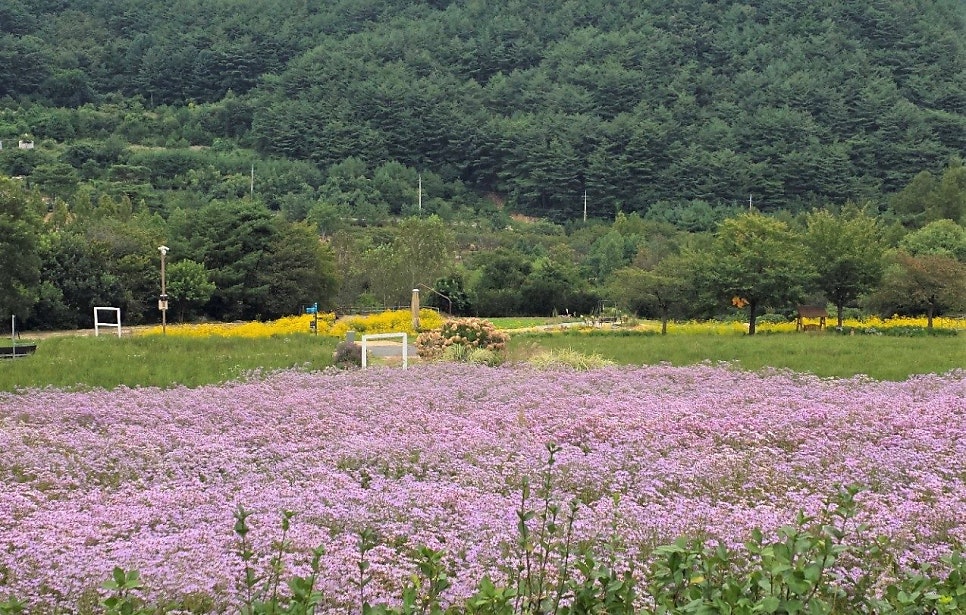
- Korean daisy (구절초) — an autumn native opening white and fading to pale pink. It is the flower whitening the hill in the photograph above.
- The other thirteen species — the institute says the planting mixes familiar wild flowers with natives most people walk past without noticing, but has not released the full list.
Which days it is actually open
The run lasts a month, and the arboretum shuts on four days inside it. It closes every Monday, and on the day of Seollal and Chuseok; when a Monday falls on a public holiday, the closure moves to the following day. Applied to the autumn 2026 calendar that produces exactly four closed dates. The one that catches people out is 6 October, a Tuesday: 5 October is a substitute public holiday for National Foundation Day, so the Monday closure slides by a day. The arboretum's own festival notice states the 6 October closure explicitly.
Opening and closing days during the exhibition, from the arboretum's visitor information and festival notice
- Opening hours
- Tuesday to Sunday, 9 am – 6 pm (March–October hours)
- Last admission
- 5 pm
- Friday 25 September
- Closed — Chuseok
- Monday 28 September
- Closed — regular weekly closing day
- Tuesday 6 October
- Closed — the Monday closure moved on, as 5 October is a substitute holiday
- Monday 12 October
- Closed — regular weekly closing day
- Address
- 1501 Chunyang-ro, Chunyang-myeon, Bonghwa-gun, Gyeongsangbuk-do
- Phone
- +82-54-679-1000
Leave more time than the closing hour suggests
Last admission at 5 pm is the ticket-office cut-off, and Wildflower Hill is a walk in from the visitor centre. This is a large site — the walk from the visitor centre to the tiger forest alone is 30 to 40 minutes each way — so arrive before 3 pm if you want to take the hill slowly.
What it costs and whether you need to book
Neither the press release nor the arboretum's visitor information mentions a separate charge or a booking step for the exhibition. Wildflower Hill sits inside the ordinary visiting area, so you buy a normal admission ticket and walk in. That is KRW 5,000 for adults, KRW 4,000 for teenagers and KRW 3,000 for children, with KRW 1,000 off each for groups of 20 or more. Entry is free if you are 6 or under, 65 or over, disabled or a person of national merit, on production of documents at the ticket office. Tickets are sold at the visitor centre desk and at self-service kiosks, or online in advance; the online route is Korean-language only, so for most visitors buying at the gate is simpler.
Come in early October and a festival overlaps
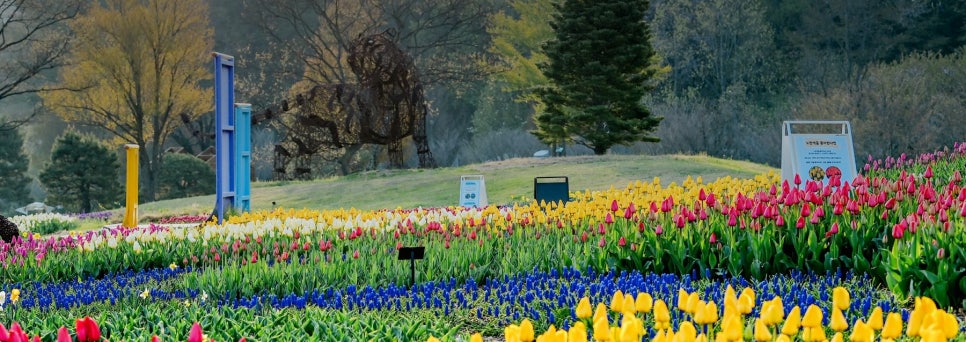
The 2026 Bongja Festival runs at the same arboretum from 1 to 11 October, right through the middle of the exhibition. The name is a contraction of 'Bonghwa native flower festival', and this year's subtitle translates roughly as 'Savouring the world'. Plants of the Elsholtzia genus are displayed on the entrance plaza alongside performances, hands-on activities and a flea market. The part that matters to a visitor is the admission: the arboretum is free to enter for the whole festival. Go between 1 and 11 October and Wildflower Taste costs nothing.
Wildflower Taste and the Bongja Festival compared
- Dates
- Wildflower Taste 19 September – 18 October; Bongja Festival 1 – 11 October
- Character
- Wildflower Taste is a native-plant exhibition; the Bongja Festival is a community event with local growers and artists
- Where
- Wildflower Taste is on Wildflower Hill; the festival covers the entrance plaza and the wider grounds
- Admission
- Wildflower Taste needs a standard ticket; entry is free to all from 1 to 11 October
- Shared closing day
- 6 October falls inside the festival but the arboretum is shut that day

Free entry comes from the festival notice
Both the free entry and the 6 October closure are stated in the arboretum's own notice of 10 August announcing the 2026 Bongja Festival. Festival-only extras such as shuttle buses could not be confirmed on the arboretum's website, so if you are relying on public transport, call +82-54-679-1000 before you set out.
If it rains, there is an indoor show
The weakness of an outdoor exhibition is the weather. A special exhibition called Forest Open Today runs in the second-floor special exhibition room of the visitor centre over the same period — from 22 September 2026 to 30 June 2027, so it covers the whole of Wildflower Taste. It presents the arboretum's work of conserving seeds and recording forests under climate change as a 'forest village' story told through the arboretum's own characters. It is a place to redirect to on a wet day or when the hill is too much walking.

The hill is not the whole site
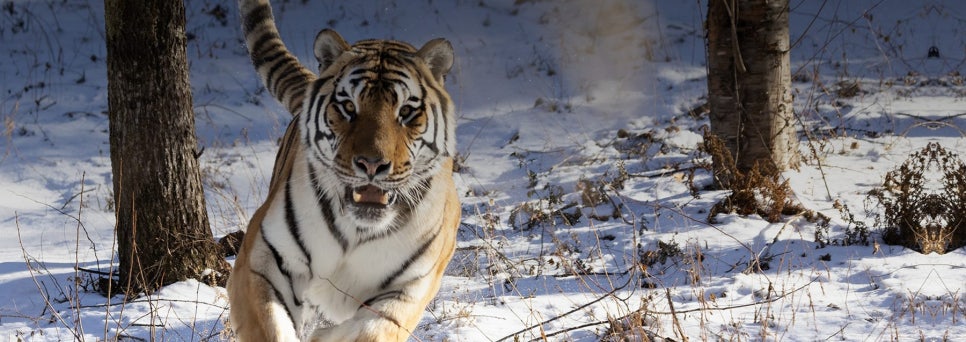
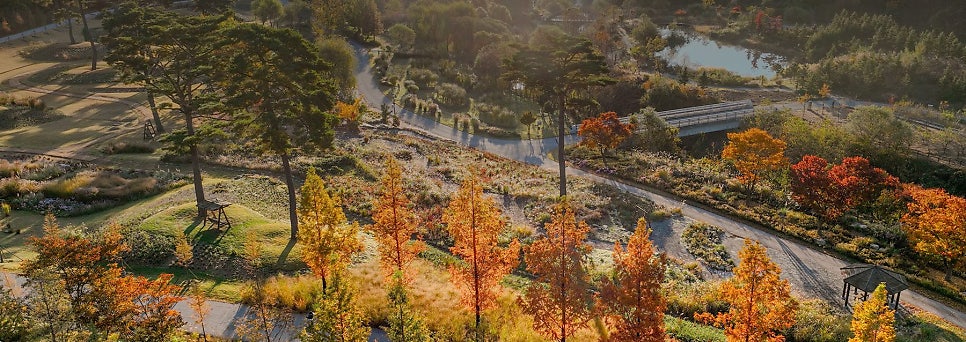
Baekdudaegan National Arboretum occupies one of the largest arboretum sites in Asia, with the visitor centre, display glasshouses, a tiger forest and the entrance-plaza gardens spread widely across it. Seeing only Wildflower Hill leaves half a day unused. The tiger forest, home to Siberian tigers, opens later and closes earlier than the arboretum itself — 10 am to 5 pm in the March-to-October season. If you arrive late in the afternoon, go to the tiger forest first and walk the hill on the way back.


What can be confirmed right now
As of 22 September 2026, Wildflower Taste appears only in the Korea Arboreta and Gardens Institute press release; it has not yet been listed on the arboretum's own exhibition board. Because it is planted outdoors, how much is in flower depends on the weather, so check the arboretum's notices shortly before you travel.
Getting there, and what to expect on the day
Bonghwa is a long way from anywhere. By car it is about three hours from Seoul via Punggi interchange, two from Daegu and four from Busan; the arboretum asks drivers to approach from the Chunyang side rather than Mulya, which is steep and full of tight bends, and the Jusillyeong pass is closed in heavy winter snow. By rail from Seoul, take a train from Seoul or Cheongnyangni station to Yeongju, then a bus on to Chunyang; from Dongdaegu station there are trains directly to Chunyang station. From the Chunyang public bus stop, local bus 51 or 53 reaches the arboretum, and a taxi from Chunyang is the reliable alternative if the bus times do not line up. Allow the better part of a day each way and treat this as an overnight rather than a day trip. On site, expect Korean-language plant labels and signage: nothing about this exhibition has been published in English, the ticketing and visitor-information pages are Korean only, and the institute's English website covers the organisation rather than visiting. Because the exhibition is a planted hillside rather than a display to read, that matters less here than it would in a museum — and because there is nothing to book, the language of the booking system never comes up.
Frequently asked questions
- Q. When does the Wildflower Taste exhibition at Baekdudaegan National Arboretum end?
- It runs from 19 September to 18 October 2026, a month in total, on Wildflower Hill at the arboretum in Bonghwa.
- Q. Is there a separate charge for the exhibition?
- No. The standard arboretum ticket covers it — KRW 5,000 for adults, KRW 4,000 for teenagers and KRW 3,000 for children. Entry is free to everyone from 1 to 11 October during the Bongja Festival.
- Q. Do I need to book in advance?
- No booking is required. Buy a ticket at the visitor centre desk or a self-service kiosk on arrival. Tickets can also be bought online, but that site is in Korean only.
- Q. What are the opening hours and closing days?
- The arboretum opens Tuesday to Sunday from 9 am to 6 pm between March and October, with last admission at 5 pm. During the exhibition it is closed on 25 and 28 September and on 6 and 12 October.
- Q. Which flowers will I see?
- Around 200,000 plants of 15 native species have been planted. Only Tatarian aster and Korean daisy were named in the official announcement; the other thirteen species have not been published.
- Q. Is it worth going if I do not read Korean?
- Yes, with one caveat. This is a planted hillside you walk through rather than a display you read, there is nothing to book, and admission is bought at a desk or kiosk. Plant labels and signage should be assumed to be Korean, and no English guided tour of the exhibition has been announced. The real obstacle is distance, not language: Bonghwa is about three hours from Seoul.
Editor's note · Kang Shin-wook
For a visitor without a car, the hard part of this trip is not the flowers but the schedule: Bonghwa is roughly three hours from Seoul and the arboretum closes on four separate days during the exhibition. This page pulls the closure dates, the admission prices and the route in from three separate Korean pages so you can plan the day in one pass. Other arboreta and gardens are compared in our arboretums guide.
Sources
- Official notice (Korean)
- Baekdudaegan National Arboretum visitor information — hours, closing days and admission (Korean)
- Baekdudaegan National Arboretum notice on the 2026 Bongja Festival, 10 August 2026 (Korean)
- Baekdudaegan National Arboretum special exhibition Forest Open Today (Korean)
- Baekdudaegan National Arboretum directions — road, rail and bus routes (Korean)
Written in our own words from the sources above, never copied from them, and every date and price checked against at least two pages. The originals are in Korean. Spotted a mistake? Ask for a correction.