Exhibition·Daegu National MuseumIn 6 days
Daegu National Museum's Dalgubeol exhibition on Three Kingdoms Daegu — 24 Nov 2026 to 7 Mar 2027
Summary
Daegu National Museum's special exhibition Dalgubeol: A Continuing Homeland, an Unfolding World runs in its special exhibition galleries from 24 November 2026 to 7 March 2027, 104 days in all. It uses finds from the great burial mounds at Dalseong, Guam-dong and elsewhere to show where ancient Daegu, then called Dalgubeol, had its centre and how its people lived about 1,600 years ago. No admission price has been published yet: the museum's rule is that special exhibitions are free unless ticketed. It is closed on Mondays, needs no booking for individuals, and the exhibition page is in Korean only.
Article
In short
- Daegu National Museum's special exhibition on Dalgubeol, the Three Kingdoms-era name for Daegu, runs from Tuesday 24 November 2026 to Sunday 7 March 2027 (104 days) in the special exhibition galleries.
- It draws on excavations of the large burial mounds at Dalseong, Guam-dong and other sites to show where ancient Daegu had its centre and how its people lived.
- No ticket price has been published. The museum's admission rule makes permanent and special exhibitions free, with an exception for ticketed special exhibitions.
- Opening hours are 09:00 to 18:00 (last entry 17:30). The museum is closed on Mondays, 1 January, Lunar New Year's Day and Chuseok Day.
- Individuals walk in without booking; the exhibition information is published in Korean only.
This winter Daegu National Museum gives its whole special exhibition space to Dalgubeol, the name used for the polity that held the Daegu basin in the Three Kingdoms period. The museum's starting point is that Daegu, unlike most of the Yeongnam region, has monumental burial mounds scattered across several sites, and that those mounds mark the centre of the ancient polity. The exhibition gathers what excavations at the Dalseong and Guam-dong mound groups have found so far, and uses archaeology to trace how the people of Daegu lived roughly 1,600 years ago and what they left behind.
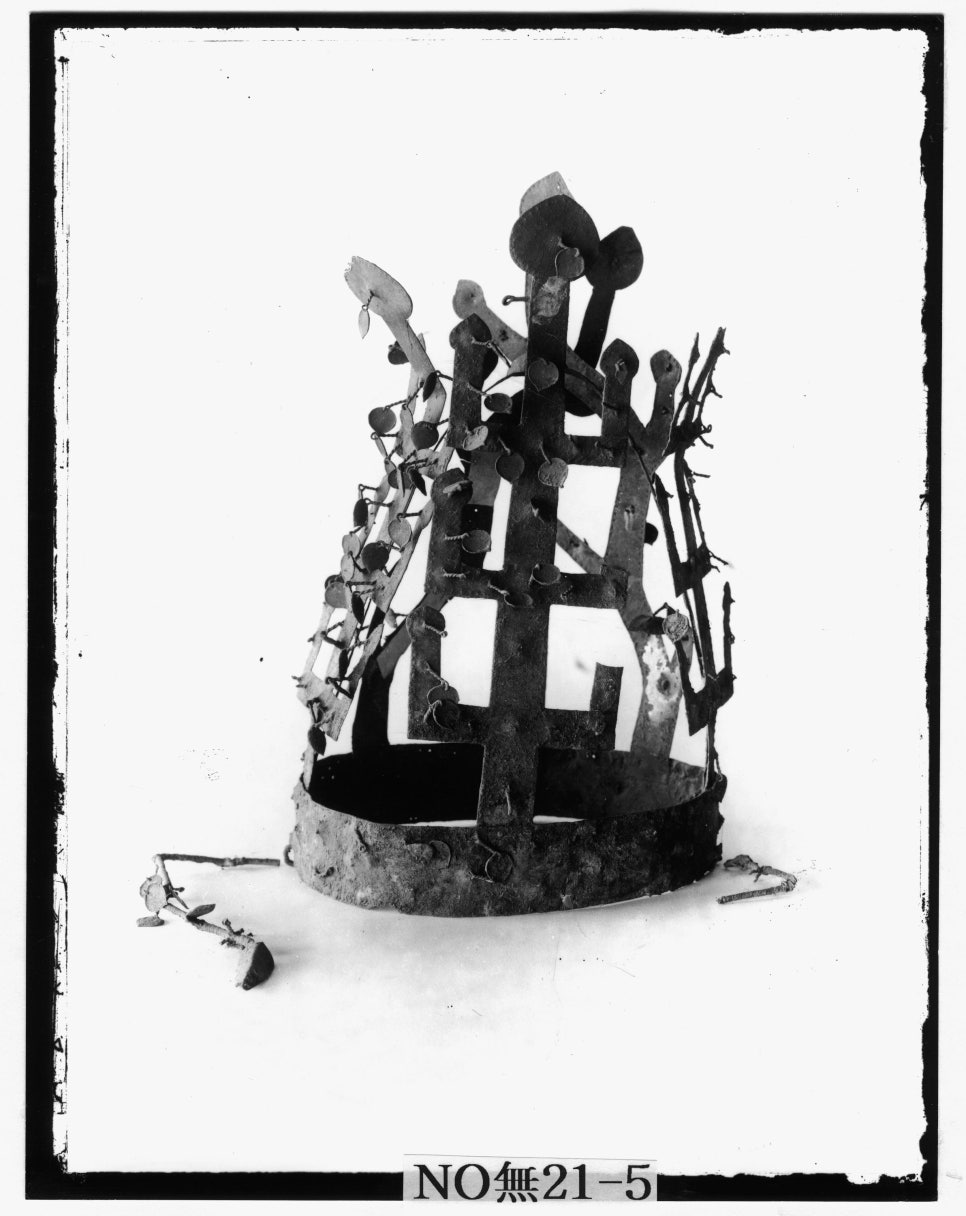
Gilt-bronze crown from stone chamber 1 of tomb 37, Naedang-dong (Dalseong mound group), Daegu. Glass plate negative from the Japanese colonial period (plate 34183)
Photo: National Museum of Korea collection, glass plate negative / e-museum · KOGL Type 1 · Original
What is the Dalgubeol exhibition about?
The Daegu basin is ringed by Palgongsan and Biseulsan mountains, and it is where the Geumho River and the Sincheon stream run into the Nakdong. The museum's press release describes it as a crossroads of river and land routes in the Yeongnam region. In the Three Kingdoms period large mound groups rose at Dalseong, Guam-dong, Bullo-dong and Munsan-ri, and the crowns, swords, horse fittings and pottery from those tombs look set to form the backbone of the exhibition. The museum presents it as a survey of everything excavated to date.
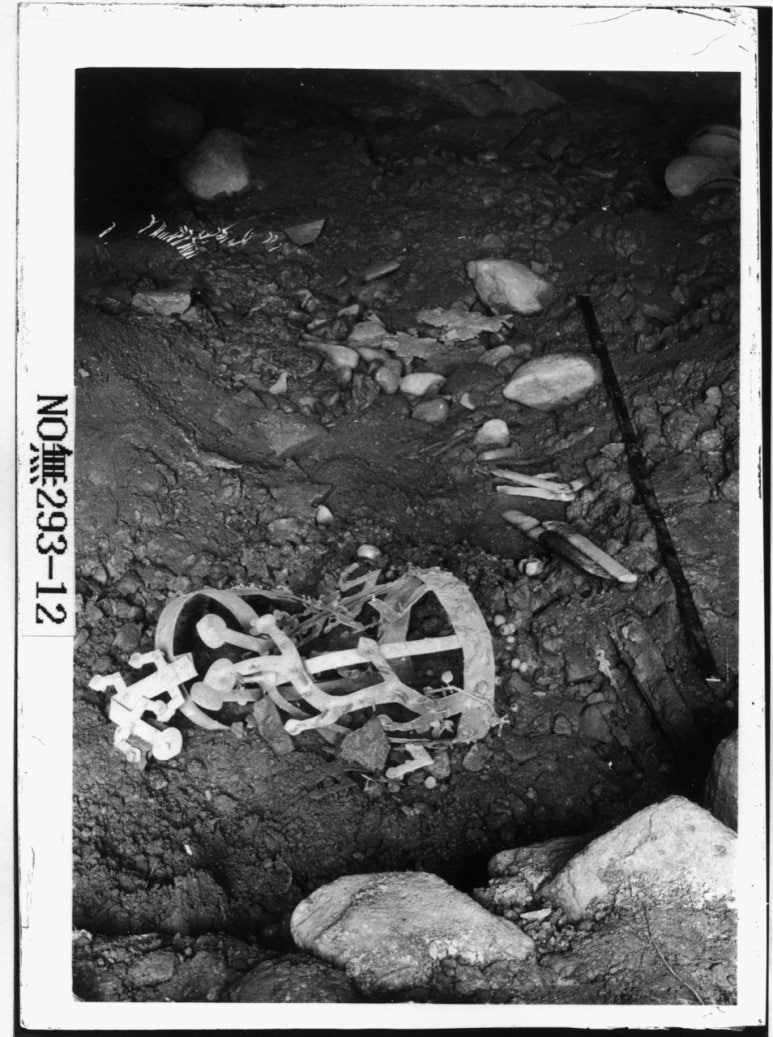
The gilt-bronze crown as found in stone chamber 1 of tomb 37, Naedang-dong (plate 21027)
Photo: National Museum of Korea collection, glass plate negative / e-museum · KOGL Type 1 · Original
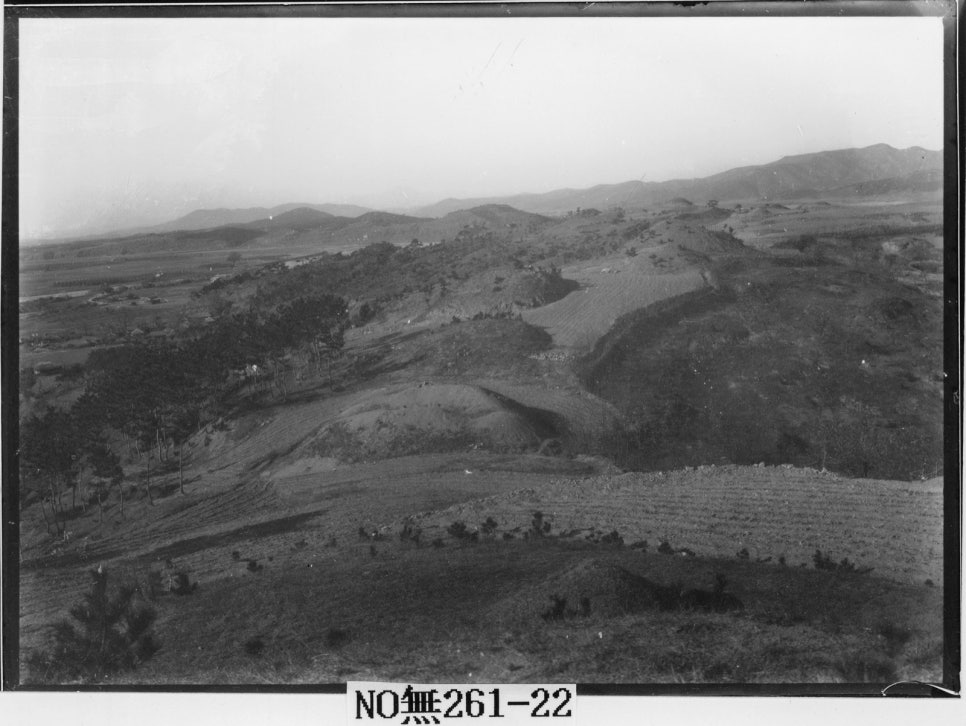
The Bullo-dong mound group in Daegu, photographed in the Japanese colonial period (plate 20697)
Photo: National Museum of Korea collection, glass plate negative / e-museum · KOGL Type 1 · Original
What came out of the pre-opening conference?
On 2 October the museum held a joint conference with the Yeongnam Institute of Cultural Properties, titled The People of Daegu 1,600 Years Ago, and said its findings would feed into the exhibition. The papers listed in the press release fall into four themes. Which objects will actually be on show has not been announced, so read these as a guide to the exhibition's direction rather than a list of exhibits.
- Gilt-bronze crowns and decorated swords — a study dividing the crowns and swords from Dalseong and other mounds into Goguryeo-style, Silla court-style and locally made pieces, suggesting that the owners of the locally made crowns may have held ritual roles.
- Horse equipment — from bits made around the turn of the era to the ornate horse fittings of the fifth and sixth centuries, tracing how Silla and Gaya techniques travelled along the Geumho and Nakdong rivers and how Daegu craftsmen adapted them.
- The Bongmu-dong site — a fifth- to sixth-century logistics hub on the Geumho River with hundreds of storehouse foundations, a stone-paved road and traces of a ferry landing, read as a glimpse of early town planning.
- Food in the tombs and iron production — fish bones and sea snails in vessels and shark bones brought from the coast as offerings for the dead, alongside charcoal kilns, ironworking sites and iron ingots at Geomdan-dong and Bongmu-dong.
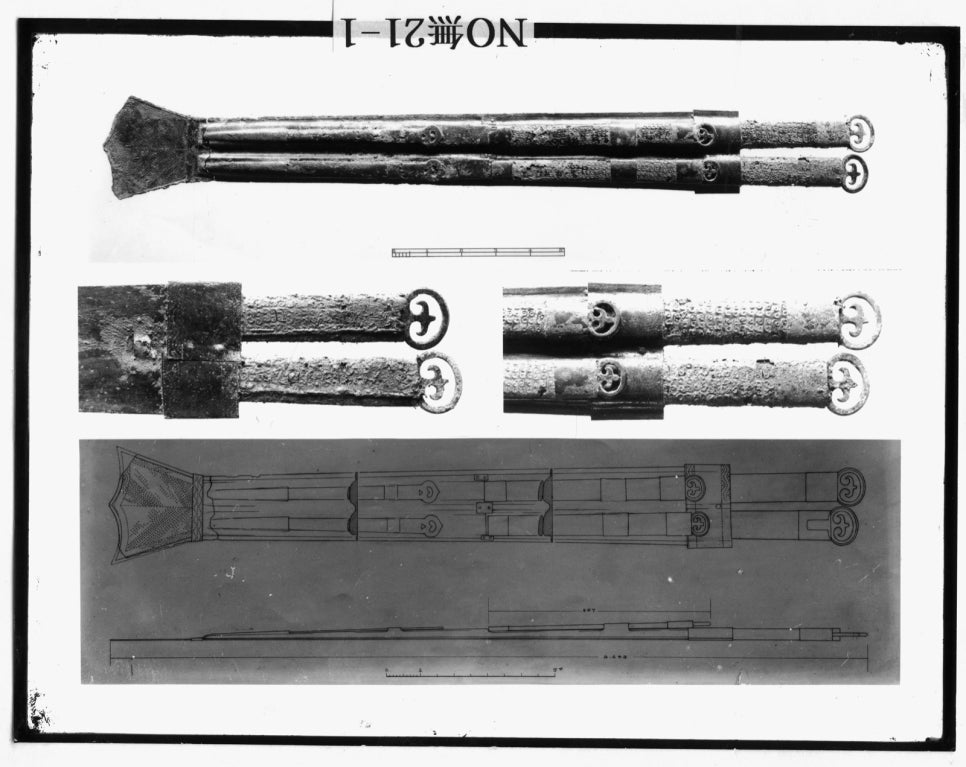
Gilt-bronze decorated ring-pommel sword from tomb 55, Naedang-dong, with its measured drawing (plate 34179)
Photo: National Museum of Korea collection, glass plate negative / e-museum · KOGL Type 1 · Original
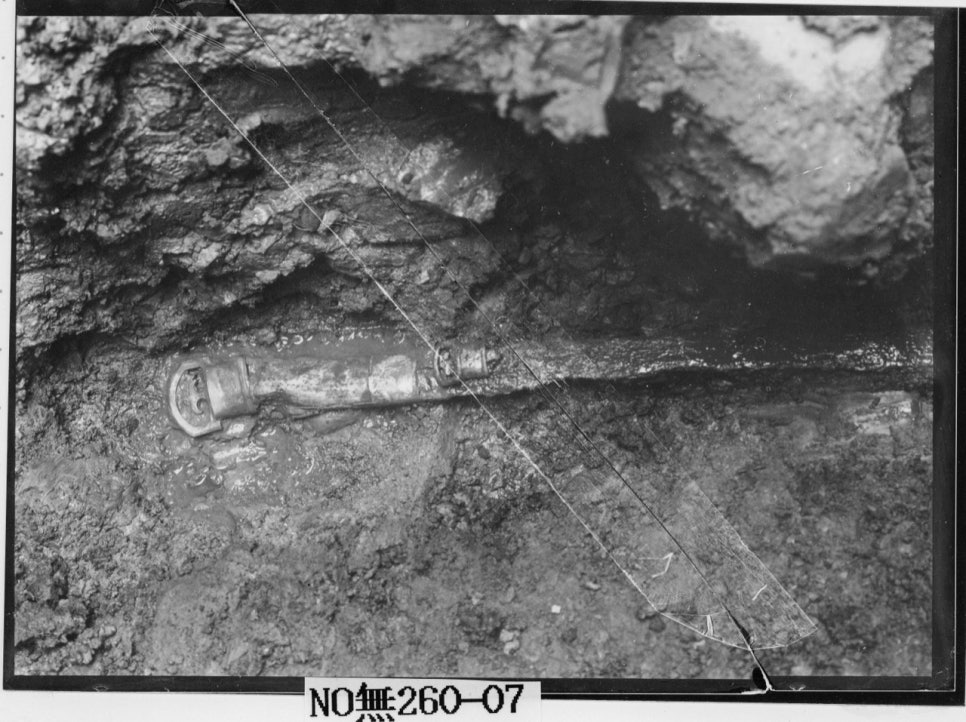
A ring-pommel sword as found in the stone chamber of tomb 7 at the Daemyeong-dong site (plate 38016)
Photo: National Museum of Korea collection, glass plate negative / e-museum · KOGL Type 1 · Original
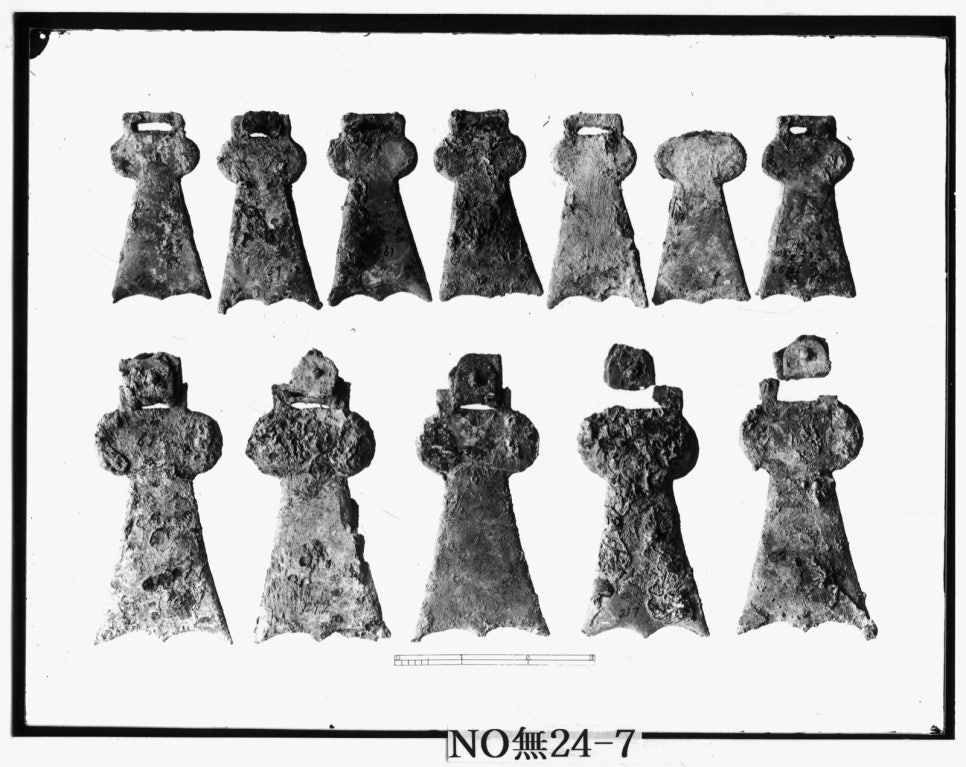
Gilt-bronze horse ornaments (haengyeop) from tomb 55, Naedang-dong (plate 34207)
Photo: National Museum of Korea collection, glass plate negative / e-museum · KOGL Type 1 · Original
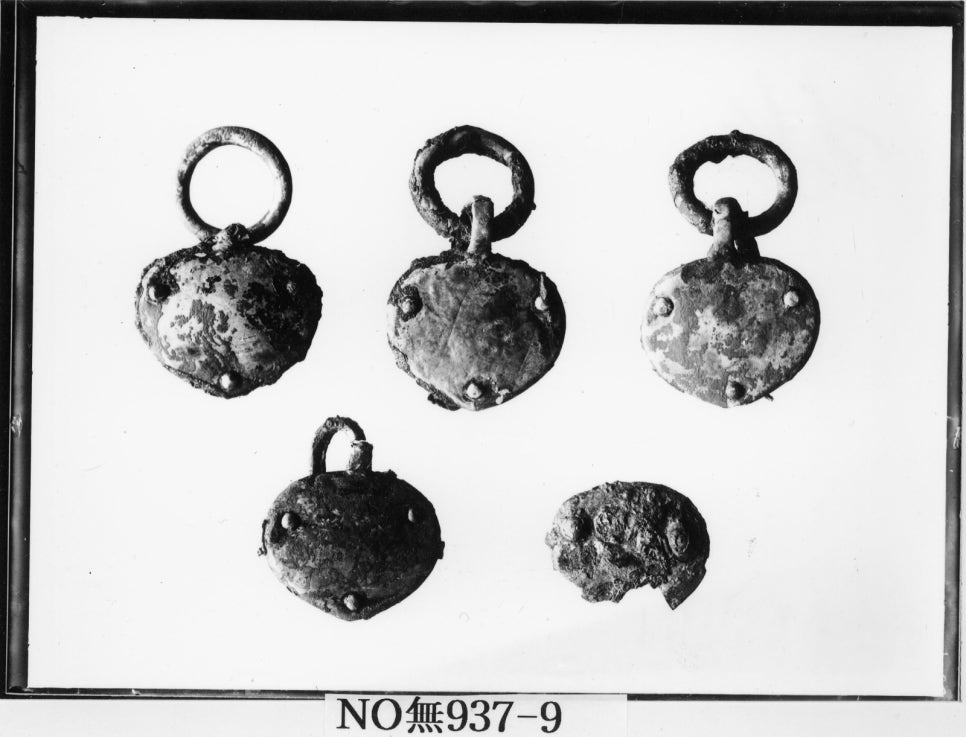
Silver belt ornaments from tomb 65, Naedang-dong (plate 28039)
Photo: National Museum of Korea collection, glass plate negative / e-museum · KOGL Type 1 · Original
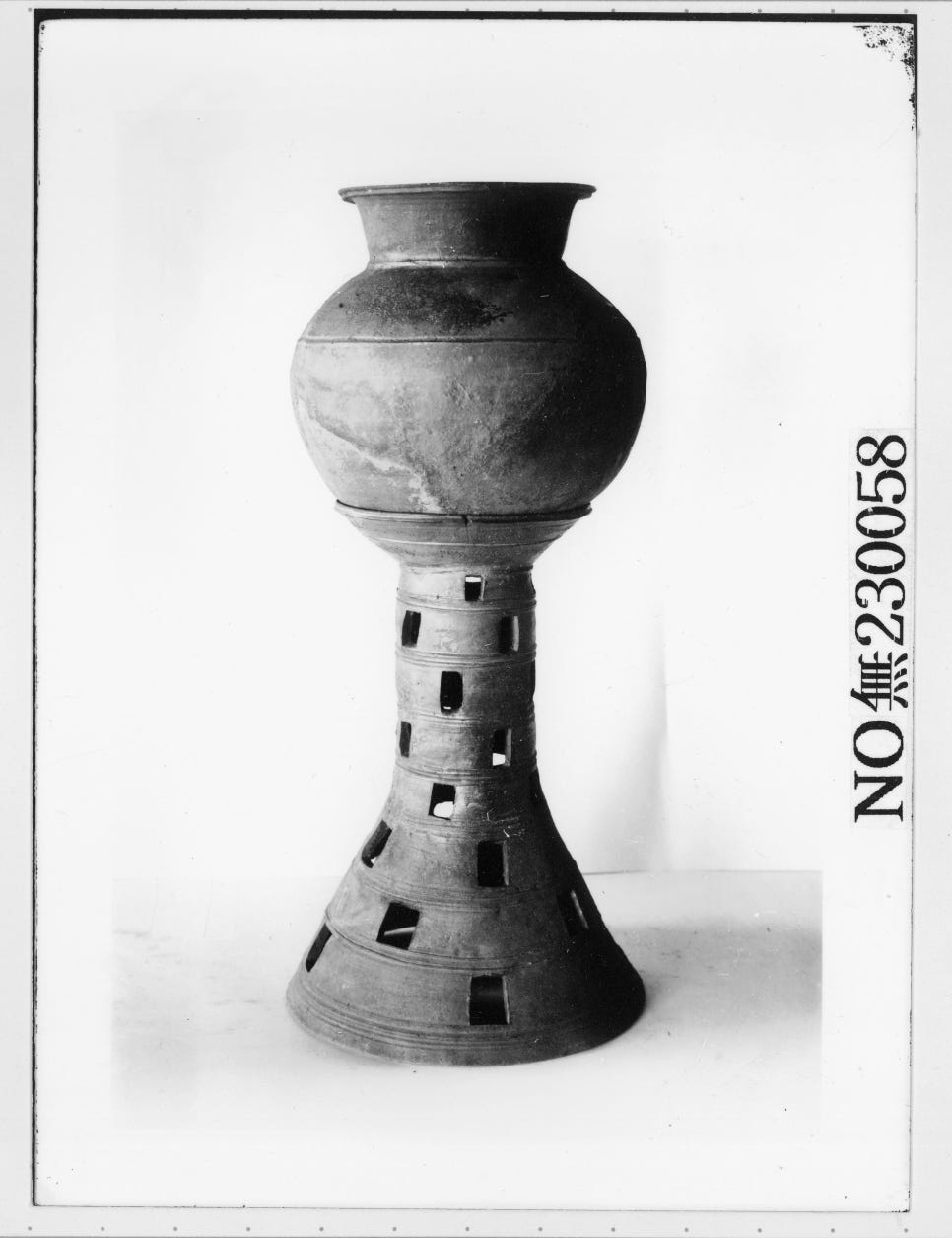
Pottery stand and long-necked jar from stone chamber 2 of tomb 37, Naedang-dong (plate 32547)
Photo: National Museum of Korea collection, glass plate negative / e-museum · KOGL Type 1 · Original
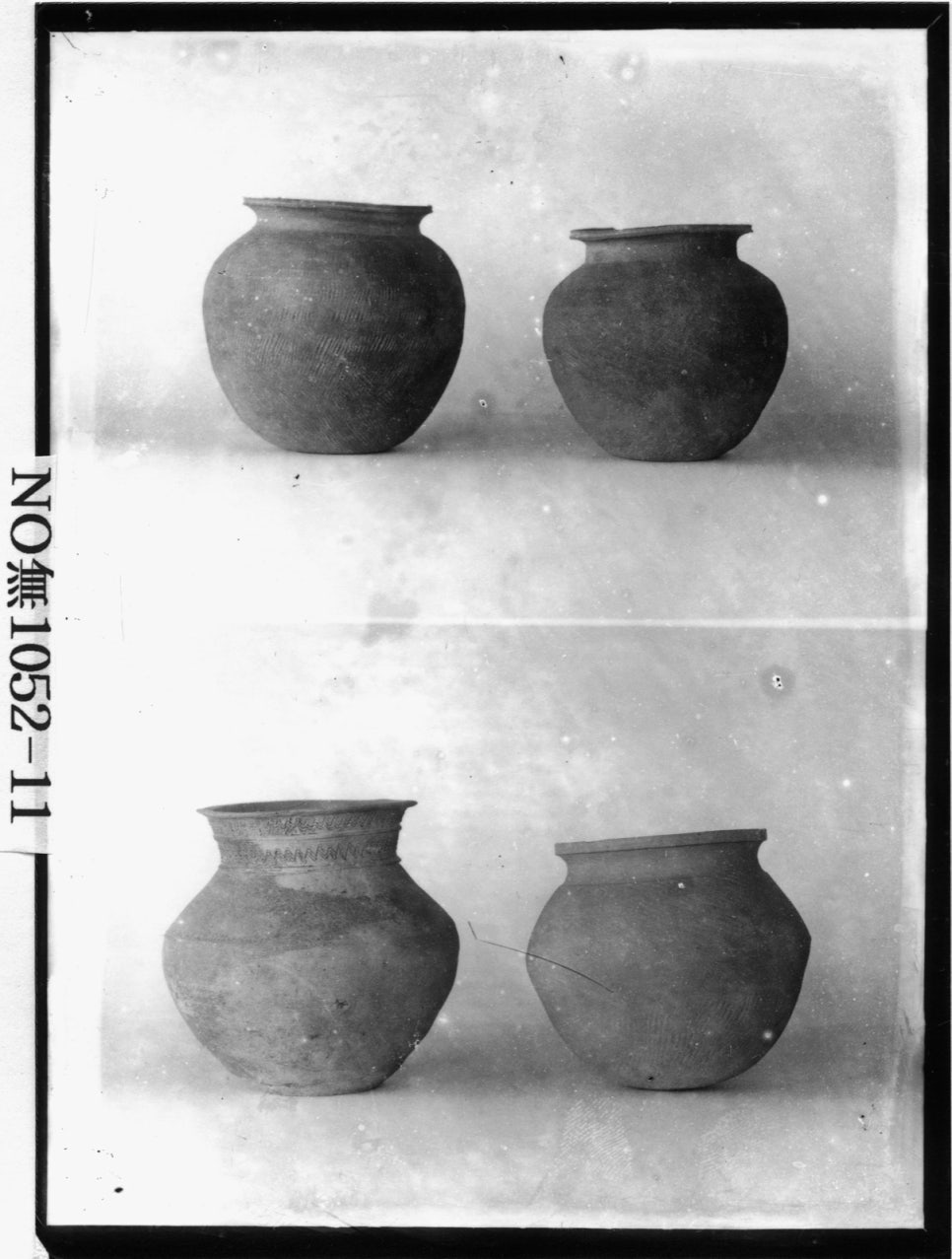
Jars from tomb 34, Naedang-dong (plate 29484)
Photo: National Museum of Korea collection, glass plate negative / e-museum · KOGL Type 1 · Original
These photographs are old records, not exhibits
Every photograph here is a glass plate negative from the Japanese colonial period in the National Museum of Korea's collection, recording finds from the same tombs at the time. Whether these objects will be in the exhibition has not been confirmed. The conference topics come from a single source, the museum's press release of 29 September 2026, so we have kept figures general.
What does it cost, and when is it open?
The exhibition page gives no admission price. Daegu National Museum's admission rule makes permanent and special exhibitions free, except for ticketed special exhibitions. That could change around opening, so do not assume it is free: check the museum's notices or call +82 53-768-6051. Individual visitors walk in without booking; groups book in advance.
Daegu National Museum visitor information (museum admission page)
- Hours
- Weekdays, weekends and holidays 09:00 to 18:00; last entry 30 minutes before closing
- Closed
- Mondays (the next weekday if Monday is a public holiday), 1 January, Lunar New Year's Day, Chuseok Day
- Admission
- Permanent and special exhibitions free; ticketed special exhibitions excepted
- Address
- 321 Cheongho-ro, Suseong-gu, Daegu
The museum warns that entry can close early when it gets busy. No talks or education programmes linked to the exhibition had been announced when we checked. If you are visiting with children at weekends during the winter school holidays, note that the museum's children's museum needs a separate booking.
Getting there, and how much is in English
The museum is in Suseong-gu in south-eastern Daegu, reachable by taxi or city bus from Dongdaegu Station, where KTX and SRT trains from Seoul arrive; it is not at a metro station door, so check the museum's directions page for the last stretch. Entry needs no ticket, booking or phone number, which makes it an easy stop. The language is the catch: the exhibition page and the press release are in Korean only, and English labelling has not been announced, so the objects will do more of the talking than the panels. The museum's English website covers hours and closing days.
Frequently asked questions
- Q. When is the Dalgubeol exhibition at Daegu National Museum?
- From Tuesday 24 November 2026 to Sunday 7 March 2027, 104 days in all, in the museum's special exhibition galleries.
- Q. Is the Dalgubeol exhibition free?
- No price has been published yet. The museum's rule is that special exhibitions are free unless ticketed, so check the museum's notices or call +82 53-768-6051 before you go.
- Q. What does Dalgubeol mean?
- It is the name for the polity that held the Daegu area in the Three Kingdoms period. Daegu National Museum says the city's large burial mounds marked its centre, and that centre is what the name refers to.
- Q. When is Daegu National Museum open?
- 09:00 to 18:00, with last entry 30 minutes before closing. It is closed on Mondays (the next weekday if Monday is a public holiday), 1 January, Lunar New Year's Day and Chuseok Day.
- Q. Is it worth going if I do not read Korean?
- Yes, if you are interested in Silla- and Gaya-era crowns, swords and pottery: entry needs no booking and the objects speak for themselves. Expect little English interpretation, since none has been announced, and read up on the background beforehand.
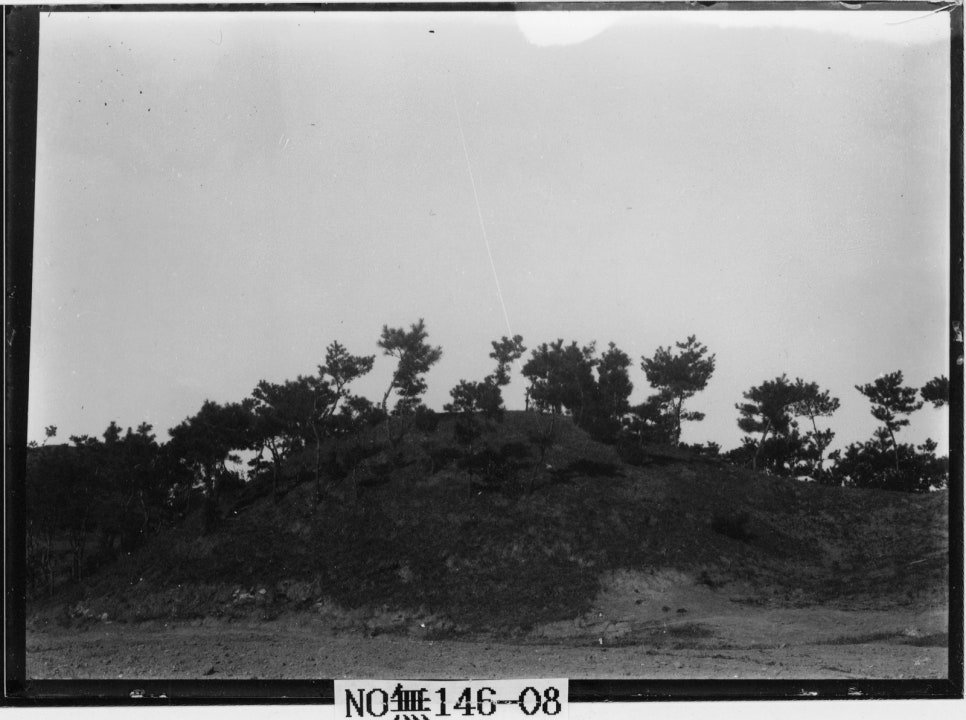
Mound of tomb 2 in the Bullo-dong group, photographed in the Japanese colonial period (plate 19308)
Photo: National Museum of Korea collection, glass plate negative / e-museum · KOGL Type 1 · Original
Editor's note · Kang Shin-wook
For anyone in Daegu this winter, or passing through on the way to Gyeongju, who wants to see the Silla- and Gaya-era world from the other side of the Nakdong River. Free admission and closing days at the other national museums are compared in National museums: free admission and closing days.
Sources
- Official notice (Korean)
- Daegu National Museum: admission and hours (Korean)
- Daegu National Museum: visitor information (English)
Written in our own words from the sources above, never copied from them, and every date and price checked against at least two pages. The originals are in Korean. Spotted a mistake? Ask for a correction.
