Event·National Hangeul MuseumEnded
Hangeul Week 2026 at Gwanghwamun Square — stage, eve-of-Hangeul-Day light show and the 1926 exhibition, 6–17 October
This event has ended. The institution's visiting guide is still current. · What's on
Summary
Korea's Ministry of Culture marks the 100th anniversary of Hangeul Day with Hangeul Week 2026, from Tuesday 6 to Saturday 17 October. The part a visitor can walk into is on Gwanghwamun Square in central Seoul: stage shows, hands-on stalls and a Hangeul design market from 6 to 8 October, then an eve-of-Hangeul-Day ceremony at 7pm on the 8th that ends by switching on Twenty-Four, Universe, a projection show on Gwanghwamun Gate. The National Hangeul Museum's centenary exhibition 1926: Infinite Takeoff runs to 9 February 2027 in the free National Museum of Korean Contemporary History beside the square. Nothing needs booking or a Korean phone number; the stage programme is in Korean, the market, the light show and the exhibition's interactive rooms are not.
Article
In short
- Hangeul Week 2026 runs from Tuesday 6 to Saturday 17 October, but the festival on Gwanghwamun Square in Seoul lasts only three days, 6 to 8 October.
- The eve-of-Hangeul-Day ceremony is on Thursday 8 October from 7:00 to 8:00pm on the square's north stage, and its last act switches on Twenty-Four, Universe, a projection show on Gwanghwamun Gate that is then scheduled nightly from 8 to 11 October, 8:00–11:00pm.
- The National Hangeul Museum's centenary exhibition 1926: Infinite Takeoff runs from 2 October 2026 to 9 February 2027 on the third floor of the National Museum of Korean Contemporary History, beside the square. The museum is free and stays open to 9pm on Wednesdays and Saturdays.
- The Hangeul design market (Hangeul Culture Industry Fair) is open 6–8 October, noon to 8pm, on the square's south section, selling stationery, furniture, lighting and other Hangeul-themed goods.
- No admission price or booking has been published for the square events and nothing requires a Korean phone number; the stage shows are in Korean, the market, light show and the exhibition's interactive rooms are not.
In 1926, on the eighth sixty-year cycle since the alphabet was promulgated, the first commemoration of what was then called Gagya Day was held in Seoul; this year is its centenary. The Ministry of Culture, Sports and Tourism has folded that anniversary and the 580th anniversary of the promulgation of the Hunminjeongeum into Hangeul Week 2026 under the theme Hangeul by My Side. Of the twelve days, the stage and the stalls stand on Gwanghwamun Square only from 6 to 8 October; after that the week continues as an exhibition and as regional events across the country. This article sets out, from official sources, which day to go where and what you will find.
When and where is each part of Hangeul Week?
Several quite different events overlap in the same week, so the dates and places come first. Within Gwanghwamun Square the stage is on Yukjo Madang, the northern section nearest the gate, while the hands-on stalls and the design market are on Nori Madang, the southern section. Coming out of Gwanghwamun Station (Line 5) you reach Nori Madang first; Gyeongbokgung Station (Line 3) brings you in at the Yukjo Madang end.
Hangeul Week 2026 main schedule (from the ministry press release, the Hangeul Week website and the National Hangeul Museum's notice)
- Hangeul Hanmadang stalls and displays
- Tue 6 – Thu 8 Oct, 12:00–20:00 · Gwanghwamun Square, Nori Madang (south)
- Stage performances
- Tue 6 – Wed 7 Oct, 12:00–20:00 · Gwanghwamun Square, Yukjo Madang (north)
- Hangeul Culture Industry Fair (design market)
- Tue 6 – Thu 8 Oct, 12:00–20:00 · Gwanghwamun Square, Nori Madang (south)
- Eve-of-Hangeul-Day ceremony
- Thu 8 Oct, 19:00–20:00 · Gwanghwamun Square, Yukjo Madang
- Projection show Twenty-Four, Universe
- Thu 8 – Sun 11 Oct, 20:00–23:00 · walls of Gwanghwamun Gate (press-release timing)
- National Hangeul Museum stalls on Hangeul Day
- Fri 9 Oct, 12:00–18:00 · outdoor plaza of the National Museum of Korea, Yongsan (by the Mirror Pond)
- Centenary academic conference
- Mon 12 Oct · National Museum of Korea (in Korean)
- Exhibition 1926: Infinite Takeoff
- Fri 2 Oct 2026 – Tue 9 Feb 2027 · National Museum of Korean Contemporary History, 3rd floor
What is on at the Gwanghwamun festival?
The stage runs for two days only, the 6th and the 7th. The timetable below is the one posted on the official Hangeul Week website. The two musicals swap slots between the two days, so a single afternoon is enough to see both. Everything on stage is performed in Korean without surtitles.
- Tuesday 6 October — 12:00 musical Beside Me, You in a Dopo Robe (King Sejong lands in present-day Gwanghwamun just before promulgating the alphabet) · 14:00 Hangeul storytelling session with Kim Aran · 16:30 musical Gat-geul, the Newborn Letters (Sejong and his daughter Princess Jeongui) · 19:00 poetry-and-song concert Read, Walk, Sing
- Wednesday 7 October — 12:00 Gat-geul · 14:00 Hangeul culture performance with Olltii & Woo Yerin and Blackhood · 16:30 Beside Me, You in a Dopo Robe · 18:30 band Yangbans · 19:30 band Far East Asia Tigers
The stalls on Nori Madang run all three days to the 8th. The ministry counts about twenty hands-on spaces, and the ones run directly by the National Hangeul Museum stand out. There are craft tables — printing a page of the Hunminjeongeum on a letterpress, a Hangeul lamp you decorate with paint pens and light up, a mother-of-pearl norigae pendant built from Hangeul letters, and a tote bag you colour in from a Hunminjeongeum design — and digital ones: Ask King Sejong, an AI version of the king who answers questions, Spelling Detectives, a timed hunt for wrong spellings, and Floating Hangeul 1446, which sends a letter you make back to the year the alphabet was created. Around them, run by civic groups and agencies, are a children's playground built from reclaimed timber, a calligraphy display with brush-writing tables, a Hangeul garden of ceramic planters and letter sculptures, and a stall where you can register a Hangeul-script internet domain. The craft tables work with pointing and watching; the AI and spelling games are in Korean.
How does the 8 October eve ceremony and Twenty-Four, Universe run?
At 7pm on the evening before Hangeul Day, the Yukjo Madang stage hosts a one-hour ceremony. Combining the running order in the ministry's press release with the one on the Hangeul Week website gives the sequence below. Both sources carry a note that the details may change.
Eve-of-Hangeul-Day ceremony running order (8 October, 19:00–20:00, Gwanghwamun Square Yukjo Madang)
- 19:00
- Opening performance — K-pop group At Heart sings A Piece of My Heart (from the National Hangeul Museum's project setting the 1728 song anthology Cheongguyeongeon to K-pop)
- 19:10
- Opening ceremony — 100 lights switched on for the 100th anniversary of Hangeul Day
- 19:15
- Short film on the hundred years of Hangeul Day, 1926 to 2026
- 19:17
- Celebration set — indie band Broccoli, You Too
- 19:30
- Foreign students of the King Sejong Institute talk about what Hangeul means to them
- 19:40
- Readings by speakers of different generations while a calligrapher writes Hangeul by My Side with a giant brush
- 19:50
- First showing of the projection Twenty-Four, Universe on Gwanghwamun Gate, then close
Twenty-Four, Universe is a media-facade projection that uses the outer wall of the Gwanghwamun gatehouse as its screen. In the ministry's description, the twenty-four Korean consonants and vowels emerge from ink-black darkness, become constellations, spread into mountains, water and living things, and finally merge with the painted dancheong pattern of the gate into a single name. After its first showing at the ceremony it is scheduled to run every evening from 8 to 11 October between 8pm and 11pm.
Check the projection times before you go
The 8–11 October, 8pm–11pm schedule appears only in the ministry press release and the government policy site that reproduced it; the official Hangeul Week website lists only the 19:50 premiere on the 8th. It is an outdoor projection and no wet-weather policy has been announced. If you are going on the 9th, 10th or 11th just for the show, check the Hangeul Week website or call the organising office (+82-2-797-8761, Korean) before setting out.
Where and until when can I see the exhibition 1926: Infinite Takeoff?
The National Hangeul Museum's own building in Yongsan has been closed since a fire in 2025 and stays shut until the second half of 2028, so this exhibition borrows the third-floor gallery of the National Museum of Korean Contemporary History, the building on the east side of Gwanghwamun Square. It is co-organised by the National Hangeul Museum, the host museum, the Korean Language Society and the King Sejong Memorial Society, and runs from 2 October 2026 to 9 February 2027 — four more months after Hangeul Week ends. It brings together 116 items (121 pieces) connected with Hangeul Day and with Gagya, the alphabet's old nickname, in three parts.
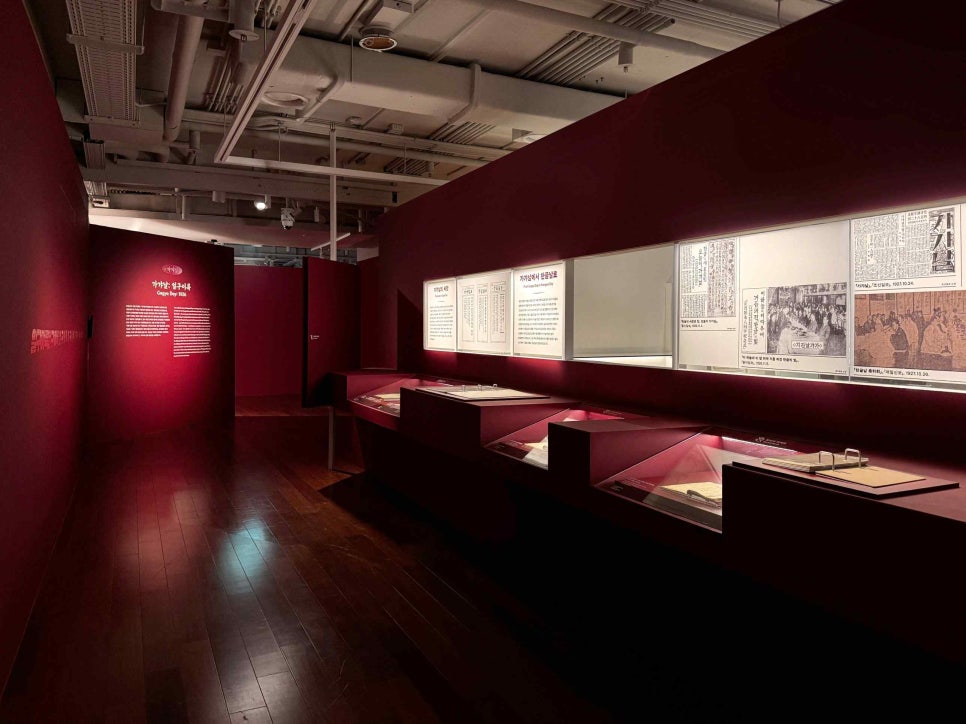
Part 1, Gagya Day: 1926 begins with the 1910s campaign to commemorate the alphabet's creation and the first ceremony of 1926, then follows the day's uneven path: a public holiday after liberation, dropped from the holiday list for a time, then made a national day and restored as a holiday. A light-table activity here, Shining Hangeul Day, has you hunt for the date on old calendars.
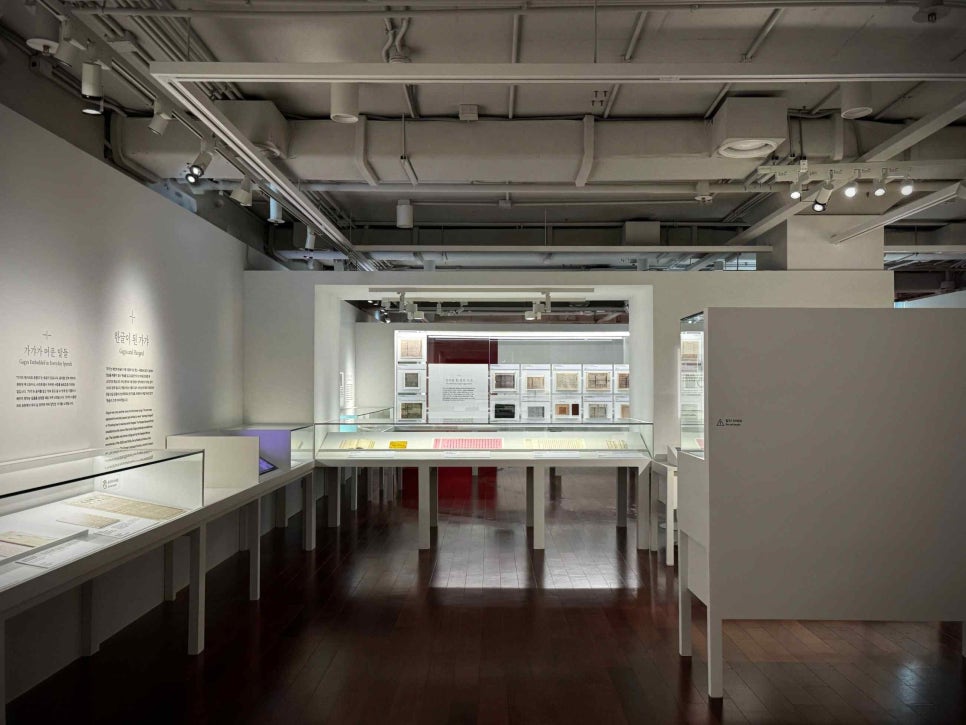
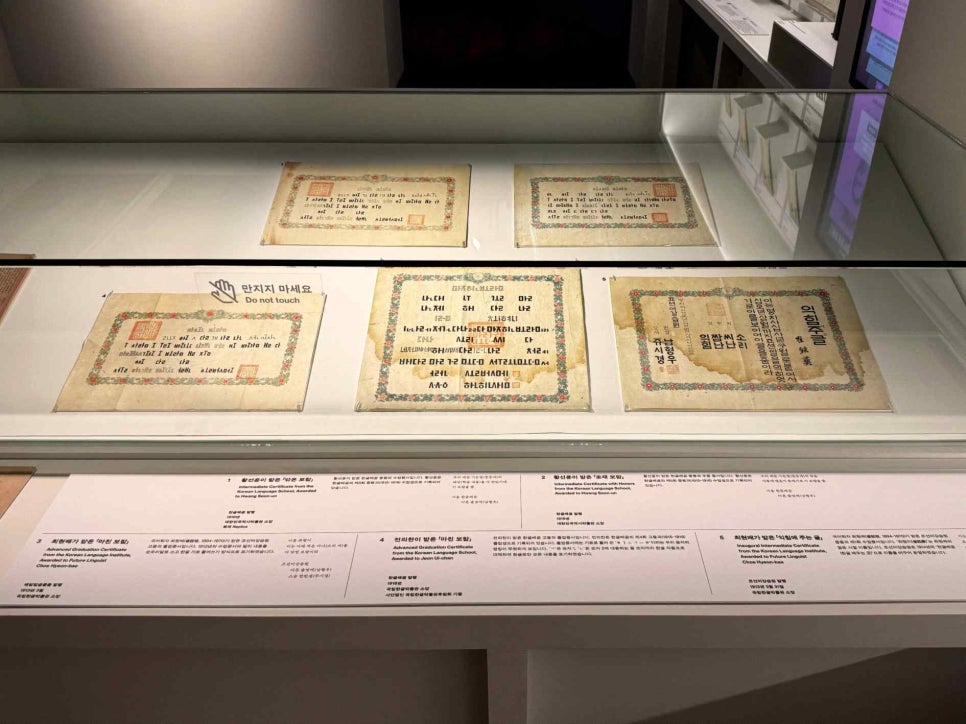
Part 2, Familiar Clues to Gagya starts from the fact that the nickname Gagya comes from the syllable charts that laid the alphabet out in the order ga, gya, geo, gyeo and so on. Charts held by Korean institutions and by the National Library of France are shown together with a woodblock used to print them, alongside the Malmoi manuscript (a Treasure, shown as a facsimile), the first attempt at a Korean dictionary by the linguist Ju Si-gyeong and his students; the manuscript of the Great Dictionary of the Korean Language (a Treasure, lent by the Korean Language Society), seized by the Japanese colonial police and found at Seoul Station just after liberation; and a facsimile of the earliest document in which the name Hangeul appears.
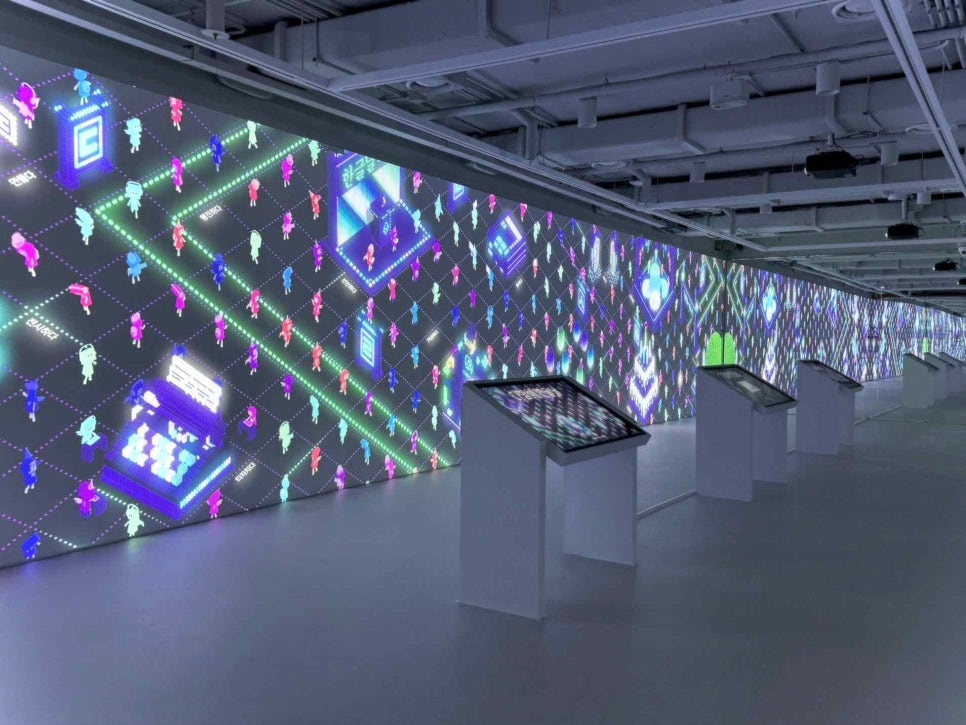
Part 3, Hangeul Day: Infinite Takeoff is more a room to take part in than to look at. In Hangeul Day Together you browse a hundred years of Hangeul Day footage, photographs and newspaper cuttings by theme or year, or build a character and drop it into a Hangeul Day festival of your own. In To the Future Hangeul Will Reach you pick a Korean word to send to someone in the future and a date up to a hundred years ahead, and a large language model writes back on the spot with what Hangeul might look like then. Braille guides, a braille floor plan and sign-language videos are installed, and an online VR version of the exhibition is planned on the museum's website. This is the part that works best without Korean: the archive is visual and the AI room is about playing with letters.
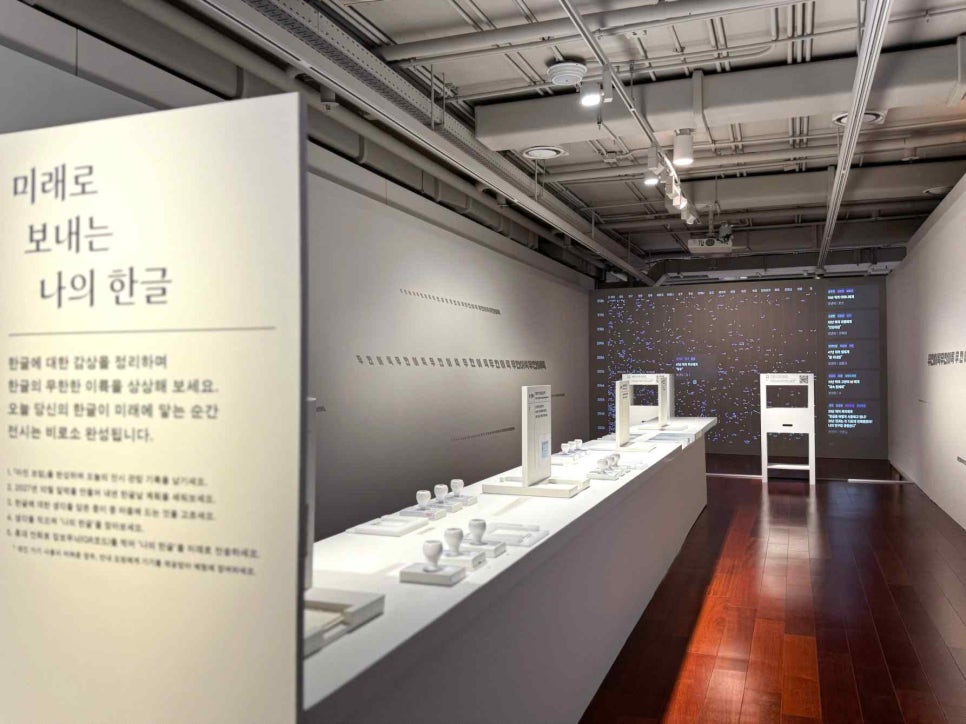
Opening hours follow the host museum: 10am to 6pm on Monday, Tuesday, Thursday, Friday and Sunday, 10am to 9pm on Wednesday and Saturday, with last entry 30 minutes before closing. It is closed on 1 January and on 7 February 2027 (the Lunar New Year day), and the museum charges no admission. Guided tours of the exhibition are offered only to groups of 10 to 30 people on Wednesdays and Fridays, requested by e-mail (hangeul@korea.kr) in Korean; on Hangeul Day, 9 October, the curators give a special talk whose time is announced on the National Hangeul Museum's social media, also in Korean. There is no car park, so come by subway.
What can I buy and see at the Hangeul design market?
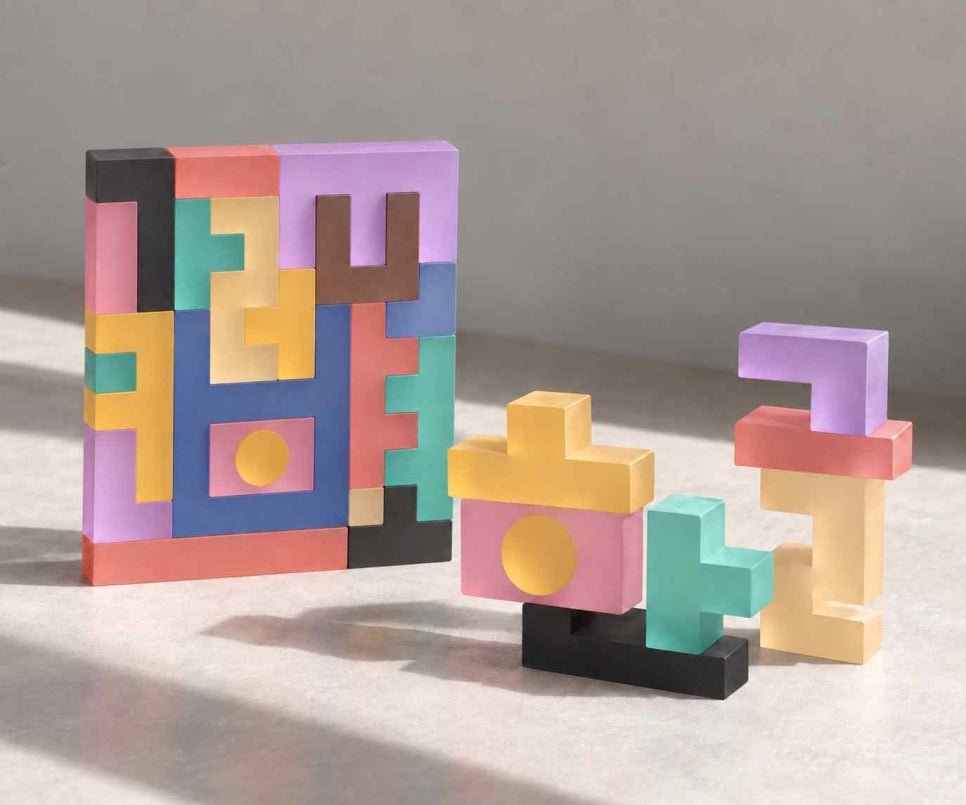
On the same three days and the same southern section of the square, the National Hangeul Museum hosts the Hangeul Culture Industry Fair 2026, run for it by the Sejong City Culture and Tourism Foundation. It shows the goods developed under the museum's Hangeul products and content scheme and, for the first time this year, sells them. The two themes are the Hunminjeongeum, the 1446 text that introduced the alphabet, and the Cheongguyeongeon, a 1728 anthology of Korean-language song lyrics compiled by Kim Cheon-taek that the museum holds and that is designated a Treasure. For a visitor this is the easiest place on the square to spend money and come away with something: the stallholders are small design brands and the goods explain themselves.
- Centrepiece display — a media-art piece built from the graphics of the Cheongguyeongeon, plus the K-pop track A Piece of My Heart and the video A Night When Words Shine made from its lyrics, both first shown this year at KCON LA and at the DDP Seoul Light autumn show
- Goods on display and for sale — stationery, furniture, lighting, bedding and food and drink with Hangeul designs, arranged as a living-room-style showroom, with each maker's sales stall and a promotional stall for the Deohangeul brand
- Hangeul Industry Business Centre — a meeting space for buyers and the participating firms, a showcase of AI and big-data applications of Hangeul, and talks by industry specialists (in Korean)
- Hands-on — make a Hangeul garment, find your personality type from Cheongguyeongeon lyrics, and gift giveaways
What happens on Hangeul Day itself, and outside Seoul?
On Hangeul Day, Friday 9 October, the Gwanghwamun stage is gone. The National Hangeul Museum's stalls move to the outdoor plaza of the National Museum of Korea in Yongsan (by the Mirror Pond, Ichon Station on Line 4 and the Gyeongui-Jungang line) and run from noon to 6pm: the letterpress, the lamp, the norigae pendant, the tote bag and the spelling game all travel with them. From 2 to 11 October a separate set of Hangeul Day activities runs on the lawn of the former officers' housing block 5 in Yongsan Park, near Seobinggo Station. The nationwide events listed in the ministry press release are below; all are conducted in Korean.
- National Museum of World Writing Systems (Songdo, Incheon) — the exhibition From Dots to the World: 100 Years of Hunmaengjeongeum, on the Korean braille system, opens 7 October and runs to 14 February 2027 according to the museum's website; co-organised with the National Hangeul Museum
- National Museum of World Writing Systems — Hangeul Day festival Hangeul, Simply Good on 9 October, with a Seoul Performing Arts Company show and hands-on stalls
- Centenary academic conference, A Hundred Years of Hangeul Day: Crossing Boundaries, Opening the Future of Korean — 12 October at the National Museum of Korea; no public registration details
- National Institute of Korean Language — the national argumentative writing contest, online heats in October with a final at the National Museum of Korea
- Sejong City — the Sejong Hangeul Festival and the Hangeul Run, around the Hangeul Day holiday at Sejong Lake Park and Central Park (check the organiser for dates)
- Seoul Metropolitan Government — Seoul Buzzing with Hangeul on 9 October on Gwanghwamun Square's south section, with hat-making and a music stage
- Ulsan — Oesol Hangeul Hanmadang at the Oesol Memorial Hall on 9 October
- The 22 regional Korean-language culture centres — essay, calligraphy and handwritten-letter competitions and local activities
Where the sources disagree
The ministry press release gives the end of the braille exhibition at the National Museum of World Writing Systems as January 2027, but the museum's own exhibition list shows 7 October 2026 to 14 February 2027. We have followed the museum. The Hangeul Week website's stage timetable and the ministry's attachment also differ by about half an hour on the evening band slots of 7 October, so follow the signage on the day.
What to check before you go
- Admission and booking: none of the official material mentions a price or a reservation for the Gwanghwamun events, and none says they are free either, so expect to check on the spot whether any stall charges. The National Museum of Korean Contemporary History, where the exhibition is, charges nothing.
- Dates: the stalls and the market run three days, 6–8 October; the stage only two, the 6th and 7th. On the 9th the museum's stalls are at the National Museum of Korea in Yongsan, not on the square.
- Times: everything on the square starts at noon. There is nothing to see in the morning.
- Ceremony and projection: the running order and times come from the press release and may change, and no wet-weather policy for the outdoor projection has been announced.
- Transport: Gwanghwamun Station on Line 5 and Gyeongbokgung Station on Line 3 are the nearest stations. Neither the National Museum of Korean Contemporary History (three minutes from Gwanghwamun Station exit 2) nor the exhibition has parking.
Getting there, and how much works without Korean
Gwanghwamun Square is the long plaza running south from Gwanghwamun Gate, the front gate of Gyeongbokgung Palace, in the middle of Seoul. Gwanghwamun Station on Line 5 opens onto its southern end; Gyeongbokgung Station on Line 3 puts you at the northern end by the gate. From Incheon Airport take the AREX to Gongdeok and change to Line 5; from Gimpo Airport, Line 5 runs straight through with no change. Station signs and the square's own wayfinding are in English, and the National Museum of Korean Contemporary History has an English website and bilingual permanent galleries. The Hangeul Week website itself is Korean-only. On the square, the musicals, concerts and the eve ceremony are in Korean; the one moment written for foreign visitors is the 7:30pm segment when King Sejong Institute students from abroad speak about the alphabet. The design market, the craft stalls and the projection show need no language at all, and in the exhibition the archive room and the AI room in Part 3 can be used with little or no Korean, while the document-heavy Parts 1 and 2 are written Korean-first — the museum has not published what is captioned in English, so treat the labels as a bonus rather than a given. Nothing in this week requires a booking, a Korean phone number or a Korean-only form; the market stalls are ordinary retail.
Frequently asked questions
- Q. When is Hangeul Week 2026?
- From Tuesday 6 to Saturday 17 October 2026, twelve days in all. The festival on Gwanghwamun Square in Seoul, with the stage and the stalls, is only 6 to 8 October; the rest of the period is the exhibition and regional events across the country. Hangeul Day itself, a public holiday, is Friday 9 October.
- Q. What time and where is the eve-of-Hangeul-Day ceremony?
- Thursday 8 October, 7:00 to 8:00pm, on the Yukjo Madang stage at the northern end of Gwanghwamun Square. It opens with the K-pop group At Heart, lights 100 lamps for the centenary, continues with the band Broccoli, You Too and readings by King Sejong Institute students and Seoul residents, and at about 7:50pm switches on the projection Twenty-Four, Universe on Gwanghwamun Gate. The running order may change.
- Q. Can I see the Gwanghwamun projection Twenty-Four, Universe on another night?
- According to the ministry press release it runs nightly from 8 to 11 October between 8pm and 11pm. Those times do not appear on the official Hangeul Week website and no wet-weather policy has been announced, so if you are travelling for the show alone, confirm with the organising office before you go.
- Q. Is Hangeul Week free? Do I need to book?
- Neither the ministry press release, the Hangeul Week website nor the National Hangeul Museum's notices mention an admission price or a reservation for the Gwanghwamun events, and none states that they are free, so check on the spot. The exhibition 1926: Infinite Takeoff is at the National Museum of Korean Contemporary History, which charges no admission and needs no booking. Nothing in the week asks for a Korean phone number.
- Q. Where is the exhibition 1926: Infinite Takeoff and how long does it run?
- On the third floor of the National Museum of Korean Contemporary History on Gwanghwamun Square, because the National Hangeul Museum's own building is closed until 2028. It runs from 2 October 2026 to 9 February 2027, open to 6pm on Monday, Tuesday, Thursday, Friday and Sunday and to 9pm on Wednesday and Saturday, closed on 1 January and on 7 February 2027 for the Lunar New Year.
- Q. Is it worth going if I do not read Korean?
- Yes for the square on 6–8 October and for the eve ceremony: the market, the craft stalls, the atmosphere and the projection on the gate are visual, the ceremony is short and ends with the light show, and the museum next door is free and bilingual. Skip the musicals and the concerts unless you want the music alone, as they are in Korean without surtitles. The exhibition is rewarding in Part 3, whose archive and AI rooms are interactive, but Parts 1 and 2 are document-led and written Korean-first, so give it 30 to 40 minutes rather than an afternoon.
Editor's note · Kang Shin-wook
Written for visitors who will be in Seoul over the Hangeul Day holiday (9 October) and want to know what is actually happening on Gwanghwamun Square and which parts work without Korean, and for Korean speakers who want the schedule in one table. The exhibition venue is covered in our National Museum of Korean Contemporary History visiting guide.
Sources
- Official notice (Korean)
- Hangeul Week 2026 official website — stage timetable (Korean)
- National Hangeul Museum — exhibition page for 1926: Infinite Takeoff (Korean)
- National Hangeul Museum press release — exhibition 1926: Infinite Takeoff, 1 October 2026 (Korean)
- National Hangeul Museum press release — centenary events in October, 2 October 2026 (Korean)
- National Hangeul Museum notice — Hangeul Hanmadang and Hangeul Day stalls, 29 September 2026 (Korean)
- National Museum of Korean Contemporary History — hours and admission (Korean)
- National Museum of Korean Contemporary History — English site
- National Museum of World Writing Systems — special exhibition list with the braille exhibition dates (Korean)
- Korea Policy Briefing — centenary of Hangeul Day, cultural events announced, 2 October 2026 (Korean)
Written in our own words from the sources above, never copied from them, and every date and price checked against at least two pages. The originals are in Korean. Spotted a mistake? Ask for a correction.