Programme·Royal Palaces and Tombs CenterIn 4 daysFree
Gyeongbokgung incense burners regain their lids — November talks full
Summary
Gyeongbokgung Palace is holding four free Saturday lectures in Heungbokjeon Hall on 7, 14, 21 and 28 November 2026, 2–4 pm, but all 30 places per session were taken by 1 November and the talks are given in Korean. What any visitor can still see is their subject: the pair of bronze incense burners beside Geunjeongjeon, the throne hall, which have carried reproduction dragon lids since 24 December 2025 and are on permanent view with ordinary palace admission (KRW 3,000, free in hanbok). Booking the lectures needs Korean identity verification, so for most visitors the burners are the reason to go.
Article
In short
- The 2026 Heungbokjeon Royal Culture Academy is four free lectures in Heungbokjeon Hall, Gyeongbokgung Palace, on Saturdays 7, 14, 21 and 28 November, 2–4 pm; palace admission is paid separately.
- Each session took 30 people, first come first served online from 19 October; as of 1 November all four were fully booked, and there is no walk-in or phone sign-up.
- Three of the four talks are about the incense burners beside Geunjeongjeon, the throne hall. Since 24 December 2025 they have carried reproduction lids made by a master iron caster and are on permanent view to anyone inside the palace, no booking needed.
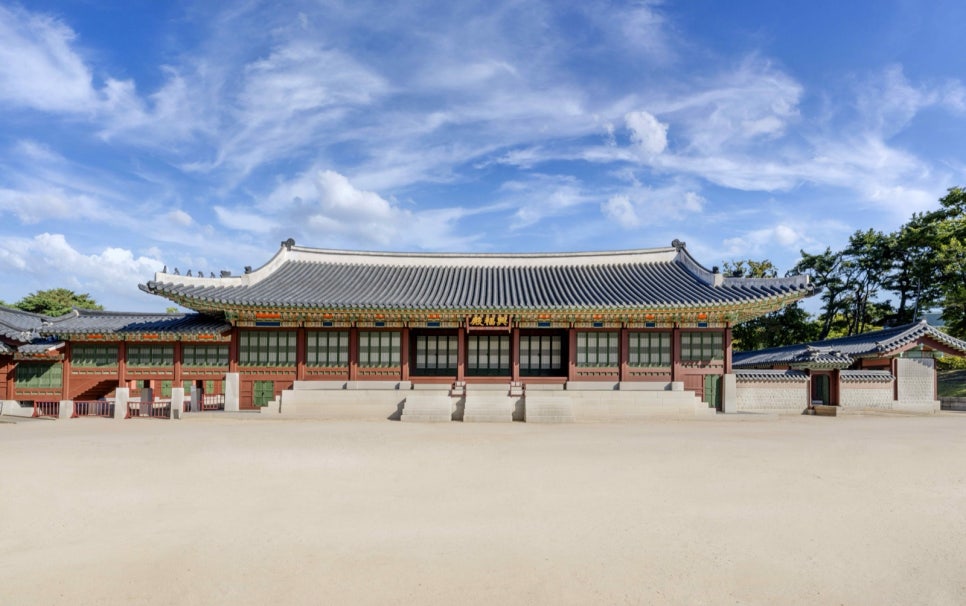
- Heungbokjeon was built in 1867, pulled down for timber to rebuild Changdeokgung after its 1917 fire, and rebuilt between 2015 and 2018; the lectures return to it this year after it was painted.
- For a visitor who reads no Korean: the lectures are in Korean and booking needs Korean identity verification, but the burners and the newly painted hall are both open to see with an ordinary ticket.
The Heungbokjeon Royal Culture Academy is an annual series of expert talks run by the office that manages Gyeongbokgung Palace. In 2026 it runs on four Saturdays in November — the first time it has moved off a weekday — and it is also the series' return after a pause while Heungbokjeon was being painted. Sign-up has closed, but the two things the lectures are about, the throne-hall incense burners and the newly painted hall, can both be seen on an ordinary palace visit, so this piece covers both.
When are the 2026 Heungbokjeon lectures, and what do they cover?
The programme splits in two. The first session is given by Lee Man-hee, a writer who worked at the palaces and has published a book on them, tracing spaces inside Gyeongbokgung that no longer exist through old plans such as the Bukgwoldohyeong. The other three start from the Geunjeongjeon incense burners and narrow down: incense burners across East Asia, then those of the Joseon and Korean Empire palaces, then the incense itself used in royal ritual. The third speaker led the research for the project that reproduced the lids.
2026 Heungbokjeon Royal Culture Academy sessions (all 2:00–4:00 pm)
- Session 1 · Sat 7 Nov
- The secrets of the palace nobody tells you — Lee Man-hee, writer
- Session 2 · Sat 14 Nov
- The world of East Asian incense burners — Lee Yong-jin, professor of art history, Dongguk University graduate school
- Session 3 · Sat 21 Nov
- Palaces and incense burners of Joseon and the Korean Empire — Chang Kyung-hee, former professor of conservation, Hanseo University
- Session 4 · Sat 28 Nov
- Joseon royal culture through incense — Ha Su-min, PhD, Korea National University of Cultural Heritage
Availability is shown only on the reservation site
On 1 November the palace authority's integrated reservation site showed all four sessions as fully booked. No re-release of cancellations has been announced, and the official notice says there is no walk-in or phone sign-up. Places were one per person after identity verification. Whether a seat comes free can only be checked on the reservation site's event bookings page.
What is Heungbokjeon Hall?
Heungbokjeon stands in the northern, residential part of Gyeongbokgung, close to the Hyangwonjeong pavilion. It has only been standing again for a few years, so even people who know the palace well often do not recognise it. Its history in brief:
- Built in 1867 (the fourth year of King Gojong) when Gyeongbokgung was rebuilt, it was used in the later 1880s to receive foreign ministers, consuls and senior officials.
- It was pulled down to supply material for rebuilding Changdeokgung after that palace burned in 1917, and a Japanese-style garden was laid out on the site.
- Between September 2015 and December 2018 the hall and its east, west and north wings — four buildings — were rebuilt.
- After restoration it served as a lecture space, then had its dancheong paintwork applied; the 2026 series is the first held in the painted hall.
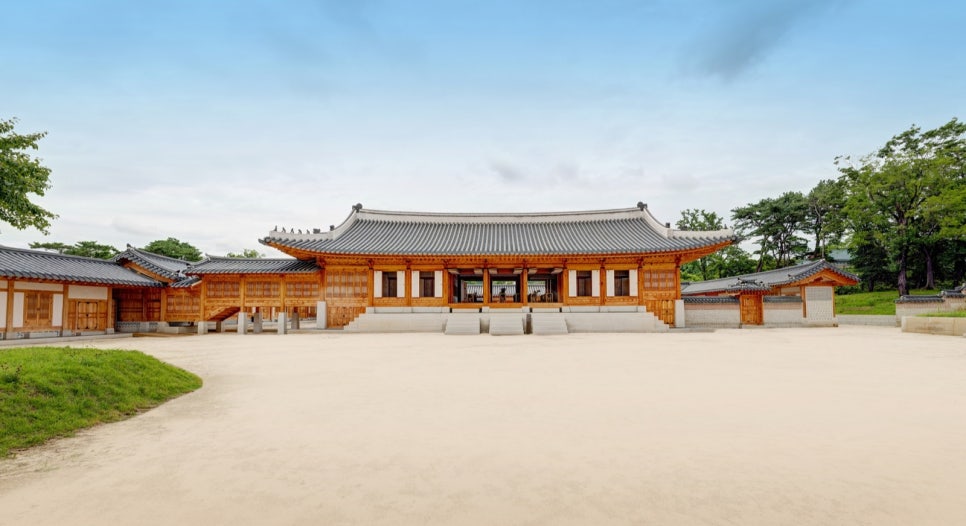
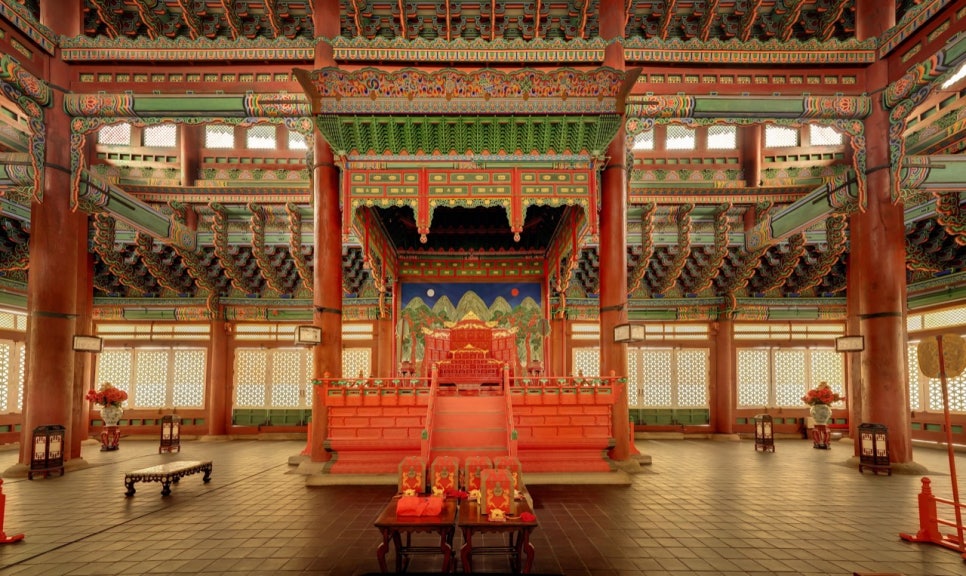
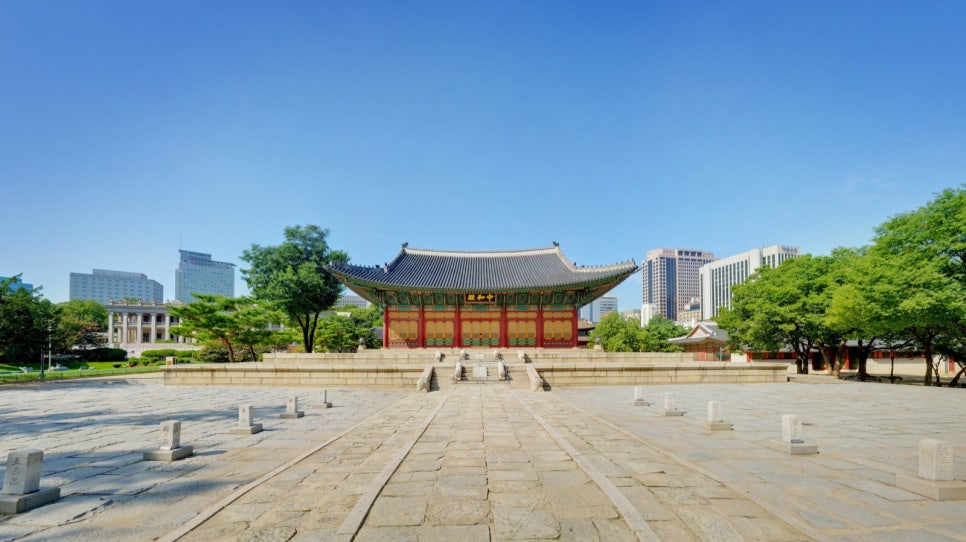
Straight after restoration Heungbokjeon was left in bare, unpainted timber. The photo above shows it then; the photo at the top shows it after painting, as it appeared in the 2026 press release. Seeing it in person, you can judge how much the paintwork alone changes the building.
Why did the lectures move from Wednesday to Saturday?
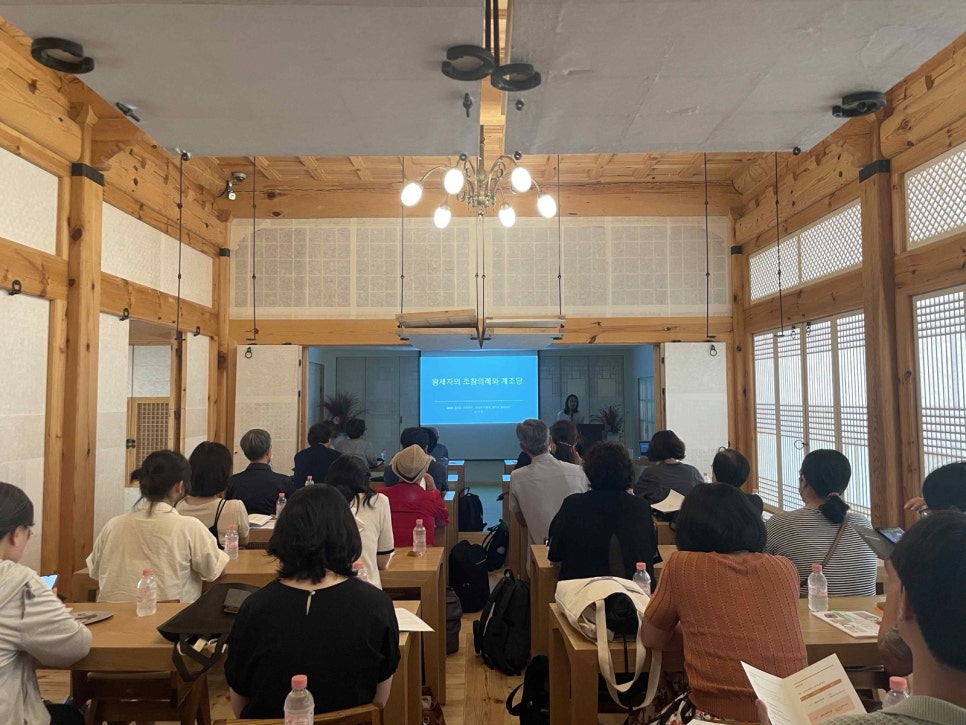
The management office says it moved this year's series from a weekday to the weekend so that more people could take part. Compared with the two previous series we could confirm, the day is not the only change: the number of places and the way they are allocated changed too. With first-come booking instead of a ballot, the opening afternoon matters far more.
Heungbokjeon Royal Culture Academy by year (from official press releases)
- 2023
- 14 Jun – 5 Jul, Wednesdays 2 pm, 4 sessions · 25 per session by ballot · theme: the eldest legitimate son's road to the throne
- 2024
- 1–29 May, Wednesdays 2 pm, 5 sessions · 25 per session by ballot · theme: the Grand Queen Dowager, the most senior royal
- 2026
- 7–28 Nov, Saturdays 2 pm, 4 sessions · 30 per session, first come first served · themes: the palace's lost spaces and the Geunjeongjeon incense burners
Where are the Geunjeongjeon incense burners, and how do you see them?
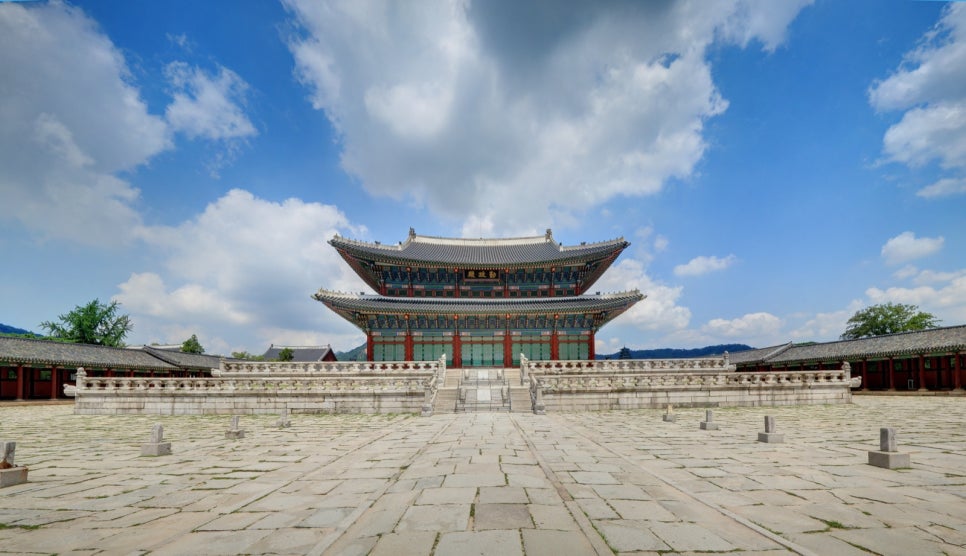
Two bronze incense burners of identical size and shape stand either side of Geunjeongjeon, the throne hall. For decades only their bodies survived; the Korea Heritage Service has fitted them with reproduction lids and put them on permanent view since 24 December 2025. There is nothing to book and no extra charge — once inside the palace, walk through Geunjeongmun gate and they are in front of you.
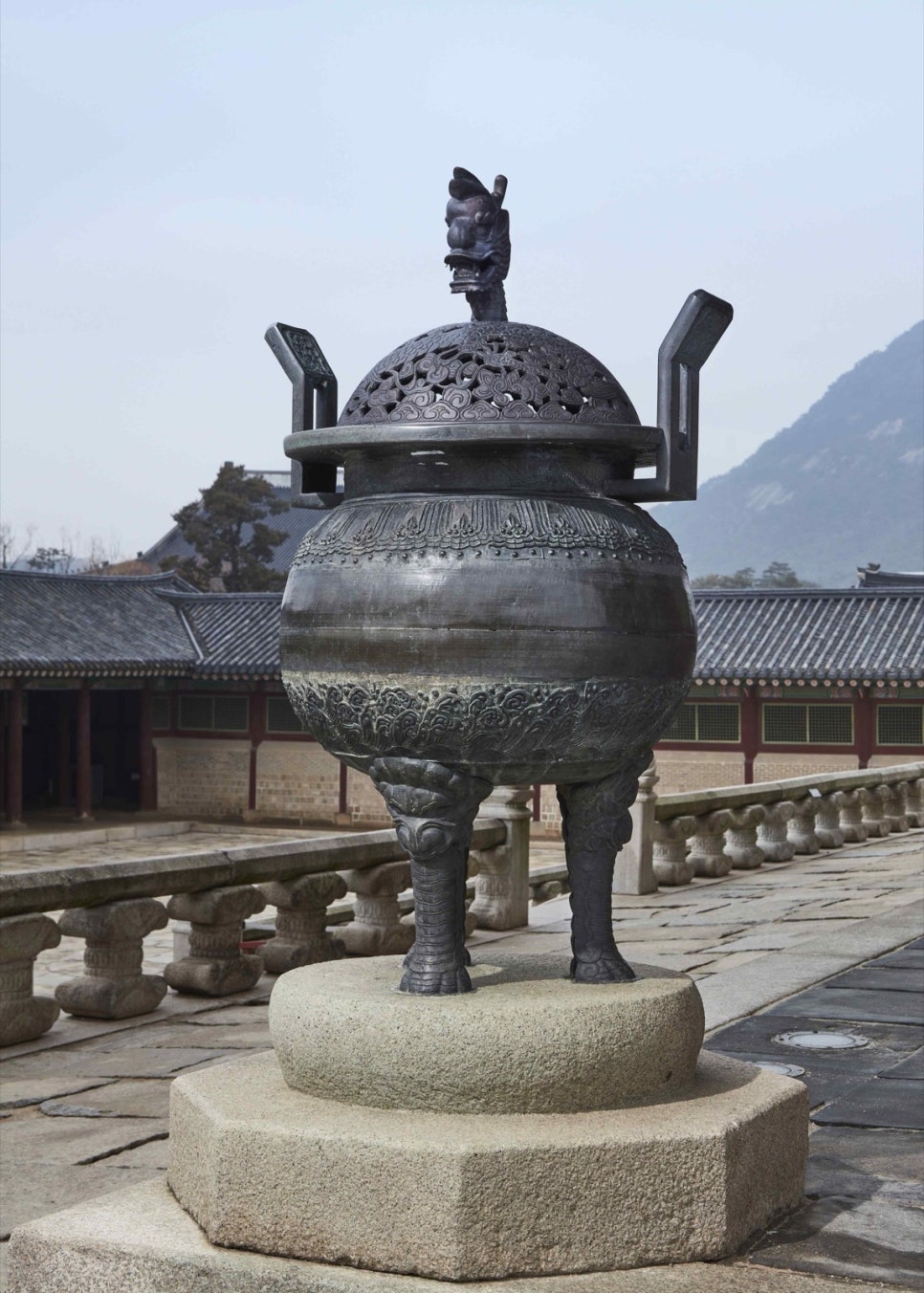
- See them as a pair — there is one on the east side of Geunjeongjeon and an identical one on the west. Do not stop at the first.
- The body — a cauldron (ding) shape with two handles and three legs, fixed onto a stone base.
- The lid — modelled on a dragon, and made by Won Gwang-sik, a holder of the National Intangible Heritage title for iron casting, with his trainee Won Cheon-su.
- When the lids went — photographs from the Japanese colonial period already show their whereabouts uncertain, and the Korea Heritage Service estimates both were lost between 1961 and 1962.
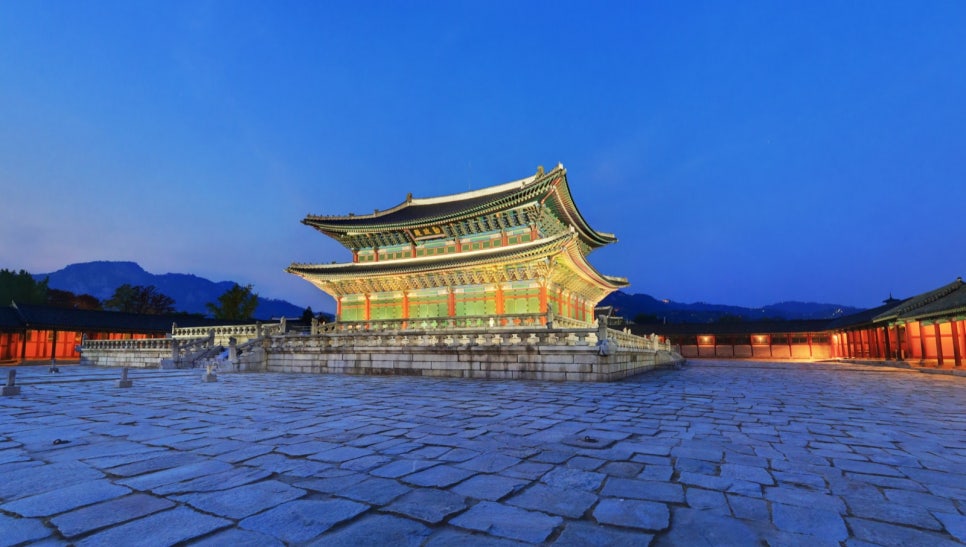
According to the Korea Heritage Service, the burners were made in 1866, when Gyeongbokgung was being rebuilt, by melting down a great bell cast in 1457 that had hung west of Gwanghwamun gate. The heritage service describes them as a visible statement of royal authority, placed in pairs in front of the hall where state ceremonies were held — which is also why the stone-paved courtyard and the rank stones in front of Geunjeongjeon are laid out as they are.
What do you see if you add Deoksugung's Junghwajeon?
The third lecture compares the burners in front of two throne halls: Gyeongbokgung, the main palace of Joseon, and Deoksugung, the main palace of the Korean Empire. Without the lecture you can still put the two palaces into one day and compare for yourself how similar burners were placed in front of each. The two are within walking distance of each other along Sejong-daero from Gwanghwamun.
What we left out
Claims that large fixed incense burners exist only at Gyeongbokgung and Deoksugung, and descriptions of a surviving Deoksugung lid or of smoke rising through the dragon, circulate widely online, but we could not find them in the Korea Heritage Service's own material, so they are not repeated here.
Missed the booking? What you can still do
- Watch for cancellations — check the Heungbokjeon sessions under event bookings for Gyeongbokgung on the integrated reservation site. No re-release has been announced.
- Go for the burners alone — they can be seen any time the palace is open. Gyeongbokgung closes on Tuesdays and, from November to February, shuts at 5 pm, with last entry an hour earlier.
- If you did book — check-in opens at 1:40 pm in front of Heungbokjeon, where you show the KakaoTalk confirmation. Nobody is admitted once a talk is five minutes in, and no food or drink, including beverages, may be brought in.
- Contact — Gyeongbokgung Palace Management Office, +82-2-3700-3900 (Korean).
The lectures are a 30-seat room, but everything they talk about is inside Gyeongbokgung. The freshly painted Heungbokjeon and a pair of burners with their lids back are both new sights at the palace this autumn, and both fit easily into a late-autumn walk round the grounds.
Getting there, and what is in English
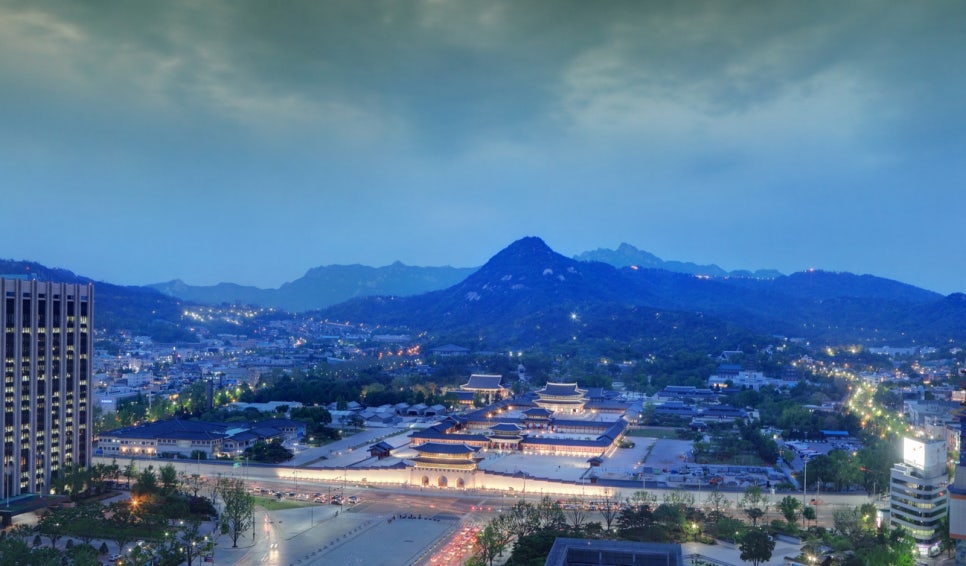
Take Seoul Subway Line 3 to Gyeongbokgung Station; the palace entrance is a short walk from the station, and Gwanghwamun gate is the main way in from Sejong-daero. Geunjeongjeon is straight ahead after the first two gates. Heungbokjeon is further north, in the residential quarter near the Hyangwonjeong pavilion pond — allow ten minutes' walk inside the grounds. Admission is KRW 3,000 for ages 25 to 64 and free for anyone 24 or under, 65 or over, or wearing hanbok; the palace is closed on Tuesdays. The palace authority publishes admission, hours and the hanbok rule in English, but the lecture notice and reservation pages are in Korean only, and the booking requires Korean identity verification, which generally means a Korean mobile number. Deoksugung, for the comparison, is at City Hall Station (Lines 1 and 2) and is open until 9 pm, closing on Mondays.
Frequently asked questions
- Q. Can I still sign up for the Heungbokjeon Royal Culture Academy?
- As of 1 November 2026 all four sessions — 7, 14, 21 and 28 November — were fully booked. No cancellation release has been announced, and there is no walk-in or phone sign-up, so the only option is to check the palace authority's integrated reservation site.
- Q. How much does the Heungbokjeon lecture cost?
- The lecture itself is free, but it is held inside Gyeongbokgung, so palace admission is paid separately: KRW 3,000 for ages 25 to 64, free for ages 24 and under, 65 and over, or anyone wearing hanbok.
- Q. When can I see the Geunjeongjeon incense burner lids?
- Since 24 December 2025 the two incense burners beside Geunjeongjeon have carried reproduction lids made by a master iron caster, and they are on permanent view. Anyone inside Gyeongbokgung can see them without booking.
- Q. What is Heungbokjeon Hall at Gyeongbokgung?
- A hall built in 1867 when Gyeongbokgung was rebuilt, used in the later 1880s to receive foreign envoys and officials. It was pulled down for material to rebuild Changdeokgung after a 1917 fire and rebuilt between 2015 and 2018.
- Q. Is it worth going if I do not read Korean?
- For the lectures, no: they are in Korean, fully booked, and booking requires Korean identity verification. For the incense burners and the newly painted Heungbokjeon, yes — both are visible on an ordinary palace ticket, and Geunjeongjeon is the centrepiece of any Gyeongbokgung visit anyway.
Editor's note · Kang Shin-wook
For anyone visiting Gyeongbokgung this autumn who wants to know what has changed, and for readers who saw the lecture announcement and wondered whether they could attend. Palace hours, closing days and the hanbok rule are in our royal palaces guide.
Sources
- Official notice (Korean)
- Royal Palaces and Tombs Center notice: 2026 Heungbokjeon Royal Culture Academy, 13 Oct 2026 (Korean)
- Royal Palaces and Tombs Center press release on the Geunjeongjeon incense-burner lids, 23 Dec 2025 (Korean)
- Royal Palaces and Tombs Center press release on the 2024 lecture series, 16 Apr 2024 (Korean)
- Korea Heritage Service press release on the 2023 lecture series, 31 May 2023 (Korean)
- Korea.kr policy news on the Heungbokjeon restoration plan, 16 Jul 2015 (Korean)
- Korea Heritage Service project record: Heungbokjeon area restoration (completed), 20 Dec 2018 (Korean)
Written in our own words from the sources above, never copied from them, and every date and price checked against at least two pages. The originals are in Korean. Spotted a mistake? Ask for a correction.
Latest from Royal Palaces and Tombs Center
 Royal Palaces and Tombs CenterProgramme3 November 2026Year-roundFreeSeosamneung Hyoreung and royal placenta tombs — free guided walks
 Royal Palaces and Tombs CenterNotice1 November 2026Changgyeonggung free phone audio guide in English — from 29 Oct
 Royal Palaces and Tombs CenterProgramme31 October 2026On nowJoseon royal tomb day tours: last six of 2026 — 1–14 November
 Royal Palaces and Tombs CenterNotice30 October 2026Seoul palaces free every Wednesday — except Gyeongbokgung