Programme·Royal Palaces and Tombs CenterIn 10 daysFree
Geonwolleung's silver-grass mound opens — 3–8 November 2026
Summary
The burial mound of Taejo, founder of the Joseon dynasty, at Donggureung in Guri is opened to guided groups twice a day from 3 to 8 November 2026, free of charge. It is the only Joseon royal tomb whose mound is covered in silver grass rather than turf. Advance booking (20 per session) sold out by 23 October; ten walk-in places per session remain, but no start time or desk for them has been announced, and the guide speaks Korean.
Article
In short
- Geonwolleung, the tomb of King Taejo at Donggureung in Guri, opens its burial mound to guided groups from Tuesday 3 to Sunday 8 November 2026, twice a day: 10:00–11:00 and 14:00–15:00.
- It is free. Advance booking (20 per session, up to four people each) opened on 20 October and every one of the twelve sessions was full by 23 October.
- What is left is ten walk-in places per session on the day. Neither the time nor the place the walk-ins are taken has been published, so ring the Eastern Royal Tombs Office (+82-31-579-4904) first.
- 29 October – 15 November is a free-entry period at all the palaces, Jongmyo and the royal tombs, so Donggureung admission is waived on all six days; parking is still charged.
- The guide speaks Korean and no English session has been announced: without Korean you get the place, close up, but not the story.
Geonwolleung, where Taejo, the founder of the Joseon dynasty, is buried, is the only Joseon royal tomb whose mound is covered in silver grass instead of turf. On an ordinary day visitors may go as far as the red gate and the T-shaped shrine at the foot of the hill, and the burial area on top is closed. For a few days in late autumn, when the grass is at its fullest, a guide takes small groups up to the mound itself. This year the Eastern Royal Tombs Office of the Korea Heritage Service runs it from 3 to 8 November.

The catch is booking. Advance places, 20 per session, were gone three days after they opened. So this piece starts with whether you can still go, then what to check before relying on a walk-in place, and then why this one mound is grass.
When did the burial mound start opening?
The burial area (neungchim) is the mound where the king lies and the ring of stone figures around it. Joseon royal tombs keep it closed to protect it. Geonwolleung was opened on trial in 2018, the response was good, and since 2019 it has opened every year at the peak of the silver grass. In 2019 each session took 40 people by reservation; now a session is 30, 20 booked in advance and ten taken on the day.
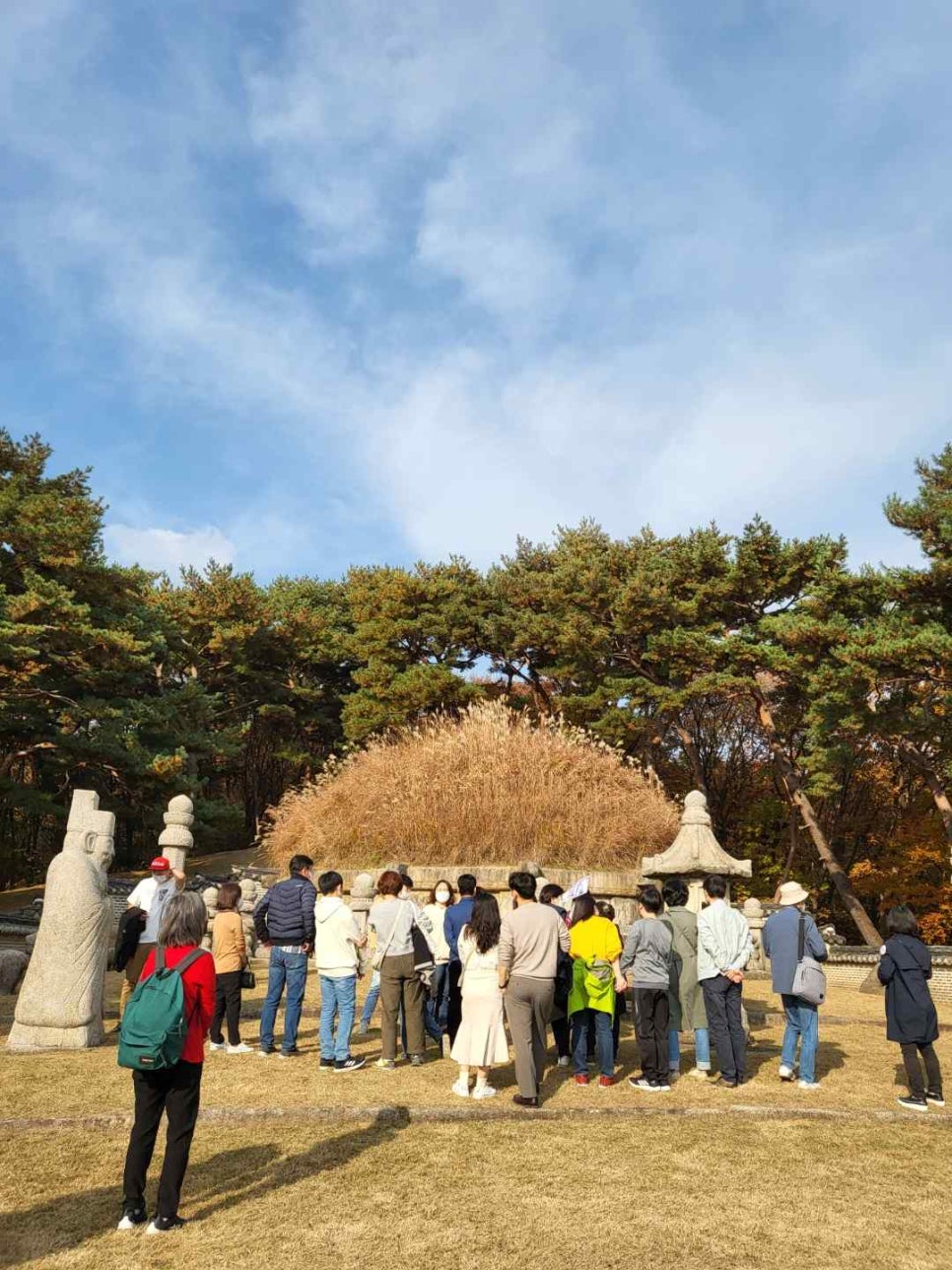
The walk lasts an hour, up to the mound and back. What is different from an ordinary visit is standing inside the low wall that rings the mound, right beside the stone sheep and tigers and the civil and military officials carved in stone.
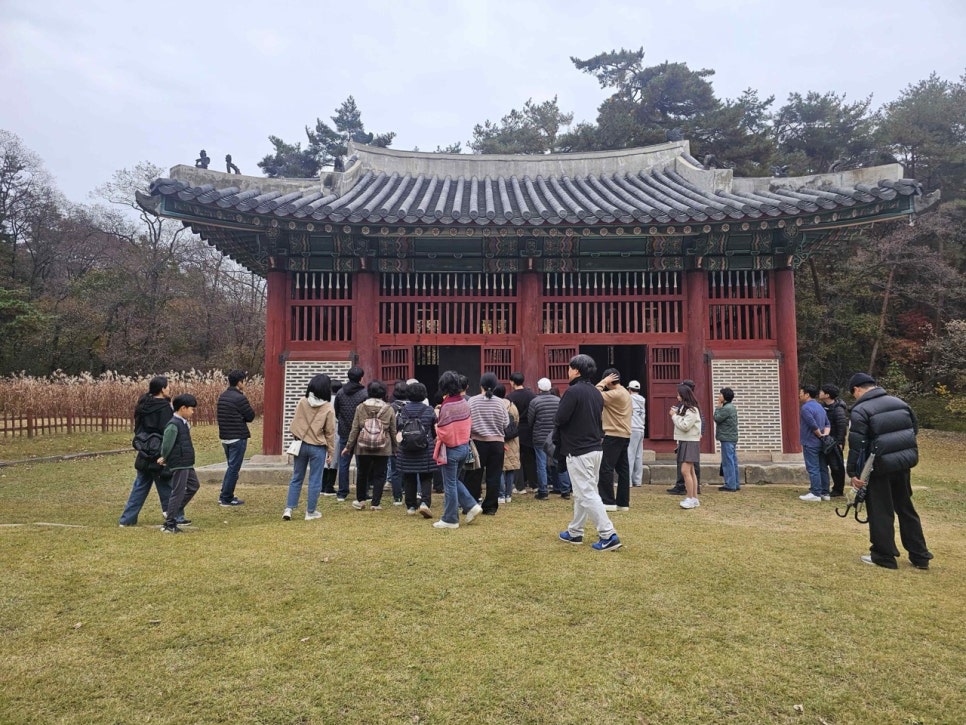
If advance booking is full, how do walk-in places work?
Side by side, the two routes look like this. On the walk-in side the official notice says little beyond the number.
Advance booking vs walk-in (Korea Heritage Service press release; reservation site as of 23 October)
- Route
- Advance booking / Walk-in on the day
- Places
- 20 per session, first come / 10 per session
- Where
- Royal Palaces and Tombs reservation site → Royal Tombs / On site, on the day
- People per booking
- Up to 4 / Not announced
- Opened
- 20 October, 10:00 / Time and desk not announced
- Status
- All 12 sessions full / Runs each session
Ten walk-in places a session means twenty a day across both sessions. Because nobody has said when or where they are handed out, phone the office before making the trip to Guri. It is also worth checking the reservation site now and then in case cancelled places reappear.
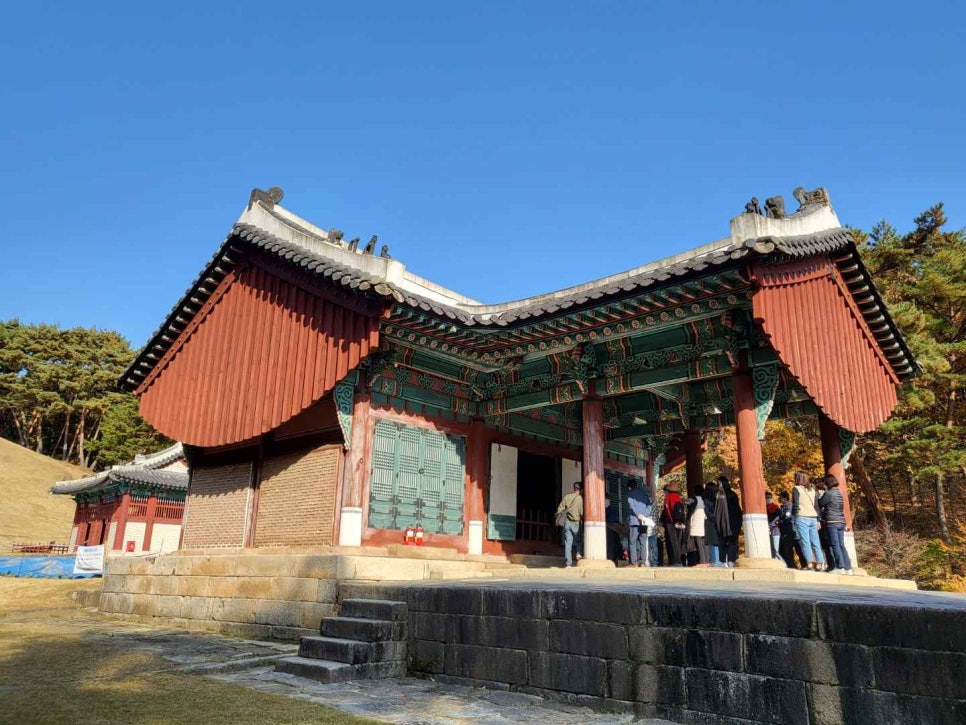
Why is only Geonwolleung's mound covered in silver grass?
The Korea Heritage Service says Taejo asked to be buried under silver grass brought from his home town of Hamhung, in what is now North Korea, but it presents this as tradition — something that "is said" — rather than settled fact.
In its notices about the spring grass-cutting, the Korea Heritage Service cites the Annals of the Joseon Dynasty for the story that the grass was brought from Hamhung on Taejo's wishes and cut every year at Hansik, a spring festival. Its notice for this opening still writes "it is said", which keeps a line between what is recorded and what is told.
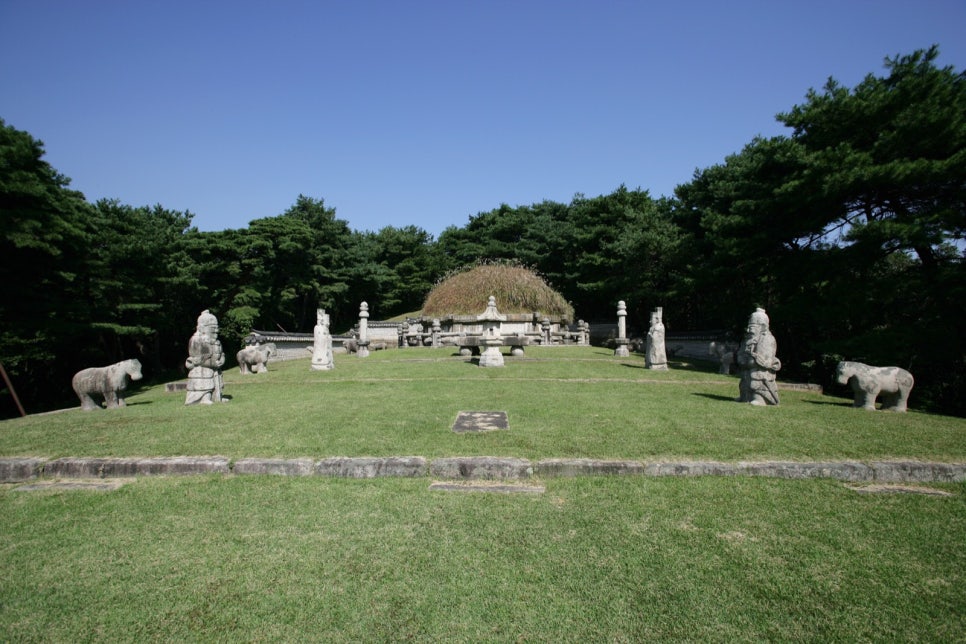
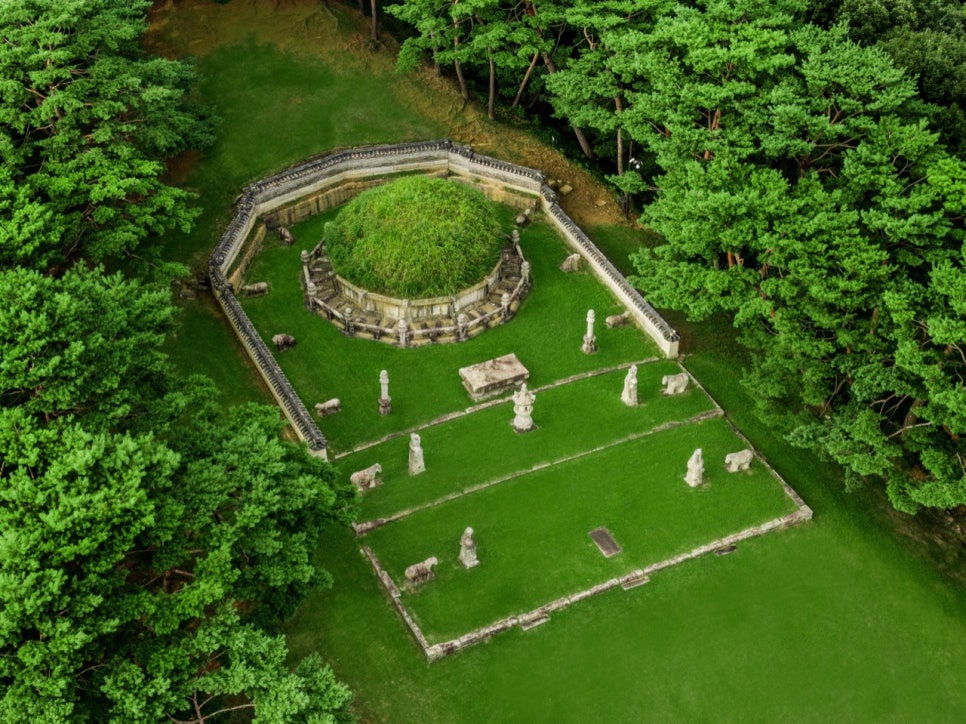
Cut in spring, full by autumn
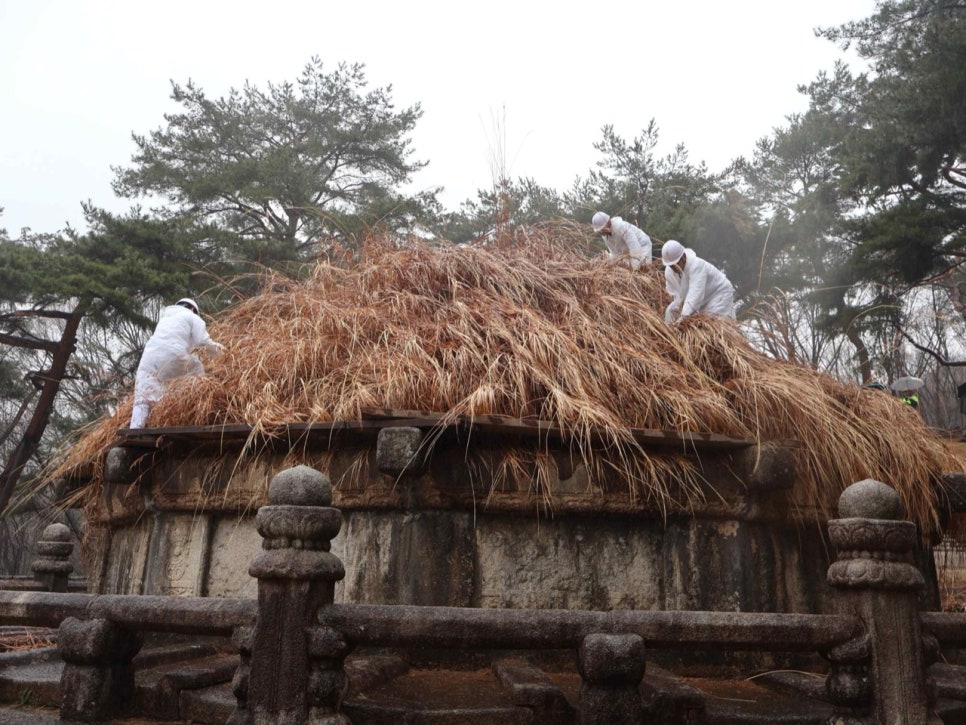
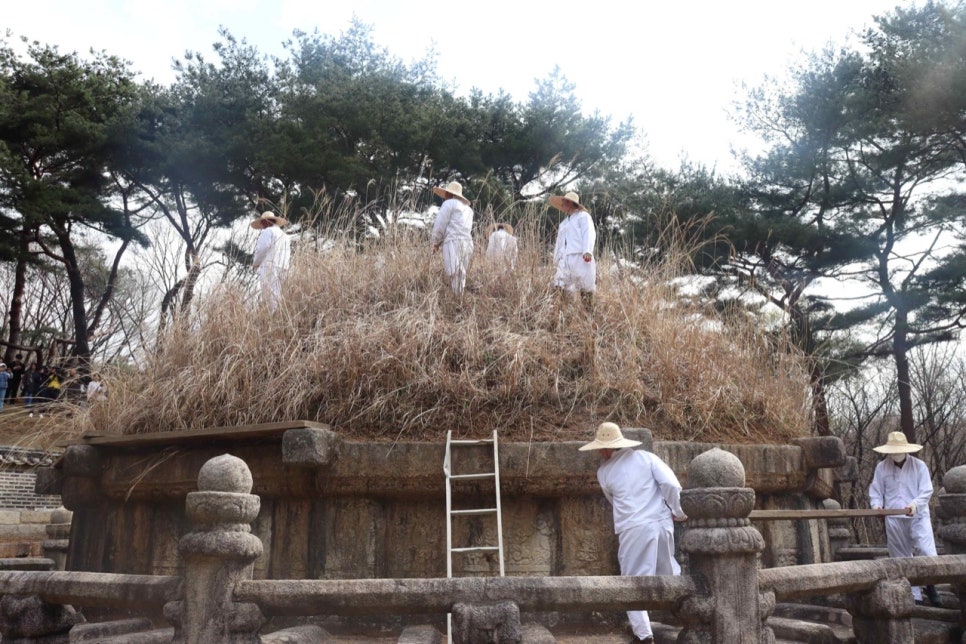
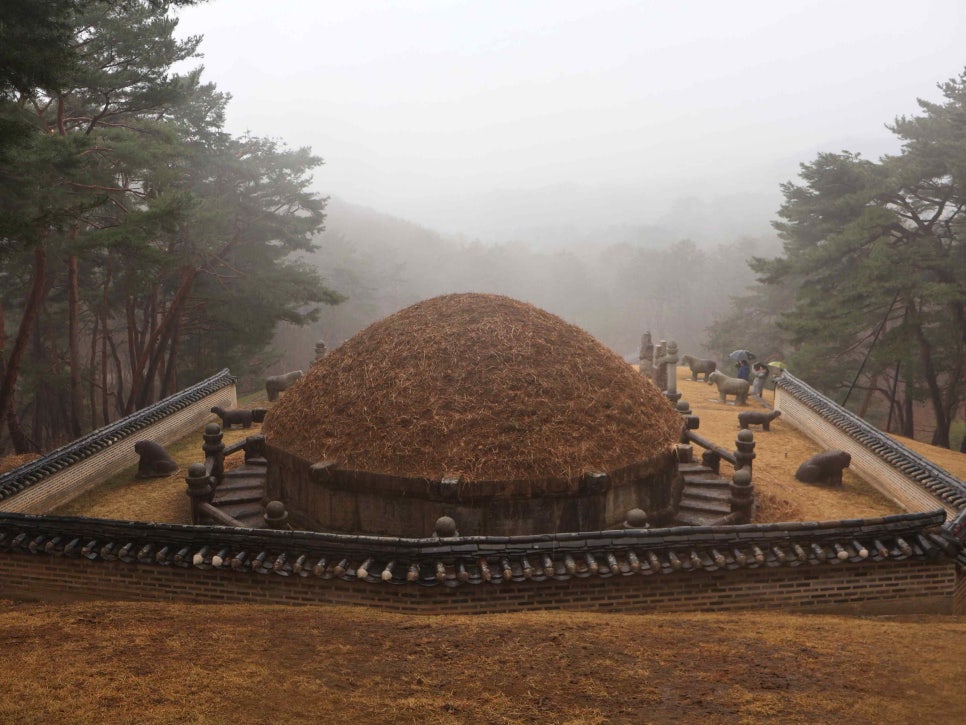
The grass you see in November has grown for about seven months since it was cut back in spring. Every year at Hansik the office holds Cheongwan Yechoui (청완 예초의), a ceremony in which the grass on the mound is cut; in 2026 it took place on 6 April. Geonwolleung is the only royal tomb where it happens.
The next three photographs are spring scenes
All three were taken around Hansik, when the grass is short or freshly cut. In November it is long and golden, and the mound looks quite different.
What else to see at Donggureung
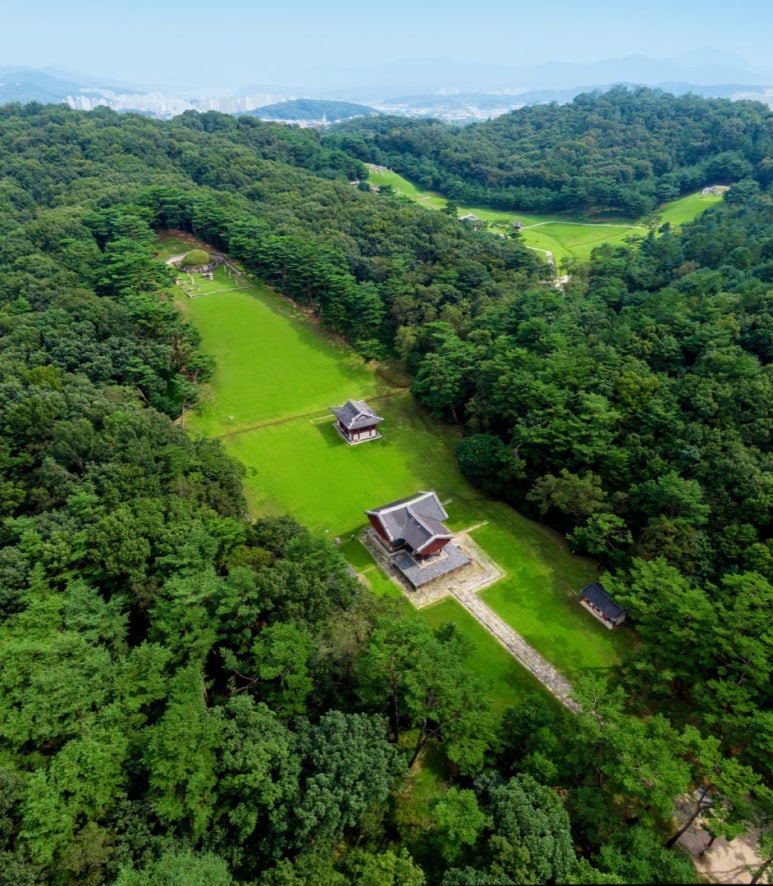
Geonwolleung sits inside Donggureung, a group of nine royal tombs and part of the Royal Tombs of the Joseon Dynasty World Heritage Site. The guided walk takes an hour, so you can follow the forest paths to the other tombs after the morning session or before the afternoon one. From November to January Donggureung is open 06:30–17:30, with tickets sold until 16:30; it is closed on Mondays, which is why the opening runs Tuesday to Sunday and 2 November is a closed day.
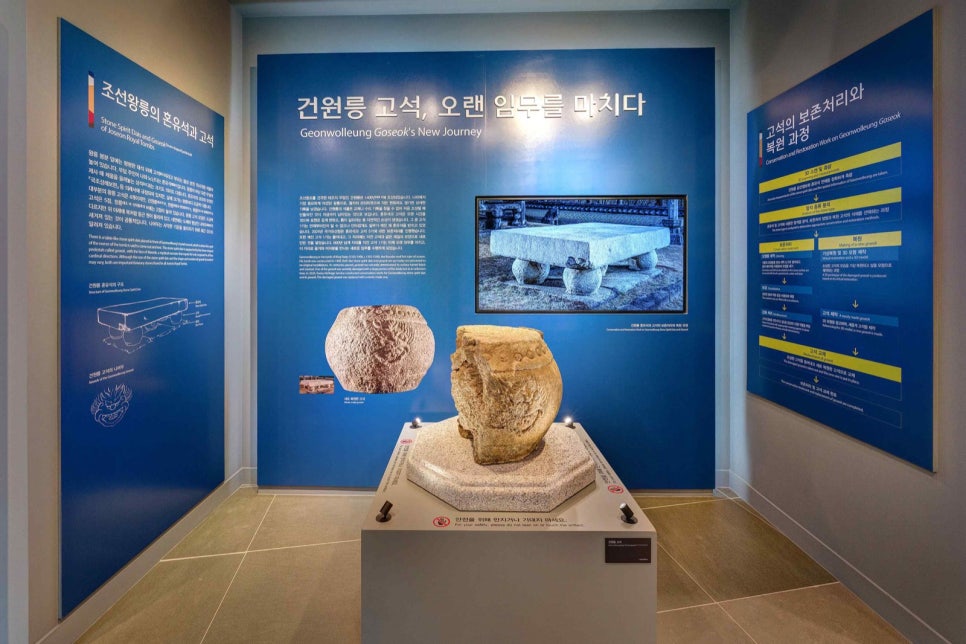
Since December 2024 the history and culture hall near the entrance has displayed one of the stone drums that held up the stone table in front of Geonwolleung's mound. We could not confirm that it is still on show, so ask on site.
Before you go
- Walk-in time and desk: not announced. Ask the Eastern Royal Tombs Office (+82-31-579-4904) beforehand.
- Cancelled advance places: no re-release has been announced. Check Royal Palaces and Tombs reservation site → Royal Tombs from time to time.
- Admission: the press release says Donggureung admission is separate, but the Royal Palaces and Tombs Center has announced free entry to the royal tombs from 29 October to 15 November, and all six days fall inside it.
- Parking is charged.
- Donggureung closes on Mondays, so the opening starts on Tuesday 3 November and ends on Sunday 8 November.
Getting there, and what to expect without Korean
Donggureung is in Guri, just east of Seoul. The nearest subway station is Donggureung Station on Line 8, which opened in August 2024; check the walk to the tomb entrance on a map app before you set out. Several city buses also stop at Donggureung, among them routes from Gangbyeon and Gwangnaru stations. Allow at least an hour from central Seoul. The guide's commentary is in Korean and the press release mentions no English session, so a visitor without Korean gets the rare view — the grass mound and the stone figures from a step away — but not the explanation; read this page before you go. Advance booking ran through the Korean-language reservation site and is closed, so the only route is a walk-in place, and since the office answers the phone in Korean, ask a Korean speaker or your accommodation to make the call about the walk-in desk.
Frequently asked questions
- Q. When is the Geonwolleung burial mound open in 2026?
- From Tuesday 3 to Sunday 8 November 2026, twice a day, 10:00–11:00 and 14:00–15:00. Monday 2 November is Donggureung's closing day and is not included.
- Q. Can I still book the Geonwolleung opening?
- As of 23 October all twelve advance sessions were full. The remaining option is a walk-in place on the day, ten per session. Whether cancelled places reappear has to be checked on the Royal Palaces and Tombs reservation site.
- Q. How do the walk-in places work?
- The official notice gives only the number, ten per session; it does not say when or where they are handed out. Phone the Eastern Royal Tombs Office on +82-31-579-4904 before going.
- Q. How much does it cost?
- The guided opening is free. 29 October – 15 November is a free-entry period at the royal tombs, so Donggureung admission is waived too; parking is charged.
- Q. Is it worth going if I do not read Korean?
- If the place is the draw, yes: you stand beside a burial mound that is closed the rest of the year. The guided commentary is in Korean and no English session has been announced, so you will miss the stories, and with only ten walk-in places per session you should have the time checked by phone, in Korean, before travelling.
Editor's note · Kang Shin-wook
For anyone already planning a day among the UNESCO-listed Joseon royal tombs, or chasing autumn silver grass near Seoul. It is a Korean-language walk, so it suits a visitor who comes for the place rather than the commentary. Hours and closing days for every palace and tomb are in our Royal Palaces and Tombs guide.
Sources
- Official notice (Korean)
- Royal Palaces and Tombs Center notice: free admission 29 Oct – 15 Nov 2026 (Korean)
- Royal Tombs of Joseon: Donggureung visitor information (Korean)
- Korea.kr: Geonwolleung opens every year from 2019 (Korean)
- Korea.kr: silver grass cut at Geonwolleung on Hansik, 2026 (Korean)
Written in our own words from the sources above, never copied from them, and every date and price checked against at least two pages. The originals are in Korean. Spotted a mistake? Ask for a correction.
Latest from Royal Palaces and Tombs Center
 Royal Palaces and Tombs CenterProgramme24 October 2026In 17 daysDonggwol Dongnak 2026, Seoul palaces by night — ballot to 28 Oct
 Royal Palaces and Tombs CenterProgramme20 October 2026Ending soonFreeGyeonghoeru and Hyangwonjeong tour, Gyeongbokgung — last dates 23, 28 and 30 October
 Royal Palaces and Tombs CenterEvent20 October 2026In 5 daysFreeSeoul's palaces, Jongmyo and royal tombs free — 29 Oct to 15 Nov 2026
 Royal Palaces and Tombs CenterEvent11 October 2026EndedFreeChangdeokgung Secret Garden: read inside a royal library — until 18 October