Exhibition·Jeju National MuseumOn nowFree
Jeju National Museum: Kim Young-gap photos rotate — free to 1 Mar 2027
Summary
The Jeju National Museum's exhibition of photographs donated from the late Kim Young-gap's estate rehung 32 works on 3 November 2026, swapping summer scenes for autumn oreum — the island's small volcanic cones, led by Yongnuni Oreum. Entry is free and needs no booking, the show runs until 1 March 2027, and the museum is closed on Mondays. The photographs carry no titles, so very little depends on reading Korean.
Article
In short
- The Jeju National Museum's exhibition 'Moments of Eternity, Capturing Jeju', of photographs donated from the late Kim Young-gap's collection, runs in the Special Exhibition Gallery until 1 March 2027, and admission is free.
- From 3 November 2026, 32 of the colour photographs in parts 2 and 3 were replaced; the new set centres on autumn oreum of eastern Jeju's mid-mountain area, such as Yongnuni Oreum.
- Opening hours are Tuesday to Sunday, 9:00 am to 6:00 pm; it is closed on Mondays, 1 January, Seollal and Chuseok. You walk straight in with no booking.
- 177 items are on show — black-and-white and colour photographs plus belongings such as his panoramic camera — and, as the artist wished, the photographs carry no titles.
- For non-Korean readers: there is nothing to book and the photographs have no text, so the language barrier is mainly the Korean section introductions.
The work of the late photographer Kim Young-gap (1957–2005), who spent nearly twenty years recording Jeju's oreum and fields, has changed face at the Jeju National Museum. The donation exhibition that opened on 16 June rehung 32 works on 3 November, beginning its second half with autumn hills of rippling silver grass in place of summer views. Entry is free and the show runs until 1 March 2027, so even visitors who came earlier have a reason to return.
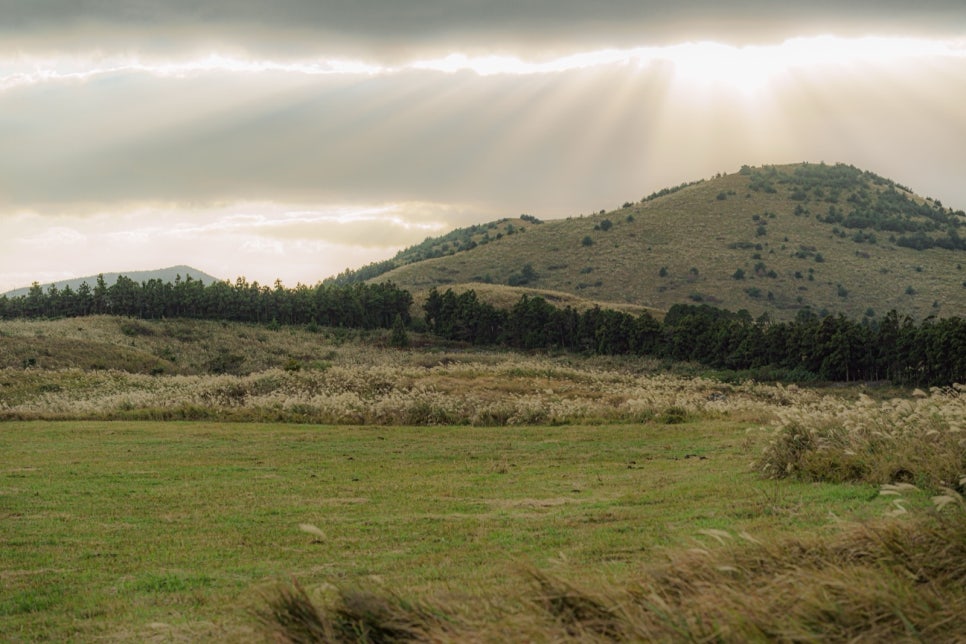
Silver grass along the ridge of Yongnuni Oreum, November 2023. Not a photograph by Kim Young-gap; shown for reference.
Photo: Korea Tourism Organization, Photo Korea (photographed 우창민) · KOGL Type 1
The exhibition exists because Kim Young-gap Gallery Dumoak, the gallery the artist built himself, handed its collection to the museum. Kim is thought to have left more than 100,000 works; about 98,000 of them were part of the donation. Below: what changed, how the rooms are arranged, and what to know before going.
What changed in the 3 November rotation
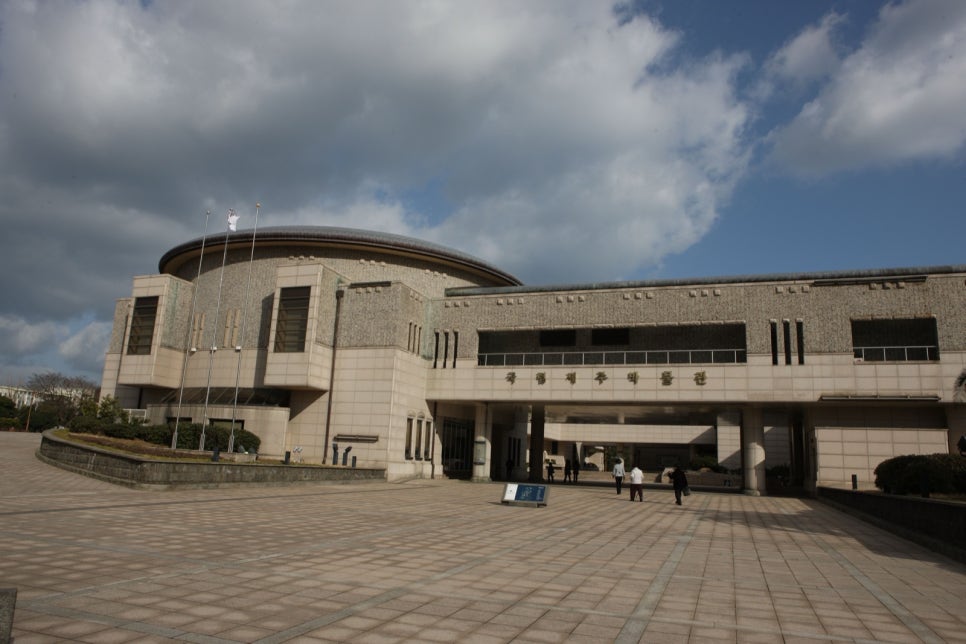
Jeju National Museum from outside (photographed January 2008; it may look different today).
Photo: Korea Tourism Organization, Photo Korea (photographed 김지호) · KOGL Type 1
The museum announced the rotation from the start: its official introduction says the works in parts 2 and 3 would be changed in November so that visitors could see more of the collection, and at the end of October Jeju's local press gave the date as 3 November and the number as 32. The first set hung until 1 November, and the same number of different photographs took their place.
The new selection follows the season. Timed for silver-grass season, it centres on the oreum of the eastern mid-mountain area, led by Yongnuni Oreum, alongside the 'cloud hill' north of Dunji Oreum, trees bent by the wind, and the sea at Seogwipo. Because the show runs from summer to the following spring, the idea is that the season in the pictures matches the season of the visit.
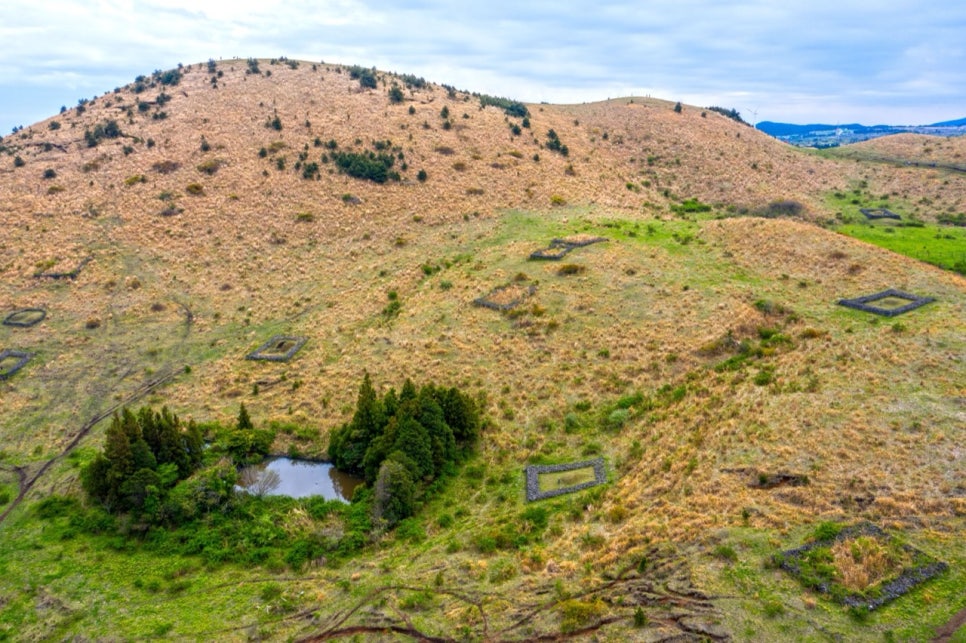
Yongnuni Oreum's crater from a drone, April 2019. Not a photograph by Kim Young-gap; shown for reference.
Photo: Korea Tourism Organization, Photo Korea (photographed 이범수) · KOGL Type 1
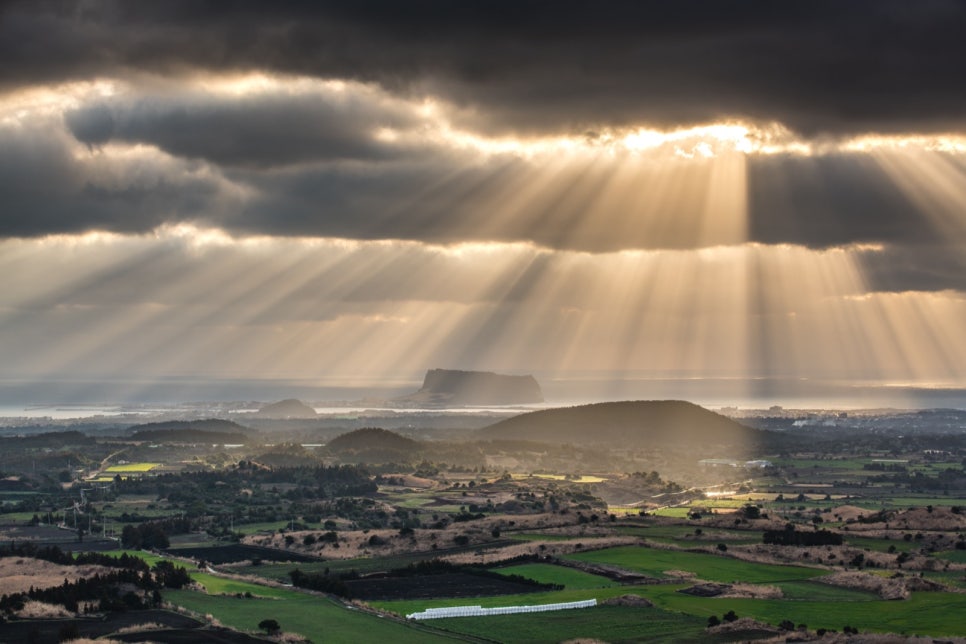
'Light Soaking the Land', the Yongnuni Oreum area; selected entry, 2018 Korea Tourism Photo Contest. Not a photograph by Kim Young-gap; shown for reference.
Photo: Korea Tourism Organization, Photo Korea (photographed 김대형) · KOGL Type 1
How the exhibition is laid out
The galleries follow the artist's working life in four parts. The rotation affected parts 2 and 3, where the colour photographs hang.
The four parts (per the official exhibition introduction)
- Part 1: Life and Death of the Jeju People
- Black-and-white photographs from his arrival on Jeju to the early 1990s
- Part 2: Oreum, Resting Place of the Soul
- Early-1990s colour photographs in 6×9 and 6×12 formats — rotated in November
- Part 3: Jeju Fantasia
- Late-1990s 6×17 panoramic photographs — rotated in November
- Part 4: The Story Left Behind
- Kim Young-gap Gallery Dumoak, which he built himself after developing ALS
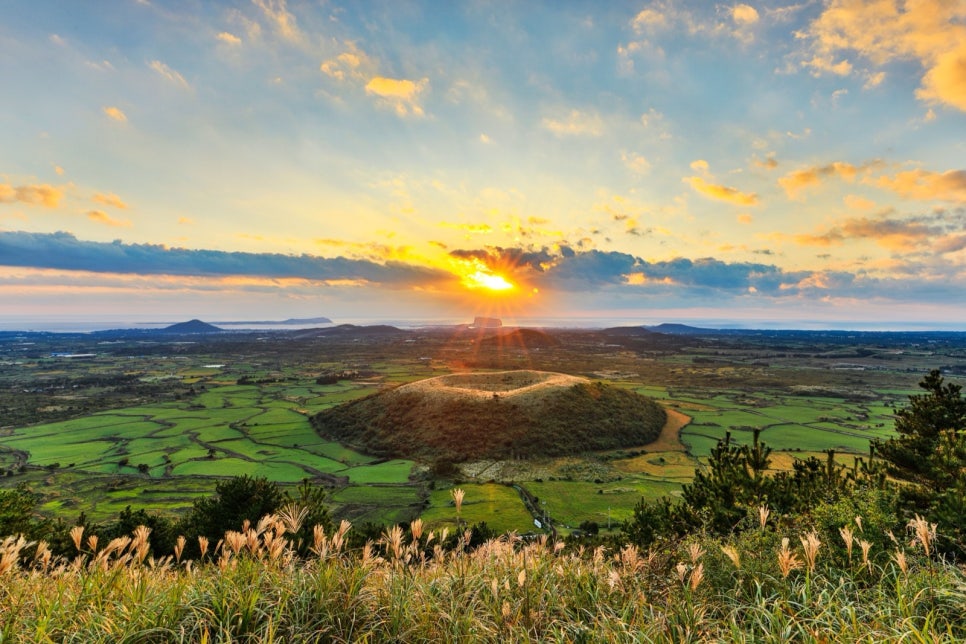
Sunrise over Darangswi Oreum; selected entry, 2019 Korea Tourism Photo Contest. Not a photograph by Kim Young-gap; shown for reference.
Photo: Korea Tourism Organization, Photo Korea (photographed 김용연) · KOGL Type 1
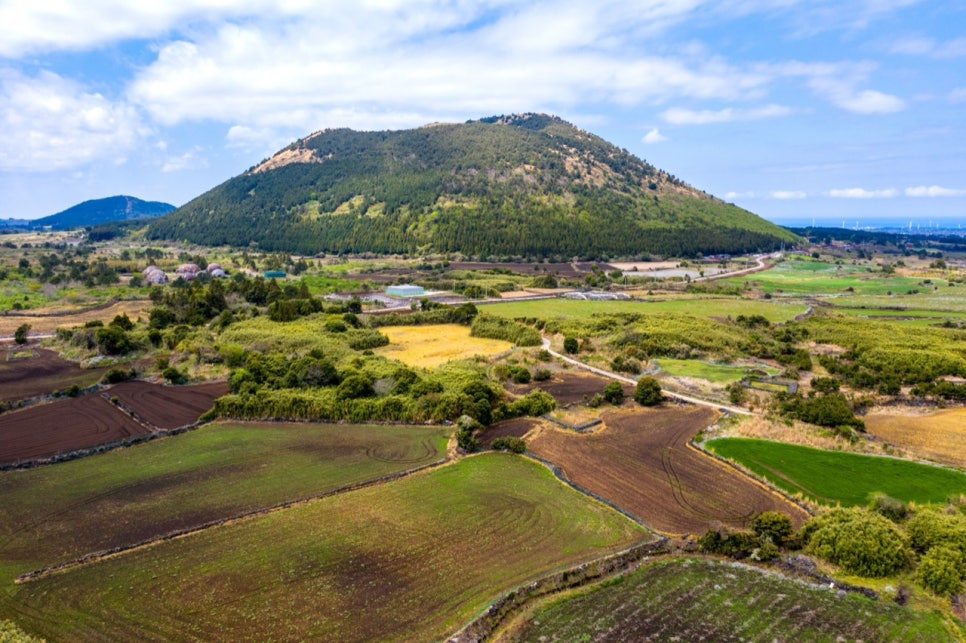
Darangswi Oreum and the Gujwa fields from a drone, April 2019. Not a photograph by Kim Young-gap; shown for reference.
Photo: Korea Tourism Organization, Photo Korea (photographed 이범수) · KOGL Type 1
Why the photographs have no titles
The first thing that feels unfamiliar is that no title sits beside the pictures. Kim never named his work, and the museum explains this as his wish that viewers meet each photograph directly, without the preconceptions a name brings.
So the exhibition rewards standing in front of each print for a while rather than looking for an explanation. The galleries also have a large video room and a hands-on space, where work that is not hung on the walls continues on screen.
Check on the day
Some reports at the time of writing said the entrance hands out a leaflet with the works' catalogue information and that a QR audio guide and large-print booklet are available, but we could not confirm this from two sources. Ask at the information desk on the day.
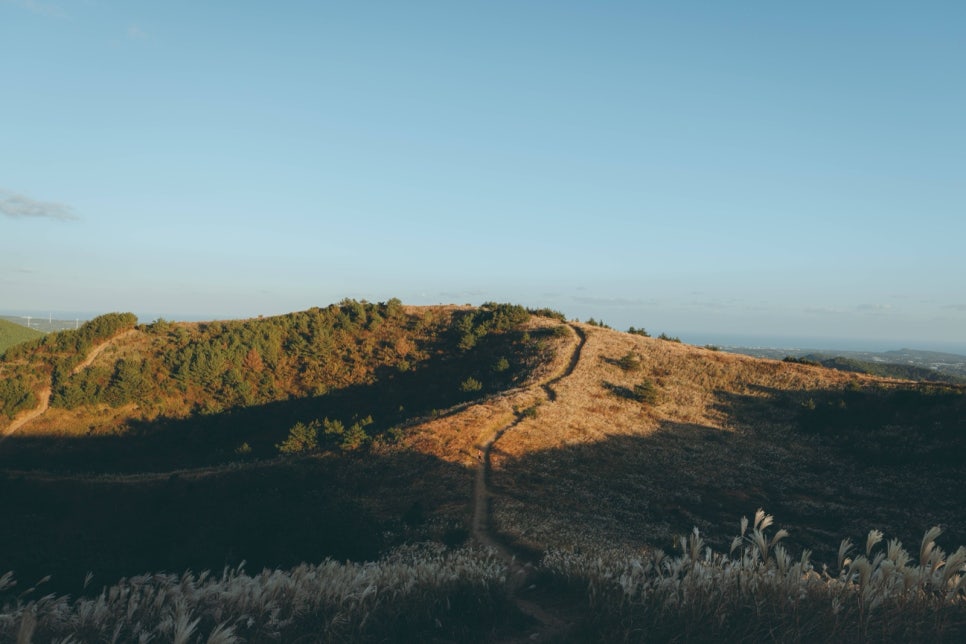
Ridge and walking trail on Ttarabi Oreum in autumn, November 2024. Not a photograph by Kim Young-gap; shown for reference.
Photo: Korea Tourism Organization, Photo Korea (photographed 이정수) · KOGL Type 1
Who was Kim Young-gap, and what is Dumoak
Kim Young-gap was born in Buyeo, South Chungcheong Province, in 1957 and settled on Jeju in 1985. For a little over twenty years he photographed the oreum, fields, wind and clouds of the island's mid-mountain area. After he was diagnosed with ALS (Lou Gehrig's disease) he converted a former school building in Samdal-ri, Seongsan-eup, Seogwipo, into Kim Young-gap Gallery Dumoak by hand, and he died there in 2005.
This year Dumoak donated about 98,000 photographs and negatives to the Jeju National Museum and signed a cooperation agreement with it: the museum takes on conservation and research, while Dumoak keeps the artist's working space. A little over an hour's drive east of the museum, you can walk through the gallery and garden where he spent his last years.
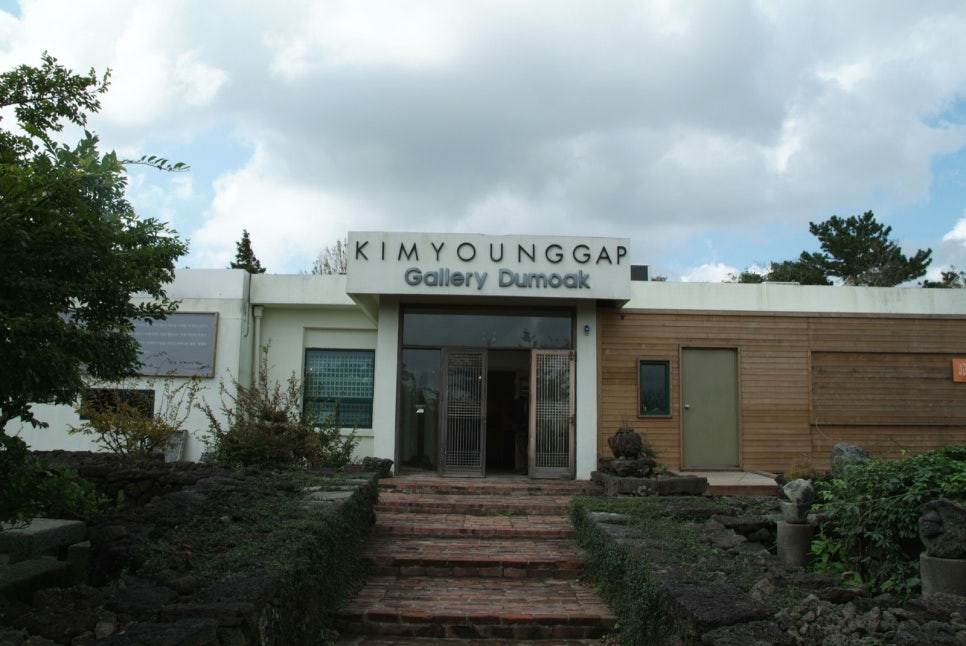
Kim Young-gap Gallery Dumoak, exterior and entrance, October 2007.
Photo: Korea Tourism Organization, Photo Korea (photographed 김지호) · KOGL Type 1
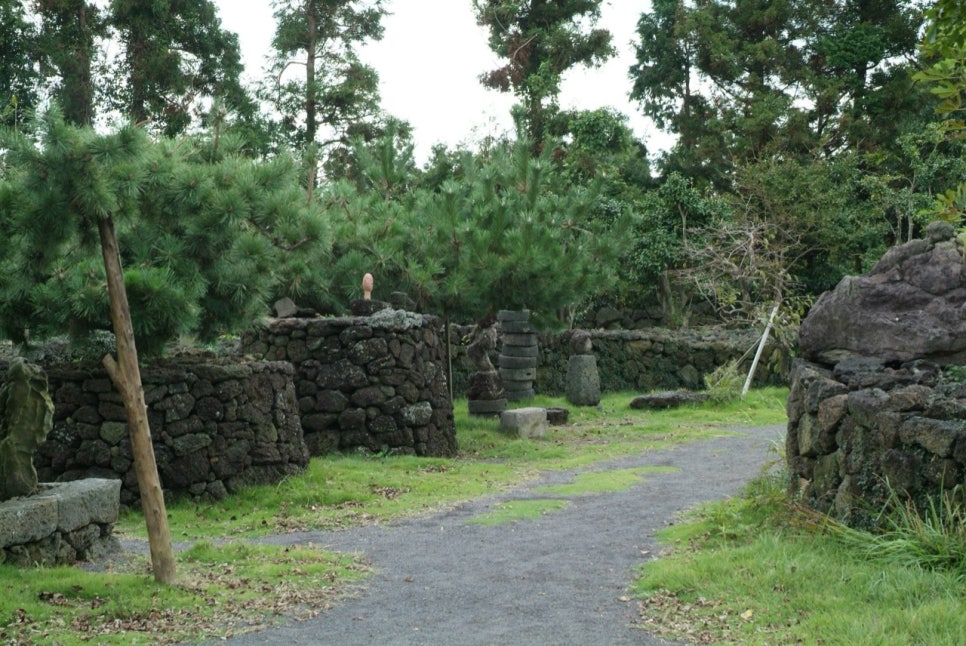
Garden path at Kim Young-gap Gallery Dumoak, October 2007.
Photo: Korea Tourism Organization, Photo Korea (photographed 김지호) · KOGL Type 1
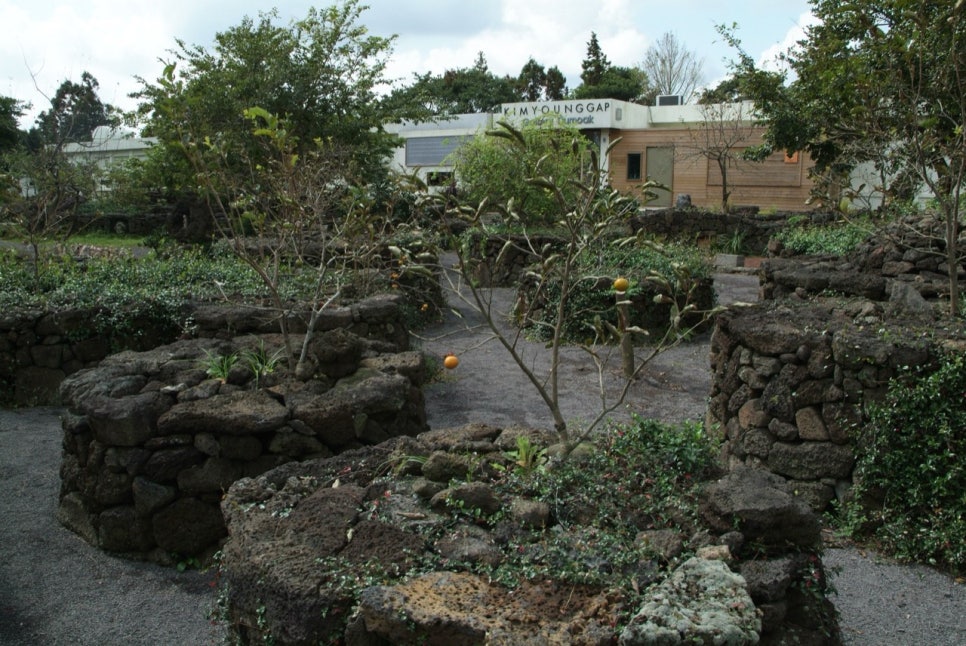
Dumoak's basalt-walled garden, October 2007.
Photo: Korea Tourism Organization, Photo Korea (photographed 김지호) · KOGL Type 1
Before you go
- Mondays are the regular closing day; it is also closed on 1 January and on Seollal and Chuseok.
- Open Tuesday to Sunday, 9:00 am – 6:00 pm, free and without booking. The official listing gives no last-entry time, so if you are arriving late in the afternoon, call +82 64-720-8000 first.
- As of 7 November the Jeju National Museum website shows only a maintenance notice; the Ministry of Culture's exhibition listing has the details instead.
- The autumn oreum photographs pair well with a day among the eastern oreum themselves — Yongnuni or Darangswi — or with Dumoak in Seongsan-eup.
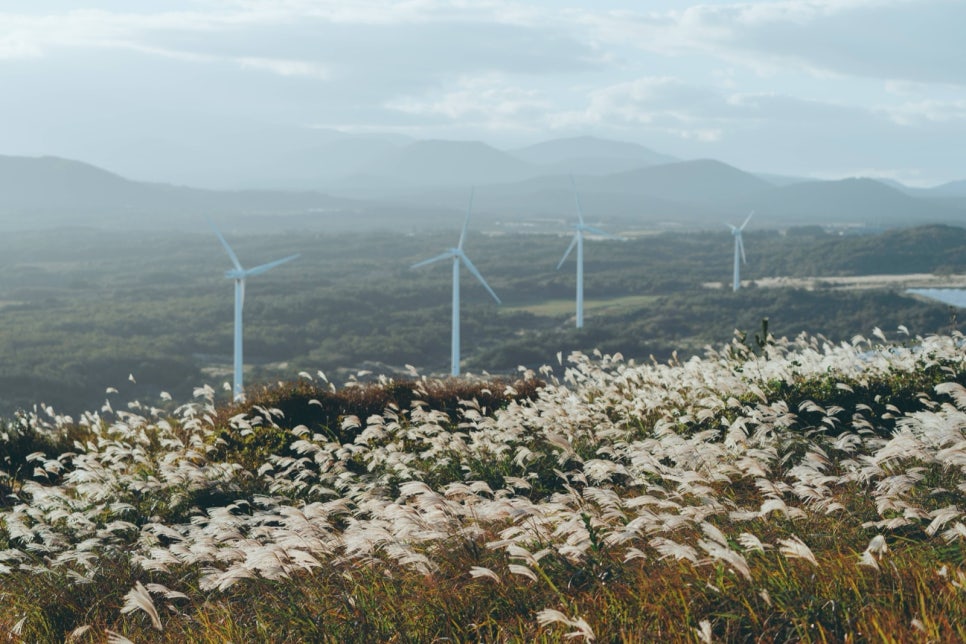
Silver-grass fields around Ttarabi Oreum, November 2024. Not a photograph by Kim Young-gap; shown for reference.
Photo: Korea Tourism Organization, Photo Korea (photographed 이정수) · KOGL Type 1
Getting there, and visiting without Korean
The museum is in the east of Jeju City, about 20–30 minutes by taxi from Jeju International Airport; city buses also stop nearby, and Kakao Map or Naver Map give current routes in English. Admission is walk-in and free, so there is no booking system to fight with a foreign phone number. Section introductions are in Korean and we could not confirm English panels or an English audio guide, but the photographs themselves carry no text at all, which makes this one of the easier exhibitions in Korea to see without the language. To continue to Dumoak in Samdal-ri, a car or taxi is far more practical than the bus.
Frequently asked questions
- Q. How much does the Kim Young-gap exhibition at Jeju National Museum cost?
- It is free. You can walk in without booking, Tuesday to Sunday from 9:00 am to 6:00 pm; it is closed on Mondays, 1 January, Seollal and Chuseok.
- Q. How long is the Kim Young-gap exhibition on?
- Until 1 March 2027 in the Special Exhibition Gallery of the Jeju National Museum. Since 3 November 2026 it has been in its second half, with 32 works rehung.
- Q. What changed in the Kim Young-gap exhibition rotation?
- 32 of the colour photographs in parts 2 and 3 were replaced by the same number of different works, centred on autumn oreum in eastern Jeju such as Yongnuni Oreum, a 'cloud hill', and the sea at Seogwipo.
- Q. How many works are in the Kim Young-gap exhibition?
- 177 items, combining black-and-white and colour photographs with belongings such as his panoramic camera.
- Q. Why do Kim Young-gap's photographs have no titles?
- He never named his work. The museum explains it as his wish that viewers meet the photographs directly, without the preconceptions a title brings.
- Q. Is it worth going if I do not read Korean?
- Yes, more than most exhibitions. The photographs have no titles or captions in any language, entry needs no booking, and the landscapes speak for themselves. What you will miss is the Korean section introductions and the artist's biography on the walls; this page covers both.
Editor's note · Kang Shin-wook
For anyone adding an indoor stop to a Jeju trip, or who saw the first half of the show over the summer. Opening hours and closing days for the other national museums are compared on national museums at a glance.
Sources
- Official notice (Korean)
- Jeju Sori, 28 Oct 2026: the Kim Young-gap rotation (Korean)
- News Jeju, 28 Oct 2026: autumn oreum through Kim Young-gap's eyes (Korean)
- Media Jeju, 28 Oct 2026: Kim Young-gap's photographs (Korean)
- Jeju National Museum visitor information (Korean)
Written in our own words from the sources above, never copied from them, and every date and price checked against at least two pages. The originals are in Korean. Spotted a mistake? Ask for a correction.