Exhibition·Korea Tourism OrganizationOn nowFree
BIG's MATERIALISM in Seoul: free architecture show — to 28 Feb 2027
Summary
Bjarke Ingels Group's first exhibition in Korea, MATERIALISM, runs from 7 November 2026 to 28 February 2027 on the two basement floors of the Seoul Hall of Urbanism & Architecture, next to Deoksugung Palace and a minute from City Hall Station. Admission is free and there is nothing to book: you walk in, handle ten building materials from stone to mycelium, sit on stools made of them and follow some 110 models from sketch to building. It opens Tuesday to Sunday, 10:00–18:00, and until 21:00 on Saturdays; it is closed on Mondays. The exhibition booklet is in Korean and English.
Article
In short
- BIG: MATERIALISM runs from 7 November 2026 to 28 February 2027 on basement levels 2 and 3 of the Seoul Hall of Urbanism & Architecture, 119 Sejong-daero, Jung-gu, Seoul.
- Admission is free and no booking is needed.
- Hours are Tuesday to Sunday, 10:00–18:00 (last entry 17:30), extended to 21:00 on Saturdays; the hall is closed on Mondays. It is one minute on foot from Exit 3 of City Hall Station (Lines 1 and 2); there is no parking.
- Visitors can touch ten building materials — stone, earth, concrete, metal, glass, wood, textile, plastic, plants and recycled material — and sit on stools made from them.
- The exhibition booklet is in both Korean and English, so the material essays and project captions can be read without Korean.
The Seoul Metropolitan Government has brought the Danish practice Bjarke Ingels Group (BIG) to Korea for the first time, in the Seoul Hall of Urbanism & Architecture right beside Deoksugung Palace's Daehanmun gate. As the title says, the subject is what buildings are made of. Instead of hanging photographs of finished projects, the show lets you handle each material and then follow, through models, how it was used in a real BIG building. The city puts the number of models at around 110.
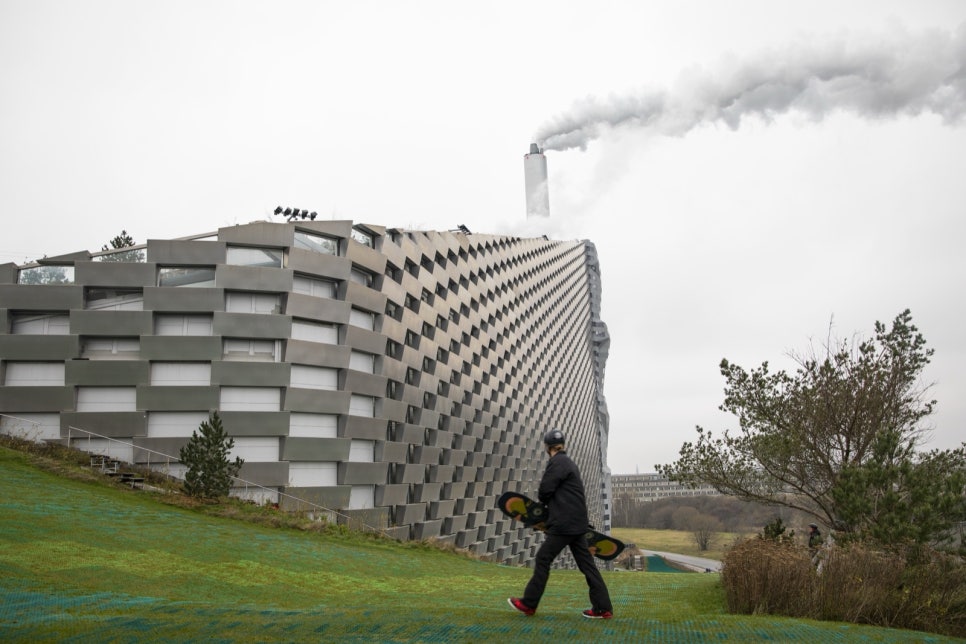
Amager Bakke (Copenhill) in Copenhagen, designed by BIG, photographed in 2019. A photo of the real building, not of the Seoul exhibition.
Photo: News Oresund (Wikimedia Commons) · CC BY 2.0
Who are BIG?
BIG is the practice founded by the Danish architect Bjarke Ingels. It is based in Copenhagen with teams in Barcelona, London, New York, Shanghai, Los Angeles and Zurich, according to the exhibition booklet. It became widely known for Amager Bakke, the Copenhagen waste-to-energy plant with a ski slope and park on its roof, and VIA 57 West, the Manhattan residential block shaped like a pyramid with one corner pulled up. Seoul's announcement names both as signature works.
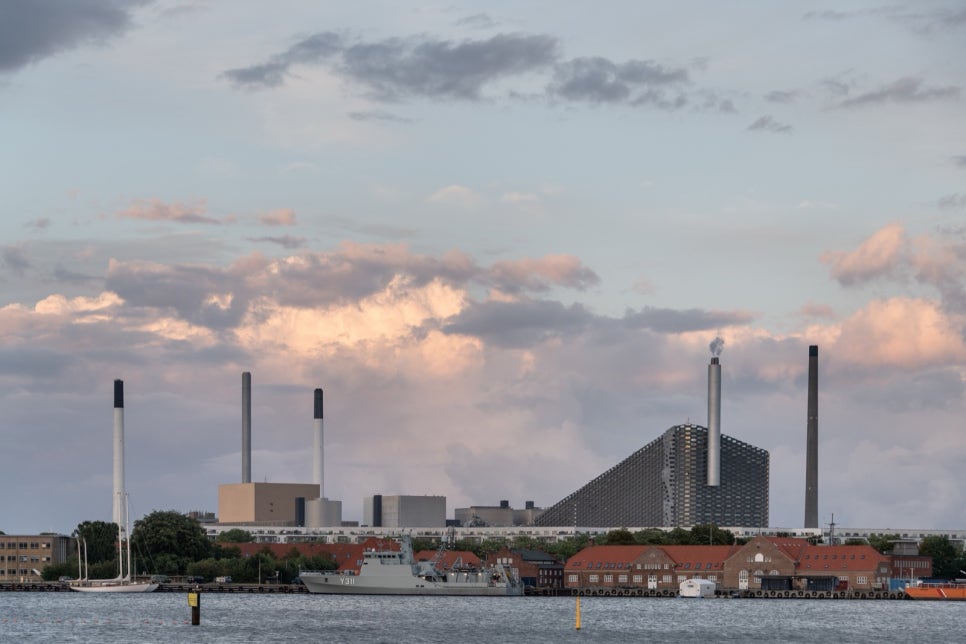
Amager Bakke seen from a distance, photographed in 2021. A photo of the real building, not of the Seoul exhibition.
Photo: Giorgio Galeotti (Wikimedia Commons) · CC BY 4.0
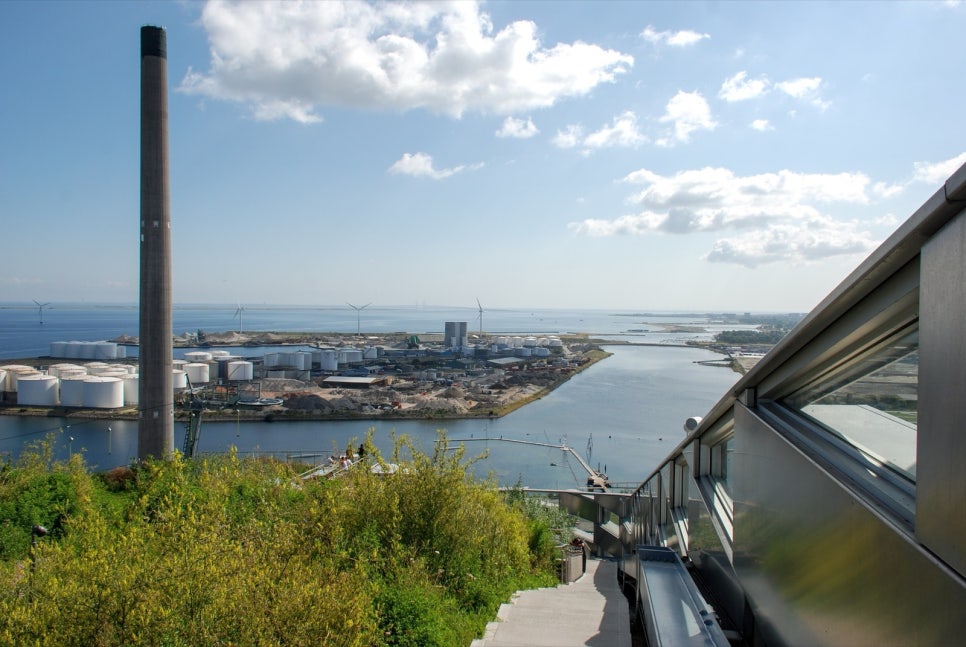
The view over Copenhagen from the roof of Copenhill, photographed in 2021. A photo of the real building, not of the Seoul exhibition.
Photo: flöschen (Wikimedia Commons) · CC BY 2.0
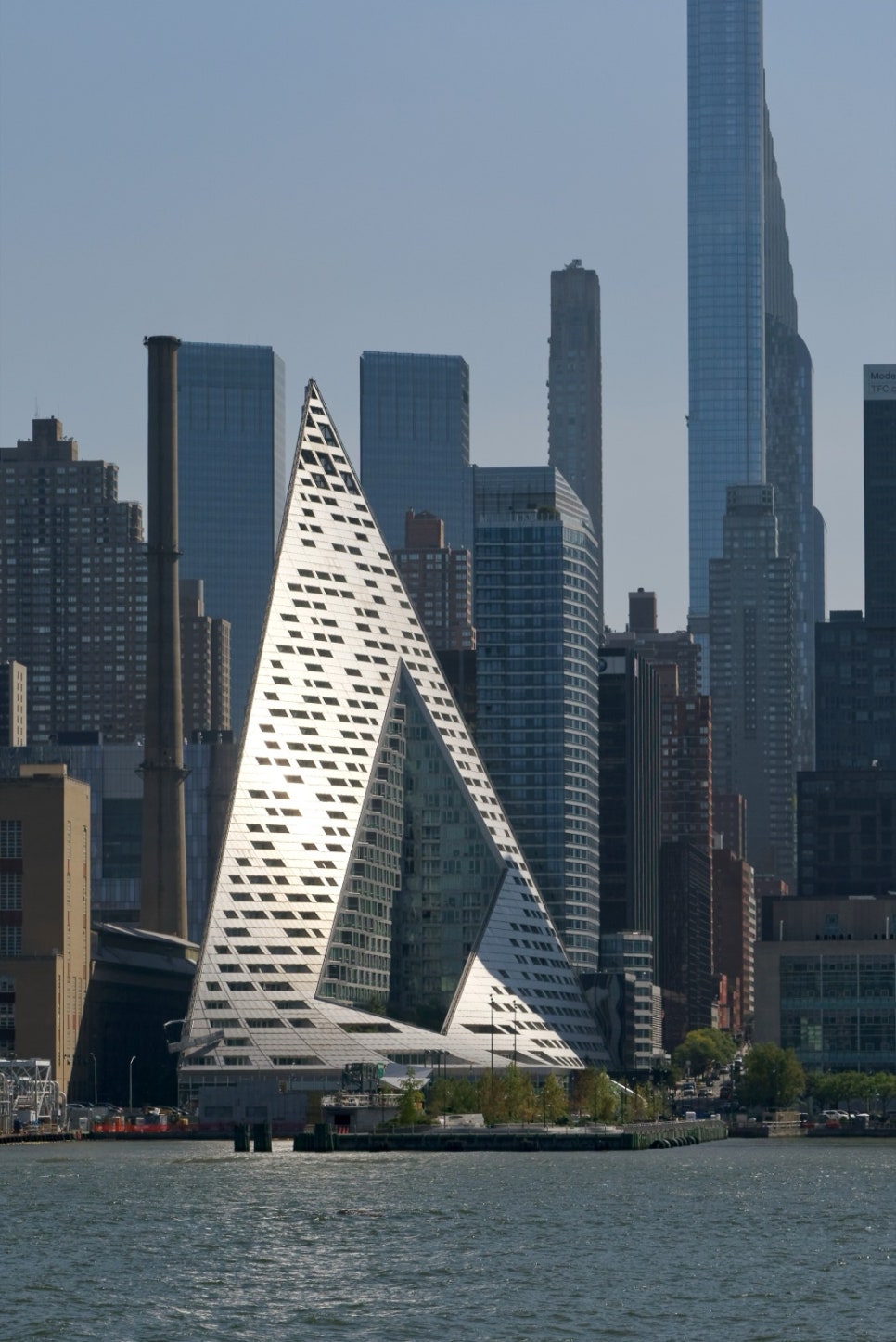
VIA 57 West in Manhattan, photographed in 2023. A photo of the real building, not of the Seoul exhibition.
Photo: Jakub Hałun (Wikimedia Commons) · CC BY 4.0
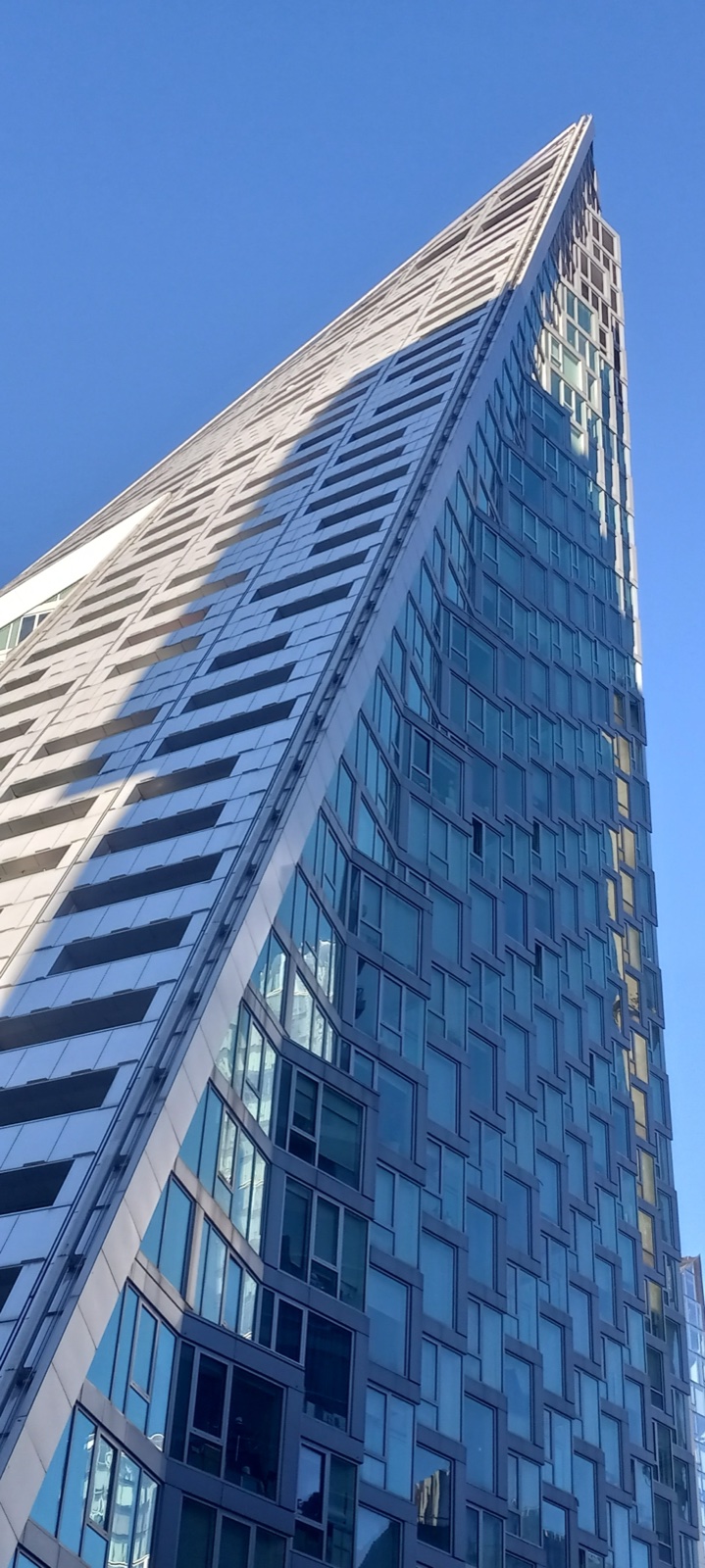
The tilted side of VIA 57 West, photographed in 2024. A photo of the real building, not of the Seoul exhibition.
Photo: Kidfly182 (Wikimedia Commons) · CC BY 4.0
Seoul signed a letter of intent on urban and architectural exchange with the Danish Embassy in 2022, for the Seoul Biennale of Architecture and Urbanism, and presents this exhibition as part of that exchange.
Which materials, shown through which buildings?
The show is organised around ten materials. The booklet pairs each one with the BIG project in which it mattered most; knowing the pairs before you go in tells you what to look for in front of each model.
Each material and its featured project (exhibition booklet)
- Material
- Featured project in the booklet
- Stone
- BIG Headquarters, Copenhagen
- Earth
- UAE Pavilion, Expo Doha
- Concrete
- Panda House, Copenhagen Zoo
- Metal
- The Twist, Kistefos Museum, Norway
- Glass
- Musée Atelier Audemars Piguet, Switzerland
- Wood
- The Plus, Norway
- Textile
- The Orb, Nevada, USA
- Plastic
- Serpentine Pavilion, London
- Plants
- I AM MSHRM, Copenhagen
- Recycled material
- Danish Maritime Museum, Helsingør
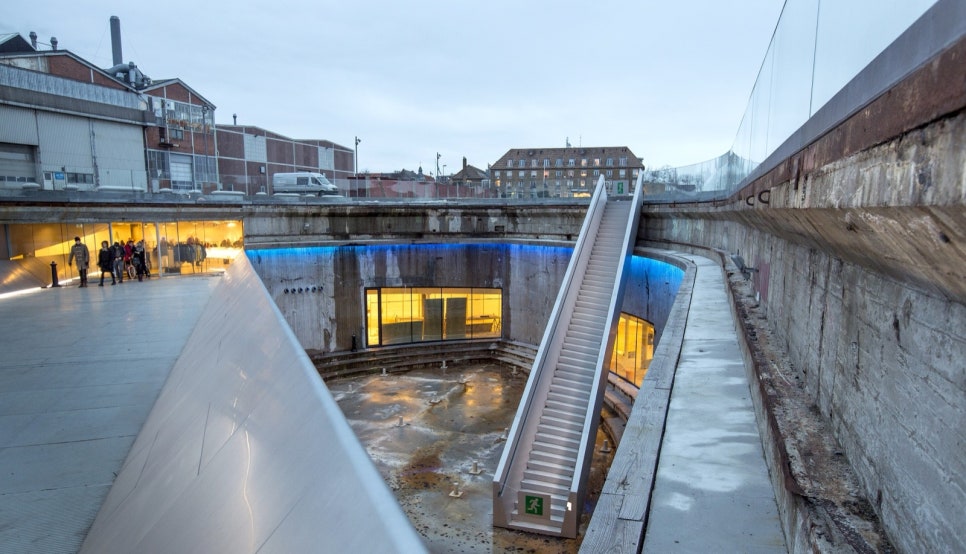
The Danish Maritime Museum in Helsingør, the building the booklet uses for recycled material. A photo of the real building, not of the Seoul exhibition.
Photo: Johan Wessman / News Oresund (Wikimedia Commons) · CC BY 2.0
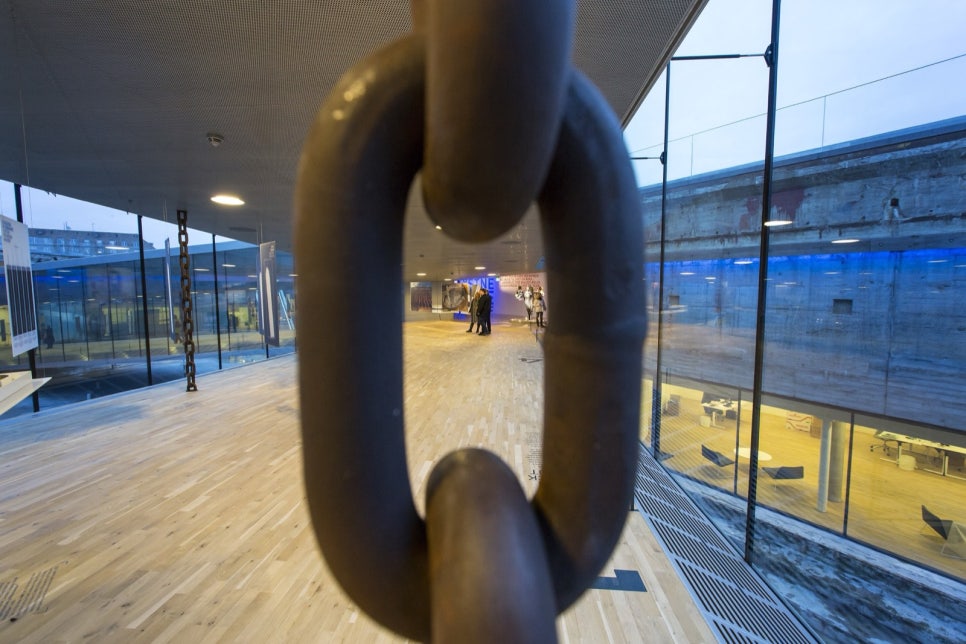
Inside the Danish Maritime Museum, photographed in 2014. A photo of the real building, not of the Seoul exhibition.
Photo: News Oresund (Wikimedia Commons) · CC BY 2.0
What order do you see it in?
The entrance is underground and the route runs touch, then process, then film. You do not need to know anything about architecture to follow it.
- Bium Hall, basement level 3 — plinths and stools made of the ten materials. Feel the surfaces and sit on the stools; around 50 models of major projects stand on the plinths with photographs and drawings.
- The passage from Bium Hall to Gallery 2 — short texts by Bjarke Ingels on each material.
- Gallery 2, basement level 3 — some 60 study models made while ideas were being worked out, tracing the path from sketch to building.
- Gallery 1, basement level 2 — a film on how BIG works closes the visit.
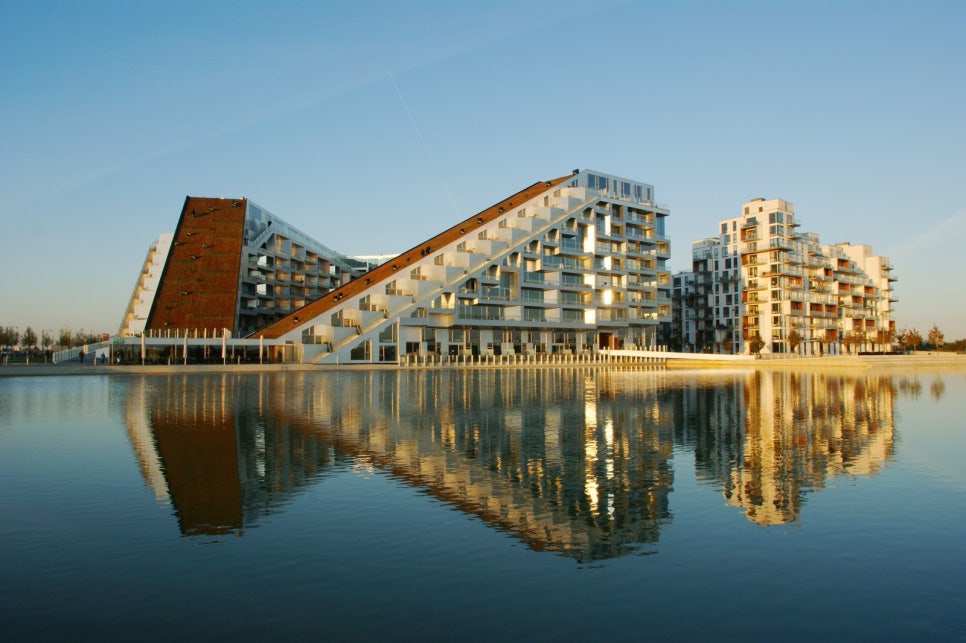
8 House in Copenhagen, one of BIG's early signature works. We could not confirm that it is in the exhibition. A photo of the real building, not of the Seoul exhibition.
Photo: Jens Cederskjold (Wikimedia Commons) · CC BY 3.0
What to check before you go
- What you may touch are the material plinths and the stools. The models are not presented as hands-on, and the hall asks visitors not to touch anything that is not marked for touching.
- There is no parking; City Hall Station Exit 3 is one minute away.
- Besides Mondays, the hall closes on 1 January and on Lunar New Year's Day; when Monday is a public holiday, it closes the following day instead.
- Bjarke Ingels's talk on 5 November and the opening-day talk and tour on 7 November have already taken place.
When docent tours start, and Saturday last entry
Seoul's press release of 5 November says docent tours run throughout the exhibition, but the city's news article the next day says they will start later. Check the hall's website and Instagram (@seoulhour) for dates. We could not find the last-entry time for the Saturday extension to 21:00 in any official notice; on other days it is 17:30.
It pairs well with a walk along the Deoksugung stone-wall road or Jeongdong-gil. The hall stands between Daehanmun gate and the Seoul Metropolitan Council building, so it is easy to drop in before or after the palace, and on a Saturday you can carry on to Deoksugung in the evening.
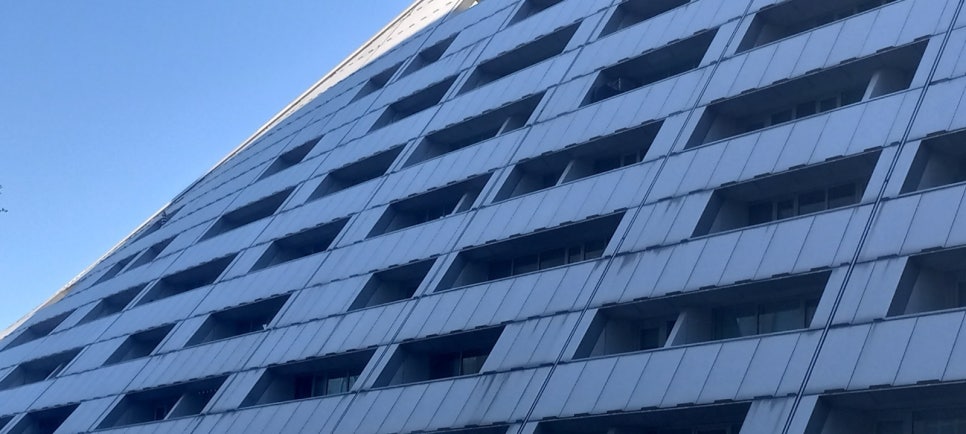
The facade of VIA 57 West, photographed in 2024. A photo of the real building, not of the Seoul exhibition.
Photo: Kidfly182 (Wikimedia Commons) · CC BY 4.0
Getting there, and what you can read in English
Take Seoul Subway Line 1 or 2 to City Hall Station (시청역) and leave by Exit 3; the hall's entrance is about a minute away on Sejong-daero, next to Daehanmun, the main gate of Deoksugung. From Myeong-dong or Gwanghwamun it is a 10–15 minute walk. Admission is free and there is no ticket desk or online booking to get through, so a foreign phone number or card is never asked for. The exhibition booklet is printed in Korean and English side by side — the introduction, the essay on each of the ten materials and the project credits — and can be downloaded as a PDF from the hall's exhibition page before you go. We could not confirm whether the wall texts and the closing film carry English, and no audio guide has been announced; the docent tours, once they begin, are expected to be in Korean.
Frequently asked questions
- Q. How much is the BIG MATERIALISM exhibition in Seoul?
- It is free. Both Seoul's press release and the Seoul Hall of Urbanism & Architecture list admission as free, and you can walk in without booking.
- Q. How long is BIG MATERIALISM on in Seoul?
- Until Sunday 28 February 2027. It opened on 7 November 2026; the hall is closed on Mondays, 1 January and Lunar New Year's Day.
- Q. What are the opening hours of the Seoul Hall of Urbanism & Architecture?
- Tuesday to Sunday, 10:00–18:00, with last entry at 17:30. During this exhibition it stays open until 21:00 every Saturday.
- Q. How do I get to the Seoul Hall of Urbanism & Architecture?
- It is at 119 Sejong-daero, Jung-gu, beside Daehanmun gate of Deoksugung Palace. Exit 3 of City Hall Station (Lines 1 and 2) is one minute away; the hall has no parking.
- Q. What can you do hands-on at the BIG exhibition?
- In Bium Hall on basement level 3 you can touch plinths made of stone, earth, concrete, metal, glass, wood, textile, plastic, plants and recycled material, and sit on stools made of the same materials.
- Q. Is it worth going if I do not read Korean?
- Yes, more than most Seoul exhibitions. The booklet is fully bilingual, the hands-on part needs no reading, and the models speak for themselves. What you may miss is any Korean-only wall text and the docent tours, which have not been announced in English.
Editor's note · Kang Shin-wook
For anyone who knows BIG from Copenhill or VIA 57 West and happens to be in central Seoul, or who wants an hour indoors between palaces. The hall sits beside the Daehanmun gate of Deoksugung — opening hours for the palace are in our Royal Palaces and Tombs guide, and other dated events are on /en/events.
Sources
- Official notice (Korean)
- Seoul Hall of Urbanism & Architecture: MATERIALISM exhibition page (Korean)
- Seoul Hall of Urbanism & Architecture: hours, closures and directions (Korean)
- MATERIALISM exhibition booklet, PDF (Korean and English)
- Seoul city news: BIG's first exhibition in Korea, 6 Nov 2026 (Korean)
Written in our own words from the sources above, never copied from them, and every date and price checked against at least two pages. The originals are in Korean. Spotted a mistake? Ask for a correction.
Latest from Korea Tourism Organization
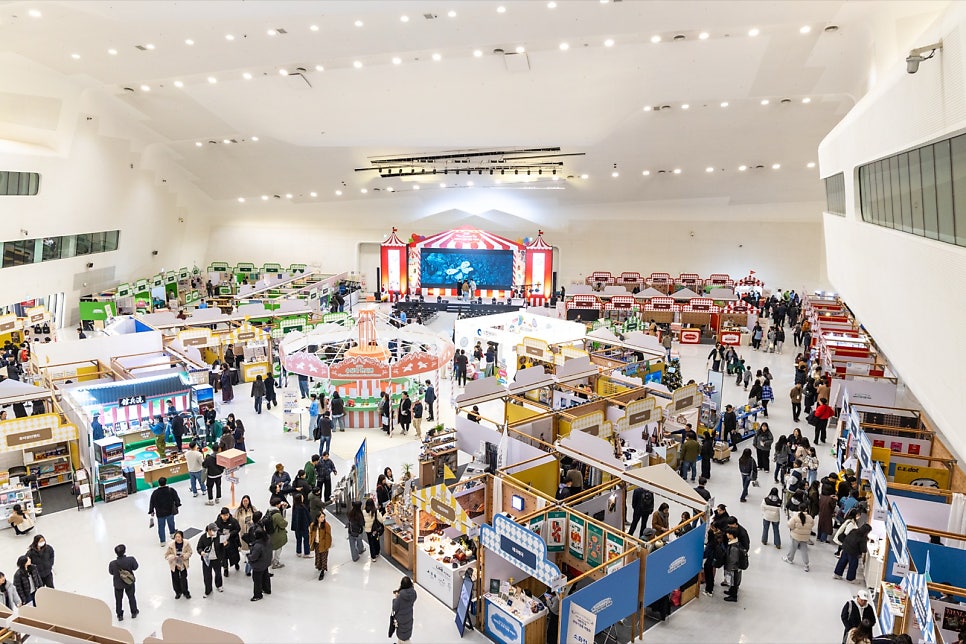 Korea Tourism OrganizationEvent18 November 2026In 2 daysFreeKorea Souvenir Fair at DDP, Seoul — free, 20–22 November 2026
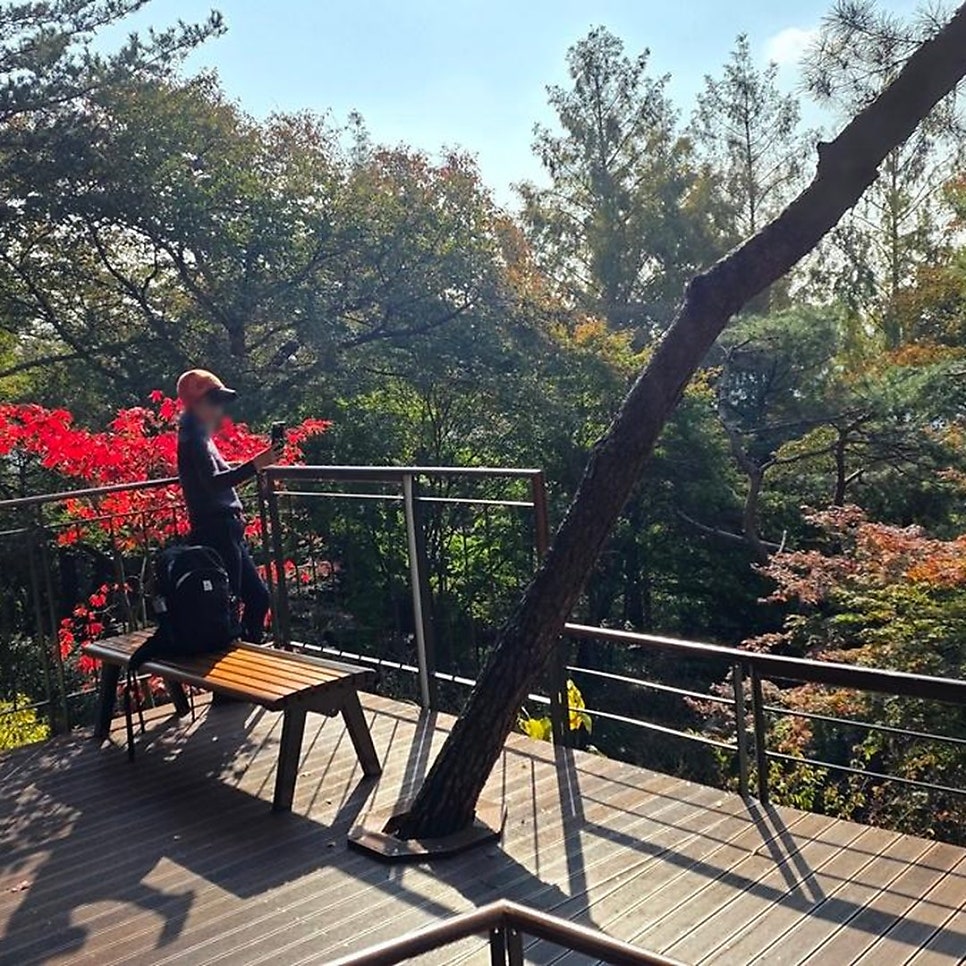 Korea Tourism OrganizationNews17 November 2026Namsan Haneul Forest Trail, Seoul: a step-free 1.45 km boardwalk lit until 11 pm
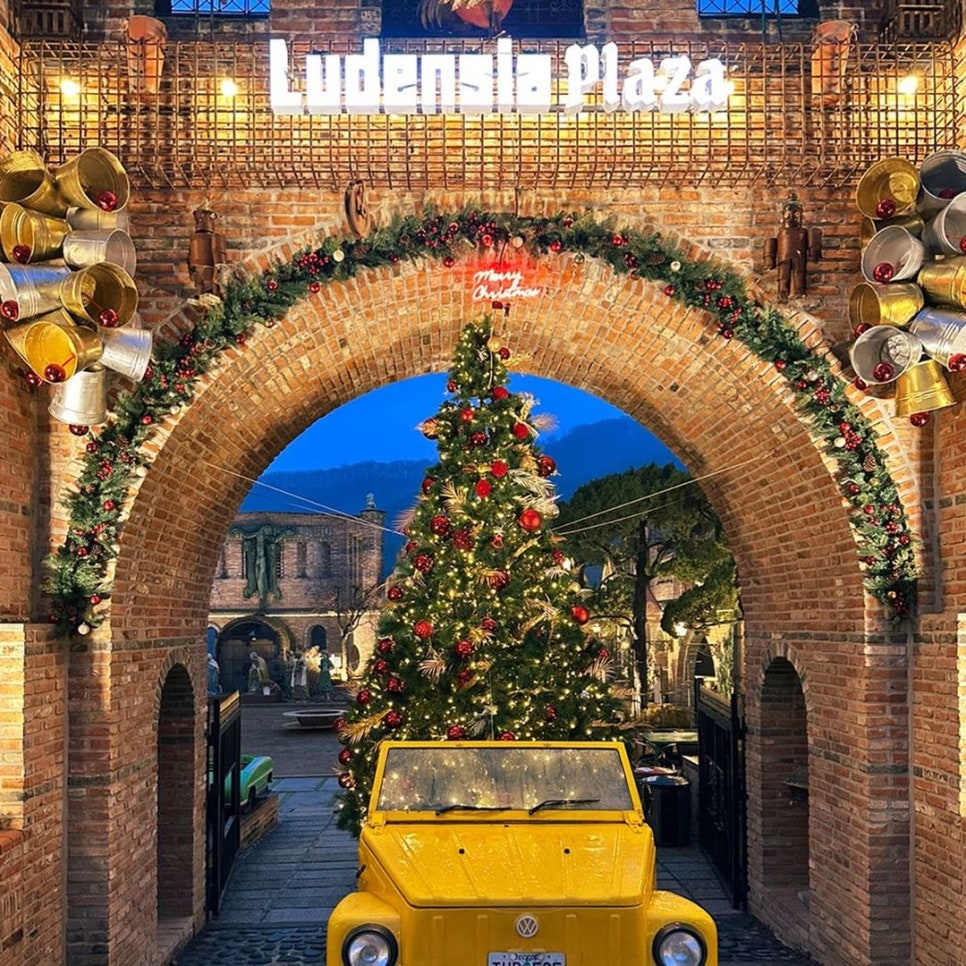 Korea Tourism OrganizationEvent16 November 2026On nowLudensia Christmas Fantasy, Yeoju — six December days need Naver booking
 Korea Tourism OrganizationEvent16 November 2026In 10 daysFreeHaeundae Light Festival 2026, Busan — free nightly, 28 Nov–10 Jan