Exhibition·Cheongju National MuseumOn nowFree
Cheongju National Museum metal exhibition — extended to 8 November, free
Summary
Cheongju National Museum has extended its special exhibition Light, Resonance, Force – Metal Awakens the Senses from 30 August to Sunday 8 November 2026. It is built around just three objects — the Silla-era Seobongchong gold crown, a Unified Silla temple bell found in Cheongju, and a Joseon 'four tigers' sword — which you are meant to look at, listen to and feel the weight of. Entry is free and walk-in, so there is nothing to book and no Korean phone number needed. The museum's permanent art and gold-crown galleries are closed from 29 September to 27 December, so a visit now centres on this exhibition and the archaeology galleries.
Article
In short
- Light, Resonance, Force – Metal Awakens the Senses runs at Cheongju National Museum until Sunday 8 November 2026, extended from its original closing date of 30 August.
- Admission is free and there is no booking. The museum opens Tuesday to Sunday, 9:00 am to 6:00 pm, and is closed on Mondays.
- The exhibition shows three objects — the Silla Seobongchong gold crown, a Unified Silla bronze bell from Uncheon-dong in Cheongju, and a Joseon four-tiger sword — and the extension notice says all three stay to the end.
- The permanent art and gold-crown galleries are closed from 29 September to 27 December 2026; the archaeology galleries and this exhibition stay open.
- For a visitor who reads no Korean: labels are in Korean, but the listening and weight-lifting stations need no reading, and walking in needs no Korean phone number.
Cheongju National Museum, on Myeongam-ro in the east of Cheongju, has extended this year's special exhibition, Light, Resonance, Force – Metal Awakens the Senses, to Sunday 8 November. Its notice of 23 August said the show would continue unchanged, built around a crown, a bell and a sword. Instead of filling a hall with dozens of pieces, it gives each of three objects one sense — light, sound, force — so even a short stop covers the whole thing. About three weeks remain.
Why only three objects?
According to the National Museum of Korea's opening press release of 21 April, the aim is not to have visitors memorise dates and lineages but to start from what they themselves see and feel. So the curators chose one object for each of three ways metal reaches the senses — light thrown back from a surface, sound that spreads when it is struck, and the hardness and weight of it in the hand. The gallery is divided into three parts in that order.
How the exhibition is laid out
- Part 1 · Me and the story of light
- Seobongchong gold crown (Silla) — seeing: light caught in the gold
- Part 2 · Us and the story of resonance
- Uncheon-dong bronze bell (Unified Silla) — hearing: the ring of a temple bell
- Part 3 · The world and the story of force
- Four-tiger sword (Joseon) — touching: the weight of iron and what it stood for
How is the Seobongchong crown different from other Silla crowns?
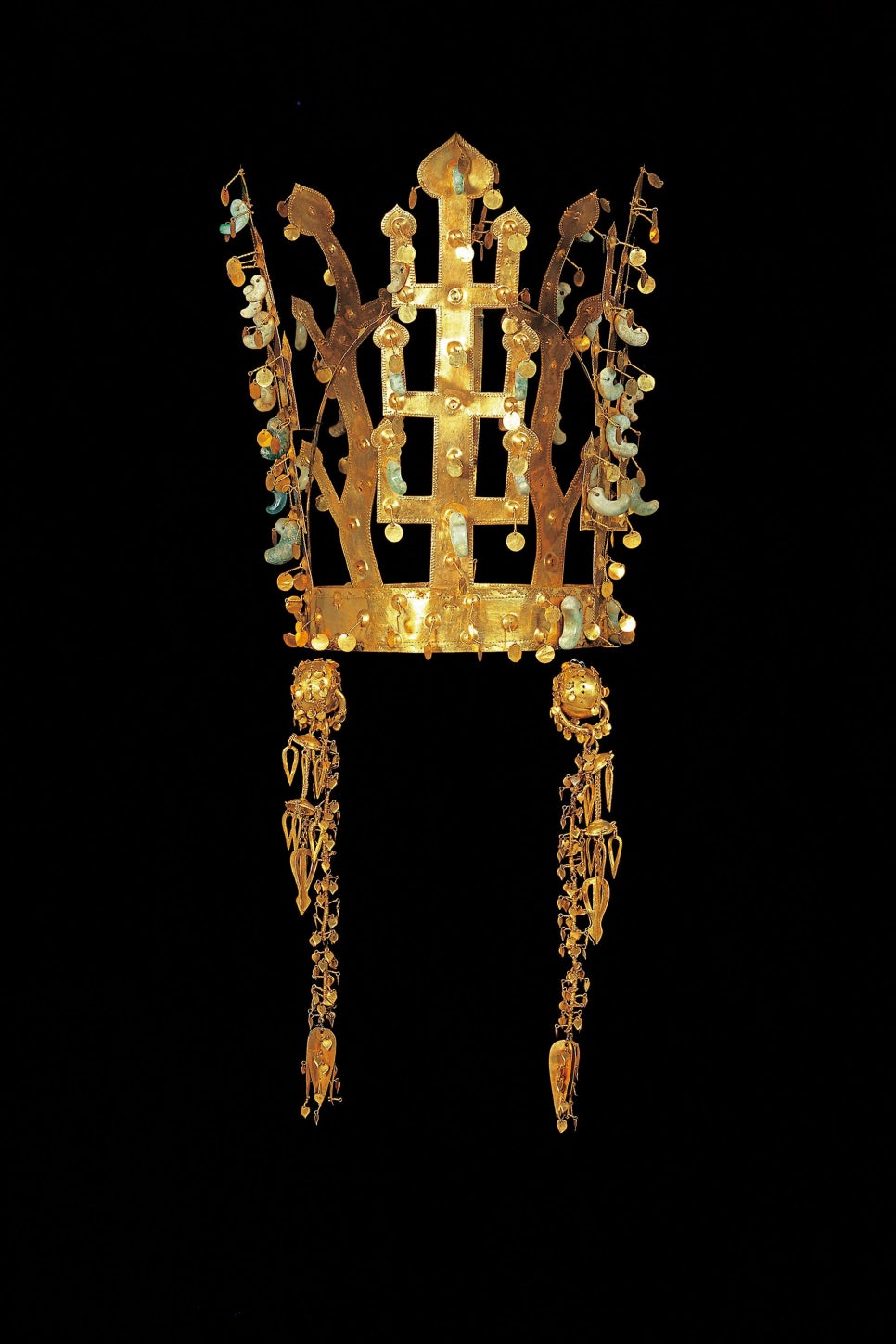
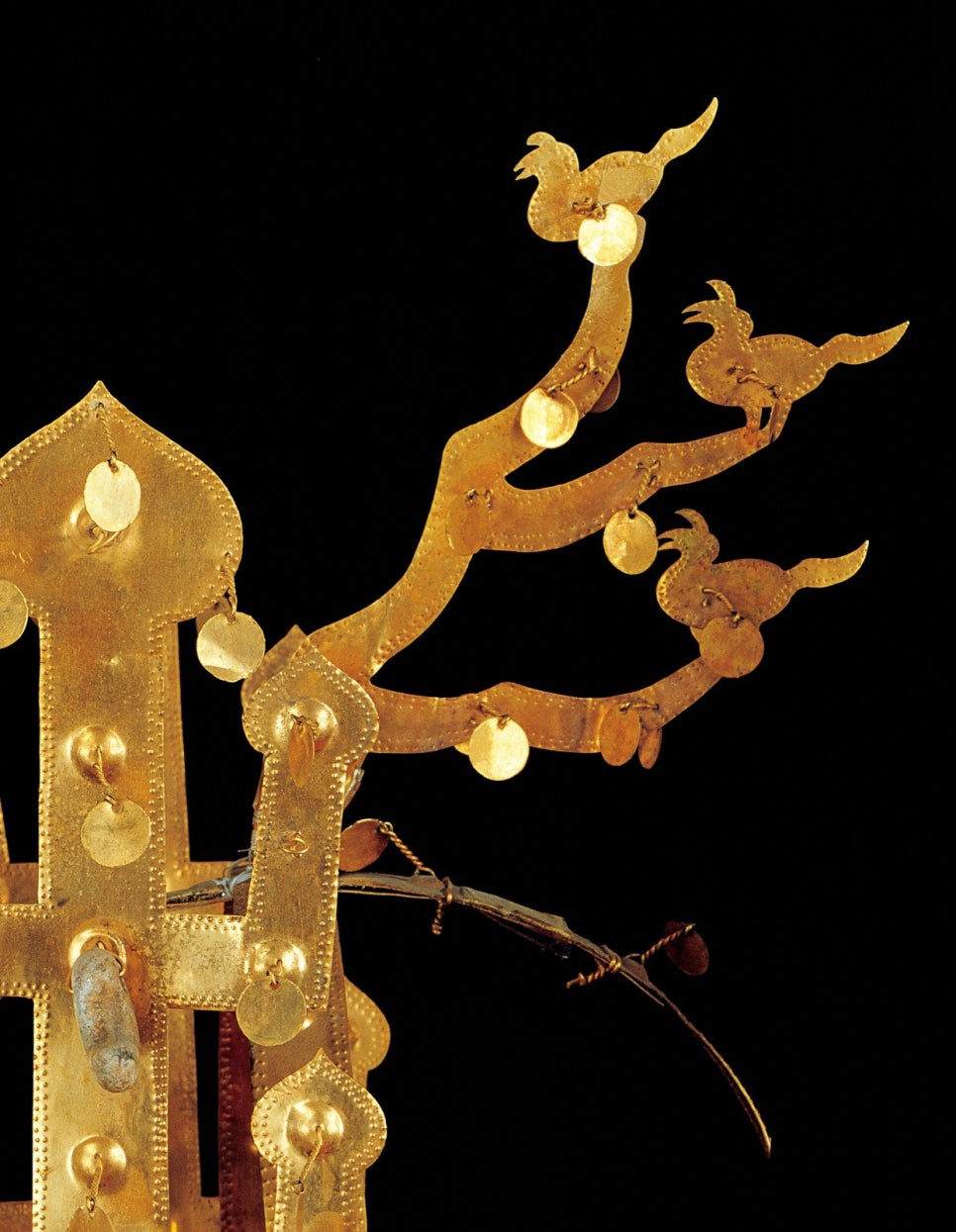
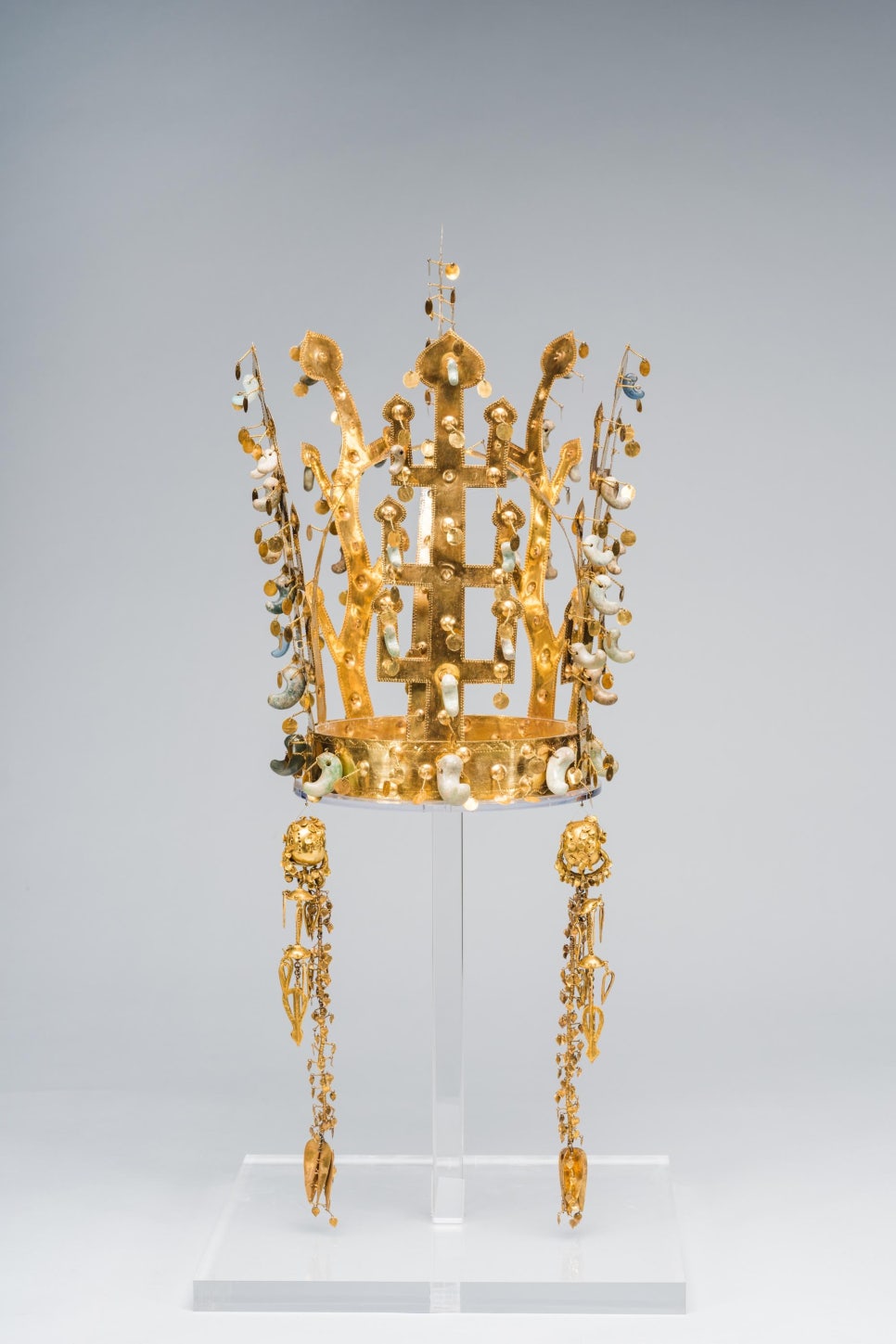
A Silla gold crown is usually a headband with upright ornaments shaped like the character chul (出) and like deer antlers. The Seobongchong crown has the same frame, but two thin gold bands rise from inside the headband and cross over the top of the head, and bird ornaments sit where they meet. Those birds — phoenixes, in the tomb's name — are what make it distinctive. It belongs to the National Museum of Korea and is designated a Treasure.

Up close, each ornament does something different. Bird and branch shapes sit at the top; curved jades (gogok) and spangles — thin discs of gold hung on wire — cover the uprights. These spangles are why part one is called 'light': under the gallery lights, hundreds of small gold discs each throw it back at a different angle.

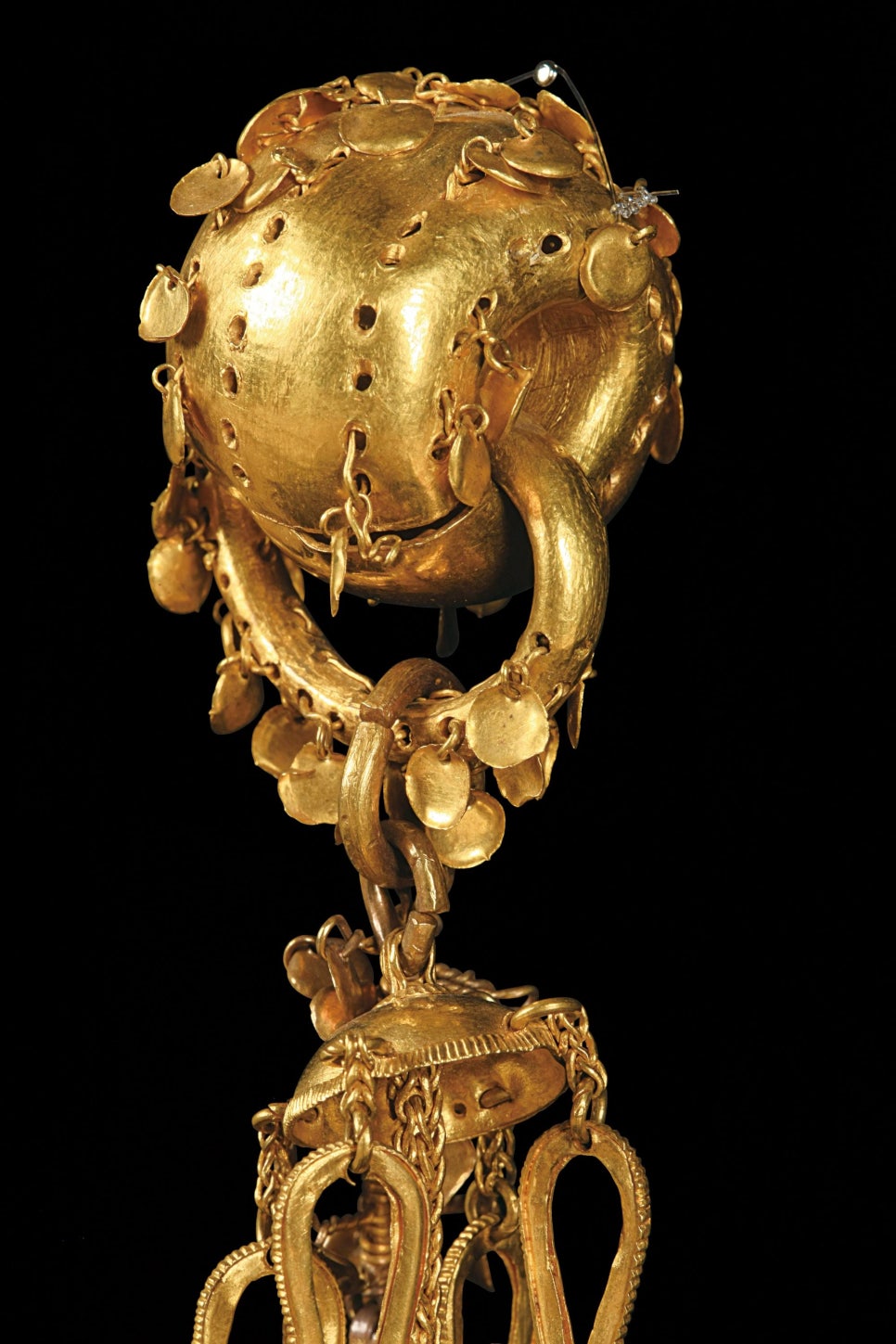
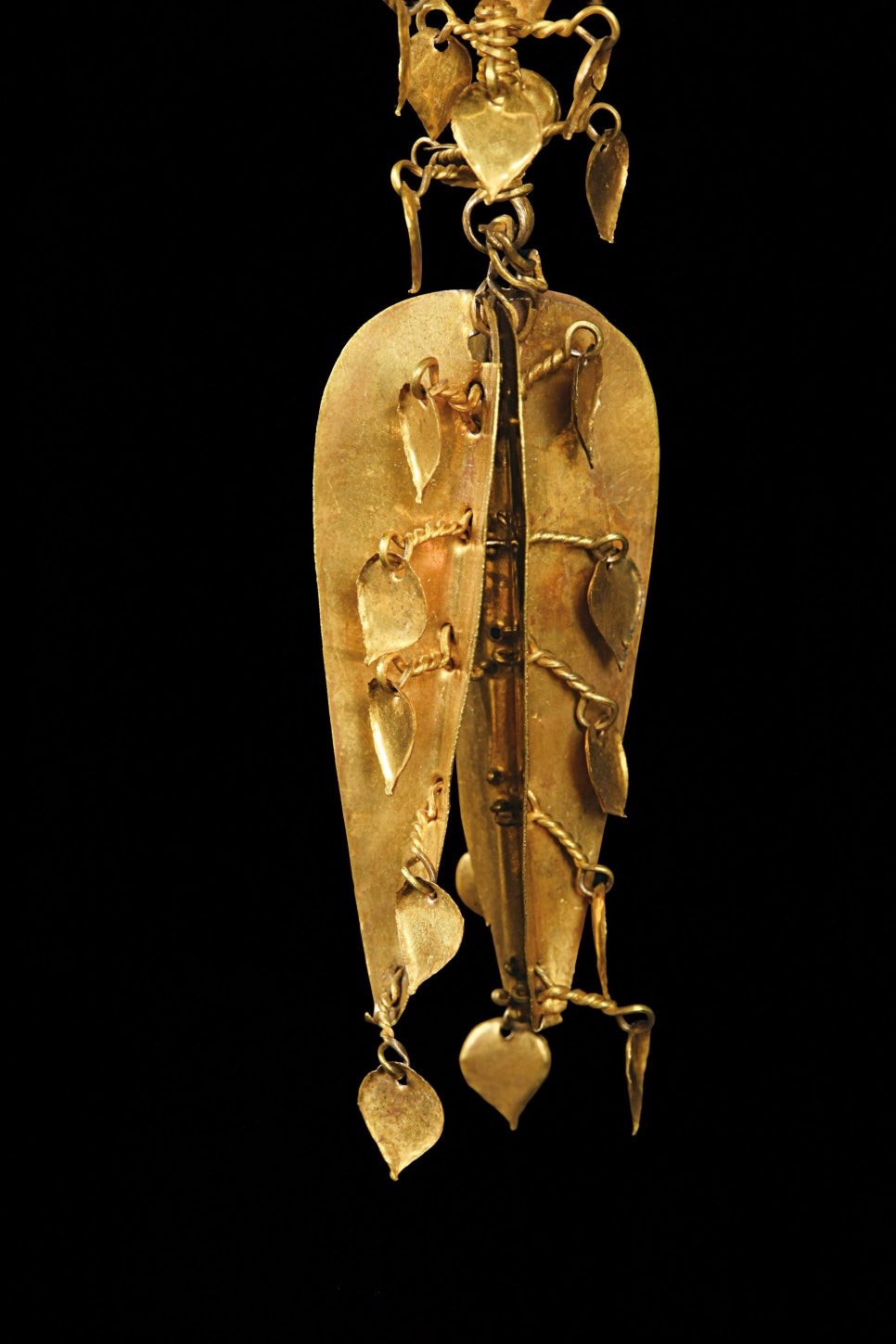
Long pendants hang from either side of the headband. Each starts from a thick ring, continues as a chain of small spangles and ends in a pointed gold plate. They are hard to see in a straight-on photograph, which makes them worth a closer look in the gallery.
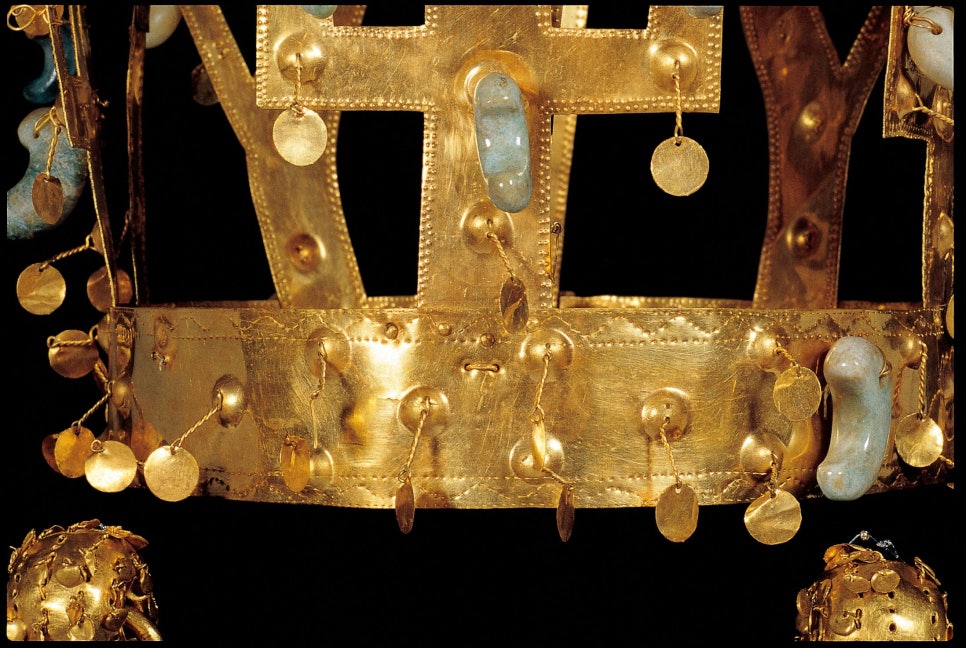
The Seobongchong tomb in Gyeongju was excavated in 1926 and is known for the Swedish crown prince — later King Gustaf VI Adolf — who was travelling in East Asia and took part in the dig. According to a Kyunghyang Shinmun report (May 2026), the crown is displayed so it can be seen from all sides and from below, beside a 'crown design notebook' that sets out the order and materials the goldsmith used.
What do you hear at the Uncheon-dong bell?
The bell in part two was found in Cheongju itself. It was discovered at Uncheon-dong in 1970, together with a gilt-bronze Buddha among other finds, and designated a Treasure in 1993. It is a medium-sized bell about 78 cm tall; its hanging loop is a single dragon biting the top plate with its mouth open, and flying celestial figures are cast on the front and back. The Korea Heritage Service dates it to the mid-ninth century, late Unified Silla. It belongs to Cheongju National Museum, which makes it the only one of the three that is local.
Kyunghyang Shinmun reports that the bell stands on a round plinth with no barrier, that headphones let you compare its sound with other temple bells such as the Sacred Bell of King Seongdeok, and that choosing a mood on a tablet plays a bell sound reworked to match. We found no official photograph of this bell released for free reuse, so it is described here in words only.
What is the four-tiger sword, and what can you try?
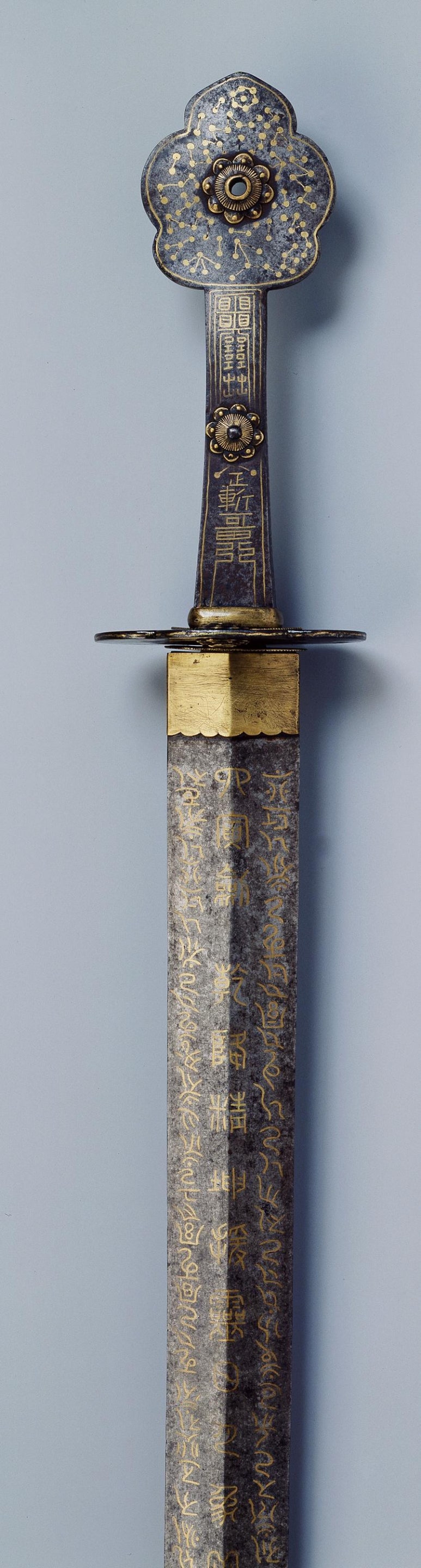
A sainsageom (四寅劍) is a Joseon sword forged at a moment chosen because the sign of the tiger, in (寅), fell on the year, month, day and hour at once. It was less a weapon than a talisman, meant to ward off evil and set things in their proper order. Constellations, the Big Dipper among them, are inlaid in gold and silver along the blade.
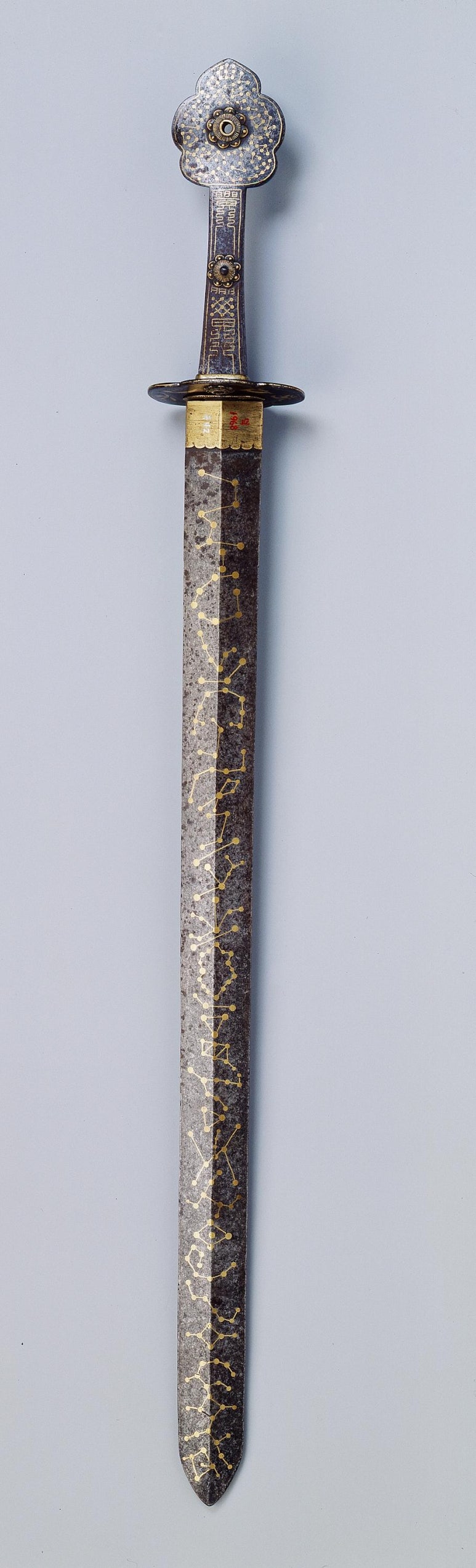
Part three lets you feel 'force' with your hands. According to Kyunghyang Shinmun, you can touch a piece of iron ore and lift an iron plate made to the same weight as the sword. Hands-on stations can change while an exhibition runs, so check at the entrance if you are coming with children.
Before you go
- It closes on Sunday 8 November. Posters or articles giving 30 August predate the extension.
- Closed on Mondays. The last weekend (7–8 November) may be busy; weekday mornings are quieter.
- No admission fee, no booking. The museum's visitor page lists admission as free, and there is no separate fee or reservation for this exhibition.
- Permanent art and gold-crown galleries closed (29 September – 27 December). Archaeology galleries 1 and 2, the children's museum and Cheongnyeon Hall (digital forge, 4D cinema) stay open; the closed galleries are due to reopen on 29 December.
Will the crown be there until the end?
The Seobongchong crown is on loan from the National Museum of Korea. Cheongju National Museum's extension notice of 23 August states that the crown, the bell and the sword all continue to 8 November, and as of 22 October the exhibition page gives the same dates. Loaned objects can still be swapped for conservation reasons, so if the crown is why you are going, call the main line (+82 43-229-6300) before you set out. With the permanent gold-crown gallery closed, this exhibition is the only place in the museum to see a crown during this period.
Getting there, and visiting without Korean
Cheongju is about two hours south of Seoul. Express buses run from Seoul to Cheongju's express and intercity bus terminals, and KTX trains stop at Osong Station on the city's western edge; the museum's English Visit Us page says to take a Cheongju city bus from the terminal or the station, and a taxi from the bus terminals is the simplest option for a first visit. The museum sits at the foot of Uamsan in the east of the city, at 143 Myeongam-ro. There is nothing to book, so the usual hurdles for foreign visitors — a Korean phone number for verification, a domestic card — do not apply. The exhibition text is in Korean, and we could not confirm English labels or an English audio guide for it, so read the sections above before you go: the crown can be looked at, the bell listened to and the iron plate lifted without reading a word.
Frequently asked questions
- Q. When does Light, Resonance, Force at Cheongju National Museum end?
- On Sunday 8 November 2026. It was originally due to close on 30 August; the museum announced the extension on 23 August. The museum is closed on Mondays.
- Q. How much is the Cheongju National Museum metal exhibition, and do I need to book?
- It is free, and you walk in — there is no booking. Opening hours are Tuesday to Sunday, 9:00 am to 6:00 pm.
- Q. What objects are in Light, Resonance, Force?
- Three: the Seobongchong gold crown (Treasure, Silla), the bronze bell excavated at Uncheon-dong in Cheongju (Treasure, Unified Silla) and a Joseon four-tiger sword, one in each of the three parts — light, resonance and force.
- Q. Is the gold-crown gallery at Cheongju National Museum open?
- No. The permanent art and gold-crown galleries are closed for refurbishment from 29 September to 27 December 2026 and are due to reopen on 29 December. Meanwhile the Seobongchong crown can be seen in this exhibition in the Special Exhibition Gallery (Cheongmyeong Hall).
- Q. How is the Seobongchong crown different from other gold crowns?
- Two thin gold bands rise from inside the headband and cross over the top of the head, with bird ornaments where they meet. Other Silla crowns rarely have that structure.
- Q. Is it worth going if I do not read Korean?
- Yes, if the objects themselves are the draw. With only three pieces, the exhibition is about looking, listening and handling rather than reading: the crown is displayed to be seen from all sides, the bell sounds come through headphones, and the iron plate is there to lift. What you will miss is the Korean wall text and the design notebook, and we could not confirm any English labels or audio guide. Entry is free and needs no booking, so it costs little to try, and the museum's archaeology galleries are open too.
Editor's note · Kang Shin-wook
For anyone heading to central Korea who likes a small exhibition they can see properly in under an hour, and for families looking for something hands-on. Hours and closing days of the other national museums are compared on National museums; what else is on is in Events.
Sources
- Official notice (Korean)
- Light, Resonance, Force exhibition page — Cheongju National Museum (Korean)
- Art and gold-crown gallery closure notice, 17 Sep 2026 — Cheongju National Museum (Korean)
- Hours, admission and closing days — Cheongju National Museum (Korean)
- Opening press release, 21 Apr 2026 — National Museum of Korea (Korean)
- Bronze bell excavated at Uncheon-dong, Cheongju — Korea Heritage Portal (Korean)
- 'See the crown, hear the bell, lift the sword' — Kyunghyang Shinmun, 5 May 2026 (Korean)
Written in our own words from the sources above, never copied from them, and every date and price checked against at least two pages. The originals are in Korean. Spotted a mistake? Ask for a correction.