Exhibition·National Institute of Biological ResourcesOn nowFree
Free tidal-flat plant exhibition near Incheon Airport — to March 2027
Summary
The National Institute of Biological Resources in Incheon is showing 26 species of salt-tolerant plants and the tidal-flat animals that live among them, from 11 September 2026 until 31 March 2027. Admission and parking are free, individuals walk in without booking, and a free shuttle bus runs from Geomam Station (검암역) on the Airport Railroad line that connects Incheon Airport with Seoul.
Article
In short
- The exhibition runs from 11 September 2026 to 31 March 2027 at the National Institute of Biological Resources in Incheon.
- Admission is free and so is parking. Individual visitors need no reservation at all — only groups of ten or more must book ahead.
- Opening hours are 9:30 am to 5:30 pm, and the building is closed on Mondays and over the Seollal and Chuseok holidays.
- A free shuttle bus runs from Geomam Station (검암역), which is on the same Airport Railroad line as Incheon International Airport.
- Expect Korean wall texts, but the exhibition leans on models, an AI-generated video wall and a touchscreen you can use without reading anything.
Korea's western coast has one of the largest tidal flats in the world, and from a car window it looks like a grey plain with nothing growing on it. It is not. A group of plants called halophytes lives there, coping with salt, glare, wind and water that arrives twice a day, and in autumn they turn whole stretches of mud deep red. This exhibition assembles 26 of those species along with the crabs, fish and birds that depend on them. It is free, it is a short shuttle ride from a station on the airport line, and it stays open until the end of March 2027.
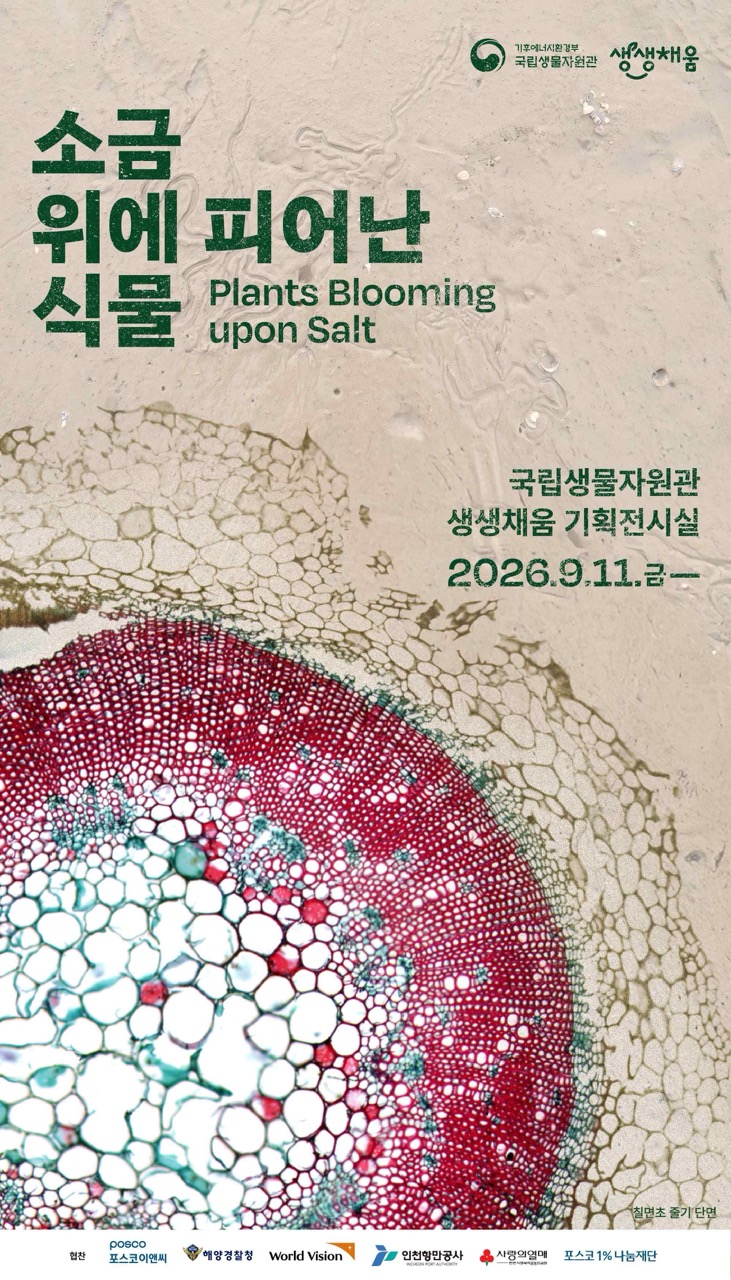
What a halophyte is, and why 26 of them
A halophyte is simply a plant that lives in salty soil. Most plants cannot: salt pulls water back out of their roots. Halophytes manage it, and different species manage it differently, which is what the exhibition sets out to explain. Alongside the plants it shows the animals that share the same ground, because the argument the institute is making is that the plants are the reason the rest of the tidal flat works at all.
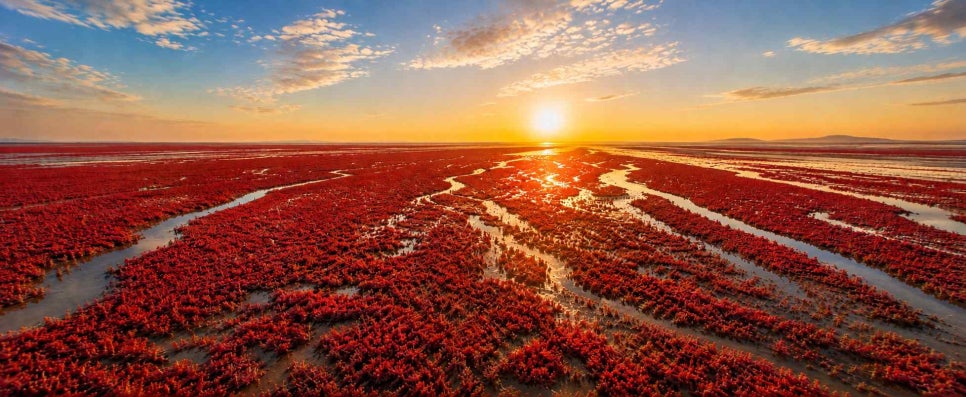
Four plants you can finally see properly
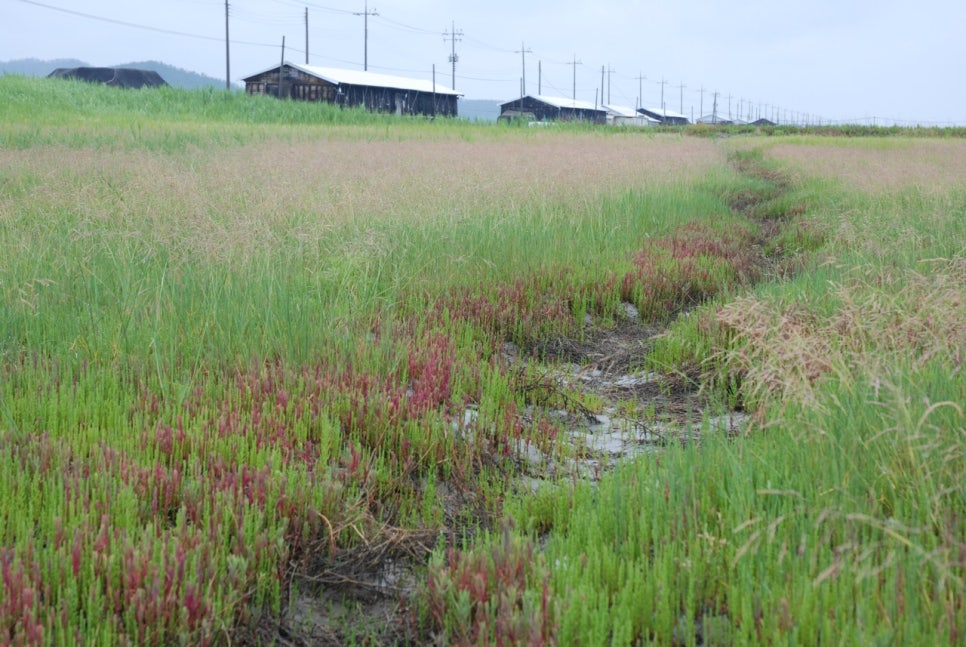
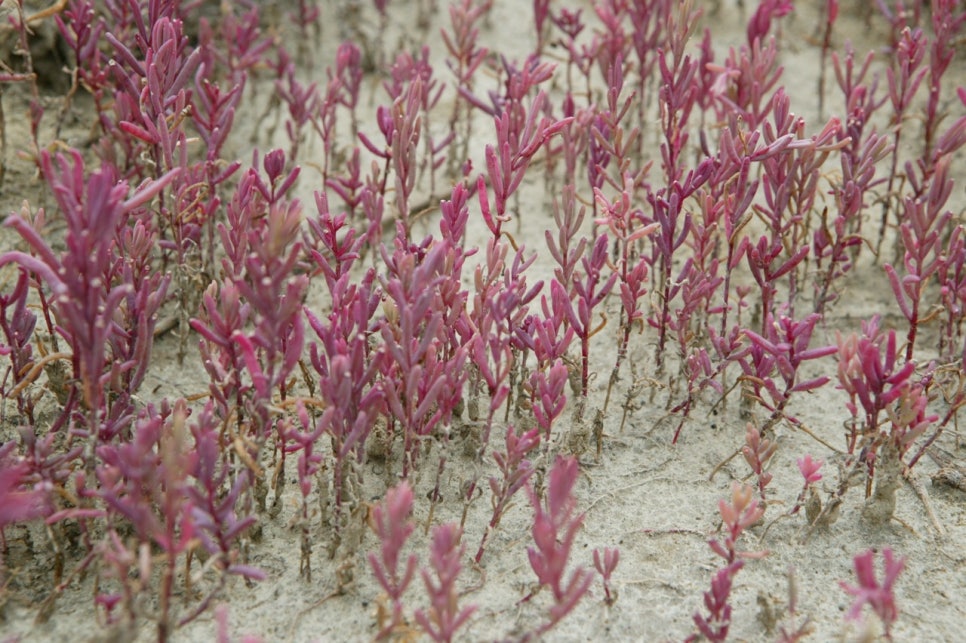
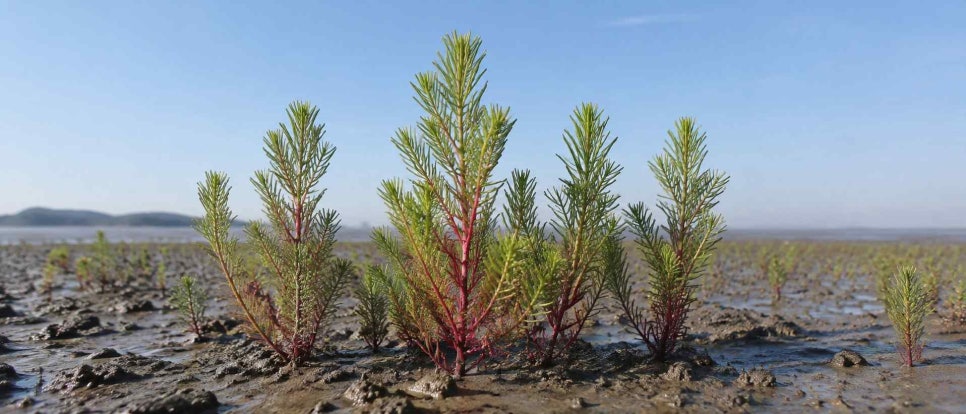
Four of the 26 species have been built as oversized models: common glasswort, sea blite and two of their relatives. On a real tidal flat these plants are ankle-high, so unless you crouch in the mud you never see how the stems are built or why the segments look swollen. Enlarged, they become legible. The photographs below show the same four species growing in the wild.
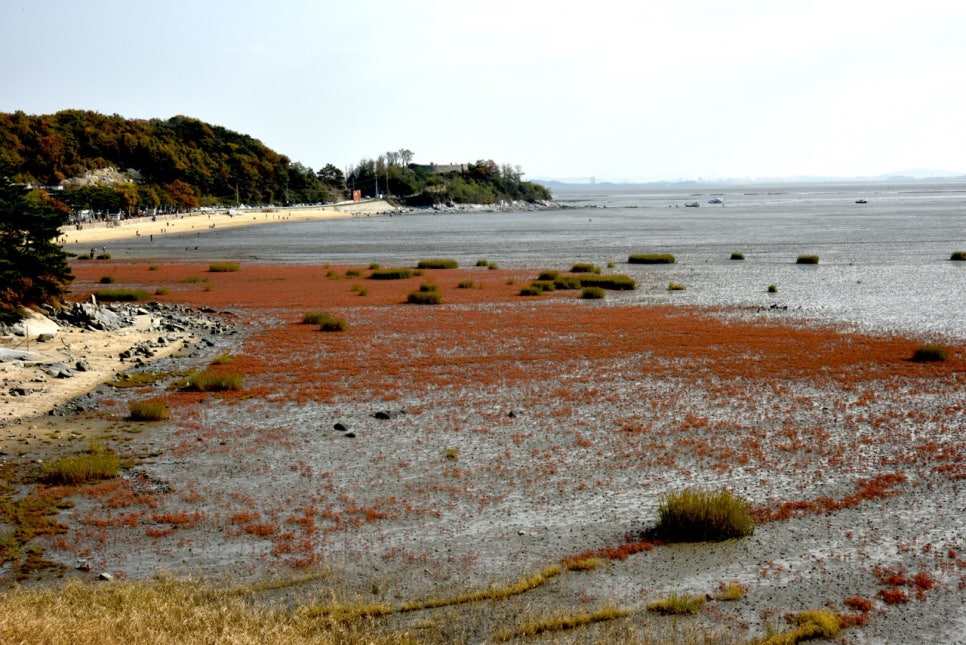
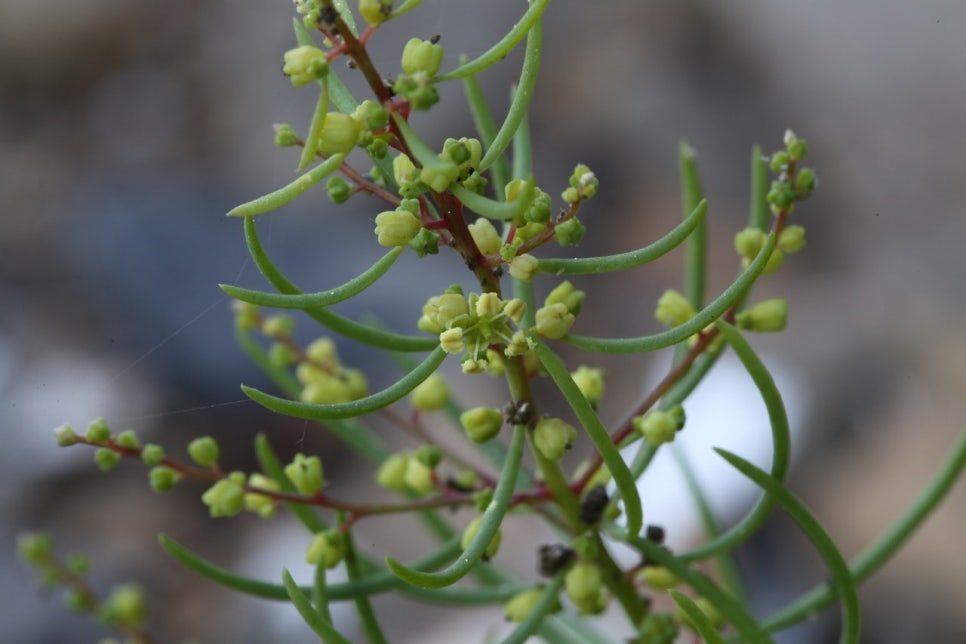
How much of it works without Korean
More of it than you would expect. The institute has not said that the labels are translated, so assume the reading is in Korean. But the three things the exhibition is built around need no text: the enlarged models, an immersive video wall made with generative AI that shows the salt marshes and their animals, and an interactive screen where you plant halophytes yourself and watch what happens to the ecosystem as they spread. That last one is aimed at children and works entirely by touch. If you are travelling with a child between flights, it is the part that will hold them.
The animals, including one that is alive
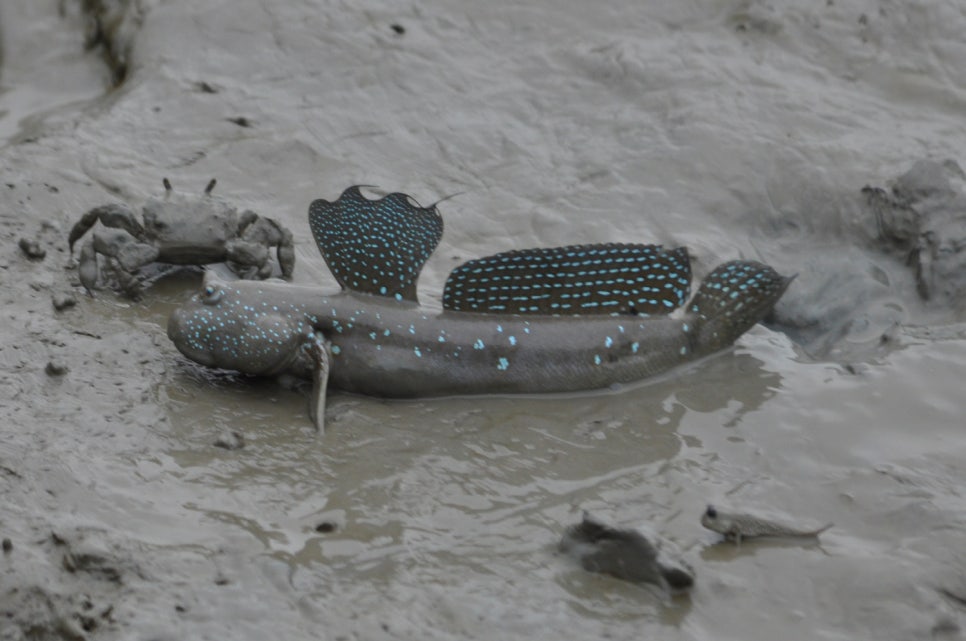
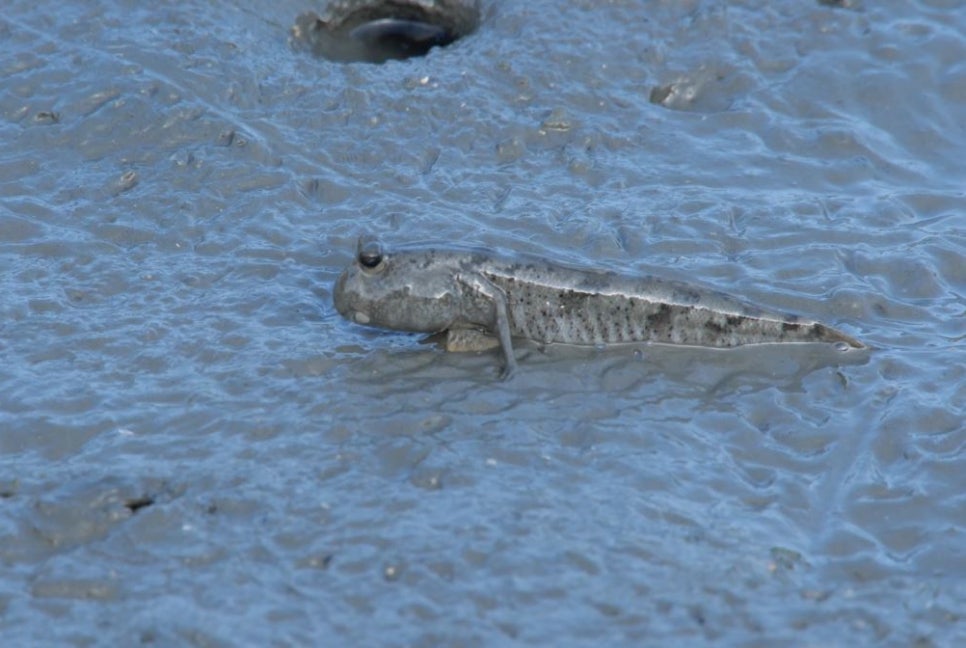
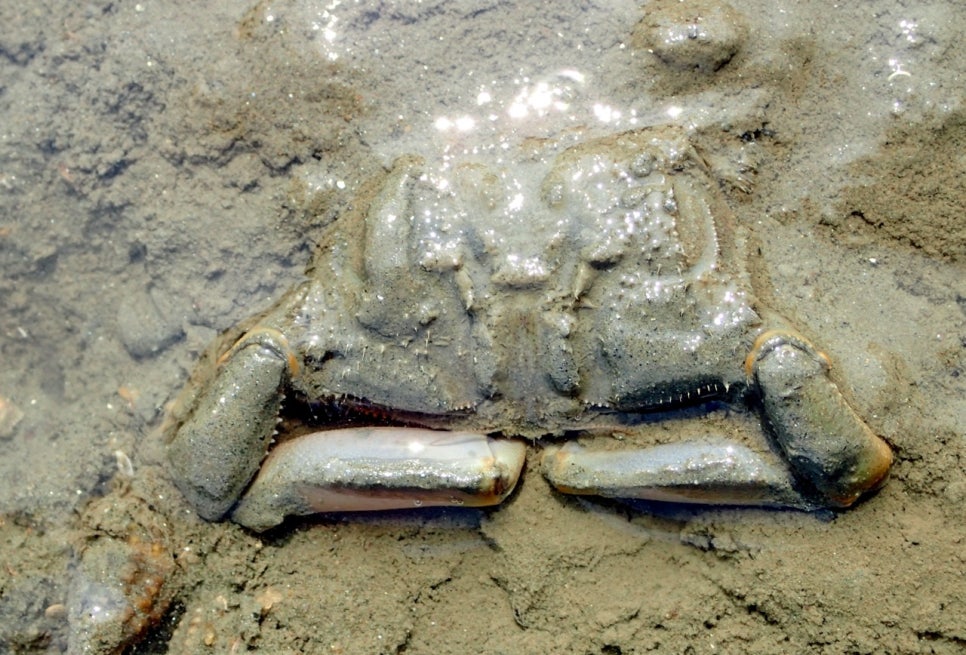
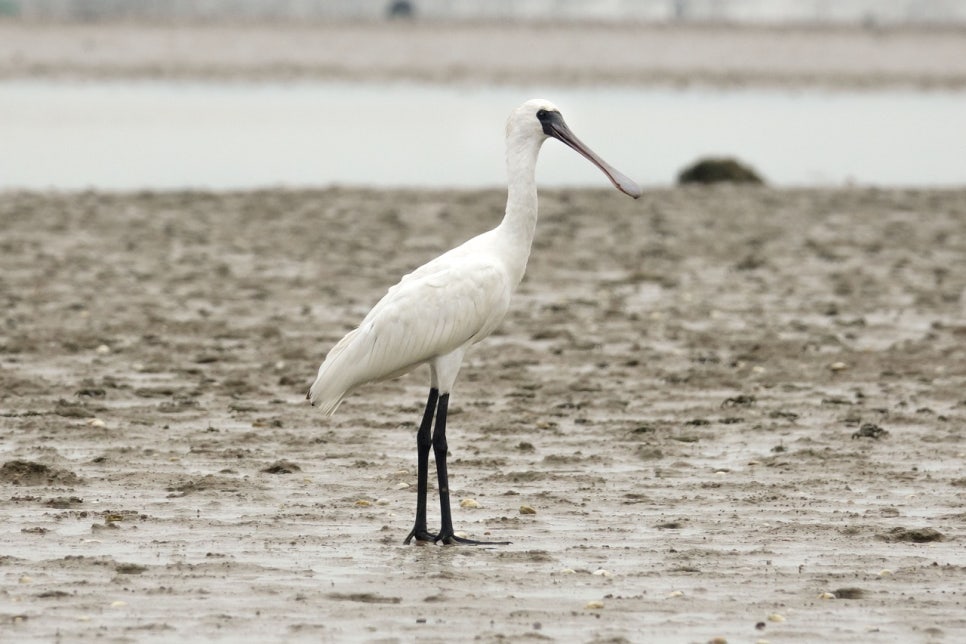
The second half of the exhibition is specimens: mudskippers and other fish, ghost crabs and clams, and birds including the black-faced spoonbill, a globally threatened species that feeds on exactly these flats. One animal is not a specimen. A live mudskipper is kept in the exhibition, and it is the thing most visitors end up standing in front of longest.
Getting there, and how long to allow
The institute sits inside a government research campus on the western edge of Incheon. By public transport you take the Airport Railroad or Incheon Metro Line 2 to Geomam Station (검암역) and catch the institute's free shuttle bus from in front of the station; the timetable is published as a download on the visiting-information page, so check it before you set out rather than after. By car, park in the visitor car park at the exhibition building — parking is free like everything else here. The address the institute publishes is 42 Hwangyeong-ro, Incheon, and if a mapping app does not find it, searching for the institute by name or for the research campus works better.
Worth knowing before you plan a layover
Geomam is on the line between Incheon International Airport and Seoul Station, which makes this one of the few free, indoor, no-booking attractions on that route. But the institute closes at 5:30 pm and all day Monday, and the shuttle runs to a fixed timetable — so it works for a long daytime layover and not for an evening one.
Frequently asked questions
- Q. How much does it cost?
- Nothing. Admission to the exhibition hall is free and so is parking.
- Q. Do I have to book, and will I need a Korean phone number?
- No booking is required for individual visitors, so you do not need a Korean phone number or an account on any Korean site. Only groups of ten or more register in advance.
- Q. When is it open?
- 9:30 am to 5:30 pm. It is closed on Mondays, on 1 January, and on the day of Seollal and of Chuseok as well as the day before each of those holidays.
- Q. How do I get there from Incheon Airport?
- Take the Airport Railroad to Geomam Station (검암역) and use the institute's free shuttle bus from in front of the station. Check the shuttle timetable on the visiting-information page before you travel.
- Q. Is it worth going if I do not read Korean?
- The labels should be assumed to be Korean, but the exhibition's main elements are the large plant models, an immersive video wall and a touchscreen planting game, none of which require reading. It is a reasonable hour for a family; it is not the place to come for detailed botanical reading in English.
Editor's note · Kang Shin-wook
For travellers with a long layover or a spare morning on the Incheon side of the capital region, and for families who want an indoor stop that costs nothing. Opening hours and prices for Korea's ecology and nature institutions are compared on our ecology institutions page.
Sources
- Official notice (Korean)
- National Institute of Biological Resources — press release, 11 September 2026 (Korean)
- Visiting information: hours, closures, shuttle bus (Korean)
- National Institute of Biological Resources — English site
Written in our own words from the sources above, never copied from them, and every date and price checked against at least two pages. The originals are in Korean. Spotted a mistake? Ask for a correction.