Exhibition·Korea National ArboretumOn nowFree
Korea National Arboretum weeds exhibition — hands-on, to 29 Nov
Summary
The Korea National Arboretum in Pocheon, north-east of Seoul, has turned its Children's Garden into a hands-on exhibition about weeds, Small but Great: Weeds, running from 30 September to 29 November 2026. Visitors look at botanical illustrations of common roadside plants, take woodblock rubbings of five weeds and layer rubber stamps of four more; there is no charge beyond arboretum admission (KRW 1,000 for adults). The catch is the car park: only pre-booked vehicles may enter, but anyone arriving on foot, by bus or by taxi walks in without a booking.
Article
In short
- Small but Great: Weeds runs from 30 September to 29 November 2026 in the Children's Garden of the Korea National Arboretum in Pocheon, Gyeonggi-do; the arboretum is closed on Mondays, and last entry is 5:00 pm in October and 4:00 pm in November.
- Visitors see botanical illustrations of common plants such as violets, Ixeris stolonifera and Cardamine leucantha, and make woodblock rubbings of five weeds and layered stamp prints of four.
- The exhibition is open to every arboretum visitor at no extra cost; arboretum admission is KRW 1,000 for adults, KRW 700 for teenagers and KRW 500 for children.
- Walk-in visitors arriving by bus or on foot need no booking, but a car is let in only with a parking booking made in advance on the arboretum's reservation site.
- Panels are in Korean only, but the rubbing and stamping tables are hands-on, so children who do not read Korean can join in.
The Korea National Arboretum, in the old-growth Gwangneung forest, has given its Children's Garden over to weeds for the autumn. Plants that usually get pulled out of verges and flowerbeds are shown again as botanical illustrations, and visitors print them with woodblocks and stamps to learn their names and shapes. It runs from 30 September to 29 November 2026, and anyone who has entered the arboretum can drop in. With children, it is a good place to spend an hour on an autumn walk through the grounds.
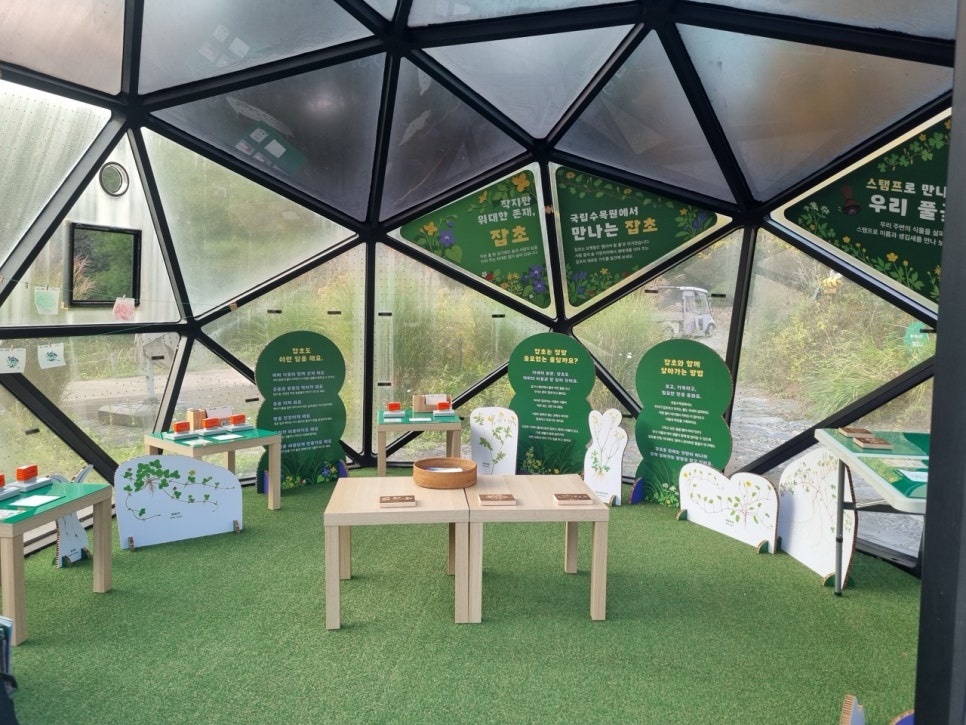
What do you do at the weeds exhibition?
According to the arboretum's press release, the exhibition has four parts. First come botanical illustrations on standing boards, of plants seen in any neighbourhood: violets, Ixeris stolonifera, Cardamine leucantha and others. Beside them, visitors lay paper over woodblocks carved with five weeds and rub out a print, then use stamps of four weeds, pressed one over another, to compare how leaf and stem shapes differ between species. The last part is a panel on the arboretum's own research into turning weeds into compost.
.jpg?type=w966)
The exhibition at a glance
- Botanical illustrations
- Illustrations of common plants such as violets, Ixeris stolonifera and Cardamine leucantha (these three are named in the press release)
- Woodblock rubbings
- Rubbing prints from woodblocks of five weeds (the five are not named in the press release)
- Layered stamps
- Stamping four weeds over one another to compare their shapes (the four are not named in the press release)
- Compost research panel
- How the arboretum turns weeds it pulls into compost (exact wording to be checked on site)
.jpg?type=w966)
.jpg?type=w966)
Which corners suit children best?
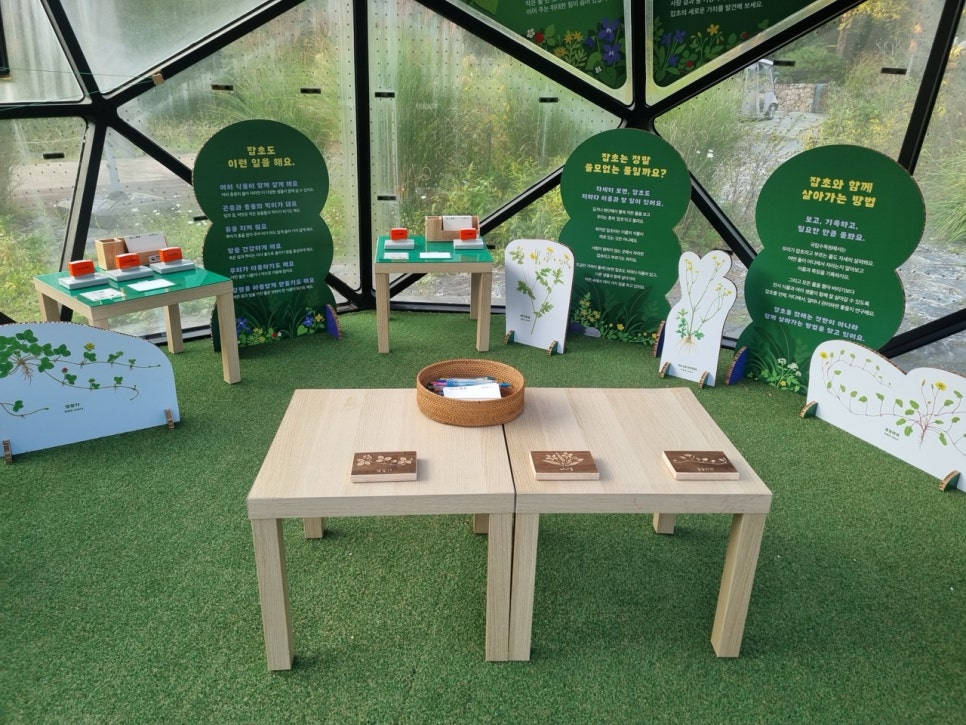
The busy-hands corners are the rubbings and the stamps. Rubbing over a woodblock slowly brings out veins and serrated edges, so even small children see a result straight away; with the stamps, each change of colour or position changes the picture, which keeps them at the table. The arboretum says it built in the hands-on elements so that children could observe weeds closely and express what they see. The exact species used in the activities are not named in the official material, so reading the labels on site together is part of the visit.
_jpg.jpg?type=w966)
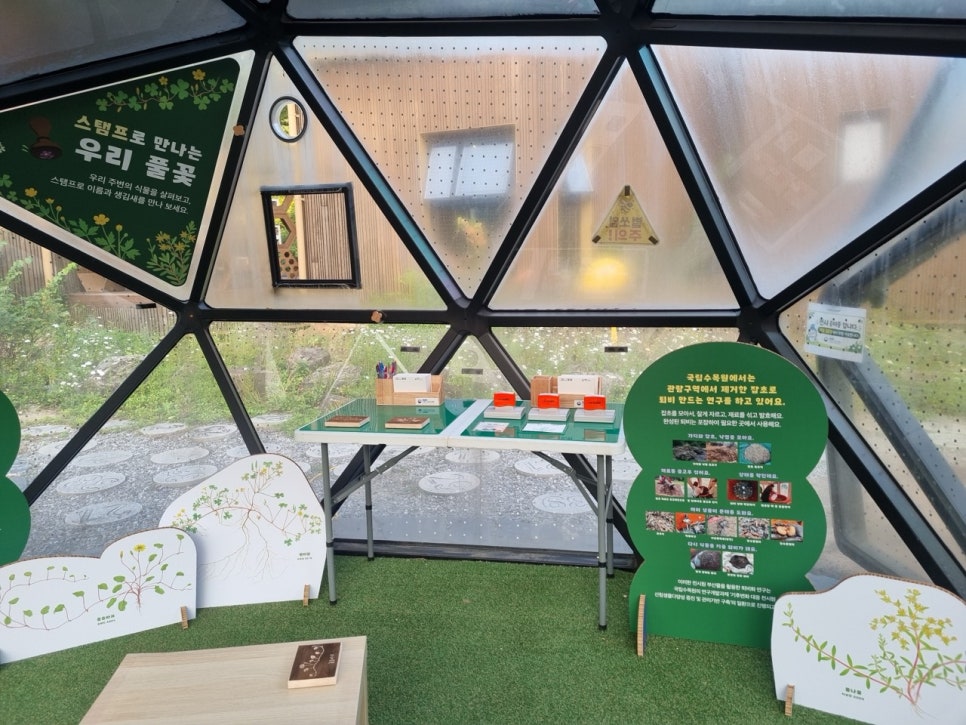
What does making compost from weeds mean?
The compost panel is what takes the exhibition beyond looking. The arboretum is researching how to turn the weeds it pulls while maintaining the grounds into compost rather than throwing them away, and the exhibition explains the process. From the press photograph the panel appears to run through gathering, chopping, mixing and fermenting, and using the result where it is needed, but that is read from a photograph, so the wording on site is the reliable version. The head of the arboretum's exhibition and education division described the show as a chance to look again at the beauty and ecological role of the weeds underfoot.
_jpg.jpg?type=w966)
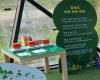
The 'Weeds do this too' panel near the end makes the case that weeds live alongside other plants, feed insects and animals, and hold the soil in place. This too is read from a press photograph and may differ slightly from the panel itself.
_jpg.jpg?type=w966)
Do you need to book, and can you drive?
The exhibition itself needs no sign-up: once inside the arboretum you can walk straight in. What decides things is how you arrive. According to the arboretum's visitor information, people arriving on foot or by public transport enter without a booking (up to 4,500 a day). Cars, by contrast, are 100% pre-booked: only vehicles with a parking reservation on the arboretum's booking system can enter the car park, and unbooked cars are turned back at the entrance. On days with spaces left, same-day bookings can be made online up to an hour before last entry. Visitors entitled to free admission still need a parking booking if they drive, and must bring proof of eligibility to collect a ticket at the staffed ticket office.
October–November visiting details (from the arboretum's visitor information, admission and parking pages)
- Opening hours
- October 9:00 am – 6:00 pm / November 9:00 am – 5:00 pm
- Last entry
- October 5:00 pm / November 4:00 pm
- Closed
- Mondays
- Extra autumn weekend parking
- 3 October to the end of November, Saturdays and Sundays: 88 spaces at the research building car park (booking required)
- Parking fee (flat daily rate, charged after the first 30 minutes)
- Compact, low-emission and multi-child family cars KRW 1,500 / cars KRW 3,000 / vans and minibuses KRW 5,000 / motorcycles KRW 1,000
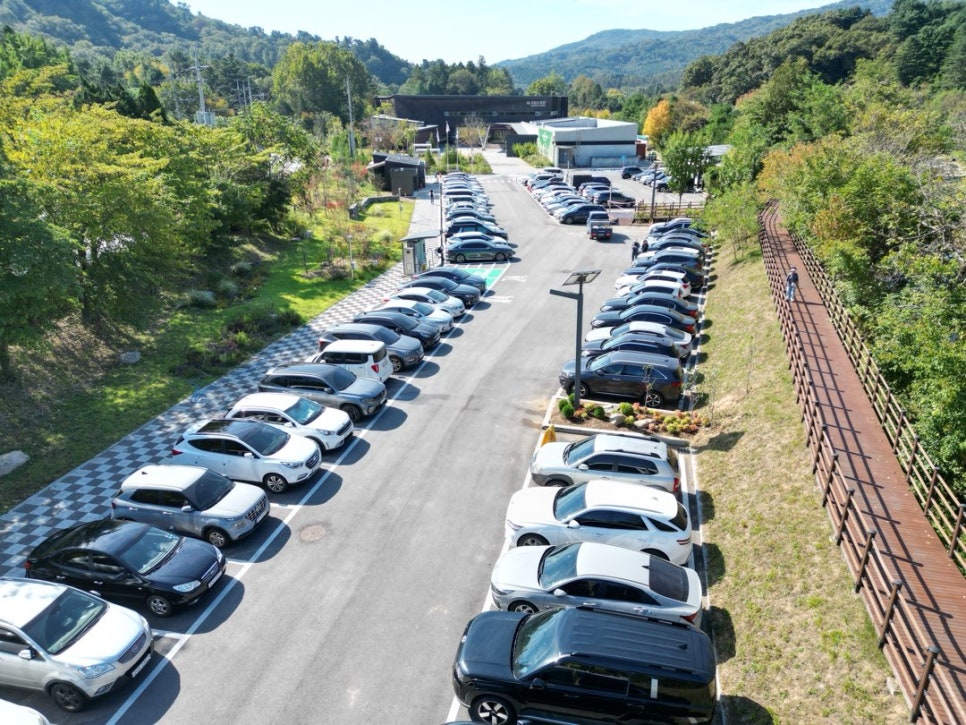
Because the main car park fills quickly on autumn-foliage weekends, the arboretum is trialling 88 extra spaces at its research building car park on Saturdays and Sundays from 3 October to the end of November, by booking. From there it is about 15 minutes' walk along a boardwalk to the main gate, and the research building itself is closed to visitors. Cars carrying registered disabled visitors and persons of national merit park free.
Check before you go
The official material does not say whether the rubbing and stamping tables run all day or close when materials run out. The Forest Museum is closed for remodelling from May to December 2026, so it cannot be combined with this visit. Enquiries: +82 31-540-2000 (Korean).
Getting there without a car, and what to expect in English
Coming by public transport is the simplest choice for a visitor, because it needs no booking at all. According to the arboretum's directions page, there are two routes by subway and bus. From Uijeongbu Station on Seoul Subway Line 1, take exit 5 and walk about 200 m towards the police station to the stop for bus 21, which takes about 50 minutes. From Jinjeop Station on Line 4, take exit 1 and walk about 170 m to the same bus 21, about 25 minutes. Bus 21 runs every 25–40 minutes on weekdays and every 40–50 minutes at weekends, so check the return times before you walk in, especially in November when last entry is 4:00 pm. Inside, the exhibition panels and plant labels are in Korean, and no English guide or session is mentioned for this exhibition. The activities, though, need no language: a woodblock, paper and a stamp pad explain themselves. Driving is harder for a non-resident: the parking reservation site is Korean-only and requires signing up as a member, and it does not say whether a foreign phone number is accepted. Older and disabled visitors can book by phone on 031-540-2000.
Frequently asked questions
- Q. When does the weeds exhibition at the Korea National Arboretum end?
- Small but Great: Weeds runs from 30 September to 29 November 2026 in the arboretum's Children's Garden in Pocheon. The arboretum is closed on Mondays.
- Q. Is there a charge for the weeds exhibition?
- The official material lists no separate charge; you pay only arboretum admission, which is KRW 1,000 for adults, KRW 700 for teenagers and KRW 500 for children, with free entry for ages 6 and under and 65 and over.
- Q. Do I need to book to visit the Korea National Arboretum?
- Not if you arrive on foot or by public transport: walk-in entry is allowed up to 4,500 people a day. A car can enter only with a parking booking made in advance on the arboretum's reservation site; spaces left over can be booked online until an hour before last entry.
- Q. What can children do at the weeds exhibition?
- They can make woodblock rubbings of five weeds and layer stamp prints of four more to compare their shapes. There are also botanical illustrations of plants such as violets, Ixeris stolonifera and Cardamine leucantha, and a panel on the arboretum's weed-compost research.
- Q. What time is last entry at the Korea National Arboretum in November?
- From November the arboretum keeps winter hours, 9:00 am to 5:00 pm, with last entry at 4:00 pm. In October it is open until 6:00 pm with last entry at 5:00 pm.
- Q. Is it worth going if I do not read Korean?
- Yes, if you have children or like plants: the rubbing and stamping activities need no reading, and the illustrations can be enjoyed without the captions. The panels themselves are in Korean only, so the compost research and the plant names will be lost without a translation app. Come by bus to avoid the Korean-only parking booking.
Editor's note · Kang Shin-wook
For families and plant lovers heading out of Seoul in autumn, especially with children who do not read Korean: the activities are done with the hands, not the labels. The arboretum's hours, fees and entry rules are on our Korea National Arboretum visiting guide; other dated events are on Events.
Sources
- Official notice (Korean)
- Korea National Arboretum press release: 88 extra weekend parking spaces, 23 Sep 2026 (Korean)
- Visitor information: entry and vehicle booking (Korean)
- Admission fees (Korean)
- Parking information (Korean)
- Yonhap News: arboretum opens hands-on weeds exhibition, 30 Sep 2026 (Korean)
- Directions by public transport (Korean)
- Booking guide (Korean)
Written in our own words from the sources above, never copied from them, and every date and price checked against at least two pages. The originals are in Korean. Spotted a mistake? Ask for a correction.
Latest from Korea National Arboretum
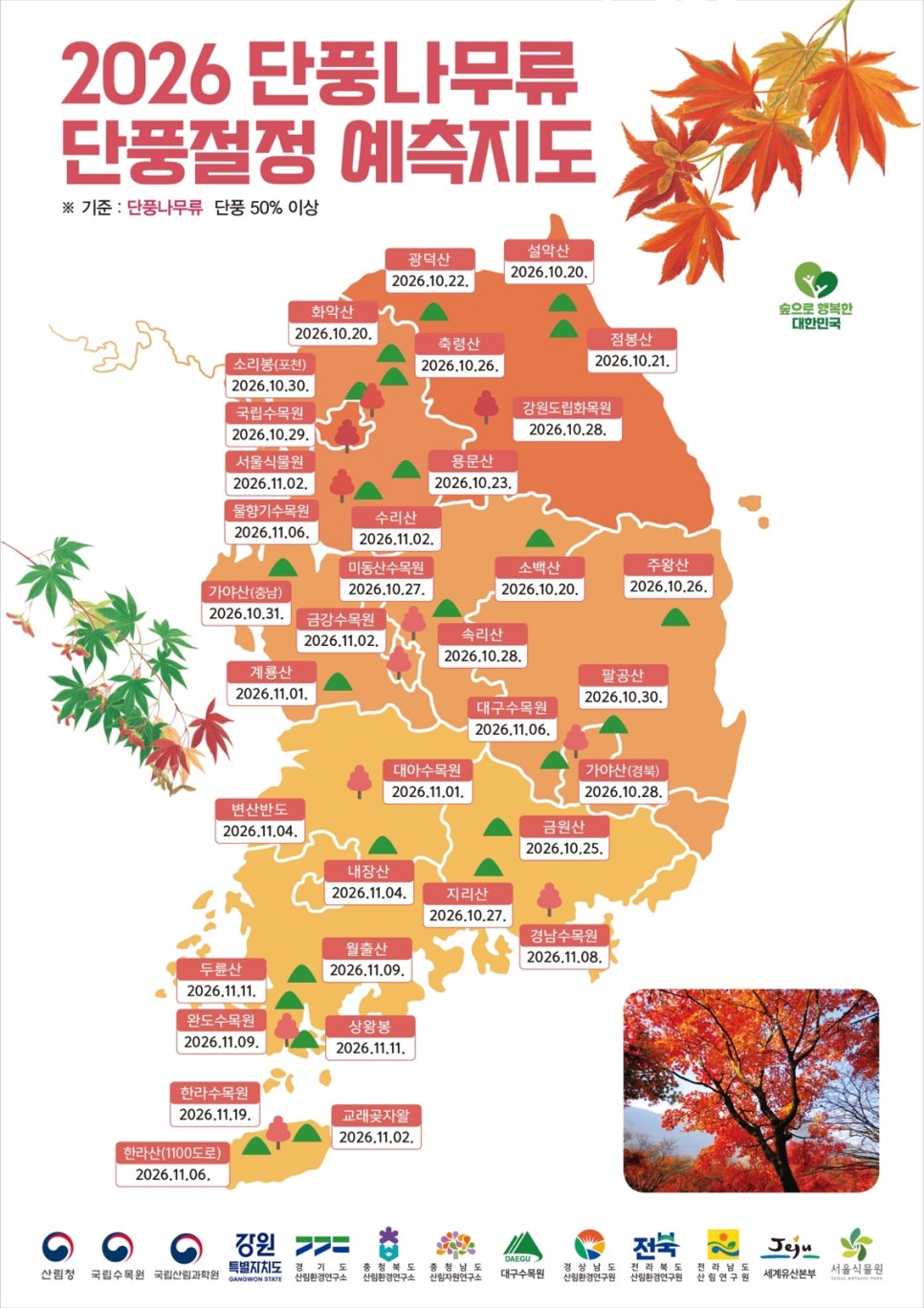 Korea National ArboretumNews29 September 2026When Korea's autumn leaves peak in 2026 — Seoraksan from 20 October
 Korea National ArboretumExhibition22 September 2026EndedStar-shaped succulent flowers at the Korea National Arboretum, to 30 September
 Korea National ArboretumNotice22 September 2026The Korea National Arboretum shuts for three days over Chuseok, then opens free on the 27th