Exhibition·Naju National MuseumIn 4 days
Naju National Museum: Mahan and the goods that came by sea — to 21 Feb 2027
Summary
Naju National Museum in South Jeolla opens the special exhibition "Mahan, Meeting the Unfamiliar" on 30 October 2026, running to 21 February 2027. It looks at how the Mahan villages of the Yeongsan River basin grew by taking in objects and techniques that arrived along the sea routes linking China, the Korean peninsula and Japan. The museum has not published an admission price for this exhibition: its permanent galleries are free and only some special exhibitions charge, so check before you travel. On 31 October, the day after it opens, a local Mahan Crown festival fills the museum lawn from 10:00 to 16:00.
Article
In short
- Naju National Museum's special exhibition "Mahan, Meeting the Unfamiliar: The Growth of Mahan in the Yeongsan River Basin and Imported Goods" runs from Friday 30 October 2026 to Sunday 21 February 2027 in the Special Exhibition Hall.
- The museum is open 09:00–18:00 and closed every Monday, on 1 January, and on Seollal and Chuseok days.
- No admission price has been published for this exhibition. The permanent galleries are free and only some special exhibitions charge, so ask the curatorial office (+82-61-330-7830) before you go.
- On Saturday 31 October, 10:00–16:00, the 2026 Mahan Crown Festival is held on the museum's outdoor lawn, so one trip covers both the exhibition and a local festival.
- For visitors who do not read Korean: the museum's free guide app works in English for main exhibits; whether it covers this exhibition is not stated, and the festival stage programme is in Korean.
Naju National Museum (국립나주박물관), in Bannam-myeon on the western edge of Naju, opens the special exhibition "Mahan, Meeting the Unfamiliar" on 30 October. Its question is how objects from the outside world, carried up the Yeongsan River by boat, helped the Mahan villages grow — a reading of Yeongsan River Mahan through its imported goods. It runs for almost four months, to 21 February 2027. The museum stands in the middle of the Bannam ancient tombs, so after the exhibition you can walk out to the mounds where many of these objects were found.
What is the exhibition about?
The museum's introduction is built around a route. The Yeongsan River flows out to the south-western coast, and that sea lane met the trade route running from China through the Korean peninsula to Japan. The Mahan people of the Yeongsan basin took the unfamiliar goods and techniques that came in along it and made them their own — and that, the exhibition argues, is where their distinctive culture came from. In the museum's words, the unfamiliar became familiar, the familiar became special, and the special became a new source of strength. The show sets out what Mahan gained, and what it built, from trade by sea.
As of 26 October neither the museum's website nor the National Museum of Korea's listing of its regional museums had published the list or number of objects on show. We will add them when the museum issues its opening press release.
Hours, admission and contacts
The exhibition and the Mahan Crown Festival at a glance (checked 26 October 2026)
- Exhibition dates
- Fri 30 Oct 2026 – Sun 21 Feb 2027, 09:00–18:00 · closed Mondays
- Exhibition venue
- Special Exhibition Hall, Naju National Museum (indoors)
- Exhibition admission
- Not stated — ask the curatorial office, +82-61-330-7830
- Festival date
- Sat 31 Oct 2026 only, 10:00–16:00
- Festival venue
- Outdoor lawn, Naju National Museum
- Festival organiser
- Mahan Crown Festival Committee, sponsored by Naju City
- Festival fee
- Not mentioned in the reports
The permanent galleries are free. With children, the Children's Museum (two sessions, 10:00–12:00 and 13:00–17:30, last entry 30 minutes before each ends) and the immersive media hall (10:00–18:00) are on the same site.
What is the 'Mahan crown'?
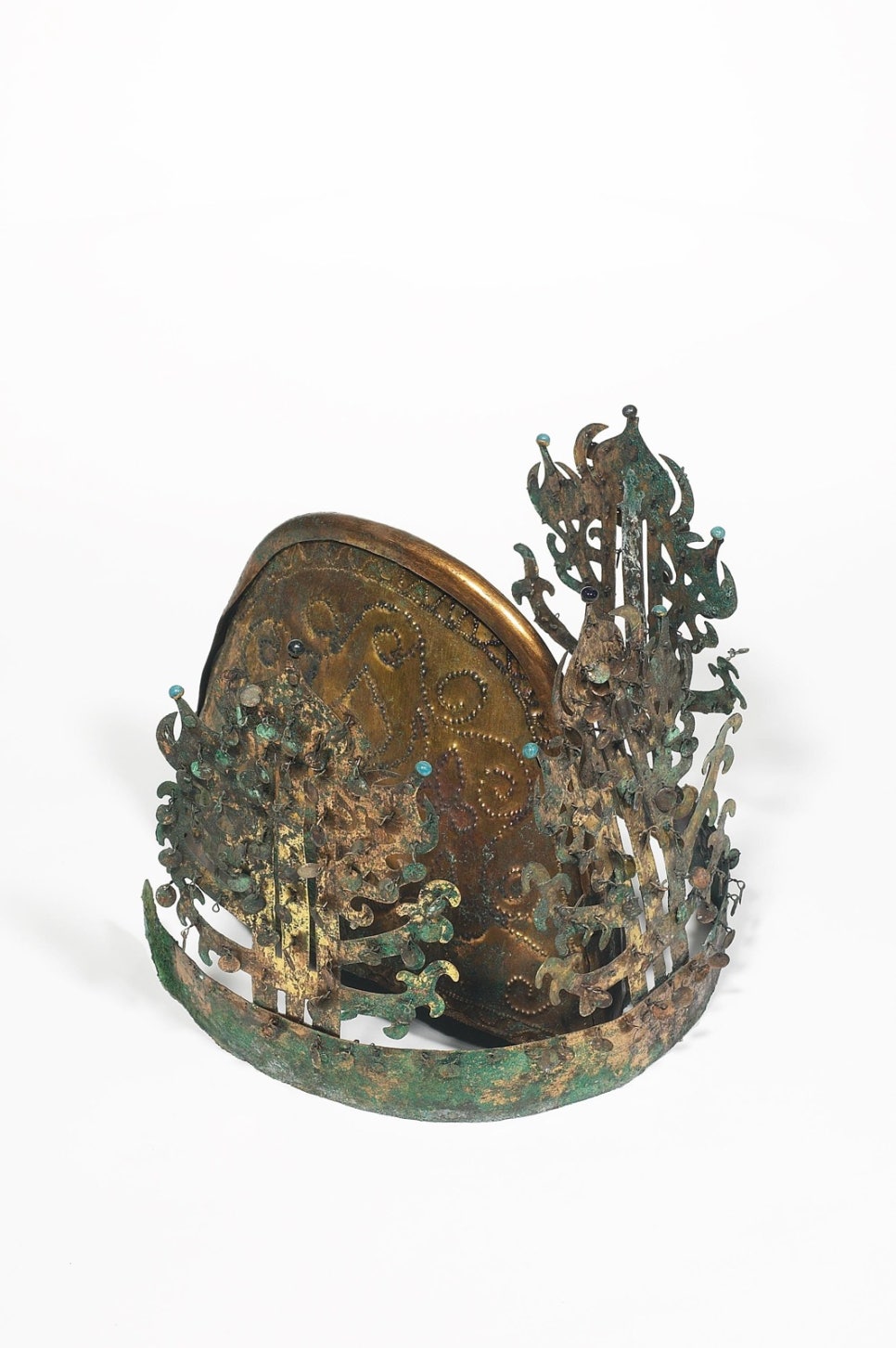
The 'Mahan crown' in the festival's name is the gilt-bronze crown from Sinchon-ri, Naju, a National Treasure. It came from Tomb No. 9 at Sinchon-ri in Bannam-myeon — the village where the museum stands — and is counted the signature object of Yeongsan River Mahan.
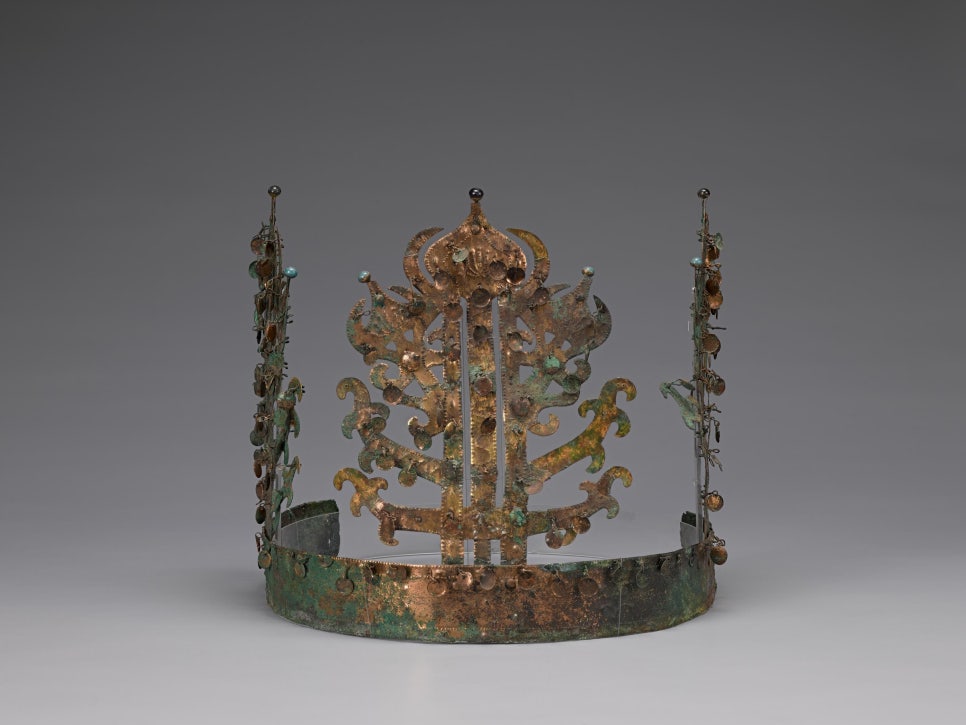
The crown has two layers: an outer band and an inner cap fitted inside it. Where the uprights of Silla gold crowns look like stacked versions of the character for 'mountain', the uprights on the Sinchon-ri crown branch like flowering plants, which makes it easy to tell apart.
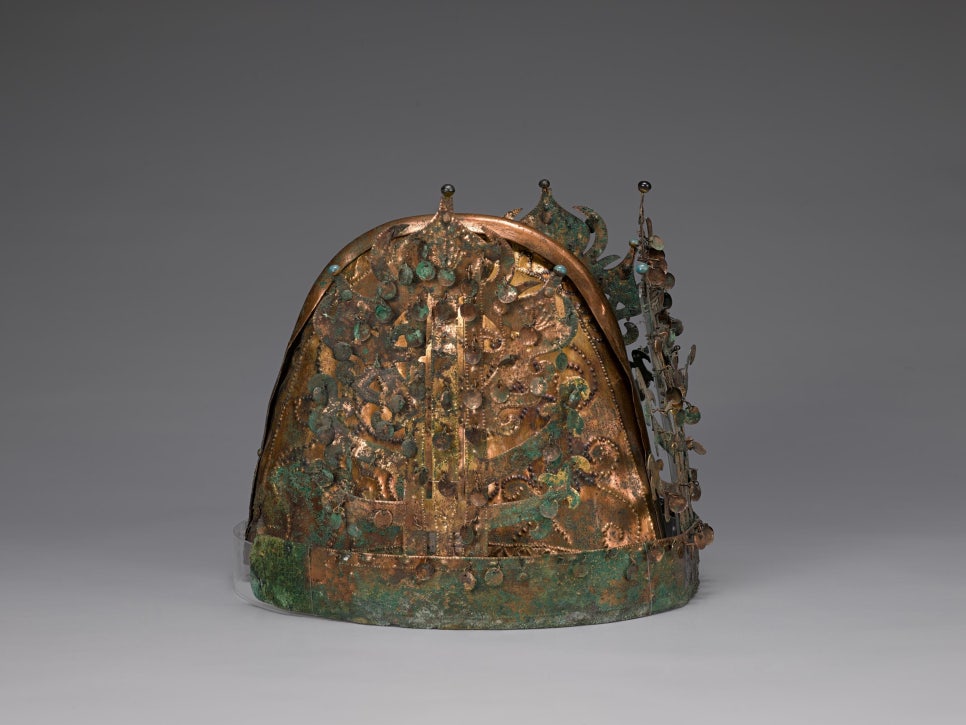
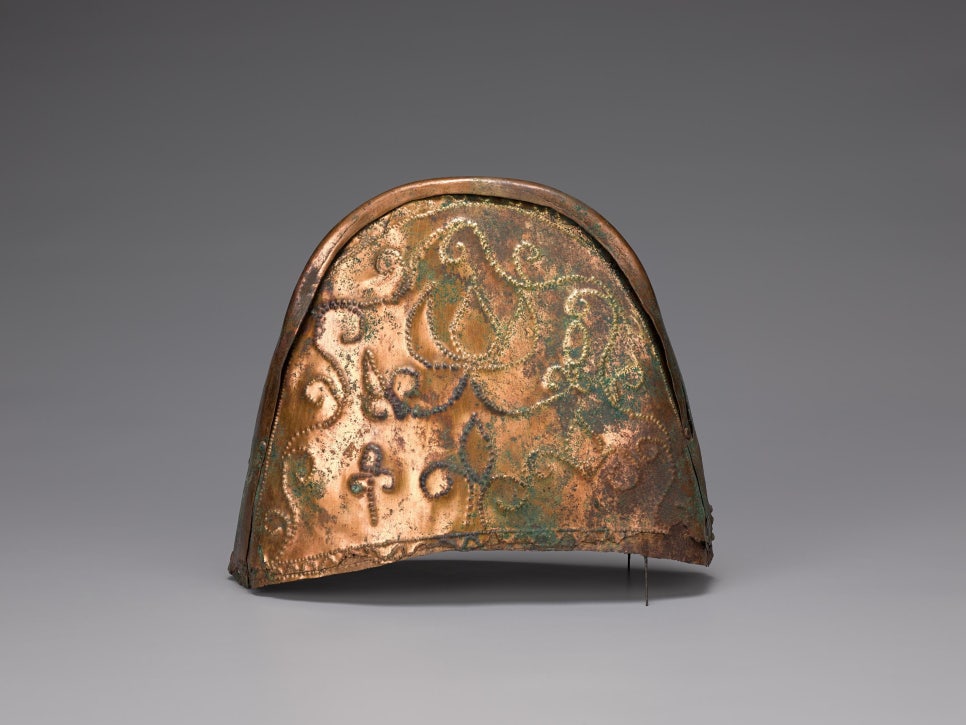
The crown belongs to the National Museum of Korea (Bon-gwan 5860), and its e-museum record lists it as on display in Naju National Museum's permanent galleries. It has not been announced whether it appears in this exhibition, so if the crown is why you are going, ask whether it is in the permanent galleries before you set off.
Why do the jar coffins of Bannam matter?
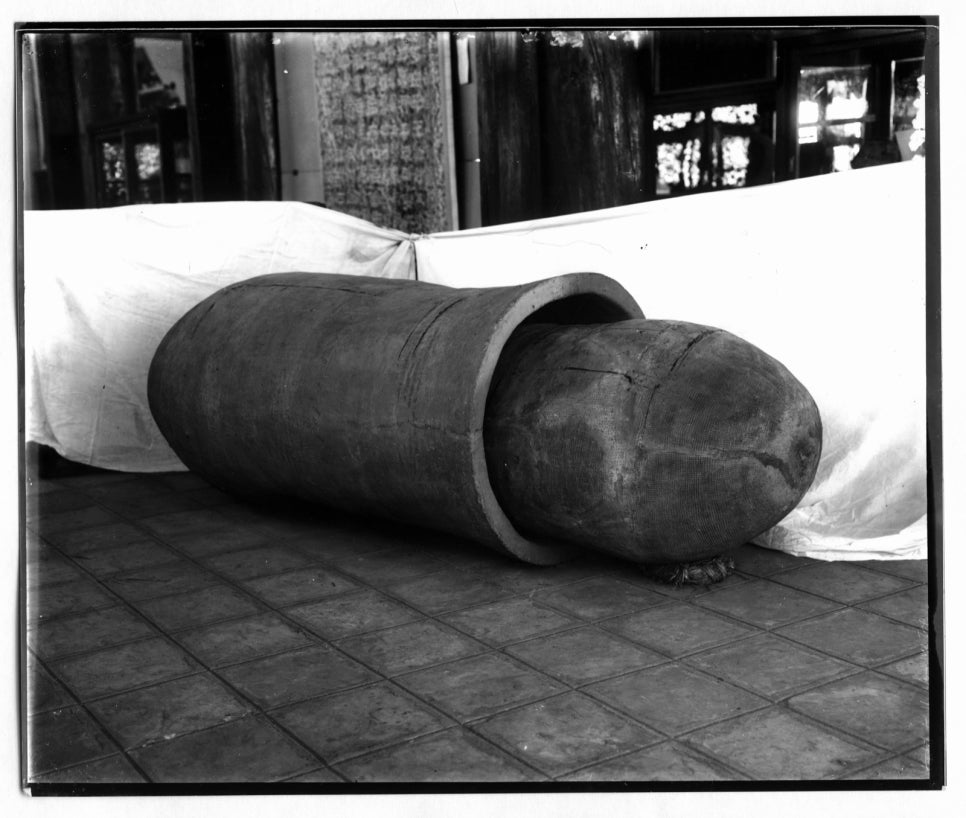
The emblem of Mahan burials in the Yeongsan basin is the jar coffin (onggwan): two large jars set mouth to mouth with the body inside. The Bannam tombs were first excavated during the Japanese colonial period, and the glass plate photographs taken then are held by the National Museum of Korea. A look through them before the exhibition gives you a picture of which tombs the objects came from, and how they lay in the ground.



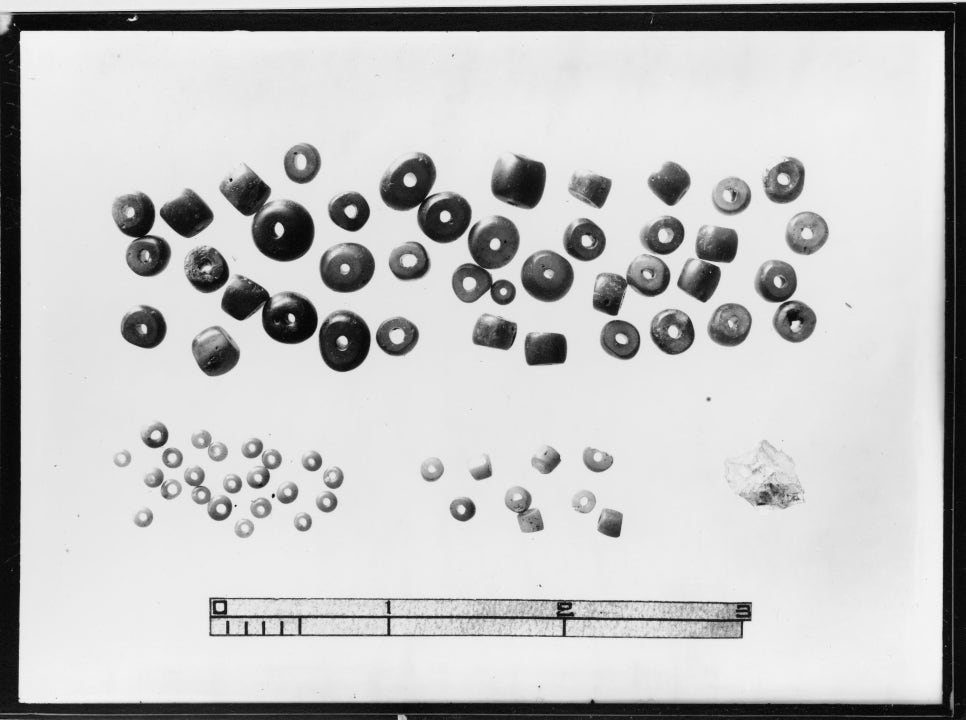
The photograph of glass beads fits the exhibition's theme of goods from across the sea, but we could not confirm that these particular beads were imported. Treat it as atmosphere, not evidence.
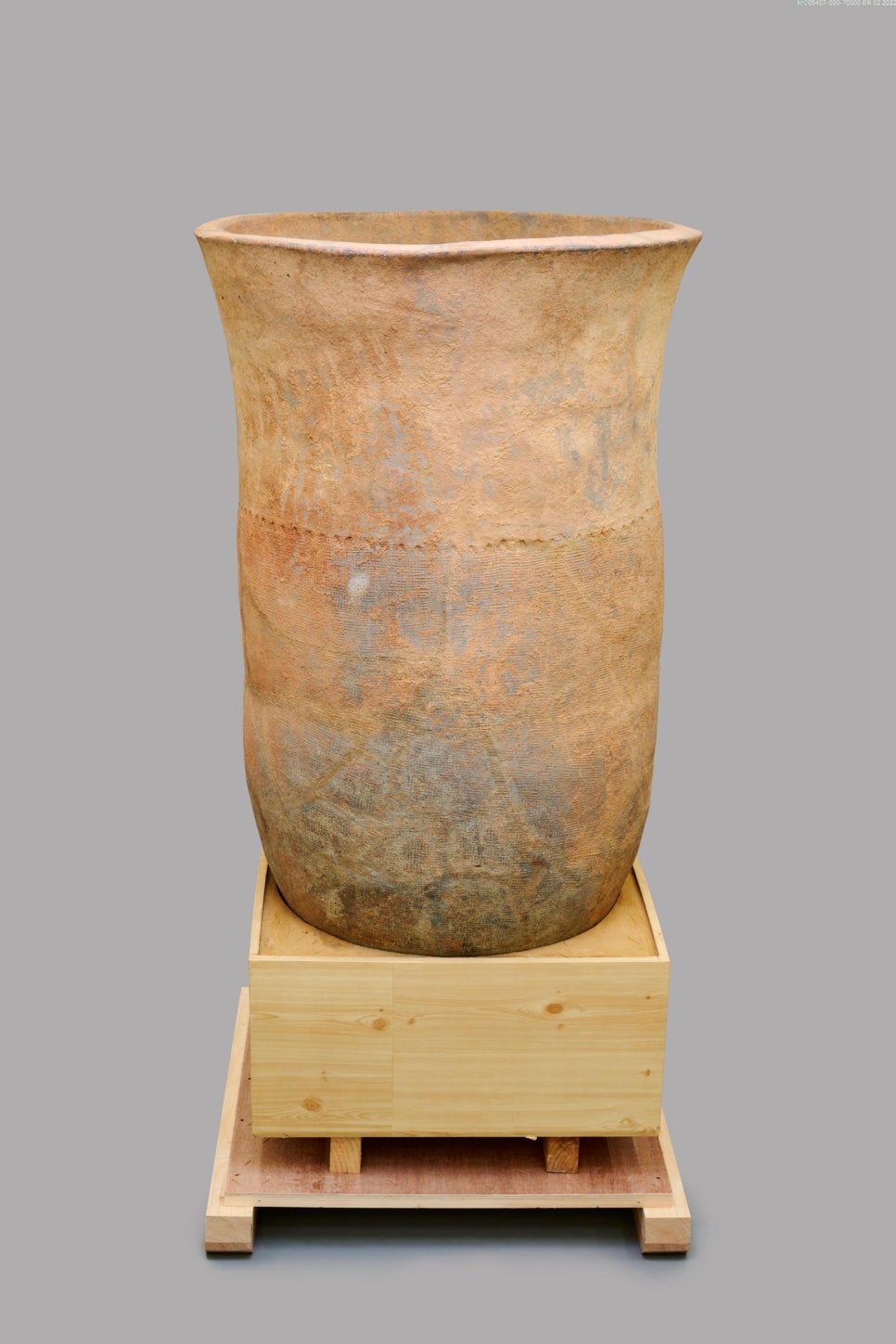
The last photograph, in colour, gives a sense of how large a jar coffin is. It is a donated piece with no recorded findspot, though, so it cannot be said to come from Naju.
What happens at the Mahan Crown Festival on 31 October?
According to reports in the Jeonnam Ilbo and Hanbang Tongsinsa, the festival opens at 10:00 with a parade of flags for the 54 statelets of Mahan by the Bannam Mahan heritage society. Samulnori drumming and an opening ceremony follow, then at 11:30 Sodoje, a re-enactment of a Mahan rite to heaven. The afternoon brings a 12-piece band, Korean traditional song, a namsadang tightrope act, guest singers at 15:00, and at 16:00 a close with the ganggangsullae circle dance by the Bannam ganggangsullae society.
- Making a Mahan crown
- Face painting and pyrography
- Family mottos written for you
- Making and flying Mahan kites
- Traditional folk games
To see both in one day, watch the parade and Sodoje in the morning, then go into the exhibition and permanent galleries after lunch.
Still to be confirmed
As of 26 October there was no official word on the exhibition's admission price or objects, or on any festival fee. The festival times come from two press reports, not an organiser's notice, and as an outdoor event it may change with the weather.
Getting there and what to expect without Korean
The museum is in the countryside, about 30 minutes west of Naju Station. From Seoul, KTX trains run from Yongsan Station to Naju Station (SRT trains run from Suseo). The museum's English directions give city bus 107 from Naju Station via Yeongsanpo Terminal to the museum — about 10 minutes to Yeongsanpo, then about 20 more — and the same bus 107 from Yeongsanpo or the Naju intercity bus terminal; from Gwangju Songjeong Station, buses 160 or 1160 connect at Yeongsanpo Terminal. Its timetables are years old, so check bus 107's current times on arrival or take a taxi from Naju Station. Inside, the free mobile guide app gives location-based commentary on main exhibits in Korean, English, Chinese and Japanese — download it on Wi-Fi before you visit and bring earphones. The museum has not said whether the app covers this new exhibition. No booking is needed for an individual visit as far as the museum has announced; guided tours and group bookings go through its Korean-language website. The festival programme on 31 October is in Korean, but the parade, tightrope act and craft tables need little explanation.
Frequently asked questions
- Q. When is the Mahan special exhibition at Naju National Museum?
- "Mahan, Meeting the Unfamiliar" runs from Friday 30 October 2026 to Sunday 21 February 2027 in the Special Exhibition Hall of Naju National Museum. The museum is closed on Mondays, 1 January, and on Seollal and Chuseok days.
- Q. How much is admission to the Mahan exhibition?
- As of 26 October 2026 no admission price had been published. Naju National Museum's permanent galleries are free and only some special exhibitions charge, so check with the curatorial office (+82-61-330-7830) before you go.
- Q. When and where is the Mahan Crown Festival?
- Saturday 31 October 2026, 10:00–16:00, on the outdoor lawn of Naju National Museum. It is organised by the Mahan Crown Festival Committee and sponsored by Naju City.
- Q. What is the Mahan crown?
- It is the gilt-bronze crown from Tomb No. 9 at Sinchon-ri, Bannam-myeon, Naju, a National Treasure. It has an outer band and an inner cap, and the outer band's uprights are shaped like branching plants.
- Q. What are Naju National Museum's opening hours?
- The galleries open 09:00–18:00 and close every Monday, on 1 January, and on Seollal and Chuseok days. The Children's Museum runs two sessions, 10:00–12:00 and 13:00–17:30.
- Q. Is it worth going if I do not read Korean?
- Yes, if you are already in the Gwangju or Mokpo area: the museum's free guide app works in English for main exhibits, the permanent galleries are free, and the Bannam tombs are outside the door. It is a long trip from Seoul for this exhibition alone, the app's coverage of the new show is not confirmed, and the festival stage programme is in Korean.
Editor's note · Kang Shin-wook
For travellers in the south-west who want an ancient-history stop between Gwangju and Mokpo, and for families planning a weekend out. To compare hours and admission at other national museums, see National museums in Korea.
Sources
- Official notice (Korean)
- National Museum of Korea — exhibitions at regional national museums (Korean)
- Naju National Museum website (Korean)
- Naju National Museum — Museum Guide, hours and admission (English)
- Jeonnam Ilbo — 2026 Mahan Crown Festival (Korean, 26 Oct 2026)
- Hanbang Tongsinsa — Mahan Crown Festival on 31 October (Korean, 24 Oct 2026)
Written in our own words from the sources above, never copied from them, and every date and price checked against at least two pages. The originals are in Korean. Spotted a mistake? Ask for a correction.