Summary
The 2026 autumn foliage map from the Korea Tourism Organization, built on peak-date forecasts by the Korea National Arboretum, puts the southern colour season from late October in Chungcheong through 6–9 November in Jeolla and Gyeongsang to 19 November at Halla Arboretum on Jeju. We re-checked each of the map's 24 southern spots against the arboretum's own peak-date lookup and grouped them by week. Nothing needs booking except the paid parks, which sell tickets at the gate, but the forecasts are about 70% accurate and both official pages are in Korean only, so check local photos the day before you travel.
Article
In short
- The 2026 autumn foliage map, published on 8 October by the Korea Tourism Organization with forecasts from the Korea National Arboretum, puts peak colour in Chungcheong, Jeolla, Gyeongsang and Jeju between late October and 19 November.
- Forecast maple peaks at the southern reference arboretums: Midongsan (Cheongju) 27 October, Daea (Wanju) 1 November, Geumgang (Sejong) 2 November, Daegu 6 November, Gyeongsangnam-do (Jinju) 8 November, Wando 9 November and Halla (Jeju) 19 November.
- Jeju holds its colour longest: Halla Arboretum's oaks and ginkgos are forecast for 16 November and its maples for 19 November.
- The National Arboretum's free online lookup (knpn.nature.go.kr) gives a forecast peak date for any point you click on its map; the arboretum puts its accuracy at about 70%.
- Nothing on the list needs booking; the paid spots sell tickets at the gate, and both official pages are in Korean only.
Seoul and Gangwon passed their peak at the end of October, but the four southern regions are only now turning. The 2026 autumn foliage map, made by the Korea Tourism Organization with the Korea Forest Service's Korea National Arboretum, divides the country into six regions, gives forecast peak dates by tree type at a reference arboretum in each, and recommends 36 places to go. This article takes the 24 spots in Chungcheong, Jeolla, Gyeongsang and Jeju, sets the official forecasts beside dates we looked up again in the arboretum's own service, and arranges them by November week.
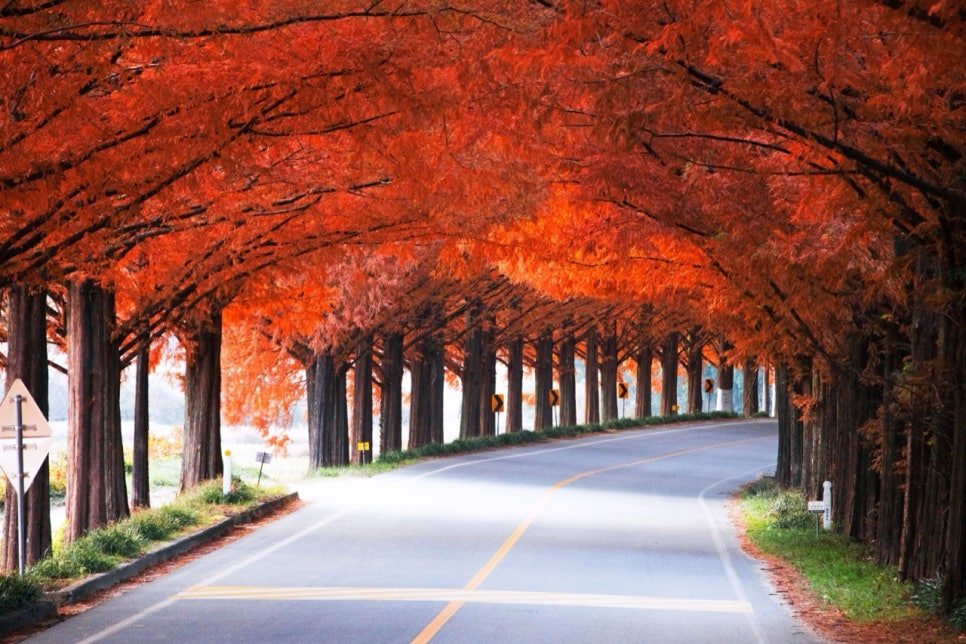
What does 'peak' mean on the 2026 foliage map?
The date on the map is the forecast day when more than half (50% or more) of that tree type's leaves have changed colour. It marks the best moment rather than the first colour, so the few days either side of it are the time to go.
The forecast rests on the National Arboretum's citizen-science Plant Phenology Observation project: records left by 829 people who took part in its autumn 2025 foliage survey, fed with weather data into a statistical model (quantile regression forest). The Korea Forest Service released its national peak-forecast map on 22 September, and on 8 October the Korea Tourism Organization added its travel picks and published the foliage map. The tourism organisation described it as citizen data meeting its own travel curation to give more accurate autumn travel information.
When do the southern regions peak?
Across the seven reference arboretums, Chungcheong peaks first and Jeju last. Within one region the inland arboretums (Cheongju, Wanju) and the south coast (Wando, Jinju) are more than a week apart, and oaks generally peak later than maples.
2026 foliage map: forecast peaks at the southern reference arboretums (maples · oaks · ginkgo)
- Midongsan Arboretum (Cheongju, North Chungcheong)
- 27 Oct · 31 Oct · 29 Oct
- Geumgang Arboretum (Sejong)
- 2 Nov · 3 Nov · 4 Nov
- Daea Arboretum (Wanju, North Jeolla)
- 1 Nov · 4 Nov · 2 Nov
- Wando Arboretum (Wando, South Jeolla)
- 9 Nov · 16 Nov · 12 Nov
- Daegu Arboretum (Daegu)
- 6 Nov · 14 Nov · 4 Nov
- Gyeongsangnam-do Arboretum (Jinju, South Gyeongsang)
- 8 Nov · 16 Nov · 5 Nov
- Halla Arboretum (Jeju)
- 19 Nov · 16 Nov · 16 Nov
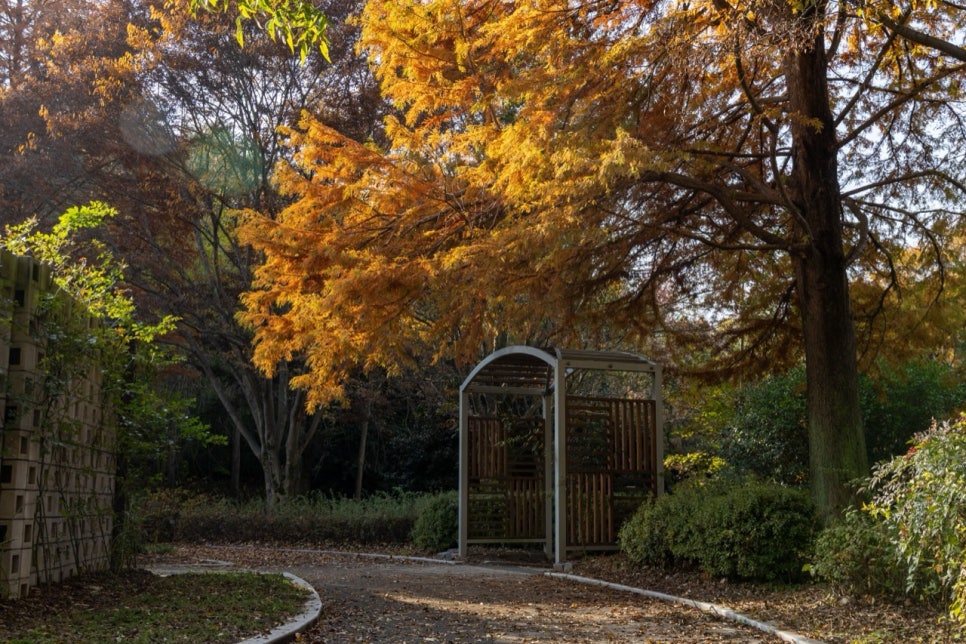
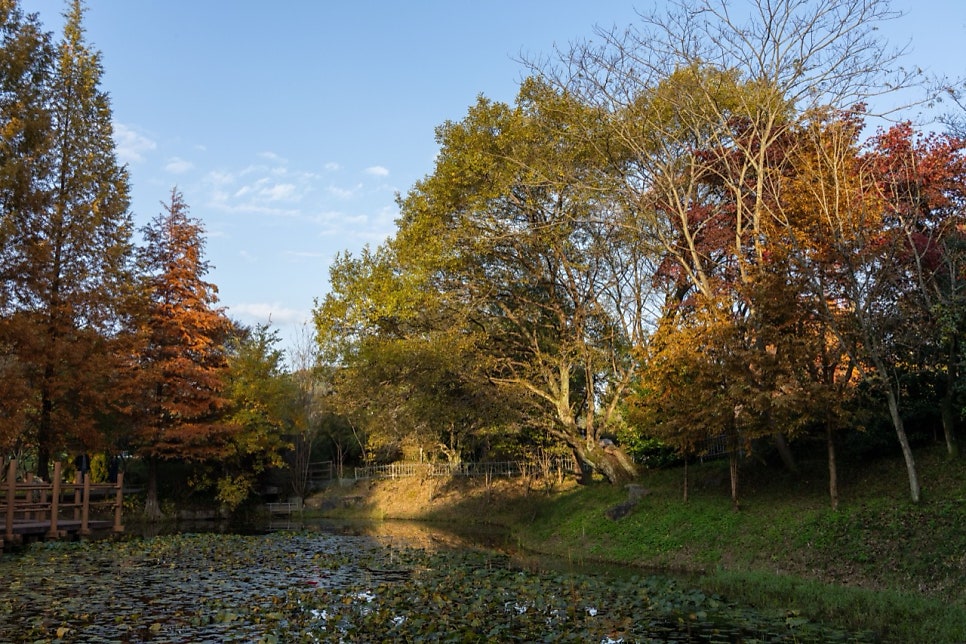
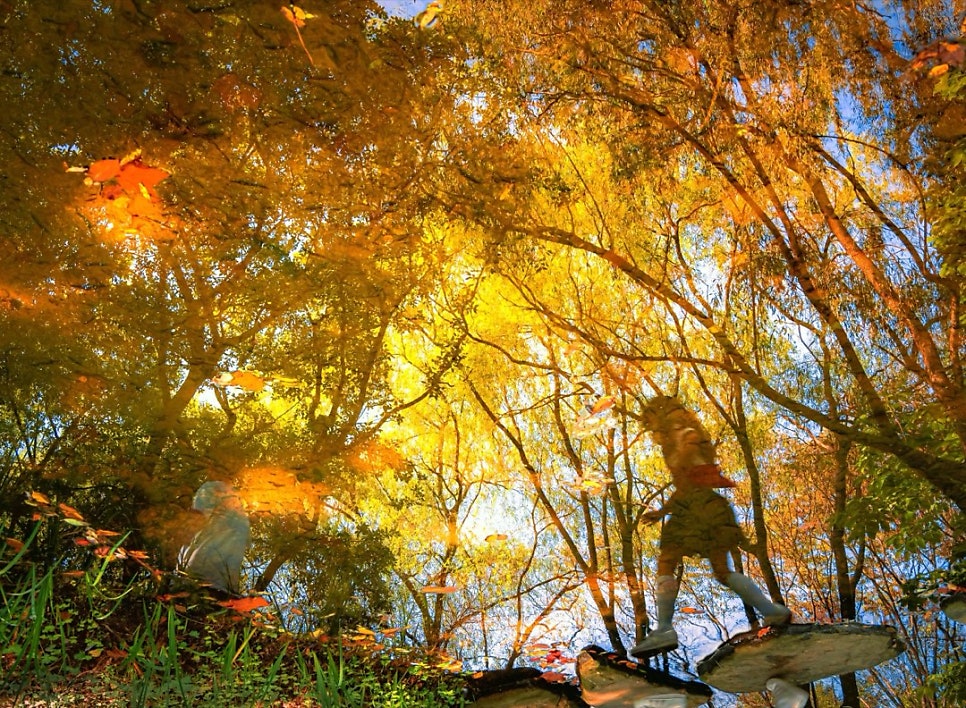
The reference arboretums are forecasting points for each region, and Halla Arboretum is the only one that is also among the 36 recommended spots. The photos below are of Gyeongsang's two reference points, Gyeongsangnam-do Arboretum and Daegu Arboretum, in past autumns.
How do I check the peak date for a particular place?
For anywhere not on the map, use the National Arboretum's peak-date lookup on its plant phenology site. It opened on 29 September and is free.
- Open knpn.nature.go.kr/record/autumn.html (in the site menu it sits under Records → Seasonal forecast).
- Type a Korean road address or building name into the address search, or simply click the point you want on the map.
- A label shows the forecast peak date for that point. There is one date per point, not one per tree type.
Why the arboretum table and the lookup disagree
The arboretum table gives a forecast per tree type; the lookup returns a single date per point. So Halla Arboretum shows 19 November for maples in the table but 17 November in the lookup. The dates for each spot below are what the lookup returned when negunde queried each location on 29–30 October; where moving the point slightly changed the answer by a day or two, we give the range. All of them are forecasts, about 70% accurate.
Chungcheong: six spots, already at the tail end?
Chungcheong peaks first in the south. Mungwang Reservoir in Goesan, the Mancheonha Skywalk in Danyang and Sejong National Arboretum were forecast for the end of October and are likely past their best by the first weekend of November; Sapgyoho, Gapcheon and the Baekje Cultural Land in Buyeo peak around 2–3 November. We found no openly licensed autumn photos of the Chungcheong spots, so they appear without pictures.
Chungcheong picks: lookup peak date · what it is
- Sapgyoho (Dangjin, South Chungcheong)
- 3 Nov · sunsets behind the moored warships, lakeside colour
- Gapcheon Eco Lake Park (Seo-gu, Daejeon)
- 2 Nov · lakeside paths beside city apartment blocks
- Baekje Cultural Land (Buyeo, South Chungcheong)
- 3 Nov · a reconstructed Baekje palace complex; paid, closed Mondays
- Mungwang Reservoir (Goesan, North Chungcheong)
- 29–30 Oct · a ginkgo avenue reflected in the water
- Mancheonha Skywalk (Danyang, North Chungcheong)
- 31 Oct · cliff-top lookout over the Namhan River; paid
- Sejong National Arboretum (Sejong)
- 31 Oct · adults KRW 5,000; 09:00–17:00 from November to February; closed Mondays
Jeolla: six spots, first and second week of November
Jeolla runs from Maisan in Jinan (1–3 November) down to the Hwangnyong River in Jangseong (10 November) and the Asia Culture Center in Gwangju (11 November). By the reference arboretums, inland Daea peaks on 1 November and Wando on the south coast on 9 November.
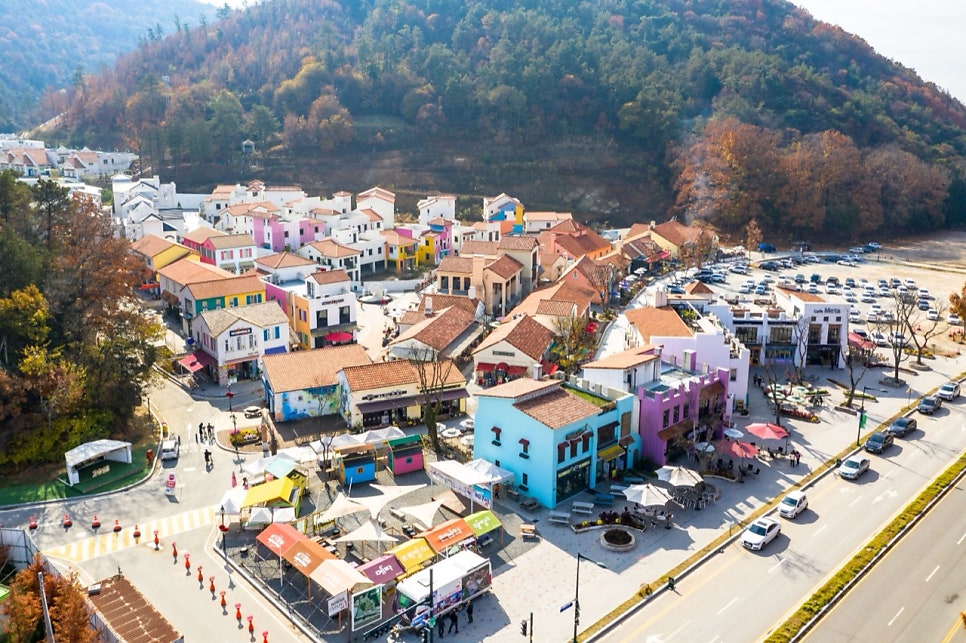
Meta Provence in Damyang is a European-style themed village built right beside the famous metasequoia avenue. The lookup gives 9–10 November, late for Jeolla, so the second weekend still has a chance.
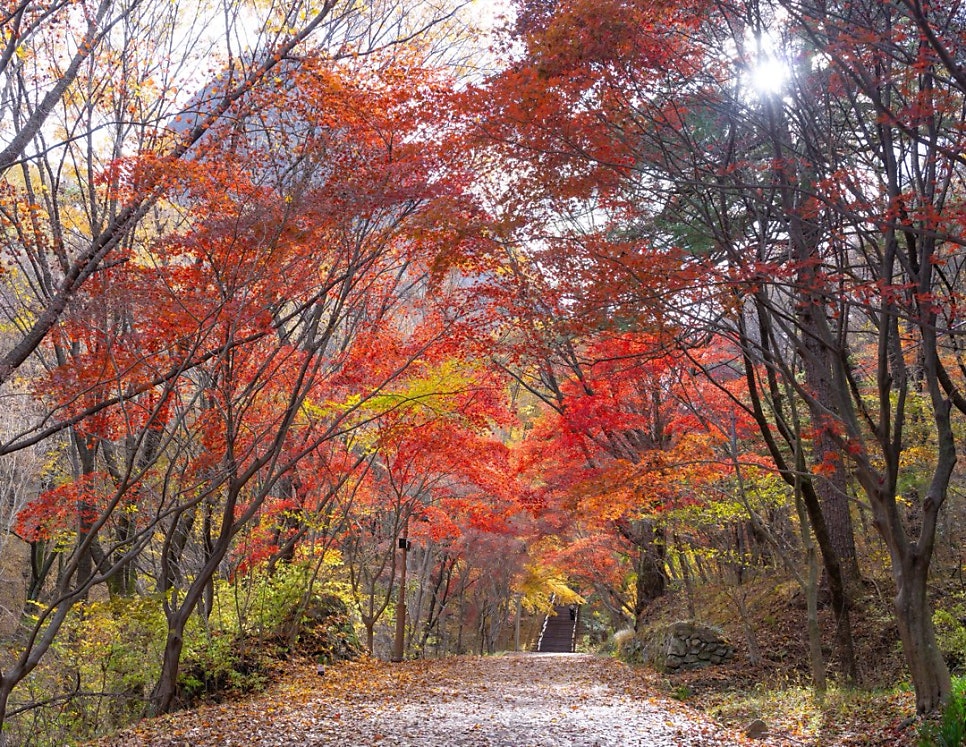
Maisan Provincial Park in Jinan is the forest beneath two rock peaks shaped like a horse's ears. Park entry is listed as free, but the temple area (Tapsa) is listed as charging its own admission, so check the amount on the day.
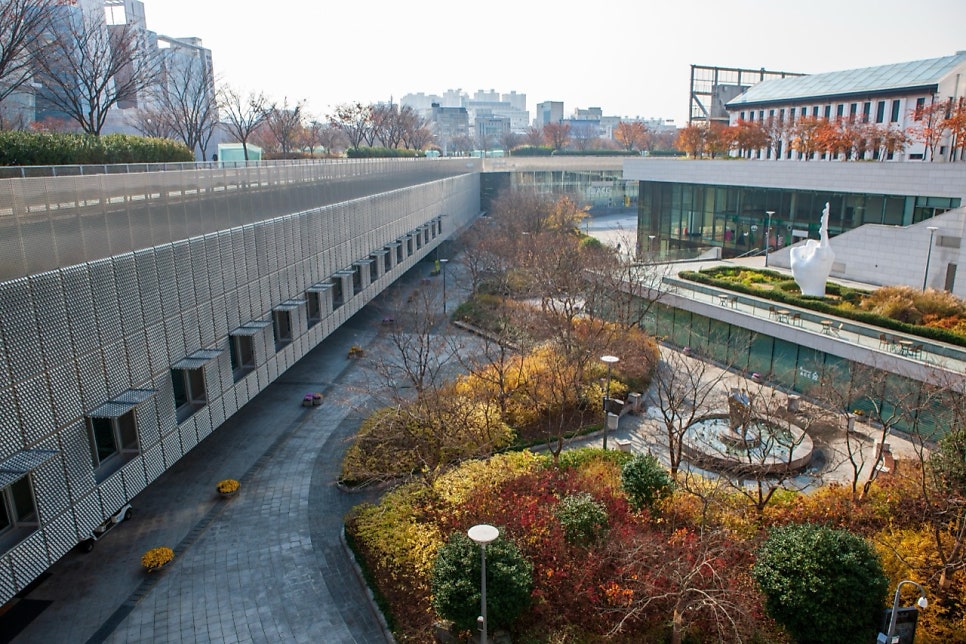
The Asia Culture Center in Gwangju sinks its buildings below ground level, leaving the gardens and plaza between them open to all. The outdoor areas are open 06:00–22:00, so it works as an evening walk too.
Jeolla picks: lookup peak date · what it is
- Imsil Cheese Theme Park (Imsil, North Jeolla)
- 5 Nov · European-style buildings and hillside gardens; closed Mondays
- Jeonju World Cup Stadium (Jeonju, North Jeolla)
- 6 Nov · walking paths around the stadium; free to walk
- Asia Culture Center (Dong-gu, Gwangju)
- 11 Nov · outdoor areas open 06:00–22:00; indoor venues closed Mondays
- Maisan Provincial Park (Jinan, North Jeolla)
- 1–3 Nov · forest beneath twin rock peaks; separate temple admission
- Meta Provence (Damyang, South Jeolla)
- 9–10 Nov · themed village beside the metasequoia avenue
- Hwangnyonggang Eco Park (Jangseong, South Jeolla)
- 10 Nov · riverside walking trail
Gyeongsang: six spots bunched into 4–8 November
The six Gyeongsang spots fall between 4 November (Gyeongju World) and 8 November (the Nam River in Jinju) in the lookup, so the end of the first week and the start of the second are the heart of the season there. Gyeongju World and E-World are amusement parks that need a day pass; the rest are mostly free parks and gardens.
Taehwagang National Garden in Ulsan joins riverside bamboo groves to planted gardens; the lookup gives 6 November.
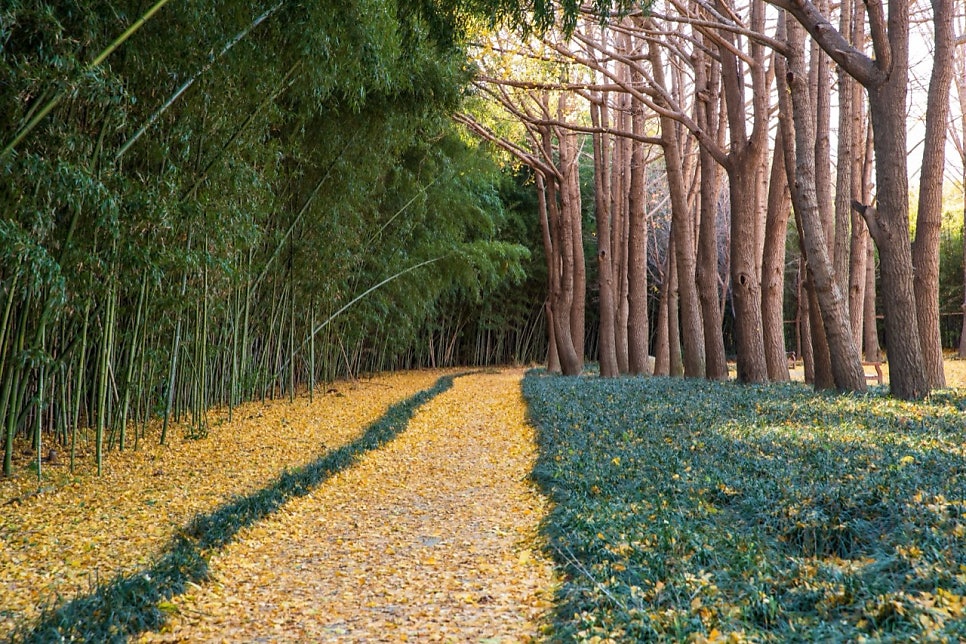
Geochang Changpowon is a waterside eco-garden at the head of the Hapcheon reservoir, with reeds and autumn colour together. We have no usable photos of the Nam River, Changpowon or Busan Citizens Park, so they appear in the table only. The Jinju photos above are of Gyeongsangnam-do Arboretum, not the Nam River.
Gyeongsang picks: lookup peak date · what it is
- Gyeongju World (Gyeongju, North Gyeongsang)
- 4 Nov · amusement park in the Bomun resort area; paid
- E-World (Dalseo-gu, Daegu)
- 6 Nov · city amusement park under 83 Tower; paid
- Busan Citizens Park (Busanjin-gu, Busan)
- 7 Nov · city park on a former US Army base
- Taehwagang National Garden (Jung-gu, Ulsan)
- 6 Nov · riverside bamboo groves and gardens
- Nam River, Jinju (Jinju, South Gyeongsang)
- 8 Nov · riverside below Jinju Fortress
- Geochang Changpowon (Geochang, South Gyeongsang)
- 6 Nov · waterside garden of reeds and colour; paid, closed Wednesdays
Where to go after mid-November: Jeju
Jeju is the last in the south. Halla Arboretum's maples are forecast for 19 November, so in the third week of November it is effectively the only choice left for leaves. Note that three of the map's six Jeju picks, Saebyeol Oreum, Ttarabi Oreum and Songaksan, are there for silver grass, not autumn leaves.
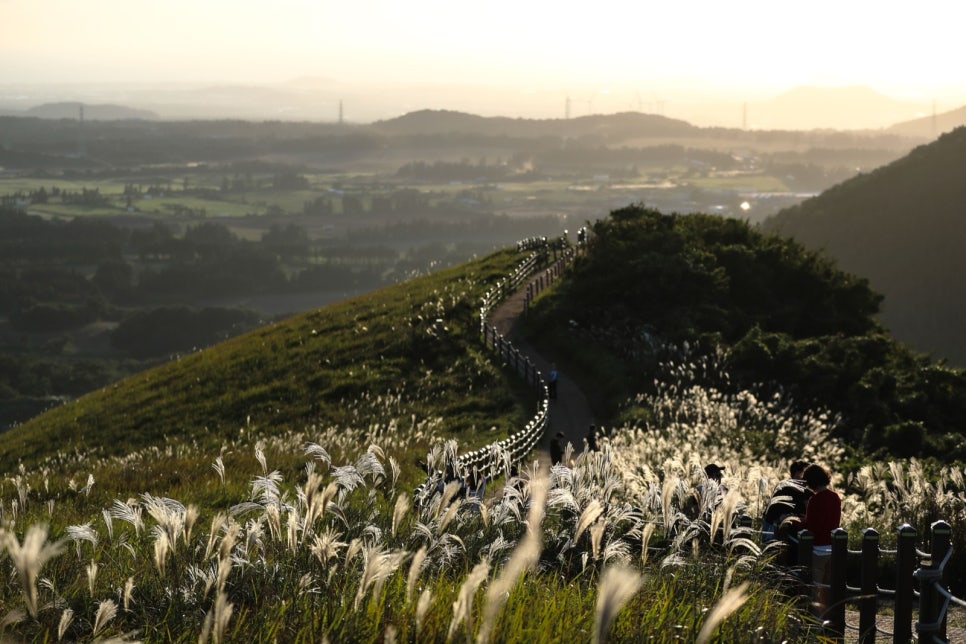
Ttarabi Oreum in Seogwipo is a ridge of three overlapping craters blanketed in silver grass; the lookup gives 8–10 November.
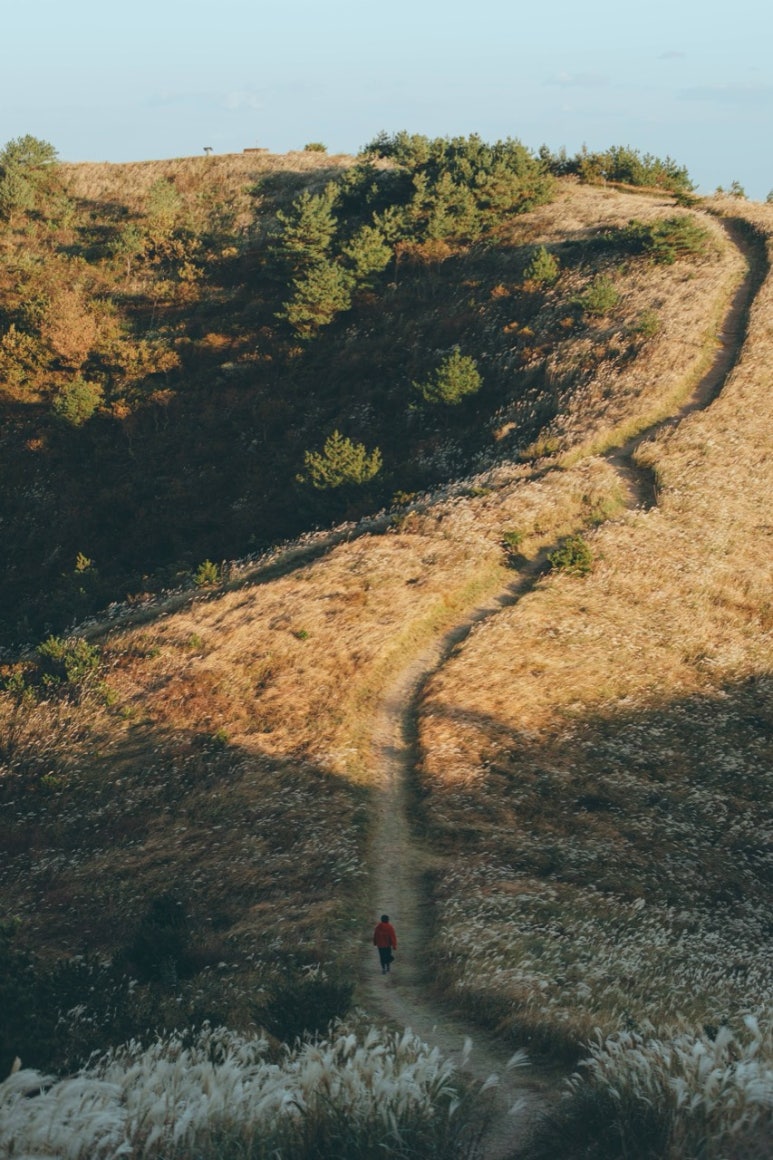
Saebyeol Oreum in Aewol, Jeju City, turns one whole face of the volcanic cone into a silver-grass slope, and is listed as free and always open.
Jeju picks: lookup peak date · what it is
- Saebyeol Oreum (Aewol, Jeju City)
- 10 Nov · silver grass; free
- Bijarim Forest (Gujwa, Jeju City)
- 12–13 Nov · trail through an old nutmeg-yew forest; paid
- Yeomiji Botanical Garden (Jungmun, Seogwipo)
- 13–14 Nov · glasshouse and outdoor gardens; paid
- Halla Arboretum (Jeju City)
- 17 Nov · forest paths of native Jeju trees; free
- Ttarabi Oreum (Pyoseon, Seogwipo)
- 8–10 Nov · silver grass; free
- Songaksan (Daejeong, Seogwipo)
- 14–15 Nov · coastal silver-grass trail facing Sanbangsan and Gapado; free
November in the south, week by week
- Late October – first week of November — Mungwang Reservoir, Mancheonha Skywalk, Sejong National Arboretum (tail end), Gapcheon Eco Lake Park, Sapgyoho, Baekje Cultural Land, Maisan Provincial Park, Gyeongju World, Imsil Cheese Theme Park
- 6–10 November — Jeonju World Cup Stadium, E-World, Taehwagang National Garden, Geochang Changpowon, Busan Citizens Park, Nam River in Jinju, Ttarabi Oreum, Meta Provence, Hwangnyonggang Eco Park, Saebyeol Oreum
- From 11 November — Asia Culture Center, Bijarim Forest, Yeomiji Botanical Garden, Songaksan, Halla Arboretum (lookup 17th, maple table 19th)
What to check before you set off
- The dates are forecasts computed from weather data up to September. The day before, look at recent photos on the local government's or the venue's social media.
- Closing days differ: Sejong National Arboretum and Baekje Cultural Land close on Mondays, as do the Asia Culture Center's indoor venues and Imsil Cheese Theme Park; Geochang Changpowon closes on Wednesdays.
- Prices at the spots marked paid vary and change; check each venue's website.
Getting there without Korean
Most of these spots are a train plus a local bus or taxi from Seoul. KTX and SRT trains reach Daejeon, Jeonju (Jeolla line), Gwangju Songjeong, Dongdaegu, Gyeongju, Ulsan (Tongdosa), Jinju and Busan, and Korail's English website sells KTX tickets to foreign cards; Jeju is a one-hour flight from Gimpo. The smaller rural spots, such as Mungwang Reservoir, Maisan, Meta Provence and Changpowon, are easiest by car or taxi from the nearest bus terminal, since country buses run only a few times a day. The foliage map and the National Arboretum's lookup are Korean-only pages, but the lookup needs no typing: zoom the map, click the spot, and the date appears in numbers. On site, expect English mainly at the larger venues such as the Asia Culture Center and the national arboretums; the small parks and reservoirs may have Korean-only signs, which matters little for a walk.
Frequently asked questions
- Q. When do autumn leaves peak in southern Korea in 2026?
- On the 2026 foliage map from the Korea Tourism Organization and the Korea National Arboretum, maples at the southern reference arboretums peak between 27 October and 2 November in Chungcheong, 1–9 November in Jeolla, 6–8 November in Gyeongsang and on 19 November in Jeju. The first and second weeks of November are the core for Jeolla and Gyeongsang; Jeju is what is left in the third week.
- Q. How can I check the foliage peak date for a specific place in Korea?
- Open the Korea National Arboretum's lookup at knpn.nature.go.kr/record/autumn.html and click the place on the map (or search a Korean address). It shows the forecast peak date for that point. It is free, Korean-only, and the arboretum puts its accuracy at about 70%.
- Q. What counts as peak autumn colour in Korea's forecasts?
- The point at which 50% or more of a tree's leaves have changed colour. The 2026 forecasts were built from observations by 829 citizens who took part in the National Arboretum's autumn 2025 phenology survey.
- Q. Where in southern Korea can I still see autumn leaves after mid-November?
- Jeju. Halla Arboretum's maples are forecast to peak on 19 November, and the arboretum's lookup gives 13–14 November for Yeomiji Botanical Garden, 14–15 November for Songaksan and 17 November for Halla Arboretum. Saebyeol Oreum, Ttarabi Oreum and Songaksan are chosen for silver grass rather than leaves.
- Q. Where can I see the 2026 Korea autumn foliage map?
- On the Korea Tourism Organization's VisitKorea Korean-language site, under the article titled as a 2026 foliage map of autumn trips to take now. It is free to view and lists the reference arboretum peak dates for six regions and 36 recommended spots.
- Q. Is it worth going if I do not read Korean?
- Yes. The trip itself needs no Korean: the spots are parks, gardens and hills you simply walk, nothing needs booking, and the paid ones sell tickets at the gate. The only Korean-only parts are the map and the forecast lookup, and the lookup can be used just by clicking on its map. Rural spots are harder to reach without a car, so pick ones near a KTX station if you are travelling by train.
Editor's note · Kang Shin-wook
For anyone in Korea in November who missed the Seoul and Gangwon colours and wants a weekend further south. See our guide to the Korea National Arboretum, which makes the forecast, and visiting notes for Sejong National Arboretum and the Asia Culture Center in Gwangju, two of the spots on the map.
Sources
- Official notice (Korean)
- VisitKorea: 2026 autumn foliage map (Korean)
- Korea National Arboretum: 2026 peak foliage date lookup (Korean)
- Korea National Arboretum announcement of the peak-date lookup, via Seoul Shinmun (Korean)
Written in our own words from the sources above, never copied from them, and every date and price checked against at least two pages. The originals are in Korean. Spotted a mistake? Ask for a correction.
Latest from Korea Tourism Organization
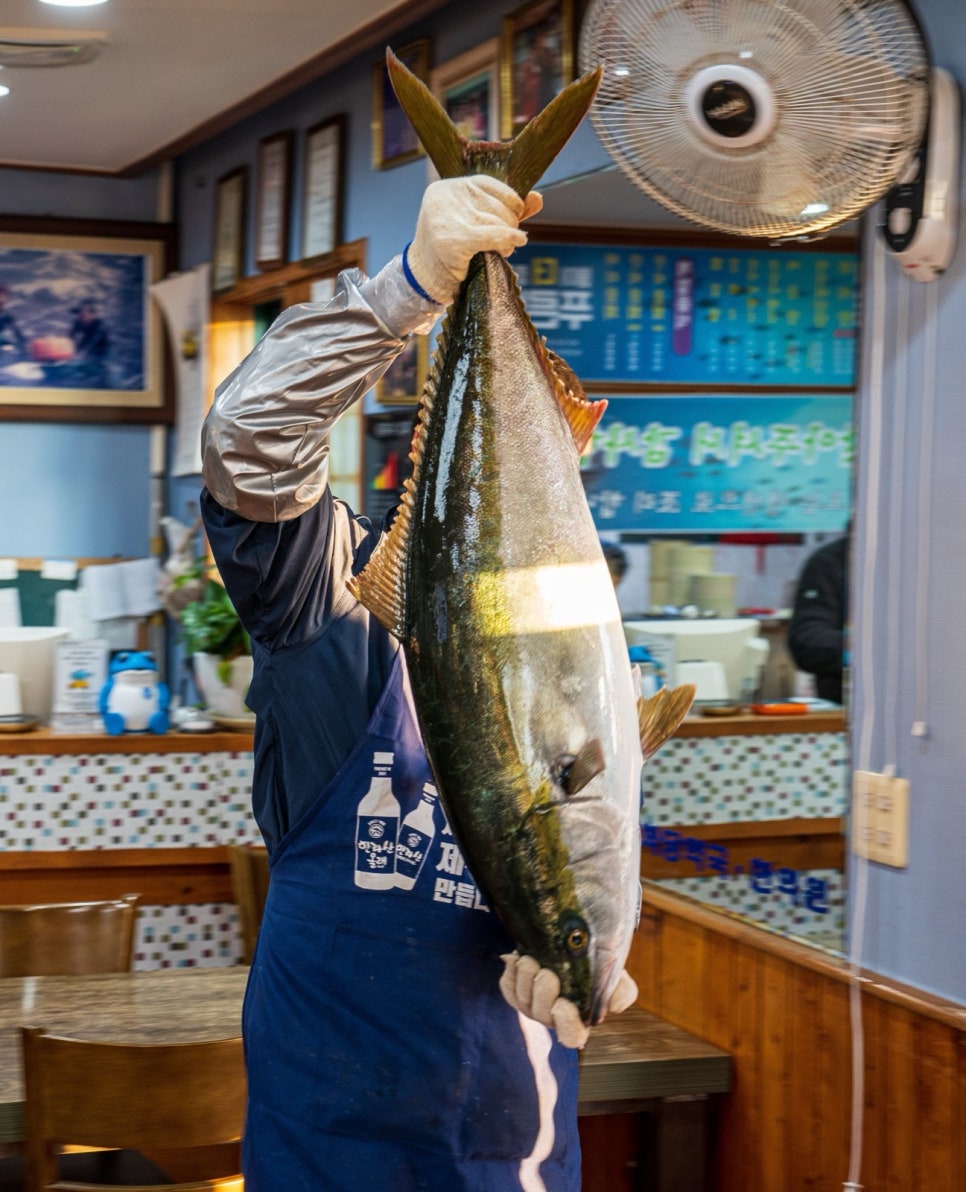 Korea Tourism OrganizationEvent3 November 2026In 16 daysFreeMoseulpo Yellowtail Festival, Jeju — 19–22 November 2026, free entry
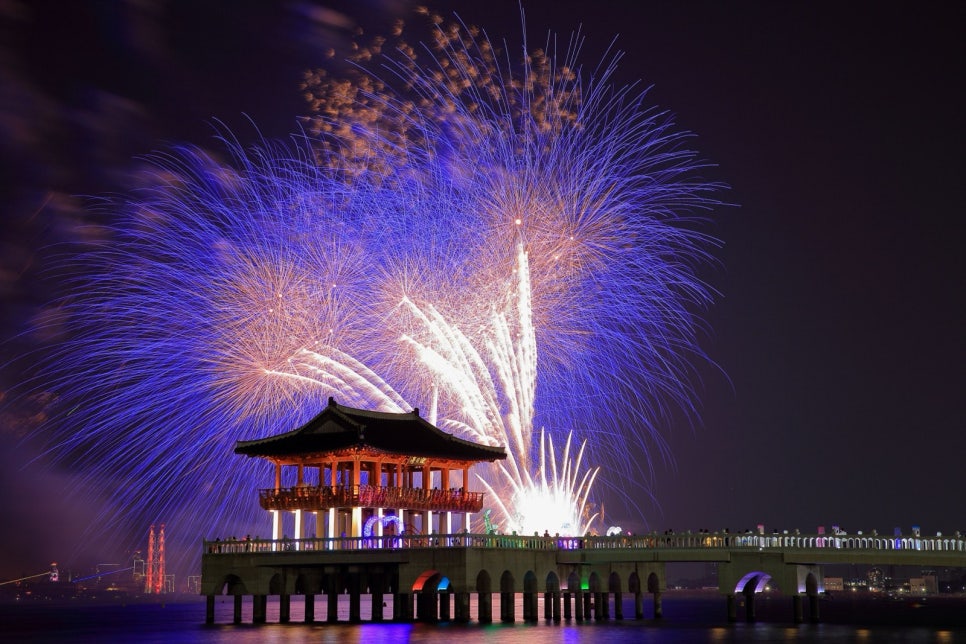 Korea Tourism OrganizationEvent29 October 2026In 16 daysFreePohang International Fire & Light Festival, Yeongildae Beach — 19–21 November 2026, free, fireworks on Saturday
 Korea Tourism OrganizationEvent28 October 2026On nowFreeNamsan Night Festival, Seoul — last dates to 14 Nov, deposit and booking
 Korea Tourism OrganizationEvent26 October 2026In 3 daysFreeKorea's November food festivals 2026 — ramyeon, kimchi, seafood and yuja, 6–15 November