Exhibition·Korea Tourism OrganizationEnding soonFree
Suseong International Biennale at Suseongmot Lake, Daegu — free until 22 Nov
Summary
The 2026 Suseong International Biennale runs until Sunday 22 November 2026 around Sanghwa Garden on Suseongmot Lake in Daegu. Inside a timber pavilion called the Big Roof, 19 architects and landscape architects, Kengo Kuma and Seung H-sang among them, show designs for six public projects that Suseong District is actually building. Entry is free and needs no booking; only some of the hands-on workshops take sign-ups, through a Korean-language form or at the desk on the day.
Article
In short
- The 2026 Suseong International Biennale runs from 27 October to Sunday 22 November 2026 around Sanghwa Garden on Suseongmot Lake in Daegu, with no closing day.
- Opening hours are 12:00–21:00 on weekdays (Mon–Fri) and 10:00–21:00 at weekends (Sat–Sun).
- Admission is listed as free by the Korea Tourism Organization and the grounds need no booking; only some workshops take sign-ups, online through the Suseong Culture Foundation or at the desk.
- Under the theme Living Ground, 19 architects and landscape architects (team members counted individually) show designs for six public projects that Suseong District is building.
- For a visitor without Korean: the exhibition is visual and walk-in, the official programme page is bilingual, but workshops and talks are in Korean.
Daegu's 2026 Suseong International Biennale closes on 22 November. Where most architecture shows hang models and drawings and then take them down, this one calls itself a biennale that builds: it presents public buildings and landscapes planned for real parks, reservoirs and empty sites in Suseong District, and some of them get built. Inside a timber pavilion in Sanghwa Garden you can see the district projects handled by Kengo Kuma, Seung H-sang and others — a free show that fits neatly into a late-autumn walk round the lake.
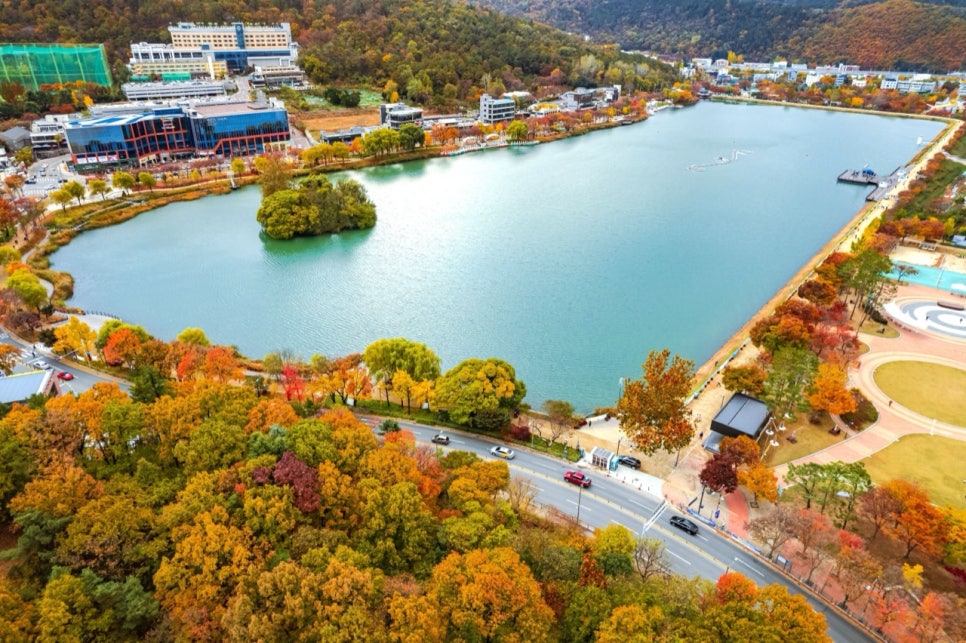
Suseongmot Lake from the air, November 2021 (not a photo of the biennale)
Photo: Korea Tourism Organization, Photo Korea (photographed by 앙지뉴 필름) · KOGL Type 1
What does the Suseong International Biennale show?
The biennale's site describes this year's theme, Living Ground, as a look at the relationship between people, ecology and the ground that carries both. The artistic directors are John Hong, professor of architecture at Seoul National University, and Ahyeon Kim, professor of landscape architecture at the University of Seoul — pairing the two disciplines is the point of the edition.
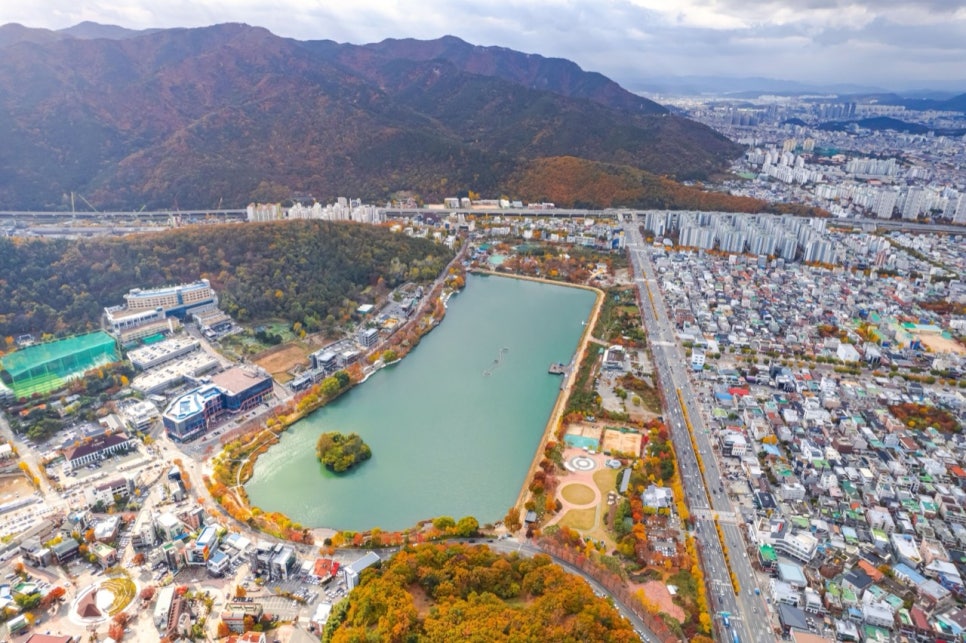
Suseongmot Lake and the hills in autumn, November 2021 (not a photo of the biennale)
Photo: Korea Tourism Organization, Photo Korea (photographed by 앙지뉴 필름) · KOGL Type 1
What sets it apart is that the exhibition is not the end of the story. The official project list gives each site its own construction period (2024–2027, for example) and scale, and work from earlier editions is already in the neighbourhood: the Soso-byeol pavilion at Naegwan-ji reservoir went up for the 2024 biennale. Visitors are, in effect, previewing the buildings and parks Suseong District will gain over the next few years.
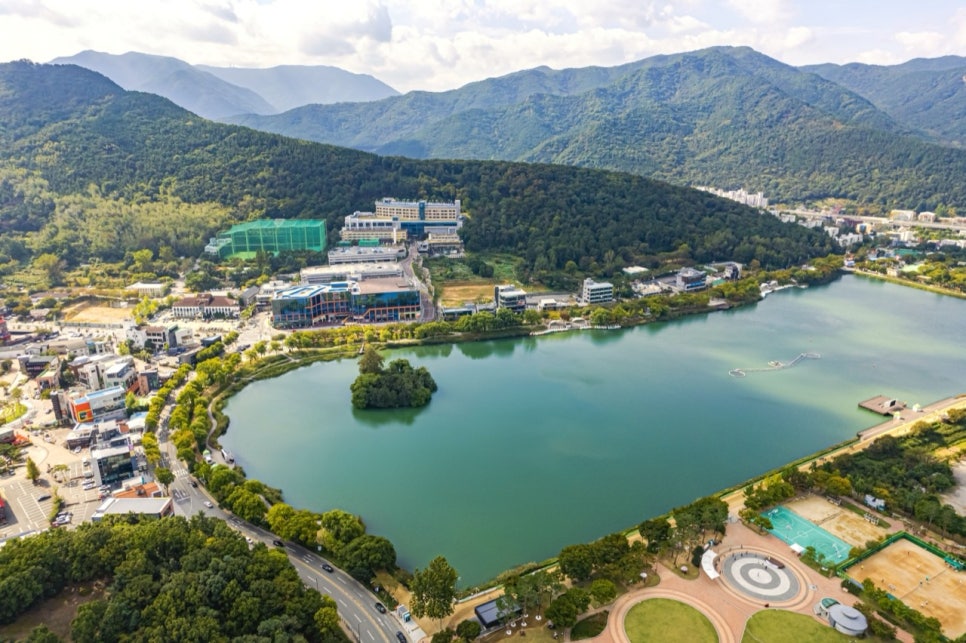
Suseongmot Lake, October 2021 (not a photo of the biennale)
Photo: Korea Tourism Organization, Photo Korea (photographed by 앙지뉴 필름) · KOGL Type 1
Which projects are on show in the Big Roof?
Exhibits and events centre on the Big Roof, an outdoor pavilion put up in Sanghwa Garden. It is a temporary timber structure that borrows the joinery of the traditional Korean house (hanok), and inside it the designs for the six sites below are shown one after another. The artist list follows the official programme page.
2026 Suseong International Biennale: sites and participating artists
- Site
- Participating artists (official site)
- Jinbat-gol Wood-Friendly City
- Kengo Kuma (winning scheme), Gerard Reinmuth, Namho Cho, Guncheol Kim — a timber community centre and a 4 km wood-friendly street, 2024–2027
- Deuran Art Park
- Topotek 1 (Martin Rein-Cano), Z+T Studio (Ziying Tang, Dong Zhang), Haemee Han + Yongjun Jo
- Yeonho District small galleries
- Chris van Duijn (OMA), Ole Scheeren, Ken Sungjin Min (SKM)
- Naegwan-ji Forest Plaza restroom
- Seung H-sang (IROJE)
- Gomo Station cultural hub
- Jeeun Song-Dusoir and Rory Dusoir (Kennedy Song Dusoir) — a rail trail and railway book lounge, 2026–2027
- Uksu-ji Suseong Pavilions
- stpmj (Mijung Lim, Seungtaek Lee) and ALIVEUS (Taekyung Kim, Hansol Kang) — an observation deck and a community shelter
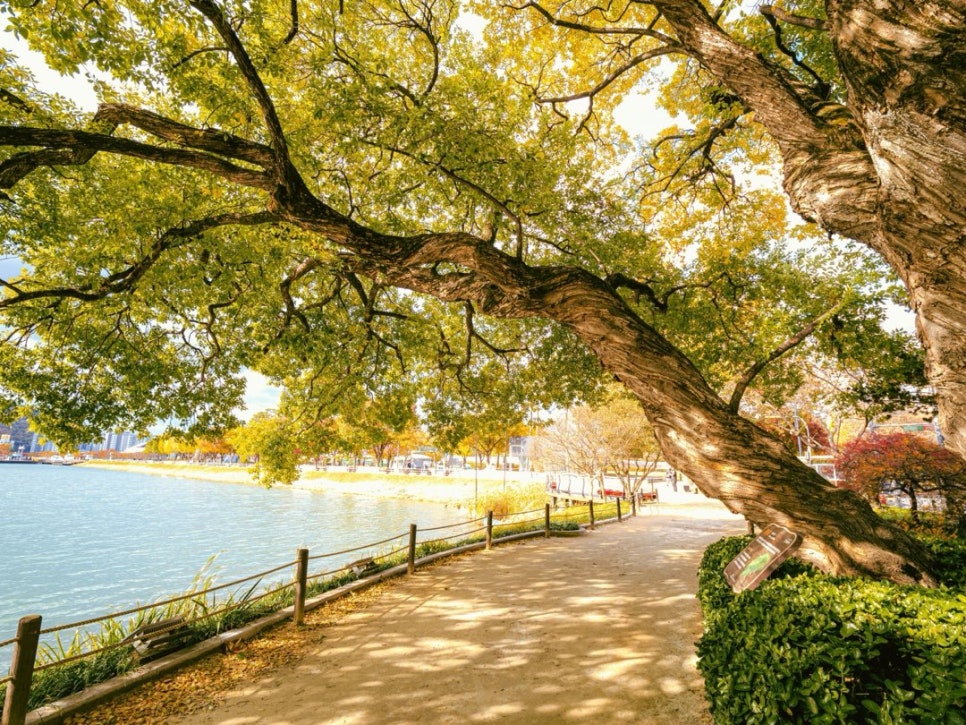
The lakeside path, November 2021 (not a photo of the biennale)
Photo: Korea Tourism Organization, Photo Korea (photographed by 앙지뉴 필름) · KOGL Type 1
How many artists are taking part?
Coverage around the opening mostly named five: Kengo Kuma, Gerard Reinmuth, Chris van Duijn, Ole Scheeren and Seung H-sang. They are the headline names; the official artist list, counting each team member, has 19. Many sites pair an overseas practice with a younger Korean architecture or landscape office, so you can compare different answers to the same piece of ground.
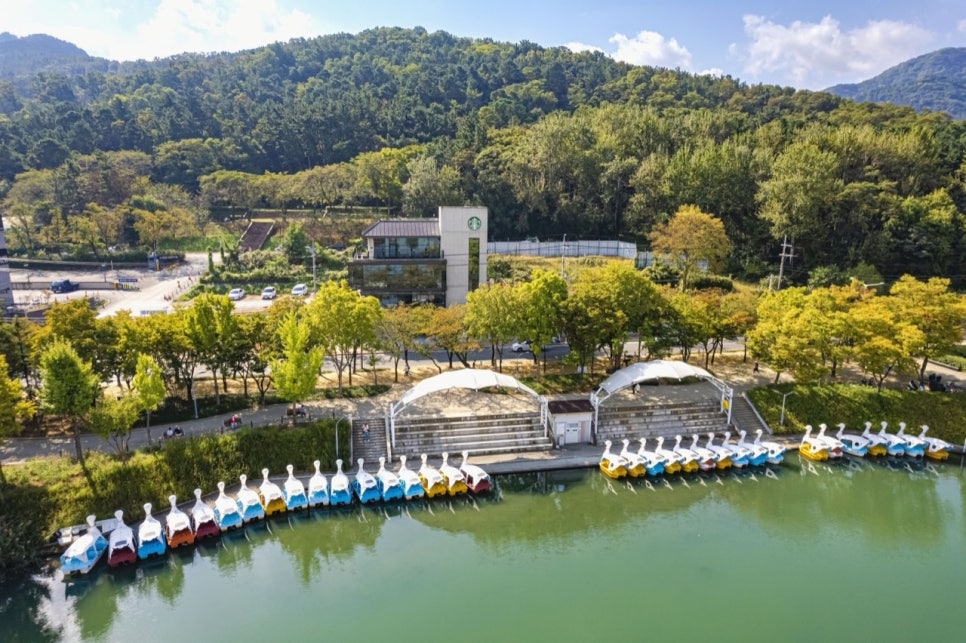
Swan-boat pier and floating stage, October 2021 (not a photo of the biennale)
Photo: Korea Tourism Organization, Photo Korea (photographed by 앙지뉴 필름) · KOGL Type 1
Do the activities need booking?
The grounds are walk-in. The activities fall into three kinds: everyday drop-in ones, weekend-only drop-in ones, and weekend sessions with sign-up, taken either on the Suseong Culture Foundation site (Culture & Arts Events → Program Registration → Suseong International Biennale) or at the desk on the day.
Activities (official site)
- Type
- Activities
- Every day
- DDUBI tower building · Living Village block-town building · outdoor architecture and landscape library
- Weekends, drop-in
- Hanok experience (joinery and geuraengi scribing) · roof-tile stacking · paper architecture models
- Weekends, sign-up
- Earth Gardener walk round the lake with gardener Kim Jang-hoon · outdoor healing meditation · DDUBI children's show (7 and 21 November, free)
- Stamp tour
- 14–15 November, Deuran Art Mall → MOTII → biennale grounds, a souvenir on completion
- Space hire
- The pavilion's central garden can be booked on weekdays (apply at least three days ahead)

Lakeside boardwalk bridge, October 2021 (not a photo of the biennale)
Photo: Korea Tourism Organization, Photo Korea (photographed by 앙지뉴 필름) · KOGL Type 1
Separately, the Suseong Culture Foundation says it is running a weekend Suseong Space Tour until 22 November, a bus loop from the lake to the Soso-byeol pavilion at Naegwan-ji, Daegu Art Museum and Daegu Kansong Art Museum. It is a small, paid tour with sign-up, so check the foundation's notice for dates and places left.
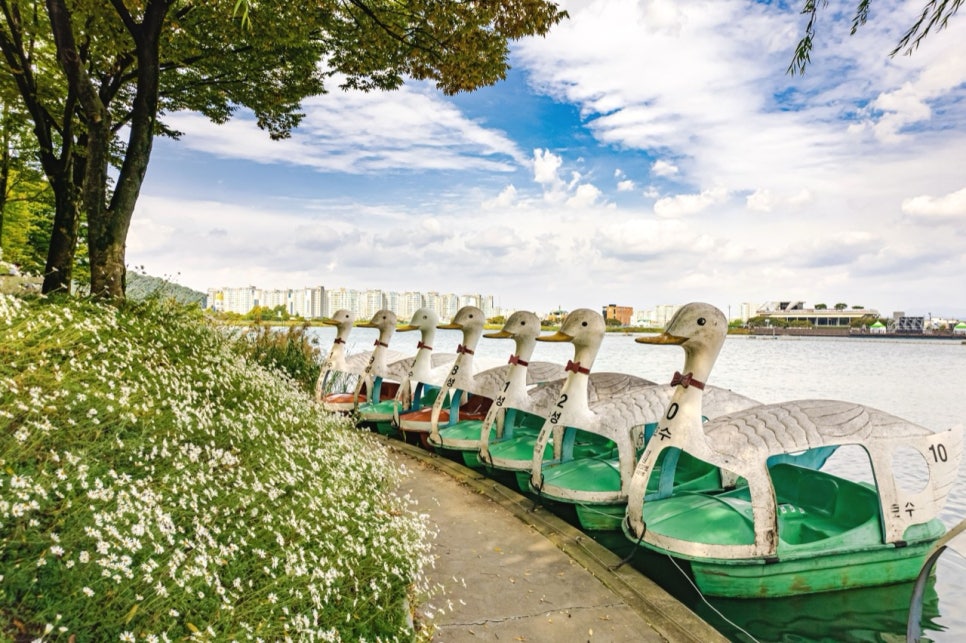
Wildflowers and swan boats, October 2021 (not a photo of the biennale)
Photo: Korea Tourism Organization, Photo Korea (photographed by 앙지뉴 필름) · KOGL Type 1
How do you get to the lake?
The easiest way in is Exit 1 of Suseongmot Station on Daegu Metro Line 3. According to the Korea Tourism Organization's accessible-travel article, there is a lift beside Exit 1, and Sanghwa Garden, at the entrance to the Suseong Resort area, is a little over 550 m away, with one long pedestrian crossing. We found no separate transport guide from the organisers.
- To catch the weekend activities, go on a Saturday or Sunday daytime; the grounds open at 10:00.
- On weekdays the grounds open at noon and stay open until 21:00, so an evening visit can take in the lake after dark.
- The pavilion is outdoors, and late-November evenings are cold.
- Enquiries: Suseong District, +82-53-668-1541
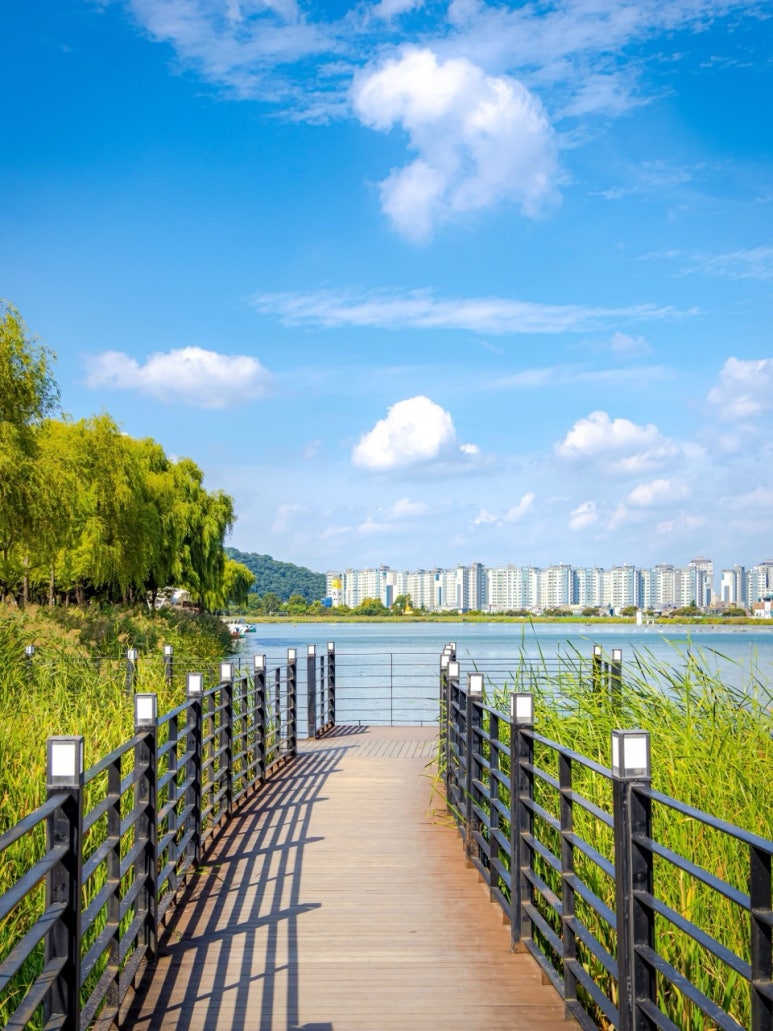
Viewing deck on the lake, October 2021 (not a photo of the biennale)
Photo: Korea Tourism Organization, Photo Korea (photographed by 앙지뉴 필름) · KOGL Type 1
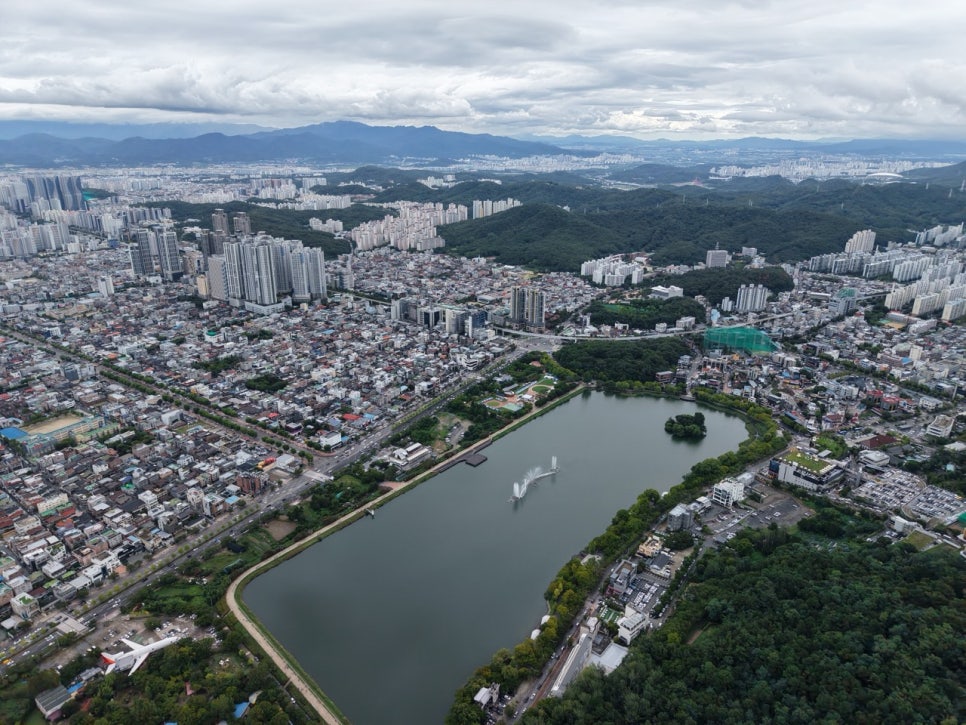
Suseongmot Lake in the city, from the air, August 2026 (not a photo of the biennale)
Photo: Korea Tourism Organization, Photo Korea (photographed by 비디비디 스튜디오) · KOGL Type 1
About the photos and the admission fee
Every photo here is of Suseongmot Lake from the Korea Tourism Organization's Photo Korea library (taken in 2021 and 2026), not of the biennale itself. Admission is listed as free by the Korea Tourism Organization, but the district's official site states no fee either way. Paid workshops and the bus tour vary by programme.
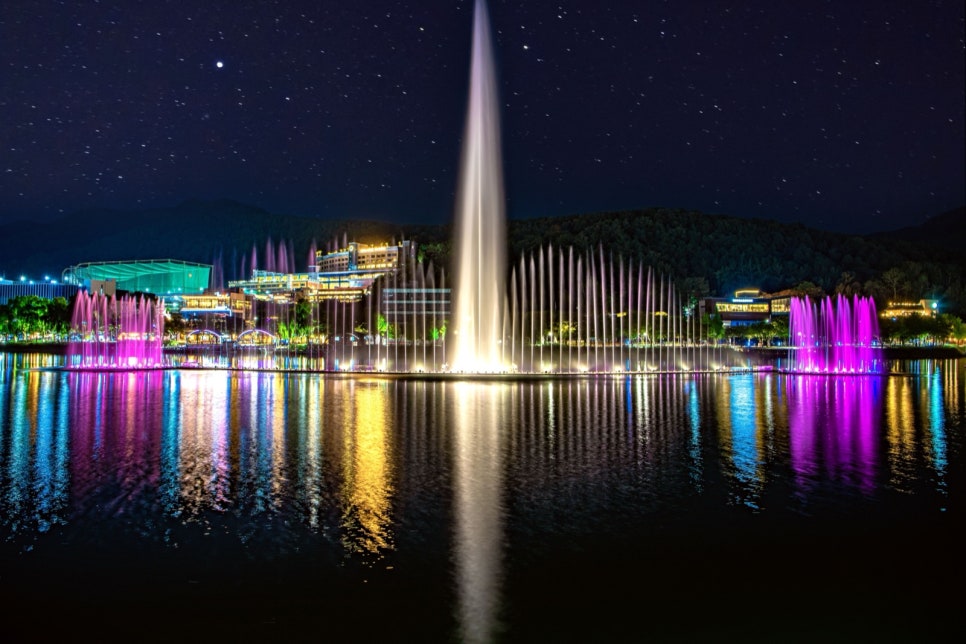
The musical fountain at night, October 2021 (not a photo of the biennale)
Photo: Korea Tourism Organization, Photo Korea (photographed by 앙지뉴 필름) · KOGL Type 1
Getting there from Seoul, and what to expect without Korean
From Seoul, the KTX to Dongdaegu Station takes roughly two hours. From there, take Daegu Metro Line 1 to Myeongdeok Station and change to Line 3 (a monorail) for Suseongmot Station, then follow the walk above. The biennale's official programme page sets out dates, hours and the artist list in both Korean and English, but we could not confirm English panels at the pavilion itself, and the workshops, talks and children's shows are run in Korean. The foundation's sign-up form is Korean-only and asks for site membership, which typically needs a Korean phone number, so a visitor who wants a workshop is better off asking at the desk on the day. None of that is needed to see the exhibition: walk in, and the designs, models and the Big Roof itself carry the show.
Frequently asked questions
- Q. When does the 2026 Suseong International Biennale end?
- It opened on Tuesday 27 October 2026 and runs until Sunday 22 November 2026 around Sanghwa Garden on Suseongmot Lake in Daegu, with no closing day.
- Q. Is the Suseong International Biennale free?
- Admission is listed as free by the Korea Tourism Organization and the grounds need no booking. The district's official site states no fee, and some workshops and the linked bus tour charge separately.
- Q. What are the Suseong International Biennale opening hours?
- 12:00–21:00 on weekdays (Monday to Friday) and 10:00–21:00 at weekends (Saturday and Sunday).
- Q. How do I get to the Suseong International Biennale?
- Take Daegu Metro Line 3 to Suseongmot Station and leave by Exit 1, which has a lift. Sanghwa Garden at the entrance to the Suseong Resort area is a little over 550 m away on foot.
- Q. What does a biennale that builds mean?
- Instead of showing models and drawings and then clearing them away, the biennale presents public buildings and landscapes planned for real parks, reservoirs and empty sites in Suseong District, and leaves them for residents once built. The Soso-byeol pavilion at Naegwan-ji, built for the 2024 edition, is one example.
- Q. Is it worth going if I do not read Korean?
- Yes, for the exhibition itself: it is walk-in and visual, the Big Roof pavilion is worth seeing in its own right, and the official programme page is in English as well as Korean. On-site English panels are not confirmed, and the workshops, talks and children's shows are in Korean.
Editor's note · Kang Shin-wook
For anyone in or passing through Daegu in late November who likes architecture, or simply wants a reason to walk round Suseongmot Lake. It covers opening hours, which activities need sign-up and the walk from the subway. More dates are on Events and Booking & sign-up.
Sources
- Official notice (Korean)
- Suseong International Biennale projects (Korean and English)
- Suseong International Biennale 2026 theme and directors (Korean)
- Suseong Culture Foundation programme sign-up (Korean)
- Korea Tourism Organization event listing (Korean)
- VisitKorea accessible Daegu by subway (Korean)
- inews24 on the biennale's opening (Korean)
- Pressian on the Suseong Space Tour (Korean)
Written in our own words from the sources above, never copied from them, and every date and price checked against at least two pages. The originals are in Korean. Spotted a mistake? Ask for a correction.
Latest from Korea Tourism Organization
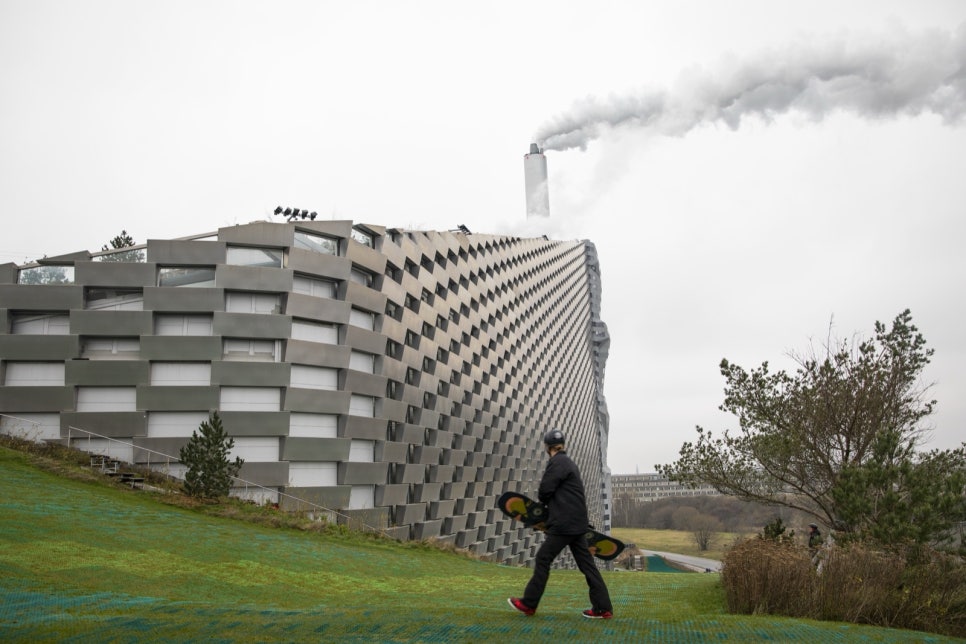 Korea Tourism OrganizationExhibition18 November 2026On nowFreeBIG's MATERIALISM in Seoul: free architecture show — to 28 Feb 2027
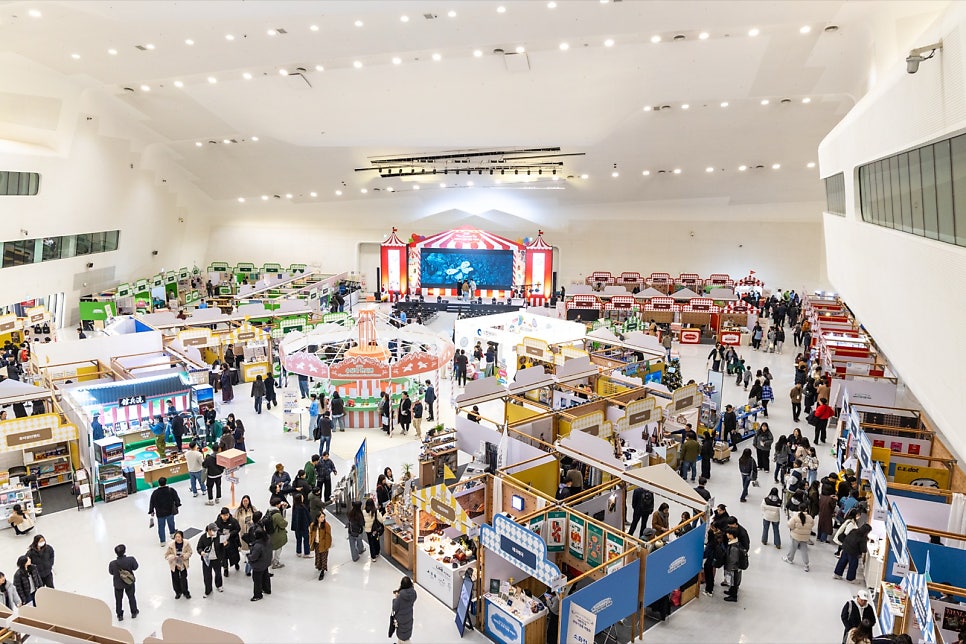 Korea Tourism OrganizationEvent18 November 2026In 2 daysFreeKorea Souvenir Fair at DDP, Seoul — free, 20–22 November 2026
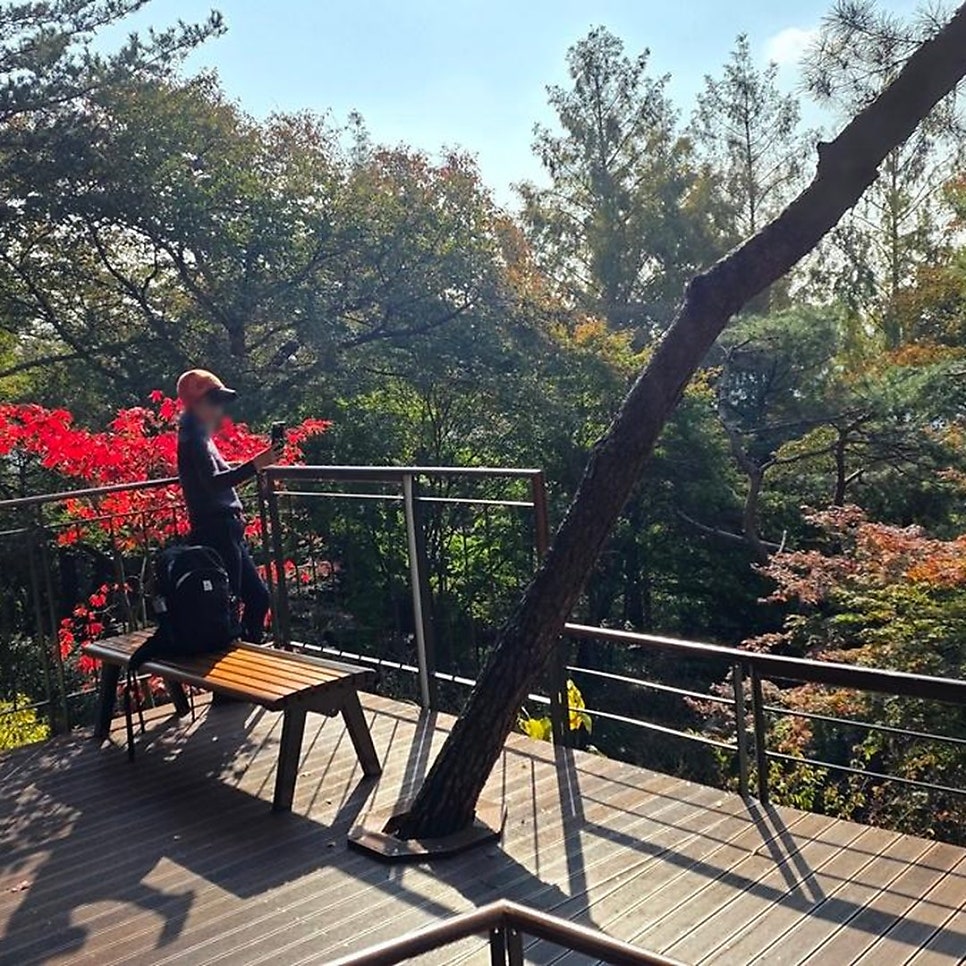 Korea Tourism OrganizationNews17 November 2026Namsan Haneul Forest Trail, Seoul: a step-free 1.45 km boardwalk lit until 11 pm
 Korea Tourism OrganizationEvent16 November 2026On nowLudensia Christmas Fantasy, Yeoju — six December days need Naver booking