Summary
The Yeongyang Firefly Observatory, inside Asia's first International Dark Sky Park in North Gyeongsang Province, runs three 30-minute telescope sessions every open night, starting at 20:00, 20:40 and 21:20. Adults pay KRW 4,000. There is no online booking: tickets are sold only at the observatory and sales for each session close five minutes before it starts. It shuts on Mondays and the day after public holidays, but opens as normal on 26 December 2026. The catch for visitors is distance — it is about three hours twenty minutes from Seoul by car, so plan to stay the night.
Article
In short
- Telescope sessions at the Yeongyang Firefly Observatory run three times a night — starting 20:00, 20:40 and 21:20, 30 minutes each — in the 3rd-floor observing room.
- Admission is KRW 4,000 for adults and KRW 3,000 for ages 5–18, day or night; KRW 2,000 on rainy days; free for ages 4 and under.
- There is no online booking: tickets are sold at the observatory desk only, sales close 5 minutes before each session, and no Korean phone number is needed.
- It closes on Mondays, the day after public holidays, 1 January, and the days of Seollal and Chuseok — but opens as normal on Saturday 26 December 2026.
- The 390-hectare area around it became Asia's first International Dark Sky Park (Silver tier) in 2015; the commentary is in Korean and the site is reachable in practice only by car.
Yeongyang International Dark Sky Park, in Subi-myeon in the north-east of North Gyeongsang Province, was designated to protect the darkness of its sky, and the Yeongyang Firefly Observatory inside it is where you can look at that sky through a telescope. This guide sets out the night-session times, prices, how tickets are sold and the closing days, based on the visitor guide Yeongyang County's Eco Park Office last revised on 23 October 2026. If you are going for the Milky Way on a clear night, two things matter more than anything else: tickets are sold on the spot only, and each session's sales close five minutes before it starts.
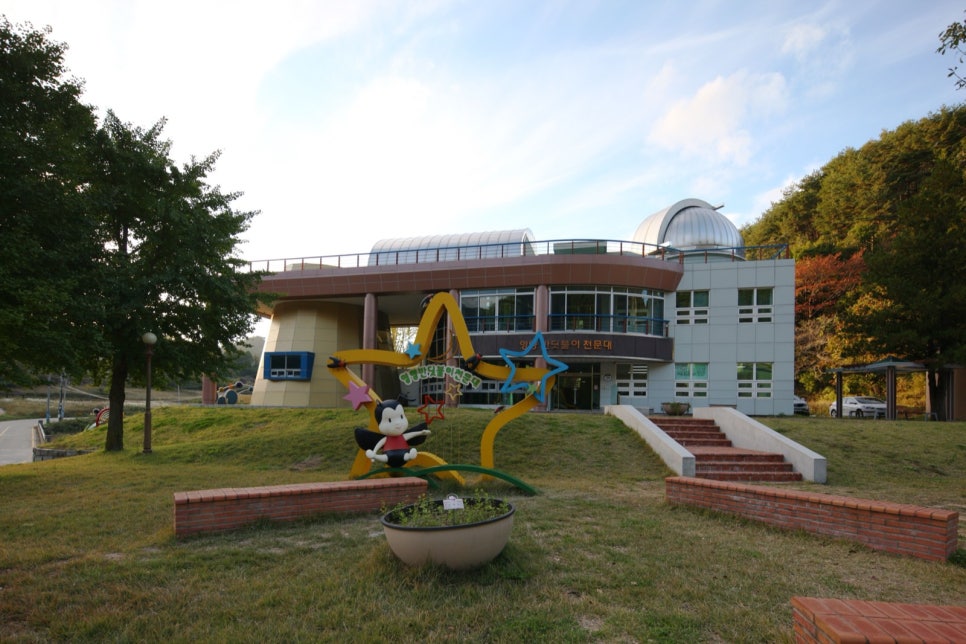
The observatory and its star sculpture, photographed by day in October 2013.
Photo: Korea Tourism Organization, Photo Korea (photographed by Kim Ji-ho) · KOGL Type 1
Why is the Yeongyang dark sky park special?
According to the county, the protected area covers 390 hectares, joining the Firefly Eco Village special zone in Suha-ri, Subi-myeon, with part of the Wangpicheon river valley's natural landscape conservation area. It was designated on 31 October 2015 at the Silver tier, and DarkSky International (then the International Dark-Sky Association) announced it that year as Asia's first International Dark Sky Park. The county's policy is to cut back and refit outdoor lighting so that the ecosystem and the night sky are protected together.
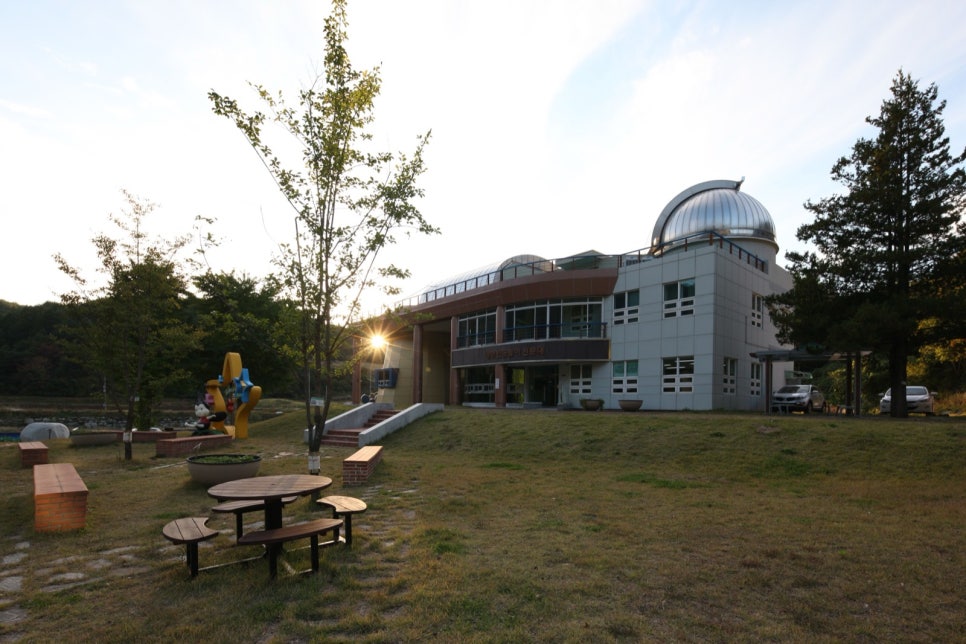
The observing dome and lawn (October 2013).
Photo: Korea Tourism Organization, Photo Korea (photographed by Kim Ji-ho) · KOGL Type 1
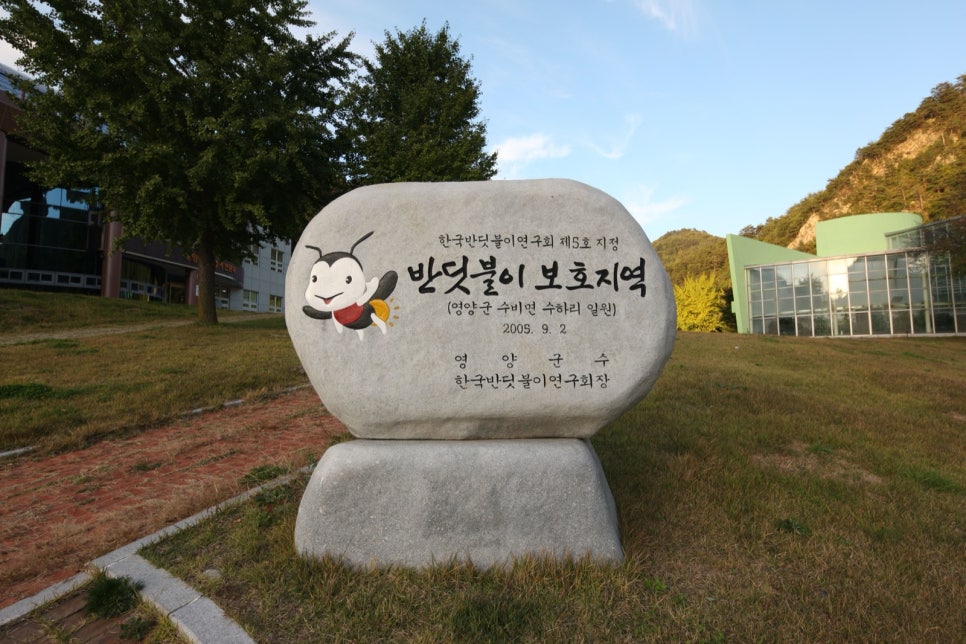
The Firefly Protection Area marker stone inside the eco park (October 2013).
Photo: Korea Tourism Organization, Photo Korea (photographed by Kim Ji-ho) · KOGL Type 1
When are the night sessions, and what do they cost?
The observatory's night opening runs from 19:30 to 22:00, and covers both the planetarium (a dome projection) and the observing room. Actual telescope viewing is limited to three 30-minute sessions starting at 20:00, 20:40 and 21:20, so arriving late easily means missing the last one. In the daytime (13:00–18:00) the planetarium is paired with the Star Ecology Hall, which alone opens at 10:00.
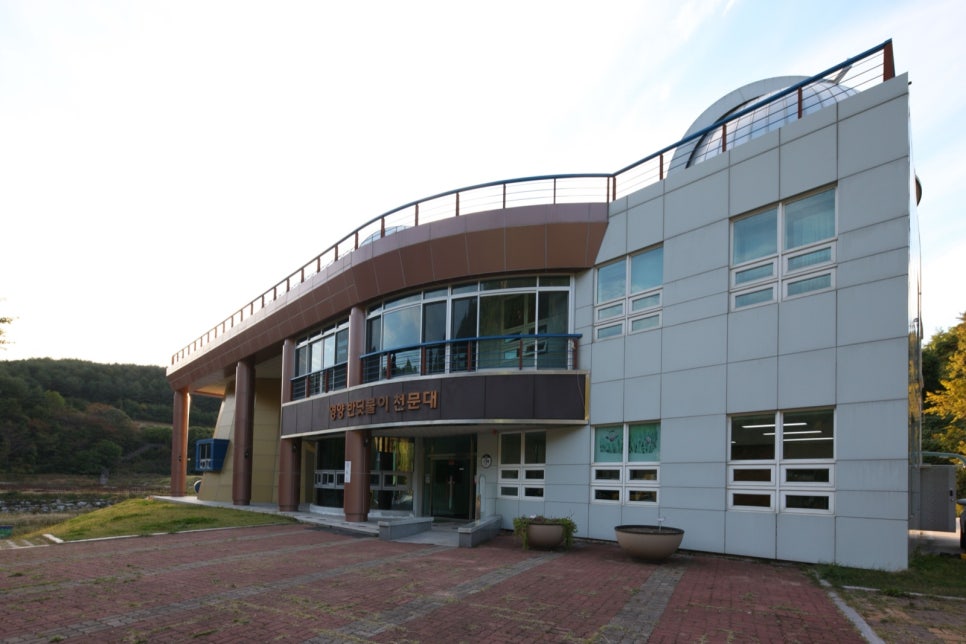
The front of the observatory, with the observing-room dome on top (October 2013).
Photo: Korea Tourism Organization, Photo Korea (photographed by Kim Ji-ho) · KOGL Type 1
Individual admission at the observatory (Yeongyang County guide, 23 October 2026)
- Day, 13:00–18:00
- Adults KRW 4,000 · ages 5–18 KRW 3,000 (planetarium + Star Ecology Hall)
- Night, 19:30–22:00
- Adults KRW 4,000 · ages 5–18 KRW 3,000 (planetarium + observing room)
- Rainy days
- KRW 2,000 for adults and youths (planetarium + exhibition)
- Free and discounts
- Free for ages 4 and under · 50% off for Yeongyang residents, over-65s, veterans of national merit, disabled visitors, basic-livelihood recipients, single-parent families and residents of sister cities
- Groups of 20+
- Day KRW 2,000 · night KRW 3,000 adults, KRW 2,000 youths
- Extra activities
- Solar viewing and the Milky Way gallery KRW 1,000 each · VR KRW 2,000 · crafts KRW 3,000–10,000
All tickets are sold at the observatory. Sales stop an hour before closing, and none are sold during the 12:00–13:00 lunch break or the 18:00–19:30 changeover to the night programme. For a telescope session you must buy your ticket at least five minutes before it starts.
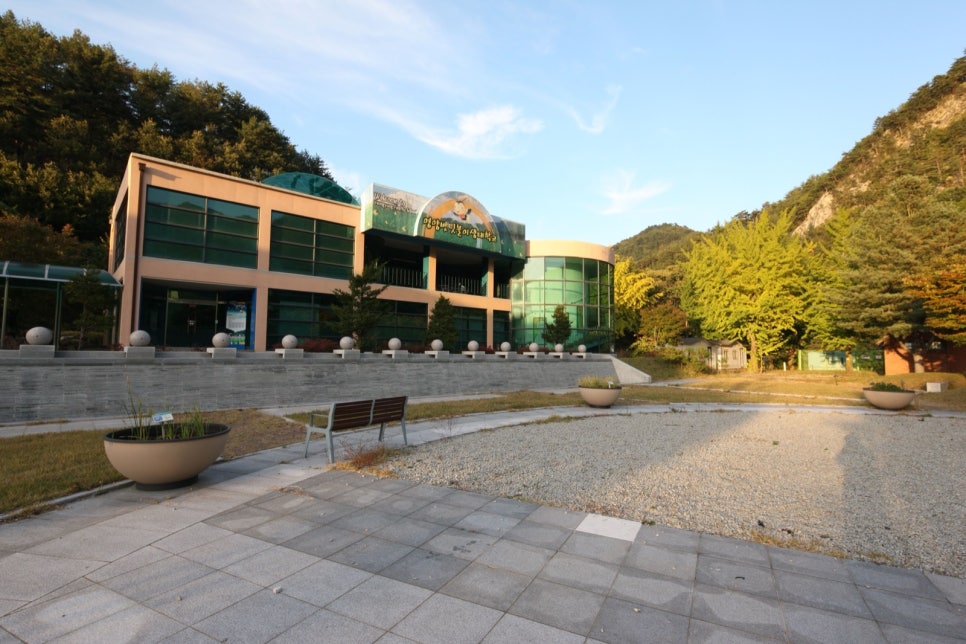
The Firefly Eco Park building and plaza (October 2013).
Photo: Korea Tourism Organization, Photo Korea (photographed by Kim Ji-ho) · KOGL Type 1
When is it closed, and is it open over the year-end?
The regular closing days are Mondays, the day after a public holiday, 1 January, and the days of Seollal (Lunar New Year) and Chuseok. In a notice dated 11 November 2026 the Eco Park Office said it will open as normal on both Christmas Day, Friday 25 December, and Saturday 26 December. The 26th would ordinarily be a closing day as the day after a holiday, so this is useful for a year-end weekend trip.
When a Monday is a public holiday
Yeongyang County's visitor guide simply lists Mondays as closed, but another tourism listing says that when a Monday is a public holiday the observatory closes the following day instead. If you are going over a long weekend, call +82 54-680-5332 first (in Korean).
What should you bring to see the Milky Way properly?
- Before setting off, check the Starlight Forecast (별빛예보) on the Eco Park Office website for hour-by-hour viewing conditions.
- At the viewing site, turn your phone screen down and switch off car headlights, so that other visitors' eyes can adapt to the dark.
- With only three sessions, arriving around 19:30 and buying your ticket first takes the pressure off.
- This is mountain country and winter nights get very cold. Dress to stand outside for 30 minutes.
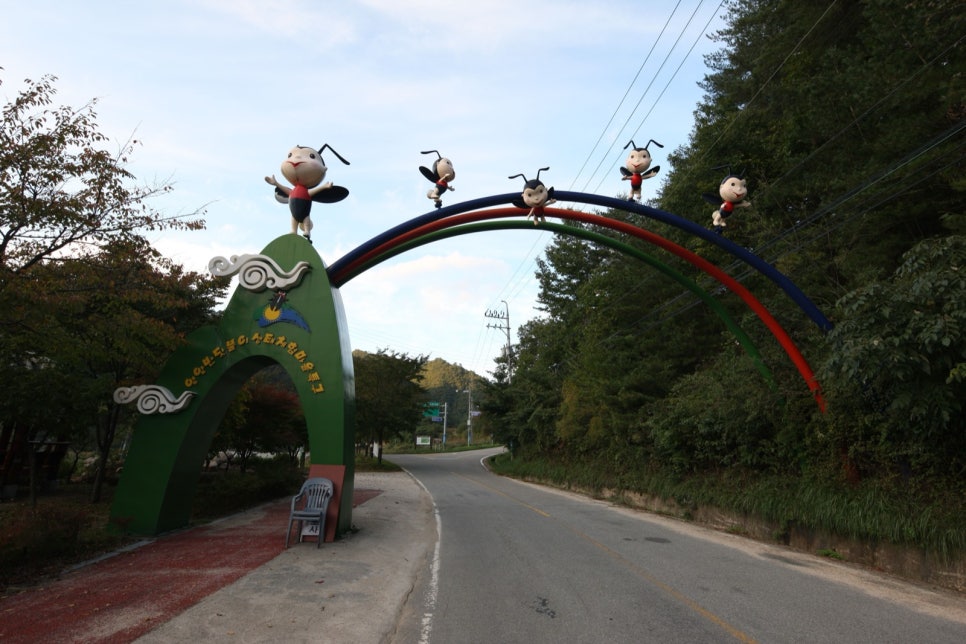
The firefly-character arch at the entrance to the eco park (October 2013).
Photo: Korea Tourism Organization, Photo Korea (photographed by Kim Ji-ho) · KOGL Type 1
Where do you stay when it ends late?
The last session ends at 21:50. The same Eco Park Office runs a pension (self-contained lodgings), a campsite and a youth training centre, and the campsite opens bookings for the following month on its website at 10:00 on the 1st of each month. Only cars registered at booking can enter the campsite, and check-in closes at 22:00, so it suits driving straight in after the last session. A Korea Tourism Organization travel article also mentions the Changbangugol columnar joints and a stargazing deck at the Subi Starlight Campsite nearby, but we could not confirm whether either is open in winter.
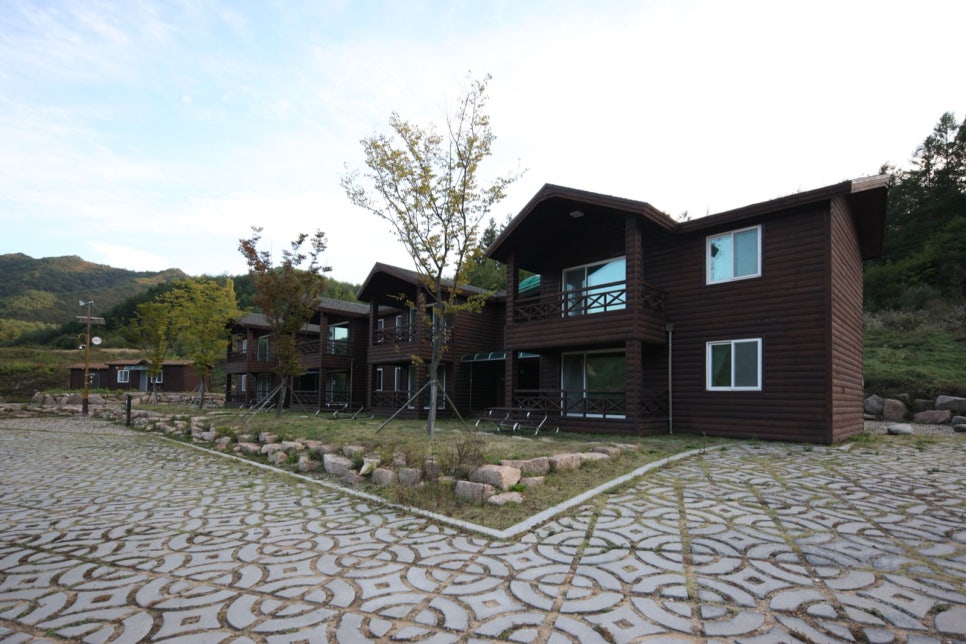
Timber lodgings run by the county's Eco Park Office (October 2013).
Photo: Korea Tourism Organization, Photo Korea (photographed by Kim Ji-ho) · KOGL Type 1
Yeongyang is about three hours twenty minutes by car from Seoul, by the county's own estimate, so staying the night is more realistic than a day trip. Walking a forest trail by day and heading to the observatory after dark keeps the driving short.
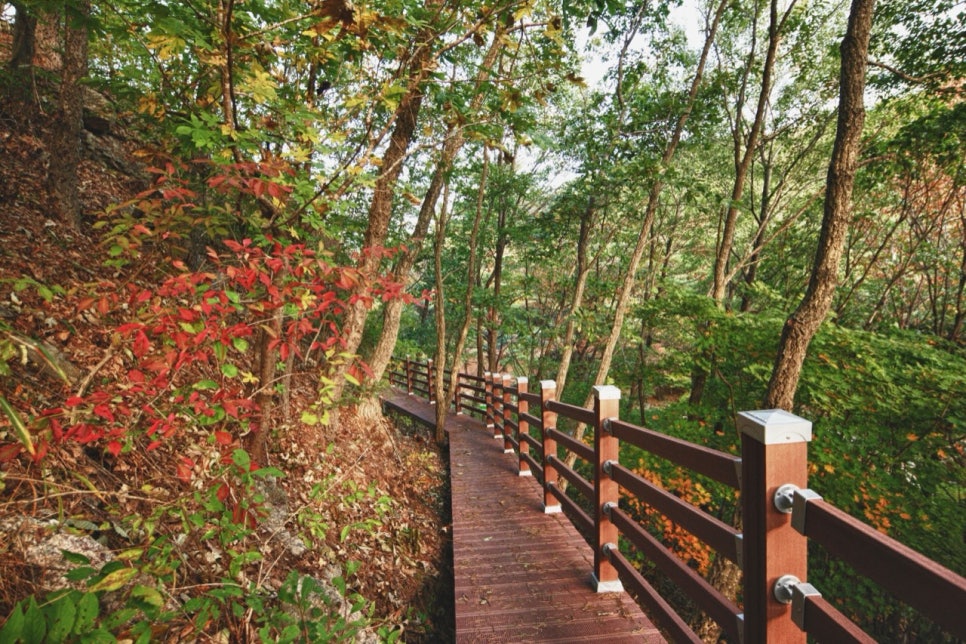
A boardwalk in Yeongyang's Geumgang pine forest (October 2013) — a different forest, not the area around the observatory.
Photo: Korea Tourism Organization, Photo Korea (photographed by Kim Ji-ho) · KOGL Type 1
Getting there, and what to expect without Korean
The county's directions are written for drivers: from Seoul by the Yeongdong and Jungang expressways to Punggi IC, then through Yeongju and Yeongyang town on national roads 36 and 31 and local road 917. The county gives no public-transport route, and we could not confirm a bus that gets back after a night session, so plan on a rental car, or a taxi from Yeongyang town arranged in advance, and somewhere to sleep nearby. The ticket desk needs no booking and no Korean phone number, which makes the night sessions easier for a foreign visitor than most Korean programmes. The commentary is in Korean, but the telescope view needs no translation. The on-site campsite and lodgings are different: they are booked through the Korean-language Eco Park Office website, and the campsite asks for ID and a registered car number, so a Korean-speaking friend or a call in advance helps.
Frequently asked questions
- Q. Do I need to book the Yeongyang Firefly Observatory?
- No. Tickets cannot be booked online; they are sold at the observatory on the day. For a night telescope session, buy your ticket at least 5 minutes before it starts.
- Q. What time are the night telescope sessions at Yeongyang?
- The night opening is 19:30–22:00, and telescope sessions run 20:00–20:30, 20:40–21:10 and 21:20–21:50 in the observatory's 3rd-floor observing room.
- Q. How much does the Yeongyang Firefly Observatory cost?
- KRW 4,000 for adults and KRW 3,000 for ages 5–18, day or night. On rainy days it is KRW 2,000, ages 4 and under are free, and Yeongyang residents, over-65s and some other groups get 50% off.
- Q. When is the Yeongyang Firefly Observatory closed?
- Mondays, the day after a public holiday, 1 January, and the days of Seollal and Chuseok. Saturday 26 December 2026 is an exception: it opens as normal although it follows Christmas Day.
- Q. What is the Yeongyang International Dark Sky Park?
- A 390-hectare area around the Firefly Eco Park in Subi-myeon, Yeongyang County, designated in 2015 by the International Dark-Sky Association (now DarkSky International) as Asia's first International Dark Sky Park, at Silver tier.
- Q. Is it worth going if I do not read Korean?
- Yes, if you have a car and a clear night. Tickets are bought at the door with no Korean phone number, and the telescope view is the point. The planetarium show and the guide's commentary are in Korean, and lodgings on site are booked through a Korean-only website.
Editor's note · Kang Shin-wook
For travellers willing to go a long way for a properly dark sky. We checked the times, fees and closing days against Yeongyang County's own visitor guide and notices. For other places to visit, see the directory of national venues.
Sources
- Official notice (Korean)
- Yeongyang Eco Park Office — International Dark Sky Park overview (Korean)
- Yeongyang Eco Park Office — Christmas opening notice, 11 Nov 2026 (Korean)
- DarkSky International — South Korean eco park named first dark sky park in Asia (English)
- Korea Tourism Organization — Yeongyang family astronomy camp article (Korean)
Written in our own words from the sources above, never copied from them, and every date and price checked against at least two pages. The originals are in Korean. Spotted a mistake? Ask for a correction.
Latest from Korea Tourism Organization
 Korea Tourism OrganizationExhibition18 November 2026On nowFreeBIG's MATERIALISM in Seoul: free architecture show — to 28 Feb 2027
 Korea Tourism OrganizationEvent18 November 2026In 2 daysFreeKorea Souvenir Fair at DDP, Seoul — free, 20–22 November 2026
 Korea Tourism OrganizationNews17 November 2026Namsan Haneul Forest Trail, Seoul: a step-free 1.45 km boardwalk lit until 11 pm
 Korea Tourism OrganizationEvent16 November 2026On nowLudensia Christmas Fantasy, Yeoju — six December days need Naver booking