Event·Royal Palaces and Tombs CenterEndedFree
Gyeongbokgung royal guard review (Cheopjong) — 30 Oct–1 Nov, free
This event has ended. The institution's visiting guide is still current. Visiting guide · What's on
Summary
Cheopjong, the Joseon ceremony in which the king summoned his guard by ringing bells and inspected them in person, is re-enacted in the Heungnyemun courtyard of Gyeongbokgung Palace from 30 October to 1 November 2026, at 11:00 and 14:00 each day. Watching is free and there is nothing to book: you turn up and stand in the courtyard. During those days the usual Royal Guard Changing Ceremony is replaced by the Gwanghwamun Gate guard ceremony at 10:00 and 13:00, so the two can be seen back to back. No English commentary has been announced.
Article
In short
- Gyeongbokgung's Cheopjong royal guard review runs for three days, Friday 30 October to Sunday 1 November 2026, twice a day at 11:00 and 14:00 in the Heungnyemun courtyard. Each performance lasts about 45 minutes.
- It is free and there is no booking. Go to the courtyard in front of Heungnyemun Gate at the time and watch.
- There is a public rehearsal on Thursday 29 October at 11:00, open to ordinary visitors.
- From 29 October to 1 November the Royal Guard Changing Ceremony is suspended; the Gwanghwamun Gate guard ceremony takes its place on the Gwanghwamun terrace at 10:00 and 13:00, an hour before each Cheopjong.
- No English commentary has been announced, but nothing here needs Korean: there is no ticket or form, and the performance is drums, banners and drill. Gyeongbokgung Station (Line 3) and Gwanghwamun Station (Line 5) are both a few minutes' walk away.
The Korea Heritage Service's Royal Palaces and Tombs Center and the Korea Heritage Agency are staging Cheopjong (疊鐘), the royal guard review ceremony, in the Heungnyemun courtyard of Gyeongbokgung again this autumn. Cheopjong was a Joseon military rite: bells were rung in quick succession to signal an emergency, and the palace guard and the civil and military officials assembled before the king to be inspected. Every day from 30 October to 1 November, at 11:00 and 14:00, a king and his guard appear and perform formations and martial arts as a staged drama. It takes place in the first courtyard you reach after walking through Gwanghwamun Gate and needs no sign-up, so it slots easily into a weekend at the palace.
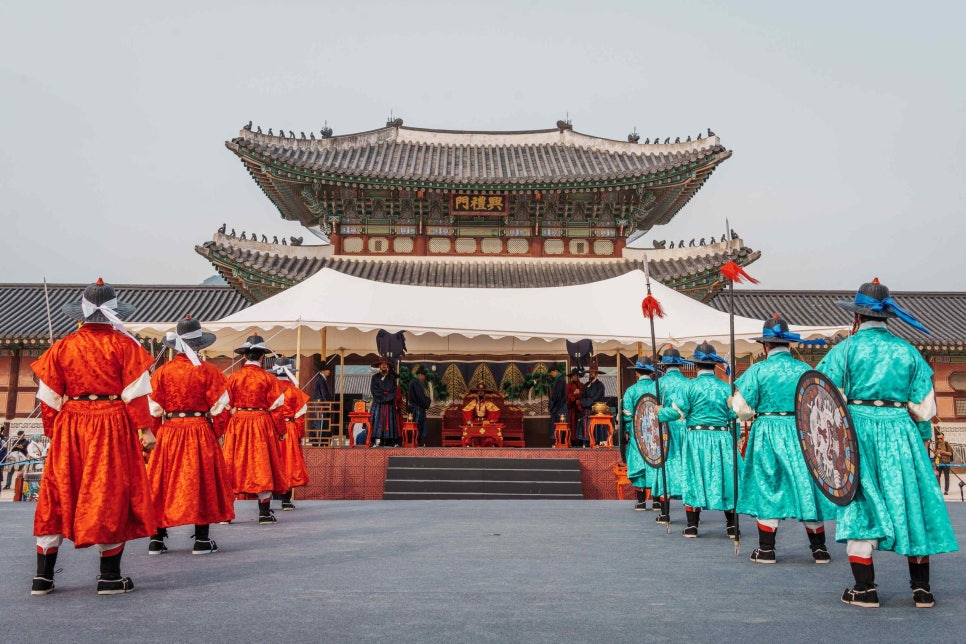
What was Cheopjong?
The name means 'bells rung on top of one another'. According to the Korea Heritage Service, once Cheopjong was ordered, not only the soldiers on duty in the palace but the civil and military officials and the troops of the Five Commands (Owi, 五衛), the central army, all gathered to be reviewed before the king. The Heritage Service reads it as a rite for tightening military discipline, keeping the foundations of the state and asserting royal authority.
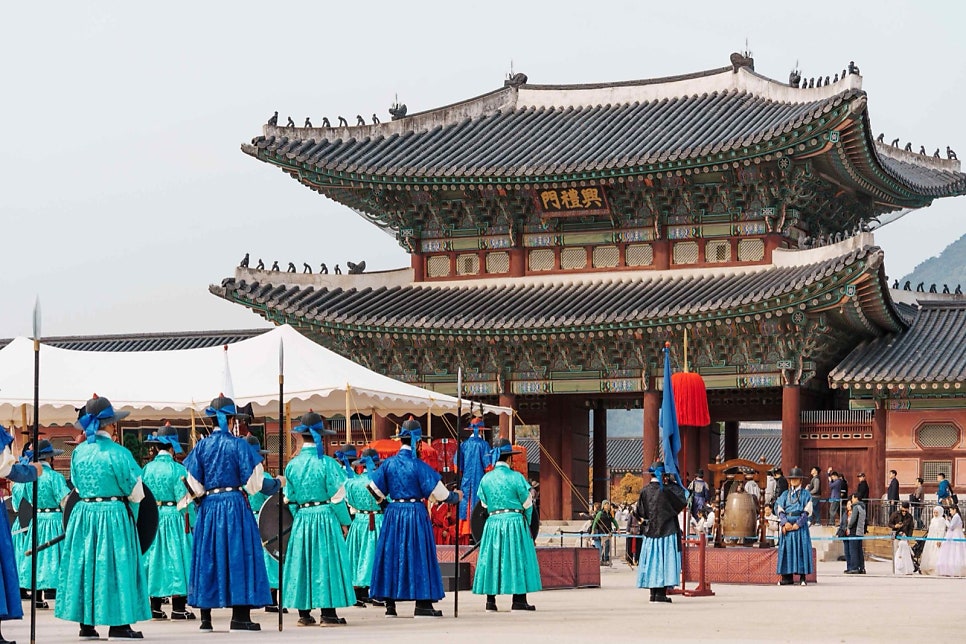
The re-enactment rests on two records: the 'Cheopjong' article in the military code of the Gyeongguk daejeon and the 'Grand Review' (daeyeorui, 大閱儀) in the military rites of the Gukjo oryeui, a ceremony in which the king himself directed the troops and watched them compete. This year the costumes, weapons, banners and shields are reconstructed from early Joseon sources, and the Heritage Service says it has added the Geumgun (禁軍), the king's close bodyguard, to strengthen the staging. The outline attached to the press release lists a cast of about 160, including the king, standard-bearers, the Geumgun, officials and the inner palace guard.
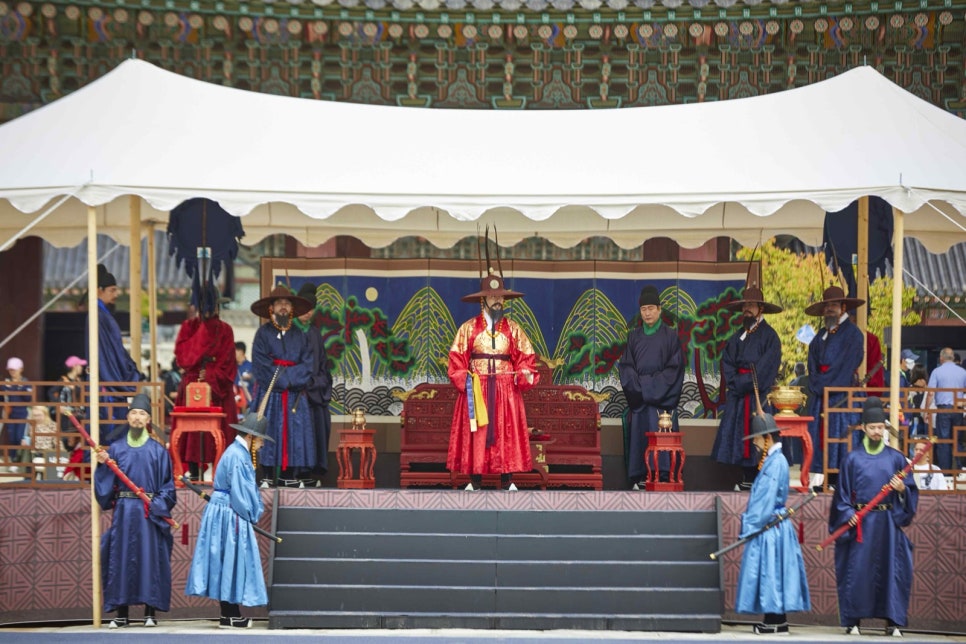
What happens in the 45 minutes?
The Korea Heritage Agency's event page lists five stages. The first part sets up the ritual with the bells and the roll call; the formations and the martial-arts display in the second half are the spectacle.
- Cheopjong — the royal secretary issues the Cheopjong decree, a herald proclaims it, and the bell-ringers strike the bells to declare the emergency.
- Roll call (jeomgo) — officials and soldiers line up before the king and a herald marks each name in the register to check numbers.
- Formations (jinbeop) — the troops change formation on signals from gongs, drums and white and blue command flags.
- Martial arts (yeonmu) — soldiers of the inner palace guard, split into a left and a right army, compete with one another.
- Withdrawal — the king encourages the troops and the procession withdraws.
What did past years look like?
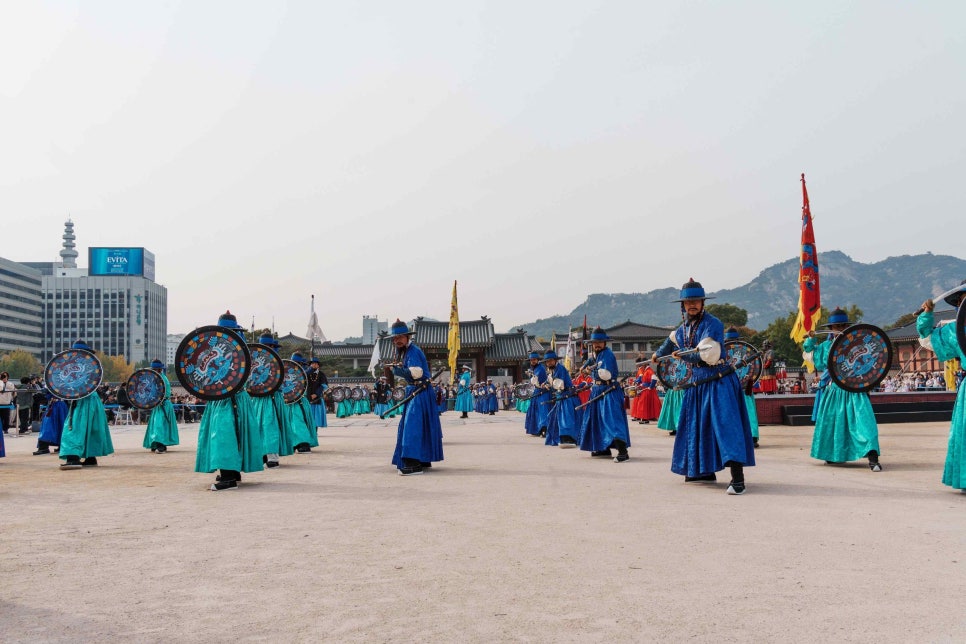
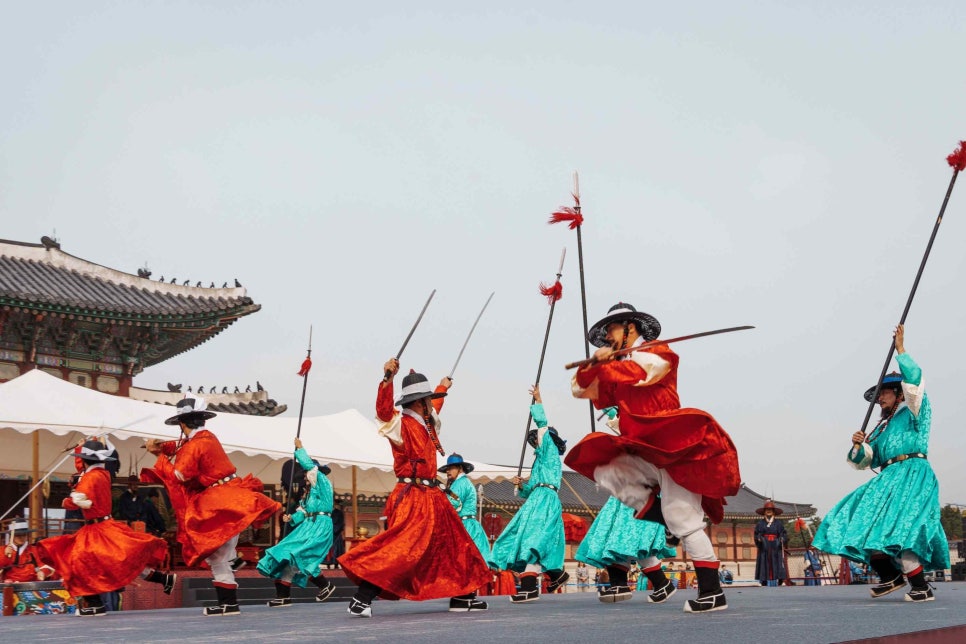
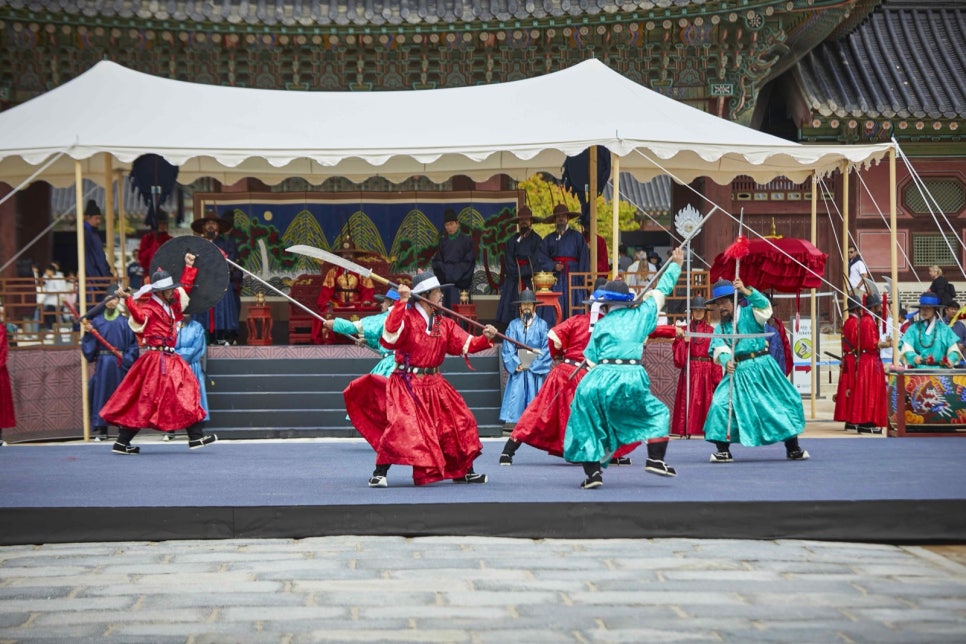
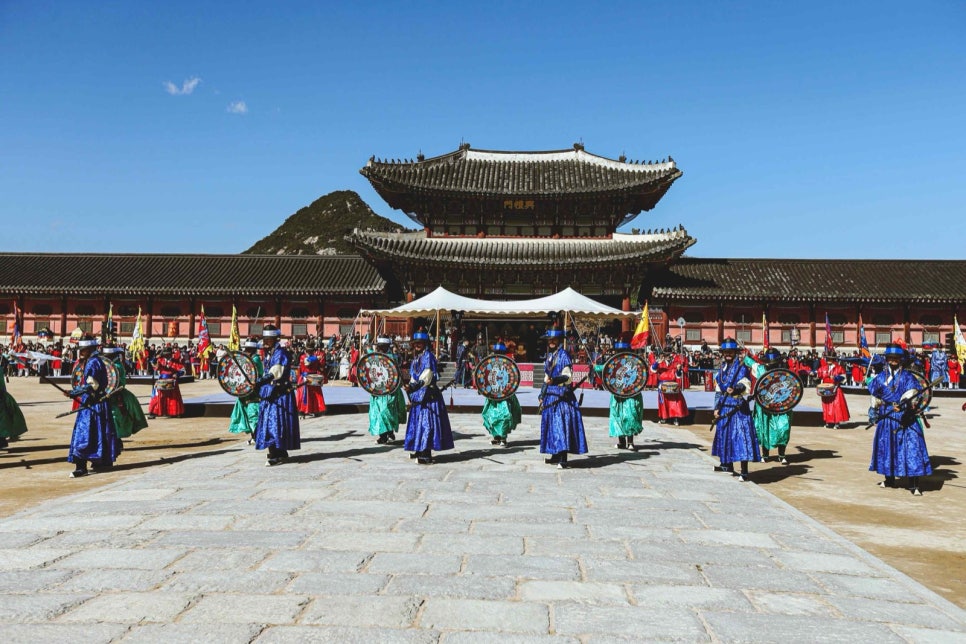
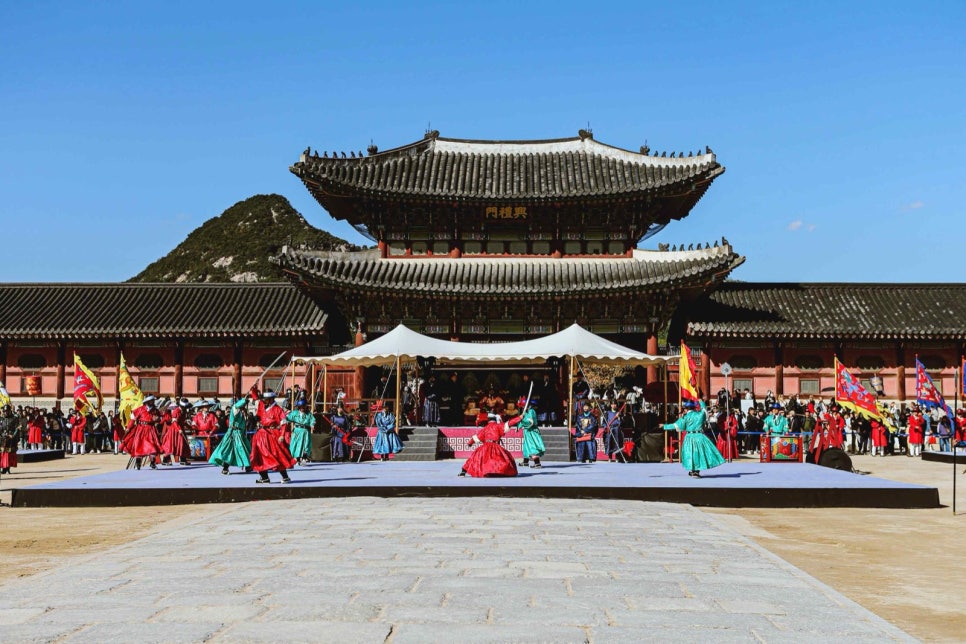
Cheopjong stopped during the COVID-19 pandemic and returned in 2023 after four years; it has been held in front of Heungnyemun every autumn since. Past press releases and photographs show much the same scenes each year. With the Geumgun added this year the programme may differ, so treat the list below as what has appeared before, not as this year's running order.
- Formations from the early Joseon Five Commands drill, such as the single line and the circle
- A shield wall led by round dragon-painted shields (paengbae)
- Group combat and one-on-one martial-arts bouts
- An archery display
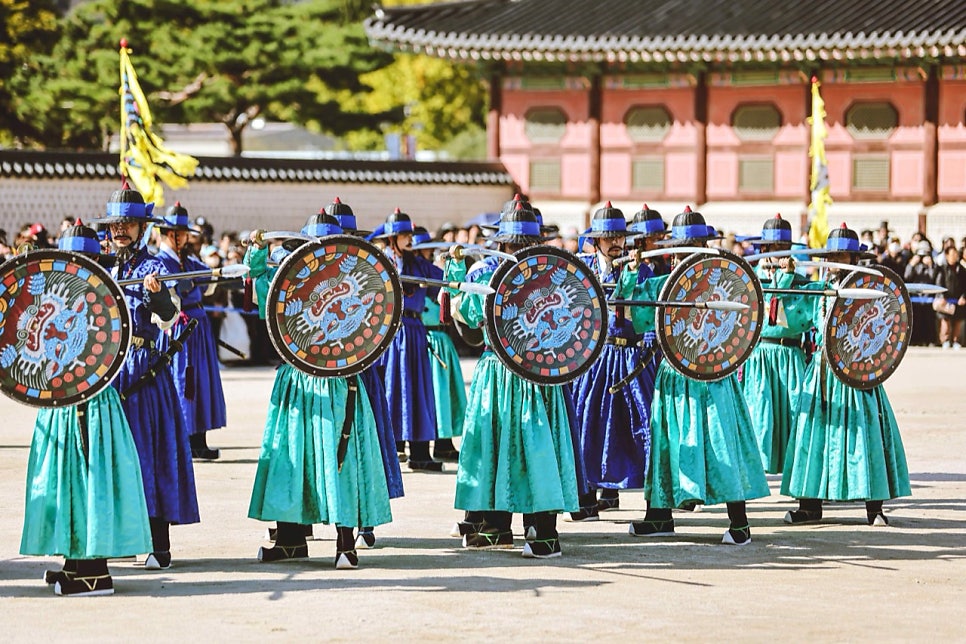
How to see it with the Gwanghwamun guard ceremony
While Cheopjong is on (29 October to 1 November, counting the rehearsal day) the Royal Guard Changing Ceremony normally held at Gyeongbokgung takes a break. The Gwanghwamun Gate guard ceremony fills the gap twice a day on the Gwanghwamun terrace, exactly one hour before each Cheopjong. Watch it on the terrace, then walk through the gate into the Heungnyemun courtyard, and the next performance is about to begin.
Cheopjong royal guard review
- Dates
- Friday 30 October – Sunday 1 November, 3 days (public rehearsal on the 29th)
- Times
- 11:00 · 14:00 (about 45 minutes each)
- Place
- Heungnyemun courtyard, Gyeongbokgung
- Admission
- Free, no booking
- What it is
- The king reviews his guard (bells → roll call → formations → martial arts → withdrawal)
Gwanghwamun Gate guard ceremony (in place of the guard-changing ceremony)
- Dates
- Thursday 29 October – Sunday 1 November, 4 days
- Times
- 10:00 · 13:00
- Place
- Gwanghwamun terrace (woldae)
- Admission
- Free, no booking
- What it is
- The gate watch at Gwanghwamun changing shifts
- Morning: 10:00 guard ceremony on the Gwanghwamun terrace → 11:00 Cheopjong in the Heungnyemun courtyard
- Afternoon: 13:00 guard ceremony → 14:00 Cheopjong
- To avoid the weekend crowd: the public rehearsal on Thursday 29 October at 11:00, with the guard ceremony the same day
The rehearsal times are given two ways
The Korea Heritage Agency's event page lists the public rehearsal on 29 October at both 11:00 and 14:00, while the Korea Heritage Service's press release says 11:00 is for the public and 14:00 is a press preview. If you are not press, aim for 11:00.
Before you go
- Weather: the performance may be changed or cancelled in rain or bad weather. Check the Korea Heritage Agency or Royal Palaces and Tombs Center notices that morning.
- Inside the palace: Cheopjong itself is free, and according to the Royal Palaces and Tombs Center's notice of 30 September, Gyeongbokgung is in a free-admission period from 29 October to 15 November (closed Tuesdays), so walking on into the palace costs nothing either.
- Crowds: follow the event staff's directions when finding a spot. The front rows fill early.
- Enquiries: Korea Heritage Agency, +82 2-3011-7750 (Korean)
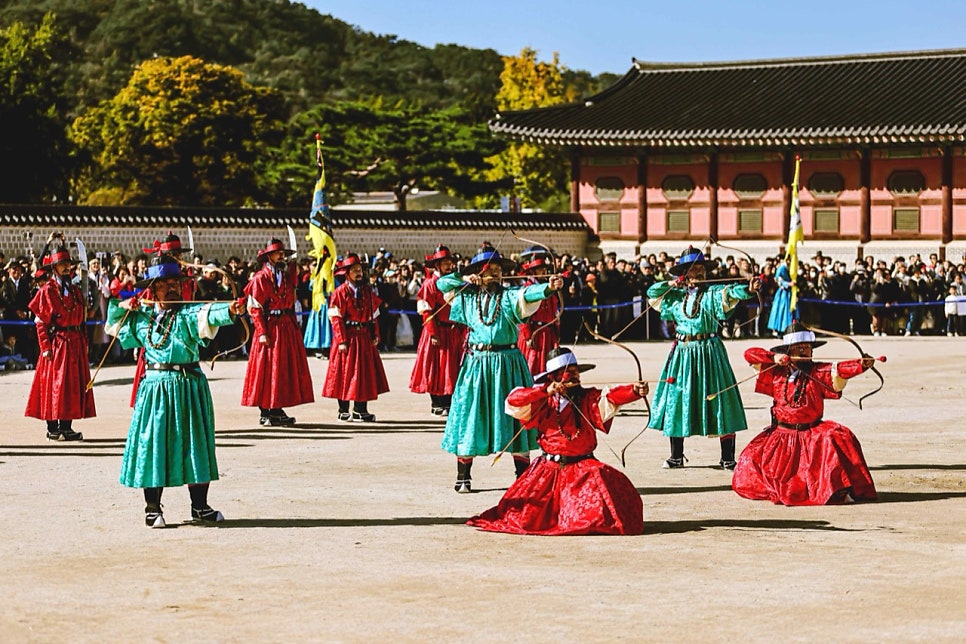
Getting there, and what works without Korean
Gyeongbokgung Station on Seoul Subway Line 3 (exit 5) brings you into the palace grounds a short walk from the Heungnyemun courtyard; Gwanghwamun Station on Line 5 (exit 2) puts you on Gwanghwamun Square, from where you walk through Gwanghwamun Gate to the courtyard. There is nothing to buy or book, so a foreign phone number or card is never an issue, and during the free-admission period you do not even need a palace ticket to carry on inside. No English narration or interpreter has been announced for Cheopjong: the decree and the roll call are delivered in Korean. The part most visitors come for — the bells, the drums, the flag signals and the fighting — needs no translation. The five-stage list above is enough to follow along.
Frequently asked questions
- Q. When and where is the Cheopjong re-enactment at Gyeongbokgung?
- From Friday 30 October to Sunday 1 November 2026, daily at 11:00 and 14:00, in the Heungnyemun courtyard of Gyeongbokgung Palace. Each performance lasts about 45 minutes, and there is a public rehearsal on Thursday 29 October at 11:00.
- Q. Do I need to book Cheopjong, and is there a charge?
- No booking, and it is free. Go to the Heungnyemun courtyard at the time and watch. Gyeongbokgung is also in a free-admission period from 29 October to 15 November (closed Tuesdays), so entering the palace is free too.
- Q. What does Cheopjong mean?
- It means 'ringing the bells one after another'. In the Joseon period the bells were sounded to prepare for an emergency, and the troops and officials gathered before the king, who inspected them in person.
- Q. Can I see the Royal Guard Changing Ceremony during Cheopjong?
- Not from 29 October to 1 November — it is suspended. The Gwanghwamun Gate guard ceremony runs instead on the Gwanghwamun terrace, free, daily at 10:00 and 13:00.
- Q. Is Cheopjong cancelled if it rains?
- It may be changed or cancelled in rain or bad weather. Check with the Korea Heritage Agency (+82 2-3011-7750, Korean) or the Royal Palaces and Tombs Center's notices before you set out.
- Q. Is it worth going if I do not read Korean?
- Yes. There is no ticket or registration to get through, and the parts worth watching — bells, drums, flag signals, formations and martial-arts bouts — need no language. What you will miss is the spoken decree and the roll call, which are in Korean with no announced English commentary; reading the five stages in this article beforehand covers that.
Editor's note · Kang Shin-wook
For anyone in Seoul on the last weekend of October who planned to see the guard-changing ceremony at Gyeongbokgung. Palace hours and closing day are on our Gyeongbokgung and royal palaces guide, and other dated events are on the events board.
Sources
- Official notice (Korean)
- Korea Heritage Agency event page — 2026 Cheopjong royal guard review (Korean)
- Royal Palaces and Tombs Center notice — Gyeongbokgung opening in October and November 2026, 30 September 2026 (Korean)
Written in our own words from the sources above, never copied from them, and every date and price checked against at least two pages. The originals are in Korean. Spotted a mistake? Ask for a correction.
Latest from Royal Palaces and Tombs Center
 Royal Palaces and Tombs CenterProgramme3 November 2026Year-roundFreeSeosamneung Hyoreung and royal placenta tombs — free guided walks
 Royal Palaces and Tombs CenterProgramme2 November 2026In 4 daysFreeGyeongbokgung incense burners regain their lids — November talks full
 Royal Palaces and Tombs CenterNotice1 November 2026Changgyeonggung free phone audio guide in English — from 29 Oct
 Royal Palaces and Tombs CenterProgramme31 October 2026On nowJoseon royal tomb day tours: last six of 2026 — 1–14 November