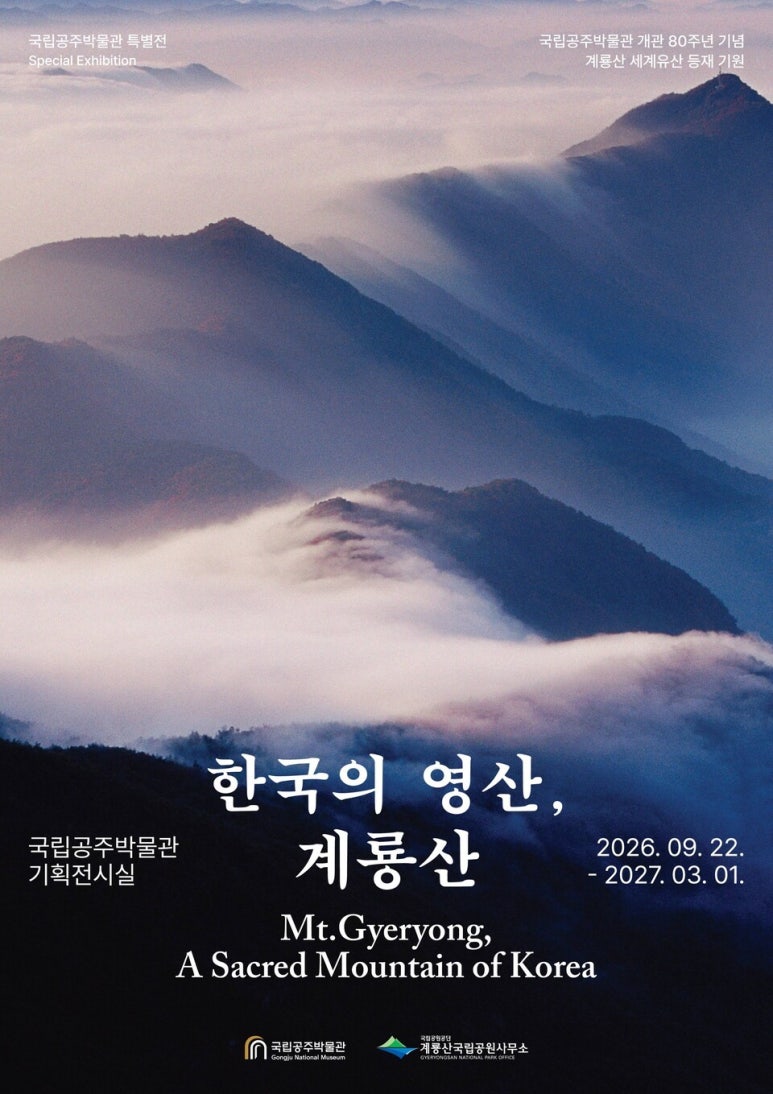
Exhibition·Gongju National MuseumOn nowFree
Gongju National Museum: Queen Muryeong's coffin treasures — headrest on view to 8 Nov
Summary
Gongju National Museum marks 1,500 years since the death of King Muryeong's queen with a theme exhibition of what was laid inside her coffin, running in the Ungjin Baekje Gallery until 21 February 2027. Her headrest and footrest — both National Treasures, and not normally on display — are out only until 8 November; the gilt coffin ornaments stay until 13 December. Entry is free and needs no booking, so the only planning is the date.
Article
In short
- The theme exhibition "1,500 Years Together: Queen Muryeong's Coffin Goods" runs from 27 October 2026 to 21 February 2027 in the Ungjin Baekje Gallery of Gongju National Museum.
- The queen's headrest and footrest, both National Treasures, are on special display only until Sunday 8 November; her gilt coffin ornaments stay until Sunday 13 December.
- Entry is free and needs no booking. The museum is open 9:00 am – 6:00 pm and closed on Mondays.
- 2026 is 1,500 years since 526, the year the tomb's memorial stone gives for the queen's death.
- Expect the theme panels to be in Korean; national museum labels usually add an English object name — the objects themselves are the reason to go.
Gongju National Museum has brought back out the things that were buried beside King Muryeong's queen, to mark 1,500 years since her death. Because the display sits inside the Ungjin Baekje Gallery, part of the free permanent exhibition, there is no ticket to buy — but the two most important pieces, her headrest and footrest, are out for just two weeks, until 8 November. After that the coffin ornaments and the rest of the display remain, so decide what you want to see before you pick the day.
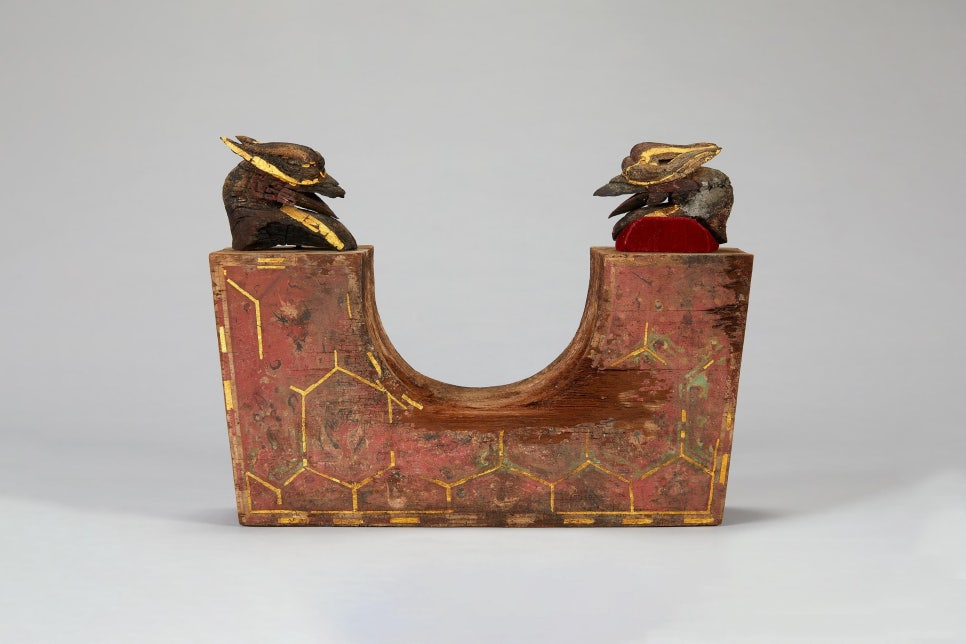
The queen's headrest, a National Treasure — gold-leaf hexagons over red lacquer, with two phoenix-head ornaments on top
Photo: Gongju National Museum collection / e-museum · KOGL Type 1
Which pieces are on view, and until when?
Display periods by object (Gongju National Museum press release)
- Queen's headrest · National Treasure
- 27 October – 8 November (two weeks)
- Queen's footrest · National Treasure
- 27 October – 8 November (two weeks)
- Queen's coffin ornaments
- 27 October – 13 December (about two months)
- Whole theme exhibition
- 27 October 2026 – 21 February 2027
The museum says none of the three is normally in the permanent display. From 9 November you will see the coffin ornaments and the core display; from 14 December, the core display alone. 8 November is a Sunday, so in practice this weekend is the last chance for the two National Treasures, and no extension has been announced.
How is the gallery laid out?
The space is modelled on the queen's coffin. It shows how she was laid out and where each object was placed, with the tableware that sat by her head, her jewellery and the funerary goods. Illustrations by the history cartoonist Woo Yong-gok run through the display, which makes it easy going with children even if the panels are in Korean.
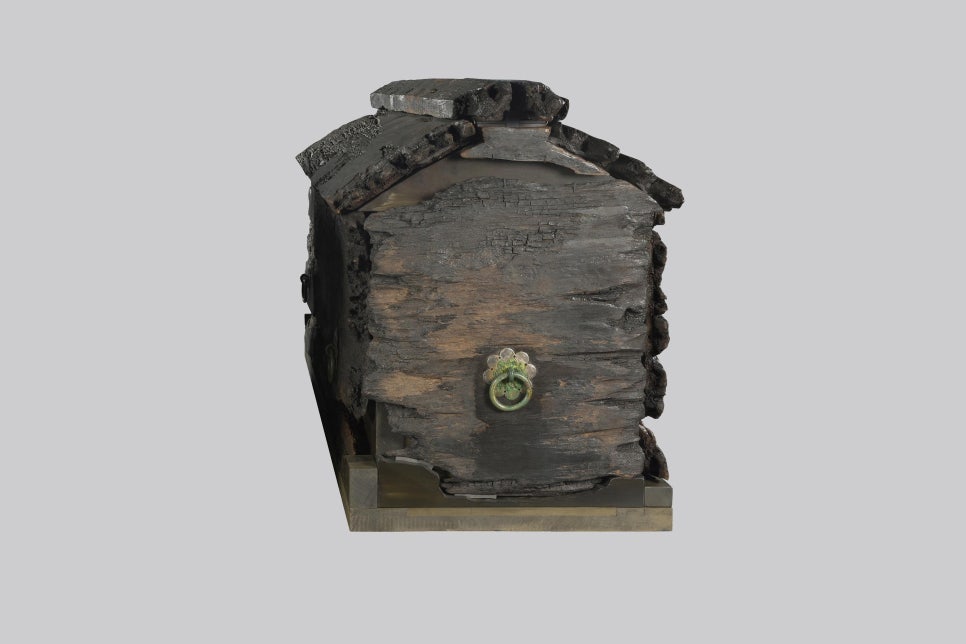
The queen's wooden coffin — not confirmed as part of this exhibition
Photo: Gongju National Museum collection / e-museum · KOGL Type 1
What makes the headrest special?
The headrest is a block of wood with a half-moon hollow cut into the top to cradle the head. It is lacquered red all over and then covered in a lattice of gold-leaf hexagons; according to the e-museum catalogue entry, the hexagons enclose painted lotuses, phoenixes and celestial figures. Two phoenix heads carved from wood are thought to have rested on top.
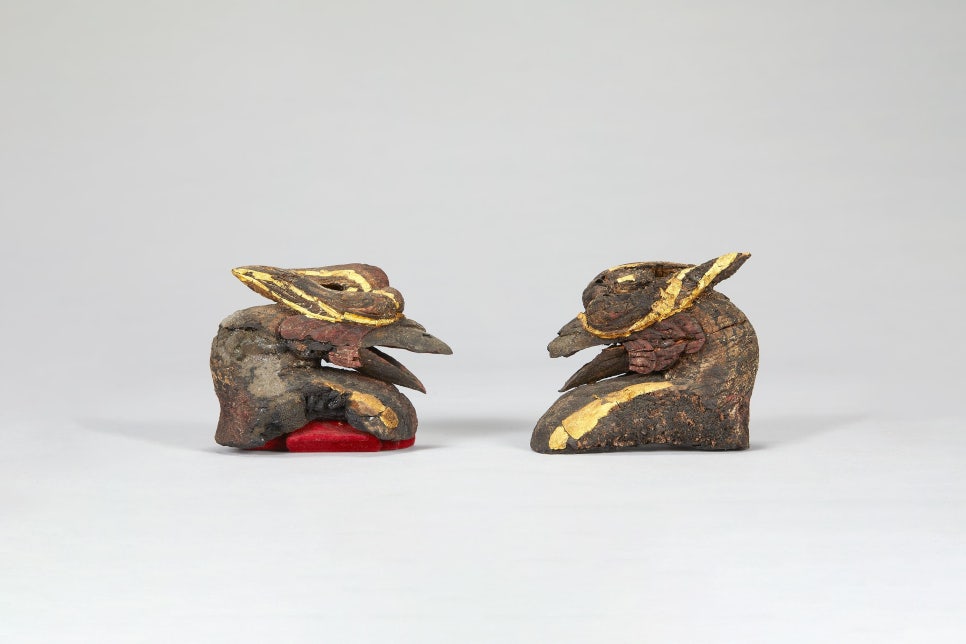
The two wooden phoenix-head ornaments from the queen's headrest
Photo: Gongju National Museum collection / e-museum · KOGL Type 1
What does the footrest look like?
The footrest is a block of wood with a deep W-shaped groove cut down the middle to hold both feet. Like the headrest it is finished in red lacquer with a gold-leaf border, and it was among the finds from the tomb designated as National Treasures together in 1974.
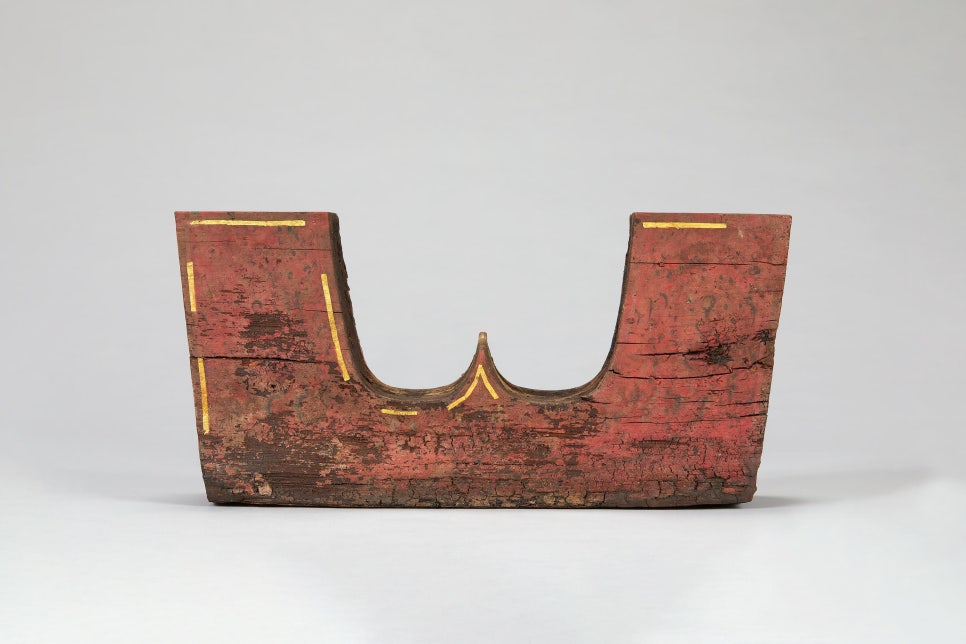
The queen's footrest — W-shaped groove, red lacquer and gold-leaf border
Photo: Gongju National Museum collection / e-museum · KOGL Type 1
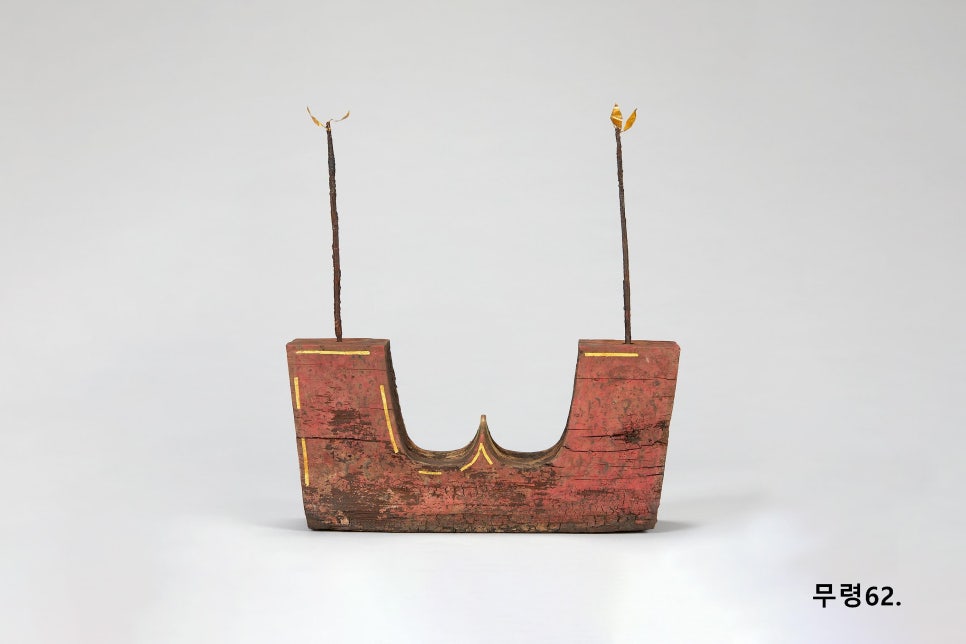
The queen's footrest with its decorative pins in place (accession number visible bottom right)
Photo: Gongju National Museum collection / e-museum · KOGL Type 1
The coffin ornaments, on view to 13 December
The coffin ornaments are a pair of thin gold sheets cut through with flame and lotus patterns, and they stay on view until 13 December — more than a month after the headrest and footrest go back. If you miss 8 November, these are what remains of the special display.
Are the coffin ornaments a National Treasure?
The e-museum catalogue lists the queen's coffin ornaments as a National Treasure, but this press release puts the National Treasure label only on the headrest and footrest. We found nothing that settles which is right, so this article does not state the ornaments' status.
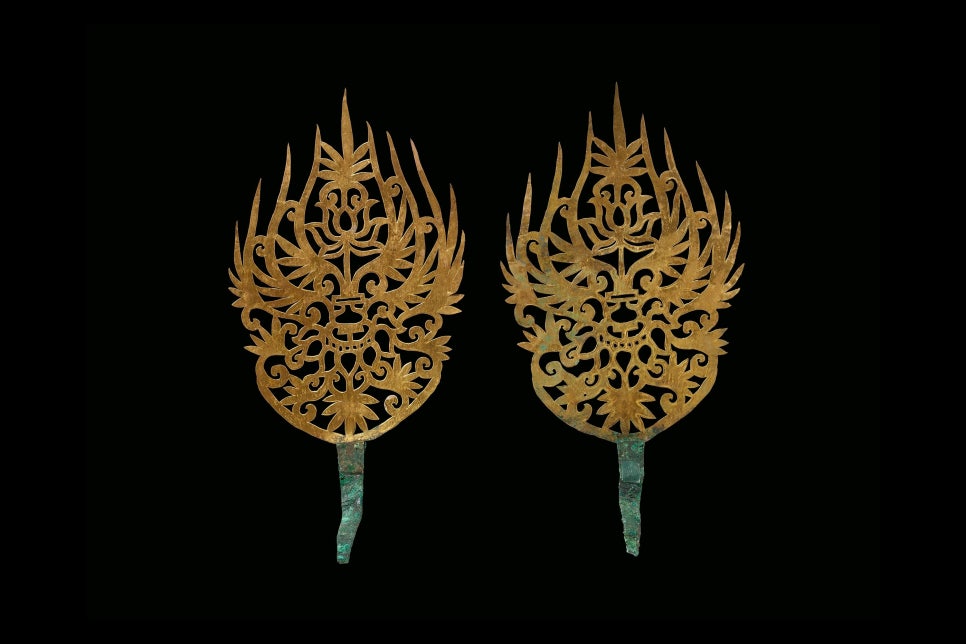
The queen's coffin ornaments, a pair
Photo: Gongju National Museum collection / e-museum · KOGL Type 1
What else was buried with the queen?
The photographs below are other grave goods of Queen Muryeong published on e-museum. The museum says only that jewellery and funerary goods are on display and has not released a full object list, so we could not confirm whether these pieces are in the gallery. Treat them as background on what she was buried with; if you are travelling for one particular object, ask the museum first on +82 41-850-6300.
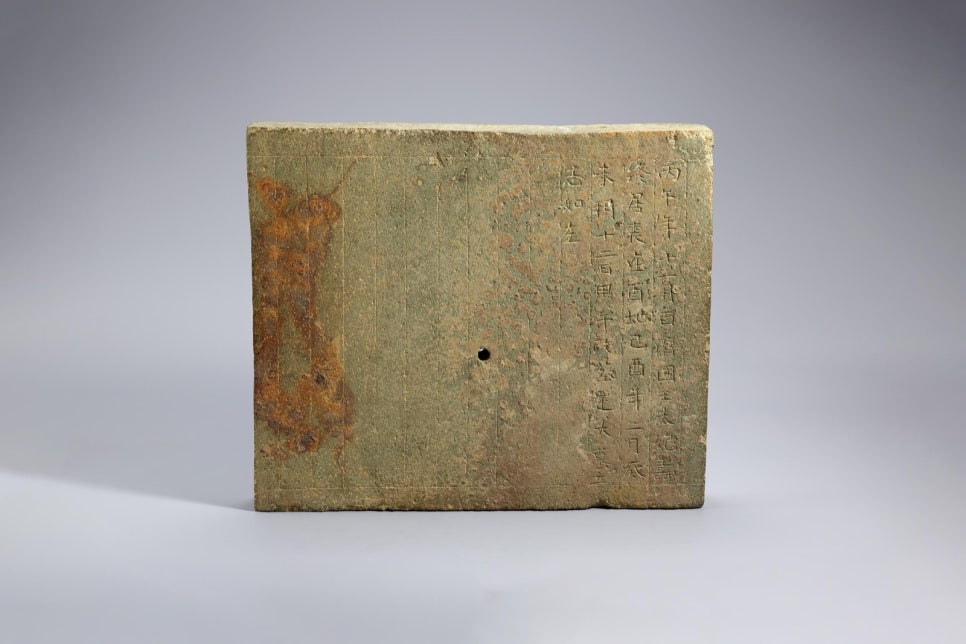
The queen's memorial stone and the king's land-purchase tablet — inscribed with her dates of death and burial (display not confirmed)
Photo: Gongju National Museum collection / e-museum · KOGL Type 1
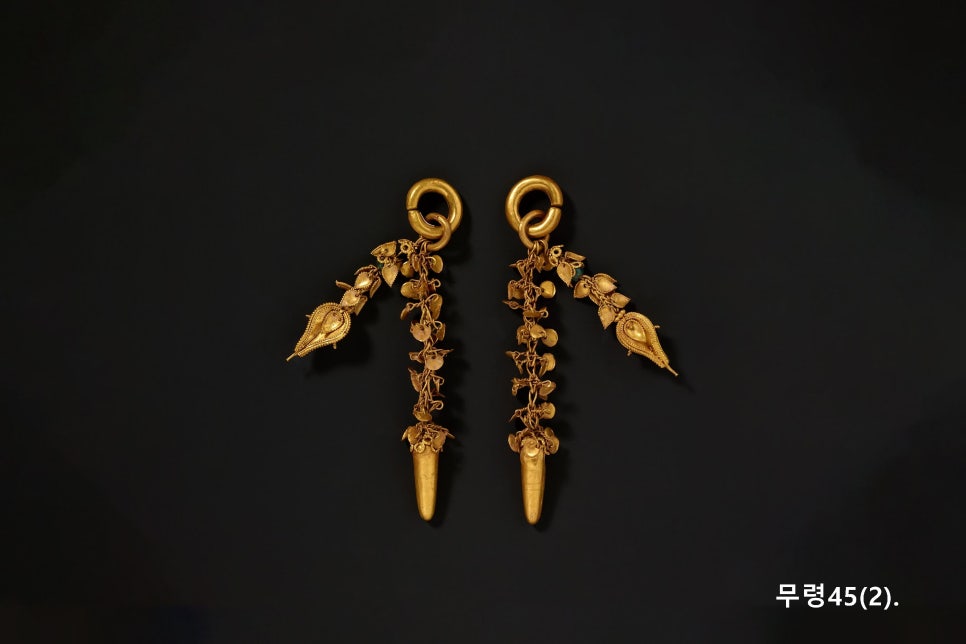
The queen's gold earrings — display not confirmed
Photo: Gongju National Museum collection / e-museum · KOGL Type 1
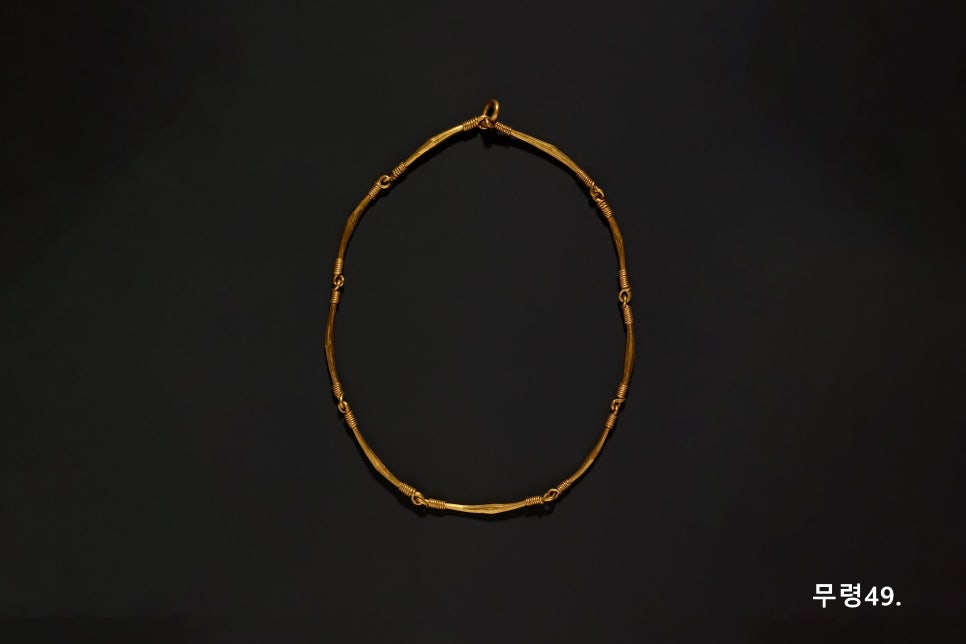
The queen's gold necklace — display not confirmed
Photo: Gongju National Museum collection / e-museum · KOGL Type 1
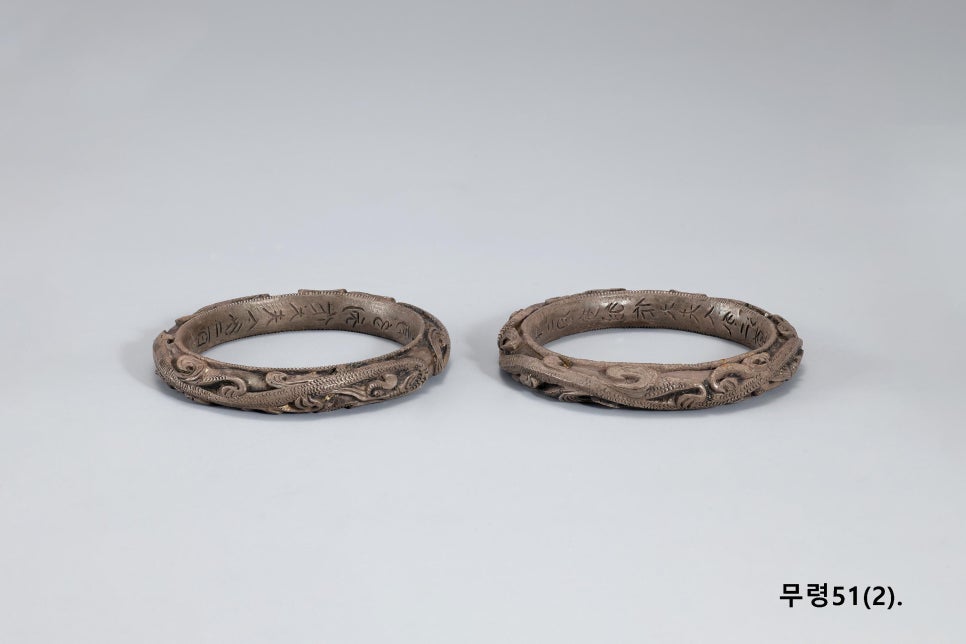
The queen's silver bracelets with dragon design — display not confirmed
Photo: Gongju National Museum collection / e-museum · KOGL Type 1
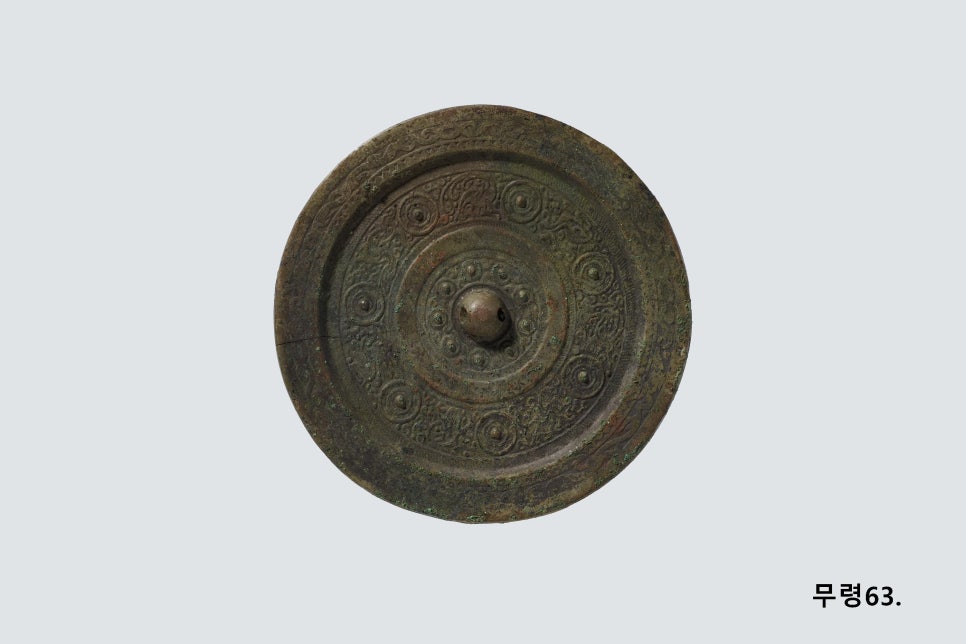
The queen's bronze mirror — display not confirmed
Photo: Gongju National Museum collection / e-museum · KOGL Type 1
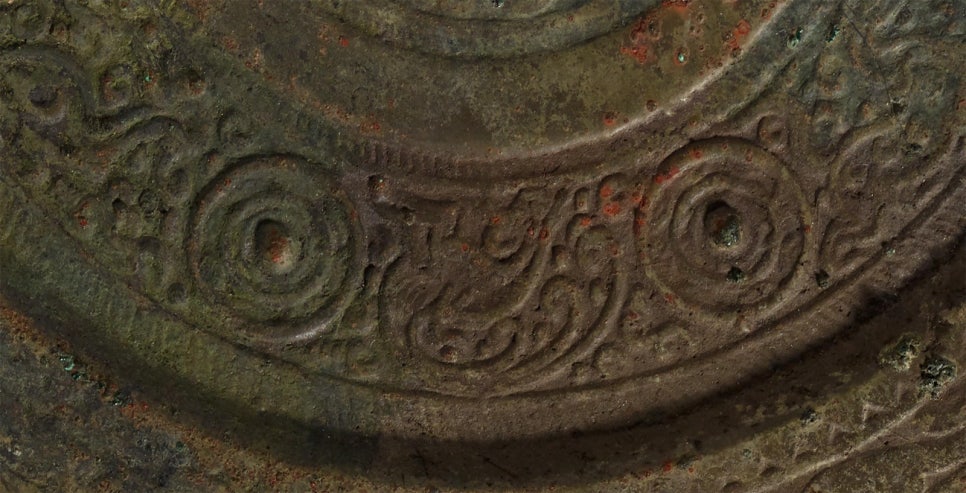
Detail of the design on the back of the queen's bronze mirror
Photo: Gongju National Museum collection / e-museum · KOGL Type 1
How was the Muryeong royal tomb found?
- July 1971 — the tomb was found during work on the Songsan-ri tomb group in Gongju (now Geumseong-dong) and excavated.
- Finds — more than 4,600 objects, including gold and silver jewellery, bronze mirrors, wooden objects and ceramics.
- 9 July 1974 — 17 items in 12 categories from the tomb were designated National Treasures.
- The memorial stones — King Muryeong died in the fifth month of 523 and was interred in the eighth month of 525; the queen died in the eleventh month of 526 and was interred in the second month of 529.
The exhibition's "1,500th anniversary" counts from 526, the year of the queen's death on her memorial stone. Because those stones name the occupants outright, the Muryeong tomb is one of the very few royal tombs of the Three Kingdoms period whose owner and date are known for certain.
Getting there, and what to expect if you do not read Korean
Gongju is about an hour and a half to two hours from Seoul by express bus to Gongju bus terminal; the KTX stops at Gongju Station, which is well outside the town, so the bus is usually simpler. From the terminal, a taxi to the museum is short. The museum sits beside the Songsan-ri tomb group, where the Muryeong tomb itself is, so the two make one visit — the tomb interiors are closed, and a replica exhibition hall at the tomb site shows what they look like. National museum labels usually give an English object name, but the longer theme panels and the cartoon illustrations are in Korean. Nothing needs booking, so a foreign phone number is never an issue here.
Frequently asked questions
- Q. Until when can I see Queen Muryeong's headrest and footrest?
- They are on special display at Gongju National Museum from 27 October to Sunday 8 November 2026 only — two weeks. As of 6 November no extension had been announced.
- Q. Where and when is the Queen Muryeong exhibition?
- "1,500 Years Together: Queen Muryeong's Coffin Goods" runs from 27 October 2026 to 21 February 2027 in the Ungjin Baekje Gallery of Gongju National Museum, 34 Gwangwangdanji-gil, Gongju.
- Q. How long are the queen's coffin ornaments on display?
- From 27 October to Sunday 13 December, about two months. After that the theme exhibition continues without the specially displayed pieces.
- Q. How much is Gongju National Museum, and when is it closed?
- Entry is free and needs no booking, because the display is part of the permanent galleries. It opens 9:00 am – 6:00 pm and closes on Mondays (Tuesday when the Monday is a substitute holiday), 1 January, Seollal and Chuseok.
- Q. Are the queen's gold earrings and necklace in this exhibition?
- The museum says jewellery and funerary goods are included but has not published a full object list. To see a particular piece, ask Gongju National Museum in advance on +82 41-850-6300.
- Q. Is it worth going if I do not read Korean?
- Yes, if you go for the objects. The headrest, footrest and gold ornaments need no explanation, labels at national museums usually carry an English object name, and entry is free. What you will miss is the Korean-only theme text about how the queen was laid out — this article covers the gist of it.
Editor's note · Kang Shin-wook
For anyone heading to Gongju for the Muryeong royal tomb, and for families who want the short version of what came out of it. Hours and closing days for the other national museums are compared on Museums at a glance.
Sources
- Official notice (Korean)
- Gongju National Museum hours and admission (Korean)
- Gongju National Museum website (Korean)
- National Archives of Korea — the Muryeong royal tomb (Korean)
Written in our own words from the sources above, never copied from them, and every date and price checked against at least two pages. The originals are in Korean. Spotted a mistake? Ask for a correction.