Summary
Since 6 November 2026 the 100 Best Forests of Korea, a list the Korea Forest Service announced in 2023, can be browsed region by region on a map on VisitKorea's Korean-language site. Five of them — Woljeongsa fir forest in Pyeongchang, Mansongjeong pine grove at Hahoe Village in Andong, the pitch-loblolly pine forest at Gyesan-dong in Daejeon, the camellia forest on Cheongwansan in Jangheung and the Seungeon-ri pine forest on Anmyeondo in Taean — are being written up with nearby sights. The forests need no booking and most are free to walk; the map page and a recommend-your-favourite-forest prize draw that runs to 25 November are in Korean only.
Article
In short
- Since 6 November 2026, Korea's 100 Best Forests can be browsed on a regional map on VisitKorea's Korean site, which links on to the Korea Forest Service guidebook.
- The 100 are the list the Korea Forest Service announced on 26 September 2023: 50 state-forest picks plus 50 forests kept by individuals, companies and local governments. Gangwon has the most (25), then Busan–Ulsan–South Gyeongsang (14) and North Gyeongsang (12).
- Five — Woljeongsa fir forest, Mansongjeong grove at Hahoe Village, the Gyesan-dong pine forest in Daejeon, the Cheongwansan camellia forest and the Seungeon-ri pine forest on Anmyeondo — are being featured one by one with nearby sights.
- A prize draw for recommending a forest you have visited runs to Wednesday 25 November, with 117 winners.
- For a visitor who reads no Korean: the forests need no booking, but the map page and the prize draw are in Korean only, and trail signs are mostly Korean.
The Korea Forest Service (KFS) and the Korea Tourism Organization have put the locations of all 100 Best Forests on one map. Until now, finding the ones near you meant digging through the 2023 announcement or the guidebook; on the VisitKorea map page (opens in a new tab) you pick a region and the forest names and pins appear. KFS says the aim is to turn a walk in the woods into a trip to the area around it (press release, 6 November 2026).
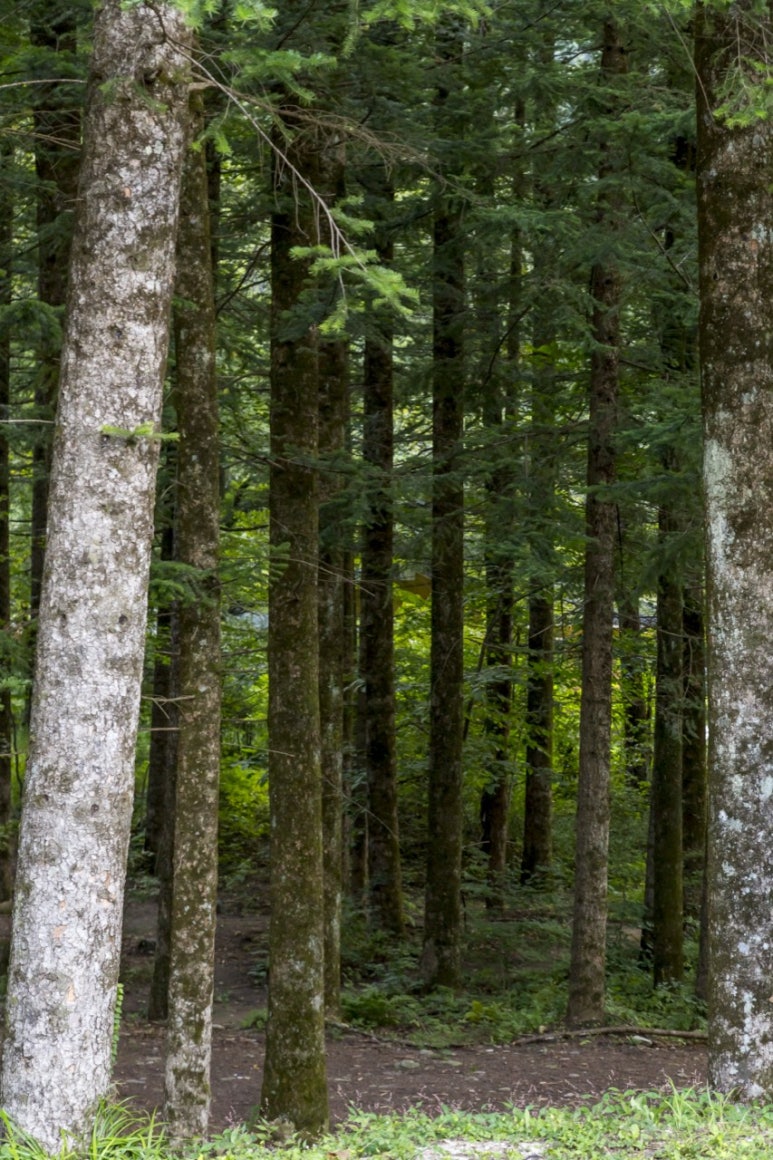
Woljeongsa fir forest, Pyeongchang (taken September 2014)
Photo: Kim Sun-sik (김순식), Gongyu Madang · CC BY
How were the 100 chosen?
It starts with the 50 state-owned forests KFS picked one batch a year from 2017 to 2022. In 2023, the 50th anniversary of the national reforestation drive, it added 50 forests that individuals, companies and local governments had looked after for decades, put the candidates to a public online review, and published the 100 on 26 September. The forests fall into three types.
How the 100 break down by type (2023 announcement)
- Recreation
- 45 — forests for walking and resting
- Managed forestry
- 29 — forests raised by planting and tending
- Conservation
- 26 — forests with high conservation value
How many are near you?
The VisitKorea map splits the country into ten regions. Choose one and tap a pin to see the forest's name; the description of each forest is in the KFS guidebook linked from the same page. The counts below are those shown on the map, and they match the province-by-province figures published in 2023.
Best Forests by region (VisitKorea map)
- Gangwon
- 25
- Busan · Ulsan · South Gyeongsang
- 14
- North Gyeongsang
- 12
- South Jeolla
- 10
- North Chungcheong
- 9
- Incheon · Gyeonggi
- 8
- Daejeon · South Chungcheong
- 6
- North Jeolla
- 6
- Jeju
- 6
- Seoul
- 4 — Bugaksan open forest, Ui-dong Solbat Park pines, Inwang foothills forest, Hongneung forest
Which five come first, and what is nearby?
KFS picked five of the 100 for longer features that pair each forest with places to see nearby, released one at a time from 6 November. Woljeongsa came first; as of 12 November the Andong and Taean features are also linked.
The five featured forests and the nearby places paired with them
- Woljeongsa fir forest, Pyeongchang (Gangwon)
- Daegwallyeong Sky Ranch · Daegwallyeong Sheep Farm · Samyang Roundhill · Phoenix Park
- Mansongjeong grove, Hahoe Village, Andong (North Gyeongsang)
- Hahoe Village · Andong Folk Museum
- Gyesan-dong pitch-loblolly pine forest, Daejeon
- Daejeon Citizens Observatory · Expo Aquarium · former South Chungcheong Provincial Office
- Cheongwansan camellia forest, Jangheung (South Jeolla)
- Jeongnamjin Water Science Museum
- Seungeon-ri pine forest, Taean (South Chungcheong)
- Anmyeondo Jurassic Museum · Chollipo Arboretum
How do you walk the Woljeongsa fir forest?
About 1,700 fir trees line the roughly 1 km path from the Iljumun gate of Woljeongsa temple to Geumganggyo bridge. The path is close to level, so it suits children and older walkers, and a loop between the bridge and the gate takes in the temple as well. About halfway along, the oldest fir in the forest — known as the grandfather fir — still stands as a dead trunk, and most people stop there.
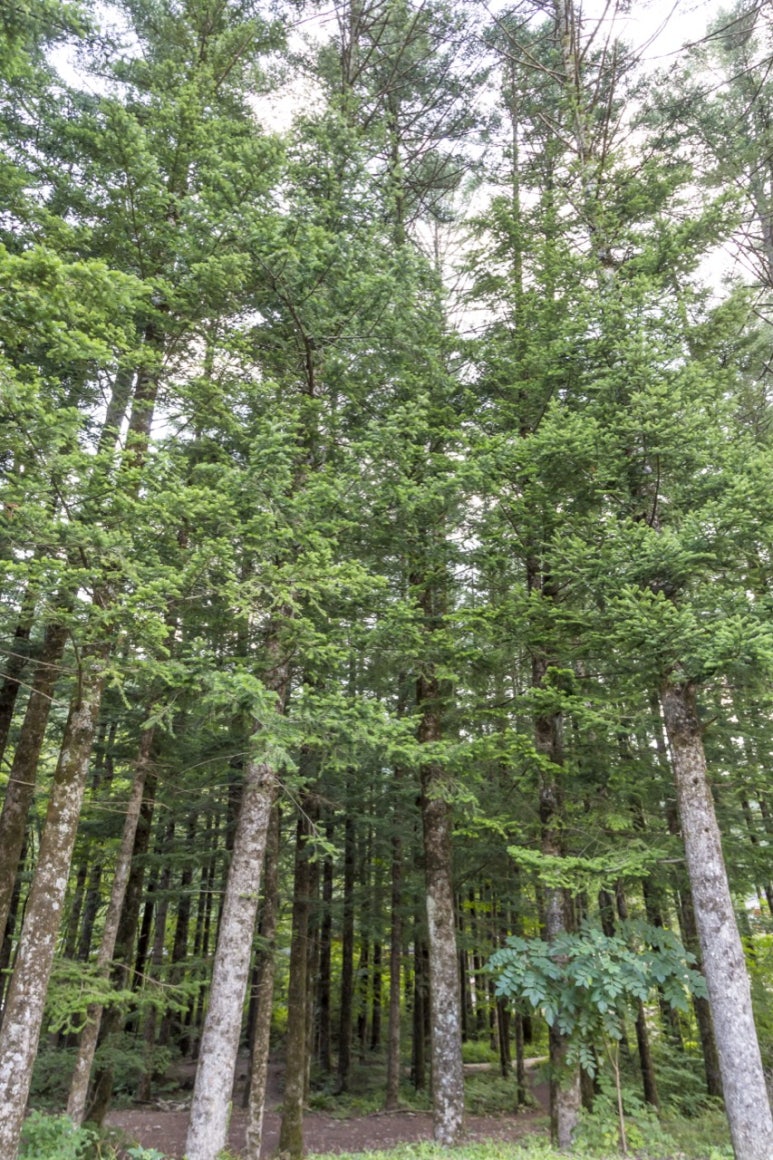
The Woljeongsa firs, looking up (taken September 2014)
Photo: Kim Sun-sik (김순식), Gongyu Madang · CC BY
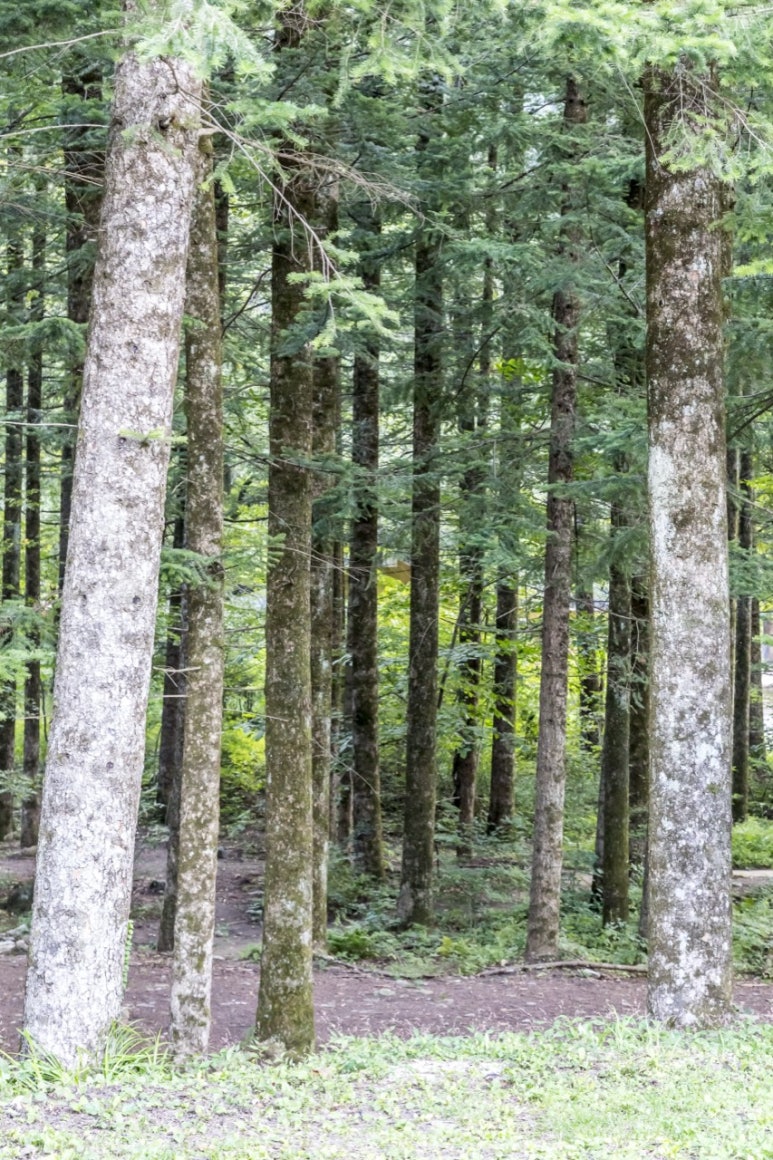
Fir trunks and the grassy forest floor (taken September 2014)
Photo: Kim Sun-sik (김순식), Gongyu Madang · CC BY
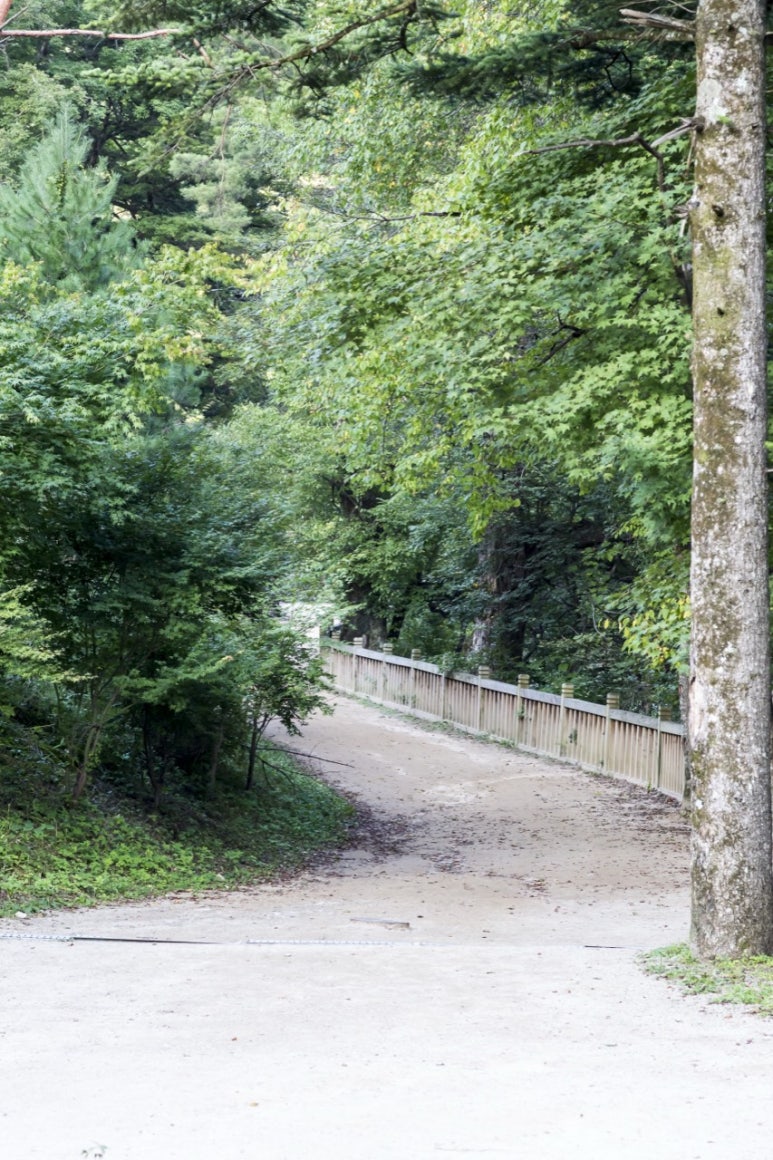
A forest path near Woljeongsa (taken September 2014; exact spot not confirmed)
Photo: Kim Sun-sik (김순식), Gongyu Madang · CC BY
Why is there a pine grove in front of Hahoe Village?
Mansongjeong is the pine grove on the northwest side of Hahoe Village (하회마을), standing between the sandbanks of the Nakdonggang river and the old houses. The story goes that Ryu Un-ryong planted pines here in the Joseon era to soften the force of Buyongdae cliff across the river; the present grove was replanted in the early twentieth century. It also breaks the winter wind, and stepping from the village down to the river brings you straight onto its paths.
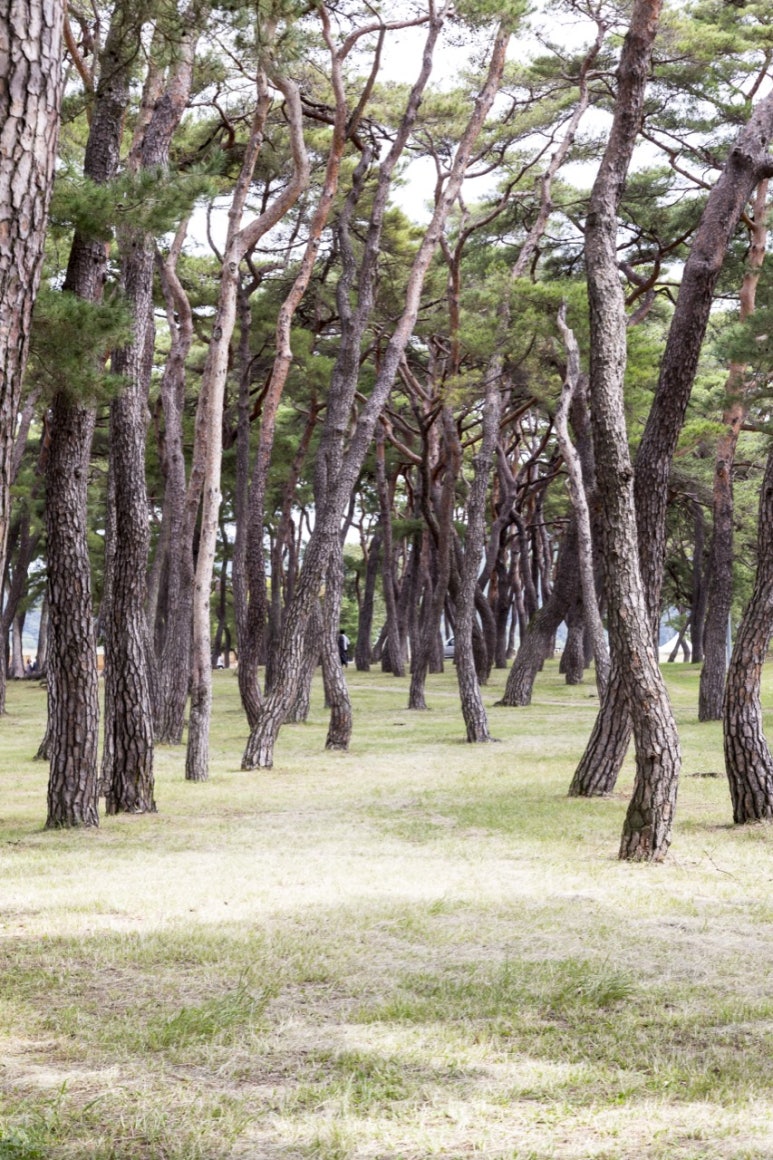
Riverside pine grove at Hahoe Village (taken September 2014; probably the Mansongjeong grove)
Photo: Lee Sang-hwa (이상화), Gongyu Madang · CC BY
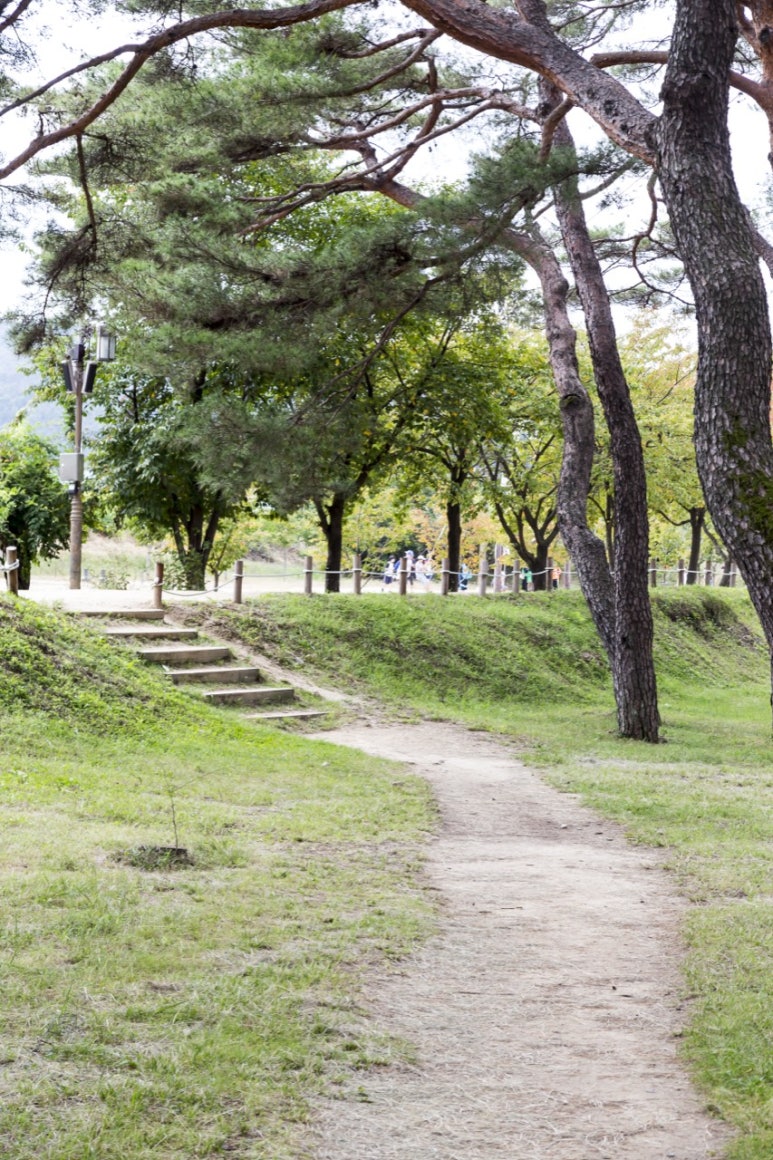
Footpath through the riverside pines at Hahoe Village (taken September 2014; probably the Mansongjeong grove)
Photo: Lee Sang-hwa (이상화), Gongyu Madang · CC BY
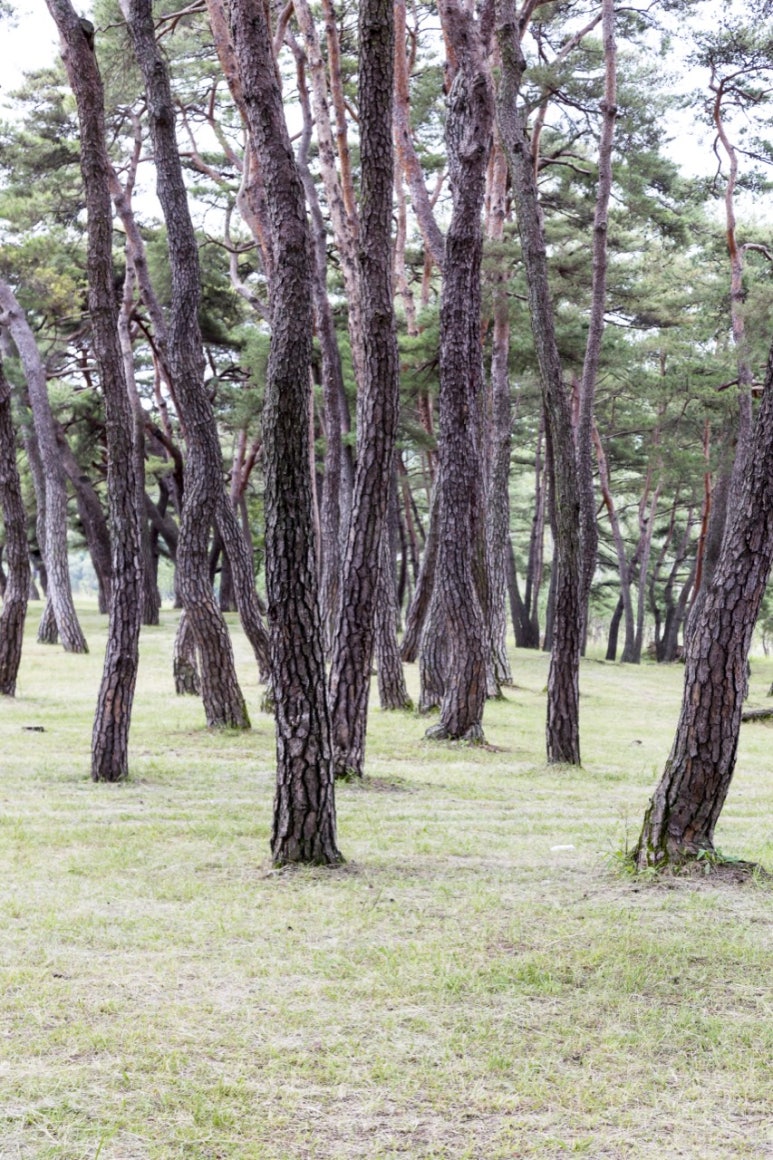
An old pine trunk in the riverside grove (taken September 2014; probably the Mansongjeong grove)
Photo: Lee Sang-hwa (이상화), Gongyu Madang · CC BY
What are the Daejeon, Jangheung and Taean forests like?
The Gyesan-dong pitch-loblolly pine forest in Daejeon stands at the Sutonggol entrance to Gyeryongsan National Park. It was planted as a trial of a hybrid bred in Korea by crossing pitch pine with loblolly pine. It is evergreen, so the view hardly changes after the leaves fall elsewhere.
The Cheongwansan camellia forest in Jangheung is a natural stand of camellias growing in a long band up a mountain valley. Camellias flower between winter and early spring, and the timing shifts from year to year, so check local news before you go for the blossom. In autumn many walkers pair it with the silver-grass plain near Cheongwansan's summit.
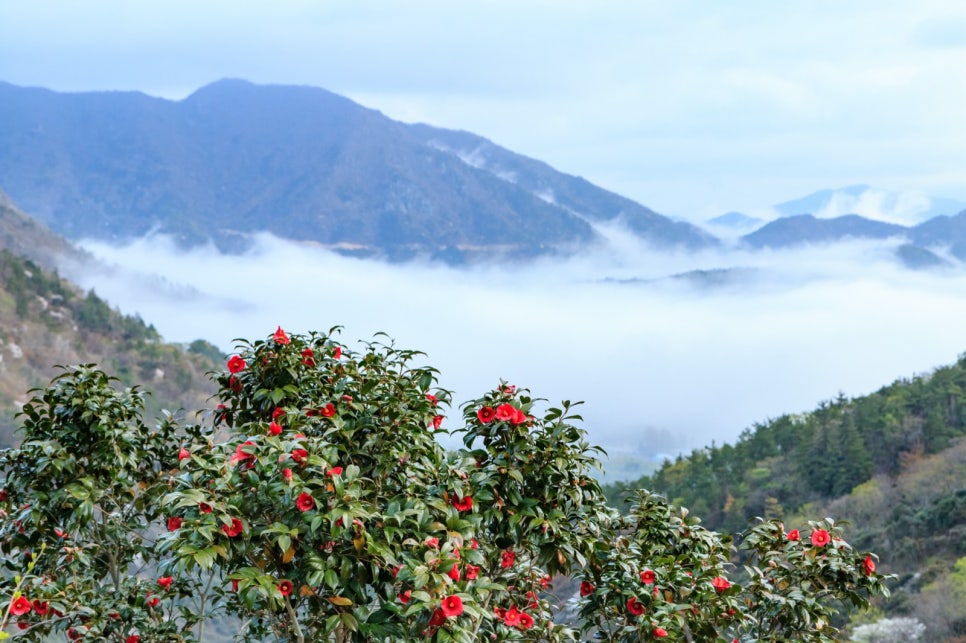
Camellia forest on Cheongwansan, Jangheung (taken April 2018)
Photo: Korea Forest Service (100 Best Forests of Korea guidebook)
The Seungeon-ri pine forest in Taean spreads around Anmyeondo Natural Recreation Forest and is known for its tall, straight Anmyeon pines. It was protected for centuries as a source of state timber; sources differ on whether that protection began under Goryeo or Joseon.
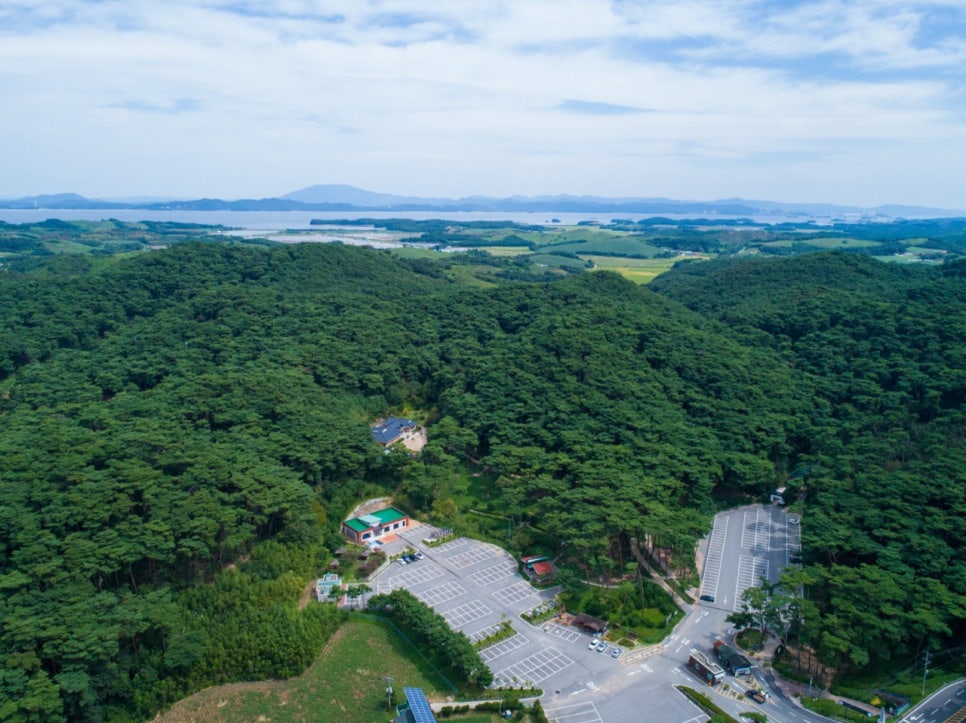
Seungeon-ri pine forest, Taean, from the air (taken September 2017)
Photo: Korea Forest Service (100 Best Forests of Korea guidebook)
Check before you go
Figures for individual forests (number of trees, area, year planted) vary between sources, so this article gives only those confirmed in at least two. As of 12 November the Daejeon and Jangheung features were not yet published, so the lists of nearby places may grow. Check autumn colour and camellia timing, and any trail closures, just before you visit.
How does the favourite-forest prize draw work?
Leave the name of a forest in Korea you have visited and why you recommend it on the VisitKorea event page. The draw runs from Friday 6 to Wednesday 25 November and 117 entrants win a gift. Any forest in Korea counts, not only the 100. The page does not say whether a foreign phone number or overseas address can receive a prize; check the event page for the prizes and the announcement date.
Getting there without Korean
Woljeongsa: take the KTX from Seoul to Jinbu (Odaesan) Station, then a local bus or taxi to the temple; the forest path starts by the car park. Hahoe Village: take the KTX-Eum to Andong Station and the local bus to Hahoe; the grove is a short walk from the village entrance. Anmyeondo: intercity buses run from Seoul to Anmyeon terminal, and the recreation forest is a short taxi ride on. Temple and village signs include English; trail signs inside the forests are mostly Korean, so a map app with offline directions helps. Nothing here needs booking unless you stay overnight.
Frequently asked questions
- Q. Where can I see the map of Korea's 100 Best Forests?
- On VisitKorea's Korean-language site, on a page titled “Forest immersion warning” (전국 숲며듦주의보) that opened on 6 November 2026. Pick a region to see each forest's name and location; the page also links to the Korea Forest Service guidebook. There is no English version yet.
- Q. When and how were the 100 Best Forests chosen?
- The Korea Forest Service announced them on 26 September 2023, the 50th anniversary of national reforestation. It took the 50 state-forest picks from 2017–2022, added 50 forests kept by individuals, companies and local governments, and put them to a public online review.
- Q. Which region has the most Best Forests?
- Gangwon, with 25. Then Busan–Ulsan–South Gyeongsang with 14, North Gyeongsang 12, South Jeolla 10 and North Chungcheong 9. Seoul has four, including the Bugaksan open forest and Hongneung forest.
- Q. Do the Best Forests charge admission?
- The map page and guidebook are free. Entry and parking charges depend on the forest; one inside a temple or recreation forest follows that site's charges.
- Q. When does the favourite-forest prize draw close?
- It runs from 6 to 25 November 2026 (closing on a Wednesday). Leave a forest in Korea you have visited and why you recommend it on the VisitKorea event page; 117 entrants win a gift by draw.
- Q. Is it worth going if I do not read Korean?
- Yes for the forests, which need no Korean and no booking: Woljeongsa and Hahoe Village are major sights with English signs, and a forest path needs no explanation. The map page and the prize draw are Korean only, so use this article's region table and the five featured forests as your English shortlist.
Editor's note · Kang Shin-wook
For anyone choosing a forest walk to build a day trip around. The five featured forests are all reachable by train and local bus; for a night nearby, our English guides cover what to expect at Korea's forest lodges, and what's on lists dated events.
Sources
- Official notice (Korean)
- VisitKorea — 100 Best Forests map page (Korean)
- Newsis — Korea Forest Service names 100 Best Forests, 26 September 2023 (Korean)
- Korea.kr — Woljeongsa fir forest feature (Korean)
- Korea Forest Service press release (Korean)
Written in our own words from the sources above, never copied from them, and every date and price checked against at least two pages. The originals are in Korean. Spotted a mistake? Ask for a correction.