Event·Korea Tourism OrganizationOn nowFree
Seoul subway farmers' markets at 4 stations — 16–28 Nov 2026
Summary
Seoul's 'Seoro Itda Local Market' puts farm stalls from five rural counties inside four subway stations — Guui, Miasageori, Hapjeong and Achasan — from 16 to 28 November 2026. Each station hosts a different county on different days, so Ganghwa salted shrimp is at Guui and Cheongsong apples are at Achasan, and you need to pick the station and date before you go. Entry is free and there is nothing to book: you simply buy at the stall, which makes it one of the easiest local food stops in Seoul for a visitor. The Gwanghwamun preview market (9–10 November) has already ended.
Article
In short
- The regular Seoro Itda Local Market runs from Monday 16 to Saturday 28 November 2026 inside Guui, Miasageori, Hapjeong and Achasan subway stations in Seoul. The Gwanghwamun Station preview (9–10 November) has already ended.
- Each station has its own county and dates: Guui hosts Ganghwa (16–18 and 23–25 Nov); Miasageori hosts Gongju (16–18 and 23–25 Nov) and Hongcheon (19–21 and 26–28 Nov); Hapjeong hosts Uiseong and Achasan hosts Cheongsong (both 23–28 Nov).
- Entry is free, there is no booking, and Seoul gives the hours as 11:00–20:00.
- Seoul says direct sales make the produce up to 30% cheaper than in shops, but it has not published prices for individual items.
- For visitors: stalls are signed in Korean and run by farmers, so bring a little cash and point; nothing needs a Korean phone number.
The Seoul Metropolitan Government has teamed up with five rural counties — Ganghwa, Gongju, Hongcheon, Uiseong and Cheongsong — to turn empty retail space inside subway stations into farmers' stalls. It is called the Seoro Itda Local Market. After a two-day taster at Gwanghwamun Station on 9–10 November, county-by-county markets rotate through four residential-area stations from 16 to 28 November. The growers sell in person, so the point is that you can pick up produce straight from the farm on the way home.
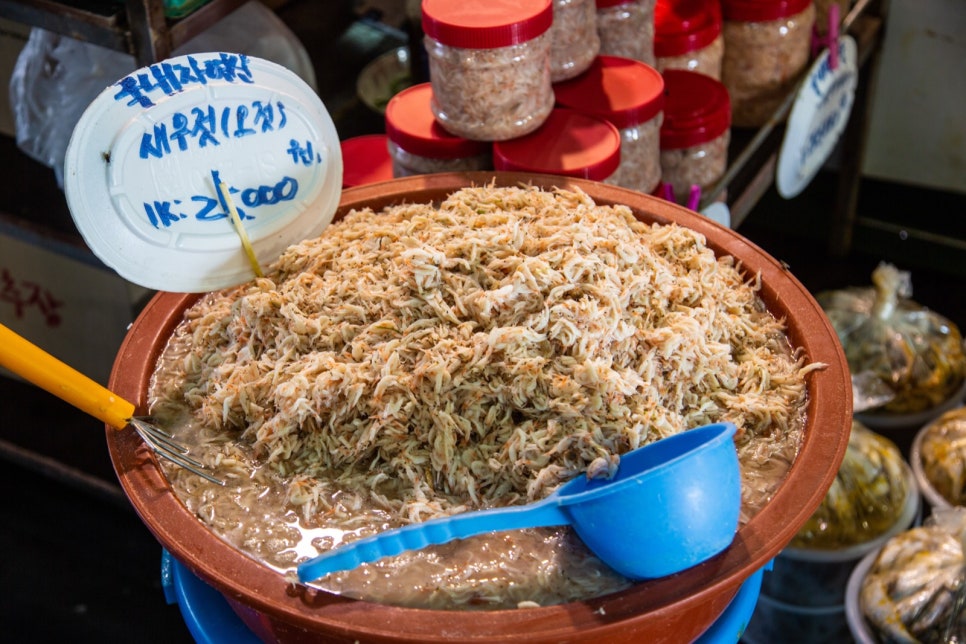
Reference photo (not the market itself) · salted shrimp at a Ganghwa Island market, 2020
Photo: Chae Ji-hyeong (채지형) / Gongyu Madang · CC BY
Each station is paired with one county at a time. So it is not a case of turning up at any station and finding everything: first check which station has the produce you want, and on which days. The table below answers that.
Which station, which days, what is on sale
Reference photo (around Gaepo-dong Station, not a market station) · 2014
Photo: Lee In-hee (이인희) / Gongyu Madang · CC BY
Seoro Itda Local Market by station (per the Seoul press release)
- Guui Station (Line 2) · Ganghwa County
- 16–18 and 23–25 Nov — salted shrimp, Ganghwa rice, turnips, cheonggukjang (fermented soybean paste), dried sweet potato
- Miasageori Station (Line 4) · Gongju
- 16–18 and 23–25 Nov — chestnuts, chestnut tofu, sikhye (sweet rice drink), jam
- Miasageori Station (Line 4) · Hongcheon County
- 19–21 and 26–28 Nov — waxy corn, ginseng, apples, omija (five-flavour berry) syrup
- Hapjeong Station (Lines 2 and 6) · Uiseong County
- 23–28 Nov — garlic, apples, Shine Muscat grapes, nurungji (toasted rice crisps)
- Achasan Station (Line 5) · Cheongsong County
- 23–28 Nov — Fuji and Shinano Gold apples, apple juice
What does 'Seoro Itda' mean, and why a subway station?
'Seoro' joins the first syllables of Seoul and Local, and 'itda' (to connect) is a pun on 'eat': linking the city and the countryside through food. Subway stations were chosen because the scheme runs with Seoul Metro's 'Seoul Pick' urban–rural programme, which uses vacant shop units inside stations. Seoul calls this a pilot and says it will look at taking the markets into other neighbourhood spaces beyond the subway, depending on the response.
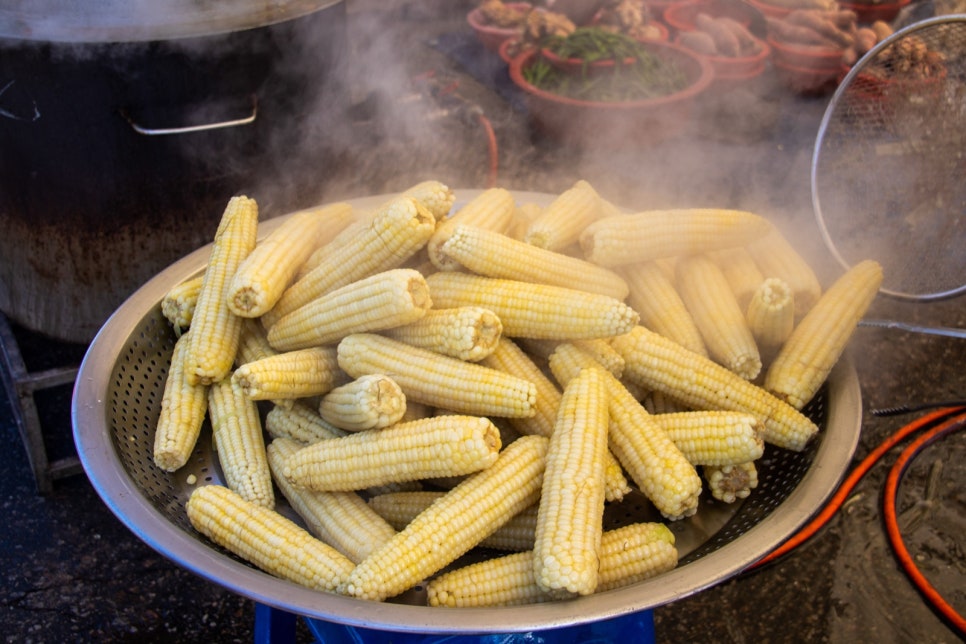
Reference photo (Donghae, Gangwon; not the market) · steamed corn, 2020
Photo: Chae Ji-hyeong (채지형) / Gongyu Madang
What can you buy at Guui and Miasageori?
Guui Station on Line 2 belongs to Ganghwa County: salted shrimp, Ganghwa rice, turnips, cheonggukjang and dried sweet potato, in two runs on 16–18 and 23–25 November. Miasageori Station on Line 4 switches county by the half-week. Monday to Wednesday (16–18 and 23–25 November) brings Gongju chestnuts with chestnut tofu, sikhye and jam; Thursday to Saturday (19–21 and 26–28 November) brings Hongcheon waxy corn, ginseng, apples and omija syrup. Pick the wrong day at the right station and the county you came for will not be there.
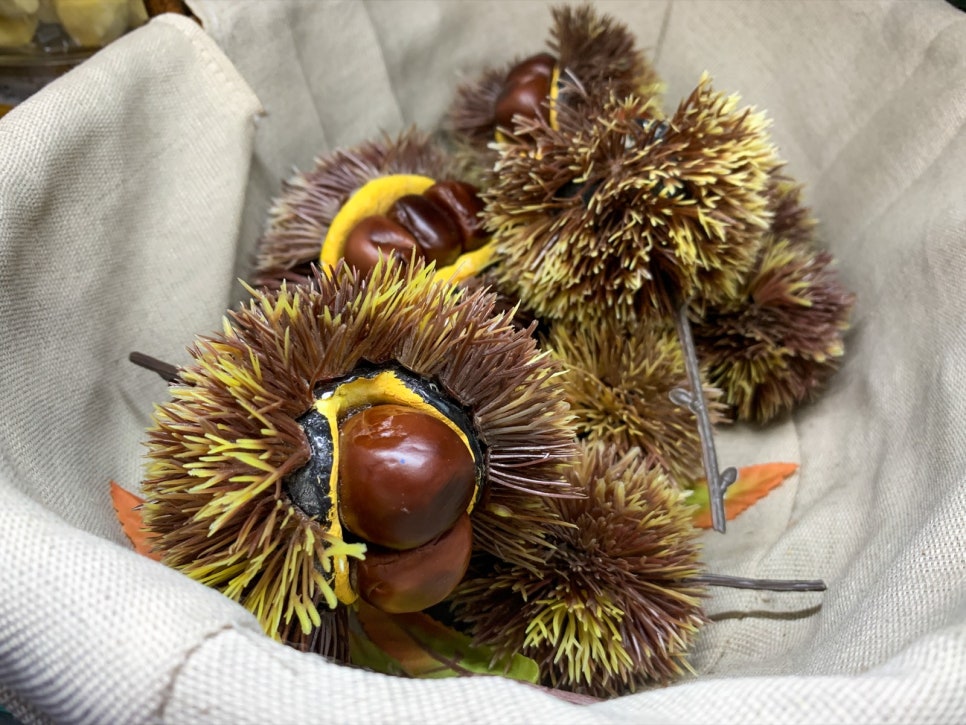
Reference photo (Gongju, South Chungcheong; may be a decorative model) · chestnut burrs, 2020
Photo: Chae Ji-hyeong (채지형) / Gongyu Madang · CC BY
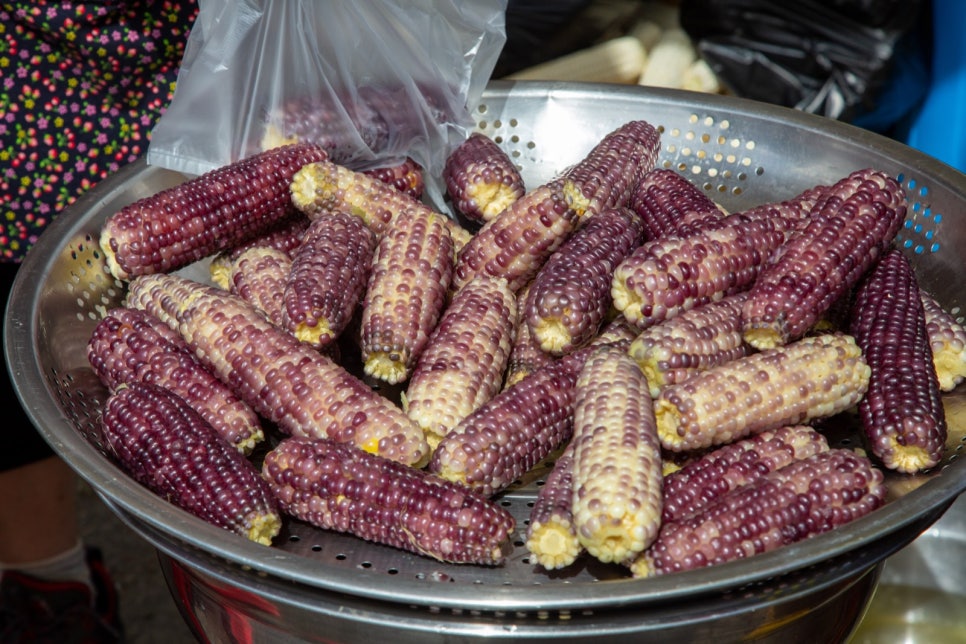
Reference photo (Donghae, Gangwon, not Hongcheon) · waxy corn in a steamer, 2020
Photo: Chae Ji-hyeong (채지형) / Gongyu Madang
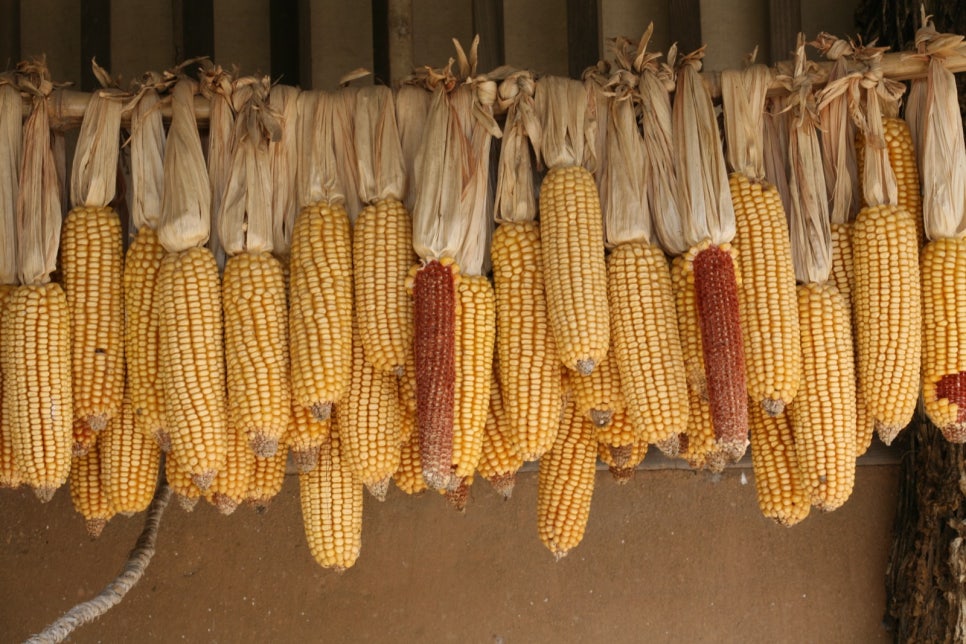
Reference photo (around Suncheon, South Jeolla, not Hongcheon) · 2009
Photo: Asadal (아사달) / Gongyu Madang · CC BY
When should you go to Hapjeong and Achasan?
These two stations open only in the second week of the regular market. From Monday 23 to Saturday 28 November, Uiseong County brings garlic, apples, Shine Muscat grapes and nurungji to Hapjeong Station (Lines 2 and 6), and over the same days Cheongsong County sells Fuji and Shinano Gold apples and apple juice at Achasan Station (Line 5). Go in the first week (16–21 November) and you will find empty counters.
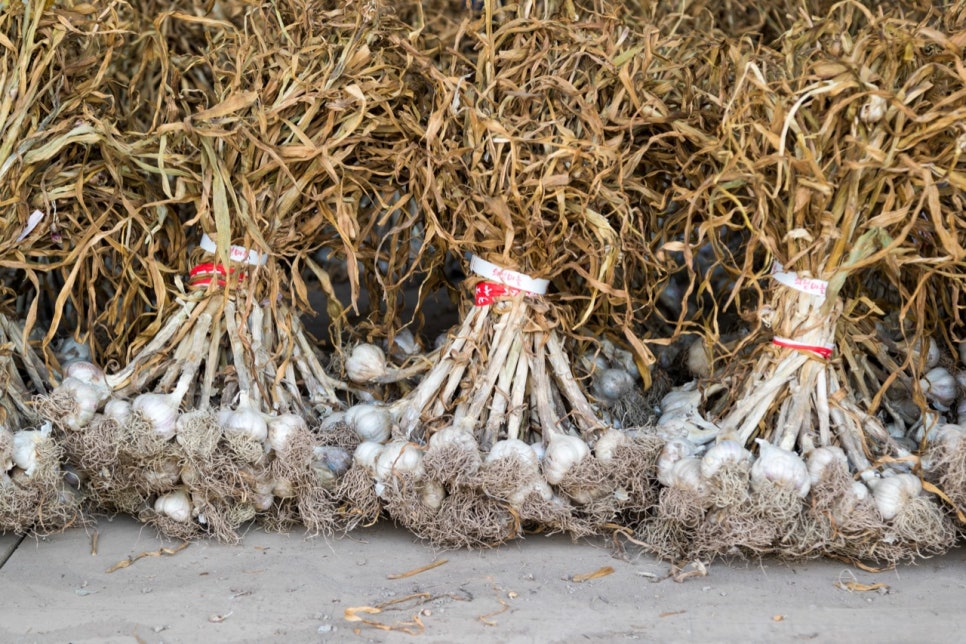
Reference photo (not the market) · braided Uiseong garlic drying, 2015
Photo: Chae Ji-hyeong (채지형) / Gongyu Madang
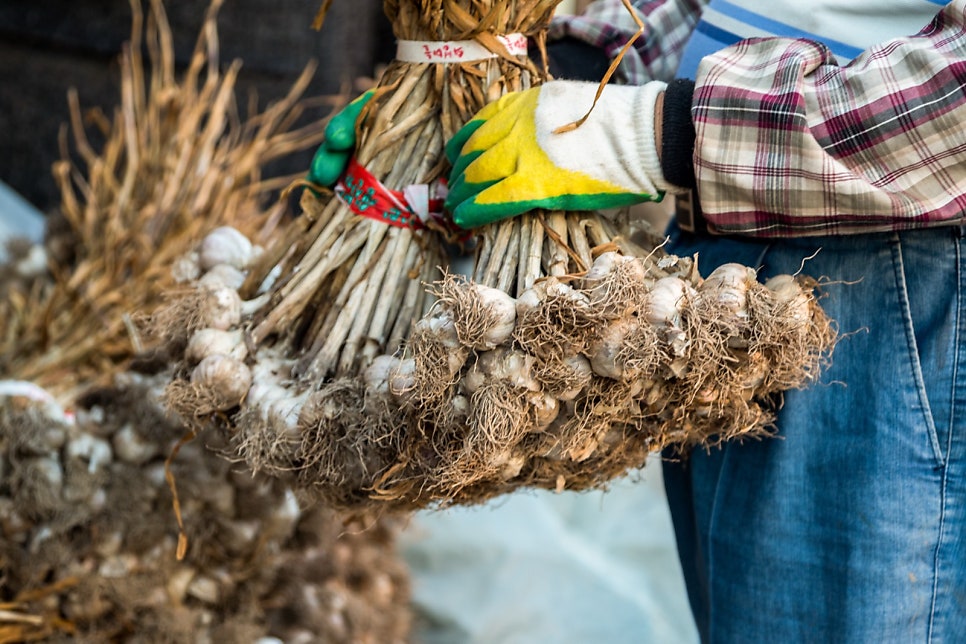
Reference photo (not the market) · trimming garlic bundles, 2015
Photo: Chae Ji-hyeong (채지형) / Gongyu Madang
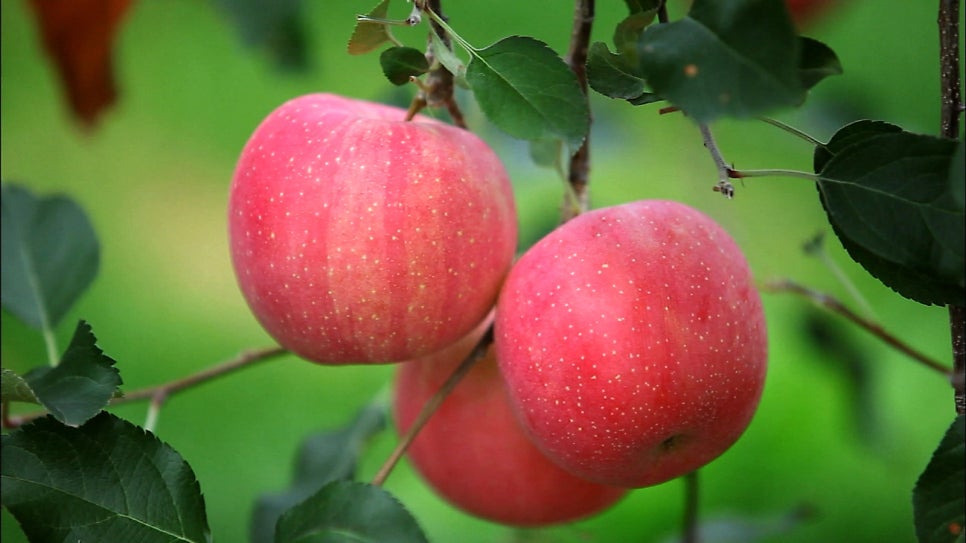
Reference photo (Yeongdong, North Chungcheong, not Cheongsong)
Photo: Korea Educational Broadcasting System (EBS) / Gongyu Madang · CC BY
What to check before you go
- The 11:00–20:00 hours come from Seoul's administration site notice for the Gwanghwamun preview. The event outline says the regular markets run on 'three to six weekdays', so confirm the days and hours on the notice at each station.
- 'Up to 30% cheaper' is the Seoul press release's wording; no item prices or discount rates have been published.
- Each county brings only two or three farms, so popular items can sell out early.
- Payment methods have not been announced. Since you are buying directly from farmers, carrying a little cash makes things easier.
The press release body and its attached table list slightly different produce
The table attached to Seoul's press release adds chestnut honey, gwajul and oranda (traditional sweets) for Gongju, kkachi pear wine, gangjeong (rice crackers) and peach mochi for Hongcheon, and chilli powder for Uiseong, while Hongcheon's apples appear only in the body text. Our table follows the press release body; what is actually on sale may vary with each farm.
The Gwanghwamun Station preview market, held by 14 farms from all five counties on 9–10 November, has already ended. Only the regular markets at the four stations above remain.
Getting there, and what to expect if you do not read Korean
All four stations are on the Seoul subway and take a T-money card or a contactless bank card at the gates. Guui is on Line 2 one stop east of Konkuk University Station; Achasan is on Line 5 near the Achasan trailhead, so the Cheongsong apples pair well with a short hike; Hapjeong (Lines 2 and 6) is a short walk or one Line 6 stop from Mangwon Market and the Hongdae area; Miasageori is on Line 4 in the north of the city. The stalls sit inside the stations, so follow the shop units near the gates; station signs are in English but the market banners and price tags are in Korean. There is nothing to book and no Korean phone number or ID is needed. Salted shrimp and fresh produce are hard to take home through customs, so a visitor is better off with apples, chestnut snacks or sealed drinks such as apple juice and omija syrup — check your own country's import rules for food.
Frequently asked questions
- Q. When and where is the Seoro Itda Local Market?
- The regular markets run from 16 to 28 November 2026 inside Guui (Line 2), Miasageori (Line 4), Hapjeong (Lines 2 and 6) and Achasan (Line 5) subway stations in Seoul. Dates differ by station: Hapjeong and Achasan open only on 23–28 November.
- Q. What are the hours and is there an entry fee?
- Entry is free and nothing needs booking. Seoul gives the hours as 11:00–20:00; check the notice at each station for its exact days.
- Q. Which station sells Ganghwa salted shrimp or Cheongsong apples?
- Ganghwa salted shrimp is at Guui Station (16–18 and 23–25 November) and Cheongsong apples are at Achasan Station (23–28 November). Uiseong garlic is at Hapjeong Station (23–28 November), and Gongju chestnuts and Hongcheon corn share Miasageori Station on different days.
- Q. Is it really cheaper than the shops?
- Seoul says the farmers sell directly, cutting out middlemen, so prices are up to 30% below retail. No prices or discount rates for individual items have been published.
- Q. Is the Gwanghwamun Station preview market still on?
- No. The Gwanghwamun preview ran on 9–10 November 2026 and has ended. What remains are the regular markets at Guui, Miasageori, Hapjeong and Achasan stations (16–28 November).
- Q. Is it worth going if I do not read Korean?
- Yes, if you are near one of the four stations on the right day. There is nothing to book, prices are written as numbers and the farmers are used to pointing and gestures; signage on the stalls is Korean only. Choose items you can eat in Seoul or carry home legally.
Editor's note · Kang Shin-wook
A station-by-station timetable for anyone in Seoul who wants farm produce straight from the growers, including visitors with a few hours to spare near Lines 2, 4, 5 or 6. For other things on in the same weeks, see upcoming events.
Sources
- Official notice (Korean)
- Seoul administration site — Seoro Itda Local Market notice (Korean)
- VisitKorea news — Seoul press release reposted (Korean)
Written in our own words from the sources above, never copied from them, and every date and price checked against at least two pages. The originals are in Korean. Spotted a mistake? Ask for a correction.
Latest from Korea Tourism Organization
 Korea Tourism OrganizationExhibition18 November 2026On nowFreeBIG's MATERIALISM in Seoul: free architecture show — to 28 Feb 2027
 Korea Tourism OrganizationEvent18 November 2026In 2 daysFreeKorea Souvenir Fair at DDP, Seoul — free, 20–22 November 2026
 Korea Tourism OrganizationNews17 November 2026Namsan Haneul Forest Trail, Seoul: a step-free 1.45 km boardwalk lit until 11 pm
 Korea Tourism OrganizationEvent16 November 2026On nowLudensia Christmas Fantasy, Yeoju — six December days need Naver booking