National museums · Korea Heritage Service
National Palace Museum of Korea
The Joseon court's own things, free, right outside Gyeongbokgung Station
The National Palace Museum of Korea holds what the Joseon royal household actually used and kept: the seals and investiture books, court dress, the royal carriages, the astronomical instruments, the funerary and ancestral ritual objects. It is the counterpart to the palaces themselves — they are the empty rooms, this is what was in them — and it sits directly beside Gyeongbokgung, which makes the pairing the obvious one to make.
It is free, and you can enter it without a palace ticket: the museum has its own entrance at Gyeongbokgung Station Exit 5 and you never have to pass a palace turnstile. It also opens later than almost anything else in the area on Saturdays and on the last Wednesday of each month, which is the quiet slot worth aiming for.
Visiting
- Hours
- Monday–Friday and Sunday 9:30 am – 5:30 pm (last admission 5:00 pm) Saturday and the last Wednesday of each month 9:30 am – 9:00 pm (last admission 8:30 pm)
- Closed
- 1 January, the day of Seollal and of Chuseok, and the last Monday of each month (the day after the holiday ends if that Monday is a public holiday)
- Admission
- Free, and free until the museum announces otherwise
- Address
- 12 Hyoja-ro, Jongno-gu, Seoul
- Getting there
- Gyeongbokgung Station on Line 3, Exit 5, straight into the museum. No Gyeongbokgung ticket is required
- From the airport
- From Incheon (ICN): AREX to Seoul Station, Line 4 to Chungmuro, then Line 3 to Gyeongbokgung — about 85 minutes. From Gimpo (GMP): Line 9 to Yeouido, Line 5 to Jongno 3-ga, Line 3 two stops to Gyeongbokgung
- Saturday evenings run to 9pm, which lines up with Gyeongbokgung's seasonal night openings next door.
- Objects in the permanent galleries are rotated for conservation, so the display is not identical from one visit to the next.
- The museum shop is one of the better ones in Seoul for reproductions of court objects.
Checked against the official pages on 2026-09-21. Hours and fees change — confirm before you travel. Official site
How much English you will find
- Gallery labels and panel texts are provided in Korean and English throughout the permanent exhibition.
- The museum's website has an English section covering hours, location and current exhibitions; the Korean pages carry more detail on temporary programmes.
- Because the collection is object-led — dress, seals, carriages, instruments — it holds up well without a guide, and the palaces next door run their own free English tours.
Exhibitions and events
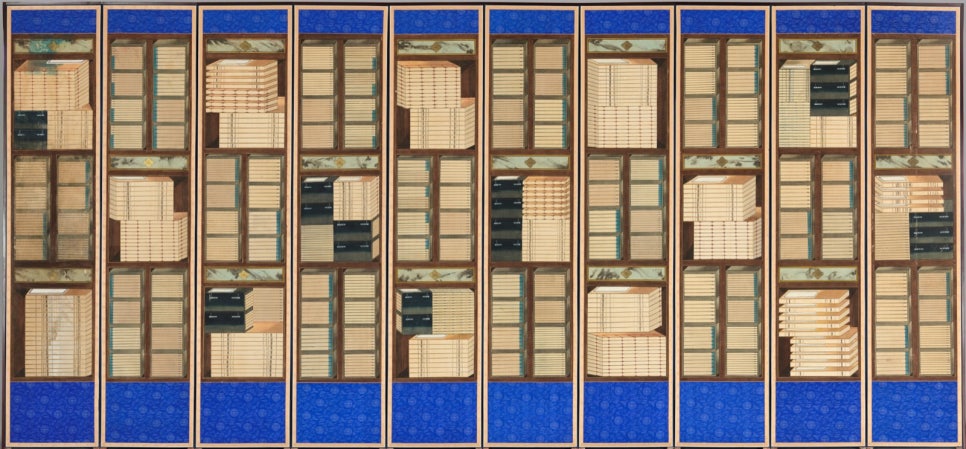
Full schedule- 16 Sept – 4 JanNational Palace Museum of Korea · Musée Guimet, ParisA Joseon royal book screen in Paris — Musée Guimet, until 4 January 2027On now
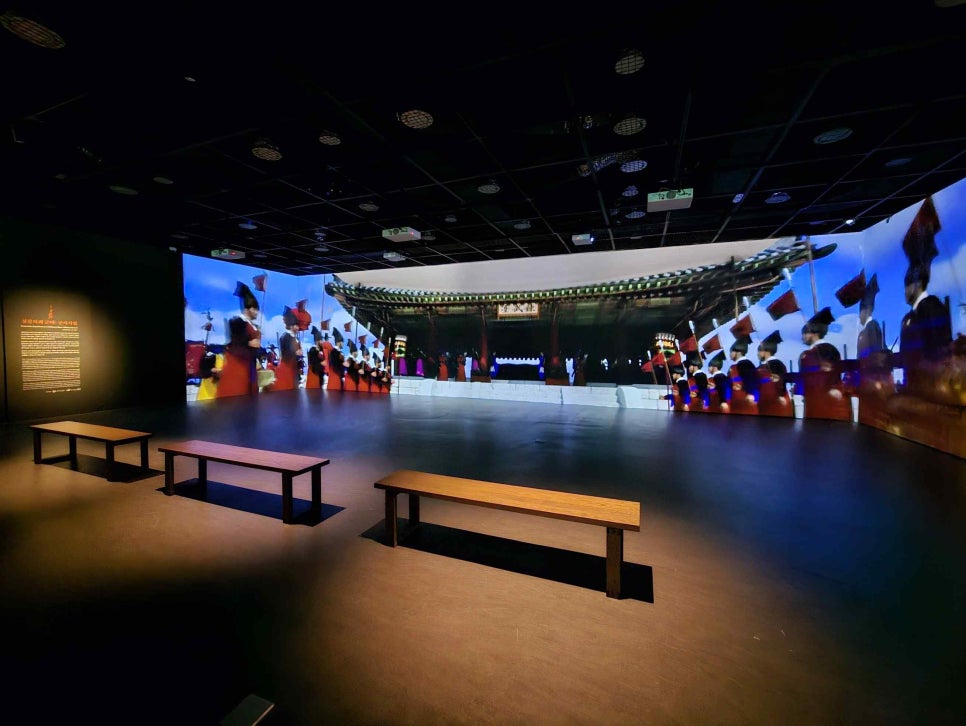
- 8 Oct – 13 DecNational Palace Museum of Korea · National Museum of the Annals of the Joseon Dynasty, 2nd-floor special gallery (Odaesan, Pyeongchang)Odaesan's Annals Museum revives King Jeongjo's army in light — free until 13 DecemberOn nowFree
How to visit
- 1
Come out of Exit 5 and you are there
Gyeongbokgung Station Exit 5 delivers you to the museum without crossing a road, which is an unusually good arrangement in central Seoul and a considerable relief in July or January. You do not need a Gyeongbokgung ticket to get in — the museum is free and separately entered.
- 2
Do it either side of the palace, not instead of it
An hour here before or after Gyeongbokgung changes what the palace looks like, because you have seen the objects that furnished it. If the weather is against you, this is also the indoor half of that pair and the one to start with.
- 3
Watch the closing day — it is the last Monday, not every Monday
Most Korean museums close weekly on a Monday. This one closes on the last Monday of each month only, so check a calendar rather than assuming. If that Monday is a public holiday the closure moves to the day after the holiday ends.
Frequently asked questions
Is this inside Gyeongbokgung, and do I need a palace ticket?
It stands on the palace grounds but has its own entrance from Gyeongbokgung Station Exit 5, and it is free. You do not need a palace ticket to visit the museum, and visiting the museum does not get you into the palace — they are separate admissions, one of which costs nothing.
How is it different from the National Folk Museum, which is also at Gyeongbokgung?
This one is the royal household: court seals, ceremonial dress, carriages, ritual objects. The National Folk Museum, on the other side of the palace grounds, is about how ordinary people lived. Both are free, and doing both plus the palace is a full and quite satisfying day.
When exactly is it closed?
The last Monday of each month, 1 January, and the days of Seollal and Chuseok. That monthly closure is easy to trip over because most other museums here close every Monday instead — so a normal Monday is usually fine, and the last one of the month is not.