Exhibition·National Palace Museum of KoreaOn nowFree
Odaesan's Annals Museum revives King Jeongjo's army in light — free until 13 December
Summary
The National Museum of the Annals of the Joseon Dynasty, at the foot of Odaesan in Pyeongchang, runs its autumn theme exhibition "The Day of the Military Rites at Hwaseong: The King's Army Revived in Light" from 8 October to 13 December 2026 in the second-floor special gallery. Two royal protocol books record King Jeongjo's 1795 procession to Hwaseong, and an immersive video restages the military review on a panoramic screen. Admission is free and there is nothing to book: walk in during opening hours. Closed Mondays, and from November the doors shut at 5 pm.
Article
In short
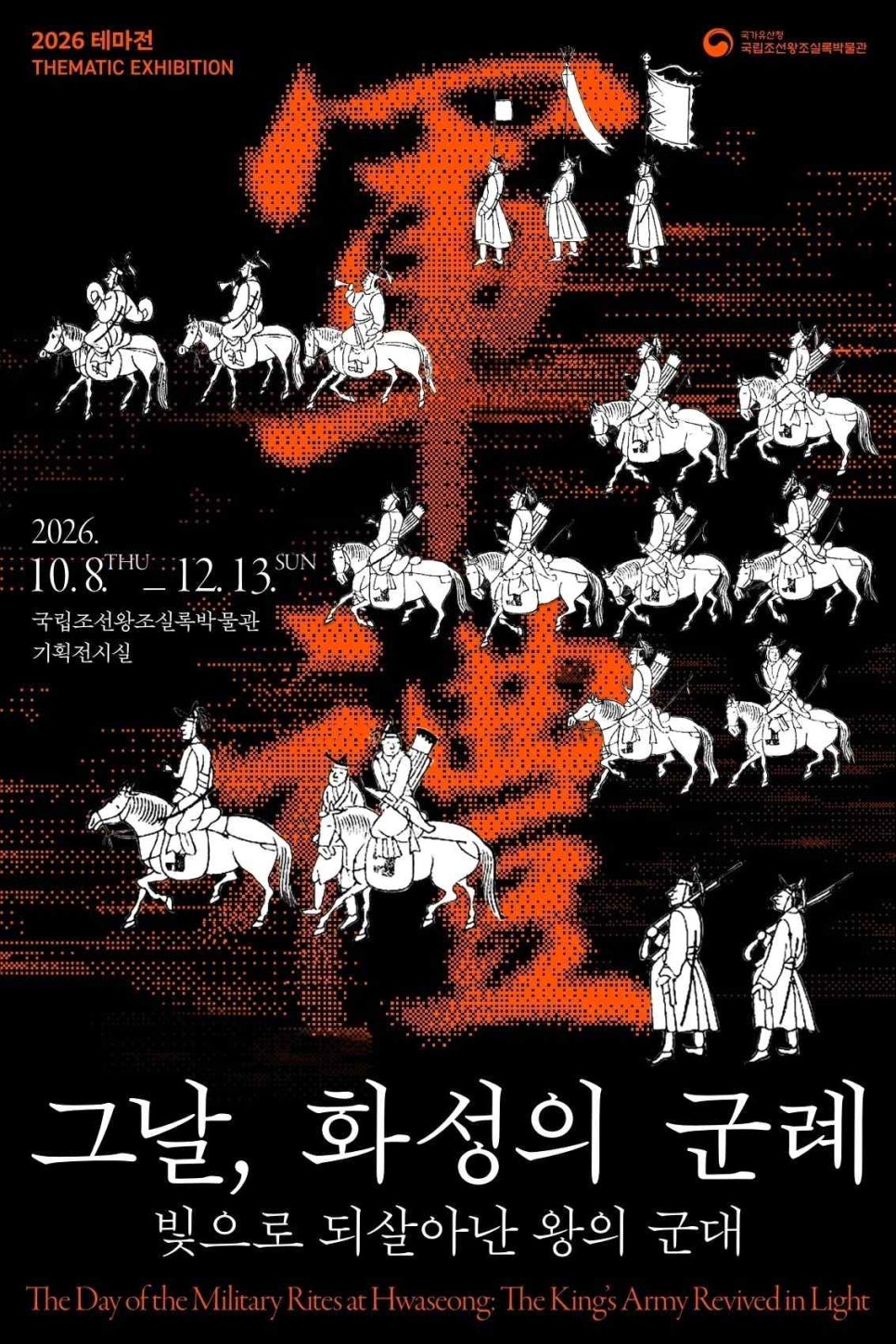
- The National Museum of the Annals of the Joseon Dynasty (Odaesan, Pyeongchang) shows its 2026 autumn theme exhibition "The Day of the Military Rites at Hwaseong: The King's Army Revived in Light" from Thursday 8 October to Sunday 13 December in the second-floor special gallery.
- Admission is free and no booking exists. Hours are 9:30 am – 5:30 pm until the end of October and 9:30 am – 5:00 pm from November; last entry is 30 minutes before closing. The museum is closed every Monday.
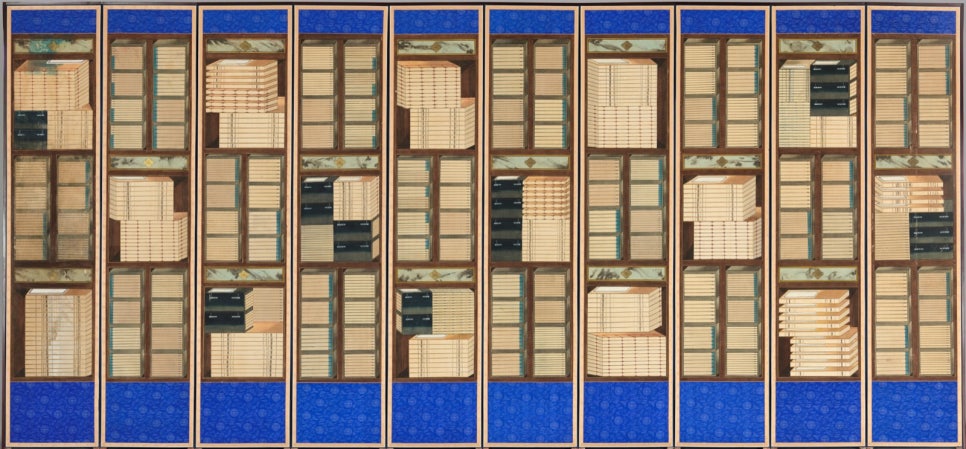
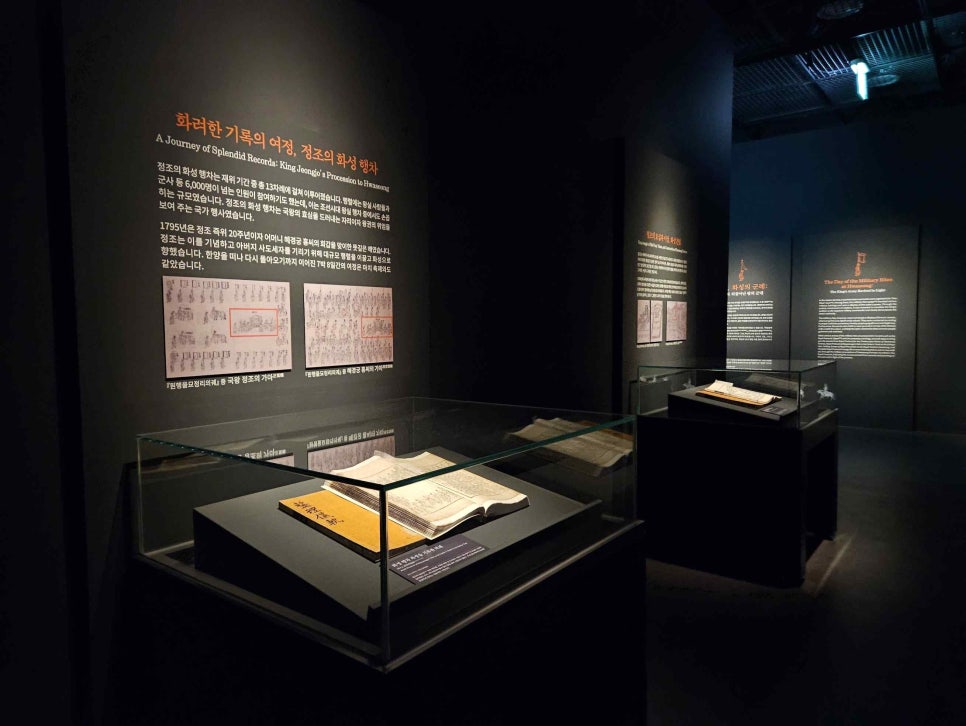
- The show pairs two royal protocol books — the Wonhaeng Eulmyo Jeongni Uigwe, recording King Jeongjo's 1795 procession to Hwaseong, and the Hwaseong Seongyeok Uigwe, recording the fortress's construction — with an immersive video that restages the military review.
- A spring run with the same subtitle (14 April – 24 May) came first; this is its autumn edition. The opening-weekend extras, the "Autumn Love Sillok" event (9–10 October) and the Odaesan Culture Festival (8–10 October), are over.
- Nothing needs a Korean phone number or ID: it is a free walk-in gallery. The museum's site and labels are in Korean, but the spring listing carried English section titles, and the video is a visual reconstruction rather than a lecture.
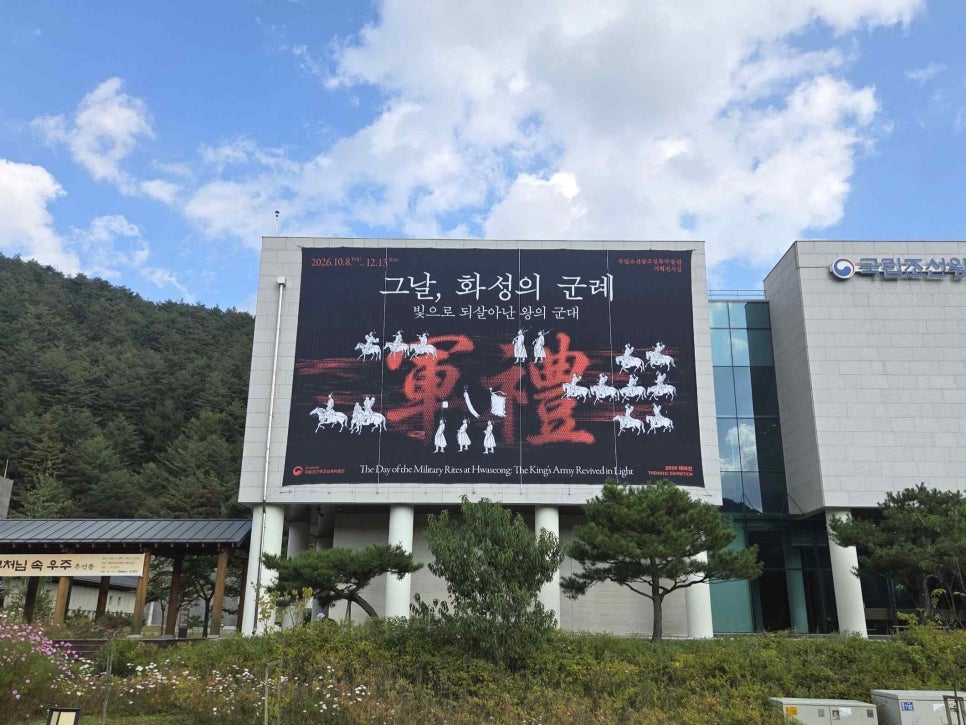
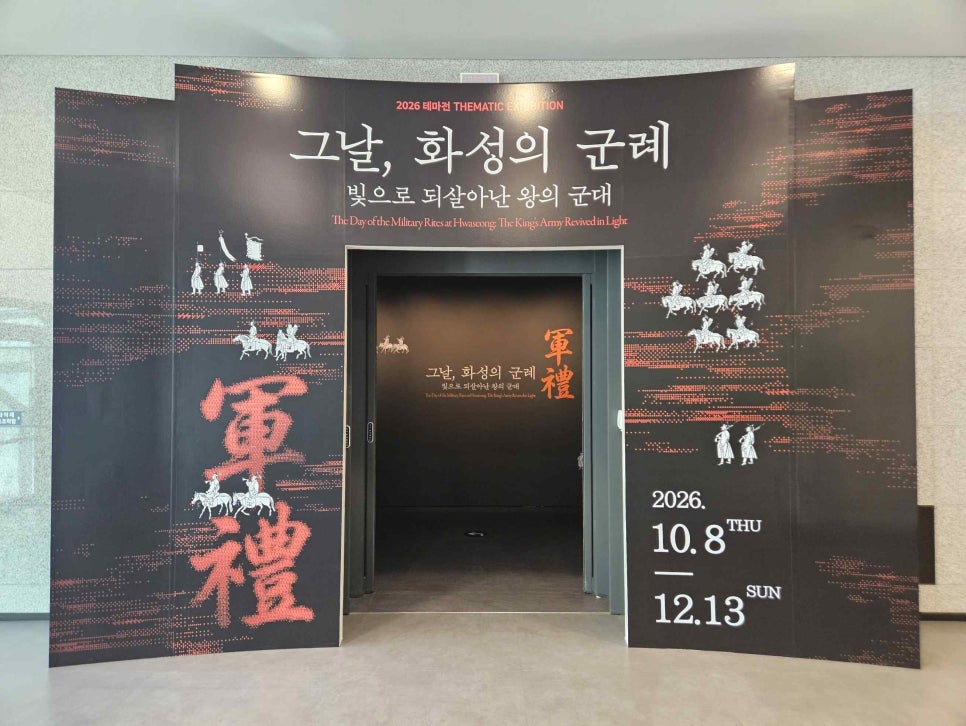
On the road up to Woljeongsa temple in Pyeongchang, Gangwon, the National Museum of the Annals of the Joseon Dynasty has opened its autumn theme exhibition. The subject is the military rites — in Korean, gunrye (군례) — that King Jeongjo staged at Hwaseong fortress in 1795. Two uigwe, the illustrated protocol books the Joseon court kept of its state occasions, carry the procession and the fortress; an immersive video produced by the Korea Heritage Agency puts the military review on a wall-sized screen. The Korea Heritage Service says the museum runs a theme show twice a year, in spring and autumn, and timed this one to the opening day of the Odaesan Culture Festival so that people coming for the foliage would find the documentary heritage too. It runs until 13 December and costs nothing.
What are the military rites, and why Hwaseong?
Joseon sorted the state's great ceremonies into five kinds, the Five Rites. The military rites were the ones that moved an army: formation drills, reviews of the troops, archery. Soldiers moving in order were themselves the message — the man who commands this army is the king. Hwaseong (화성) is the fortress King Jeongjo built at Suwon after moving his father Crown Prince Sado's tomb there. In 1795, for his mother Lady Hyegyeong's sixtieth birthday, Jeongjo travelled to Hwaseong on an eight-day, seven-night journey; while there he watched military drills from the Seojangdae command post and shot arrows at the Deukjungjeong pavilion. That procession is the "day" this exhibition sets out to revive.
How do the two protocol books differ?
The spine of the show is two uigwe. One records the procession itself; the other records the fortress that staged it. Seen side by side, they lock together: what was done, and where.
The two uigwe in the exhibition (as described in the Korea Heritage Service release)
- Wonhaeng Eulmyo Jeongni Uigwe (원행을묘정리의궤)
- The record of King Jeongjo and Lady Hyegyeong's 1795 procession to Hwaseong: the order of the journey, the military drill at the Seojangdae command post and the archery at the Deukjungjeong pavilion.
- Hwaseong Seongyeok Uigwe (화성성역의궤)
- The record of building Suwon Hwaseong from 1793 to 1797 — how the fortress where the rites took place was put up.
- Jeongni Uigwe (뎡니의궤)
- A Korean-script uigwe of the fortress's construction and the procession. Its paintings of the review at the east command post and of the night exercise are the basis of the immersive video.
Which copies are on display is not stated
Neither the press release nor the museum's website says which collection or edition the uigwe on show come from, or how many objects there are. Whether they are originals or facsimiles cannot be told from public material, so we do not say.
What does the immersive video "The Military Review" show?
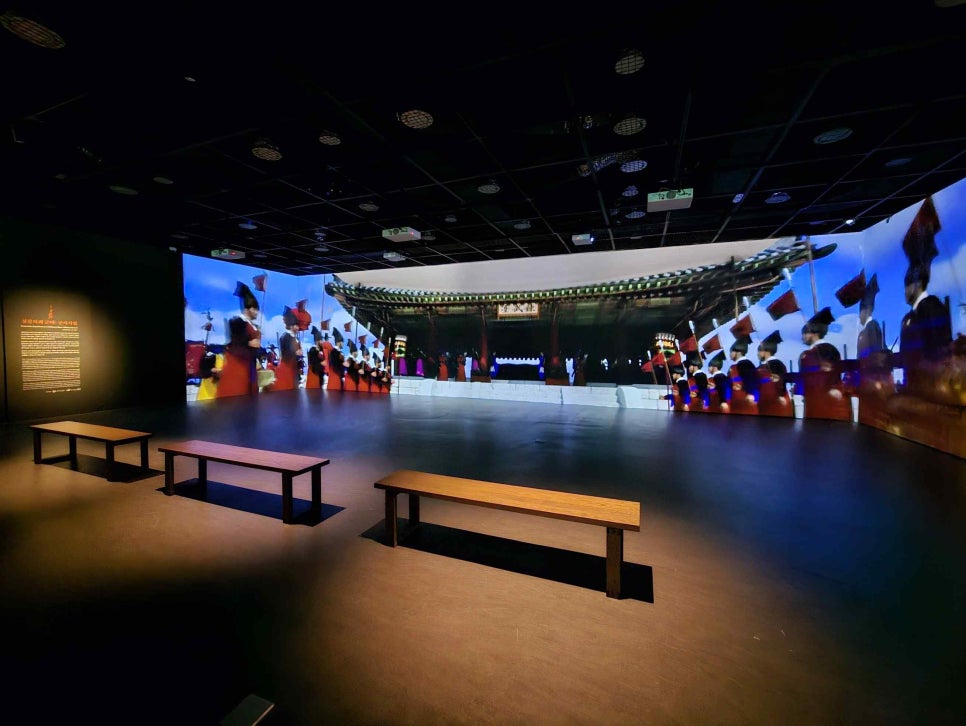
A review that survives only as book illustrations has been turned into moving pictures by the Korea Heritage Agency. The source is the Korean-script Jeongni Uigwe and two of its paintings: the troop review at the east command post and the night exercise. According to the description the museum posted for the spring run, the video opens by day with the review and archery on the field below the east command post, then moves to night, when torches are lit along the Seojangdae command post and buried fireworks burst from the ground. The producers say the costumes, the movement of the formations and the military signals follow what the uigwe records.
The press release gives no running time or screening schedule. If you want to plan time in front of the screen, calling the museum (+82-33-330-7900, Korean) before you go is the only sure way to find out.
Is it new if you saw the spring show?
The museum's own list of special exhibitions carries a 2026 spring theme exhibition, "Hwaseong, the Day of the Military Rites: The King's Army Revived in Light" (14 April – 24 May), as a past show. The subtitle is the same, and the immersive video was already screening then. The spring description also mentions the Hwaseong Procession Screen. The autumn press release names only the two uigwe and the video, so what has changed since spring cannot be confirmed from official material. If you came in spring, assume the same line-up and treat it as a side trip on an Odaesan foliage day.
The museum website does not list the autumn show yet
As of 13 October the museum's special-exhibition page has no entry for the autumn theme exhibition. The dates, venue and hours in this article were checked against the Korea Heritage Service press release of 8 October and the museum's visitor-information page.
Opening hours, rules and how to get there
- Hours: 9:30 am – 5:30 pm from March to October, 9:30 am – 5:00 pm from November to February. Last entry is 30 minutes before closing, so from November you must be in by 4:30 pm.
- Closed: every Monday, 1 January, and the days of Seollal and Chuseok. The museum may close for maintenance at short notice.
- Admission and booking: free, nothing to book. Children aged 6 and under must be accompanied by an adult; pets are not admitted.
- Photography: personal photos are allowed, but flash, tripods and selfie sticks are banned in the galleries. No food or drink inside.
- KTX: Seoul Station to Jinbu (Odaesan) Station (진부 오대산역) on the Gangneung line, then a bus or taxi.
- Intercity bus: Dong Seoul Terminal (Gangbyeon Station, Line 2, Exit 4) to Jinbu Intercity Bus Terminal takes about 2 hours 14 minutes, every 30–40 minutes (first 6:40 am, last 8:20 pm); Seoul Nambu Terminal has three departures a day. From Jinbu terminal, buses 225, 226 and 227 bound for Woljeongsa and Sangwonsa take about 20 minutes — get off at Odaesan Meokgeori Village (오대산 먹거리마을). A taxi takes around 15 minutes.
- By car: 15 minutes from the Jinbu toll gate on the Yeongdong Expressway; allow about 3 hours from Seoul.
The opening-week events are over
"Autumn Love Sillok" (가을愛 실록), held on 9 and 10 October to mark the opening, was an outdoor reading lounge, a band performance and a free-drink promotion for people who posted a photo of the show; it has finished. So has the Odaesan Culture Festival around Woljeongsa (8–10 October). What remains is the exhibition itself and a children's family programme the press release says normally runs on Saturdays only. Its times and sign-up are not in the release, so check the museum's notice board or call before counting on it.
Getting there from Seoul, and what the day looks like
The simplest route is the KTX from Seoul Station to Jinbu (Odaesan) Station; the museum itself quotes a 15-minute taxi from the Jinbu area, and the Woljeongsa-bound buses 225, 226 and 227 are the budget option (the destination on the bus is in Korean, so match the number). The museum sits on the approach road to Woljeongsa, so the natural plan is museum first, then the temple's fir-tree path, then the foliage — all within Odaesan National Park. On the language question: the museum's website, labels and phone line are Korean. The spring listing of this same show gave English titles for each section, which suggests English headings on the panels, and the heart of the exhibition is a wordless visual reconstruction, so a non-reader still gets the point. Nothing has to be booked, paid for or registered, which makes this one of the easier national-museum stops for a visitor without a Korean phone number — the only timing to respect is the earlier 5 pm close from November.
Frequently asked questions
- Q. When does the Hwaseong military rites exhibition at the Annals museum end?
- It runs from Thursday 8 October to Sunday 13 December 2026 in the second-floor special gallery of the National Museum of the Annals of the Joseon Dynasty. The museum is closed every Monday.
- Q. Is there an entrance fee or a booking for the autumn theme exhibition?
- No. Admission is free and there is no booking system; arrive within opening hours and walk in. Children aged 6 and under must be with an adult.
- Q. What are the opening hours of the National Museum of the Annals of the Joseon Dynasty?
- 9:30 am – 5:30 pm from March to October and 9:30 am – 5:00 pm from November to February. Last entry is 30 minutes before closing, so from November you need to be inside by 4:30 pm.
- Q. How do I get to the Annals museum at Odaesan?
- The address is 176 Odaesan-ro, Jinbu-myeon, Pyeongchang-gun, on the road to Woljeongsa temple. From Jinbu (Odaesan) KTX Station or Jinbu Intercity Bus Terminal, take bus 225, 226 or 227 toward Woljeongsa for about 20 minutes, or a taxi for about 15 minutes. By car it is 15 minutes from the Jinbu toll gate on the Yeongdong Expressway.
- Q. What is on show in the Hwaseong military rites exhibition?
- The Wonhaeng Eulmyo Jeongni Uigwe, recording King Jeongjo's 1795 procession to Hwaseong; the Hwaseong Seongyeok Uigwe, recording the construction of Suwon Hwaseong; and the immersive video "Military Rites in Immersive Uigwe: The Military Review", which restages the troop review from the paintings in the Korean-script Jeongni Uigwe.
- Q. Is it worth going if I do not read Korean?
- Yes, with modest expectations. The website, labels and phone line are Korean, but the spring run of this show listed English section titles and the immersive video is a visual reconstruction with no reading required. It is free and compact, so it works best as a stop on the way to Woljeongsa rather than the reason for the trip.
Editor's note · Kang Shin-wook
For anyone building an autumn trip around Odaesan and Woljeongsa temple who wants one indoor stop, and for readers who liked Suwon Hwaseong and want the king behind it. The museum is a branch of the National Palace Museum of Korea and sits inside Odaesan National Park, so read it with our national parks guide. Other national museums are compared on the museums page.
Sources
- Official notice (Korean)
- National Museum of the Annals of the Joseon Dynasty — visitor information: admission, hours, closed days (Korean)
- National Museum of the Annals of the Joseon Dynasty — directions (Korean)
- National Museum of the Annals of the Joseon Dynasty — 2026 spring theme exhibition page (Korean, with English section titles)
- Asia Economy Daily — Suwon Hwaseong's military drills revived on screen at Odaesan (8 October 2026, Korean)
- Suwon Cultural Foundation — the 1795 royal procession in the Hwaseong procession paintings (Korean)
Written in our own words from the sources above, never copied from them, and every date and price checked against at least two pages. The originals are in Korean. Spotted a mistake? Ask for a correction.