Event·Royal Palaces and Tombs CenterEnded
Seoul's autumn palace festival, 7–11 October — what needs no ticket
This event has ended. The institution's visiting guide is still current. Visiting guide · What's on
Summary
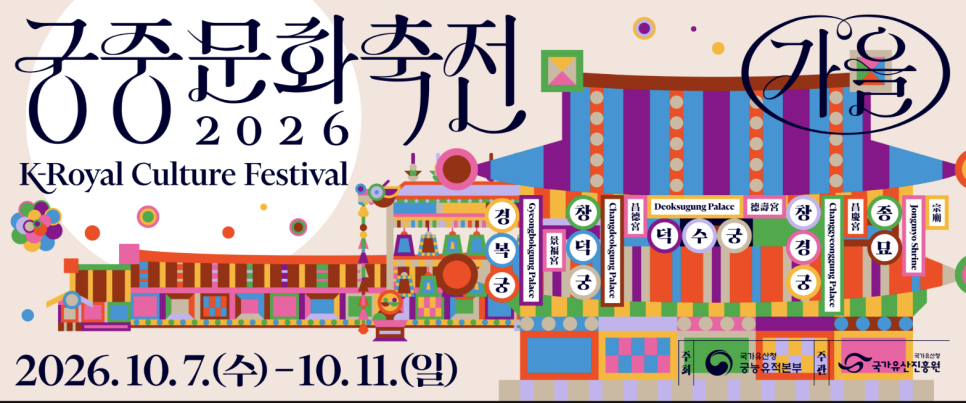
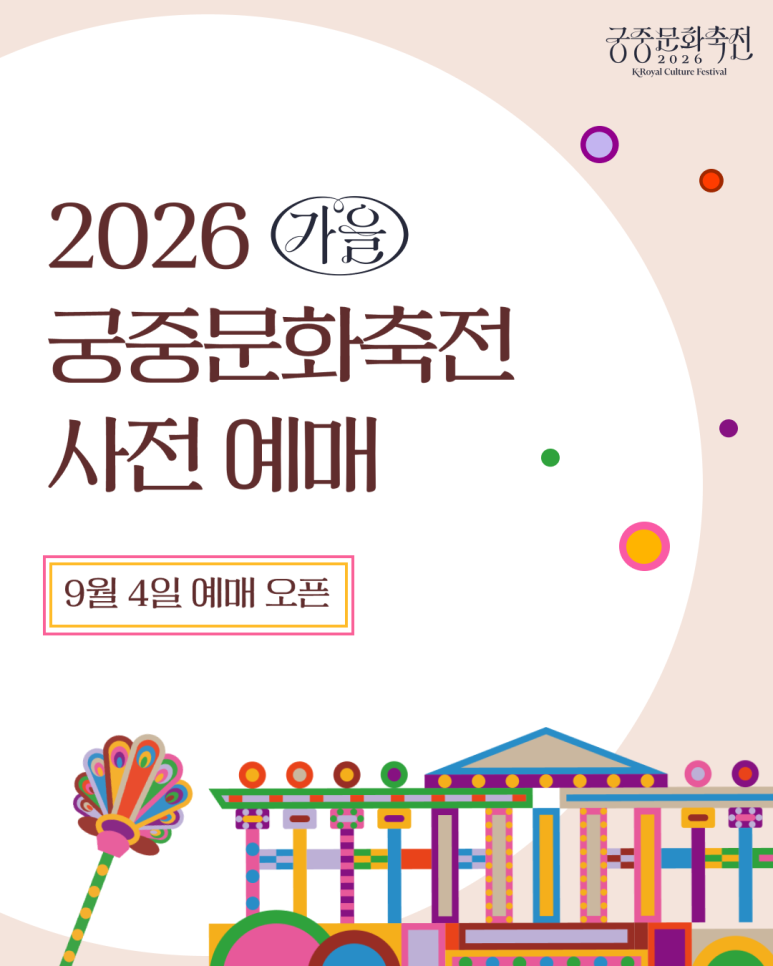
The autumn edition of the Korean Royal Culture Festival runs from Wednesday 7 to Sunday 11 October 2026 across Gyeongbokgung, Changdeokgung, Deoksugung and Changgyeonggung palaces and Jongmyo Shrine, with a free open-air concert at Gyeongbokgung the evening before. Roughly half the programme needs a reservation made on a Korean ticketing site; the other half you can simply walk into with a palace ticket that costs between KRW 1,000 and KRW 3,000 at the gate.
Article
In short
- The festival runs 7–11 October 2026 at four Seoul palaces and Jongmyo Shrine; the free opening-eve concert is on 6 October at Gyeongbokgung.
- You do not need a festival ticket. Buy a palace ticket at the gate — KRW 3,000 at Gyeongbokgung and Changdeokgung, KRW 1,000 at Changgyeonggung, Deoksugung and Jongmyo.
- Guard ceremonies, processions, palace exhibitions and the daily reenactment at Changgyeonggung carry no reservation mark on the official timetable, so a gate ticket is enough.
- The banquet, night tours and media-art programmes must be booked on Ticketlink, a Korean-language site that the English timetable also links to.
- An English timetable exists at kh.or.kr/fest/en, but it does not say which sessions are conducted in English.
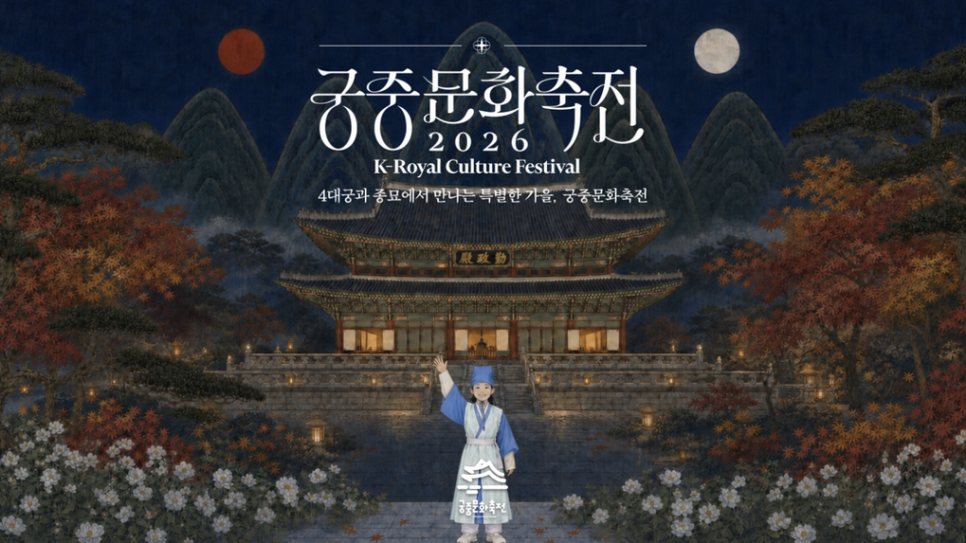
For five days in October the Korea Heritage Service opens its palaces to a programme of performances, tours, workshops and night events under the title Korean Royal Culture Festival. If you have read about it and concluded that everything is sold out, that is only half right. The official timetable marks reservation-only programmes with a dot, and a good third of the grid carries no dot at all. Those are the ones a visitor who arrives in Seoul without a plan can still see, and they are the ones this piece is about.
What a gate ticket already buys you
These are the programmes that appear on the official timetable without a reservation mark. You pay the ordinary palace admission at the ticket window and walk in. None of them requires you to have registered on a Korean website, and none of them requires Korean to follow, because they are things you watch rather than things you are told about.
No reservation needed — 2026 autumn timetable
- Gyeongbokgung
- Changing of the Royal Palace Guard at Heungnyemun Gate Square, 10:00 and 14:00, about 20 minutes, every day of the festival
- Changdeokgung
- Royal court games at Nakseonjae, 10:00–17:00 (closed 12:00–13:00); two exhibitions at Huijeongdang Hall and Seonjeonggak, 10:00–17:00
- Deoksugung
- Exhibition at Deokhongjeon Hall, 10:00–17:00; Gilnori procession through the palace at 13:00 and 16:00, about 50 minutes
- Changgyeonggung
- A Time Travel reenactment of palace daily life at 12:00 and 15:30, about 120 minutes; Gilnori procession at 11:00 and 14:30
- Jongmyo
- Guard patrol ceremony in Jongmyo Square at 15:30, about 60 minutes
- All five sites
- Stamp tour, and Goong-ee Doong-ee volunteers on hand to help
What you cannot get into without booking
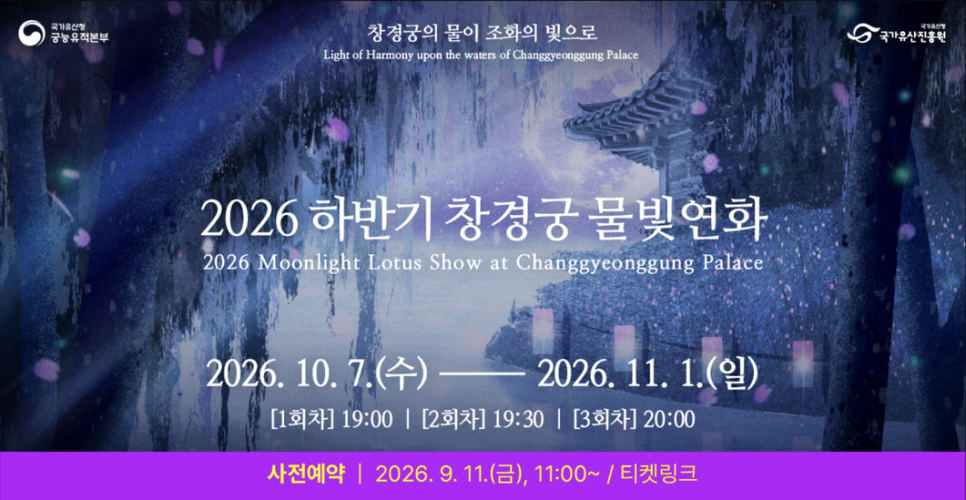
The headline programmes are reservation-only: the Hanbok Royal Banquet at Gyeongbokgung on 9 and 10 October, the Moonlight Tour at Changdeokgung, Seokjojeon at Night at Deoksugung, the Moonlight Lotus media-art show on Chundangji Pond at Changgyeonggung, an early-morning walk at Changdeokgung that starts at 7:30 am, a workshop at the Gyujanggak royal library, a children's school at Deoksugung, and an architecture programme at Jongmyo. All of them are sold on Ticketlink, and the festival's English timetable links to the same Korean product pages rather than to an English checkout. If you cannot complete a Korean online purchase, treat this list as closed and work from the previous one.
Some of these run longer than the festival
Gyeongbokgung's Saenggwabang (2 September – 26 October) and Starlight Tour (2 September – 24 October) are standing autumn programmes that the festival timetable simply includes. If a festival-week session is gone, dates outside 7–11 October may still be open on the same Ticketlink page.
The free concert, and why it is on a Tuesday
The evening before the festival opens, a television music show is recorded outdoors at Heungnyemun Gate Square inside Gyeongbokgung: KBS2's Immortal Songs, staged as the festival's opening night on 6 October at 5 pm. Admission is free, but seats went to a ballot that opened at 10 am on 15 September on the programme's own website, with 2,500 places of which 300 are set aside for non-Korean applicants. If you are reading this close to the date, the ballot has almost certainly closed. It is worth knowing that 6 October is a Tuesday, which is Gyeongbokgung's regular closing day; the palace's other four neighbours close on Mondays instead, and none of those closures falls inside the festival's five days.
What the tickets cost at the gate
Individual admission, Korea Heritage Service price list
- Gyeongbokgung
- KRW 3,000
- Changdeokgung main palace
- KRW 3,000; the Secret Garden is a separate KRW 5,000 and you must hold a main-palace ticket as well
- Changgyeonggung
- KRW 1,000
- Deoksugung
- KRW 1,000; the art museum inside is ticketed separately
- Jongmyo
- KRW 1,000
- Who pays
- Foreign visitors aged 19 to 64; younger and older visitors are admitted free
If you are not in Seoul at all
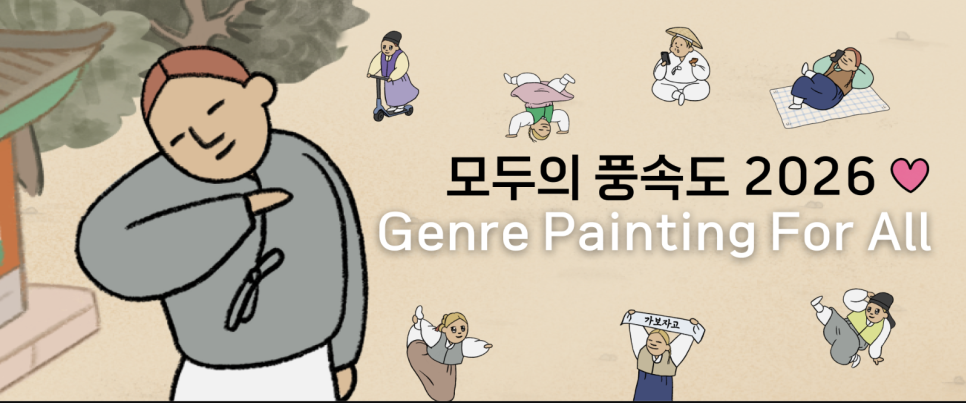
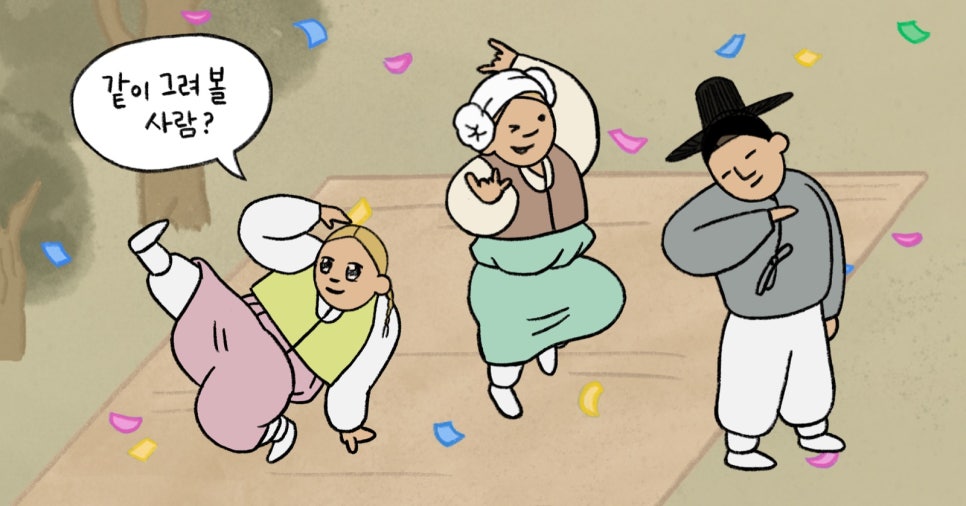
The festival's online programme is genuinely open to anyone. Genre Painting for All 2026 runs from 18 September to 1 November at pungsokdo.com: you build a Joseon-era character on a phone or a computer and it is placed inside a real eighteenth-century painting by Kim Hong-do, alongside everyone else's. There is no software to install and no account to create, which in practice makes it one of the few Korean cultural programmes a non-resident can join without a phone number. Last year 487,000 people made a character, and about 1.39 million have taken part since the project started in 2021.
Two titles that do not match
Check the building, not the name
The craft exhibition at Changdeokgung's Huijeongdang Hall appears under one Korean title on the festival timetable and a different one in the 15 September press release. The Deoksugung exhibition at Deokhongjeon Hall has a Korean heading that reads as the centenary of Emperor Sunjong's accession while the English line on the same page reads as the centenary of his passing. If you are looking for either, go by the hall name rather than the title.
Frequently asked questions
- Q. When and where is the 2026 autumn Korean Royal Culture Festival?
- Wednesday 7 to Sunday 11 October 2026, at Gyeongbokgung, Changdeokgung, Deoksugung and Changgyeonggung palaces and at Jongmyo Shrine in central Seoul. A free concert is staged the evening before, on 6 October, at Gyeongbokgung.
- Q. Do I need a festival ticket?
- There is no single festival pass. You pay ordinary palace admission at the gate — KRW 3,000 at Gyeongbokgung and Changdeokgung, KRW 1,000 at Changgyeonggung, Deoksugung and Jongmyo — and individual programmes are separately free or ticketed.
- Q. Can I book the ticketed programmes from abroad?
- They are sold on Ticketlink, a Korean ticketing site, and the festival's English timetable links to those same Korean pages rather than to an English checkout. If you cannot complete a Korean purchase, plan around the programmes that need no reservation.
- Q. Is it worth going if I do not read Korean?
- Yes, with the right expectations. The guard ceremonies, processions, palace exhibitions and the Changgyeonggung reenactment are visual and need no narration, and the festival publishes its timetable in English. Guided or participatory programmes should be assumed to run in Korean unless their booking page says otherwise.
- Q. Are the palaces closed on any festival day?
- No. Gyeongbokgung and Jongmyo close on Tuesdays and the other three palaces on Mondays, and none of those days falls between 7 and 11 October. The 6 October eve concert does, however, fall on Gyeongbokgung's regular closing day.
Editor's note · Kang Shin-wook
Written for a visitor who will be in Seoul that week and has not booked anything. It sorts the official timetable into what you can still see with a gate ticket and what is already locked behind Korean-language ticketing. Opening days and prices for all five sites are on our palaces and shrines page.
Sources
- Official notice (Korean)
- Korean Royal Culture Festival — programme page (English)
- Korea Heritage Agency press release on the opening-eve concert, 15 September 2026 (Korean)
- Korea Heritage Agency press release on the online programme, 17 September 2026 (Korean)
- Royal Palaces and Tombs Center — admission prices (Korean)
- Royal Palaces and Tombs Center — opening hours and closing days (Korean)
Written in our own words from the sources above, never copied from them, and every date and price checked against at least two pages. The originals are in Korean. Spotted a mistake? Ask for a correction.
Latest from Royal Palaces and Tombs Center
 Royal Palaces and Tombs CenterEvent11 October 2026Last dayFreeChangdeokgung Secret Garden: read inside a royal library — until 18 October
 Royal Palaces and Tombs CenterEvent11 October 2026On nowJoseon royal tomb forest trails open for autumn — until 29 November
 Royal Palaces and Tombs CenterNotice26 September 2026AI patrol robots at Deoksugung and Seooreung — wheels or legs, until November 2026
 Royal Palaces and Tombs CenterProgramme25 September 2026On nowFreeGenre Painting for All 2026: make a Joseon character — free to 1 Nov