Exhibition·National Museum of Modern and Contemporary Art, KoreaIn 9 days
Georgia O'Keeffe at MMCA Gwacheon — 12 Nov 2026 to 21 Mar 2027
Summary
The National Museum of Modern and Contemporary Art (MMCA) opens «Georgia O'Keeffe and American Modernism» at its Gwacheon branch on 12 November 2026, organised with the Art Institute of Chicago, and runs it until 21 March 2027. Built around the Art Institute's Alfred Stieglitz Collection, it lists 107 works by O'Keeffe, Stieglitz, Marsden Hartley and their circle. Tickets cost KRW 3,000 and are bought at the door; nothing needs booking. The museum is shut on Mondays, and a free documentary on O'Keeffe screens from 25 November. The exhibition page is in Korean only so far.
Article
In short
- «Georgia O'Keeffe and American Modernism» runs from 12 November 2026 to 21 March 2027 in Gallery 2 on the first floor of MMCA Gwacheon, open Tuesday to Sunday 10:00–18:00 (closed Mondays).
- Admission is KRW 3,000 (Gwacheon exhibition ticket); ages 24 and under and 65 and over get in free with ID, and everyone is free on the last Wednesday of the month (Culture Day).
- Centred on the Art Institute of Chicago's Alfred Stieglitz Collection, it lists 107 works by O'Keeffe, Stieglitz, Marsden Hartley and others.
- A related documentary, «Georgia O'Keeffe: The Brightness of Light», screens free in the Gwacheon auditorium from 25 November 2026 to 24 February 2027 (250 seats a session); session times are not yet announced.
- No booking is needed for the exhibition itself, but its page is in Korean only so far and MMCA has not said what will be signed in English.
The American painter Georgia O'Keeffe, best known for her flowers and cattle skulls, is coming to Gwacheon. The National Museum of Modern and Contemporary Art, Korea (MMCA) opens «Georgia O'Keeffe and American Modernism», organised with the Art Institute of Chicago, at its Gwacheon branch on 12 November 2026, and keeps it open until 21 March 2027. It is less a retrospective of one painter than the story of the painters and photographers gathered around the photographer Alfred Stieglitz, and how they worked out a modern art that was American rather than European. Admission is KRW 3,000.
The exhibition page gives the number of works as 107. The show has not opened yet and there is no press release devoted to it, so the final selection and count may change after the opening.
What is the exhibition about: the circle around Stieglitz
The starting point is New York in the early twentieth century. Stieglitz ran galleries that introduced young American artists, and the group that formed around him is usually called the Stieglitz Circle. MMCA frames the exhibition around that community rather than around a single genius: change, it says, needs not only one gifted artist but the people who share the aim and back it.
MMCA lists the participating artists by medium:
- Painting: Georgia O'Keeffe, Arthur Dove, Marsden Hartley, Charles Demuth, John Marin and others
- Photography: Alfred Stieglitz, Paul Strand, Edward Weston and others
Which works are the highlights
MMCA has put five works on the exhibition page so far. Three are O'Keeffe paintings, spread evenly across her career: abstraction from around 1920, a New Mexico skull from the 1930s, and a late work from 1960.
Highlights announced by MMCA (all from the Art Institute of Chicago)
- Artist
- Work (date, medium)
- Georgia O'Keeffe
- Blue and Green Music, 1919–21, oil on canvas
- Georgia O'Keeffe
- Cow's Skull with Calico Roses, 1931, oil on canvas
- Georgia O'Keeffe
- It Was Yellow and Pink III, 1960, oil on canvas
- Alfred Stieglitz
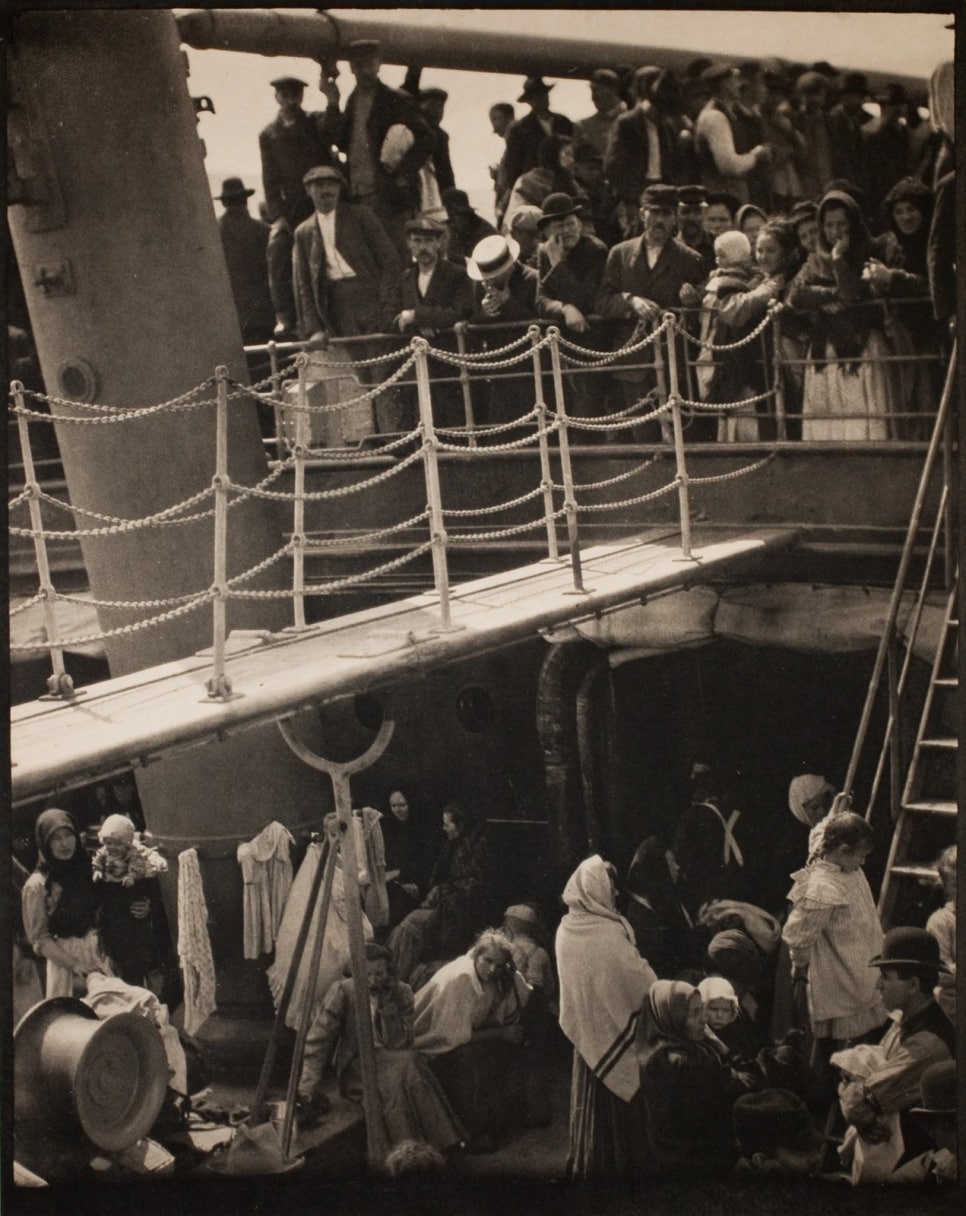
- The Steerage, 1907 (printed 1913 or earlier), photogravure
- Marsden Hartley
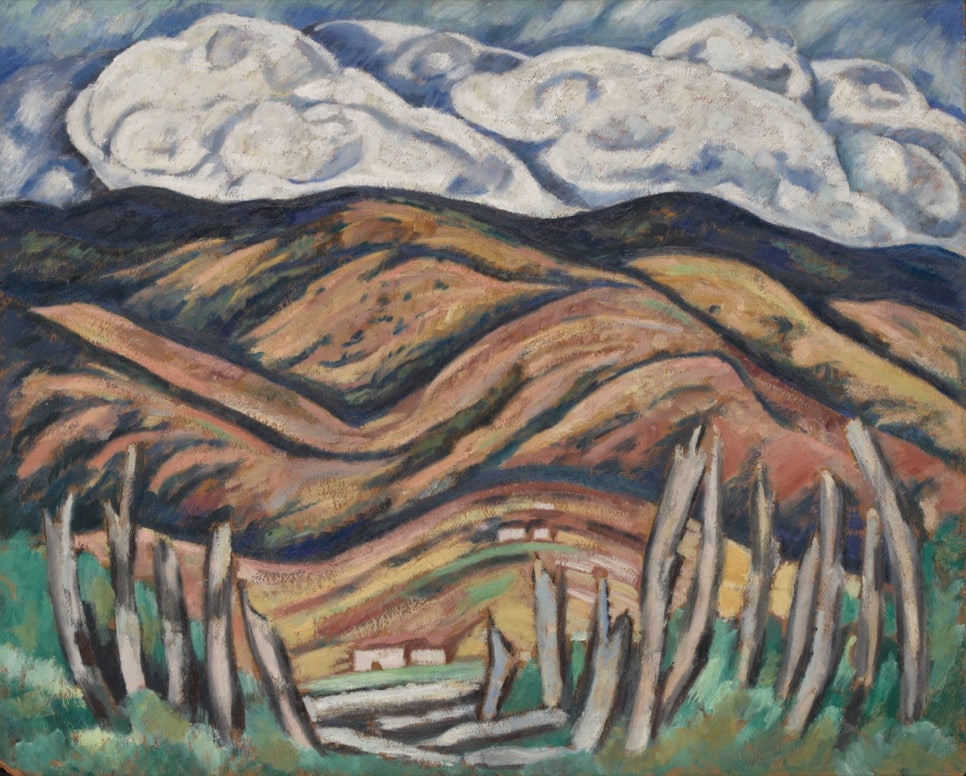
- The Last of New England—The Beginning of New Mexico, 1918–19, oil on board
Why there are no O'Keeffe paintings on this page
O'Keeffe died in 1986, so her paintings are still in copyright. This page shows only works by Stieglitz and Hartley that are in the public domain (CC0). Images of O'Keeffe's highlighted paintings are on the MMCA exhibition page.
How Stieglitz photographed O'Keeffe
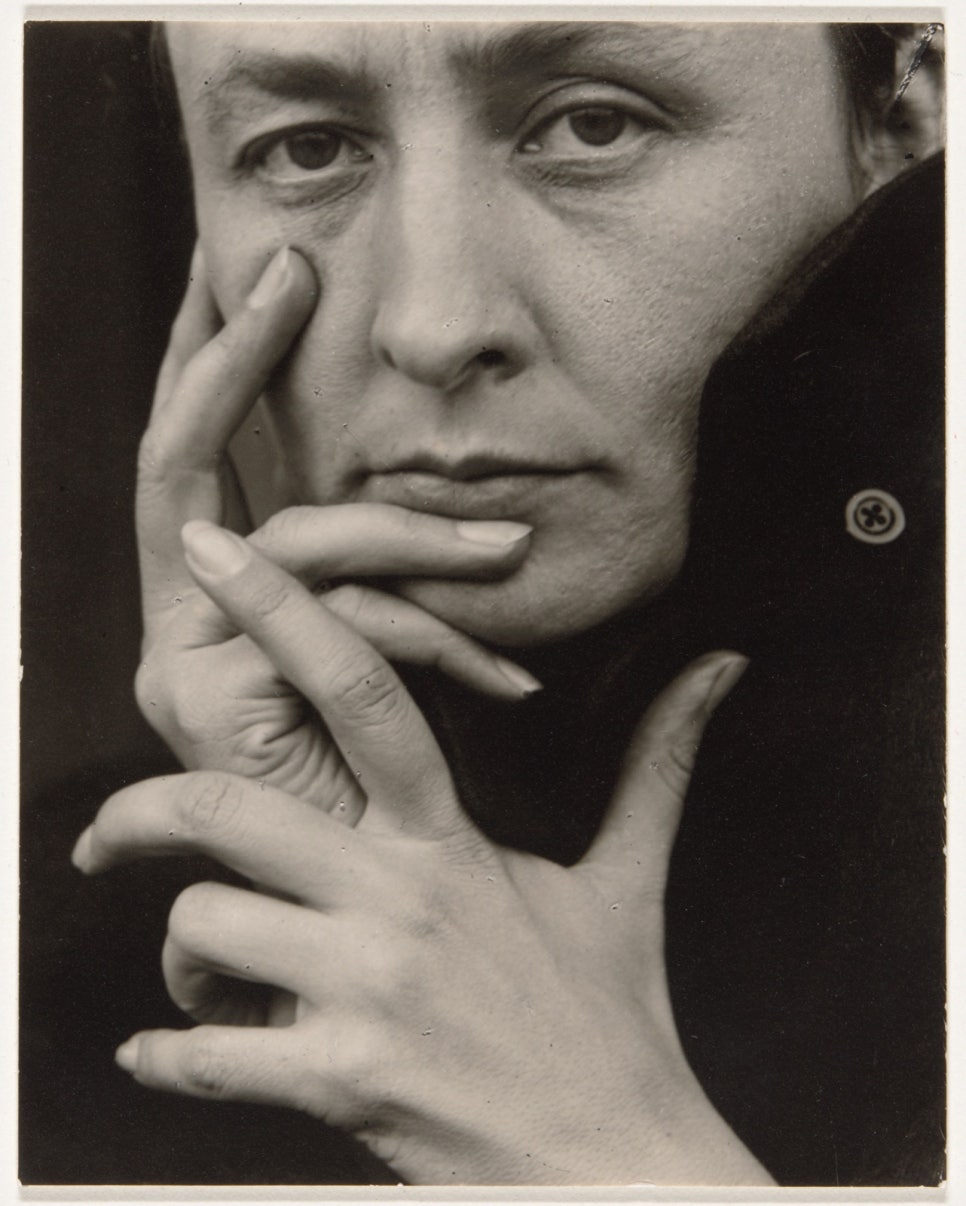
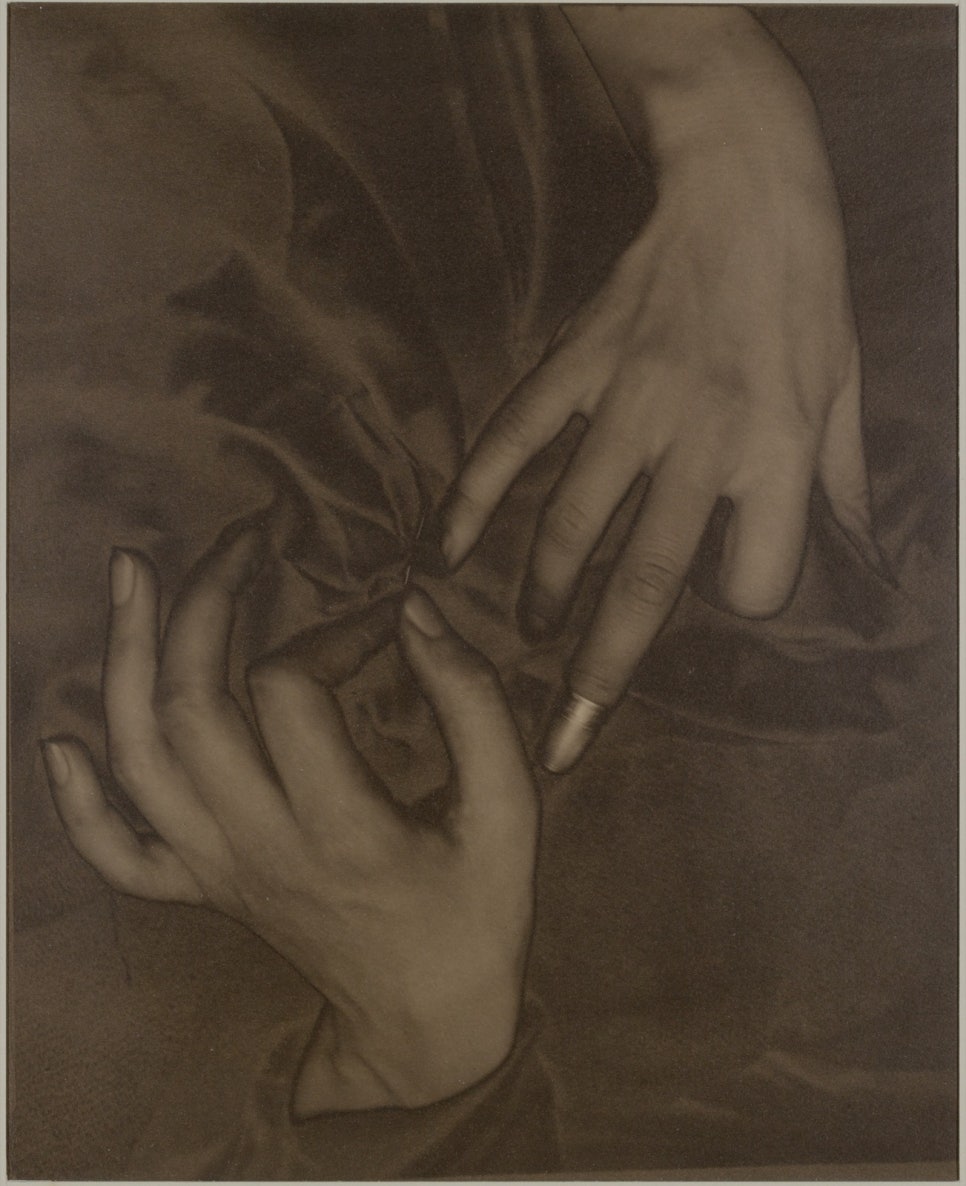
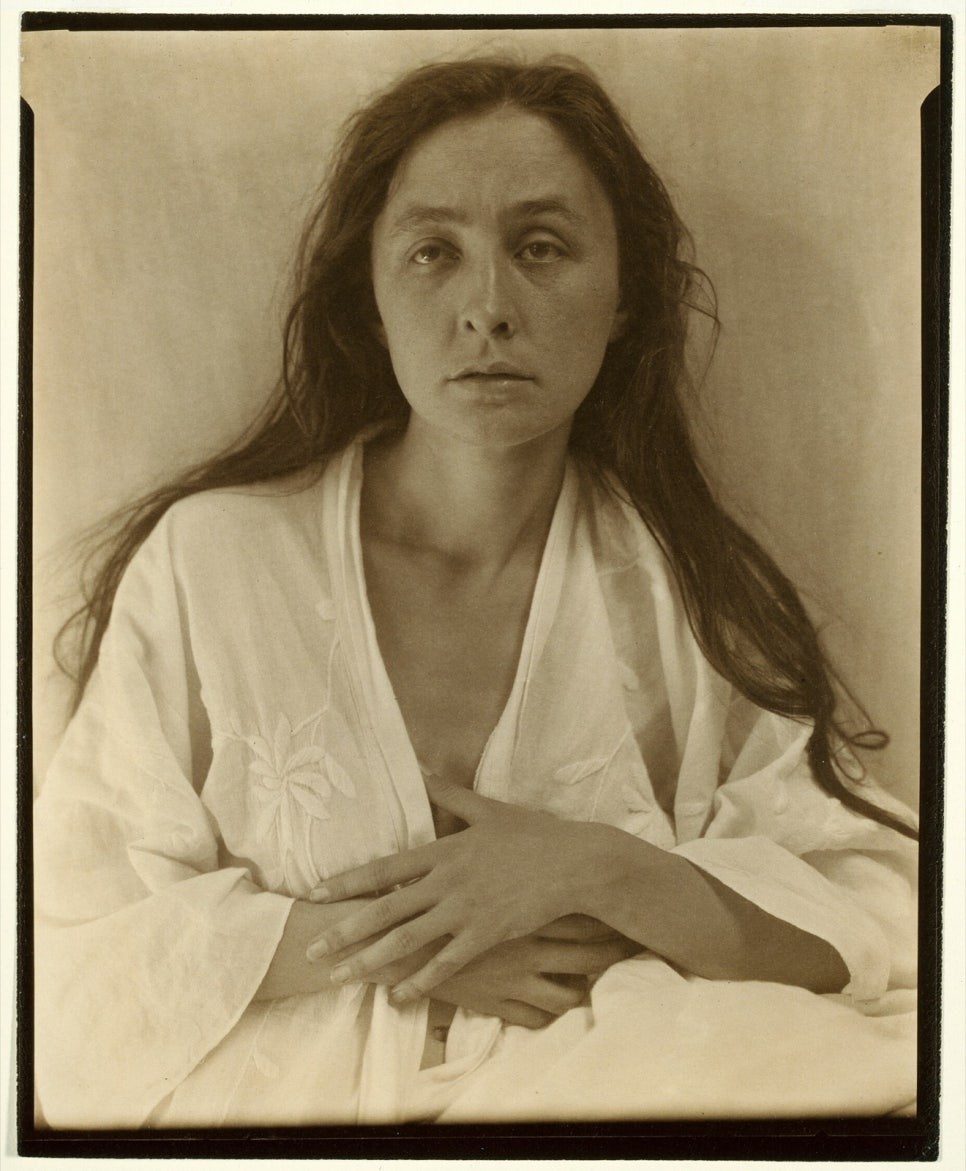
Stieglitz was O'Keeffe's husband and the first to champion her work. MMCA calls him her partner in life and art, and says the later part of the exhibition includes portrait photographs of her. The two pictures below are portraits of O'Keeffe that Stieglitz took in 1918–19; they belong to the Art Institute of Chicago, but it is not confirmed that they are in this exhibition.
How the photographers saw New York
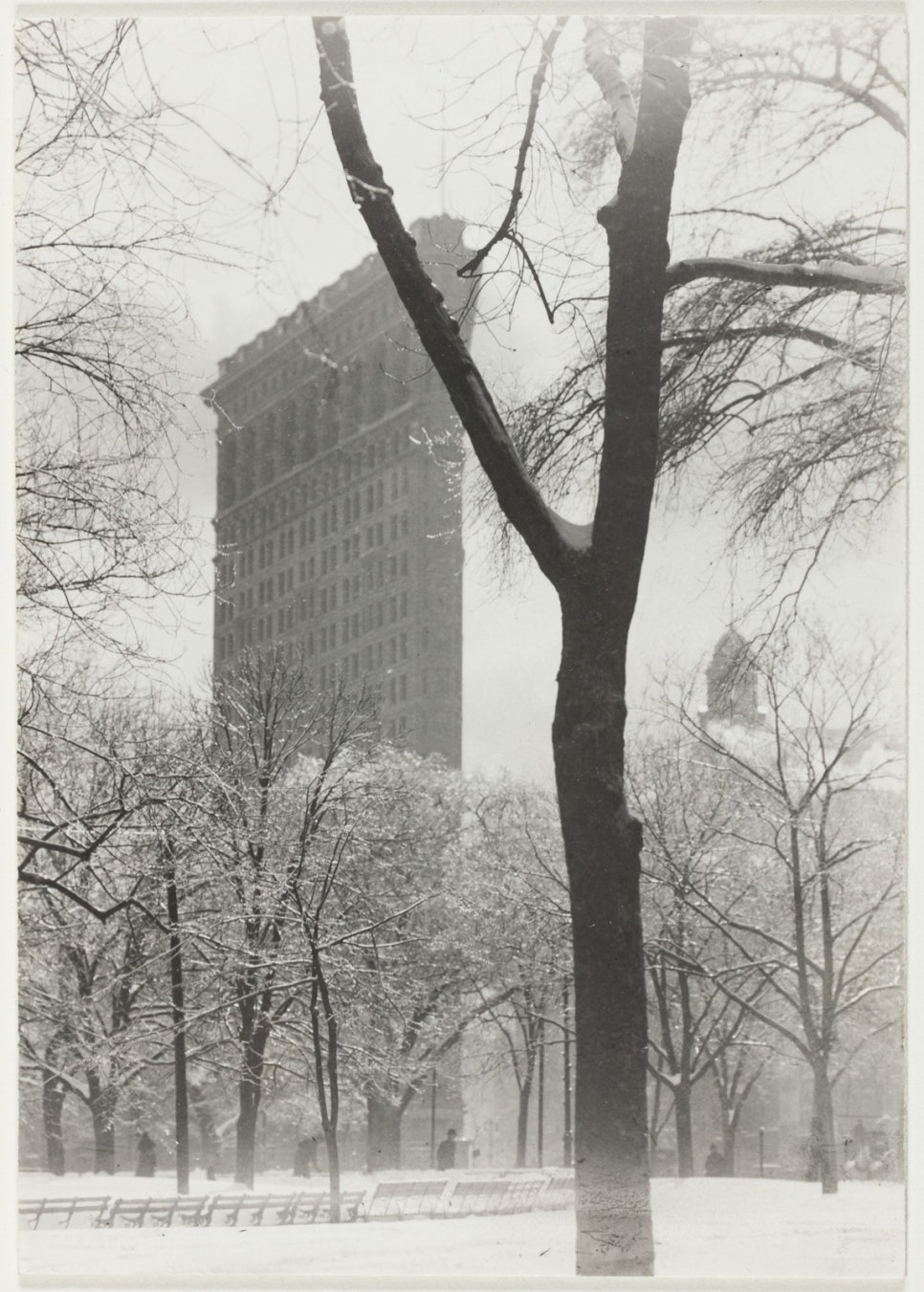
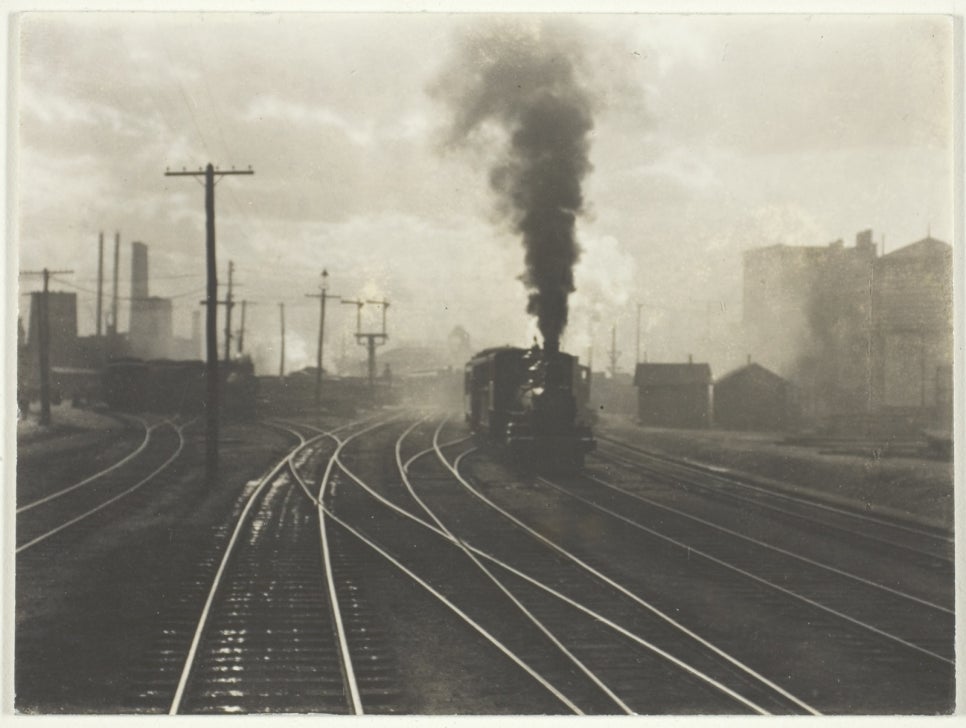
Alongside the paintings, the exhibition covers modernist photographers such as Paul Strand and Edward Weston. Stieglitz himself photographed the fast-growing city in the early 1900s, from snowy streets to rail yards. Neither of the two pictures below is confirmed for the exhibition.
Who was Marsden Hartley
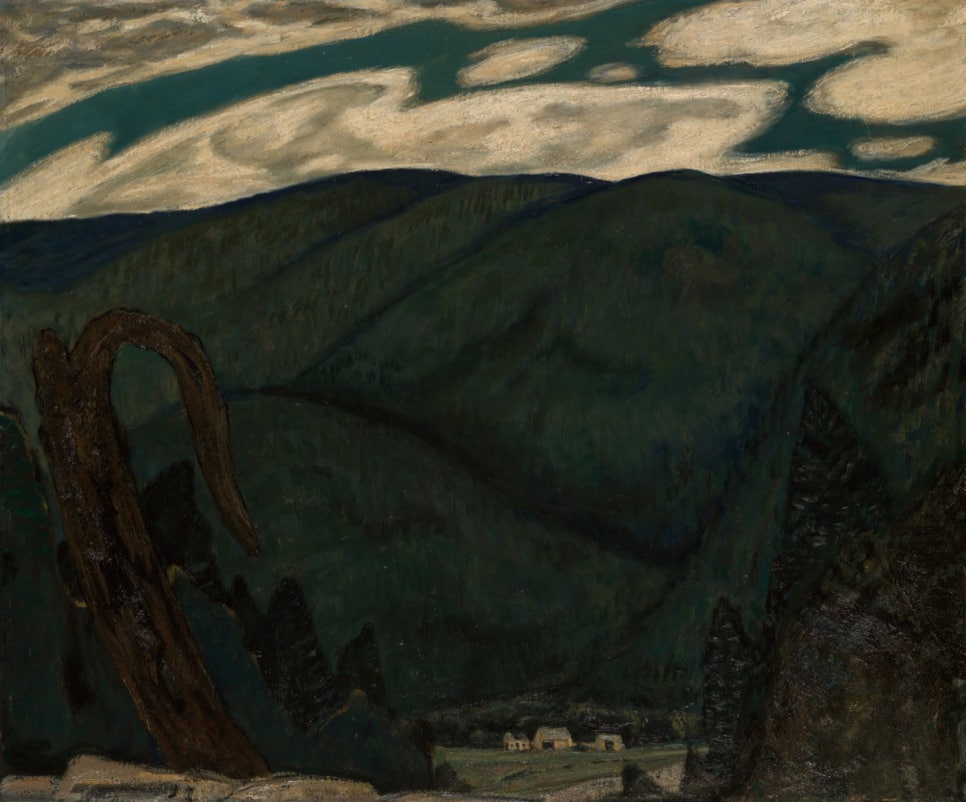
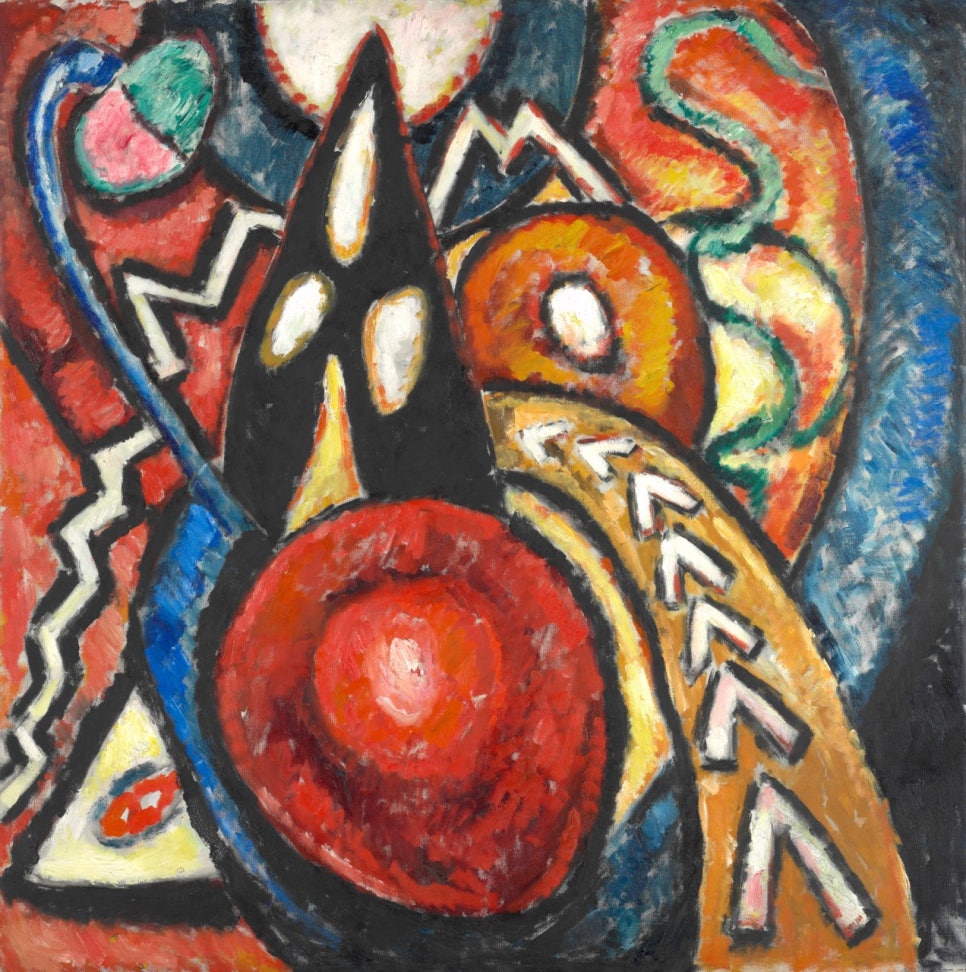
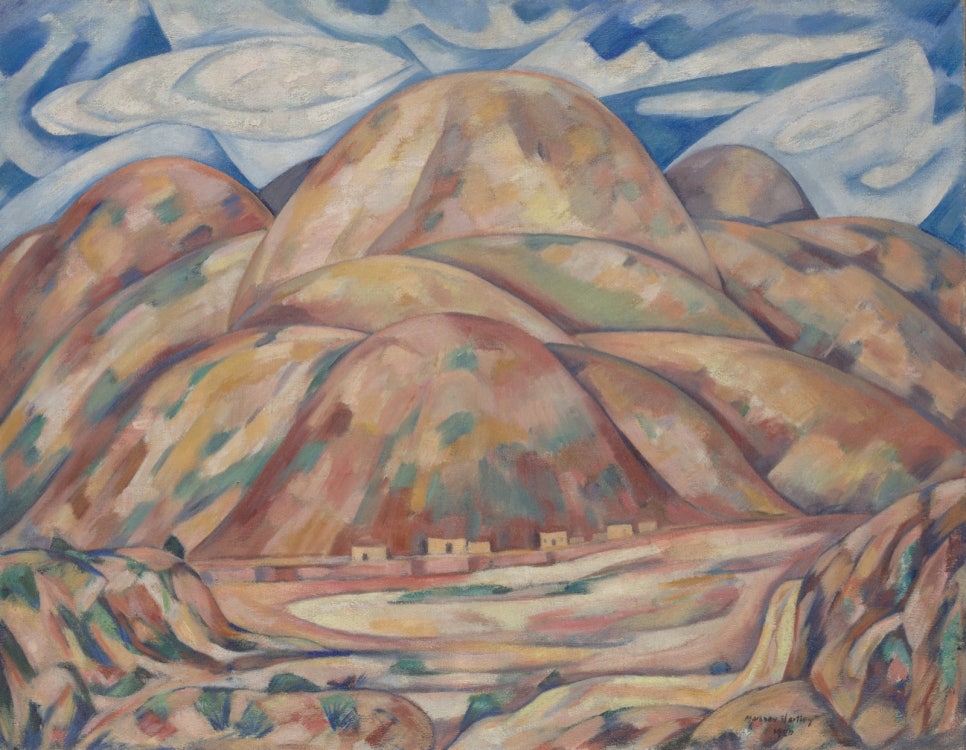
Hartley had one of his first solo shows at Stieglitz's gallery and painted The Last of New England—The Beginning of New Mexico, one of the exhibition's highlights. His style changed sharply, from the mountains of his native Maine through the abstraction he met in Europe in the 1910s to the red earth of New Mexico, and the three paintings below show that change side by side. All three belong to the Art Institute of Chicago; none is confirmed for this exhibition.
The last section: O'Keeffe and New Mexico
The final section turns to O'Keeffe's later career in New Mexico. According to MMCA, she first went there in 1929, spent close to twenty years travelling between New York and New Mexico every year, and settled there for good in 1949, staying until her death.
This part brings together her best-known pictures of desert bones and the surrounding landscape, her late work, and portrait photographs of the artist. Of the announced highlights, Cow's Skull with Calico Roses (1931) and It Was Yellow and Pink III (1960) belong here.
When is the documentary, and does it need booking
Alongside the exhibition, MMCA is screening «Georgia O'Keeffe: The Brightness of Light» (2024), a feature-length documentary on her life, free of charge. The museum's event page has a booking button, but the session times are still blank.
Related documentary screening (per the MMCA event page)
- Item
- Details
- Dates
- 25 November 2026 – 24 February 2027
- Place
- Gwacheon auditorium (basement level 1)
- Price and seats
- Free, 250 seats a session, open to all visitors
- Film
- Directed by Paul Wagner, 1 hr 58 min, narrated by Hugh Dancy, with Claire Danes as the voice of O'Keeffe
- Booking
- Booking button on the MMCA event page; session times to be announced
Can I see it in Busan instead
That is the plan. MMCA says that after Gwacheon the exhibition travels, as part of its regional touring programme, to the Museum of Contemporary Art Busan from April to July 2027; the Busan museum is also a co-organiser. Exact dates, prices and the number of works for Busan have not been announced.
Gwacheon and Busan compared
- Item
- Gwacheon / Busan
- Dates
- Gwacheon 12 Nov 2026 – 21 Mar 2027 · Busan April – July 2027 (exact dates not announced)
- Place
- Gwacheon: Gallery 2, 1st floor · Busan: Museum of Contemporary Art Busan
- Admission
- Gwacheon KRW 3,000 · Busan not announced
- Works
- Gwacheon 107 (per the exhibition page) · Busan not announced
What to check before you go
- The museum is closed on Mondays; it opens Tuesday to Sunday, 10:00–18:00.
- Ages 24 and under, 65 and over, undergraduate students and some other groups get in free on showing ID. Everyone gets in free on the last Wednesday of the month (Culture Day).
- MMCA Gwacheon is reached from Seoul Grand Park Station (Line 4) by shuttle bus or a walk of about 20 minutes through Seoul Grand Park. Public transport is recommended at weekends.
- When it was first announced early in 2026 the exhibition was called «Georgia O'Keeffe and American Modern Art»; searches under the old title lead to the same show.
Two different closing dates
The exhibition page and MMCA's exhibition list give the closing date as 21 March 2027, but the related-exhibition box on the documentary's event page says 31 March. This page follows the exhibition page. If you plan to go after mid-March, check with the museum first.
Getting there, and how much is in English
From central Seoul, take subway Line 4 to Seoul Grand Park Station (대공원역). MMCA's Korean visitor page points to exit 4 for the museum shuttle bus and exit 2 for the walk: through the Seoul Grand Park main entrance and to the right, towards Seoul Zoo, about 20 minutes. The park's elephant train also stops near the museum, about five minutes' walk away. The museum warns the shuttle can be delayed or suspended at busy times. Tickets are sold at the museum desk, so there is nothing to book in advance and no Korean phone number is needed. What is less clear is language: so far the exhibition page and the documentary listing are only in Korean, and MMCA has not said whether the wall texts or an audio guide will be in English. The works themselves are American, most titles are English originals, and the documentary is an English-language film, so the exhibition is more accessible than most to a visitor who reads no Korean.
Frequently asked questions
- Q. When is the Georgia O'Keeffe exhibition in Korea?
- It runs at MMCA Gwacheon, Gallery 2 on the first floor, from 12 November 2026 to 21 March 2027. It is then planned to travel to the Museum of Contemporary Art Busan from April to July 2027.
- Q. How much is the O'Keeffe exhibition at MMCA?
- A Gwacheon exhibition ticket costs KRW 3,000. Ages 24 and under and 65 and over get in free with ID, everyone is free on the last Wednesday of the month, and the related documentary screening is free.
- Q. Which works are in the O'Keeffe exhibition?
- The exhibition page lists 107 works, centred on the Art Institute of Chicago's Alfred Stieglitz Collection. The announced highlights are O'Keeffe's Blue and Green Music, Cow's Skull with Calico Roses and It Was Yellow and Pink III, Stieglitz's The Steerage, and Marsden Hartley's The Last of New England—The Beginning of New Mexico.
- Q. Do I need to book the O'Keeffe documentary?
- The MMCA event page has a booking button. The film screens free in the Gwacheon auditorium from 25 November 2026 to 24 February 2027, with 250 seats per session; session times have not been announced yet.
- Q. Can I see the O'Keeffe exhibition in Busan?
- Yes, according to MMCA: it travels to the Museum of Contemporary Art Busan from April to July 2027. Exact dates and prices have not been announced.
- Q. Is it worth going if I do not read Korean?
- Yes, more than for most Korean exhibitions. The works are American, the titles are English originals, the documentary is in English, and tickets are bought at the door with no booking. What MMCA has not yet said is whether the wall texts and any audio guide will be in English, so expect some Korean-only labels.
Editor's note · Kang Shin-wook
For anyone who knows O'Keeffe only from the flower paintings, and for visitors who like photography and painting hung side by side. Gwacheon opening hours and the route from Seoul are on our MMCA visiting guide; other exhibitions coming up are on What's on.
Sources
- Official notice (Korean)
- MMCA event page: documentary screening (Korean)
- MMCA Gwacheon visitor information (Korean)
- Asia Economy: MMCA's 2026 exhibition plan, 6 Jan 2026 (Korean)
Written in our own words from the sources above, never copied from them, and every date and price checked against at least two pages. The originals are in Korean. Spotted a mistake? Ask for a correction.
Latest from National Museum of Modern and Contemporary Art, Korea
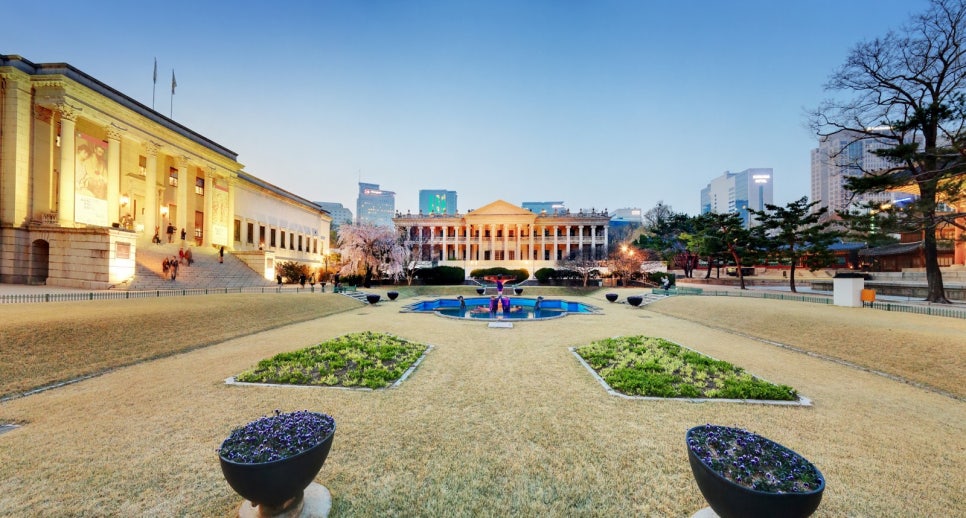 National Museum of Modern and Contemporary Art, KoreaNotice25 October 2026MMCA Seoul and Deoksugung free on Wednesday and Saturday evenings — all four free on 28 October
 National Museum of Modern and Contemporary Art, KoreaEvent22 September 2026EndedFreeMMCA is free across the Chuseok weekend, 24 to 27 September
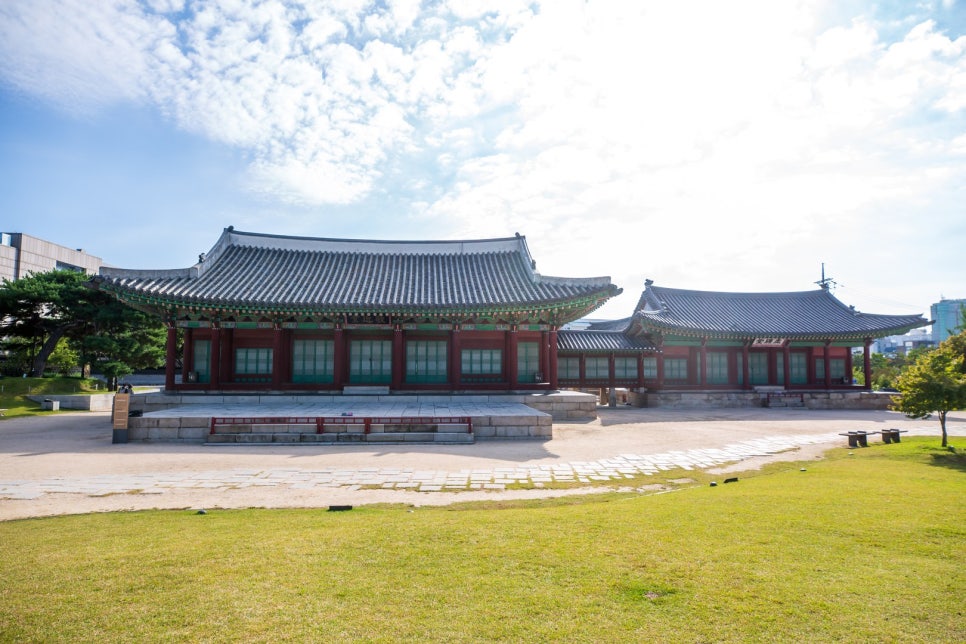 National Museum of Modern and Contemporary Art, KoreaProgramme22 September 2026On nowFreeMMCA Seoul's architecture tour, and the four centuries stacked under it
 National Museum of Modern and Contemporary Art, KoreaNotice22 September 2026MMCA runs a free shuttle between its three buildings, Tuesday to Friday