Exhibition·Jinju National MuseumOn now
Jinju National Museum: the Duam donation show — to 28 Feb 2027
Summary
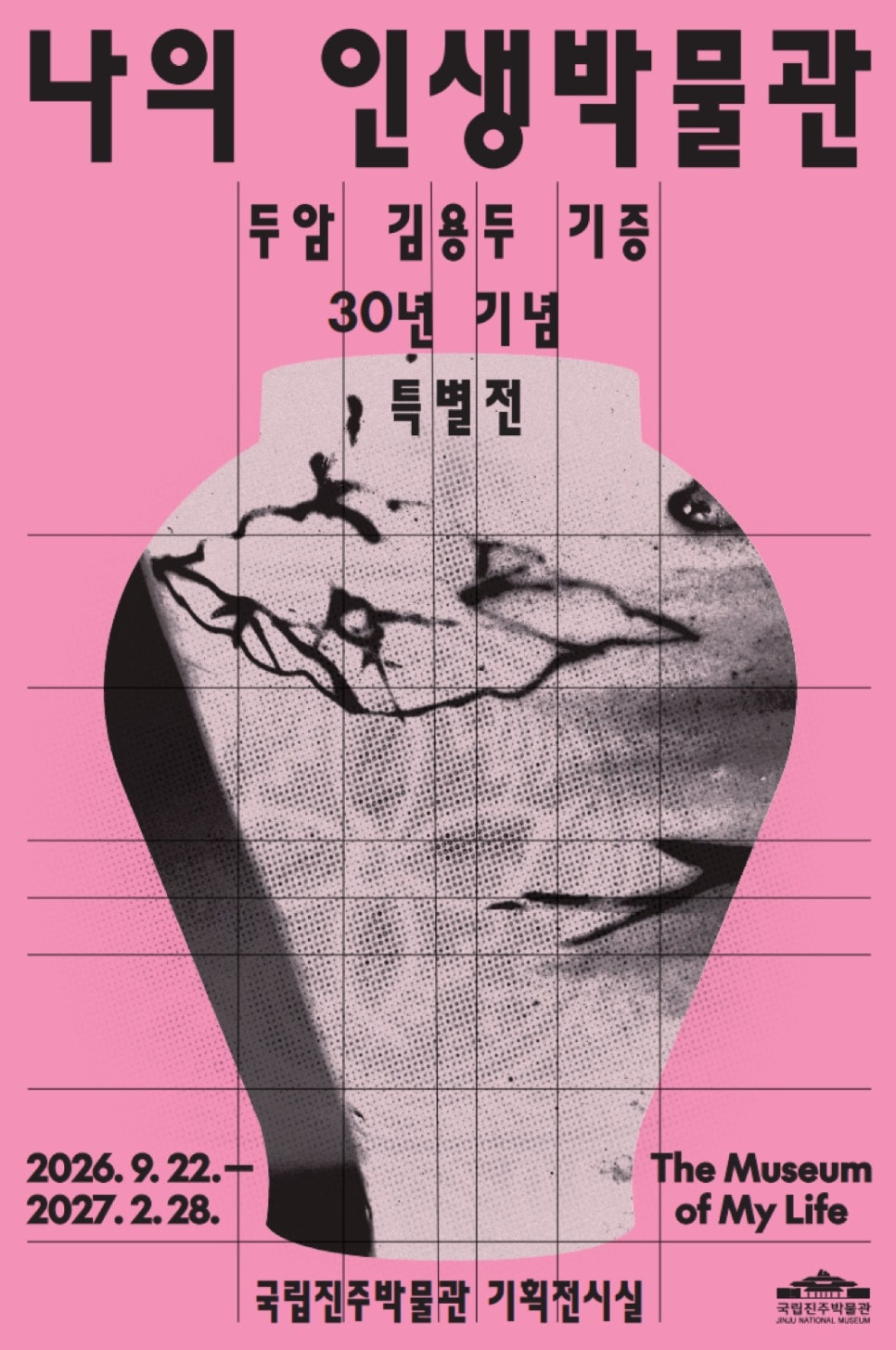
Jinju National Museum is showing 'My Life Museum', a special exhibition marking 30 years since Kim Yong-du, a Korean collector who lived in Japan, began giving his collection to the museum. It runs from 22 September 2026 to 28 February 2027 and brings out 173 objects, including two designated Treasures (bomul, the grade below National Treasure): the eight-panel Eight Views of the Xiao and Xiang Rivers, on show in Jinju for the first time in 15 years, and a calligraphy scroll by King Jeongjo. There is no booking — but the museum stands inside Jinju Fortress, so visitors from outside Jinju pay the fortress gate fee (KRW 2,000 for adults) on the way in.
Article
In short
- 'My Life Museum' runs at Jinju National Museum from 22 September 2026 to 28 February 2027, in the Special Exhibition Gallery.
- It shows 173 of the 197 objects donated by Kim Yong-du (1922–2003), a Korean collector based in Japan, including two Treasures — the largest showing of his gift to date.
- The genuine Eight Views of the Xiao and Xiang Rivers is back on view in Jinju for the first time in 15 years.
- The museum sits inside Jinju Fortress: visitors from outside Jinju pay the fortress fee (KRW 2,000 for adults). Open 9 am – 6 pm, closed Mondays.
- No booking is needed. The audio guide is in Korean only, so read up before you go — this page covers the key works.
Jinju National Museum, inside the walls of Jinju Fortress in South Gyeongsang Province, has opened My Life Museum, a special exhibition built around the collection of Duam Kim Yong-du. With 2027 marking 30 years since his first gift, the show follows how one businessman living in Japan gathered Korean paintings, ceramics and craft over a lifetime, how the collection became known, and why it ended up in a museum near his home town. The run is long — to 28 February 2027 — but the headline work, the early Joseon landscape set Eight Views of the Xiao and Xiang Rivers, has not hung in Jinju as an original for 15 years, which makes this winter the time to go.
Who was Kim Yong-du?
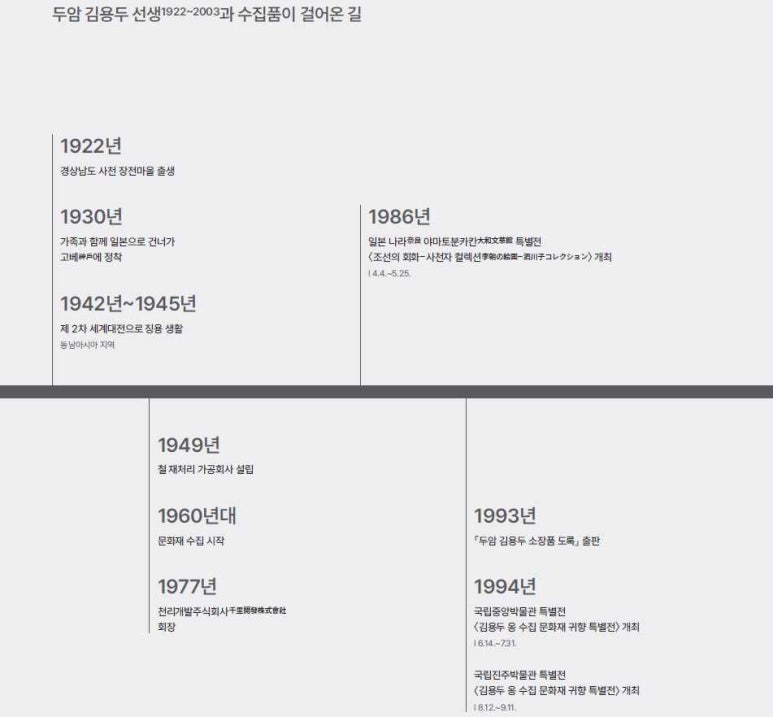
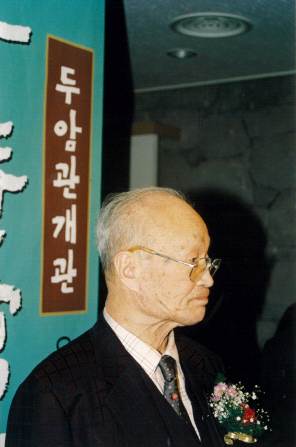
Kim Yong-du, who used the pen name Duam, was born in Sacheon in South Gyeongsang Province and moved with his family to Kobe, Japan, at the age of eight. After Liberation he built a business in steel processing and then began collecting old Korean paintings and ceramics. Most collectors in the Korean community in Japan left their holdings in Japan, where they had made their lives; Kim chose pieces and gave them to the national museum closest to Sacheon. The museum describes him as the only collector of that community to have given a collection of this size back to Korea.
The gift also changed what kind of museum Jinju is. Its core had been the Imjin War of the 1590s and the history of the region; the museum credits the Duam collection with turning it into a general museum that can show fine art as well.
When did the collection arrive, and how much?
The gift came in three instalments. The bulk arrived at once in 1997; the last, in 2001, was a single entry — the eight panels of Eight Views of the Xiao and Xiang Rivers, the piece Kim valued most. In 1997 he told reporters he hoped people in both Korea and Japan would ask themselves why he, living in Japan, held such important historical material.
The Duam Kim Yong-du gifts (National Museum of Korea press release)
- First gift (1997)
- 114 entries
- Second gift (2000)
- 49 entries
- Third gift (2001)
- 1 entry — the Treasure Eight Views of the Xiao and Xiang Rivers, eight panels
- Total
- 164 entries, 197 objects (146 entries, 173 objects on show)
Why is Eight Views of the Xiao and Xiang Rivers worth the trip?
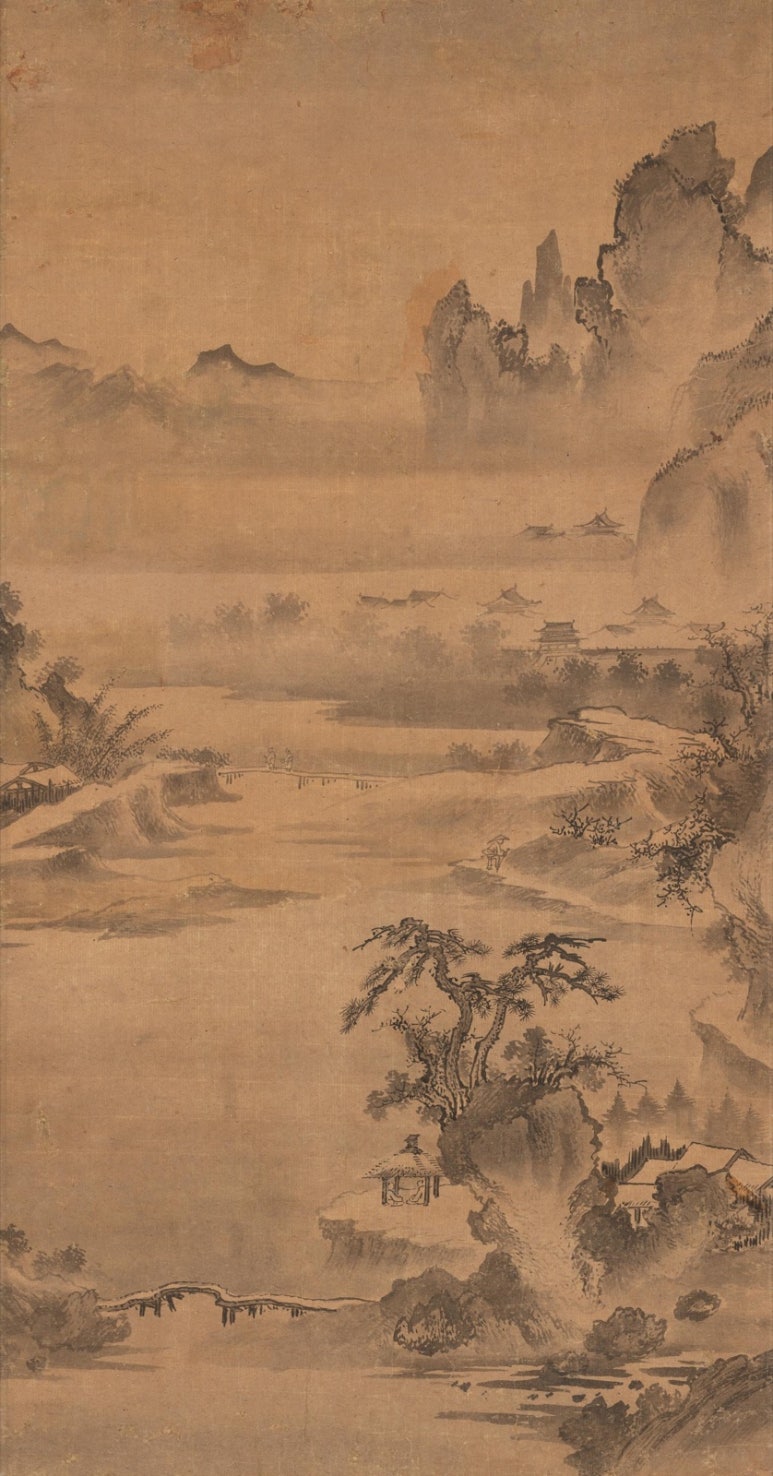
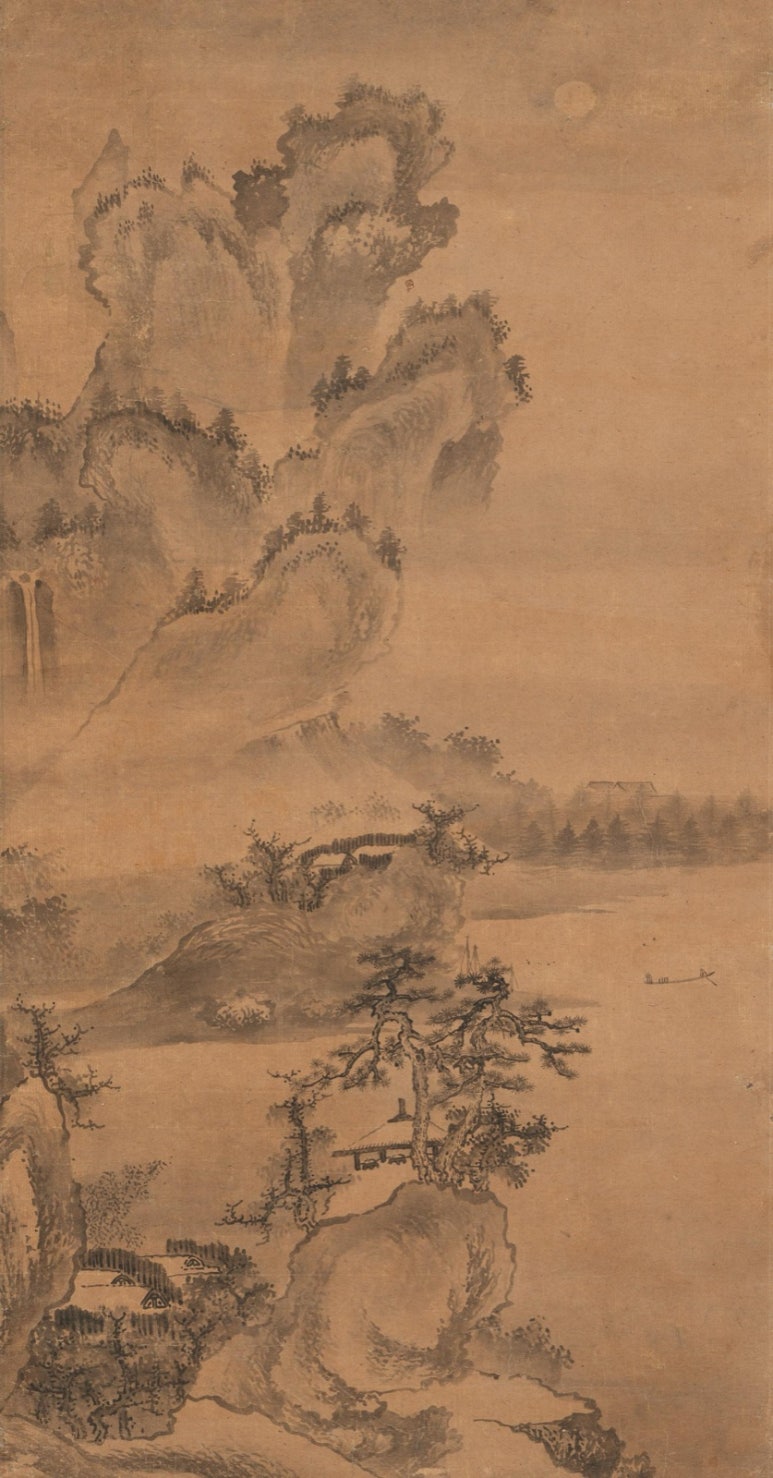
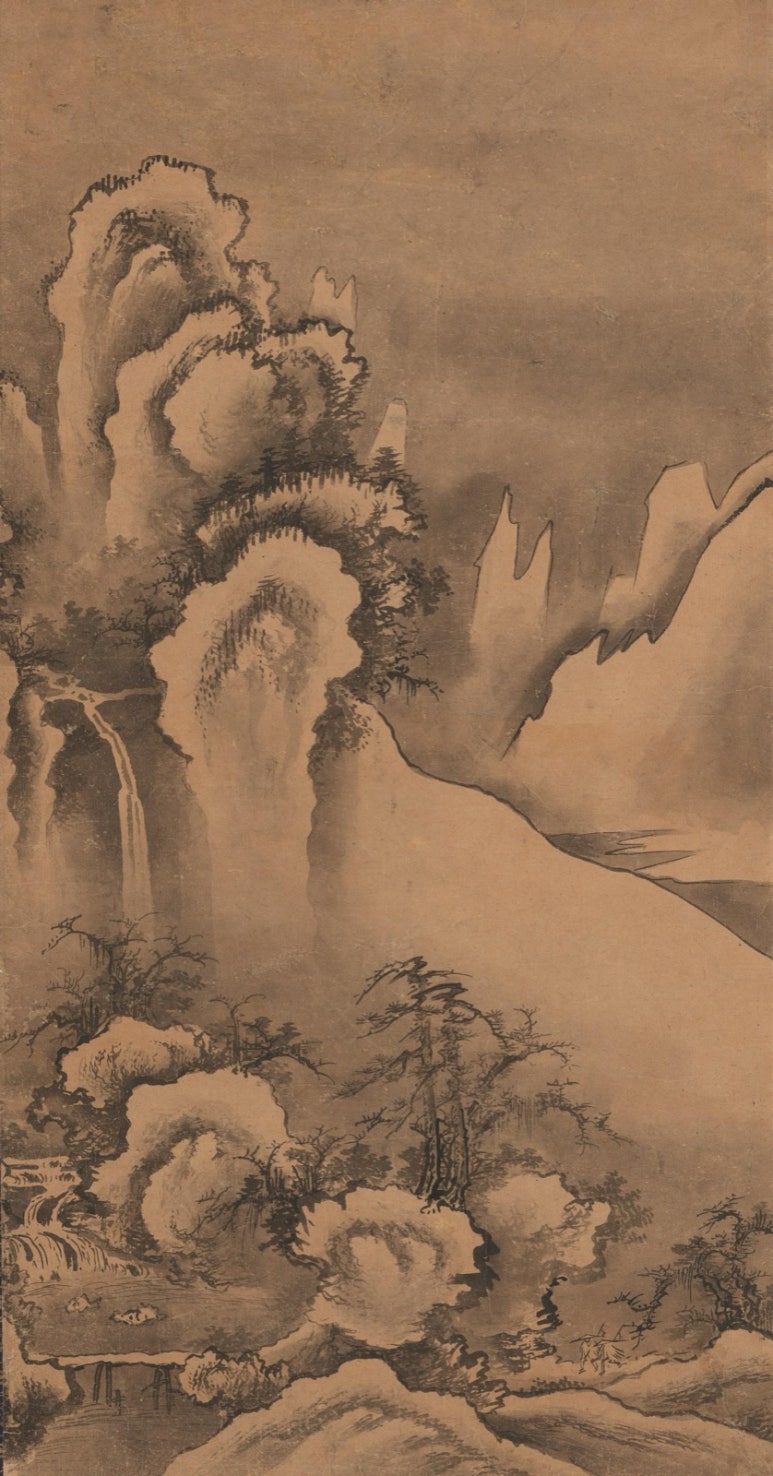
Eight Views of the Xiao and Xiang Rivers (Jinju 6330) is an early Joseon landscape that spreads eight famous views of the area where the Xiao and Xiang rivers meet, in China's Hunan province, across eight hanging panels. It is a designated Treasure. The original last hung in Jinju in 2011, in an exhibition called Spring Outing of the Eight Views; this is its first showing there since. It hangs in Part 1.

The panels run in a fixed order: Mountain Market in Clearing Mist, Evening Bell from a Misty Temple, Sunset over a Fishing Village, Sails Returning to a Distant Shore, Night Rain on the Xiao and Xiang, Autumn Moon over Lake Dongting, Wild Geese Descending to a Sandbar, and Evening Snow over the River. Weather, hour and season change from panel to panel, so reading them in order takes you from a hazy spring morning to a snowy winter dusk. Four of them are shown below.

Panels may be rotated
Old paintings are sensitive to light, and museums sometimes swap panels during a long run. No rotation schedule has been published. If you are travelling for a particular panel, ask the information desk (055-740-0698) before you set off.
The second Treasure: King Jeongjo's calligraphy
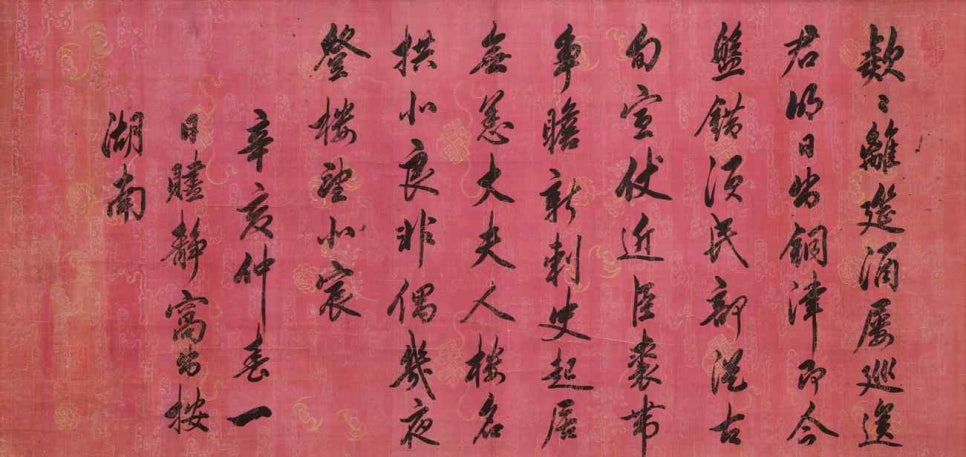
The second Treasure, a calligraphy scroll by King Jeongjo (Jinju 1120), is in Part 2. Jeongjo (1752–1800) wrote it in running script on red silk decorated in gold and silver pigment, and the silk catches the eye before the writing does.
How is the exhibition laid out?
Rather than grouping objects by type, the show follows Kim's own sequence: collecting, showing and giving. It opens with the single jar that started him collecting and ends with a film about the 2001 gift.
The four sections of My Life Museum
- Prologue · Where collecting began
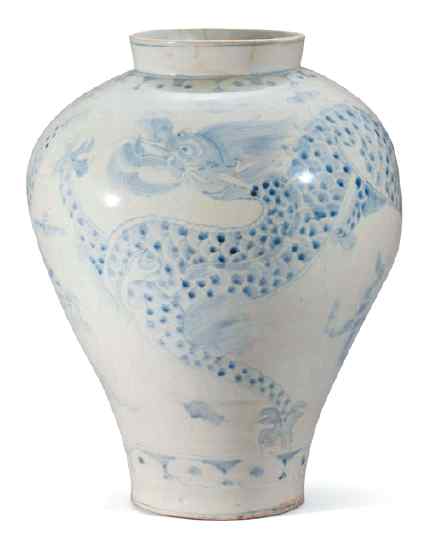
- The blue-and-white porcelain jar with clouds and dragons (Jinju 1070) that started the collection
- Part 1 · Collected, to my unexpected honour and joy
- Paintings lent to a 1986 exhibition at the Museum Yamato Bunkakan in Japan, and the Treasure Eight Views
- Part 2 · Gathered out of longing for home
- Buddhist craft, painting and blue-and-white porcelain first shown in the 1993 catalogue and the 1994 homecoming exhibition, and the Treasure calligraphy by King Jeongjo
- Part 3 · As if I myself had come home
- All three gifts, a room of three moon jars, and a film on the 2001 gift
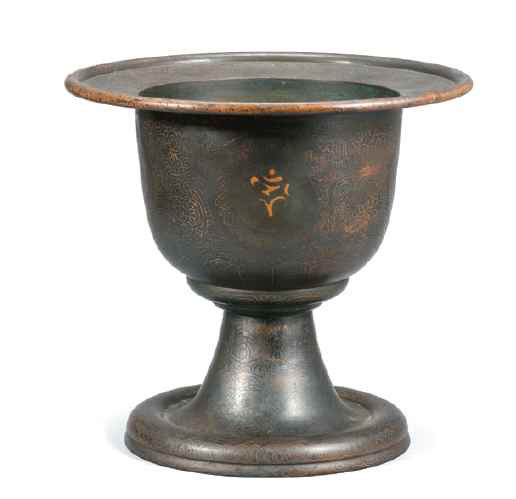
Part 2 also includes Buddhist craft: an illuminated frontispiece from a Goryeo-period sutra, incense burners and water basins. The incense burner below is decorated by cutting grooves into the bronze and hammering gold and silver wire into them — the detail only shows up close.
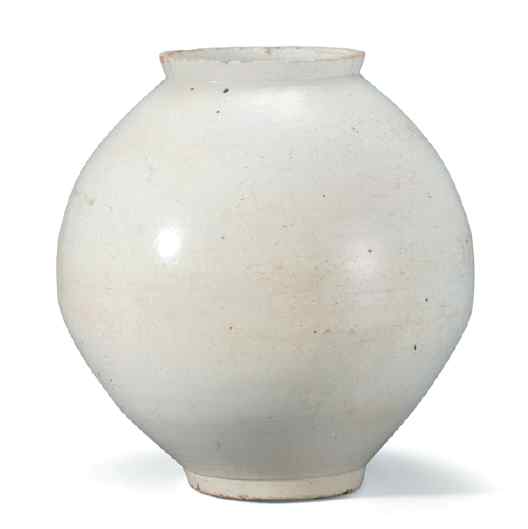
Leave time for the moon-jar room in Part 3. Kim's moon jar sits with others including one given by Dr Lee Byung-chang, three in all. Collectors in the Korean community in Japan are said to have sought moon jars because they recalled the full moon over home, and the room turns that story into a space.
Is it good for children?
Around the galleries are description cards and worksheets made by child curators from the museum's 15th Children's Museum School. Next to the adult labels, there is text written by children for children — in Korean, so it helps Korean-reading families most. Under-7s are also exempt from the fortress fee.
What does it cost, and when is it open?
The first thing to know is that the museum is inside Jinju Fortress. The museum itself charges no admission, and there is no notice of a fee for this exhibition, but you reach it through the fortress ticket gates, and anyone who is not a Jinju resident pays the fortress fee. Parking is run by the fortress, not the museum.
Jinju Fortress individual admission (Jinju National Museum and Jinju City)
- Adults
- KRW 2,000
- Youth and soldiers
- KRW 1,000
- Primary-school children
- KRW 600
- Free
- Jinju residents, under-7s, over-65s, holders of a Korean disability or national-merit card, and others
- Hours: 9 am – 6 pm, the same on weekdays and weekends; last entry 30 minutes before closing
- Closed: every Monday, 1 January, and the day of Seollal and of Chuseok. When a Monday is a public holiday the museum opens and closes on the next weekday instead
- Audio guide: free handsets at the information desk in exchange for an ID (Korean only)
- Contact: Jinju National Museum information desk, 055-740-0698
More people get in free at the fortress gate
Jinju City's own fortress page lists more exemptions than the museum does — residents of eight neighbouring southern-coast cities and counties, residents of sister cities, and anyone wearing hanbok. If one applies to you, show ID or come dressed for it.
Why this show and not the permanent gallery?
A man who left home at eight gathered these paintings and pots, and they are now together inside the fortress of Jinju, the city next to his home town. That is why the 'life' in the title refers to a lifetime rather than a list of objects. A selection of the collection is always on view in the museum's permanent Duam Hall, but 146 entries at once is a scale that will not come round often.
Getting there, and what to expect in English
Jinju is in South Gyeongsang Province, on the south side of the peninsula. KTX trains run from Seoul Station to Jinju Station, and express buses run from Seoul to Jinju; from either, a taxi or city bus takes you to the fortress, which sits on the Namgang River in the centre of town. The museum is inside the walls, so you pass a fortress ticket gate first. The museum has an English website with hours and fees, and the fortress itself is worth the entry fee — its walls and the Chokseongnu pavilion over the river are the main sights. Inside the exhibition, expect Korean-first labelling; the audio guide is Korean only and no English tour has been announced, so if you want one, contact the desk well ahead.
Frequently asked questions
- Q. When is My Life Museum on at Jinju National Museum?
- From 22 September 2026 to 28 February 2027, in the Special Exhibition Gallery. The museum is closed on Mondays, 1 January, and the day of Seollal and of Chuseok.
- Q. How much does Jinju National Museum cost?
- The museum charges no admission, and no fee has been announced for this exhibition. Because the museum is inside Jinju Fortress, visitors who are not Jinju residents pay the fortress fee: KRW 2,000 for adults, KRW 1,000 for youth and soldiers, KRW 600 for primary-school children.
- Q. Is the original Eight Views of the Xiao and Xiang Rivers on display?
- Yes. The original Treasure (Jinju 6330) hangs in Part 1, its first showing in Jinju since 2011. Panels may be rotated during the run, so check with the museum on 055-740-0698 if you are going for a particular panel.
- Q. Do I need to book?
- No. Individual visitors walk in; you pay the fortress fee at the gate if you are not a Jinju resident. Only groups and docent tours are booked, through the museum's Korean-language website.
- Q. Is it worth going if I do not read Korean?
- Yes, if you come for the objects. The two Treasures and the moon-jar room speak for themselves, and the fortress around the museum is a sight in its own right. But the audio guide is Korean only and the exhibition's story is told mainly in Korean labels, so read up first — or ask the information desk about a foreign-language tour in advance.
Editor's note · Kang Shin-wook
For anyone travelling in the south-east of Korea who wants one museum with real paintings rather than replicas, and for anyone who reads Korean ink landscape as a reason to travel. Hours and fees for the other national museums are compared in our national museums guide; the flagship in Seoul is covered in National Museum of Korea.
Sources
- Official notice (Korean)
- Jinju National Museum special exhibition page (Korean)
- Jinju National Museum visitor information and fortress fees (Korean)
- Jinju City: Jinju Fortress admission and exemptions (Korean)
- Jinju National Museum hours and admission (English)
Written in our own words from the sources above, never copied from them, and every date and price checked against at least two pages. The originals are in Korean. Spotted a mistake? Ask for a correction.