Exhibition·National Palace Museum of KoreaOn nowFree
Ahn Jung-geun's 'cannon' calligraphy at the Palace Museum — free to 27 Dec
Summary
A piece of calligraphy Ahn Jung-geun wrote in Lüshun Prison in March 1910, days before his execution — eight characters meaning 'international law is no match for cannons' — is on public view for the first time at the National Palace Museum of Korea in Seoul, from 27 October to 27 December 2026, after being brought back from Japan in 2025. The exhibition, 'Dokdae: The Eight Characters Ahn Jung-geun Left Behind', shows this single scroll alone in a darkened room. Entry is free with no booking, and the museum stays open until 9pm on Saturdays and on the last Wednesday of the month. The museum's own exhibition page gives its sections English titles; there is no catch beyond the Monday closing once a month.
Article
In short
- The National Palace Museum of Korea's special exhibition 'Dokdae (獨對): The Eight Characters Ahn Jung-geun Left Behind' runs from Tuesday 27 October to Sunday 27 December 2026 in Special Exhibition Gallery II on the second floor.
- Entry is free and there is no booking. On Saturdays and the last Wednesday of each month the museum stays open until 9pm (last entry 8:30pm).
- There is a single object: the calligraphy 'Manguk gongbeop buryeo daepo' (萬國公法不如大砲), which Ahn Jung-geun wrote in Lüshun Prison in March 1910. It was repatriated from Japan in November 2025 and this is its first public showing.
- The museum closes on the last Monday of the month (the next day if that is a public holiday) — during the exhibition, that means 30 November.
- Nothing needs Korean to get in: walk in from Gyeongbokgung Station (Line 3), which connects directly to the museum. The exhibition page gives the work its English title, 'International Law Is No Match for Cannon'.
The National Palace Museum of Korea, part of the Korea Heritage Service, has opened the special exhibition 'Dokdae (獨對): The Eight Characters Ahn Jung-geun Left Behind' to mark the 117th anniversary of Ahn Jung-geun's assassination of Itō Hirobumi at Harbin. Its subject is eight characters meaning 'international law is no match for cannons'. Shown only to the press in August at Jungmyeongjeon Hall in Deoksugung Palace, the calligraphy can now be seen by anyone, free of charge. It is the only object in the room: you walk through a darkened corridor and stand face to face with it alone, which is what 'dokdae' — a private audience — refers to.
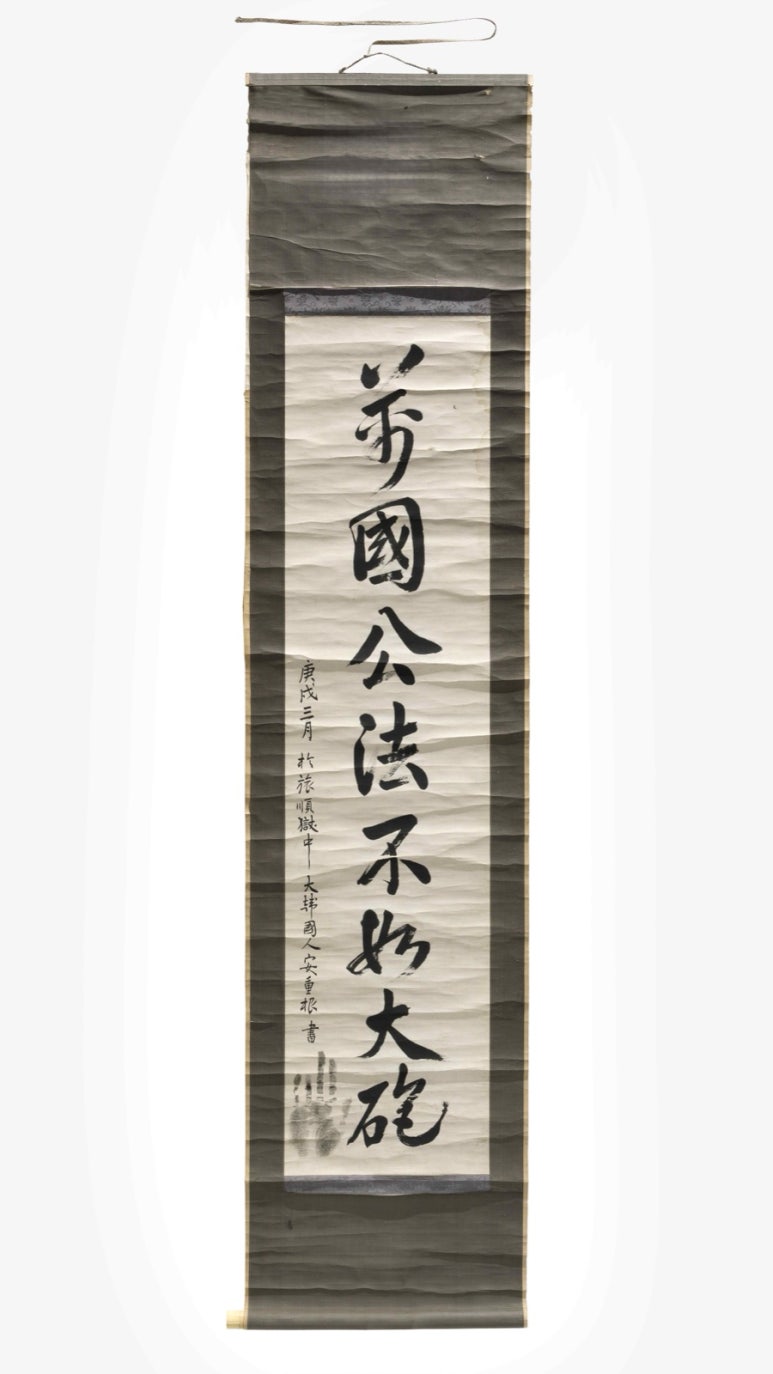
What does 'Manguk gongbeop buryeo daepo' mean?
Manguk gongbeop (萬國公法, 'the public law of all nations') was the title of an international-law treatise translated in Qing China that reached Korea in the late Joseon period; at the time it stood for modern international law itself. The eight characters read: 'international law is no match for cannons.' The Korea Heritage Service says they carry Ahn's criticism of a world in which international law bent to the power of strong states and could not protect the sovereignty of weak ones.
The context is his trial. After shooting Itō at Harbin Station on 26 October 1909, Ahn argued that he had acted as a lieutenant general of the Korean Righteous Army in a war, and demanded to be tried under international law. Japan refused, prosecuted him for simple murder, and he was sentenced to death in February 1910. He wrote this piece the following month, a few days before his execution on 26 March.
The origin of the phrase rests on one source
The Korea Heritage Service's August press release added that the phrase derives from words of the Japanese thinker Fukuzawa Yukichi (1835–1901). The museum's exhibition page does not repeat this, so read it as the press release's interpretation rather than a settled fact.
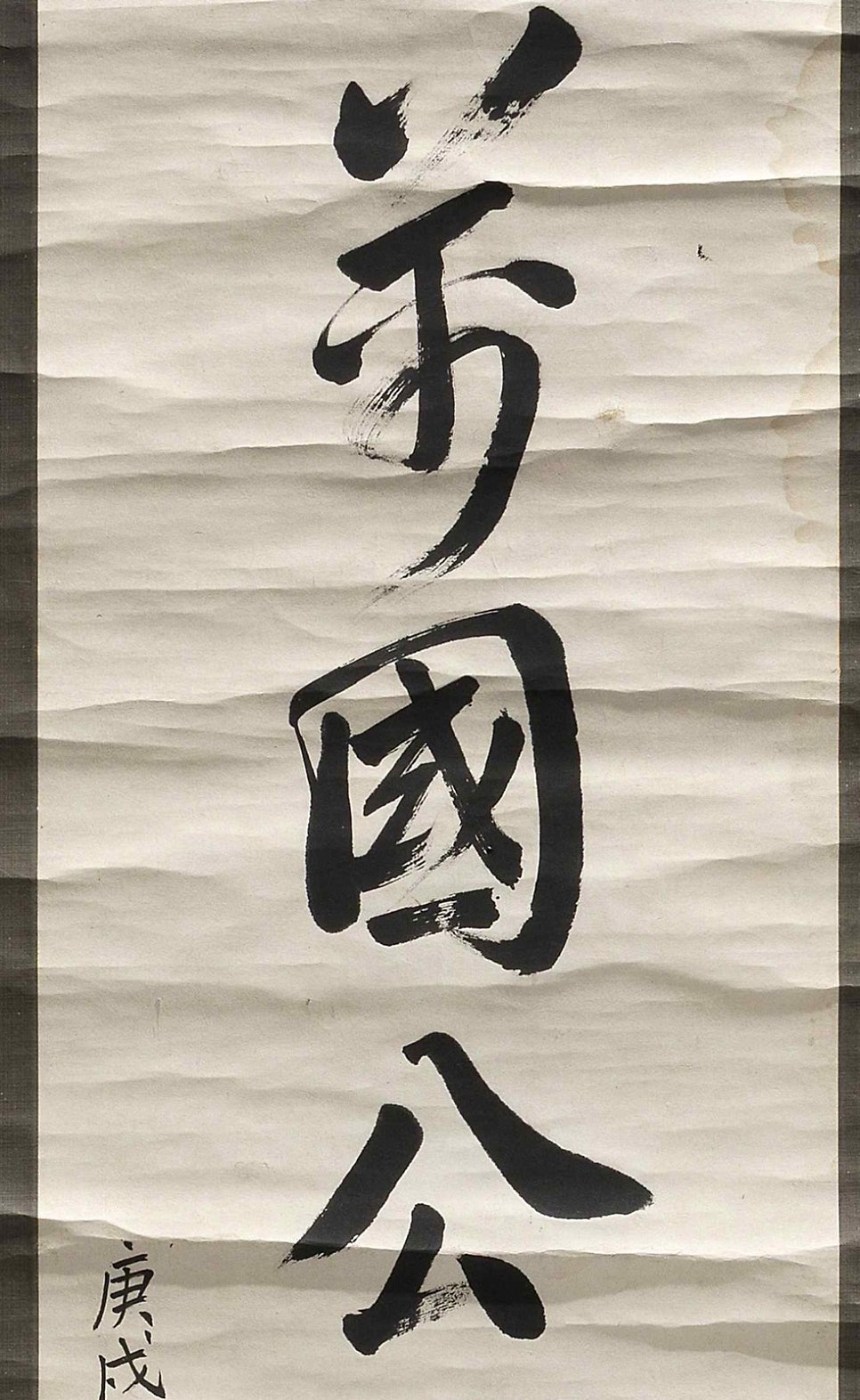
Why is it judged to be genuine?
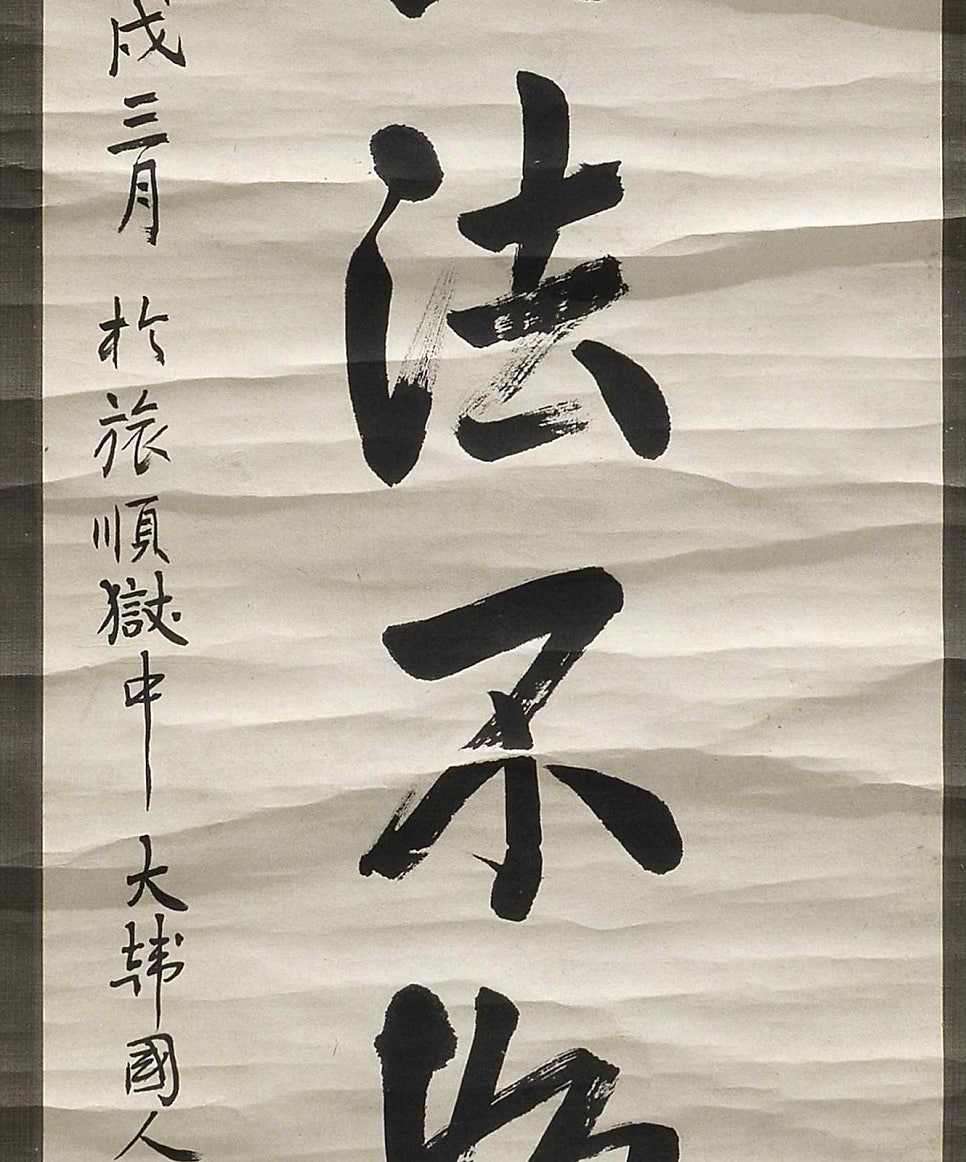
On the left is the inscription 'Written by Ahn Jung-geun, a Korean, in Lüshun Prison, third month of the gyeongsul year (1910)' (庚戌三月 於旅順獄中 大韓國人 安重根 書), and beneath it the palm print that marks Ahn's calligraphy. The writing is in running script, mixed with regular and cursive forms, set down in a single sweep.
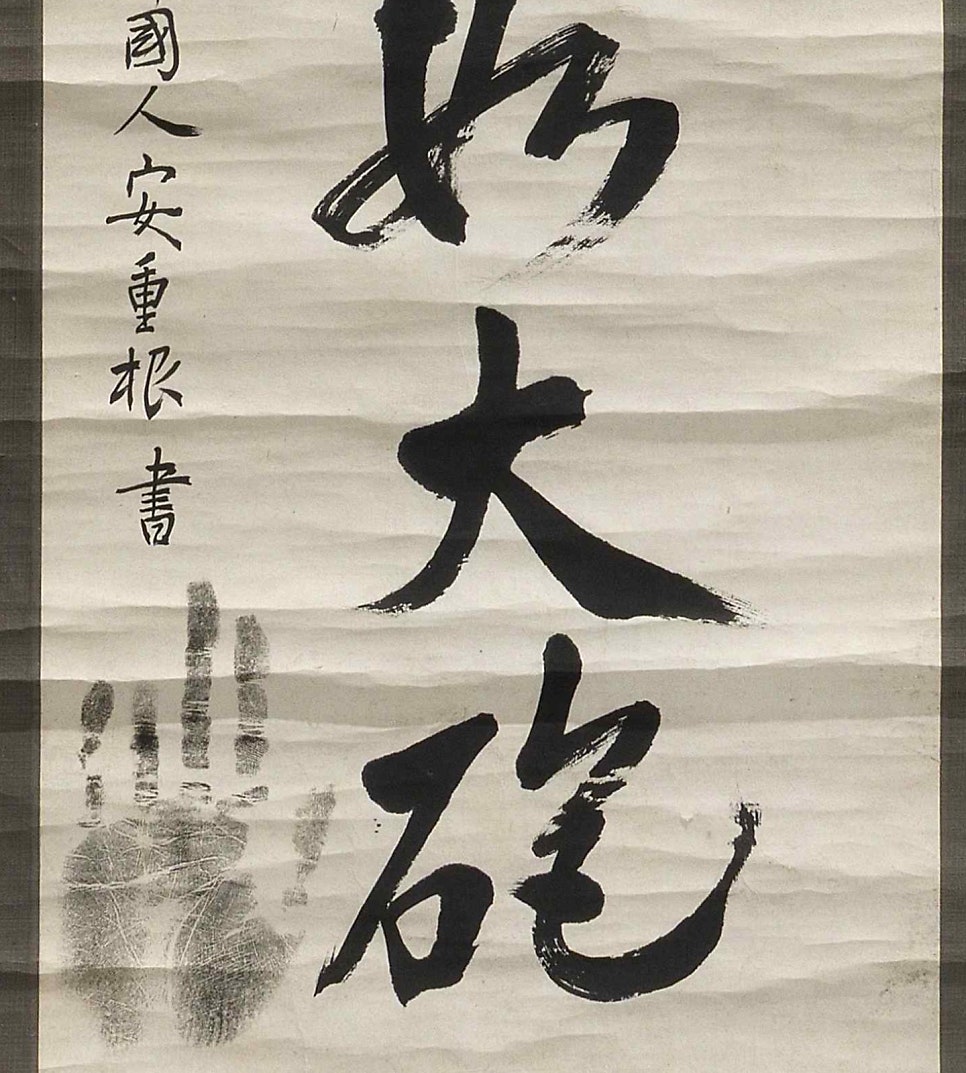
The Korea Heritage Service gives three grounds for authenticity: writing man (萬) in cursive is the same habit seen in 'Hwanggeum baengmannyang buryeo ilgyoja', held by the National Museum of Korean Contemporary History; the brushwork, character shapes and speed of the stroke closely match Ahn's pieces already designated as Treasures; and the palm print matches. The museum's exhibition page says around 70 pieces of Ahn's calligraphy survive, 31 of them designated Treasures.
How did it come back after 116 years?
What adds to its value is an ink inscription on the back of the scroll. It recounts the events from the assassination to the execution and records that the piece was held by Kurihara Sadakichi (?–1941), warden of Lüshun Prison, then passed to a man who signed himself only with a pen name (平門狂生 雷峽逸人) and had it mounted and kept it. Kurihara is remembered in several anecdotes for treating Ahn humanely in prison. The museum notes that the inscription also contains errors, such as dating the execution to 'June of Meiji 43 (1910)'.
Its existence first came to light in May 2025, when the Overseas Korean Cultural Heritage Foundation heard of it through its network in Japan. After research and negotiation it was brought to Korea that November, funded by the national Lottery Fund. It was first shown at a press viewing at Jungmyeongjeon Hall, Deoksugung, on 13 August 2026; this exhibition is its first public display.
About the work (Korea Heritage Service press release)
- Made
- March 1910, Lüshun Prison
- Material
- Paper
- Size
- Overall 196.8 × 44.8 cm; written area 135.4 × 32.3 cm (height × width)
- Script
- Running script, mixed with regular and cursive
- Repatriated
- Brought to Korea in November 2025 (Overseas Korean Cultural Heritage Foundation)
- First shown
- Press viewing at Jungmyeongjeon Hall, Deoksugung, 13 August 2026
How is the gallery laid out?
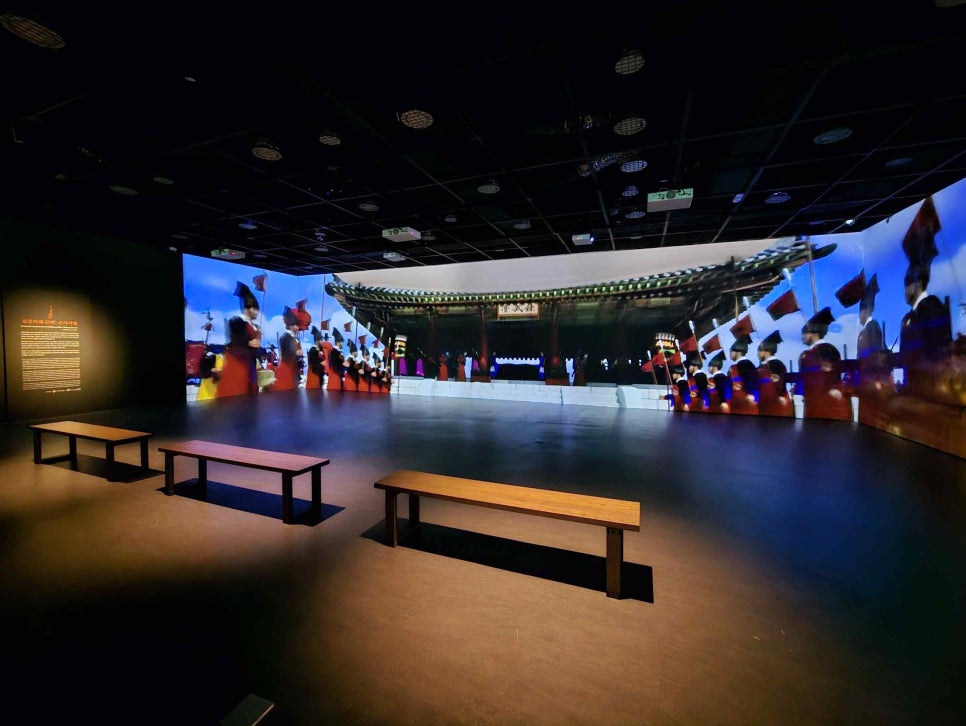
The whole room is built around one object. You pass through a deliberately dark corridor to stand before the lit calligraphy, and at the exit there is an interactive video space: put your hand against Ahn's palm print on the touchscreen and leave a message about the peace you hope for, and it scrolls across a large screen in vertical writing. With a single piece on show the visit is short, so pair it with the museum's permanent galleries of Joseon royal artefacts in the same building.
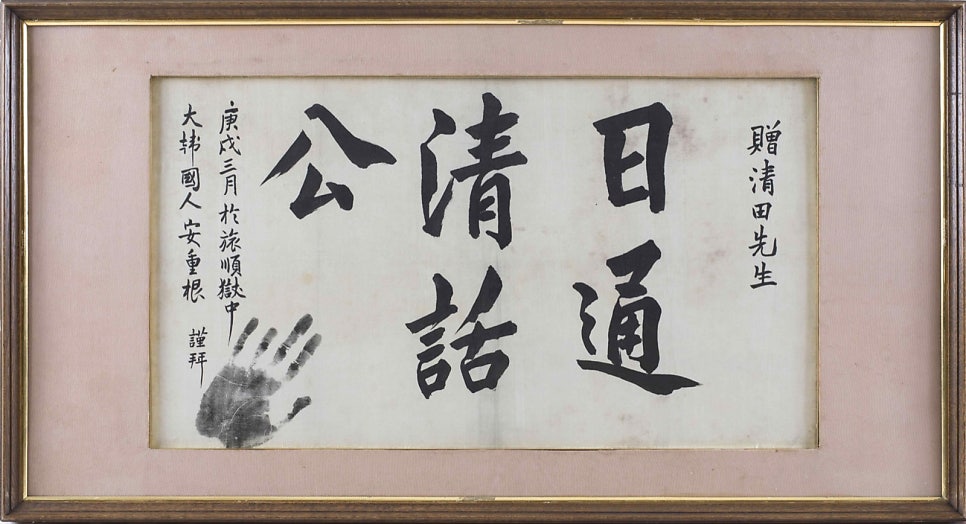
The August press viewing also showed, for comparison, the Treasure 'Calligraphy by Ahn Jung-geun — Iltong cheonghwa gong' (日通淸話公), a framed silk piece Ahn wrote in March 1910 for Kiyota, the head warder at Lüshun Prison; it too bears his palm print. Neither the press release nor the exhibition page says whether it is in this exhibition.
Before you go
- Hours: Mon–Fri and Sun 09:30–17:30 (last entry 17:00); Saturdays and the last Wednesday of the month 09:30–21:00 (last entry 20:30).
- Closed: the last Monday of each month (the next day if it is a public holiday), 1 January, and Seollal and Chuseok days. During the exhibition the closing day is 30 November.
- Admission: free, according to both the Korea Heritage Service press release and the museum's visitor information.
- Location: Special Exhibition Gallery II, 2nd floor, National Palace Museum of Korea, on the west side of Gyeongbokgung (to the left of Gwanghwamun Gate). Gyeongbokgung Station on Line 3 connects directly to the museum.
Getting there, and what is in English
Take Seoul Subway Line 3 to Gyeongbokgung Station; the station's underground passage leads straight to the National Palace Museum, so you do not even need to go outside. There is no ticket or booking, so a foreign phone number or card never comes into it. The exhibition page names the work in English — 'International Law Is No Match for Cannon' — and gives its sections English headings, and the museum's permanent galleries next door are labelled in English. Because the exhibition is one object rather than a run of captions, the experience depends less on reading than most: the scroll, the palm print and the darkened approach speak for themselves. If you have time, Gyeongbokgung is in a free-admission period until 15 November.
Frequently asked questions
- Q. Until when is the Ahn Jung-geun exhibition 'Dokdae' at the National Palace Museum?
- From Tuesday 27 October to Sunday 27 December 2026, in Special Exhibition Gallery II on the second floor of the National Palace Museum of Korea.
- Q. Is the Ahn Jung-geun calligraphy exhibition free? Do I need to book?
- It is free and needs no booking. Both the Korea Heritage Service press release and the museum's visitor information give admission as free.
- Q. What does 'Manguk gongbeop buryeo daepo' mean?
- 'International law is no match for cannons.' Ahn Jung-geun demanded a trial under international law but was sentenced to death for simple murder; he wrote these words in Lüshun Prison in March 1910, criticising an international law that gave way to force.
- Q. Can I see it on a weekend evening?
- On Saturdays the museum is open until 9pm (last entry 8:30pm), and on the last Wednesday of each month until 9pm too. On Sundays it closes at 5:30pm.
- Q. How did this Ahn Jung-geun calligraphy come back to Korea?
- The Overseas Korean Cultural Heritage Foundation learned of it through its network in Japan in May 2025, researched and negotiated its return, and brought it to Korea in November 2025. It was first shown to the press in August 2026.
- Q. Is it worth going if I do not read Korean?
- Yes. Entry is free and needs no booking, the single scroll and palm print are striking without translation, and the exhibition page gives the work and its sections English titles. You will miss the detail of the panels if they are in Korean only, but this article covers the story they tell.
Editor's note · Kang Shin-wook
For anyone in central Seoul with an hour to spare near Gyeongbokgung, and for visitors interested in the independence movement. Museum hours and the permanent galleries are in our National Palace Museum guide, and other dated exhibitions are on the events board.
Sources
- Official notice (Korean)
- National Palace Museum of Korea — 'Dokdae' special exhibition page (Korean, with English titles)
- Korea Heritage Service press release on the return of 'Manguk gongbeop buryeo daepo', 13 August 2026 (Korean and English)
Written in our own words from the sources above, never copied from them, and every date and price checked against at least two pages. The originals are in Korean. Spotted a mistake? Ask for a correction.