Exhibition·Iksan National MuseumIn 5 daysFree
Jeseoksa Revealed at Iksan National Museum — free, 10 Nov–9 Feb
Summary
From 10 November 2026 to 9 February 2027, Iksan National Museum's special exhibition gallery hosts Jeseoksa Revealed: Illuminating a Royal Temple of Baekje, on the temple King Mu built beside his palace in the seventh century. It centres on a record of the temple burning after a lightning strike in 639, preserved in a text kept in Kyoto, and on the clay figures excavated from a dump where the debris was thrown. Admission is free and no booking is needed. The museum's website has been down for maintenance since 26 October and the list of objects on show has not been published, so check hours and contents before you travel.
Article
In short
- Iksan National Museum's special exhibition Jeseoksa Revealed: Illuminating a Royal Temple of Baekje runs from Tuesday 10 November 2026 to Tuesday 9 February 2027 in the special exhibition gallery.
- The subject is Jeseoksa, a royal temple King Mu of Baekje built near his palace. The museum describes three sections: rebuilding the temple (pagoda foundation stone, walls, roof tiles), clay figures of heavenly beings, monks and demons, and the written record in the Gwanseeum eungheomgi.
- That text records that the temple burned after a lightning strike in 639, and clay figures thought to have been thrown out after that fire were found in a dump north of the temple site.
- Iksan National Museum charges no admission and is closed on Mondays. Its website has been under maintenance since 26 October, so the visiting details here come from its archived pages; call +82-63-830-0900 before travelling.
- Nothing needs booking or Korean to get in; the museum has kept English leaflets, but English labels for this exhibition have not been announced.
Jeseoksa Revealed, opening on 10 November at the museum beside the Mireuksa temple site, is the first exhibition to take on Iksan's other great Baekje temple, Jeseoksa. It was a royal temple built near the palace under King Mu (r. 600–641), and it is one of very few Baekje temple sites whose founding and destruction can both be placed from written sources. The museum says it brings objects that stayed in Iksan together with a record that survived in Japan, and the gallery includes a media-art installation. The list of objects has not been published before opening, so this article concentrates on the story worth knowing before you go.
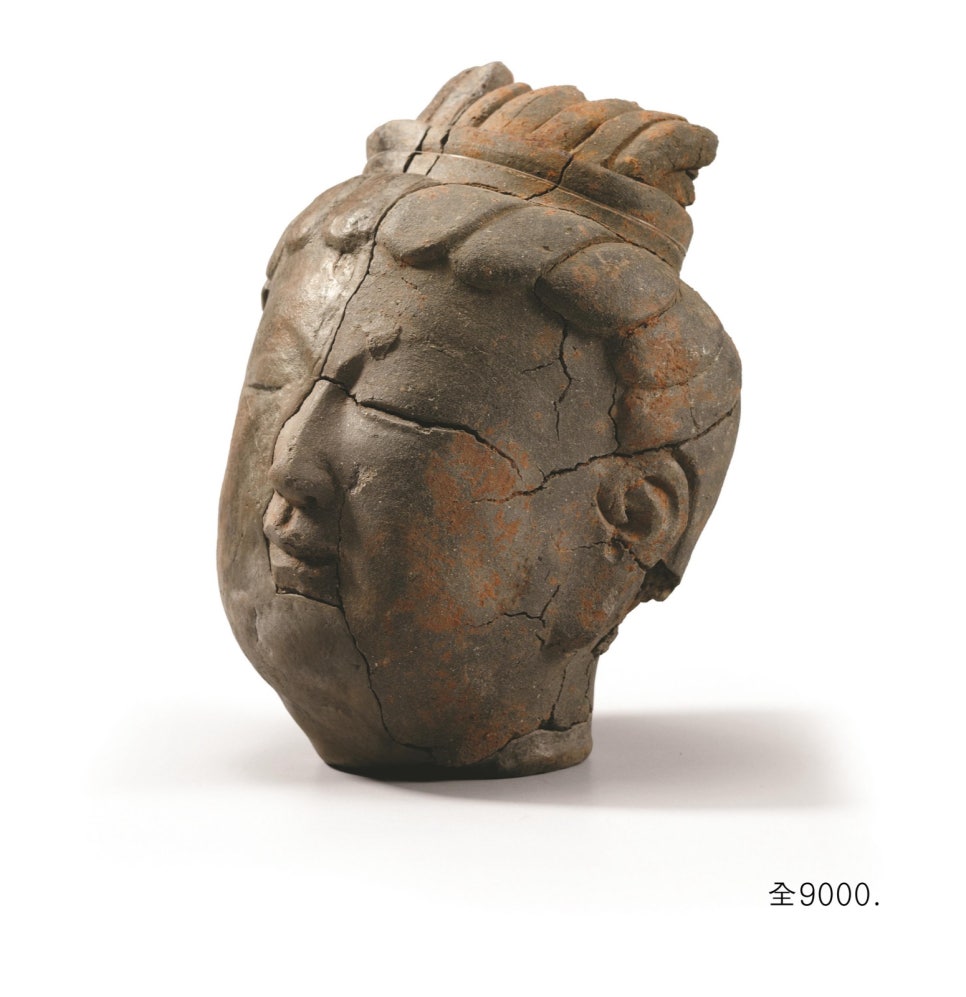
Clay head of a heavenly being (excavated from the Jeseoksa debris dump, Baekje, Jeonju 9000)
Photo: Jeonju National Museum · KOGL Type 1 · Original
What kind of temple was Jeseoksa?
King Mu built Jeseoksa close to his palace at Wanggungpyeong (today's Wanggung-ri, Iksan), and it is said to have enshrined Indra (Jeseokcheon), a guardian deity of Buddhism. A roof-tile fragment stamped with the name Jeseoksa (帝釋寺) was found near what is thought to be the pagoda site and confirmed the temple's name. The site was designated a Historic Site on 12 May 1998 and covers 25,432 square metres at 247-1 Wanggung-ri, Wanggung-myeon, Iksan.
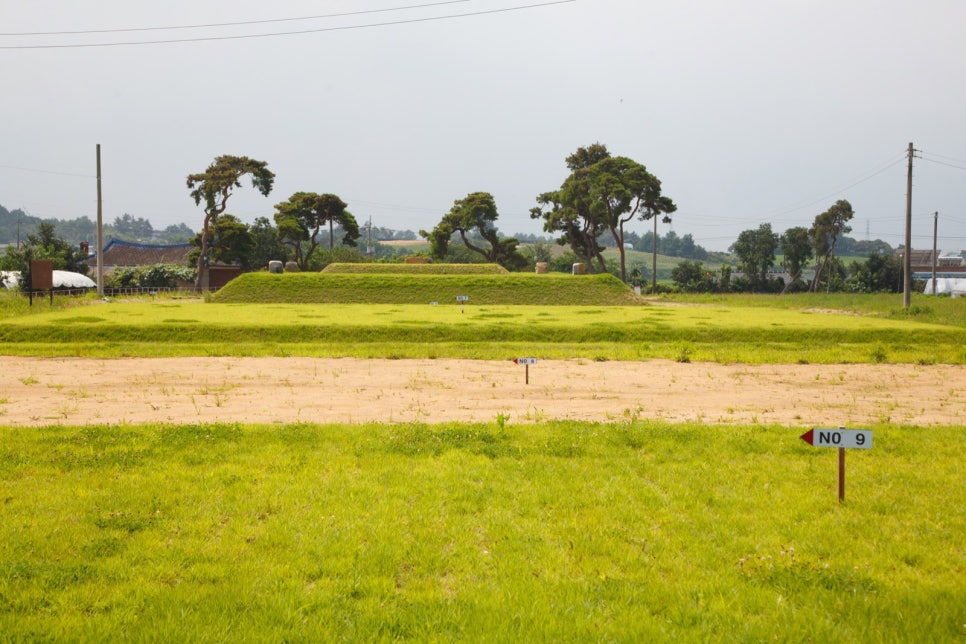
Jeseoksa Temple Site, Iksan (photographed 2015)
Photo: Korea Heritage Service · KOGL Type 1 · Original
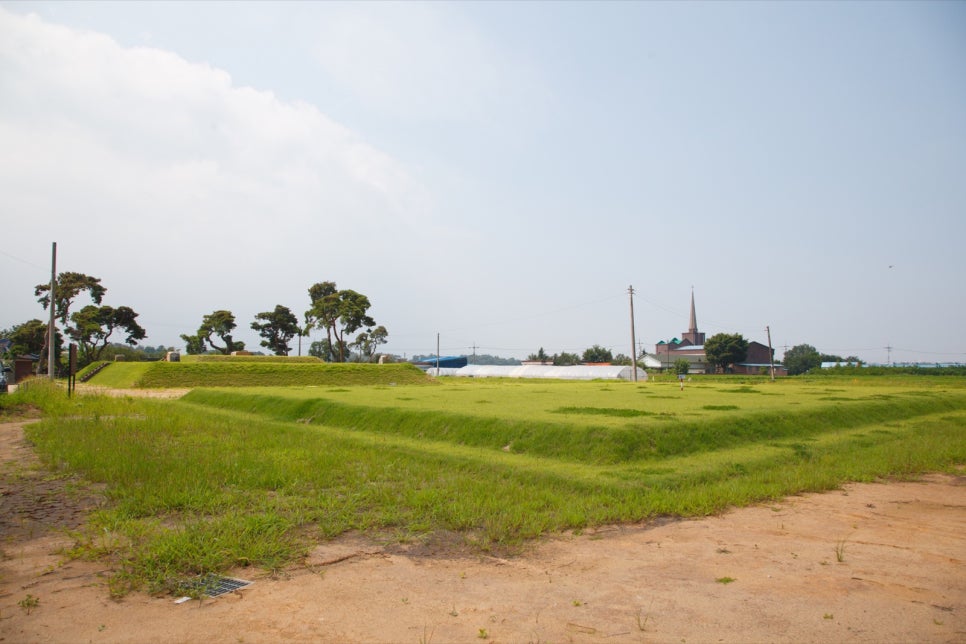
Platforms at the Jeseoksa Temple Site with the landscape beyond (photographed 2015)
Photo: Korea Heritage Service · KOGL Type 1 · Original

Roof tile bearing the name Jeseoksa (帝釋寺)
Photo: Korea Heritage Service · KOGL Type 1 · Original
How was the temple laid out?
Jeseoksa follows the classic Baekje plan of one pagoda and one main hall: middle gate, wooden pagoda, main hall and lecture hall in a single line, and the Korea Heritage Service describes it as the largest of that type. It is also the first Baekje site to yield a concave eaves-end tile. According to the museum, the exhibition's first section reconstructs the temple from the pagoda's foundation stone, wall fragments and tiles.

Foundation stones at the wooden pagoda site, Jeseoksa (photographed 2015)
Photo: Korea Heritage Service · KOGL Type 1 · Original

Convex and concave eaves-end tiles from the main hall site at Jeseoksa
Photo: Korea Heritage Service · KOGL Type 1 · Original
How do we know about the fire of 639?
The exhibition is built on records and excavation supporting each other. The Gwanseeum eungheomgi, a collection of miracle tales kept at Shōren-in in Kyoto, says that in the 40th year of King Mu's reign (639) lightning burned the whole temple, but the Diamond Sutra engraved on bronze plates and the relics placed beneath the pagoda survived and were enshrined again once the temple was rebuilt. The museum presents this book as the key object of the third section.
The ground has its own evidence. In a dump north of the temple site, excavators found heaps of clay Buddhist and guardian figures along with burnt roof tiles, and the e-museum catalogue entries date the discarded figures to the clean-up after the fire of 639.
Sources disagree on how far away the dump is
The e-museum catalogue puts the dump 500 metres from the temple site; the information-panel text on the Heritage Portal says 400 metres to the north. We have written simply that it lies north of the site rather than choose between them.
What do the clay figures from the dump look like?
The best-known clay figures from the dump belong to Jeonju National Museum. The museum says its second section compares heavenly beings, monks and demons from Jeseoksa with clay sculpture in Japan, but whether the pieces below are on show cannot be confirmed until the object list is published. They are shown here because they explain the temple.
Clay figures from the Jeseoksa debris dump (from e-museum catalogue entries)
- Head of a heavenly being (Jeonju 9000)
- 13.2 cm long. It resembles the clay Indra at Hōryū-ji in Japan and is sometimes identified as Indra; the catalogue praises its graceful, gentle Baekje style.
- Head of a demon (Jeonju 9303)
- 20.5 cm long. The contorted face of a demon trampled underfoot by a guardian king.
- Demon head (Jeonju 9345)
- 7.5 cm wide. Mouth wide open in an expression of pain.
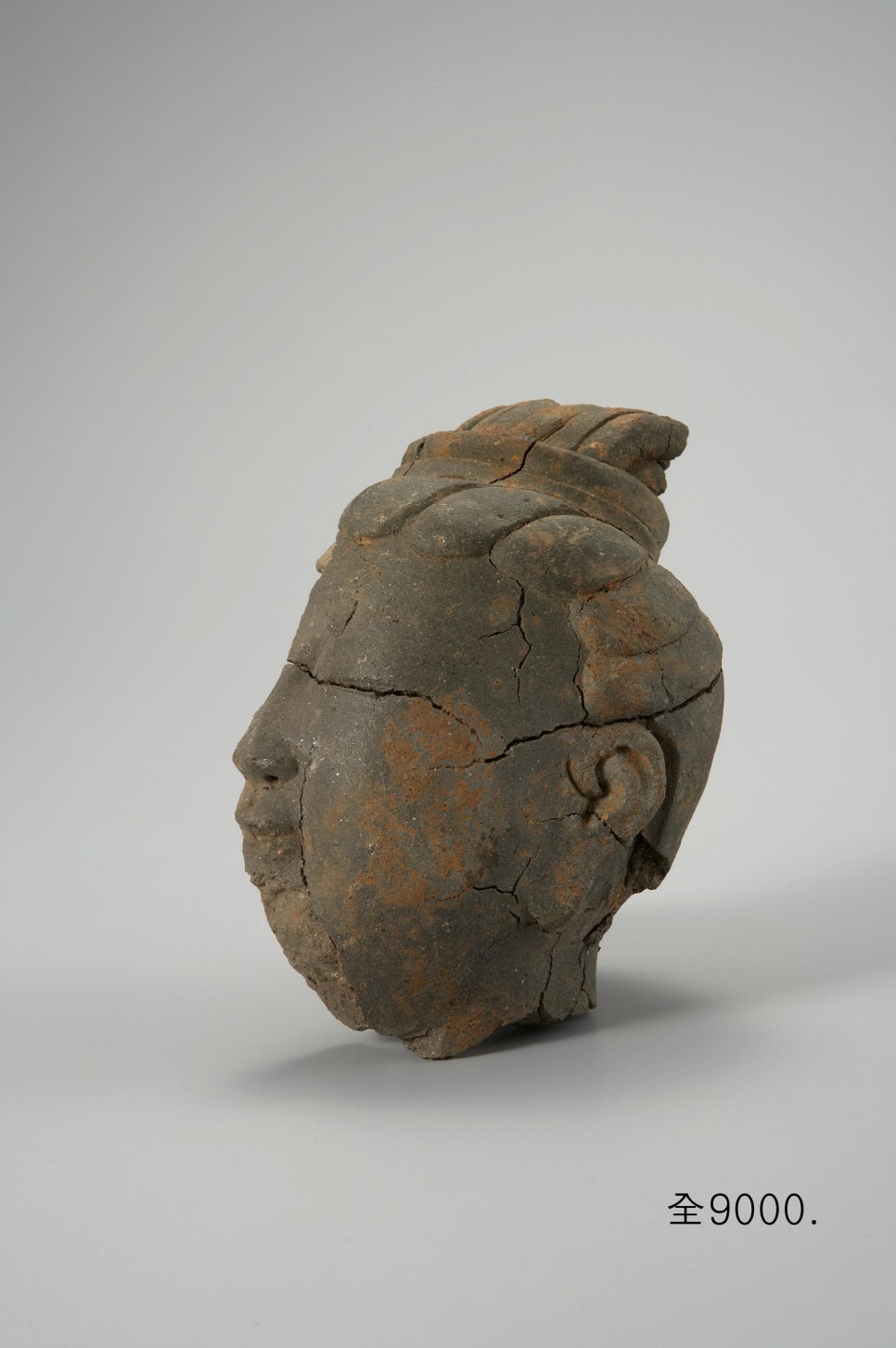
Clay head of a heavenly being, side view (Jeonju 9000)
Photo: Jeonju National Museum · KOGL Type 1 · Original

Clay head of a demon (excavated from the Jeseoksa debris dump, Jeonju 9303)
Photo: Jeonju National Museum · KOGL Type 1 · Original
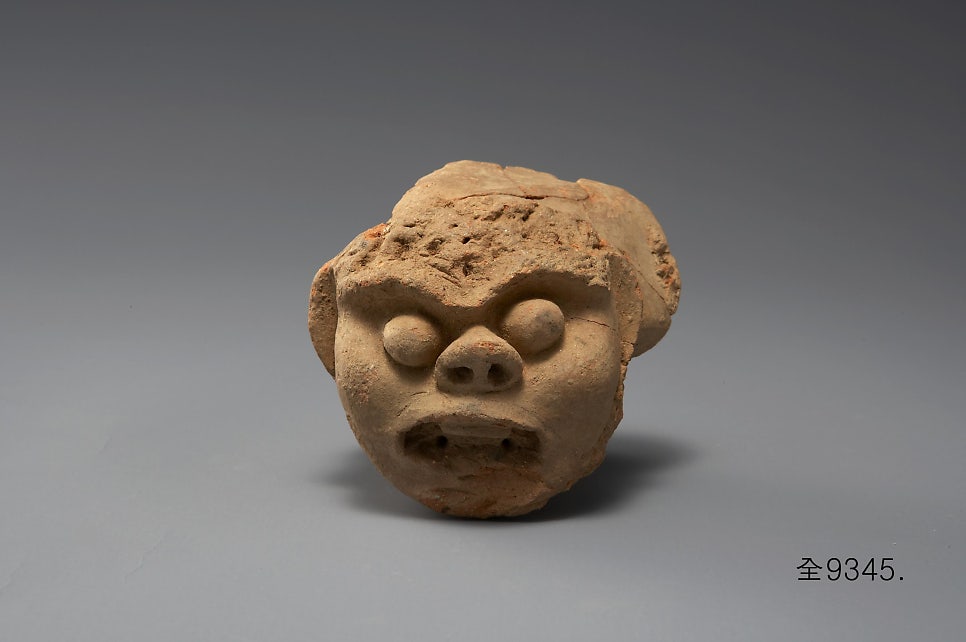
Clay demon head (Baekje, excavated in Iksan, Jeonju 9345)
Photo: Jeonju National Museum · KOGL Type 1 · Original
How does it relate to the Wanggung-ri pagoda treasures?
The Korea Heritage Service points to similarities between the Jeseoksa finds and the reliquary treasures recovered from the five-storey stone pagoda at Wanggung-ri when it was dismantled for repair in 1965. The gold Diamond Sutra plates from that pagoda (a National Treasure, 19 sheets) recall the bronze-plate sutra in the Jeseoksa record. The plates belong to the National Museum of Korea, and whether they are in this exhibition has not been confirmed.

Gold Diamond Sutra plates from the reliquary of the five-storey stone pagoda at Wanggung-ri, a National Treasure (Sinsu 2129) — shown for comparison; not confirmed for this exhibition
Photo: National Museum of Korea · KOGL Type 1 · Original
The Iksan components of the Baekje Historic Areas World Heritage Site (inscribed 2015) are the Wanggung-ri site and the Mireuksa temple site; Jeseoksa is not one of them. The three places are 10 to 20 minutes apart by car, though, so after the exhibition you can see the Wanggung-ri palace site and the empty Jeseoksa field the story comes from.
Visiting details
- Admission — free (from the museum's archived website).
- Hours — weekdays 09:00–18:00 (last entry 17:30), Saturdays and Sundays 09:00–19:00. Closed on 1 January, Lunar New Year's Day, Chuseok Day and every Monday (if a Monday is a public holiday it opens and closes the next weekday instead).
- Website maintenance — the national museums' websites have been down for maintenance since 26 October 2026, so the exhibition page will not load. Dates are confirmed on the National Museum of Korea's list of affiliated-museum exhibitions and the museum's official blog.
- Getting there — 362 Mireuksaji-ro, Geumma-myeon, Iksan. From Iksan Station, take city bus 41 or 60 to the Mireuksaji stop.
- Contact — Iksan National Museum +82-63-830-0900
Jeseoksa Revealed is the story of a 1,400-year-old written record and the clay figures that confirm it. Once the object list is published after opening, check what has actually come to Iksan.
Getting to Iksan, and what to expect in the gallery
Iksan Station is on the Honam high-speed line: KTX trains from Yongsan and SRT trains from Suseo in Seoul take roughly an hour to an hour and a half, and both can be booked in English on the operators' sites with a foreign card. From the station, city bus 41 or 60 runs to the Mireuksaji stop at the museum; a taxi takes about 30 minutes. The museum is free and walk-in. The exhibition's English title appears on the official poster, and the museum has kept English, Japanese and Chinese leaflets, but neither the panels nor an English audio guide for this show has been announced; expect the long texts to be in Korean, with the objects and the media-art room making the case on their own. Allow time for the Mireuksa site next door — it is a World Heritage site, free, and has the oldest surviving stone pagoda in Korea.
Frequently asked questions
- Q. When is the Jeseoksa exhibition at Iksan National Museum?
- From Tuesday 10 November 2026 to Tuesday 9 February 2027, in the special exhibition gallery of Iksan National Museum.
- Q. How much does the Jeseoksa exhibition cost?
- Nothing. Iksan National Museum charges no admission. Its website is under maintenance, so confirm by phone (+82-63-830-0900) before travelling.
- Q. What was Jeseoksa?
- A royal temple that King Mu of Baekje built near his palace in Iksan, said to have enshrined Indra. A text kept in Kyoto records that it burned after a lightning strike in 639.
- Q. Will the clay head of the heavenly being be on show?
- Not confirmed: the object list has not been published. The head belongs to Jeonju National Museum and is the key image on the exhibition's official poster.
- Q. Is it worth going if I do not read Korean?
- Yes, if you are already visiting the Baekje sites in Iksan. Entry is free and walk-in, the objects and media art need no translation, and English leaflets have been available at the museum, but expect the detailed panels to be in Korean.
Editor's note · Kang Shin-wook
For visitors planning a Baekje day in Iksan around the Mireuksa and Wanggung-ri World Heritage sites, which the museum sits beside. Hours and access for the national museums are in our National Museum of Korea guide.
Sources
- Official notice (Korean)
- Iksan National Museum official blog post announcing the exhibition, 26 October 2026 (Korean)
- Korea Heritage Service, Heritage Portal: Jeseoksa Temple Site, Historic Site (Korean)
- Korea Heritage Service, Heritage Portal: on-site information panel text for Jeseoksa Temple Site (Korean)
- e-museum: clay head of a heavenly being, Jeonju 9000 (Korean)
- e-museum: clay head of a demon, Jeonju 9303 (Korean)
- e-museum: clay demon head, Jeonju 9345 (Korean)
- e-museum: gold Diamond Sutra plates from the Wanggung-ri five-storey pagoda, Sinsu 2129 (Korean)
- Yonhap News on the Iksan museum lecture series introducing the exhibition, 24 October 2026 (Korean)
Written in our own words from the sources above, never copied from them, and every date and price checked against at least two pages. The originals are in Korean. Spotted a mistake? Ask for a correction.