Event·Royal Palaces and Tombs CenterEnding soonFree
Changdeokgung Secret Garden: 1828 royal banquet re-enacted — 3–4 Nov, 11am
Summary
On Tuesday 3 and Wednesday 4 November 2026 at 11am, the court banquet that Crown Prince Hyomyeong gave for his mother's 40th birthday in 1828 is performed again at Yeongyeongdang Hall, the house in Changdeokgung's Secret Garden where it originally took place. The performance is free and unreserved for anyone inside the Secret Garden — but the garden itself is a timed, capped tour: you need a Secret Garden ticket (KRW 5,000) on top of the palace ticket (KRW 3,000), and only 100 people enter per slot. Online tickets open at 10am six days before each date on the palace's booking site, which has an English version that takes an e-mail sign-up and a credit card. Cancelled if it rains.
Article
In short
- The restoration performance of the 1828 Yeongyeongdang Jinjakrye banquet takes place on Tuesday 3 and Wednesday 4 November 2026 at 11am, at Yeongyeongdang Hall in Changdeokgung's Secret Garden. It is cancelled if it rains.
- Watching is free and there are no reserved seats — but you must already be inside the Secret Garden, which means a Secret Garden ticket (KRW 5,000 adults, KRW 2,500 ages 7–18) plus a palace ticket (KRW 3,000 adults).
- The Secret Garden admits 100 people per timed slot. 50 tickets per slot go on sale online at 10am six days before the date (28 October for the 3rd, 29 October for the 4th) until the day before; the other 50 sell at the garden ticket booth from 9am on the day.
- The two days have different programmes: Cheopseungmu, Musanhyang, Choehwamu, Hyangnyeongmu and Chungwangho on the 3rd; Mangseonmun, Gongmangmu, Yeongji, Chunaengjeon and Bakjeommu on the 4th. Ten court dances out of the seventeen recorded in the 1828 banquet manual.
- For a visitor who reads no Korean: there is nothing to read during the performance, the palace is signed in English, and the booking site has an English version that signs you up with an e-mail address and takes a credit card. English-guided garden slots run at 10:30, 11:30, 14:30 and 15:30.
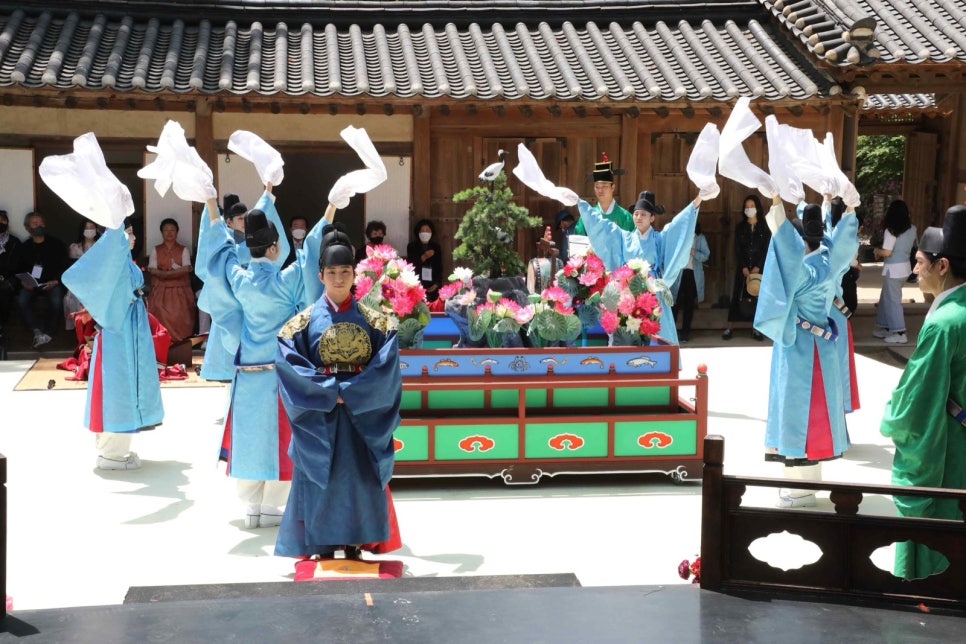
The Changdeokgung Palace Office of the Korea Heritage Service and the World Ethnic Dance Institute at the Korea National University of Arts are staging a restoration performance of the 'Jinjakrye of the muja year of King Sunjo' at Yeongyeongdang Hall on 3 and 4 November. A jinjakrye (進爵禮) was a court ceremony in which officials offered wine and food to the king on a day of royal celebration. This one re-creates the banquet Crown Prince Hyomyeong gave at Yeongyeongdang in the sixth lunar month of 1828 — the 28th year of Sunjo, a muja year in the sexagenary cycle — to mark the 40th birthday of his mother, Queen Sunwon, following the court's own record of the event, the Sunjo muja jinjak uigwe (純祖戊子進爵儀軌). Anyone who is inside the Secret Garden can watch without a further ticket; since the garden is itself a capped, timed-entry area, getting a garden ticket is the whole challenge.
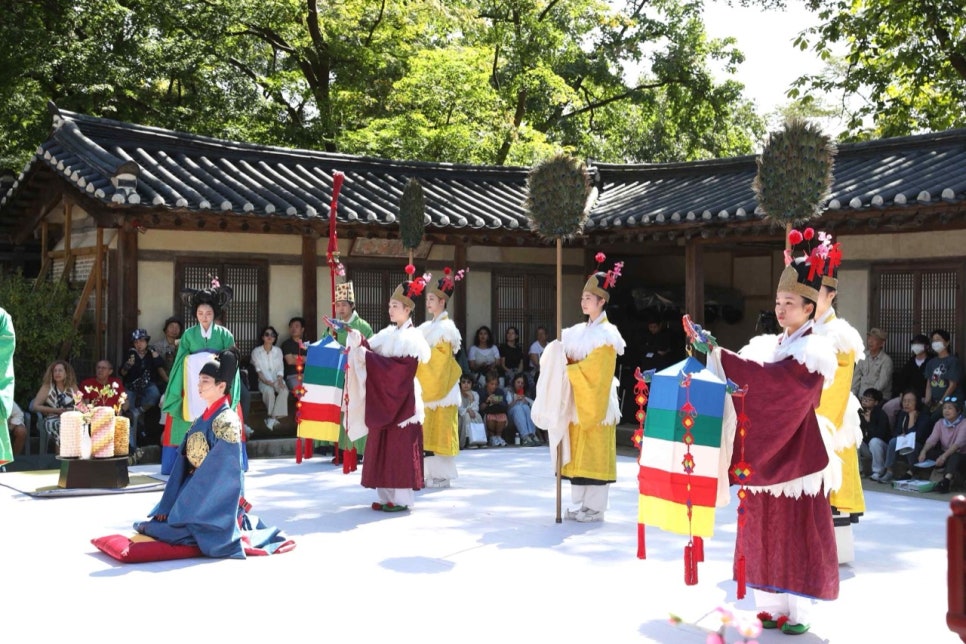
What kind of banquet was the jinjakrye?
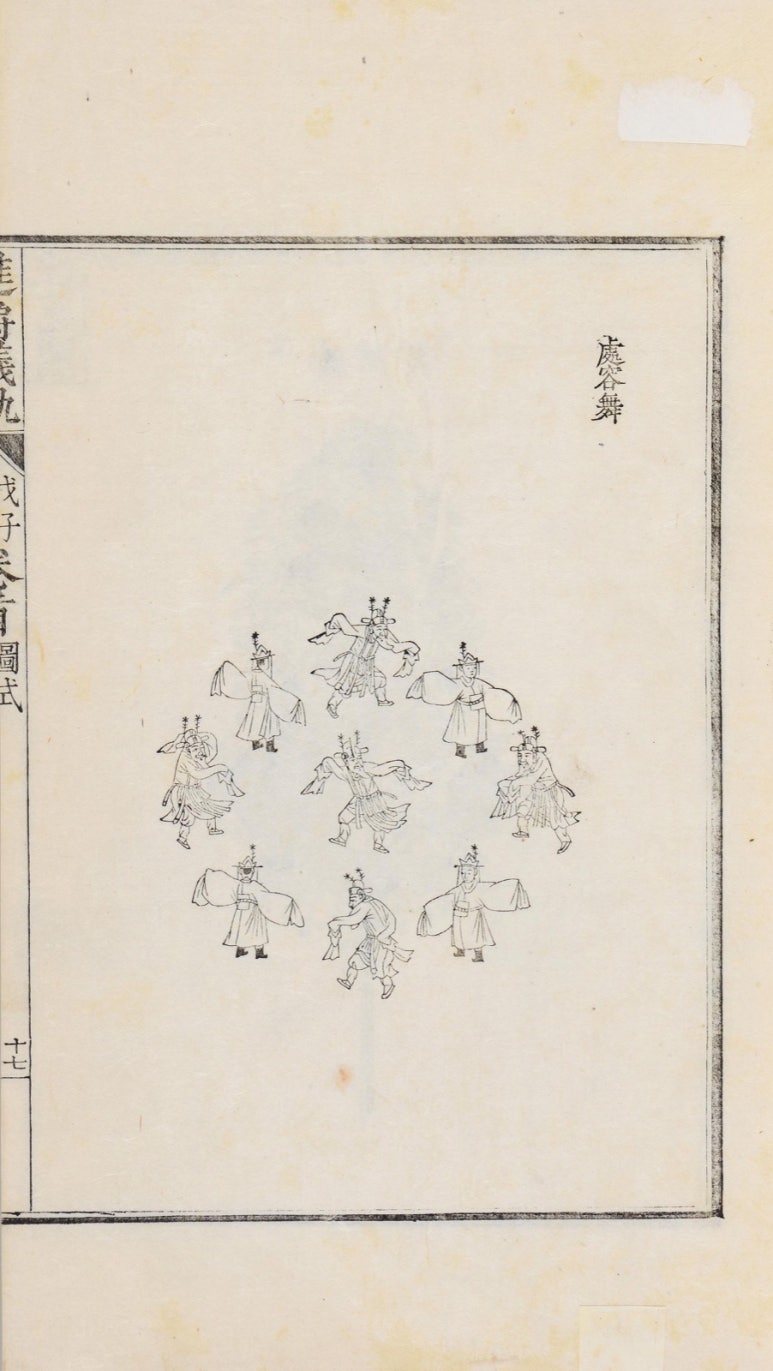
'Muja' is simply the cyclical name of the year 1828. That summer Crown Prince Hyomyeong, who was governing as regent for his father, held a banquet at Yeongyeongdang for the 40th birthday of Queen Sunwon (1789–1857). Because the court compiled an uigwe — an illustrated protocol record — listing the order of ceremony, the dances, the music, the costumes, the dishes and the furnishings, it is possible nearly two centuries later to perform the same sequence in the same building. According to the Korea Heritage Service, the reconstruction is the work of Professor Emeritus Heo Young-il of the Korea National University of Arts and researchers at the World Ethnic Dance Institute, who studied the uigwe text; the Service stresses that it brings together a World Heritage site, Changdeokgung, and a Memory of the World inscription, the Joseon royal uigwe, in one performance.
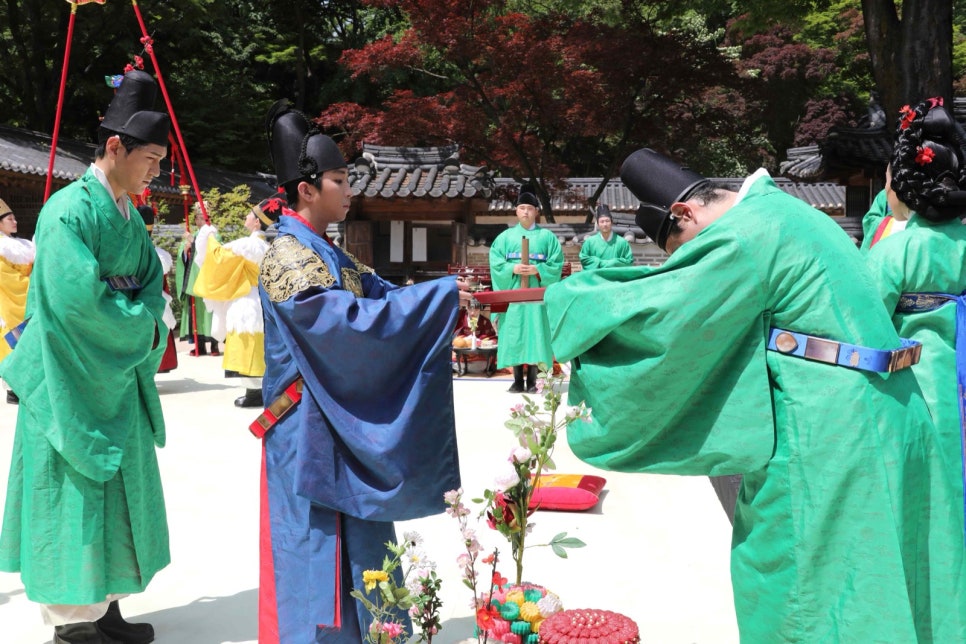
This is not a first. A 2023 Korea Heritage Service press release said the Yeongyeongdang re-enactment began in 2006 and that year's was the ninth; in 2024, over 4–5 September, the full sequence of court dances in the uigwe was restored and a ceremonial robe (myeonbok) reconstructed from Crown Prince Hyomyeong's portrait appeared on stage for the first time. The photograph in this year's press release is from a September 2025 performance, so last year's edition also went ahead. Each year adds newly restored dances, costumes or objects, so no two editions are quite the same.
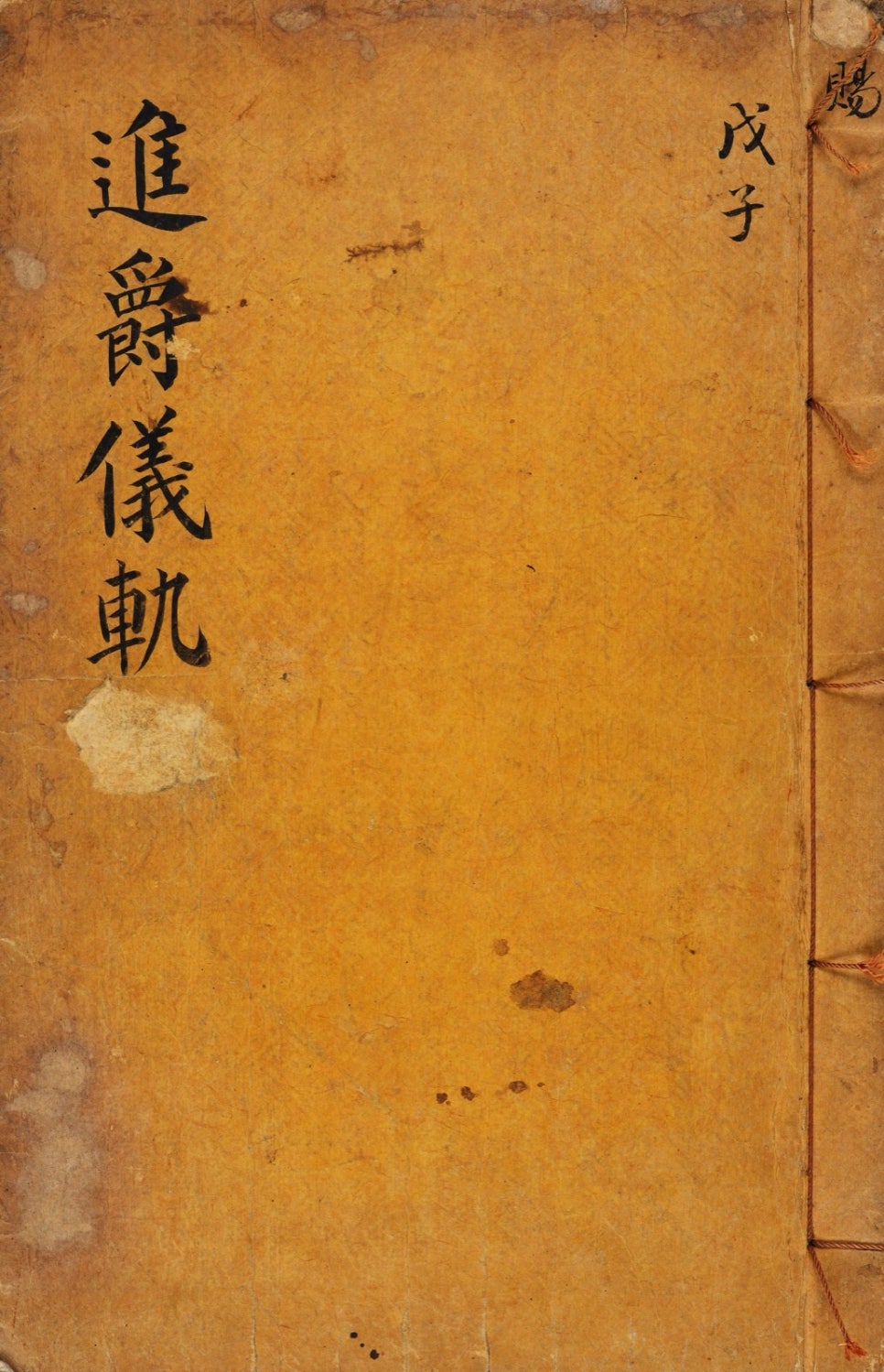
Sources disagree on how many dances the uigwe records
The 2024 and 2026 press releases count seventeen court dances in the Sunjo muja jinjak uigwe; the 2023 release spoke of six dances chosen from twenty-three. The first volume of the uigwe illustrates dances from two banquets that year — one at Jagyeongjeon Hall and one at Yeongyeongdang — so the figure seems to depend on what is counted. This article follows the seventeen used in the last two years.
What is performed on each day — ten dances
This year ten of the seventeen dances are staged, split across the two days. The Changdeokgung Palace Office notice lists which dances fall on which day, so if there is one you want to see you can pick the date. The two programmes do not overlap: one day shows you half.
Programme by day (Changdeokgung Palace Office notice)
- Tue 3 Nov, 11am
- Cheopseungmu (疊勝舞) · Musanhyang (舞山香) · Choehwamu (催花舞) · Hyangnyeongmu (響鈴舞) · Chungwangho (春光好)
- Wed 4 Nov, 11am
- Mangseonmun (望仙門) · Gongmangmu (公莫舞) · Yeongji (影池) · Chunaengjeon (春鶯囀) · Bakjeommu (撲蝶舞)
- Bakjeommu — butterflies fluttering golden wings among spring flowers (the press release's description).
- Chungwangho — a palace glowing gold in the morning sun, as an image of the glory of the throne and a peaceful reign (press release).
- Mangseonmun — according to the 2023 release, four boy dancers with peacock-feather fans; the name means 'the gate from which one gazes at the immortals'.
- Gongmangmu — a sword dance: two boy dancers in battle dress, each with two swords, facing one another.
- Musanhyang — a solo danced on a raised platform shaped like a bed.
- Chunaengjeon — a solo modelled on a nightingale, traditionally attributed to Crown Prince Hyomyeong's own time.
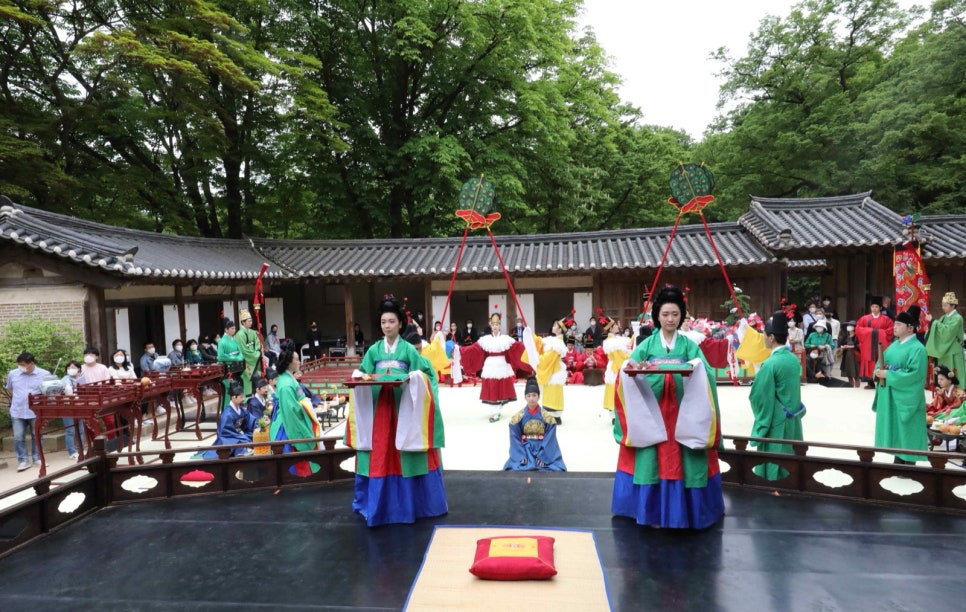
What is Yeongyeongdang?
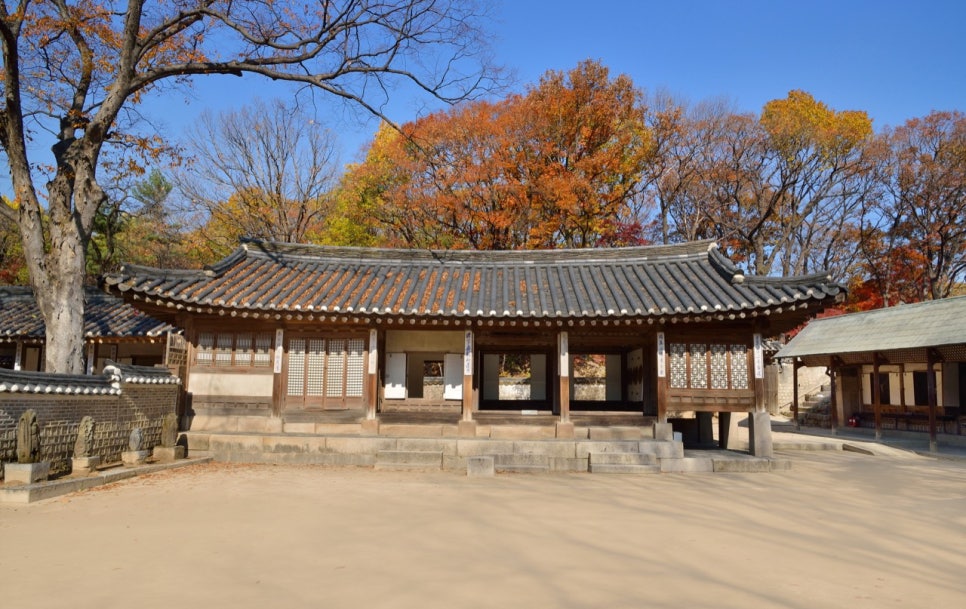
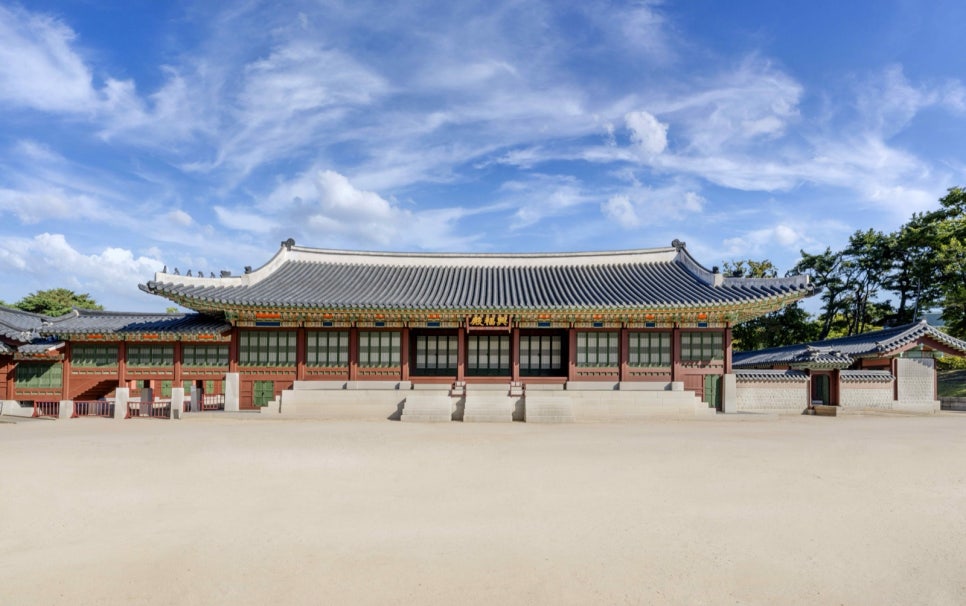
Yeongyeongdang sits deep in the Secret Garden near the Aeryeonji pond: a house built in the style of a gentleman-scholar's residence, without the painted dancheong decoration of the palace halls, and divided — unusually for a palace — into a men's quarter (sarangchae) and a women's quarter (anchae). The Korea Heritage Service's heritage portal describes it as built around 1827–1828 by Crown Prince Hyomyeong to hold banquets for his parents; the records differ by a year on the date. The name Yeongyeong (演慶) means 'celebration spreading wide', and the hall was designated a Treasure on 16 August 2012. In other words, the performance returns a banquet to the house that was built to hold it.
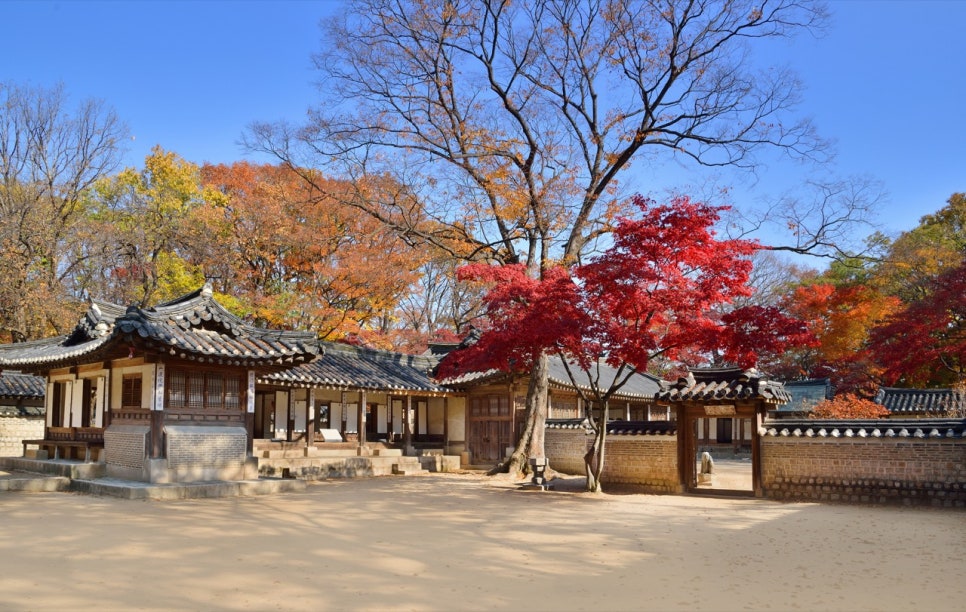
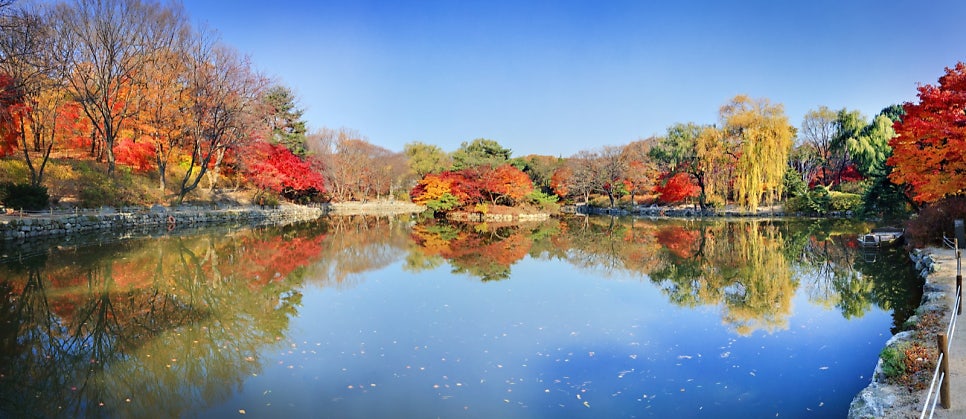
East of the men's quarter is the study, Seonhyangjae, with brick walls and a sun awning, and on the terraced slope behind it stands the one-room pavilion Nongsujeong. Seen in turn with the guide after the performance, the three buildings show how the crown prince laid out the compound. Early November is also when the Secret Garden's foliage is at its deepest, so the red backdrop that appears in every photograph of this performance is there in real life.
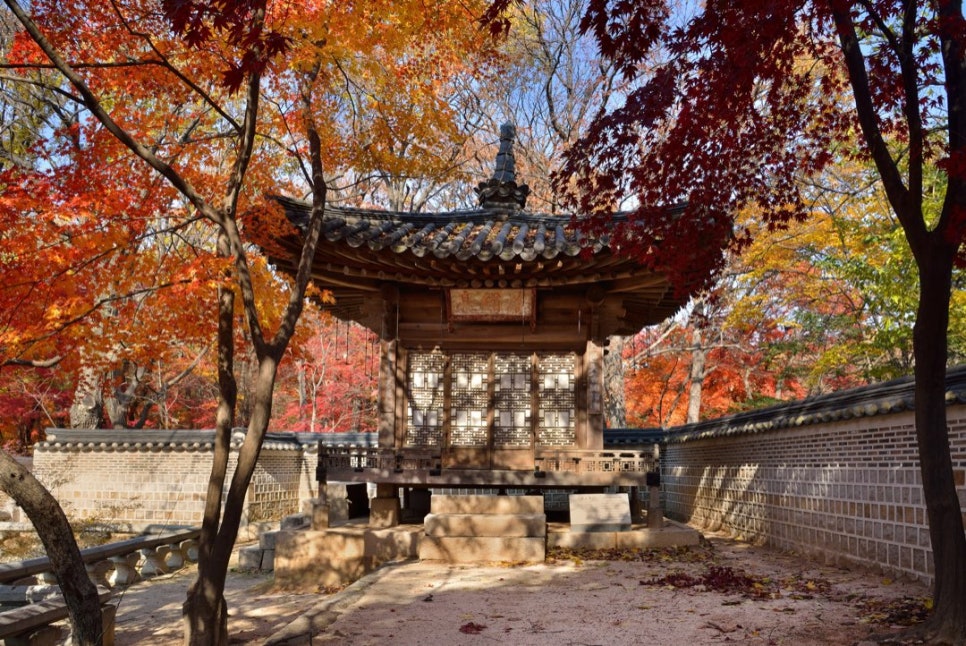
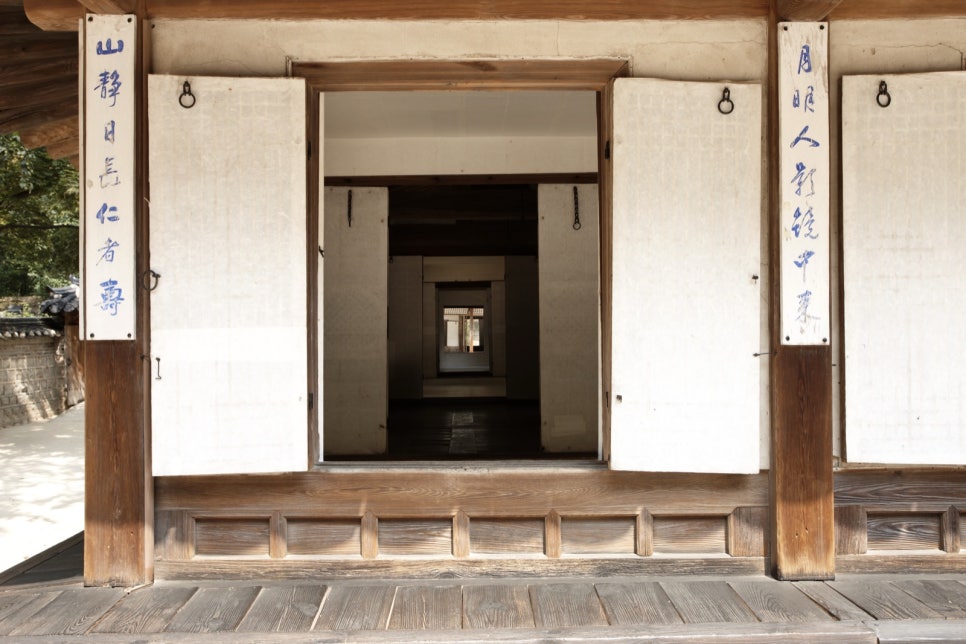
How to get a Secret Garden ticket — booking windows and prices
Three things matter. The Secret Garden is a restricted, guided visit that starts at fixed times; each slot takes only 100 people; and a Secret Garden ticket is sold only together with a palace ticket. In November the Korean-language slots run on the hour from 10am to 3pm, six a day. Half of each slot — 50 tickets — opens on the palace's booking site at 10am six days before the visit date (not counting the date itself) and sells until the day before. The other 50 are sold at the garden ticket booth from 9am on the day. The Royal Palaces and Tombs Center warns that in April–May and October–November both the online and the same-day tickets sell out very fast, so for the performance the safe move is to book the 10am or 11am slot in advance.
Secret Garden checklist (Royal Palaces and Tombs Center admission and reservation pages)
- Secret Garden ticket
- Adults (19–64) KRW 5,000 · seniors (65+) KRW 5,000 · ages 7–18 KRW 2,500 · age 6 and under free
- Palace ticket
- Required with the Secret Garden ticket. Adults KRW 3,000 (foreign visitors aged 19–64; Korean nationals 25–64). Palace entry is free for anyone wearing hanbok and for foreign visitors aged 18 and under or 65 and over — the Secret Garden is still charged
- Online booking
- From 10am six days before the date until the day before; 50 tickets per slot, first come first served. Opened 28 October for 3 November and 29 October for 4 November
- On the day
- 50 tickets per slot at the garden ticket booth from 9am, first come first served
- Korean-language slots, November
- 10:00 · 11:00 · 12:00 · 13:00 · 14:00 · 15:00
- English-language slots, November
- 10:30 · 11:30 · 14:30 · 15:30 — for non-Korean visitors, with at most two Korean companions
- No discounts
- The Secret Garden has no group rate and is excluded from the free-entry Wednesdays (Culture Day) that apply elsewhere
- Changdeokgung hours, November
- 9:00am – 5:30pm (last entry 4:30pm); closed Mondays — the performance days, Tuesday and Wednesday, are normal opening days
What the notice does not say about timing and the tour route
The Changdeokgung Palace Office notice gives only the start time (11am); it does not give a finishing time or say how long a guided group stays at Yeongyeongdang. The 2024 performance was announced as 11am to 1pm. Seating is unreserved, so expect to stand, and if rain is forecast check the palace office's notices or call +82-2-3668-2300 on the morning — a rained-off performance is cancelled, not postponed.
Getting there, booking from abroad, and what to expect on the day
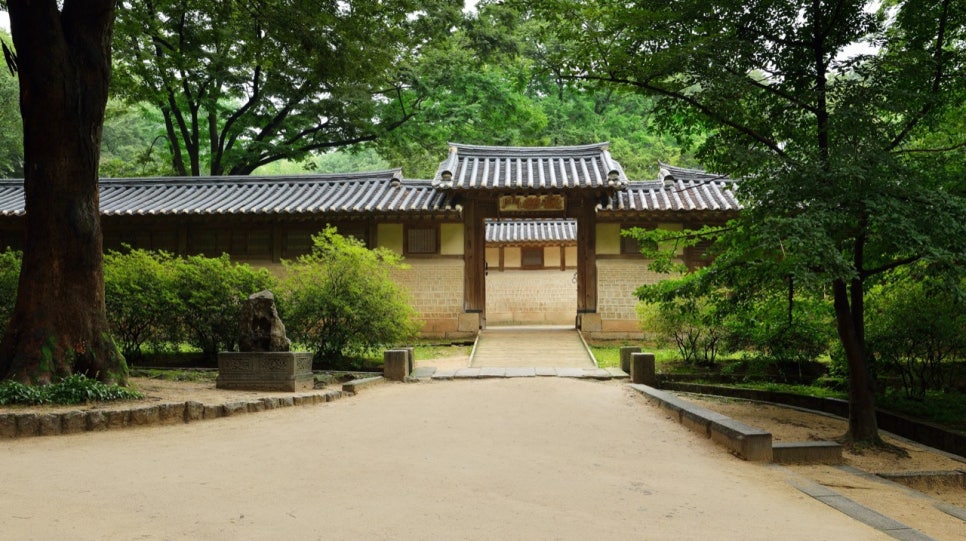
Take Seoul Subway Line 3 to Anguk Station (안국역) and leave by exit 3; Donhwamun, the main gate of Changdeokgung, is a five-minute walk east along Yulgok-ro. The Secret Garden has its own entrance inside the palace grounds, where the on-the-day tickets are sold and where groups assemble for their slot; the booking site asks you to be there 15 minutes before your entry time, and warns of long queues at both the booth and the gate in autumn. The palace is signed in English and the English-language Secret Garden tours are led by English-speaking guides. For booking, the palace ticket site (ticket.uforus.co.kr) has an English version: you register with an e-mail address as your ID, pay by credit card, can take up to five tickets per day, and either collect paper tickets at the booth or a kiosk or show the mobile ticket at the garden gate. Its instructions mention a passport or ID check for the foreign-language slots, which are reserved for non-Koreans; nothing in the rules stops a foreign visitor booking a Korean-language slot instead, and the 10:00 and 11:00 Korean slots are the ones that line up with an 11am performance. We did not complete a test registration, so we cannot say whether sign-up asks for a phone number; if it blocks you, the 50 same-day tickets per slot from 9am are the fallback. The performance itself is dance and music with no spoken text to follow.
Frequently asked questions
- Q. When and where is the Yeongyeongdang Jinjakrye performance at Changdeokgung?
- Tuesday 3 and Wednesday 4 November 2026 at 11am, at Yeongyeongdang Hall in the Secret Garden of Changdeokgung Palace. It is cancelled in rain; check the palace office's notices on royal.khs.go.kr or call +82-2-3668-2300.
- Q. Is the performance free? Do I need a separate ticket?
- The performance is free and unreserved. You do need to be inside the Secret Garden, which means a Secret Garden ticket (KRW 5,000 adults, KRW 2,500 ages 7–18) together with a palace ticket (KRW 3,000 adults).
- Q. When do Secret Garden tickets go on sale?
- Online, from 10am six days before the visit date (not counting the date) until the day before — 50 tickets per slot. For 3 November that was 28 October, for 4 November 29 October. Another 50 per slot are sold at the garden ticket booth from 9am on the day.
- Q. Are the two days different?
- Yes. 3 November: Cheopseungmu, Musanhyang, Choehwamu, Hyangnyeongmu and Chungwangho. 4 November: Mangseonmun, Gongmangmu, Yeongji, Chunaengjeon and Bakjeommu. Ten dances out of the seventeen in the 1828 banquet record.
- Q. What was a jinjakrye?
- A court ceremony in which officials offered wine and food to the king on a day of royal celebration. This performance restores the banquet Crown Prince Hyomyeong gave at Yeongyeongdang in 1828 for his mother Queen Sunwon's 40th birthday, following the court's illustrated record of it.
- Q. Is it worth going if I do not read Korean?
- Yes, if you can get a Secret Garden ticket. The performance is dance and music with nothing to read; the palace is signed in English; the booking site has an English version with an e-mail sign-up and card payment; and there are English-guided garden slots at 10:30, 11:30, 14:30 and 15:30. What you will miss is any Korean-language commentary during the ceremony — this article covers what each dance is.
Editor's note · Kang Shin-wook
For visitors planning the Secret Garden in early-November foliage season, and for anyone who wants to see Joseon court dance on the spot it was made for. Palace hours, closing days and the other palaces are in our Royal Palaces and Tombs guide; dated events are on the events board.
Sources
- Official notice (Korean)
- Korea Heritage Service press release on the performance, 27 October 2026 (Korean)
- Royal Palaces and Tombs Center events listing for the performance (Korean)
- Royal Palaces and Tombs Center — admission fees, including Secret Garden tickets (Korean)
- Royal Palaces and Tombs Center — hours and Secret Garden tour slots (Korean)
- Changdeokgung ticket site — Secret Garden guided tour booking (English)
- Korea Heritage Service press release on the 2024 performance, 27 August 2024 (Korean)
- Korea Heritage Portal — Treasure Yeongyeongdang Hall of Changdeokgung Palace (Korean)
Written in our own words from the sources above, never copied from them, and every date and price checked against at least two pages. The originals are in Korean. Spotted a mistake? Ask for a correction.
Latest from Royal Palaces and Tombs Center
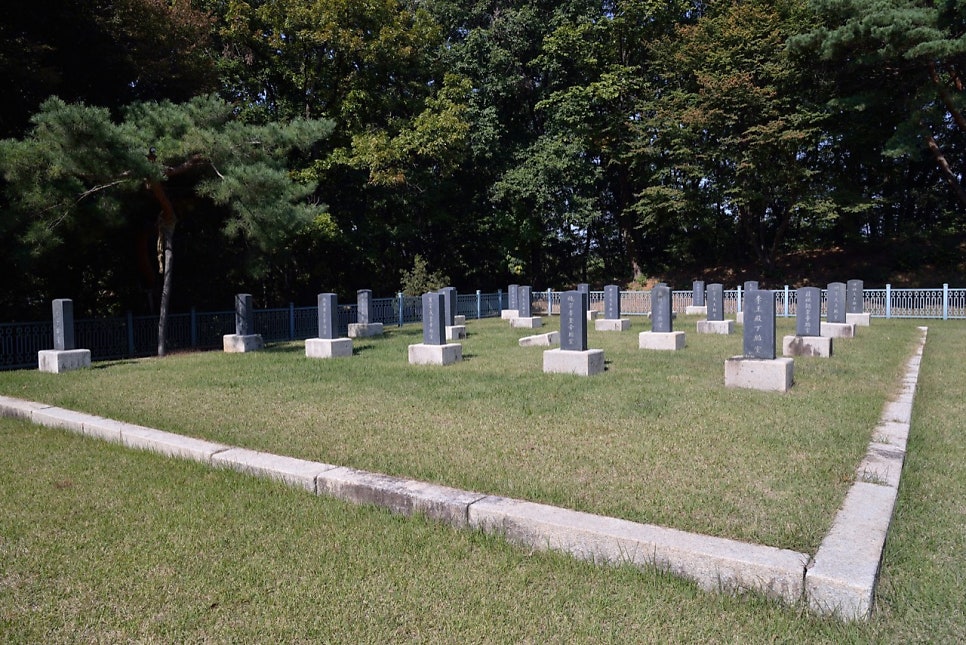 Royal Palaces and Tombs CenterProgramme3 November 2026Year-roundFreeSeosamneung Hyoreung and royal placenta tombs — free guided walks
 Royal Palaces and Tombs CenterProgramme2 November 2026In 4 daysFreeGyeongbokgung incense burners regain their lids — November talks full
 Royal Palaces and Tombs CenterNotice1 November 2026Changgyeonggung free phone audio guide in English — from 29 Oct
 Royal Palaces and Tombs CenterProgramme31 October 2026On nowJoseon royal tomb day tours: last six of 2026 — 1–14 November