Summary
On 28 October 2026 the Korea Tourism Organization's VisitKorea site published a Black Friday feature listing 26 traditional markets and shopping streets across Korea, grouped into five themes: second-hand clothing, LPs and used books, Y2K-era bric-a-brac, market snacks, and markets with the new AI Tourism Concierge. They are permanent markets with no ticket or booking, but the feature names no Black Friday discounts. At six of them (Mangwon, Gyeongdong, Suwon Nammun, Danyang Gugyeong, Haeundae and Andong Gu) a QR code opens a web map, crowd levels and a translator that covers 34 spoken languages, with no app or sign-up.
Article
In short
- On 28 October 2026 the Korea Tourism Organization's VisitKorea site listed 26 traditional markets and shopping streets for Black Friday, in five themes: second-hand clothing, LPs and used books, Y2K bric-a-brac, market snacks, and AI Tourism Concierge markets.
- All 26 are permanent markets: there is nothing to book or apply for, and the feature names no discount or coupon. Opening hours and closing days vary from stall to stall.
- At Mangwon, Gyeongdong, Suwon Nammun, Danyang Gugyeong, Haeundae and Andong Gu markets, a QR code opens the AI Tourism Concierge in your phone's browser, with a map, crowd levels and translation, and no app or sign-up.
- Its translator turns Korean menus into 10 languages and interprets conversations between vendors and visitors in 34 languages in real time.
- For a visitor who reads no Korean, those six markets are the easiest start: elsewhere, stall signs and prices are mostly in Korean only.
Black Friday in Korea usually means department stores and online malls, but the Korea Tourism Organization's suggestion this autumn is the traditional market. Its VisitKorea feature gathers 26 markets and shopping streets — ten in Seoul, four in Busan, three in Incheon, and one each in Daejeon, Daegu, Cheongju, Gangneung, Damyang, Seogwipo, Suwon, Danyang and Andong — and sorts them by theme. This article regroups that list by what you are going to buy, and separates the practical checks for each place from the details nobody has yet confirmed.
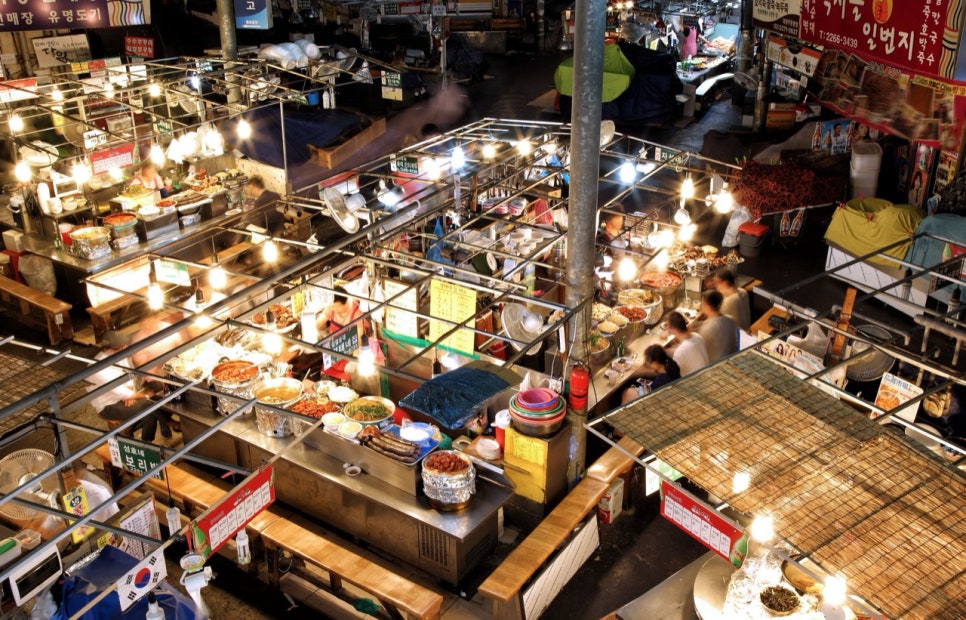
Gwangjang Market's food alley in Seoul from above (July 2017)
Photo: Korea Tourism Organization, Photo Korea (photographed IR 스튜디오) · KOGL Type 1
Which market suits you: the five themes at a glance
There is one question to settle first: are you hunting for clothes, records and books, old objects, or food? The themes break down like this.
Markets and streets by theme (as listed in the VisitKorea feature)
- Second-hand clothing (5)
- Dongmyo Flea Market · Gwangjang Market imported vintage arcade · Sinpo Fashion Culture Street, Incheon · Eunhaengjeong-i Culture Street, Daejeon · Gukje Market vintage alley, Busan
- LPs and used books (4)
- Hoehyeon Underground Shopping Center · Cheonggyecheon used bookshop street · Baedari Book Alley, Incheon · Bosu-dong Book Alley, Busan
- Y2K bric-a-brac (7)
- Hwanghak-dong Flea Market · Namdaemun Market · Seoul Folk Flea Market · Dongdaemun stationery and toy street · Cheongju Yukgeori Market · Bupyeong Kkangtong Market, Busan · Gyodong Market, Daegu
- Market snacks (4)
- Sinpo International Market, Incheon · Gangneung Jungang Market · Changpyeong Traditional Market, Damyang · Seogwipo Maeil Olle Market, Jeju
- AI Tourism Concierge (6)
- Mangwon Market · Gyeongdong Market · Suwon Nammun Market · Danyang Gugyeong Market · Haeundae Market · Andong Gu Market
Where to buy second-hand clothes: from Dongmyo to Busan's Gukje Market
The first problem with vintage shopping here is that there is rarely anywhere to try things on. The feature notes that many shops have no fitting room, so wear something easy to layer over, and check cuffs, collars, lining stains and zips before you pay.
- Dongmyo Flea Market (Jongno-gu, Seoul) — Seoul's best-known second-hand market: imported used clothing, vintage goods and accessories, right beside Dongmyo, the shrine to the general Guan Yu that gives the area its name.
- Gwangjang Market imported vintage arcade (Jongno-gu, Seoul) — an arcade of foreign vintage brand clothing. Finish in the market's food alley with yukhoe (beef tartare), mung bean pancakes or twisted doughnuts.
- Sinpo Fashion Culture Street (Incheon) — vintage shops in the old town. Where shops price by weight, light, thin clothes are the better buy; it is a short walk to Sinpo International Market and the old open-port streets.
- Eunhaengjeong-i Culture Street (Jung-gu, Daejeon) — Daejeon's old-town vintage strip, easy to combine with the Sungsimdang bakery's main shop and Daejeon Jungang Market.
- Gukje Market vintage alley (Jung-gu, Busan) — dig through heaps for Japanese and American used clothing. Jagalchi fish market is about ten minutes' walk away.
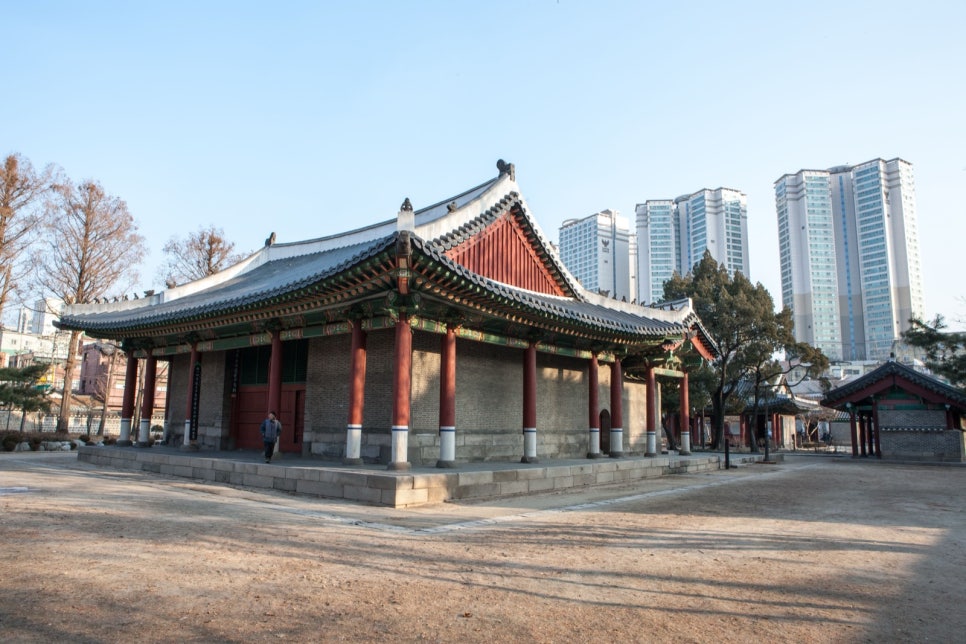
Dongmyo, the shrine to Guan Yu next to Dongmyo Flea Market (January 2014). This is the shrine, not the market
Photo: Korea Tourism Organization, Photo Korea (photographed 김지호) · KOGL Type 1
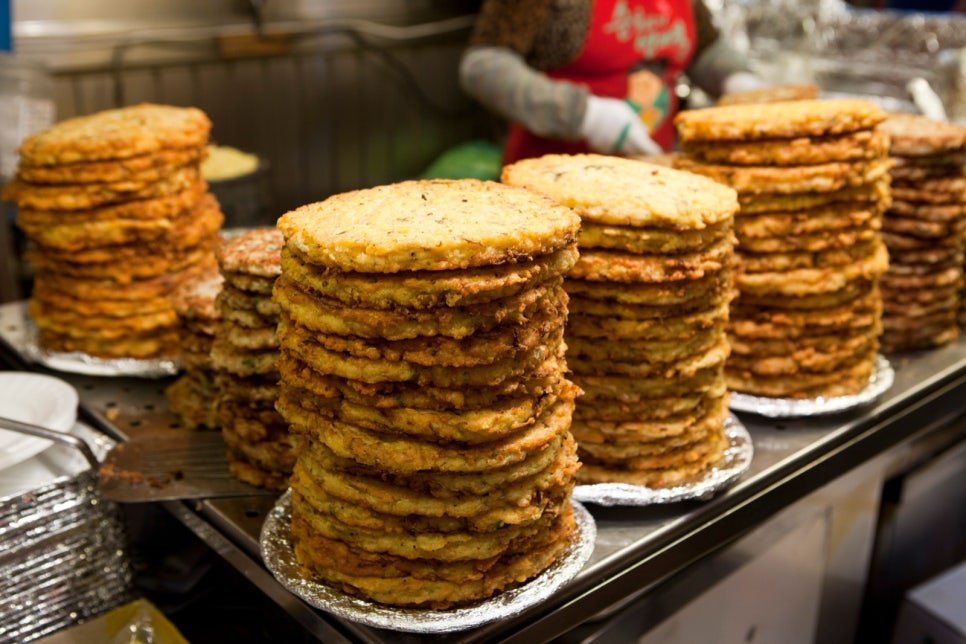
Mung bean pancakes (bindaetteok) at Gwangjang Market (February 2014)
Photo: Korea Tourism Organization, Photo Korea (photographed 이범수) · KOGL Type 1
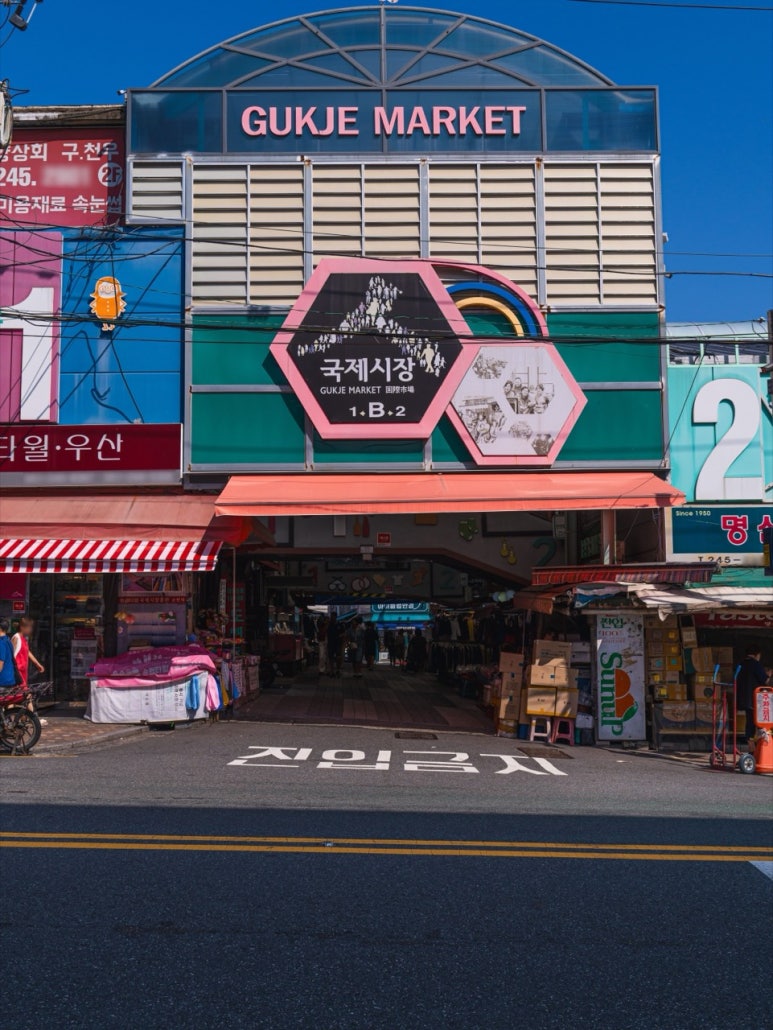
The main gate of Gukje Market, Busan (September 2024)
Photo: Korea Tourism Organization, Photo Korea (photographed 이병현) · KOGL Type 1
Where to find LPs and used books: Hoehyeon, Cheonggyecheon, Baedari, Bosu-dong
With records and books, condition sets the price. The feature's advice is simple: ask the owner first, then hold an LP up to the light to check for scratches and dust; with old books, leaf through for missing pages and loose bindings.
- Hoehyeon Underground Shopping Center (Jung-gu, Seoul) — an underground arcade where LP and cassette collectors go. You can walk on to Myeongdong Cathedral.
- Cheonggyecheon used bookshop street (Jung-gu, Seoul) — long-standing second-hand bookshops along the Cheonggyecheon stream, for old books, back issues of magazines and out-of-print titles.
- Baedari Book Alley (Incheon) — old bookshops and independent bookstores side by side. The shelves are so full that asking the owner for an author or subject is quicker; the feature mentions Hanmi Bookstore as a TV drama filming location.
- Bosu-dong Book Alley (Jung-gu, Busan) — a book alley dating back to the Korean War refugee years. Out-of-print finds tend to be upstairs or on the back shelves, and Gukje Market and Bupyeong Kkangtong Market are just across the road.
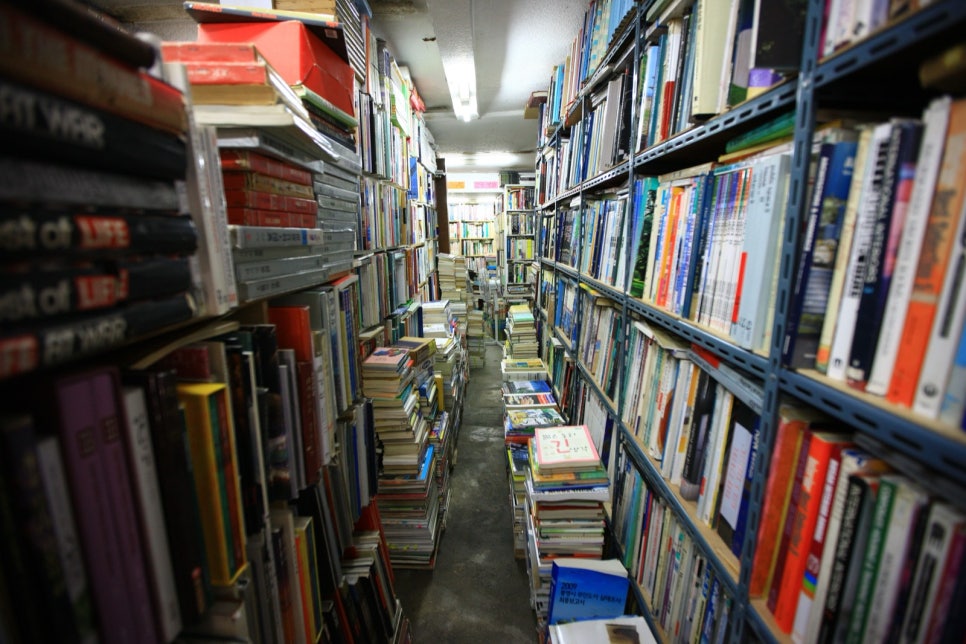
A bookshop aisle in Bosu-dong Book Alley, Busan (July 2010)
Photo: Korea Tourism Organization, Photo Korea (photographed 김지호) · KOGL Type 1
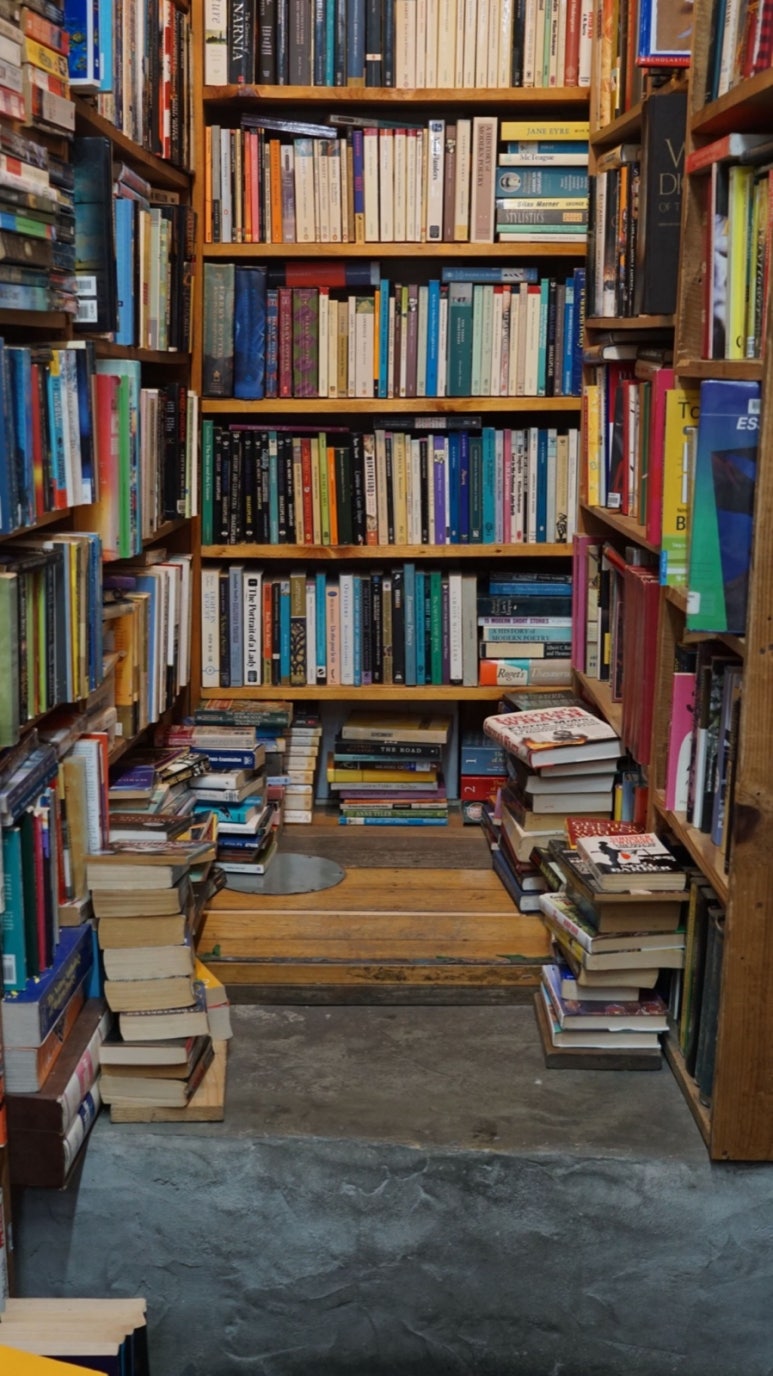
Inside a bookshop on Baedari Book Alley, Incheon (October 2023). Not the Cheonggyecheon bookshops
Photo: Korea Tourism Organization, Photo Korea (photographed 전지민) · KOGL Type 1
Where to browse old things: seven Y2K bric-a-brac markets
This is the biggest theme, with seven places. The common warning is about used electronics and watches: check that they work, whether they can be repaired and that the parts are all there. For imported electronics, read the rating plate — Korea runs on 220 V and 60 Hz, and a device bought here may not suit the socket at home either.
- Hwanghak-dong Flea Market (Jung-gu, Seoul) — everything from antiques to used appliances and watches. Sindang-dong's tteokbokki street is about 15 minutes' walk.
- Namdaemun Market (Jung-gu, Seoul) — described in the feature as a general market with 600 years of history. It is strong on household goods: bath products, tableware, kitchenware and fashion accessories, with bath goods gathered in Daedo Arcade building D (a detail found only in the feature). Vegetable hotteok and the noodle alley are the snacks to try.
- Seoul Folk Flea Market (Dongdaemun-gu, Seoul) — a large indoor market. According to the feature, sections are colour-coded (orange for used clothing, green for antiques), and the second floor recreates a 1960s–70s shopping street.
- Dongdaemun stationery and toy street (Jongno-gu, Seoul) — toy wholesalers turned character-goods hotspot. The same product can come in different sizes and sets, so compare before buying; Dongdaemun Design Plaza is close by.
- Cheongju Yukgeori Market (Cheongju, North Chungcheong) — the province's big market. On dates ending in 2 and 7, the five-day market adds farm produce, medicinal herbs and odds and ends.
- Bupyeong Kkangtong Market (Jung-gu, Busan) — imported snacks, household goods and character goods; the feature says a night market opens in the evening.
- Gyodong Market (Jung-gu, Daegu) — once nicknamed the 'goblin market', in Daegu's old centre, with imported clothes, vintage appliances and retro goods, near Dongseong-ro and Jungangno Station.
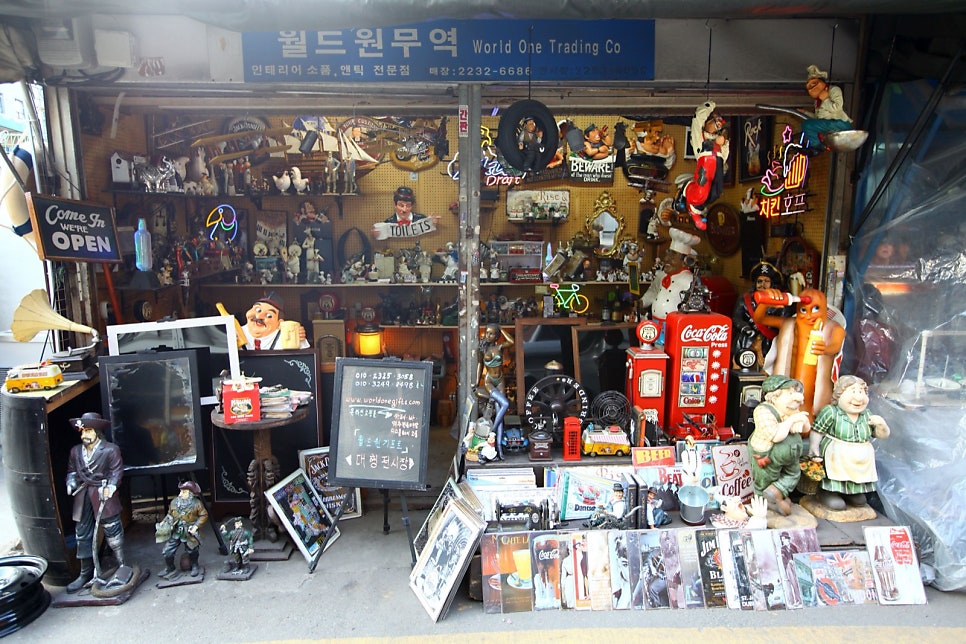
A retro goods shop in Hwanghak-dong Flea Market, Seoul (January 2014)
Photo: Korea Tourism Organization, Photo Korea (photographed 이범수) · KOGL Type 1
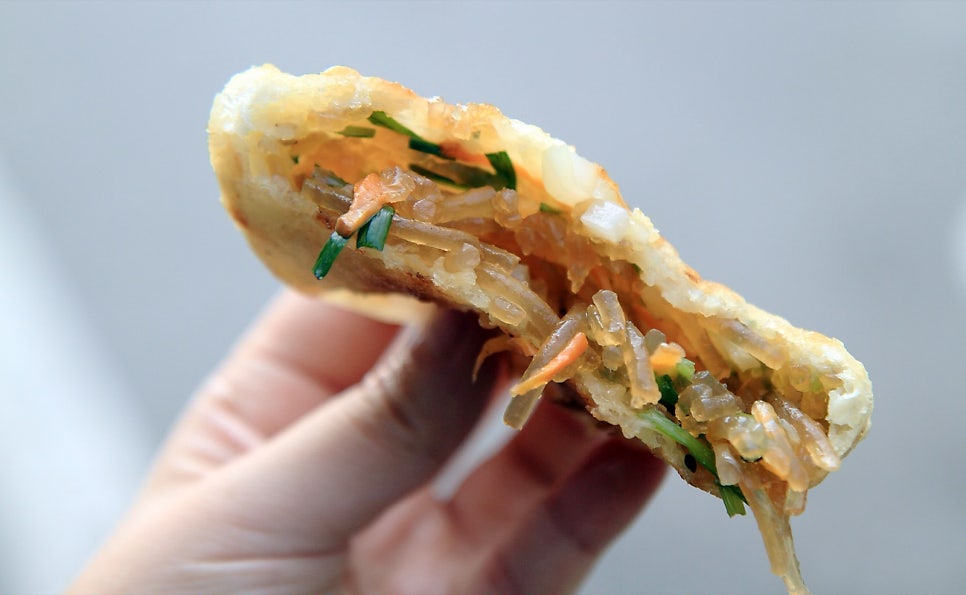
Namdaemun Market's vegetable hotteok (September 2011)
Photo: Korea Tourism Organization, Photo Korea (photographed 박은경) · KOGL Type 1
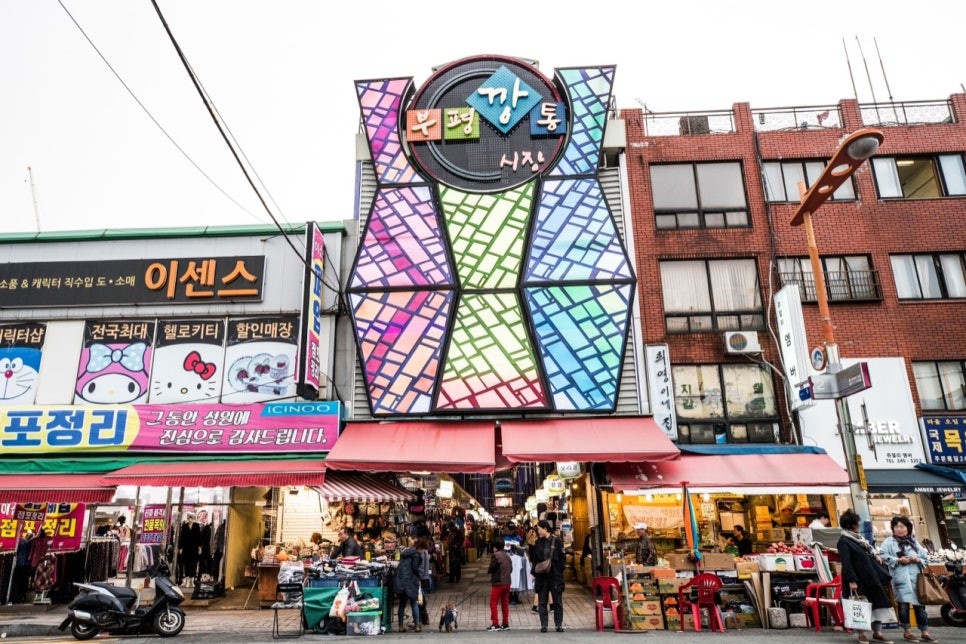
The entrance to Bupyeong Kkangtong Market, Busan (April 2018)
Photo: Korea Tourism Organization, Photo Korea (photographed 이범수) · KOGL Type 1
If you are going for snacks: four market food stops
With food, the queue is the variable. Popular stalls build lines quickly; if you are in a group, the feature suggests splitting up and queuing at different stalls at once.
- Sinpo International Market (Incheon) — a market that grew up after the port opened, known for dakgangjeong (sweet fried chicken) and hollow gonggal bread; the feature calls it Incheon's first modern permanent market. Pair it with the open-port streets and Chinatown.
- Gangneung Jungang Market (Gangneung, Gangwon) — dakgangjeong, squid sundae and coffee-bean-shaped bread, then a walk along the nearby Wolhwa-geori.
- Changpyeong Traditional Market (Damyang, South Jeolla) — Changpyeong rice taffy and traditional sweets make good gifts; the stone-walled lanes of Samjinae Village are nearby.
- Seogwipo Maeil Olle Market (Seogwipo, Jeju) — omegi rice cakes with a choice of coatings, fruit mochi and tangerine tarts; the feature mentions black-pork gangjeong at the evening night market.
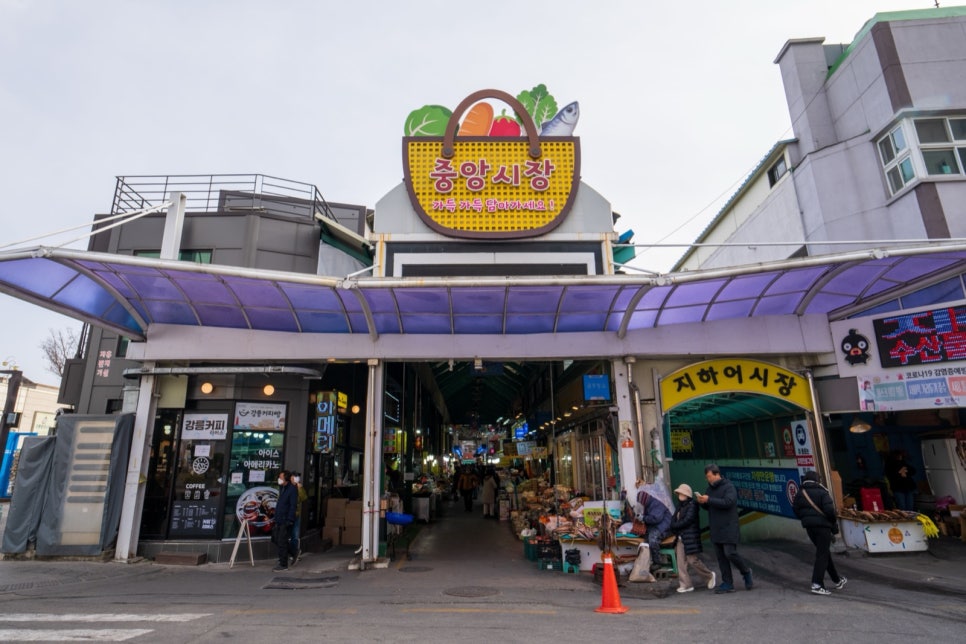
Gangneung Jungang Market (December 2022)
Photo: Korea Tourism Organization, Photo Korea (photographed 김지호) · KOGL Type 1
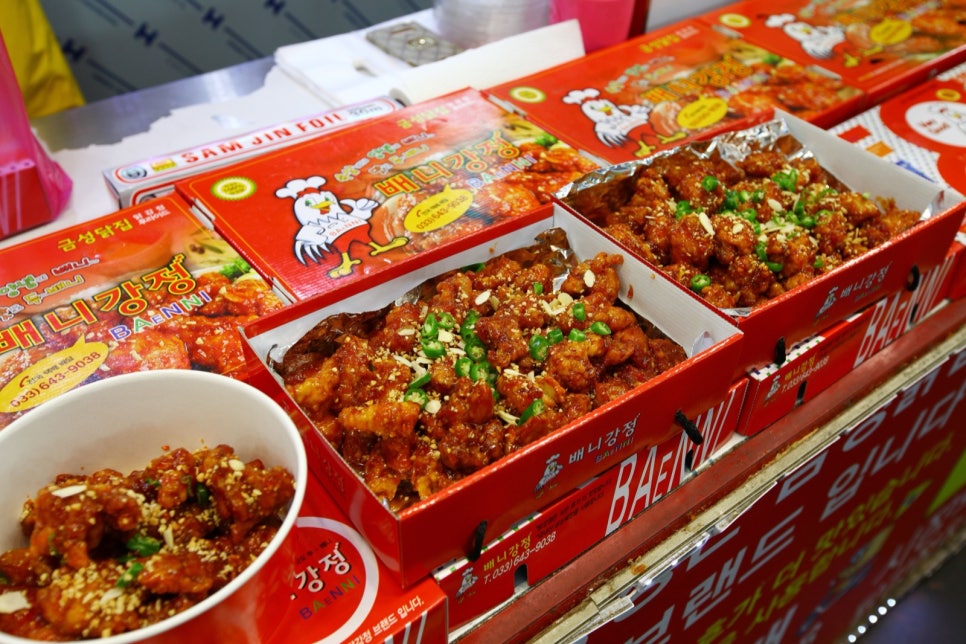
Dakgangjeong at Gangneung Jungang Market (May 2014)
Photo: Korea Tourism Organization, Photo Korea (photographed 이범수) · KOGL Type 1
What the AI Tourism Concierge is and how to use it
The feature's final 'special' theme is the AI Tourism Concierge, which the Korea Tourism Organization launched on 9 October 2026 at Mangwon Market, Haeundae Market and Suwon Nammun Market. According to its press release of 20 October, it was to extend at the end of October to Gyeongdong Market in Seoul, the Andong Gu Market group and Danyang Gugyeong Market, six markets in all. Scan one of the QR codes posted around the market with your phone camera and it opens in the browser; there is no app to install and no account to create.
- AI map — locations of stalls, toilets and car parks with directions, plus suggested routes and stalls based on what you enter, such as your age and who you are with.
- Live crowd levels — CCTV video analysis and LiDAR sensors show how busy each section is and the wait at popular stalls.
- Translation — Korean menus translated into 10 languages, and live interpretation between vendors and foreign visitors in 34 languages.
The six AI Tourism Concierge markets and what the feature recommends eating
- Mangwon Market (Mapo-gu, Seoul)
- Dakgangjeong · fried stuffed peppers · side dishes. Take it to Mangwon Hangang Park for a picnic
- Gyeongdong Market (Dongdaemun-gu, Seoul)
- Medicinal herbs and health foods · produce · dried seafood. Check the origin and use of herbal products
- Suwon Nammun Market (Suwon, Gyeonggi)
- Fried chicken · stir-fried sundae. Several markets around Paldalmun Gate, so pick a section first
- Danyang Gugyeong Market (Danyang, North Chungcheong)
- Garlic dakgangjeong · garlic bread. Five-day market on dates ending in 1 and 6; pair with the Mancheonha Skywalk
- Haeundae Market (Haeundae-gu, Busan)
- Grilled sea eel · tteokbokki and fish-cake skewers. The feature suggests coming after 7 pm, when the night market opens
- Andong Gu Market (Andong, North Gyeongsang)
- Andong jjimdak (braised chicken) · salted mackerel. Ask for your spice level; Mammoth Bakery is within walking distance
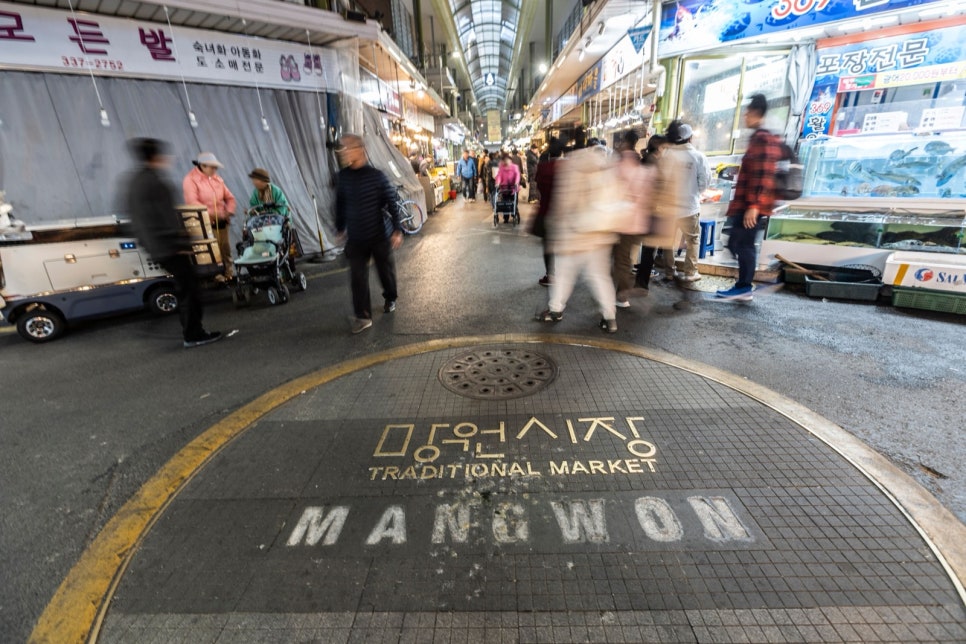
The floor sign at Mangwon Market, Seoul, one of the six AI Tourism Concierge markets (October 2018)
Photo: Korea Tourism Organization, Photo Korea (photographed 니오타니 스튜디오) · KOGL Type 1
What we could not confirm
Opening hours and closing days for the 26 places are not in the feature and vary by stall. We could not confirm from official material which days and hours the Bupyeong Kkangtong, Seogwipo Maeil Olle and Haeundae night markets run, whether the five-day markets move on public holidays, or the history claims (Namdaemun's '600 years', Sinpo as Incheon's 'first'), so those are given only as the feature states them. Government shopping festivals running at the same time are separate from this feature; whether a given market takes part has to be checked on that festival's own site.
Getting there, paying and getting by without Korean
The Seoul markets are all on the subway. Dongmyo Flea Market is at Dongmyo Station (Lines 1 and 6); Gwangjang Market is by Jongno 5-ga Station (Line 1); Namdaemun Market and the Hoehyeon Underground Shopping Center are at Hoehyeon Station (Line 4); Mangwon Market is a short walk from Mangwon Station (Line 6); and Gyeongdong Market is at Jegi-dong Station (Line 1). Station names and exits are signed in English, but inside the markets most stall signs, menus and price tags are in Korean only, and many stalls are run by one person who may not speak English. That is the gap the AI Tourism Concierge is meant to close: at the six markets that have it, point your camera at a menu or start an interpreted conversation on your own phone, which needs mobile data or Wi-Fi but no Korean phone number. We could not confirm whether the service's menus and buttons are themselves in English. Elsewhere, a camera translation app does a similar job. Smaller stalls may prefer cash, so carry some Korean won, and haggling is not expected at food stalls.
Frequently asked questions
- Q. Where does the list of 26 retro shopping markets come from?
- From a Korean-language travel feature on retro shopping in traditional markets that the Korea Tourism Organization's VisitKorea site posted on 28 October 2026. It covers 5 places for second-hand clothing, 4 for LPs and used books, 7 for Y2K bric-a-brac, 4 for market snacks and 6 markets with the AI Tourism Concierge, 26 in all.
- Q. Are there Black Friday discounts at Korean traditional markets?
- The feature lists no discount rates or coupons. It is a travel suggestion to go vintage shopping in markets during the Black Friday season; prices and any discounts are set by each market and stall.
- Q. How do I use the AI Tourism Concierge at a Korean market?
- At Mangwon, Gyeongdong, Suwon Nammun, Danyang Gugyeong, Haeundae and Andong Gu markets, scan one of the QR codes posted around the market with your phone camera and it opens in the browser. No app, account or Korean phone number is needed. It offers a market map with directions, live crowd levels, menu translation into 10 languages and live interpretation in 34.
- Q. Where can I shop for vintage clothes in Seoul?
- The feature picks Dongmyo Flea Market and the imported vintage arcade at Gwangjang Market, and the indoor Seoul Folk Flea Market has a used-clothing section too. Many shops have no fitting room, so wear something easy to try things over.
- Q. When are the five-day markets in Cheongju and Danyang?
- According to the feature, Cheongju Yukgeori Market holds its five-day market on dates ending in 2 and 7, and Danyang Gugyeong Market on dates ending in 1 and 6. The permanent shops open on other days too. Check before travelling whether the dates move around public holidays.
- Q. Is it worth going if I do not read Korean?
- Yes, if you go in expecting to point and gesture. Most stall signs and menus are Korean only, but prices are written in numbers, and at the six AI Tourism Concierge markets your phone can translate menus and interpret conversations with vendors. Mangwon or Gyeongdong in Seoul, or Haeundae in Busan, are the easiest places to start.
Editor's note · Kang Shin-wook
For visitors planning a market day around vintage clothes, records or street food, and for anyone who wants to know how far they get without Korean. To pair a market with a nearby museum or palace, see the directory of national venues; more Korea Tourism Organization news is on its page.
Sources
- Official notice (Korean)
- Korea Tourism Organization press release on the AI Tourism Concierge, 20 October 2026 (Korean)
- AI Tourism Concierge market service (Korean)
- The Korea Times, AI takes hassle out of navigating Korea's traditional markets, 20 October 2026 (English)
Written in our own words from the sources above, never copied from them, and every date and price checked against at least two pages. The originals are in Korean. Spotted a mistake? Ask for a correction.
Latest from Korea Tourism Organization
 Korea Tourism OrganizationExhibition18 November 2026On nowFreeBIG's MATERIALISM in Seoul: free architecture show — to 28 Feb 2027
 Korea Tourism OrganizationEvent18 November 2026In 2 daysFreeKorea Souvenir Fair at DDP, Seoul — free, 20–22 November 2026
 Korea Tourism OrganizationNews17 November 2026Namsan Haneul Forest Trail, Seoul: a step-free 1.45 km boardwalk lit until 11 pm
 Korea Tourism OrganizationEvent16 November 2026On nowLudensia Christmas Fantasy, Yeoju — six December days need Naver booking