Notice·Korea National Park Service
Gyeongju Namsan rock Buddha: 3D scan finds a Vairocana hand gesture
Summary
On 11 November 2026 the Korea National Park Service's Gyeongju office announced that 3D scanning and contact-free digital rubbing of a worn line-carved standing Buddha in the Seonbanggok valley of Namsan, Gyeongju, had revealed the jigwonin (지권인) — the 'wisdom fist' gesture of the Vairocana Buddha. Expert advisers rated it the first standing Vairocana identified among Gyeongju's rock-carved Buddhas, though the park service itself calls it a possibility, not a verdict. There is no viewing programme: the carving sits on a free national-park trail about 900 m above Sambulsa temple, and the lines are hard to make out with the naked eye.
Article
In short
- On 11 November 2026 the Korea National Park Service's Gyeongju National Park Office announced that a line-carved standing Buddha in the Seonbanggok valley of Namsan, Gyeongju, holds its hands in the jigwonin (智拳印) gesture in front of the chest.
- The jigwonin is the hand gesture of the Vairocana Buddha, so the figure may be a standing Vairocana; expert advisers rated it the first standing Vairocana identified among Gyeongju's rock-carved Buddhas.
- The carving is about 2.4 m high, incised on a natural rock face about 900 m up the trail from Sambulsa temple towards Geumobong peak, and was first recorded in a 2004 survey.
- The survey used 3D scanning and contact-free digital rubbing; the Gyeongju office has now made five such records of weathered rock Buddhas, this year's included.
- It is a possibility, not a confirmed identification. There is no viewing programme, entry to the park is free, and trails close in part from 15 November to 15 December for the fire season — the lines are hard to see unaided.
Namsan, the mountain on the southern edge of Gyeongju, has rock-carved Buddhas scattered through almost every valley, and many of them have been worn nearly smooth by more than a thousand years of weather. The Gyeongju National Park Office has re-read one of them with 3D scanning and digital rubbing and found a hand gesture invisible to the eye. Because that gesture belongs to the Vairocana Buddha, experts now say it could be the first standing Vairocana among Gyeongju's rock carvings. Below we separate what was confirmed from what is still conjecture, and what a walker on Namsan should know.
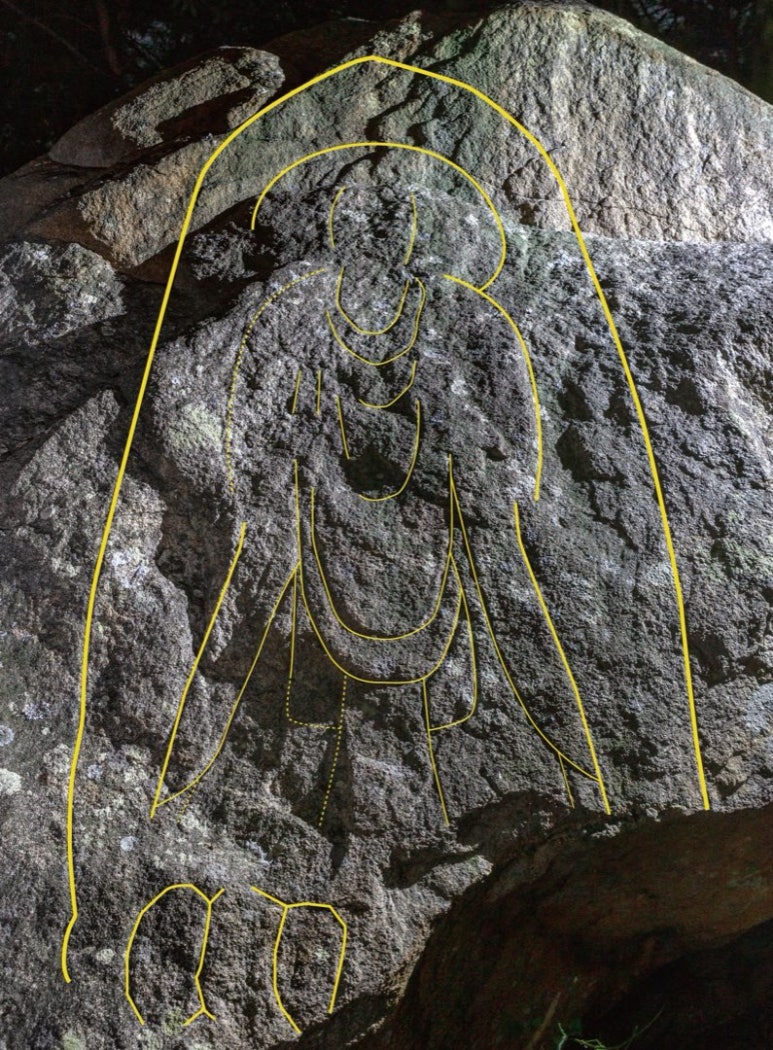
The 3D scan and line drawing of the Dongcheon-dong (Sogeumgangsan) rock-carved Bodhisattva, recorded by the Gyeongju National Park Office in last year's round of the same survey — not the Seonbanggok Buddha
Photo: Korea National Park Service, Gyeongju National Park Office · KOGL Type 1 · Original
Which Buddha was surveyed?
The subject is the line-carved standing Buddha at Seonbanggok Site 4 on Namsan (경주 남산 선방곡 제4사지 선각여래입상). It is undesignated heritage — not on any national or provincial list — and sits about 900 m along the trail from Sambulsa temple on the west side of Namsan towards Geumobong peak. The figure is outlined in incised lines on a natural rock face about 2.4 m high, a technique that wears away far faster than relief carving. When the Gyeongju National Research Institute of Cultural Heritage first recorded it in 2004, damage already made details such as the hands impossible to read.
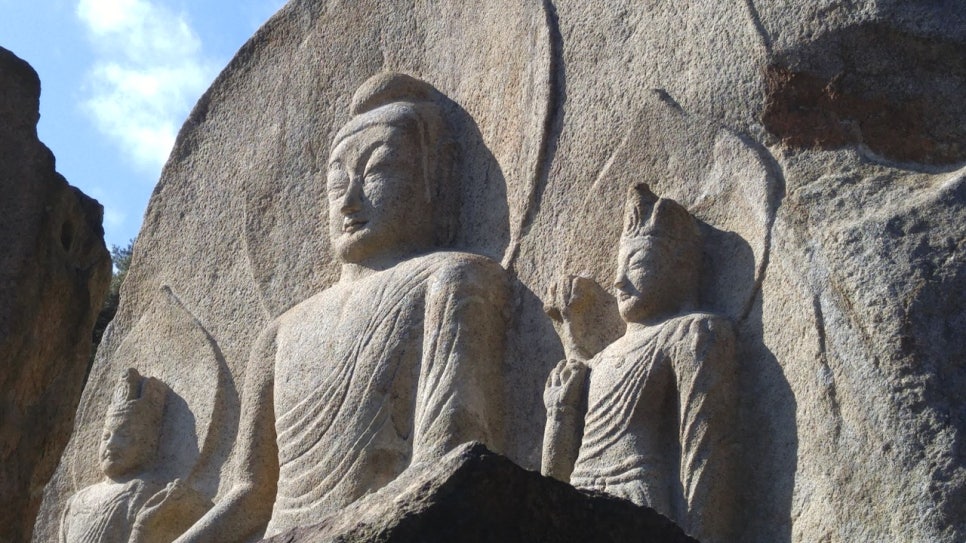
Close view of the Chilburam rock-carved Buddhas on Namsan — an example of Namsan's rock carvings, not the Buddha in this survey
Photo: Korea National Park Service, Saengsaeng Photo · KOGL Type 1
What did the 3D scan and digital rubbing reveal?
A 3D scan records the tiny rises and dips of the rock surface as a cloud of points; contact-free digital rubbing then draws the incised lines out of that data the way an ink rubbing would on paper. Nothing touches the stone, so the record does not add to the damage. Analysis showed a figure with both hands raised together in front of the chest, in the position of the jigwonin.
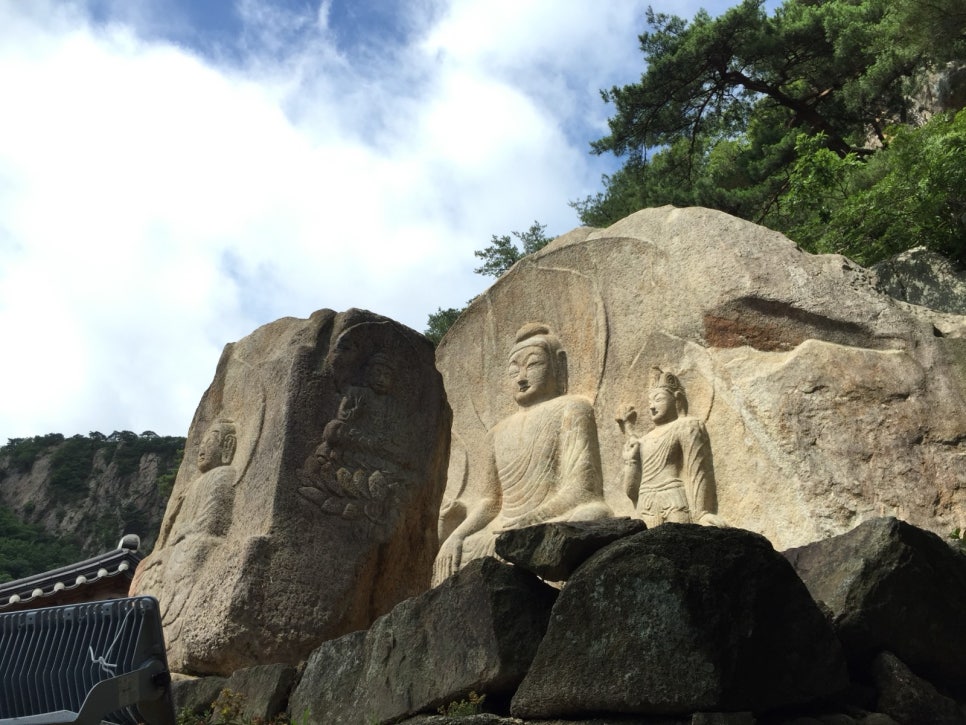
The Chilburam rock-carved Buddhas seen whole (not the Buddha in this survey)
Photo: Korea National Park Service, Saengsaeng Photo · KOGL Type 1
On top of the rock the survey also found one large hole about 30 cm across and several smaller ones of around 5.8 cm. Whether they held a roof, a screen or anything else is unknown; the park service says only that how they were made needs further study, and we do not guess at their purpose here.
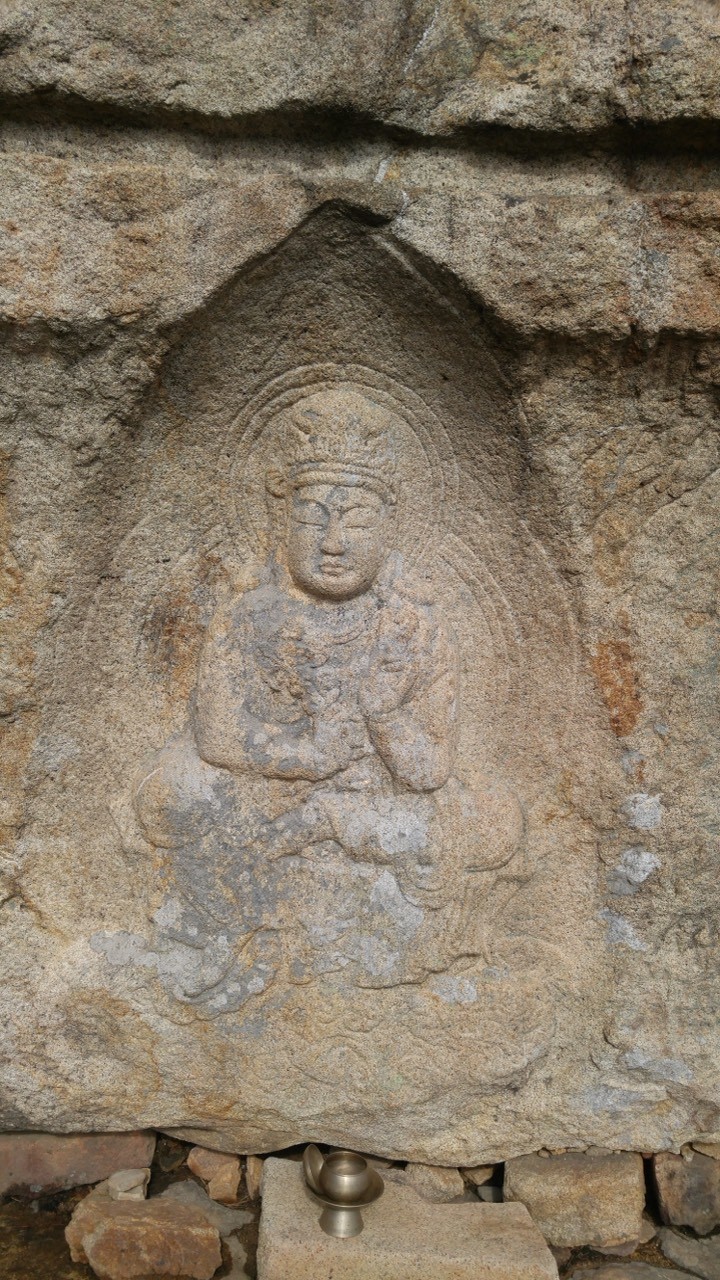
The rock-carved seated Bodhisattva at Sinseonam, seen from the front (not the Buddha in this survey)
Photo: Korea National Park Service, Saengsaeng Photo · KOGL Type 1
Why does this hand gesture point to Vairocana?
In Buddhist sculpture the hand gesture (mudra) works like a name tag: it tells you which Buddha you are looking at. In the jigwonin, both hands make fists with the thumb tucked inside; the right hand then wraps around the raised index finger of the left, and the tip of the right thumb meets the tip of that left index finger. It belongs to Vairocana, the Buddha who personifies truth itself. Once the gesture appeared in the scan, a Vairocana identification became possible, and expert advisers called it the first standing Vairocana found among Gyeongju's rock carvings.
Worth knowing
The park service's own wording is that it is 'paying attention to the possibility' that this is a standing Vairocana. It is not a confirmed identification, and when and by whom the figure was carved is still unknown. We report it at the same stage.
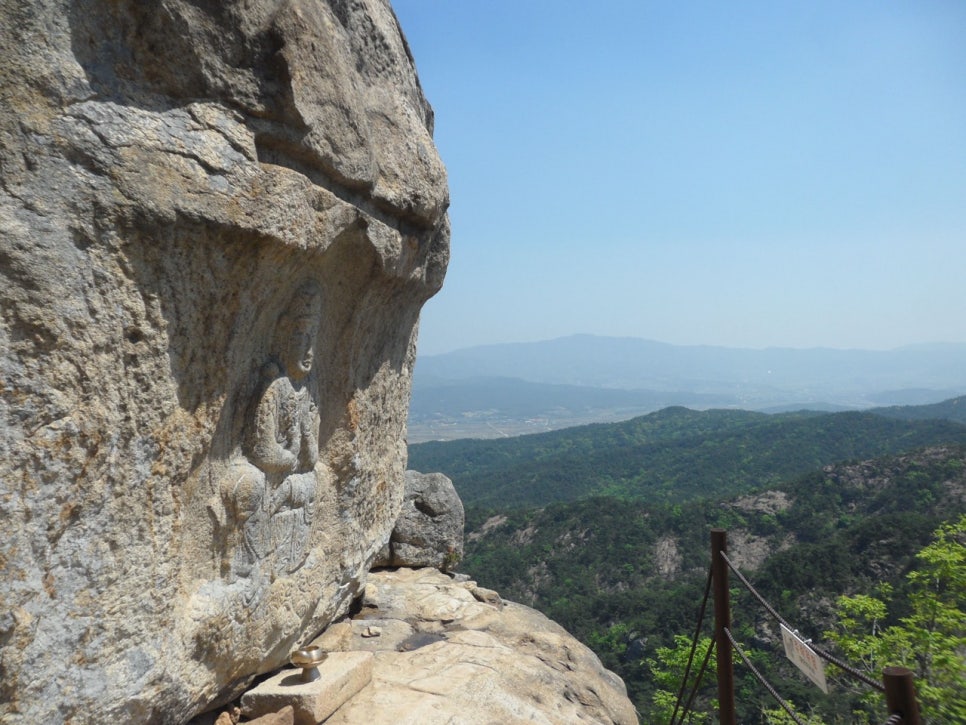
The Sinseonam Bodhisattva with Namsan's ridges and valleys below (not the Buddha in this survey)
Photo: Korea National Park Service, Saengsaeng Photo · KOGL Type 1
How far has Gyeongju National Park's digital record of rock Buddhas got?
This survey is one step in a continuing programme rather than a one-off find. The Gyeongju National Park Office has been choosing rock Buddhas too weathered to read by eye and recording them with 3D scanning and contact-free digital rubbing; with this year's work it has made five such records. Last year the same method applied to the Dongcheon-dong (Sogeumgangsan) rock-carved Bodhisattva led to the suggestion that, on style, it may be the earliest rock-carved Buddha image from Silla. The data recorded this way becomes the baseline for future research and conservation.
- Subject
- Seonbanggok Site 4 line-carved standing Buddha, Namsan (undesignated)
- First recorded
- 2004, Gyeongju National Research Institute of Cultural Heritage
- This survey
- 3D scanning · contact-free digital rubbing (2026)
- Found
- Jigwonin hand gesture; holes on top of the rock (one about 30 cm, several about 5.8 cm)
- Assessment
- Possibly a standing Vairocana — first case among Gyeongju rock carvings (expert advice)
- Still open
- Date and circumstances of carving; how the holes were made
- Records so far
- Five digital records by the Gyeongju National Park Office, this year's included
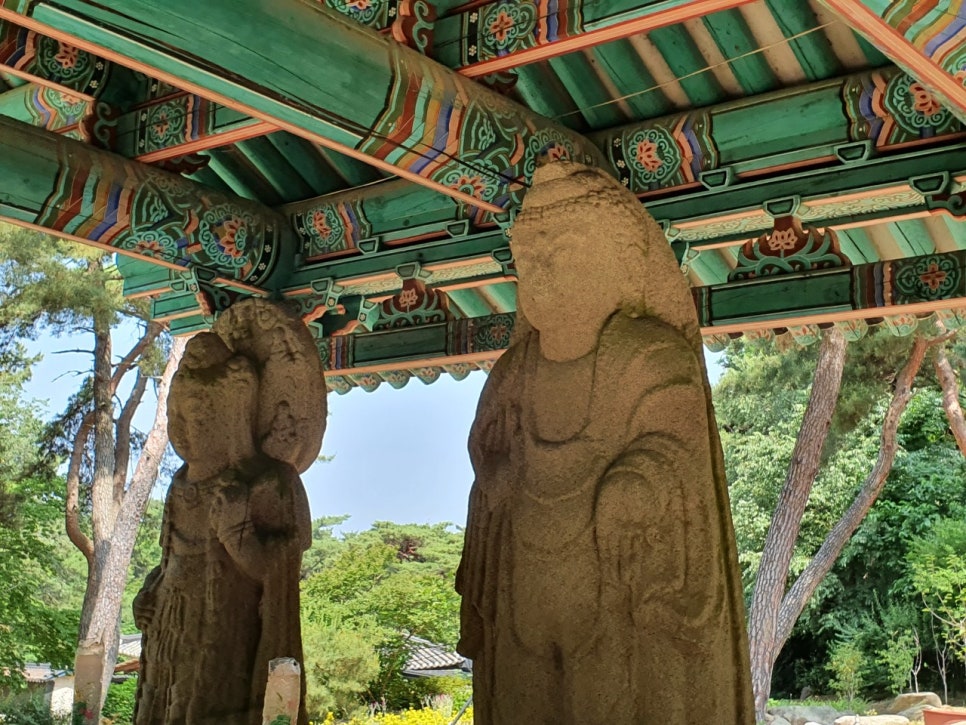
The protective pavilion over the Bae-ri standing stone Buddhas beside Sambulsa temple, near the start of the trail to the Seonbanggok carving (photographed 2020; not the Buddha in this survey)
Photo: Korea National Park Service, Saengsaeng Photo · KOGL Type 1
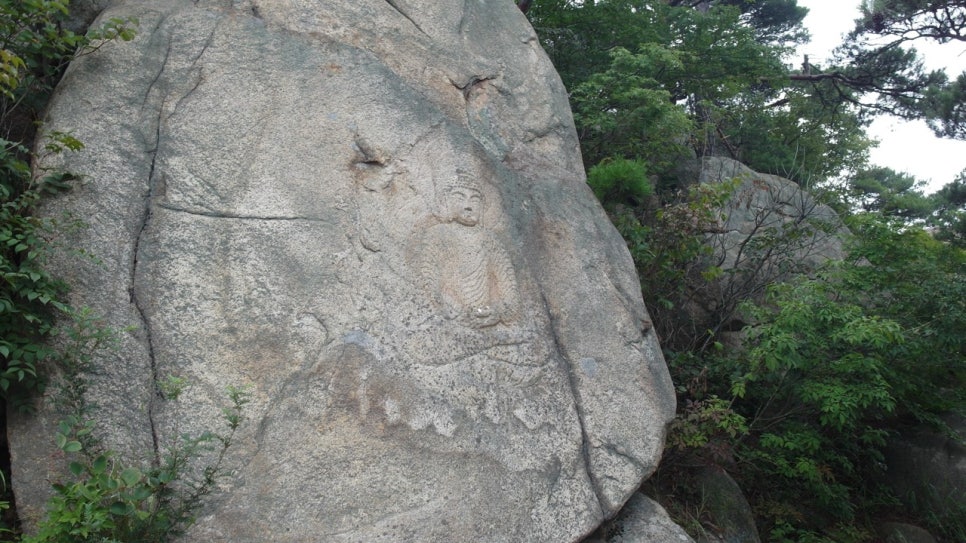
The rock face of the Yongjangsa temple site seated Buddha (not the Buddha in this survey)
Photo: Korea National Park Service, Saengsaeng Photo · KOGL Type 1
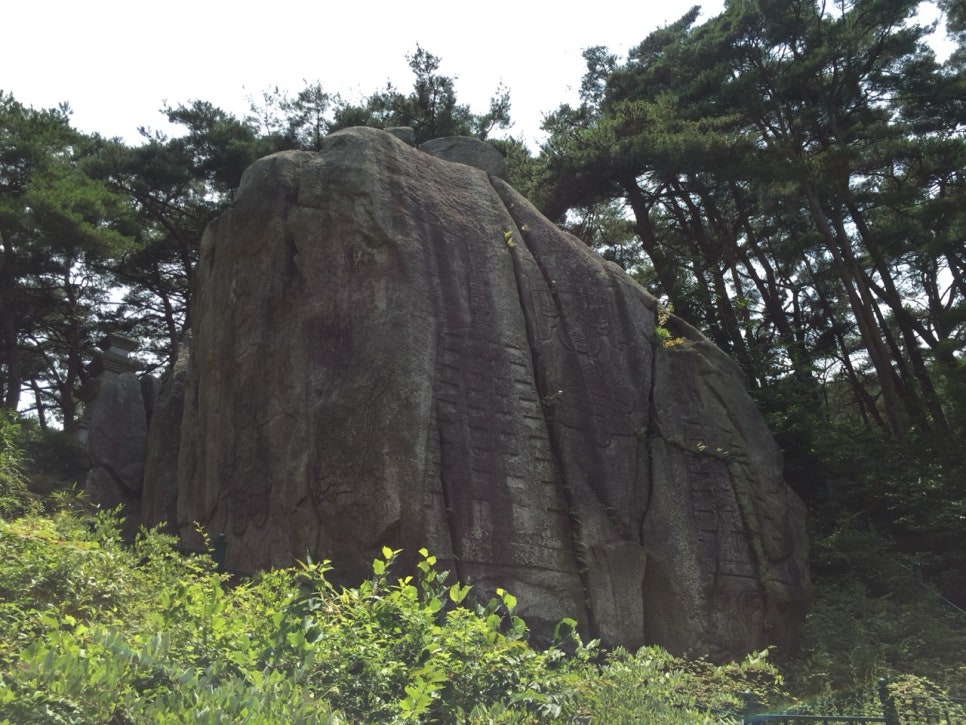
The rock of the Tapgok carved Buddhas seen from a distance (not the Buddha in this survey)
Photo: Korea National Park Service, Saengsaeng Photo · KOGL Type 1
Can you see the carving on Namsan now?
No public viewing or guided session has been announced. National parks charge no entry fee, so you can walk to it on the trail, but because the figure is only incised and badly worn, expect not to make out the hands on site. The scan drawings have been released only as photographs attached to the Korean press release.
Timing matters too. Every autumn the Korea National Park Service shuts trails with a high fire risk, and this year it is closing 148 sections nationwide from 15 November to 15 December. Check which Namsan trails are affected on the park service's trail-closure page before you set out. The Sambulsa and Samneung trailheads can be reached by bus from central Gyeongju.
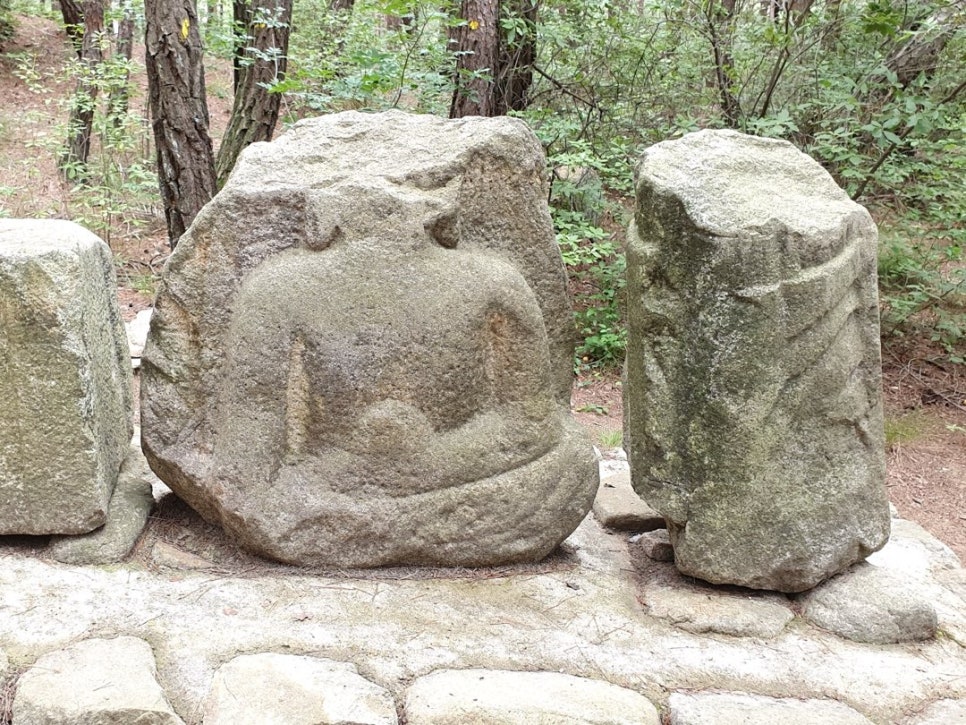
Pagoda stones and a Buddha at Samneunggok Site 1 (photographed 2019; not the Buddha in this survey)
Photo: Korea National Park Service, Saengsaeng Photo · KOGL Type 1
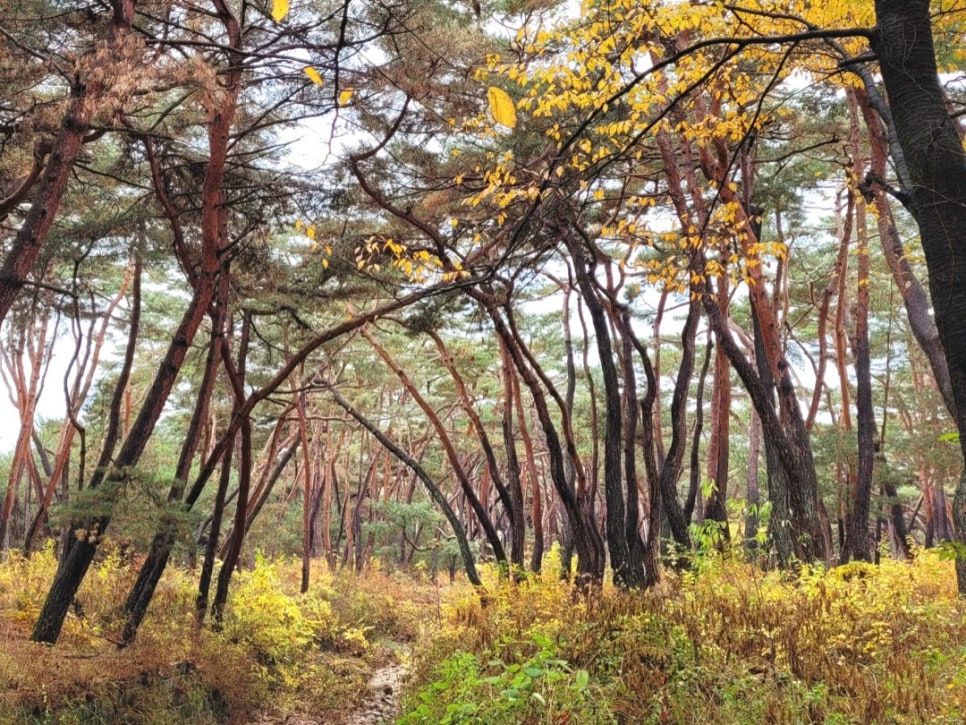
The Samneung pine forest in autumn (photographed November 2022) — the best-known trailhead on Namsan's west side
Photo: Korea National Park Service, Saengsaeng Photo · KOGL Type 1
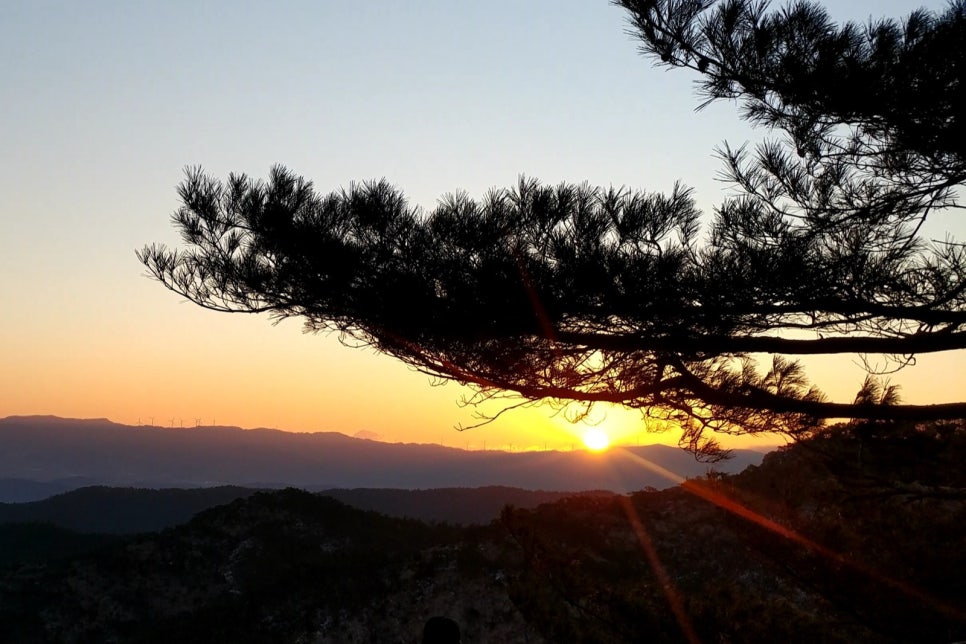
Sunrise from Sinseonam (photographed 1 January 2021)
Photo: Korea National Park Service, Saengsaeng Photo · KOGL Type 1
Getting to Namsan and what to expect on the trail
From Seoul, the KTX reaches Singyeongju Station in roughly two hours; from there, or from central Gyeongju, city buses run to the Samneung stop on the west side of Namsan, a short walk from Sambulsa temple. The carving is about 900 m up the Sambulsa–Geumobong trail, so allow a steady uphill walk and wear proper shoes. Main trail signposts on Namsan give names in English as well as Korean, but no information board for this newly assessed carving has been announced, and the press release and park pages are in Korean only. Nothing needs booking, and the park is free. Namsan rewards the walk even if you cannot read the Seonbanggok lines: the Samneung valley, Chilburam and Yongjangsa site carvings pictured here are clearer and lie on the same mountain.
Frequently asked questions
- Q. Has the Namsan Vairocana been confirmed?
- No. The Korea National Park Service says the jigwonin revealed by 3D scanning makes a standing Vairocana a possibility it is paying attention to, and that expert advisers rated it the first such case among Gyeongju's rock-carved Buddhas. When and why it was carved still needs research.
- Q. Where is the Seonbanggok Site 4 line-carved Buddha?
- In the Namsan district of Gyeongju National Park, on a natural rock face about 900 m up the trail from Sambulsa temple towards Geumobong peak. The figure is about 2.4 m high.
- Q. What does the jigwonin gesture look like?
- Both hands are raised in front of the chest as fists; the right hand wraps the raised index finger of the left, and the right thumb tip touches the tip of that left index finger. It is the gesture of the Vairocana Buddha.
- Q. How do 3D scanning and digital rubbing differ?
- A 3D scan records the rock surface as three-dimensional data; contact-free digital rubbing extracts the incised lines from that data as a flat image, like an ink rubbing. Neither touches the stone.
- Q. Can I go and see it now?
- There is no viewing programme. You can walk to it on the trail, but the worn lines are hard to see unaided. Some trails close from 15 November to 15 December 2026 for the fire season, so check the Korea National Park Service's closure page first.
- Q. Is it worth going if I do not read Korean?
- For this carving alone, probably not: there is no English (or Korean) board at the spot yet and the lines are faint. As part of a Namsan hike, yes — the trail from Samneung or Sambulsa passes several clearer rock Buddhas, trail signposts are bilingual, and the park is free with nothing to book.
Editor's note · Kang Shin-wook
For anyone walking Namsan in Gyeongju, and for readers curious how weathered rock carvings are being re-read digitally. We kept only what the park service's release states and separated what was found from what is still conjecture; every Namsan photo here shows a different carving, and the captions say so. National park rules in English are on our Korea National Park Service page.
Sources
- Official notice (Korean)
- Kyongbuk Maeil report on the 3D scan of the Namsan rock Buddha, 11 Nov 2026 (Korean)
- Metro Seoul report on the 2026 autumn fire-season trail closures (Korean)
Written in our own words from the sources above, never copied from them, and every date and price checked against at least two pages. The originals are in Korean. Spotted a mistake? Ask for a correction.
Latest from Korea National Park Service
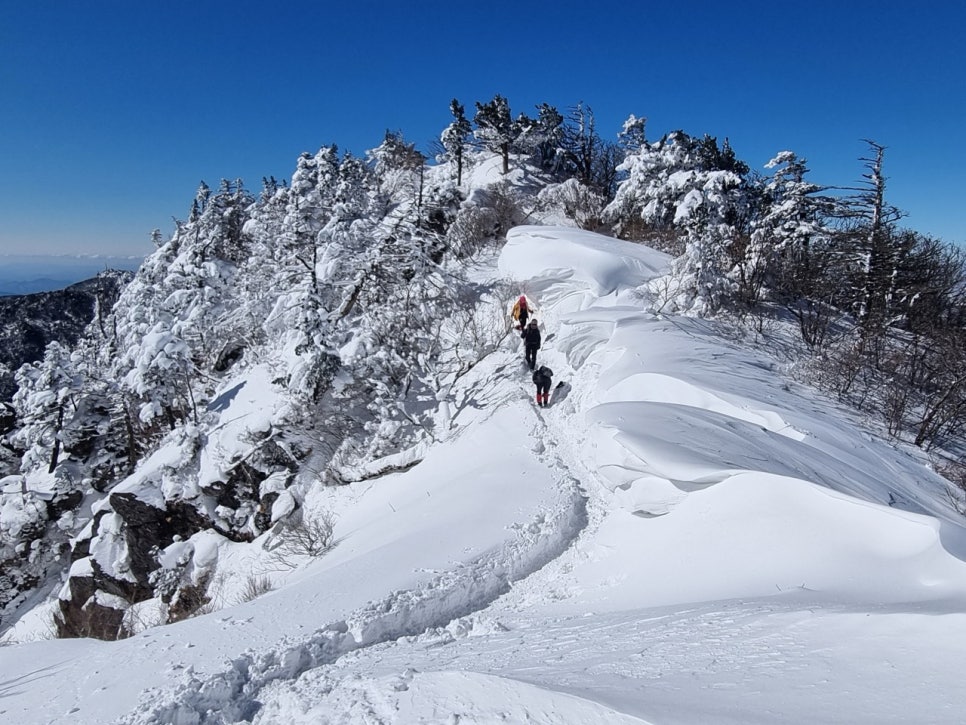 Korea National Park ServiceNotice18 November 2026Korea national parks in winter: snow closures and 69 icy spots — to 15 March
 Korea National Park ServiceNotice8 November 2026Seoraksan's Baekdam Valley trail opens — a 5.7 km walk to Baekdamsa
 Korea National Park ServiceNotice7 November 2026Jirisan campsites ban charcoal fires — free electric grills, 15 Nov–15 Dec
 Korea National Park ServiceNotice5 November 2026Taebaeksan Sky Observatory: a free, step-free view — 80,000 visitors