Notice·Korea National Park Service
Korea national parks in winter: snow closures and 69 icy spots — to 15 March
Summary
The Korea National Park Service is running its winter natural-disaster period from 15 November 2026 to 15 March 2027, watching 18 sections where heavy snow can strand hikers and 51 sections that ice over every year. Under a heavy-snow advisory only 125 trail sections stay open, and under a warning only 14, so check the closure page and winter entry hours before you set out. The catch for visitors: the closure notices, trailhead boards and emergency texts are all in Korean.
Article
In short
- The Korea National Park Service runs a winter natural-disaster period for four months, from 15 November 2026 to 15 March 2027.
- It is watching 69 places closely: 18 sections where heavy snow can cut hikers off and 51 sections that ice over every year. Eleven of the 18 cut-off sections are on Jirisan.
- When a heavy-snow advisory or warning (or a preliminary notice of one) is issued, park offices meet and close trails. Under a heavy-snow advisory only 125 sections in 19 parks stay open; under a heavy-snow warning only 14 do — two on Seoraksan and 12 in Taean Haean National Park.
- Closed trails reopen only after the alert is lifted and a safety check is done. Check the closure page on the morning you set out — it is in Korean only, and the park service's own help page tells foreign visitors to use the browser's translate function.
- From November to March winter entry hours apply: most trailheads open at 05:00 and stop admitting hikers in the early afternoon (the time varies by trailhead).
The first thing to know about hiking a Korean national park in winter is simple: when snow is forecast, trails close. In a press release issued on 15 November, the Ministry of Climate, Energy and Environment and the Korea National Park Service said this winter's period runs on the same dates as the government-wide winter natural-disaster period. Below we set out the lists attached to that release — the sections at risk and the trails that stay open under a snow alert — so you can check whether your route is affected before you go.
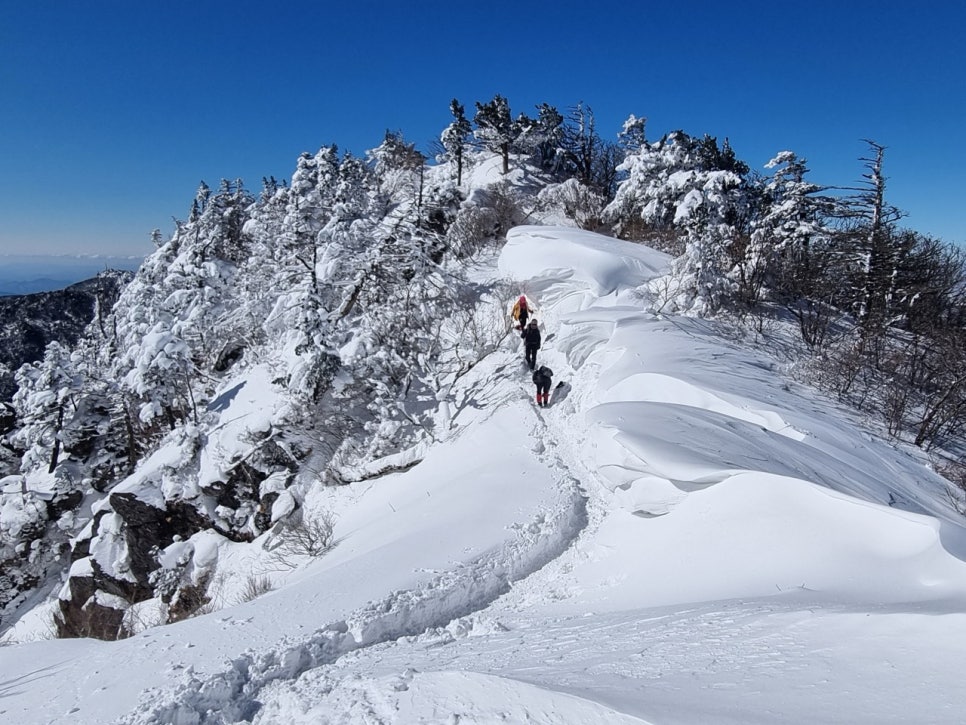
Jirisan's winter ridge (taken February 2025). Eleven of the 18 sections at risk of hikers being cut off are on Jirisan's main ridge.
Photo: Korea National Park Service, Saengsaeng Photo · KOGL Type 1
Where are the 69 winter danger spots?
There are two kinds. The first is 18 sections where heavy snow can cut off the path and leave hikers stranded; all are ridge sections above 1,200 m. The second is 51 sections that ice over in the same place every year, spread across 18 parks and about 50 km in total. The park service keeps 95 information signs, 39 safety ropes and 41 barriers on these sections.
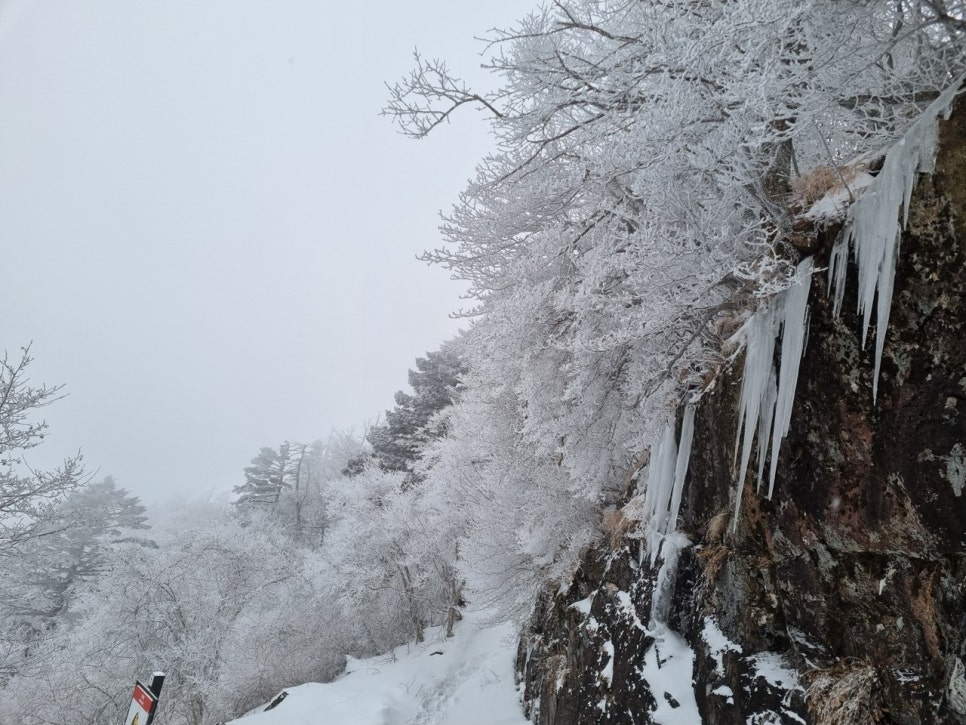
Jirisan in winter (taken December 2024). Places that freeze in the same spot every year, like this rock face, are what the park service calls repeat-ice sections.
Photo: Korea National Park Service, Saengsaeng Photo · KOGL Type 1
The 18 sections at risk of hikers being cut off by snow (by park, from attachment 1 of the press release)
- Jirisan (Gyeongnam side), 8 sections
- Jungsan-ri–Jangteomok, Yeonhabong–Jungbong, Baekmudong–Jangteomok, Baekmudong–Seseok, Seonbisaem–Yeonhabong, Seonbisaem–Yeonhacheon junction, Jungsan-ri–Cheonwangbong, Saejae–Jungbong. Shelters: Jangteomok, Seseok, Byeoksoryeong, Rotary, Chibatmok
- Jirisan (Jeonbuk side), 1 section
- Samdobong–Yeonhacheon Shelter (5.0 km). Shelter: Yeonhacheon
- Jirisan (Jeonnam side), 2 sections
- Nogodan–Banyabong (5.5 km), Piagol Shelter–Piagol junction (2 km). Shelters: Nogodan, Piagol
- Seoraksan, 3 sections
- Gongnyong Ridge (4.9 km), Daecheongbong–Socheong junction (1.2 km), Daeseungnyeong–Hangyeryeong junction (7.6 km). Shelters: Huiungak, Yangpok, Socheong, Jungcheong
- Deogyusan, 2 sections
- Dongyeopryeong–Hyangjeokbong (4.3 km), Namdeogyusan–Dongyeopryeong (11.5 km). Shelters: Hyangjeokbong, Satgatjae
- Odaesan, 1 section
- Noinbong–Mureunggye (9.6 km). Shelter: Noinbong (unstaffed)
- Sobaeksan, 1 section
- Jungnyeong–Yeonhwabong (7 km). Shelter: Second Yeonhwabong
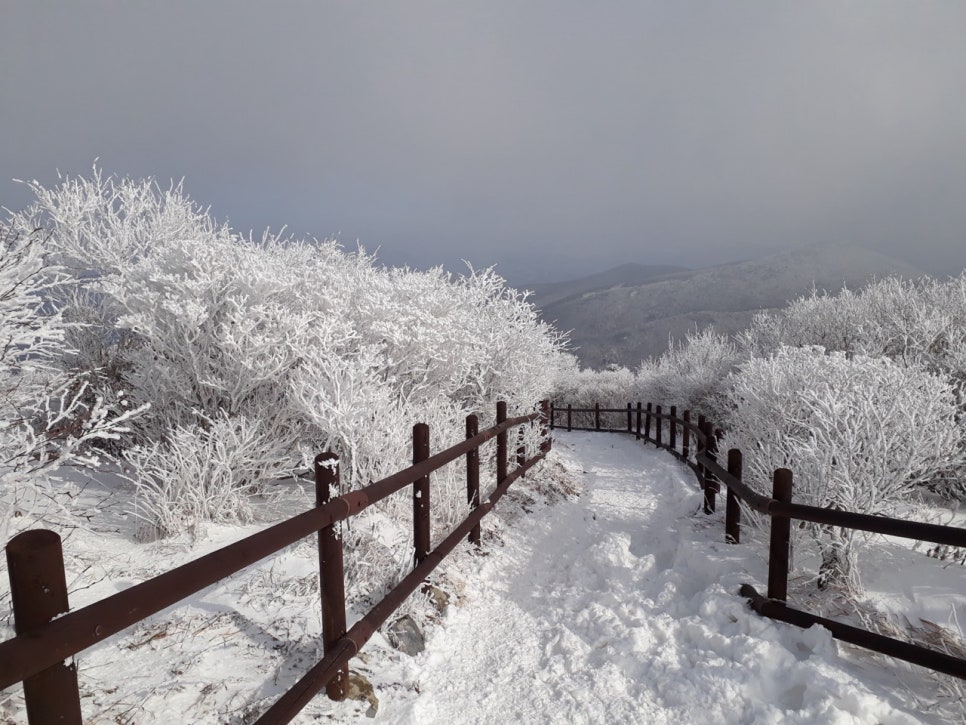
A snowy Taebaeksan trail (archive photo, December 2018). Three points on Taebaeksan, including Danggol Plaza to Banjae, are managed as repeat-ice sections.
Photo: Korea National Park Service, Saengsaeng Photo · KOGL Type 1
Repeat-ice sections are most numerous on Seoraksan (7), the Gyeongnam side of Jirisan (11) and Bukhansan–Dobongsan (6). On Bukhansan they include the Kalbawi ridge, Insu Shelter to Baegundae, below Daedongmun gate and Uisangbong to Nawolbong, plus the Podae ridge on Dobongsan. Chiaksan's list covers the Seryeom Falls area, and Mudeungsan's the 6 km from Wonhyo Plaza to Jangbuljae. Many of these are popular routes, so even where the path looks easy, plan for ice.
How are national park trails closed when it snows?
The trigger is a Korea Meteorological Administration alert. When a heavy-snow advisory or warning, or a preliminary notice of one, is issued, each park office meets to decide which trails to close. According to the release's attachments, of 871 trail sections nationwide, 746 (about 2,190 km) close under a heavy-snow advisory and 857 (about 2,424 km) under a heavy-snow warning. The Korean blog version of this story said only that low-lying trails stay open under a snow alert; the official lists distinguish advisory from warning, and the number of open trails differs sharply between them.
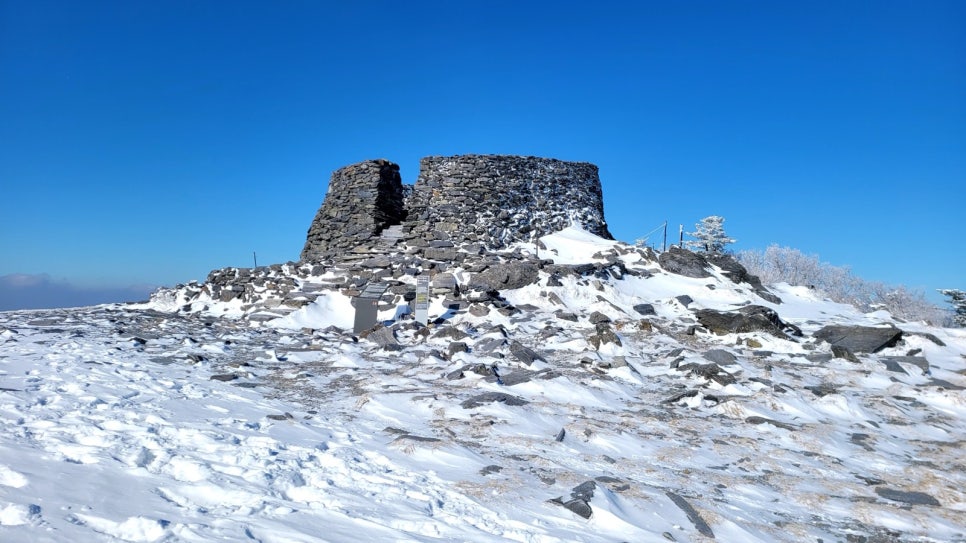
Cheonjedan altar, Taebaeksan (archive photo, December 2023). The Danggol Plaza and Yuilsa entrance trails to Cheonjedan stay open even under a heavy-snow advisory.
Photo: Korea National Park Service, Saengsaeng Photo · KOGL Type 1
Which trails stay open at each snow-alert level
- Heavy-snow advisory
- 125 sections in 19 parks (about 259 km) stay open — 95 fully, 30 only in part
- Heavy-snow warning
- Only 14 sections stay open — two on Seoraksan (Seorak-dong–Ulsanbawi, Baekdamsa–Baekdam visitor centre) and 12 trails in Taean Haean National Park
- Well-known routes open under an advisory
- Jirisan: Seongsamjae–Nogodan summit. Seoraksan: Sogongwon–Biseondae, Osaek mineral spring–Yongso Falls. Bukhansan: Uiryeong-gil. Taebaeksan: Danggol Plaza–Cheonjedan, Yuilsa entrance–Cheonjedan. Odaesan: Haetalgyo–Sangwonsa. Gyeryongsan: Gapsa–Daejeokjeon
- When closed trails reopen
- After the alert is lifted and a safety check is done — no fixed date
Closures are announced on the park service's website, its official social media and the disaster-message boards at trailheads. In a separate release the Bukhansan National Park office said it would push weather and closure information out by emergency text message, on the website and on the electronic boards at trail entrances. The surest routine is to check the closure page before you leave home and read the board at the trailhead again on arrival.
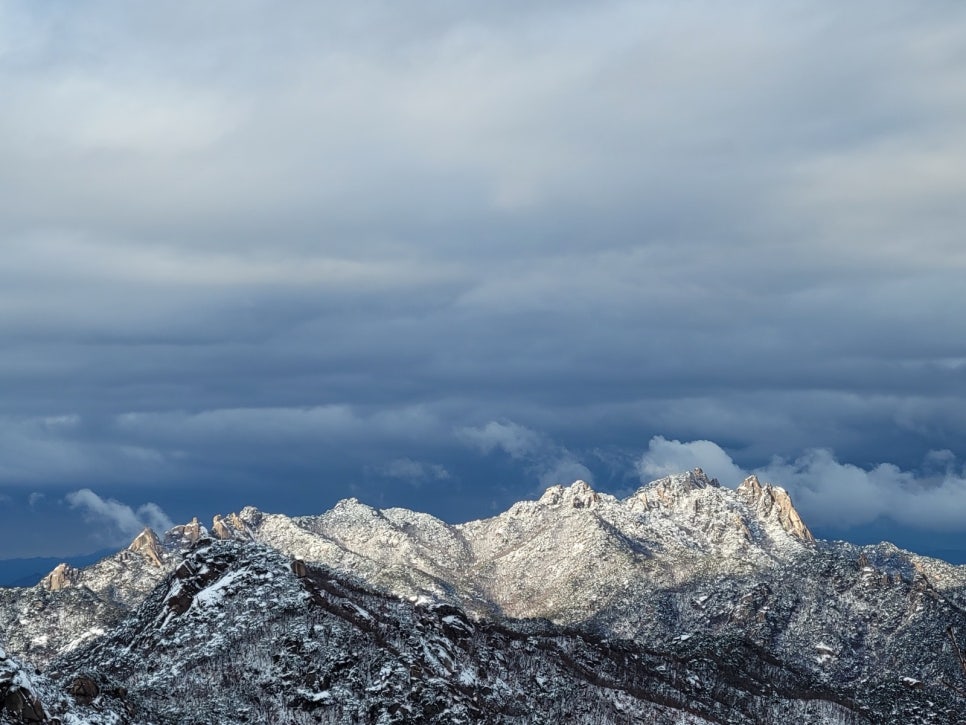
Bukhansan's granite peaks under snow (archive photo, January 2024). The Bukhansan and Dobongsan areas have six repeat-ice sections.
Photo: Korea National Park Service, Saengsaeng Photo · KOGL Type 1
What does the park service prepare for winter?
It checks the relief supplies in shelters, information signs and safety ropes, and clears the access roads and campsites with snow-clearing equipment. The 16 shelters designated for the cut-off sections hold relief stores, including 510 kg of grain and 270 sets of bedding. A disaster control room and emergency shifts run according to weather alerts and the national crisis level, each park office holds at least one drill simulating stranded hikers, and rescue and transfer arrangements are kept in place with the fire service and other agencies.
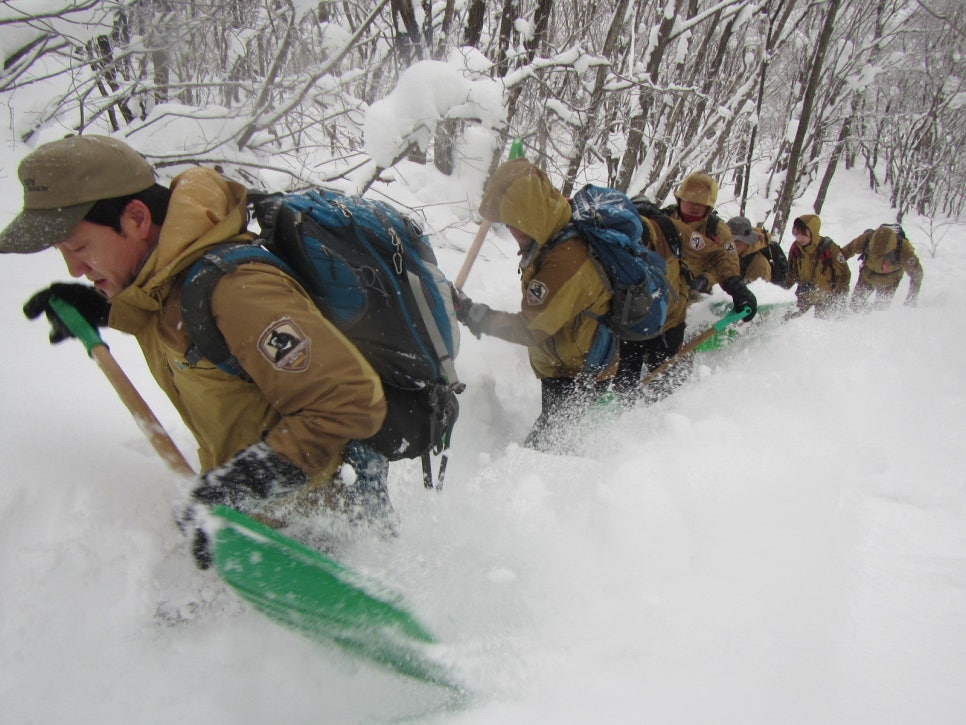
Odaesan National Park staff clearing snow (archive photo, February 2014).
Photo: Korea National Park Service, Saengsaeng Photo · KOGL Type 1
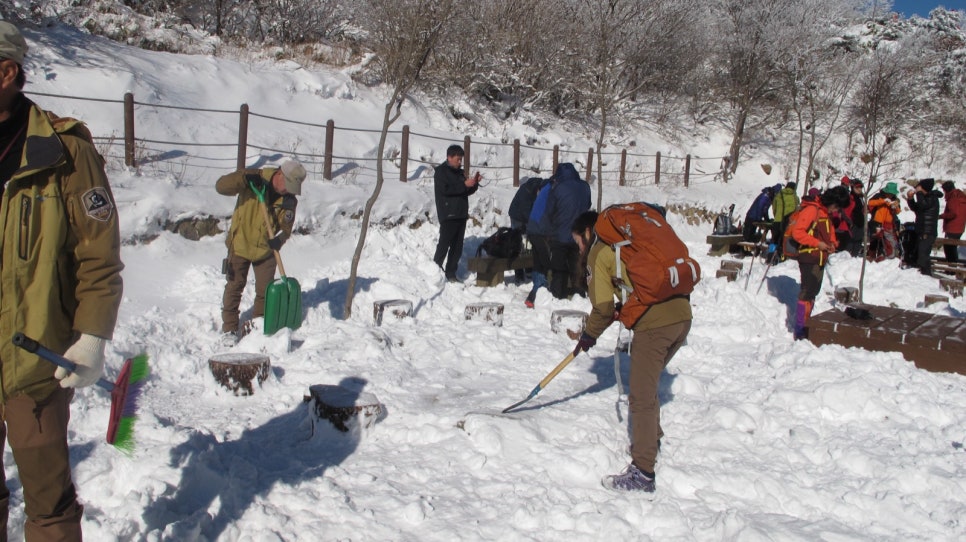
Clearing snow on a Songnisan trail (archive photo, December 2013).
Photo: Korea National Park Service, Saengsaeng Photo · KOGL Type 1
Individual park offices are preparing too. The Bukhansan office says it has checked its snow-clearing equipment and moved it forward, and is reinforcing safety fittings on repeat-ice sections and steep slopes. The Chiaksan office says it has stepped up patrols of the icy sections around Saribyeongchang and Birobong and holds joint rescue drills with a volunteer mountain rescue team and the Wonju fire station.
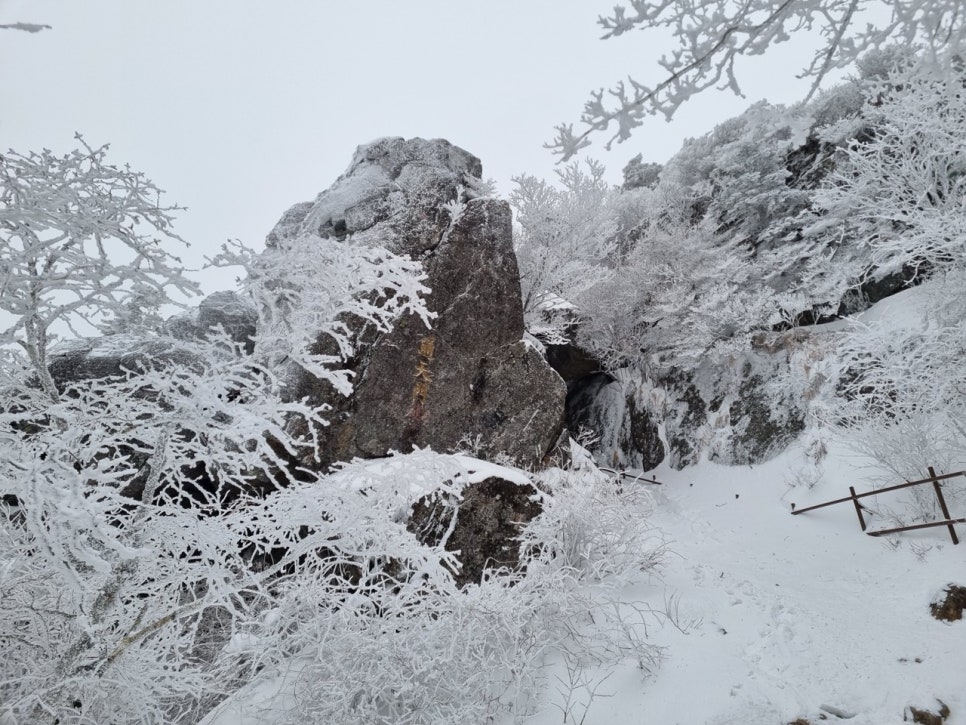
A winter trail on Jirisan (taken December 2024). The Gyeongnam side of Jirisan alone has 11 repeat-ice sections.
Photo: Korea National Park Service, Saengsaeng Photo · KOGL Type 1
What to check before a winter hike in a national park
- Weather alerts and trail closures — they can change on the morning of your hike.
- Winter entry hours — from November to March most trailheads admit hikers from 05:00, and the cut-off is somewhere between about 12:00 and 15:30 depending on the trailhead, roughly an hour earlier than in summer. On Chiaksan's main trails entry stops after 14:00.
- Crampons and gaiters — even if the trailhead is clear, the ridges hold ice. The Chiaksan office also lends hiking gear.
- Warm layers and emergency food — if you are stranded, keeping warm comes first.
- Sunset — in winter it is dark in the forest soon after 16:00 (Chiaksan office advice).
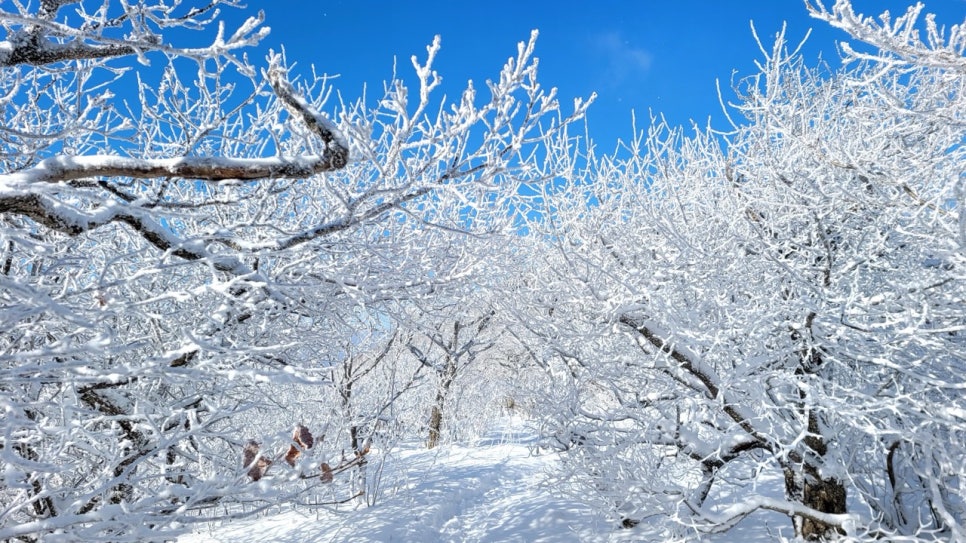
Hoarfrost on Taebaeksan (archive photo, December 2023). Shaded paths stay frozen on clear days after the snow stops.
Photo: Korea National Park Service, Saengsaeng Photo · KOGL Type 1
What should you do if heavy snow catches you on the mountain?
The park service's advice is short. If heavy snow starts, give up on the summit and go back down the way you came, or head for the nearest shelter. Each of the 18 cut-off sections has a designated shelter, so if you are walking the main ridges of Jirisan, Seoraksan or Deogyusan, note the shelter names on your route before you start.
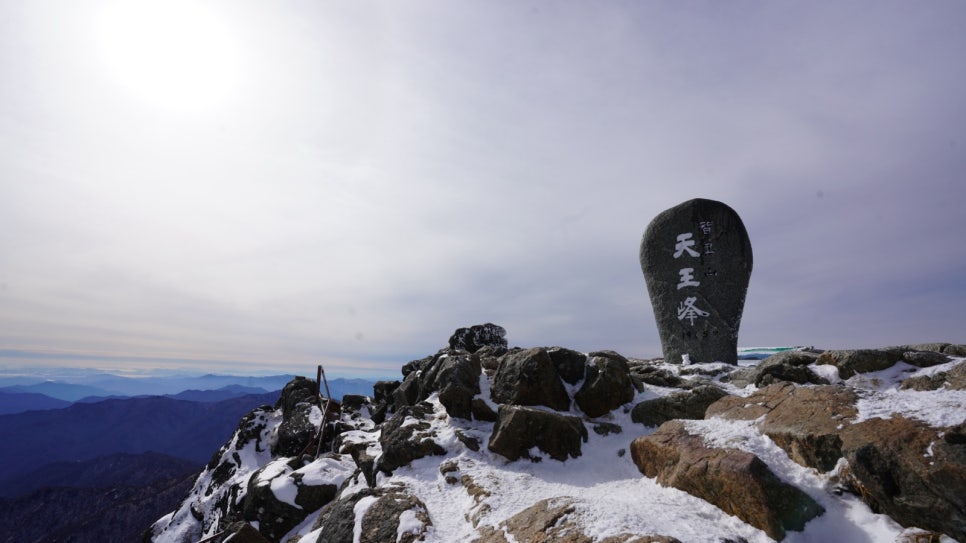
Cheonwangbong, the summit of Jirisan (archive photo, December 2023). The Jungsan-ri to Cheonwangbong route is one of the cut-off risk sections.
Photo: Korea National Park Service, Saengsaeng Photo · KOGL Type 1
It overlaps with the autumn fire season
National parks also close some trails each autumn during the wildfire-prevention period, which this year runs from 15 November to 15 December. Until mid-December both fire and snow closures can apply, so check both on the closure page.
In short, three steps: check closures and entry hours before you leave, pack crampons and warm clothing, and if heavy snow catches you, go down or go to a shelter. The park service may be watching 69 places, but the last safety measure is the hiker's own preparation.
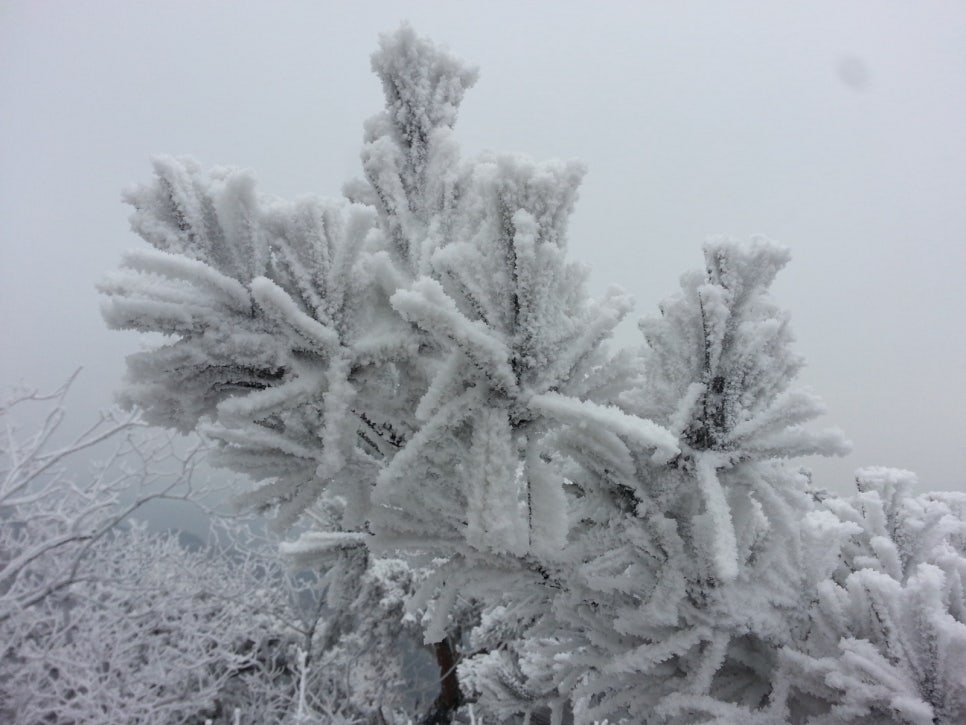
Hoarfrost on Bukhansan (archive photo, December 2018).
Photo: Korea National Park Service, Saengsaeng Photo · KOGL Type 1
Checking closures without reading Korean
Nothing here needs booking: national parks charge no entry fee and day hikes are walk-in. What a visitor who reads no Korean has to solve is the information. The Korea National Park Service's website, including the trail-closure and winter entry-hour pages linked on this page, is in Korean only, and its own multilingual help page simply tells foreign visitors to right-click and use the Chrome or Edge 'Translate to English' option; that works well enough on the closure table. The electronic boards at trailheads and the emergency text messages are in Korean too, so take a photo of the board and run it through a translation app if a ranger is not at hand. The two numbers to know are 119 for mountain rescue and 1330, the Korea Travel Helpline run by the Korea Tourism Organization, which answers in English and can interpret over the phone. Mountain shelters on Jirisan and Seoraksan are the one thing that is booked, through the park service's Korean-language reservation site; we have not confirmed whether it accepts a foreign phone number. For a first winter outing from Seoul, Bukhansan is the easy choice — Bukhansan Ui station on the Ui LRT line stops at the trailhead — and the Uiryeong-gil trail between Bukhansan and Dobongsan stays open even under a heavy-snow advisory.
Frequently asked questions
- Q. When is the national park winter natural-disaster period?
- Four months, from 15 November 2026 to 15 March 2027. It runs on the same dates as the government-wide winter natural-disaster period led by the Ministry of the Interior and Safety.
- Q. Do all national park trails close when it snows?
- No. Under a heavy-snow advisory, 125 of the 871 trail sections nationwide, in 19 parks, stay open; under a heavy-snow warning only 14 do — two on Seoraksan and 12 in Taean Haean National Park. Each park office decides the exact closures after the alert is issued.
- Q. When do closed national park trails reopen?
- After the heavy-snow alert is lifted and a safety check is completed. There is no fixed date, so check the closure page on the Korea National Park Service website or the board at the trailhead.
- Q. Where can I see the list of 69 winter danger spots?
- Attachment 1 of the press release issued on 15 November 2026 lists all 18 cut-off sections and 51 repeat-ice sections by park and section. It can be downloaded from the release page on Korea.kr, the government briefing site; the table above lists the 18 cut-off sections in English.
- Q. What time can I start a hike in a Korean national park in winter?
- From November to March most trailheads admit hikers from 05:00, with the cut-off between about 12:00 and 15:30 depending on the trailhead. The Korea National Park Service lists the times for every trailhead on its entry-hours page (in Korean).
- Q. Is it worth going if I do not read Korean?
- Yes — snow-covered Korean mountains are spectacular and free to enter. The catch is that closure notices, trailhead boards and emergency texts are in Korean, so check the closure page with browser translation the morning you go, pick a route that stays open under an advisory, and keep 119 (rescue) and 1330 (English travel helpline) in your phone.
Editor's note · Kang Shin-wook
For anyone planning a snow hike in a Korean national park this winter. Beyond the press release itself, we read its attached lists of risk sections and open trails and regrouped them by park; the Korean blog's line that only low-lying trails stay open under a snow alert is corrected here to the official advisory and warning figures. National park rules in English are on our Korea National Park Service page.
Sources
- Official notice (Korean)
- Korea National Park Service, Bukhansan office press release on winter disaster preparation, 12 Nov 2026 (Korean)
- Korea National Park Service, Chiaksan office column on safe winter hiking, 17 Nov 2026 (Korean)
- Korea.kr policy news on the government's winter snow and cold-wave measures, 11 Nov 2026 (Korean)
- Korea National Park Service, designated entry hours (Korean)
- Korea National Park Service multilingual help page (English)
Written in our own words from the sources above, never copied from them, and every date and price checked against at least two pages. The originals are in Korean. Spotted a mistake? Ask for a correction.
Latest from Korea National Park Service
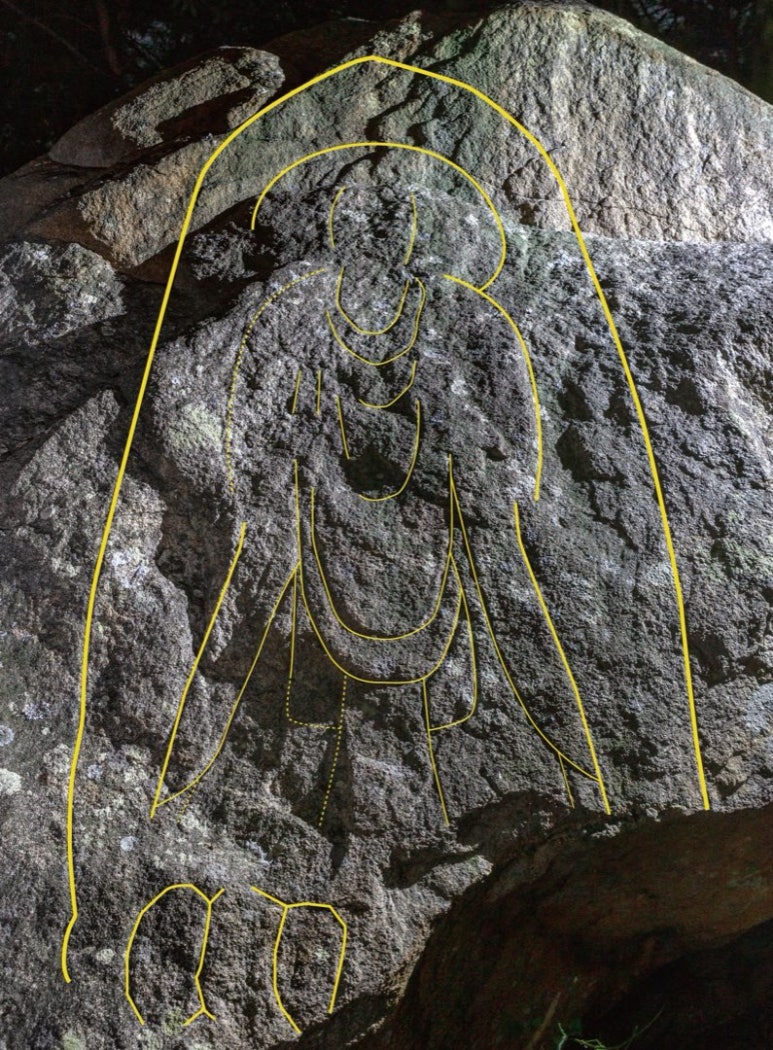 Korea National Park ServiceNotice14 November 2026Gyeongju Namsan rock Buddha: 3D scan finds a Vairocana hand gesture
 Korea National Park ServiceNotice8 November 2026Seoraksan's Baekdam Valley trail opens — a 5.7 km walk to Baekdamsa
 Korea National Park ServiceNotice7 November 2026Jirisan campsites ban charcoal fires — free electric grills, 15 Nov–15 Dec
 Korea National Park ServiceNotice5 November 2026Taebaeksan Sky Observatory: a free, step-free view — 80,000 visitors