Summary
The giant ginkgo outside Unggok Seowon, a Confucian academy in Gangdong-myeon, Gyeongju (about 30 m tall, a protected tree since 1982), is one of the city's best-known autumn sights; Gyeongju City says its leaves turn in early to mid-November, and on 10 November 2026 a news report put it at about 90% yellow. There is no admission charge and parking is free, but the academy buildings are run by the founding clan and stay shut except on ceremony days, so you see the tree from outside the wall, beside the Yuyeonjeong pavilion. Nothing needs booking; the catch is getting there, as the valley is a 20-plus-minute drive from central Gyeongju.
Article
In short
- The Unggok Seowon ginkgo stands outside the wall of a Confucian academy at 79-13 Sara-gil, Gangdong-myeon, Gyeongju, in front of the Yuyeonjeong pavilion; there is no admission charge and parking is free.
- It is about 30 m tall with a trunk girth of about 6 m; Gyeongju City puts its age at about 400 years (other sources say 370–400), and it was designated a protected tree in 1982.
- Gyeongju City says the leaves turn in early to mid-November. In 2026 a news report put the tree at about 90% yellow on 10 November, and a 14 November report quoted a local expecting it to last until around the 18th.
- The academy buildings are managed by the Andong Gwon clan and closed except on ceremony days, so plan to see the tree and the pavilion from outside the wall. Nothing needs booking and nothing needs Korean to enjoy — the practical hurdle is transport: the valley is a 20-plus-minute drive north-east of central Gyeongju, and we could not confirm a bus that stops there.
- The tree is said to have grown from a branch of a Yeongju ginkgo linked to Prince Geumseong and the deposed King Danjong; in March 2026 North Gyeongsang announced plans to have it designated a national forest cultural asset.
Unggok Seowon sits in a valley in Wangsin-ri, Gangdong-myeon, more than 20 minutes' drive north-east of central Gyeongju, and every November people crowd into it to see a single tree: the ginkgo in front of Yuyeonjeong, the pavilion just outside the academy. Gyeongju City's tourism pages call it a scene you can only catch in early to mid-November, and in autumn 2026 a hit film (왕과 사는 남자) that revived interest in the deposed boy king Danjong also brought the story attached to this tree back into view. Below we set out when to go, what you can and cannot see, separating Gyeongju City and Korea Heritage Service material from news reports.
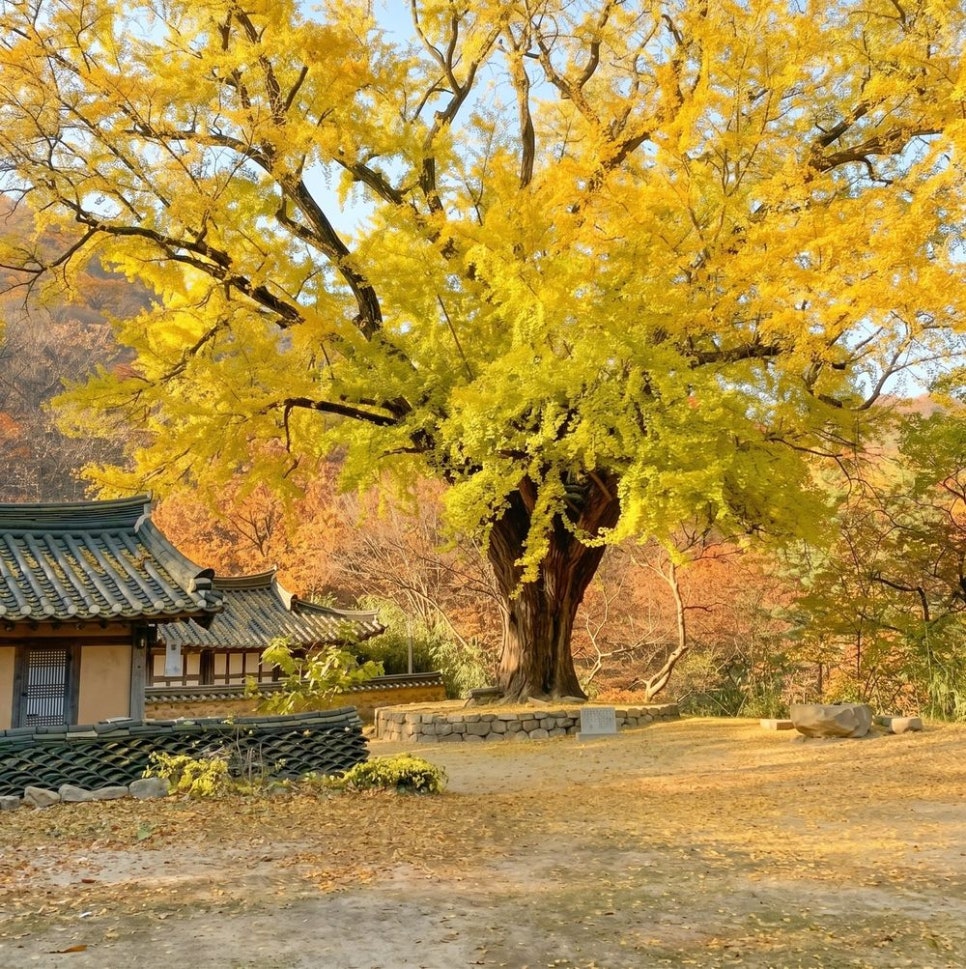
The Unggok Seowon ginkgo in full gold
Photo: Herald Corporation (provided by Gyeongbuk Culture and Tourism Organization)
If I go now, will the leaves still be yellow?
Gyeongju City gives the ginkgo's colour season as 'early November' or 'early to mid-November'. This year's progress is known only from news reports, not from any official announcement. News1 reported that about 90% of the leaves had turned yellow as of 10 November and expected that weekend to be the peak; its photo story from the morning of 14 November showed photographers and families under the tree even in the rain.
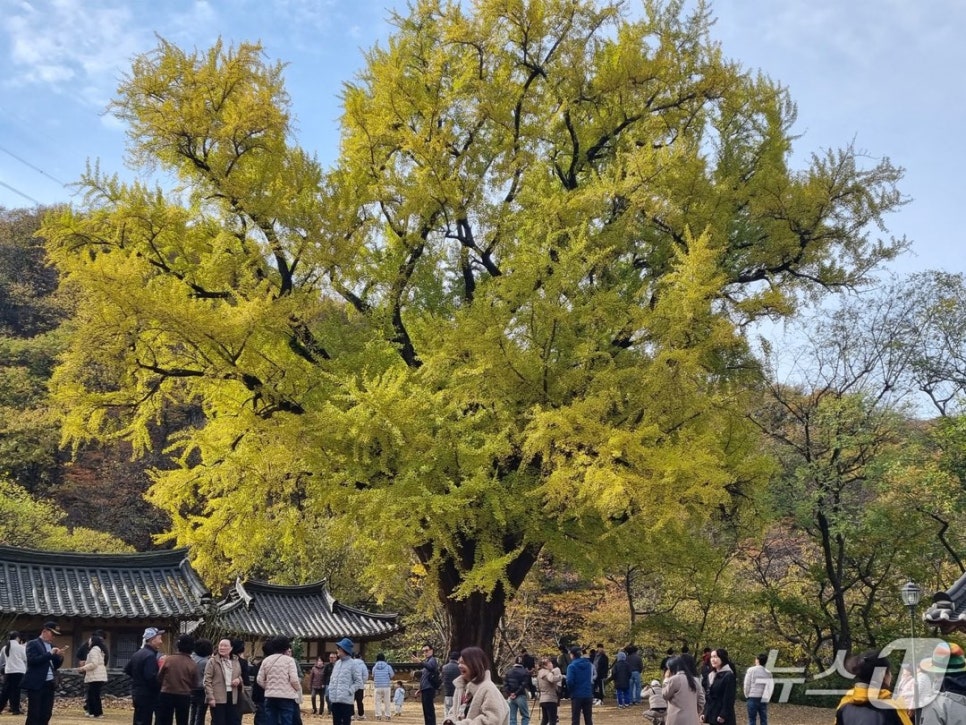
Visitors at the Unggok Seowon ginkgo on 8 November
Photo: News1
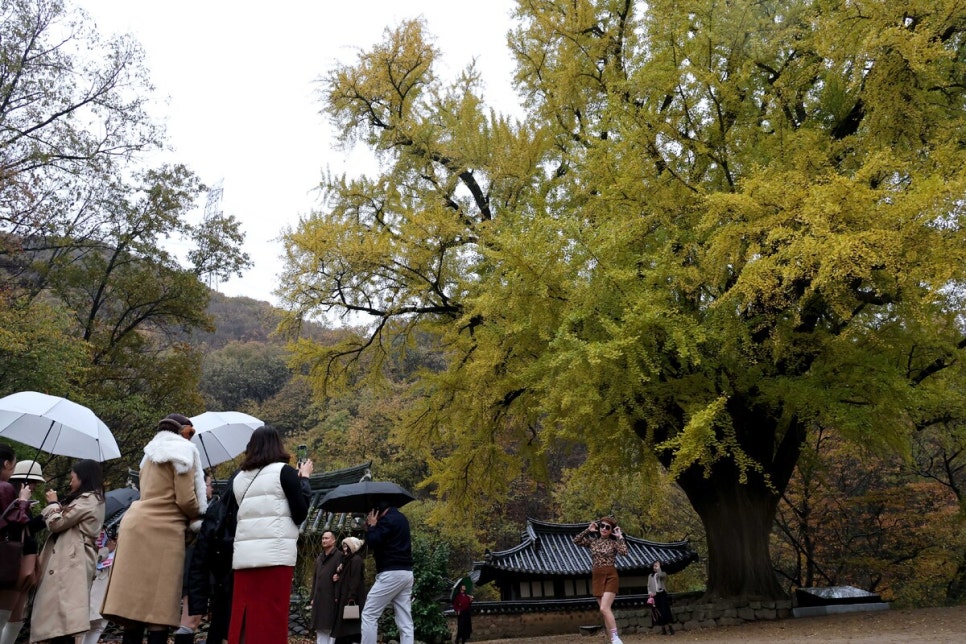
A Vietnamese tour group visiting the ginkgo on 9 November
Photo: Kyungbuk Maeil
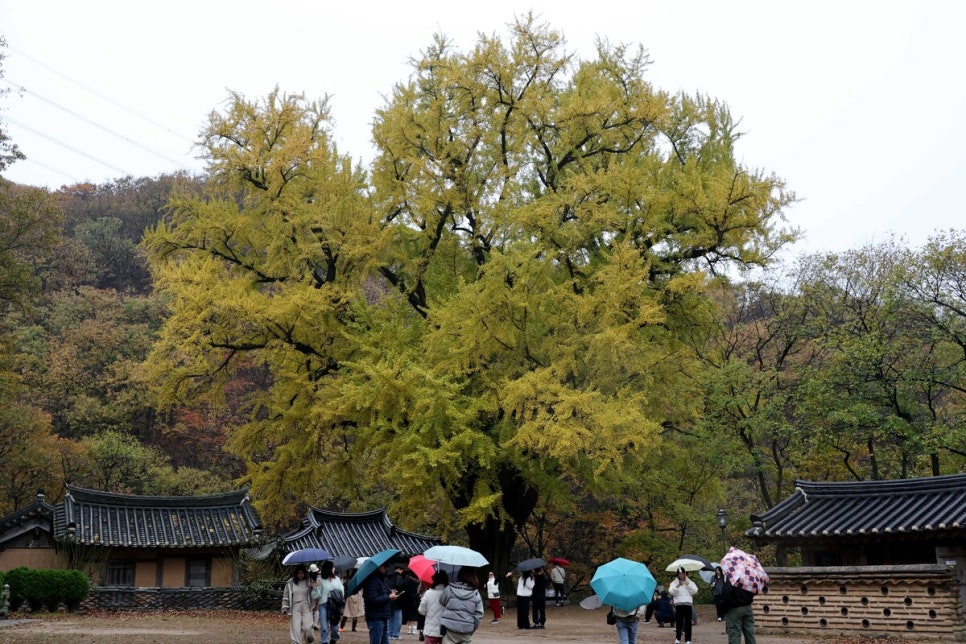
The tree on 9 November, still partly green
Photo: Kyungbuk Maeil
Kyungbuk Maeil reported that a tour group from Vietnam came to see the tree on the afternoon of 9 November. For travellers from a country where ginkgos are rare, the yellow leaves are the attraction in themselves — and it shows that Korean autumn-colour spots like this one are now appearing on overseas group itineraries.
Foliage progress is from news reports
The foliage progress above comes from news reports (News1, 10 and 14 November), not from any announcement by Gyeongju City or North Gyeongsang Province. The line that the leaves should last until around the 18th is a forecast by a local café owner quoted in the 14 November report. Wind, rain or frost can bring the leaves down all at once, so check a recent photo or report on the day you travel.
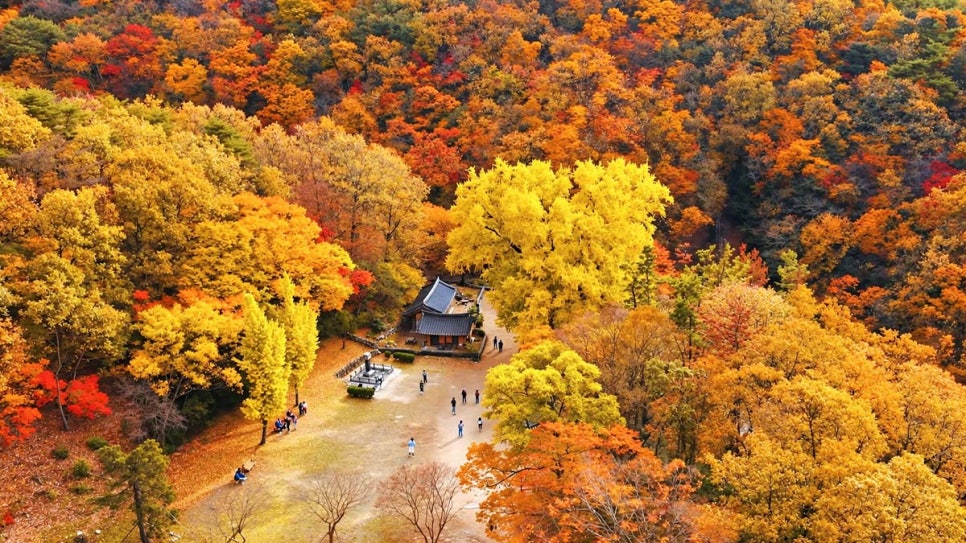
The Unggok Seowon area in autumn colour
Photo: Ardent News (still from Gyeongju City's YouTube channel)
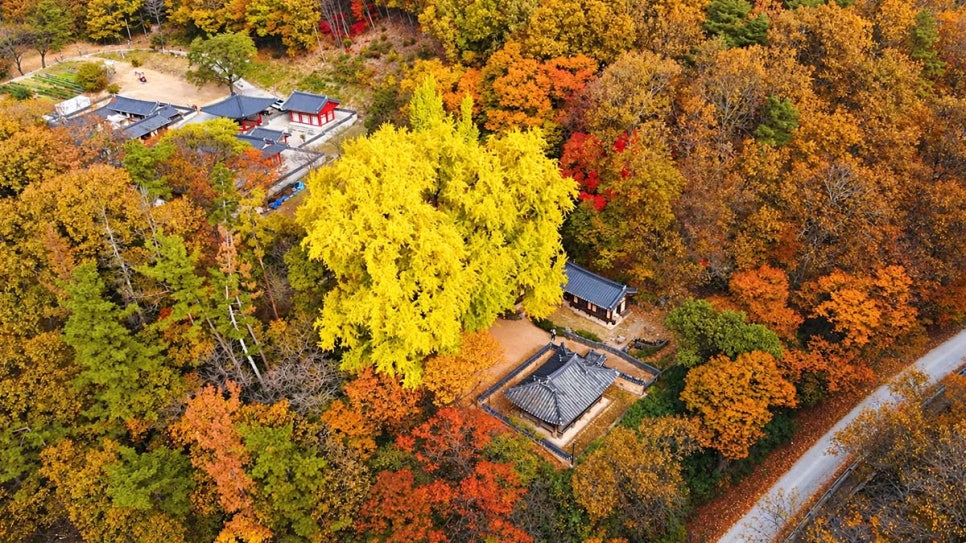
Unggok Seowon and its ginkgo from above
Photo: Ardent News (still from Gyeongju City's YouTube channel)
What story is attached to this tree?
In March 2026, as a hit film (왕과 사는 남자) renewed attention to Danjong and the officials loyal to him, North Gyeongsang Province announced plans to have two trees newly designated as national forest cultural assets: the Naejuk-ri ginkgo in Yeongju and the Unggok Seowon ginkgo in Gyeongju. National forest cultural assets are designated by the head of the Korea Forest Service and cover forest-related assets with significant ecological, scenic or emotional value. Both trees became protected trees in 1982.
The story goes like this. Gwon Jong-rak, a descendant of Gwon San-hae — who died after plotting with Prince Geumseong to restore Danjong to the throne — brought a large branch from the Naejuk-ri ginkgo in Yeongju, a tree believed to hold the prince's spirit, and planted it here. A further legend says the Yeongju tree seemed to wither after Danjong was deposed and put out leaves again once he was restored. These are oral and literary traditions, and as of November 2026 the province's designation plan has not been officially confirmed as completed.
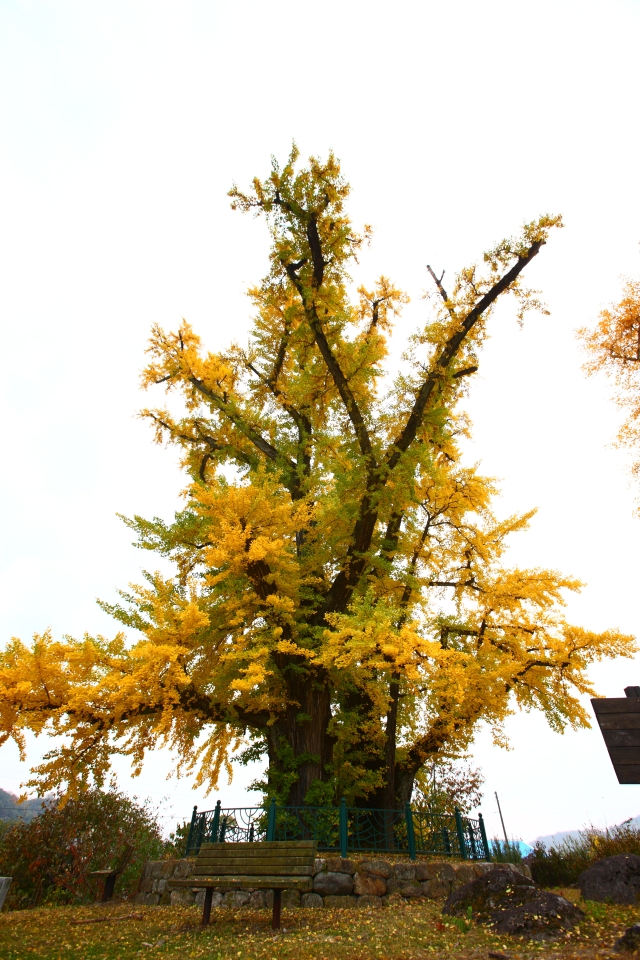
The Naejuk-ri ginkgo in Yeongju, said to be the parent of the Unggok Seowon tree
Photo: Seoul Shinmun (provided by Yeongju City)
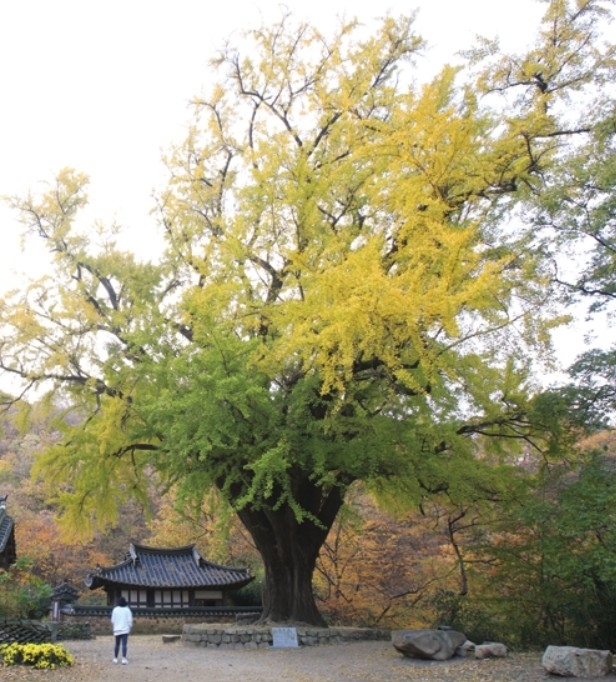
The Unggok Seowon ginkgo as it starts to turn
Photo: North Gyeongsang Province (provided)
What is Unggok Seowon, and can you go inside?
According to the Encyclopedia of Korean Culture, Unggok Seowon began in 1784 as Chuwonsa, a shrine built by local Confucian scholars to honour Gwon Haeng, founder of the Andong Gwon clan; it became an academy when Gwon San-hae and Gwon Deok-rin were enshrined alongside him. It was pulled down in 1868 under the Regent Heungseon Daewongun's order abolishing most academies, and rebuilt in 1976.
Yuyeonjeong, the pavilion that pairs with the tree, is a North Gyeongsang provincial heritage site. According to the Korea Heritage Service, the Andong Gwon clan built it in 1811 on a rock above the stream (Yongchudae) about 50 m east of the academy. The photo Gyeongju City recommends is the one that puts the tree and the pavilion in a single frame.
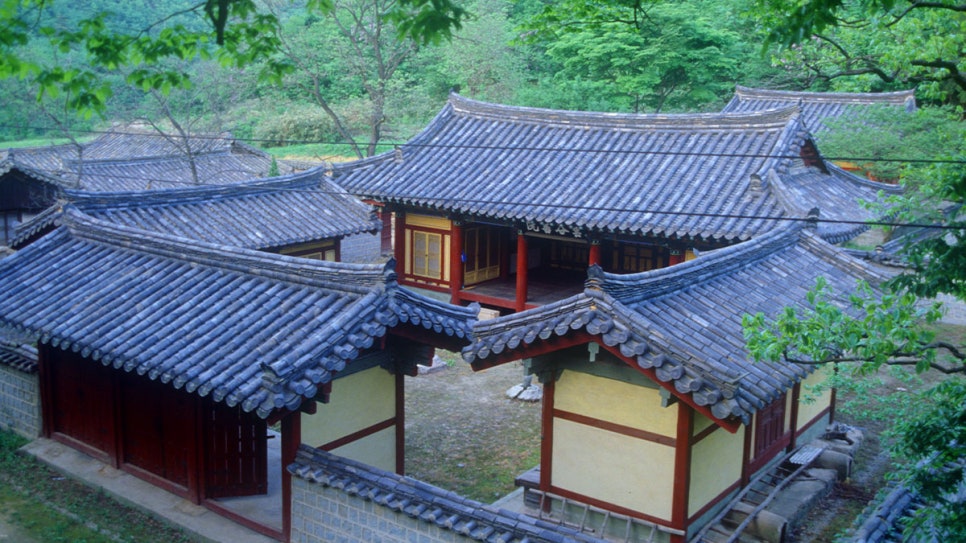
The buildings of Unggok Seowon
Photo: Ardent News (Encyclopedia of Korean Culture)
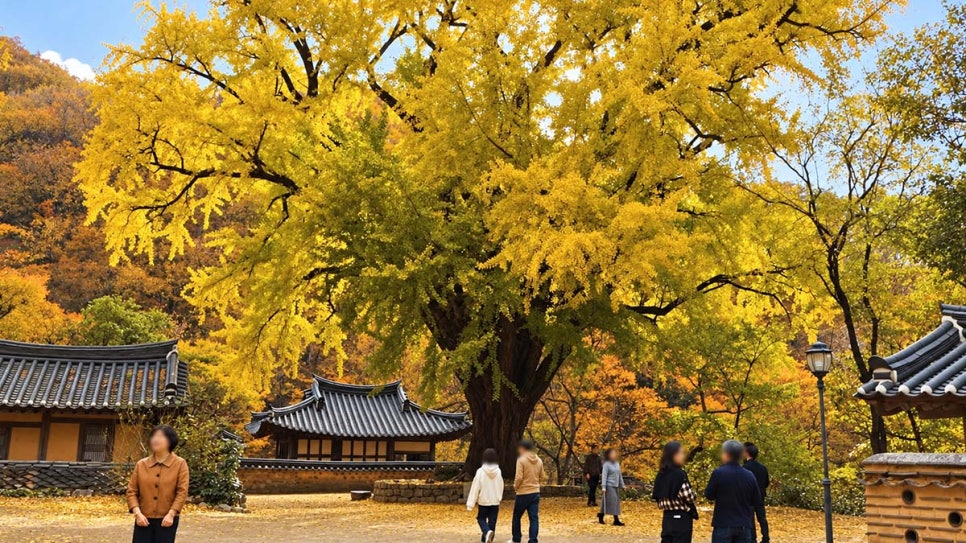
The ginkgo beside the academy wall
Photo: Ardent News (still from Gyeongju City's YouTube channel)
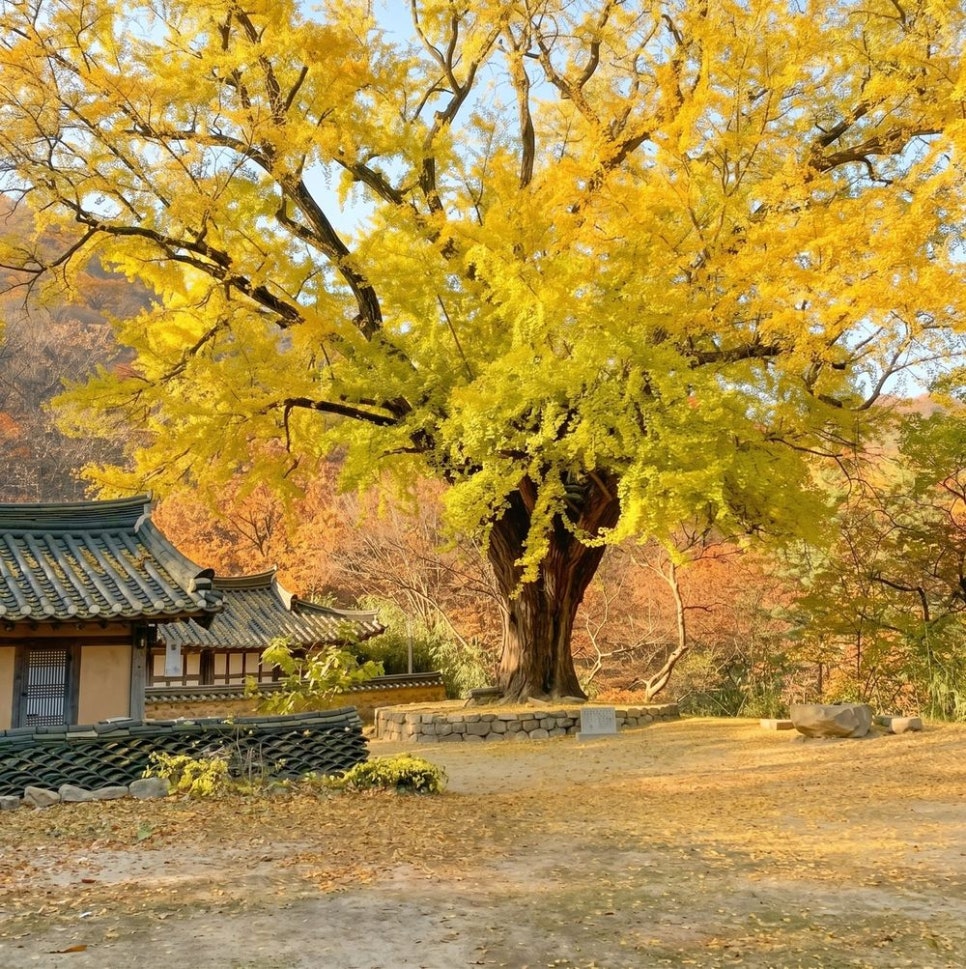
The Unggok Seowon ginkgo with its branches spread wide
Photo: Kyunghyang Shinmun (provided by Gyeongbuk Culture and Tourism Organization)
Because the academy buildings are managed by the clan, they are closed except on ceremony days. The ginkgo and Yuyeonjeong stand outside the academy proper, so you can see them fully from outside the wall, and once the leaves fall the whole area around the tree turns yellow.
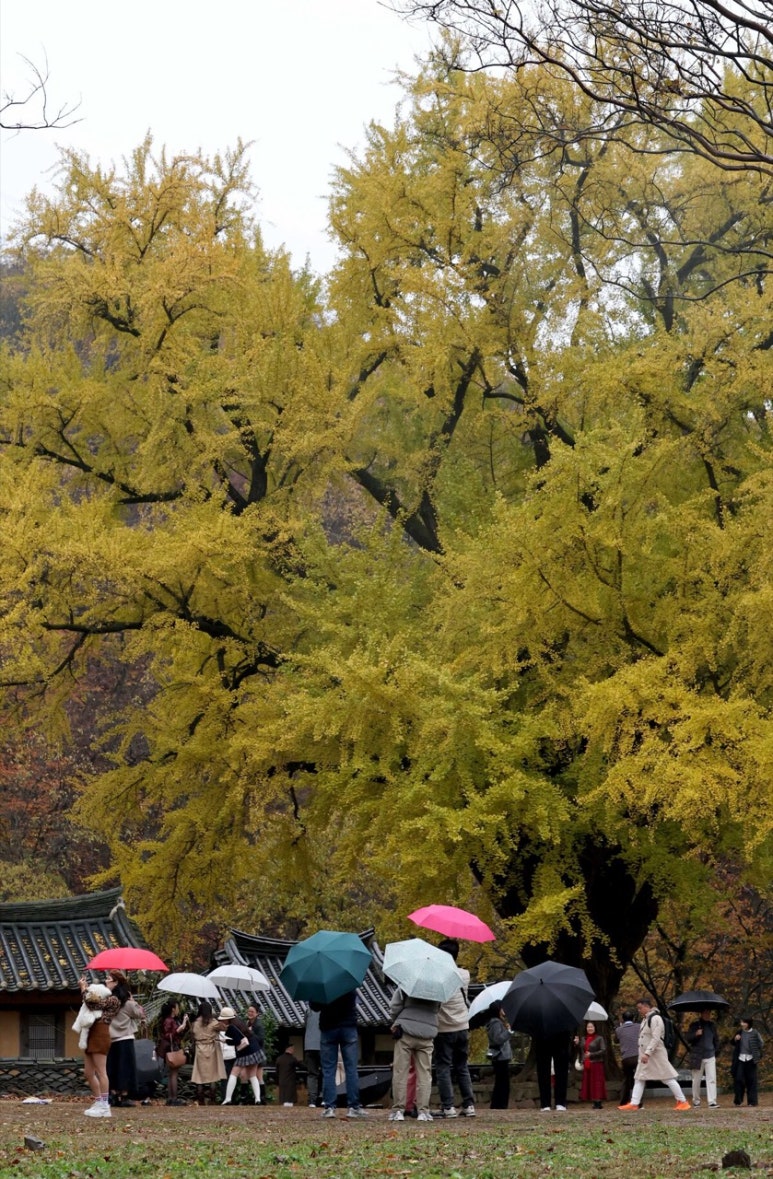
Visitors photographing the ginkgo
Photo: Kyungbuk Maeil
How do you get there, and where do you park?
Visiting Unggok Seowon
- Address
- 79-13 Sara-gil, Gangdong-myeon, Gyeongju (Wangsin-ri)
- Admission
- Free (outside the academy)
- Parking
- Dedicated car park, free (Gyeongju City)
- Foliage season
- Early to mid-November each year (Gyeongju City; varies by year)
- Academy interior
- Managed by the clan; closed except on ceremony days
- Also here
- Yuyeonjeong pavilion, about 50 m east of the academy, provincial heritage site
The academy is in a mountain valley, and most visitors arrive by car. On foliage-season weekends photographers and tour groups pack the site, so early morning, when it is quiet, is the best time to see the tree properly. Gyeongju City's autumn guide also features other old trees such as the Hagok-ri ginkgo in Angang-eup, so you can combine them into a day in northern Gyeongju.
Getting there from Seoul, and what to expect on the day
From Seoul, KTX trains reach Gyeongju Station in roughly two hours; from there, or from central Gyeongju, the academy is a drive of 20 minutes or more into Gangdong-myeon — Gyeongju City itself describes it as a trip of over 20 minutes from the city centre. We could not confirm a bus route that stops at the academy, so a taxi or rental car is the realistic option; enter the address 79-13 Sara-gil, Gangdong-myeon into a navigation app. Nothing on site is signed in English as far as we could find, but nothing needs to be read: there is no ticket office, no booking system and no phone number to register. Check a recent photo on the day, because rain or frost can strip the leaves within hours. If you need help in English, the 1330 Korea Travel Hotline can answer questions about getting there.
Frequently asked questions
- Q. When do the Unggok Seowon ginkgo leaves peak?
- Gyeongju City says the leaves turn in early to mid-November each year. In 2026 a news report put the tree at about 90% yellow on 10 November, and a 14 November report quoted a local expecting the colour to last until around the 18th. Leaves can drop quickly after rain or frost, so check recent photos before you go.
- Q. Is there an admission fee or parking charge at Unggok Seowon?
- No. The area outside the academy, where the ginkgo and the Yuyeonjeong pavilion stand, is free to visit, and Gyeongju City says the dedicated car park is free too.
- Q. Can you go inside Unggok Seowon?
- Not normally. The academy buildings are managed by the Andong Gwon clan and are opened only on ceremony days; the ginkgo and the pavilion can be seen from outside the wall.
- Q. How old is the Unggok Seowon ginkgo?
- Gyeongju City's tourism pages say about 400 years (another of its pages says an estimated 300 to 400), while Gyeongbuk Culture and Tourism Organization material says about 370. It is about 30 m tall with a trunk girth of about 6 m, and became a protected tree in 1982.
- Q. Is it worth going if I do not read Korean?
- Yes, if you can get there. Nothing about the visit depends on Korean — there are no tickets, bookings or guided tours, and the tree is the whole point. The harder part is transport: plan on a taxi or rental car from central Gyeongju, as we could not confirm a bus that stops at the academy.
Editor's note · Kang Shin-wook
For visitors heading to Gyeongju in November who want to know whether the Unggok Seowon ginkgo is still worth the detour and whether the academy itself can be visited. We separate what Gyeongju City and the Korea Heritage Service state from what comes from news reports. For a full day in the city, see our Gyeongju National Museum visiting guide; more dated outings are on /en/events.
Sources
- Official notice (Korean)
- Gyeongju City tourism — November in Gyeongju: the Unggok Seowon ginkgo (Korean)
- National Heritage Portal — Yuyeonjeong pavilion, Gyeongju (Korean)
- Encyclopedia of Korean Culture — Unggok Seowon (Korean)
- Herald Corporation — North Gyeongsang plans forest cultural asset status for two ginkgos, 19 March 2026 (Korean)
- Nocut News — North Gyeongsang's old ginkgo trees, from Gyeongbuk Culture and Tourism Organization (Korean)
- Kyungbuk Maeil — nine autumn ginkgo spots in North Gyeongsang, 18 October 2026 (Korean)
- Kyungbuk Maeil — the Unggok Seowon ginkgo, 8 November 2023 (Korean)
- News1 — Unggok Seowon expected to peak at the weekend, 10 November 2026 (Korean)
- News1 — the Unggok Seowon ginkgo at the end of autumn, 14 November 2026 (Korean)
- National Heritage Portal: Yuyeonjeong pavilion (Korean)
Written in our own words from the sources above, never copied from them, and every date and price checked against at least two pages. The originals are in Korean. Spotted a mistake? Ask for a correction.
Latest from Korea Tourism Organization
 Korea Tourism OrganizationExhibition18 November 2026On nowFreeBIG's MATERIALISM in Seoul: free architecture show — to 28 Feb 2027
 Korea Tourism OrganizationEvent18 November 2026In 2 daysFreeKorea Souvenir Fair at DDP, Seoul — free, 20–22 November 2026
 Korea Tourism OrganizationNews17 November 2026Namsan Haneul Forest Trail, Seoul: a step-free 1.45 km boardwalk lit until 11 pm
 Korea Tourism OrganizationEvent16 November 2026On nowLudensia Christmas Fantasy, Yeoju — six December days need Naver booking