Exhibition·Gyeongju National MuseumEndedFree
Hwangnyongsa reliquaries at Gyeongju National Museum — free, ends 11 October
This event has ended. The institution's visiting guide is still current. Visiting guide · What's on
Summary
Gyeongju National Museum's special exhibition Hwangnyongsa and Its Wooden Pagoda: Enshrining the Sacred Relics of the Buddha, marking 50 years since the Hwangnyongsa temple site excavation began, closes on Sunday 11 October 2026. It gathers 322 objects in 117 groups that were sealed beneath the central pillar of Silla's nine-storey wooden pagoda, and its headline is four craftsmen's names newly read off an 872 reliquary casket during conservation. Entry is free, there is no booking, and the museum is about two hours from Seoul by KTX. The daily gallery talks are in Korean only.
Article
In short
- Runs from Friday 12 June to Sunday 11 October 2026, 121 days in all, in the Special Exhibition Hall of Gyeongju National Museum.
- Admission is free and nothing needs booking. The museum opens 10:00–18:00, and every Saturday through October it stays open until 20:00.
- On show are 322 objects in 117 groups, two of them designated Treasures: the reliquaries from the relic chamber of the nine-storey wooden pagoda's central foundation stone, and the offerings found beneath it.
- During conservation of the gilt-bronze casket King Gyeongmun had made when he repaired the pagoda in 872, four new names — Kim Chung, Yeonjang, Cheongseon and Yeonchang — were read off the inside of the lid and a fragment of the base.
- For a visitor who reads no Korean: entry is walk-in with nothing to book, the labels are the museum's usual bilingual ones, but the free daily gallery talks (13:00 and 16:00, first 30 people) are in Korean only and the English Sunday tour covers the permanent galleries, not this show.
Gyeongju National Museum's special exhibition Hwangnyongsa and Its Wooden Pagoda: Enshrining the Sacred Relics of the Buddha, held for the 50th anniversary of the Hwangnyongsa temple site excavation, closes on Sunday 11 October 2026. Open since 12 June, it sets the reliquaries buried under the central pillar of Silla's nine-storey wooden pagoda — a building that now survives only as a field of foundation stones — side by side, the ones placed at the pagoda's founding against the ones added when it was repaired in 872. This article is for anyone who can get to Gyeongju in the next ten days: what to look for, and what the museum has newly established, taken from its official material.
The pagoda is gone, so what is there to show?
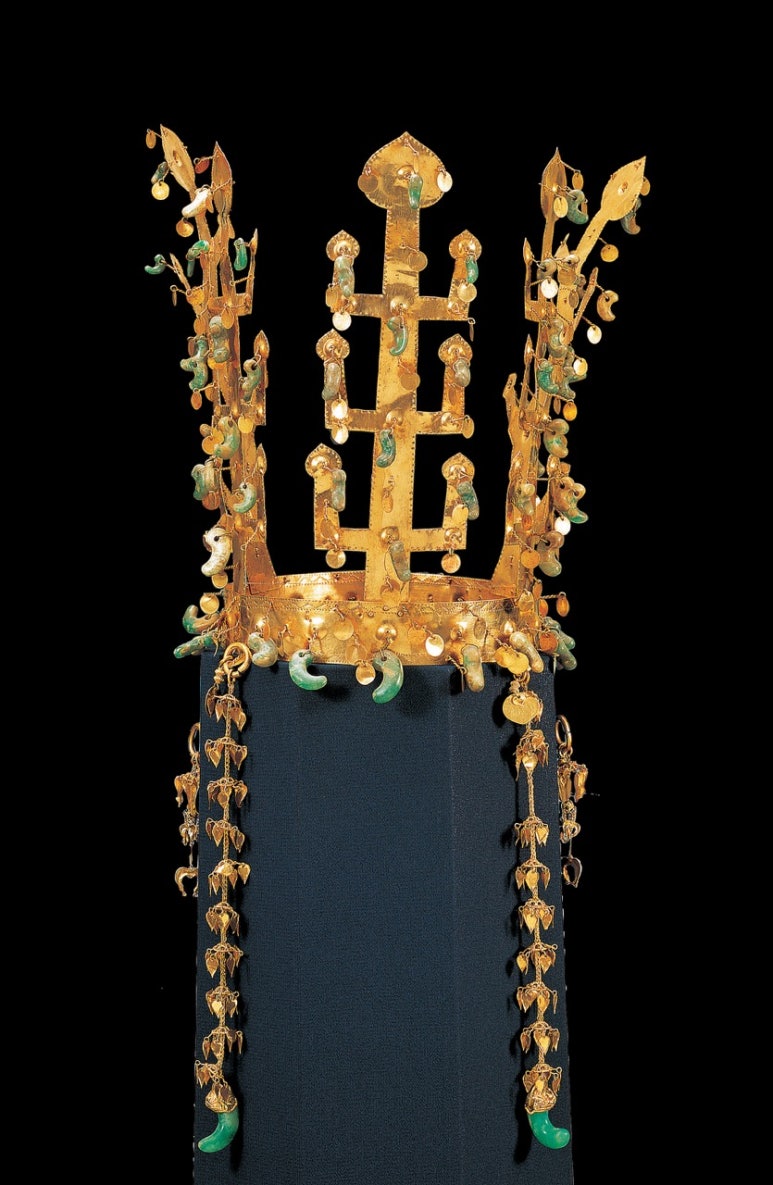
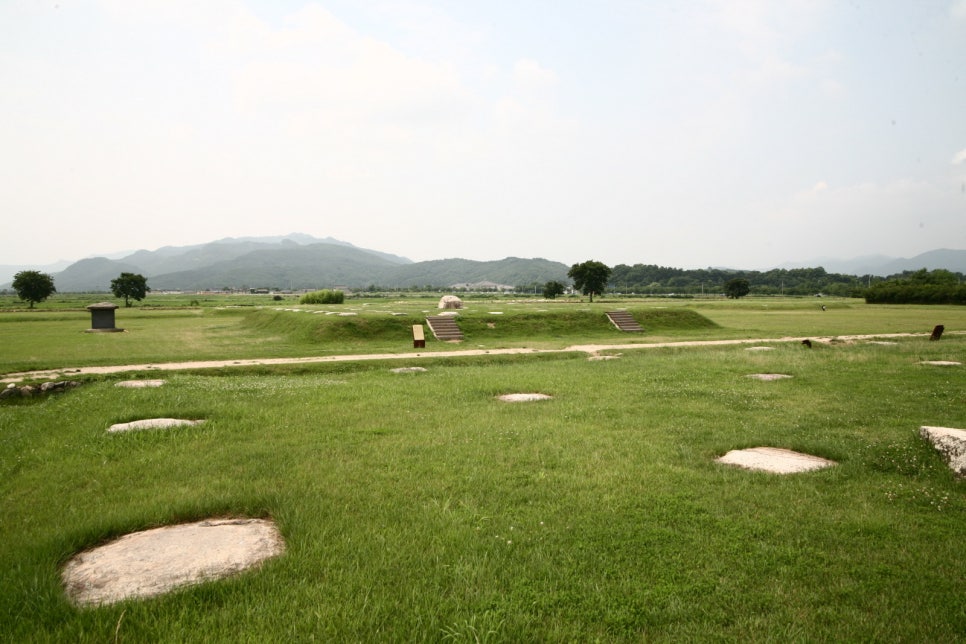
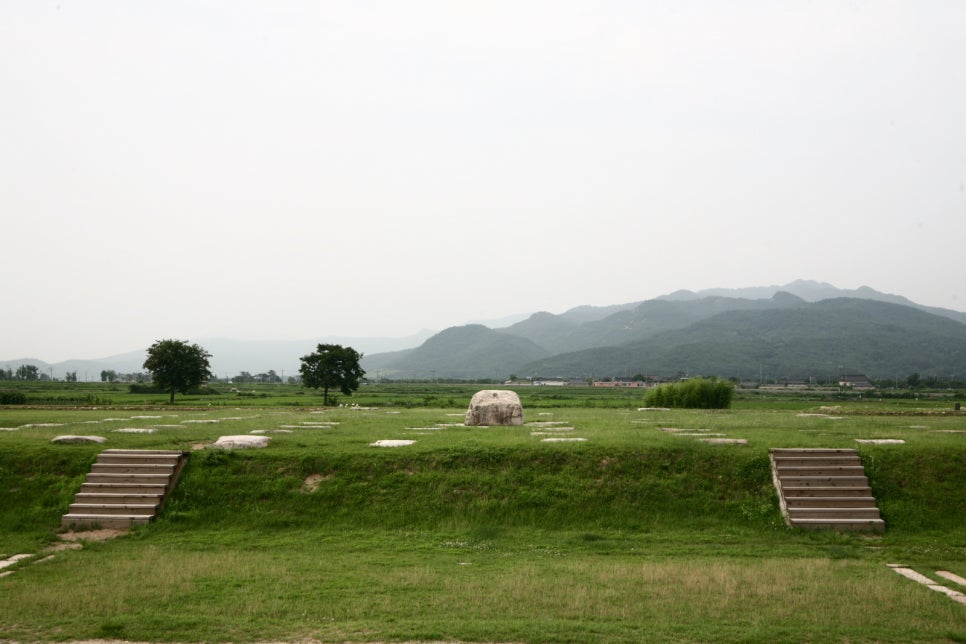
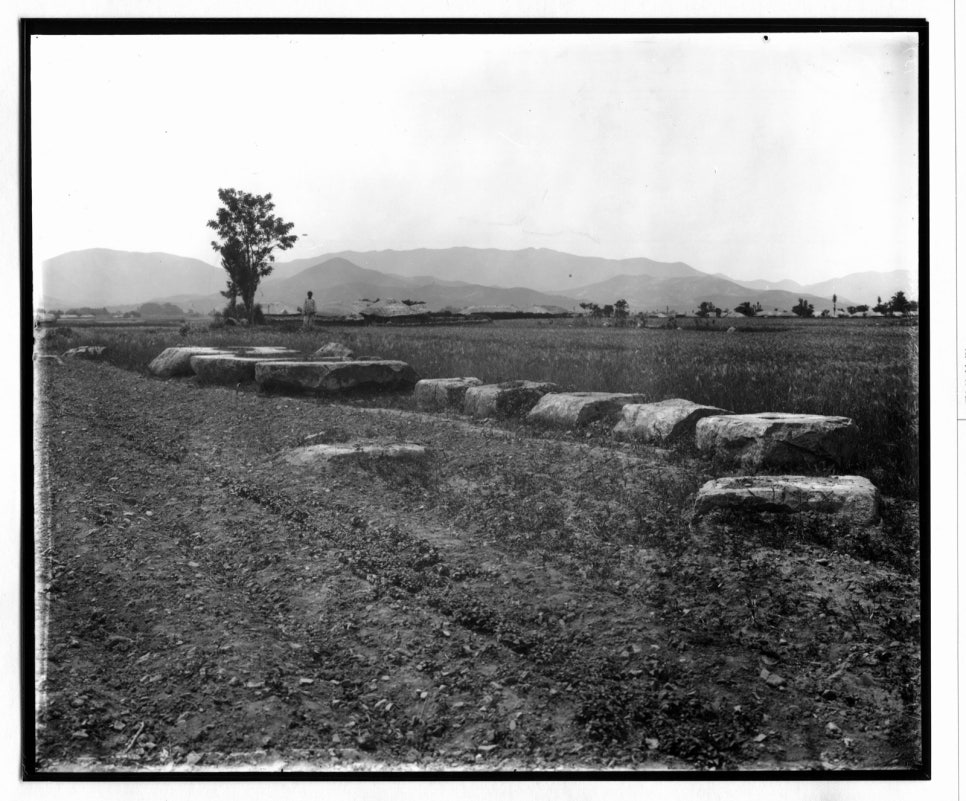
Hwangnyongsa was a royal temple begun in 553, the 14th year of King Jinheung of Silla, and its nine-storey wooden pagoda — raised in 645 under Queen Seondeok at the urging of the monk Jajang — was the largest timber building Silla ever put up. It burned during the Mongol invasions of the Goryeo period and was never rebuilt; what stands on the site in Guhwang-dong, Gyeongju, today is the foundation stones. But the central foundation stone that carried the pagoda's main pillar is still in place, and cut into it is the relic chamber, a square cavity that held the Buddha's relics. The reliquaries and caskets taken from that chamber, together with the offerings — glass beads, comma-shaped jade, bells, bronze vessels — found in the platform beneath the stone during the site excavation that began in 1976, are the backbone of this exhibition.
The point the museum presses hardest is that the relic chamber was not a simple storage hole. Conservation showed that its walls, its floor and even the underside of its stone lid were lined with gilt-bronze plates, gilded only on the face turned towards the chamber. In other words the whole space that held the relics was dressed as one large casket, not just the container inside it. The four plates that stood against the walls each carry two guardian figures, eight in all; they were found broken and their original positions were unknown for decades, and it was only in reconstructing them that the museum found they had been set to face the centre from the south.
Why did King Gyeongmun write on a reliquary casket in 872?
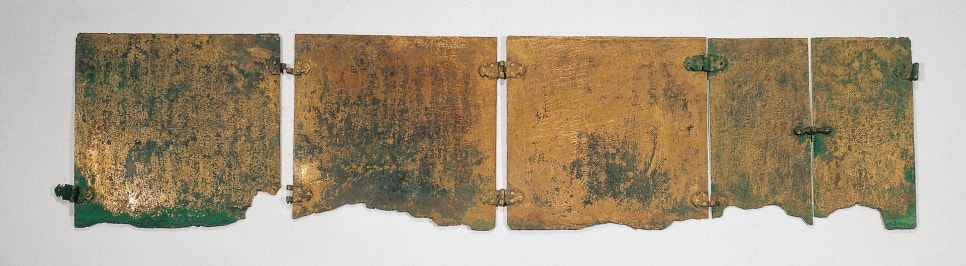
The pagoda was repaired several times after it was built, and the repair by King Gyeongmun in 872 is the special one. Gyeongmun opened the relic chamber, inspected the reliquaries already there, added 100 relics and two kinds of dharma relic, and had a record of some 900 characters engraved on the inside and outside of a gilt-bronze casket. That record is the Hwangnyongsa Chaljubongi, the pagoda's own chronicle: why it was built, how it was repaired, who took part, and what was newly enshrined. A pagoda's history was usually carved separately on stone or a metal plate as a foundation record; at Hwangnyongsa it went onto the casket that held the relics themselves. The casket is a designated Treasure in the collection of the National Museum of Korea.
Who are the four newly found names?
The casket that carries the chronicle preserves the names of 61 people — 20 officials and 41 monks, with their posts and roles — which is what makes the 872 repair look like a state project drawing on many hands rather than a royal gesture. Three names of the engravers who cut the text, Chonghye, Soyeonjeon and Yeonjeon, have long been known. This round of conservation added four more: Kim Chung (金忠), Yeonjang (連長) and Cheongseon (淸宣) on the inside of the lid, and Yeonchang (連昌) on a fragment thought to be the base plate. Those positions set them apart from the people who engraved the side panels, and the museum's reading is that they were the craftsmen who carved the decoration on the side panels, base and lid.
- Engravers already known: Chonghye, Soyeonjeon, Yeonjeon
- Newly read on the inside of the lid: Kim Chung (金忠), Yeonjang (連長), Cheongseon (淸宣)
- Newly read on the presumed base plate: Yeonchang (連昌)
Compare the vajra guardians and deities on the casket's left and right doors and you will see that the depth and weight of the lines, the treatment of the floral motifs and the way the weapons are drawn all differ. That is the trace of several craftsmen each taking a section, and read alongside the new names it sketches the division of labour in a workshop a thousand years ago. It is worth standing in front of the casket and comparing the two doors side by side.
'Nine stories of the nine-storey pagoda': what is new?
The museum has grouped what recent conservation and scientific analysis turned up into nine stories and spread them through the show. Beyond the ones covered above — the lined relic chamber, the repositioned guardian plates, the chronicle, the four names and the differing hands — four more are worth looking for.
- The platform beneath the central foundation stone held three layers: the lowest a ground-settling rite, the upper two large-scale offerings, showing that offering ceremonies were held more than once while the pagoda went up.
- The chronicle says a 'gold-and-silver high seat' stood with the glass relic bottle, and what that object was had been argued over for years. Analysis of a small lotus-shaped stand found its upper and lower petals are gold and its central column silver, which makes it the likely candidate.
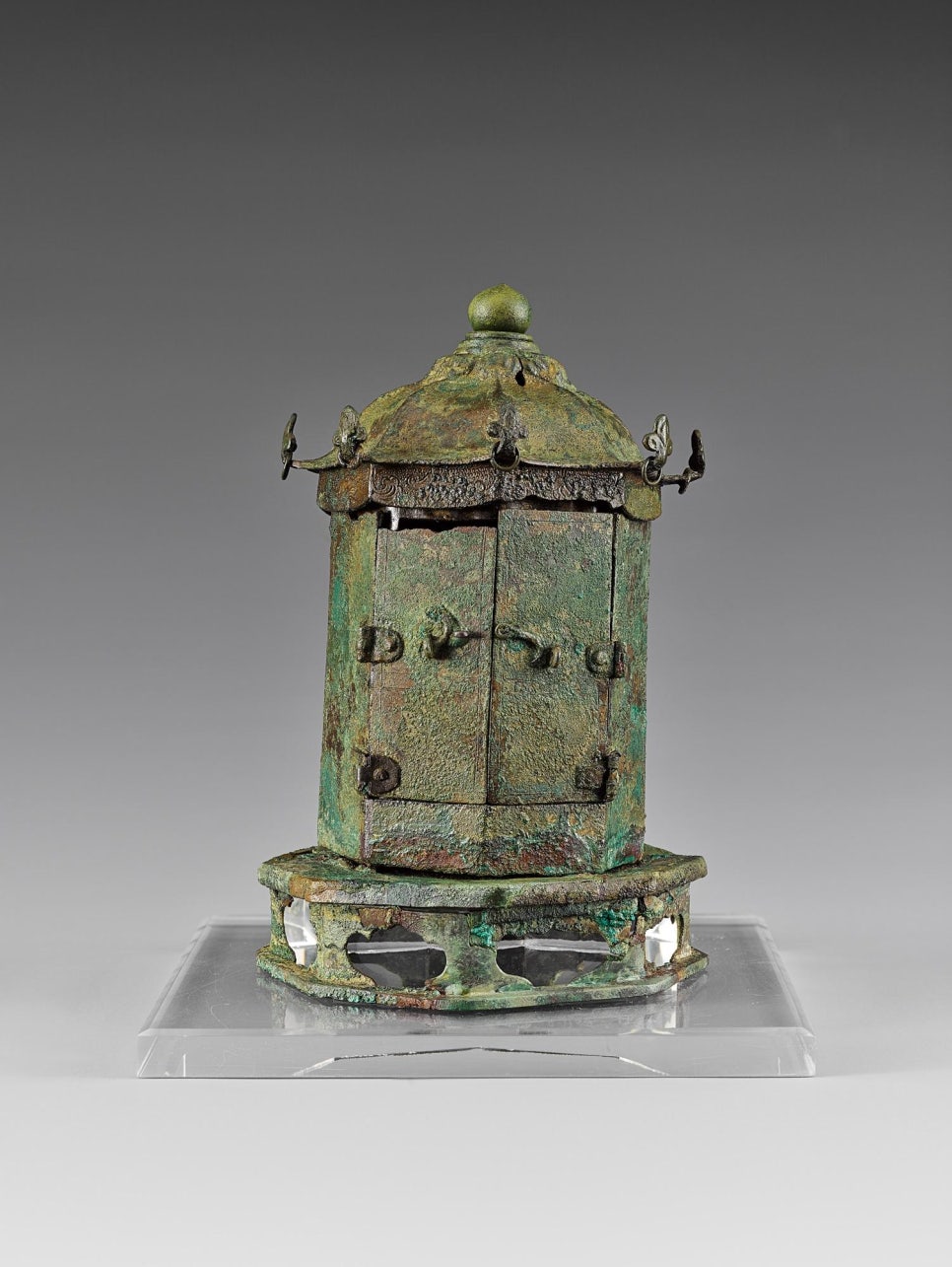
- Two silver plates engraved with the verse 'all things arise from causes and conditions' were found to have sat between the double walls of the octagonal pavilion-shaped reliquary. The chronicle records that Gyeongmun added two kinds of dharma relic, and these plates are the physical evidence.
- A reliquary inscribed with the Chinese reign date 'Zhonghe 3' (883) seems to have been made for another temple's pagoda. Its body, looted and later recovered, was now matched to a lid found in the relic-chamber survey, which proves it was inside the Hwangnyongsa pagoda and was moved there after the 872 repair.
How is the exhibition laid out?
The route is chronological. It opens with the reliquaries from the pagoda's founding, moves to Gyeongmun's re-enshrinement, and ends with the way relic enshrinement spread to other temples in the ninth century. Part 3 shows, for the first time together, the agalmatolite relic jar (a Treasure) and the gilt-bronze casket of 863 attributed to the three-storey stone pagoda of Biroam at Donghwasa in Daegu, plus the pagoda record stone and miniature pagodas of 895 from Gilsangtap at Haeinsa in Hapcheon and material on dharani belief — tracing how a new format that enshrined relics, dharma relics, dharani and miniature pagodas together took hold.
The three parts of the exhibition
- Part 1
- Reliquaries placed at the pagoda's founding — the nine-storey pagoda as a symbol of relic devotion and of the state's protection
- Part 2
- King Gyeongmun's repair of 872 and the re-enshrinement — new relics, dharma relics and offerings added
- Part 3
- Relic enshrinement spreading to other temples after Hwangnyongsa — the Biroam relic jar and casket, the Gilsangtap record stone and miniature pagodas
Fifty years of excavation: why mark it now?
These objects did not come out of the ground quietly. In the 1960s the relic chamber in the central foundation stone was looted, a salvage survey of the chamber followed, and in 1976 a full excavation of the temple site began — the dig that produced the thousands of offerings in the platform beneath the stone. This year is the 50th anniversary of that excavation, and with the looted reliquary body now matched to the lid recovered in the survey, the show is in effect half a century of investigation drawn together in one place.
Before you go
- The last day is Sunday 11 October. The final weekend (10–11 October) may be busy, so a weekday afternoon or a Saturday evening is the safer bet; Saturdays are open until 20:00 through October.
- Gallery talks run daily at 13:00 and 16:00, 50 minutes each, starting from the Special Exhibition Hall information desk, first 30 people. They are led by volunteers, may change without notice, and are in Korean. The inscriptions and the conservation findings are much easier to follow with one.
- Admission is free and there is no booking. The Special Exhibition Hall shares the grounds with the permanent galleries, so pair it with the Silla History Gallery and the Silla Art Gallery for a half-day.
- Afterwards, the Hwangnyongsa site in Guhwang-dong, a short bus or taxi ride from the museum, lets you stand at the central foundation stone itself; the size of the relic chamber and the scale of the pagoda make more sense once you have seen it.
- During the run the museum offered a discovery-kit programme, a family walk to the site, curator talks and a Silla studies lecture series, all in Korean. Any remaining sessions are listed under education and events on the museum site.
The object count differs between sources
The museum's press release of 11 June 2026 gives 322 objects in 117 groups (two Treasures); the same museum's exhibition page, in Korean and in English, says 'approximately 390 artifacts'. The difference looks like a counting-unit issue, but the museum has not explained it, so this article follows the press release. Likewise the museum's material dates the pagoda to 645 while some collection records give 646.
Getting there, and what to expect on the day
From Seoul, take the KTX from Seoul Station to Singyeongju Station (신경주역), about two hours, then bus 711 to the museum stop or bus 700 to Donggung and Wolji (동궁과 월지) and walk three minutes; from Busan Station the KTX to Singyeongju is a short hop, so the show also fits a Busan trip. Arriving from Incheon Airport, allow about four hours door to door via the AREX and KTX. There is nothing to book for the exhibition itself — you walk in, and no phone number or card is asked for. The museum's galleries carry English labels alongside the Korean, and the exhibition has an English title and an English page on the museum's website, but the two daily gallery talks are in Korean only. The museum's free English-language tour runs on Sundays at 10:00 and 14:00 from the Silla History Gallery, but it covers the permanent collection and needs an advance email or phone booking; the four-language audio guide (KRW 2,000, hire at the bookshop by the main entrance) likewise covers the permanent galleries. In short, plan to read your way round this exhibition rather than be talked through it.
Frequently asked questions
- Q. Until when is the Hwangnyongsa special exhibition at Gyeongju National Museum open?
- Until Sunday 11 October 2026. It opened on 12 June and runs 121 days; hours are 10:00–18:00, extended to 20:00 every Saturday through October.
- Q. Is there an admission fee, and do I need to book?
- It is free and there is no booking. The museum's press release states the exhibition can be seen without reservation and free of charge, in line with its rule that its own special exhibitions are free.
- Q. What has been newly discovered for this exhibition?
- Four names — Kim Chung, Yeonjang, Cheongseon and Yeonchang — were read off the inside of the lid and a base fragment of the gilt-bronze casket made for King Gyeongmun's repair of 872, bringing the names on the casket to 61 (20 officials and 41 monks). The show also presents the finding that the whole relic chamber was lined in gilt bronze, the dharma-relic silver plates inside the octagonal reliquary, and the match between the body and lid of the 'Zhonghe 3' reliquary, among nine findings in all.
- Q. Which king repaired the nine-storey pagoda in 872?
- King Gyeongmun of Silla. During the repair he added 100 relics and two kinds of dharma relic and had the pagoda's history engraved on the gilt-bronze casket as the Hwangnyongsa Chaljubongi, a record of some 900 characters.
- Q. When are the gallery talks for the Hwangnyongsa exhibition?
- Twice a day, 13:00–13:50 and 16:00–16:50. Turn up at the Special Exhibition Hall information desk on time; the talks are free, limited to 30 people, and given in Korean.
- Q. Is it worth going if I do not read Korean?
- Yes, if you are already within reach of Gyeongju. The objects — the gilt-bronze caskets, the octagonal reliquary, the guardian plates — carry the show on their own, entry is free and walk-in, and the museum's labelling is bilingual. What you will miss is the interpretation: the daily talks are in Korean, and the English Sunday tour and the audio guide cover the permanent galleries rather than this exhibition. Read this article and the museum's English exhibition page first, and treat the four newly found names and the two casket doors as your checklist.
Editor's note · Kang Shin-wook
Written for anyone already in Korea who can fit Gyeongju into the next ten days, and for readers who know the nine-storey pagoda from a textbook and want to see what actually survives of it. Hours, closures and how to reach the museum are on our Gyeongju National Museum visiting guide.
Sources
- Official notice (Korean)
- Gyeongju National Museum, exhibition page 'Hwangnyongsa and Its Wooden Pagoda' (English)
- Gyeongju National Museum, gallery talks and English tour schedule (Korean)
- National Museum of Korea collection record, Hwangnyongsa pagoda chronicle casket panel, Sinsu 2323 (Korean)
- Korea Heritage Service, Heritage Portal entry for the Hwangnyongsa temple site (Korean)
- Seoul Shinmun report on the exhibition, 11 June 2026 (Korean)
- Press release (Korean)
Written in our own words from the sources above, never copied from them, and every date and price checked against at least two pages. The originals are in Korean. Spotted a mistake? Ask for a correction.