Programme·National Institute of EcologyYear-roundFree
The ant exhibition at Korea's National Institute of Ecology
Summary
At the National Institute of Ecology in Seocheon, the Ant World Exploration exhibition hands visitors a lab coat and walks them through the working day of an ant scientist, ending with a report they write themselves. There is no separate charge — the standard admission of KRW 5,000 for adults covers it — and a 30-minute guided session runs year-round, in September 2026 at 10 am, 1 pm and 3 pm from Tuesday to Sunday except Wednesday. That guided session is conducted in Korean and booking needs a Korean-language account, but the exhibition itself can be walked without either.
Article
In short
- Ant World Exploration, in the special exhibition hall of the Ecorium at the National Institute of Ecology in Seocheon, gives visitors a lab coat and a route that follows the working day of an ant scientist.
- There is no exhibition ticket. Standard admission covers it: KRW 5,000 for adults, KRW 3,000 for teenagers and KRW 2,000 for children, card payment only.
- A 30-minute guided session runs year-round. In September 2026 it runs Tuesday, Thursday, Friday, Saturday and Sunday at 10 am, 1 pm and 3 pm, from the Eco-guide Q&A desk inside the Ecorium.
- That session is in Korean and is booked on a Korean-language site up to two days ahead, confirmed by a KakaoTalk approval message. The exhibition itself needs no booking and no Korean.
- The institute opens 9:30 am to 5:30 pm with the ticket office closing at 4:30 pm, and is shut on Mondays.
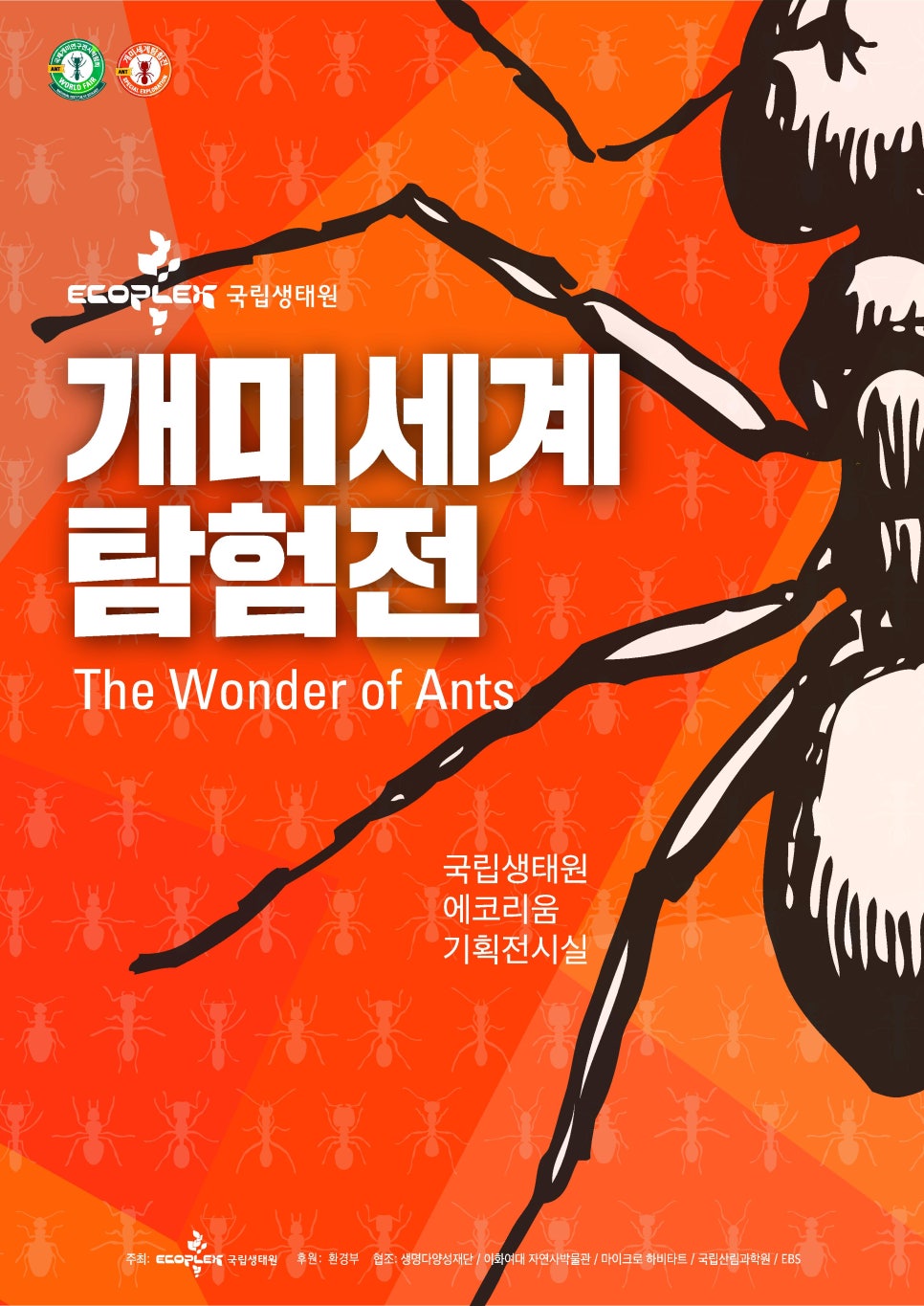
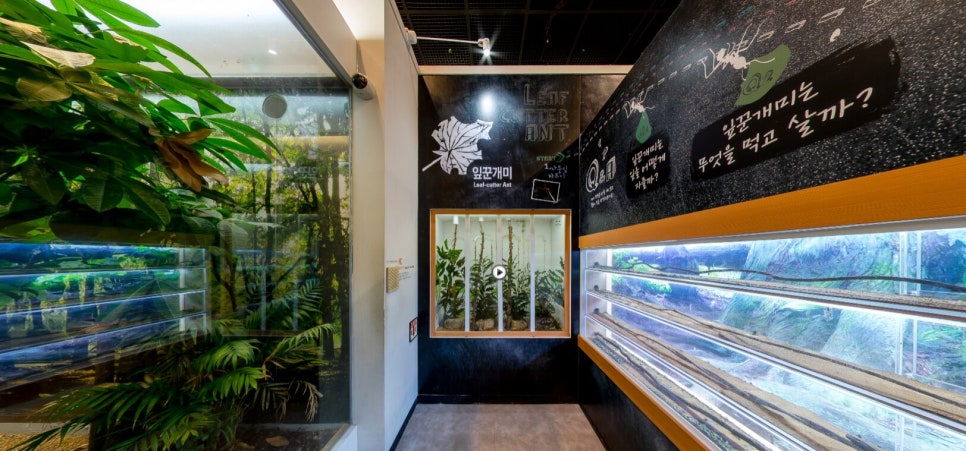
At the National Institute of Ecology in Seocheon, on the west coast about three hours from Seoul, one exhibition asks you to do something rather than look at something. It is called Ant World Exploration, subtitled 'a journey to the ant science base', and it sits in the special exhibition hall of the Ecorium. The institute built it to share the process and findings of its research into the behavioural ecology of social insects, and it holds live ant colonies from Korea and abroad at close range. A 30-minute guided session runs alongside it year-round, which changes the visit considerably if you can get a place.
What makes the ant science base different
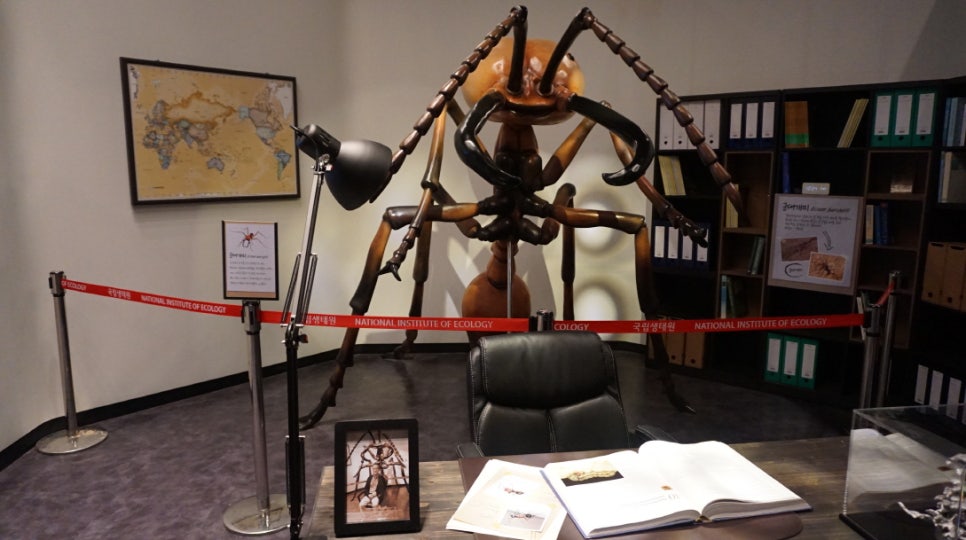
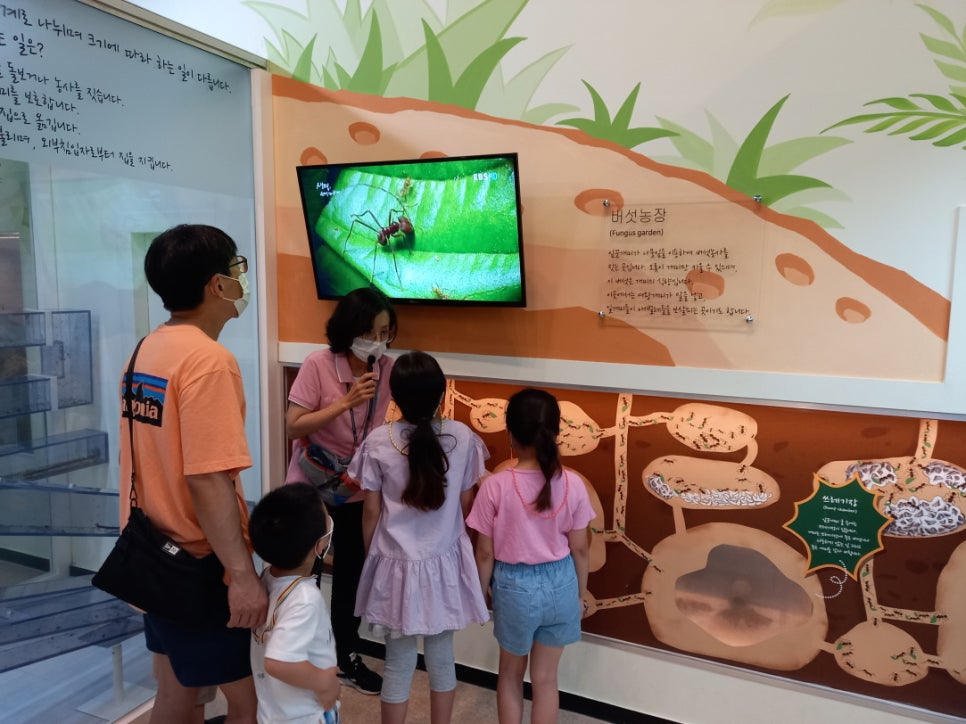
By the institute's own description, the exhibition departs from ordinary display and maps the working process of ant scientists directly onto the visitor route. You collect a lab coat at the information desk by the entrance, follow a set path through the exercises, and finish by writing up the results of that simulated fieldwork as a report and presenting it. Pushing the visit all the way through to recording and organising what you observed is what makes it worth the trip with a child: the visit does not end with a lap of the hall.
Which ants are on display
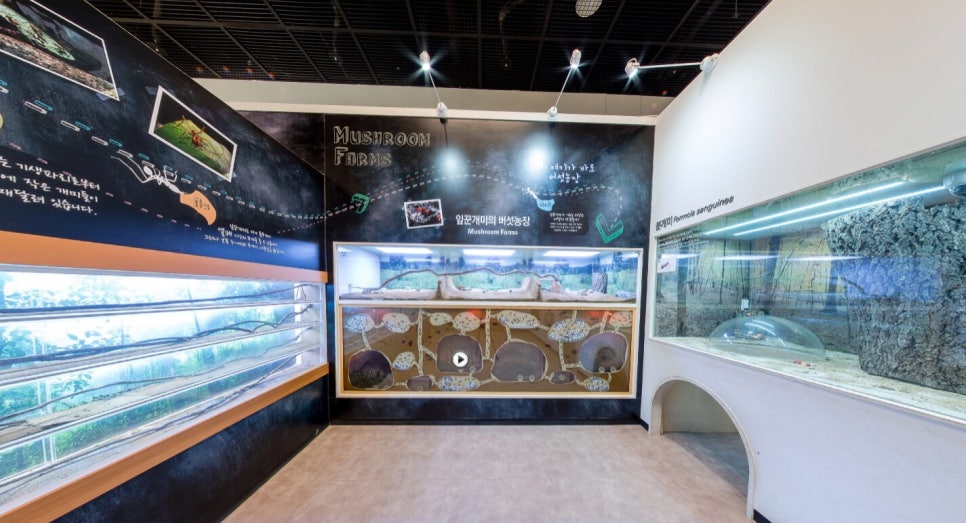
The line-up the institute records on its exhibition page is ten species: seven ants native to Korea, one termite, and two from abroad — the weaver ant and the leafcutter ant. Of the native species, the ones named are the Japanese carpenter ant, the spiny ant and a shining fire ant. The mix has changed since the opening: in 2015 the exhibition opened with eight native ant species, one termite and two wasps, and brought the foreign species in later.
- Leafcutter ant — a tropical Central and South American ant that cultivates an edible fungus on the leaf fragments it cuts and carries home. It is the headline species the institute imported from abroad.
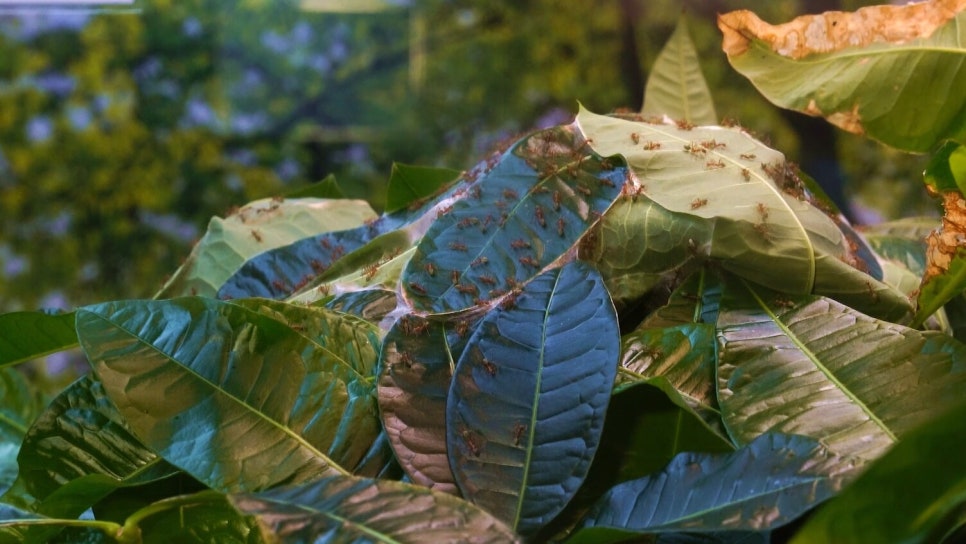
- Weaver ant — known for a cooperative behaviour in which several ants hold leaves together while silk produced by the larvae binds them into a nest.
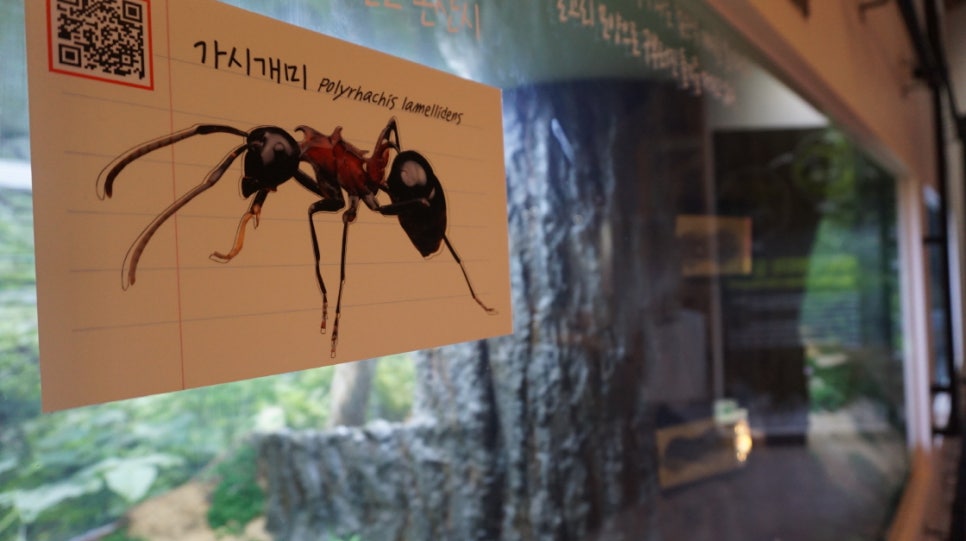
- Japanese carpenter ant, spiny ant and shining fire ant — the species the institute chose to represent ants native to Korea.
What happens if the foreign ants get out
Hearing that a Korean institution keeps foreign ants naturally raises the question of invasive species, and the institute answered it directly at the opening briefing. Its account was that the species were chosen in the first place from tropical ants that could not survive in the Korean climate; that the housing was built with escape-prevention measures matched to the quarantine authority's requirements; and that colonies are managed separately, unit by unit. Staff were also sent abroad to be trained at comparable facilities before the exhibition opened.
The core of the argument is reproductive. Worker ants cannot reproduce, so however many get out they produce no next generation; establishment would require a queen surviving outside, and the queens of tropical species cannot get through a Korean winter. That was the reasoning Choe Jae-chun, then the institute's director and one of Korea's best-known ant researchers, used to satisfy the quarantine authority — arguing that even thirty thousand escaped workers could not repeat what the bullfrog did to Korean waterways.
How to book the guided session
A 30-minute session with an eco-guide is attached to the exhibition. On the institute's eco-guide timetable this programme is listed as running year-round, and in practice sessions are released a month at a time through the booking system. The September 2026 round gives the shape of it.
The Ant World Exploration eco-guide session, September 2026 round, from the institute's reservation service
- Length
- 30 minutes
- Season
- Year-round; sessions released one month at a time
- September round
- 1 – 30 September 2026
- Days
- Tuesday, Thursday, Friday, Saturday and Sunday
- Times
- 10:00, 13:00 and 15:00
- Capacity
- 20 per session, 15 for the 1 pm session
- Meeting point
- Eco-guide Q&A desk inside the Ecorium
- Booking window
- 21 August – 30 September 2026
- Open the eco-guide section of the institute's reservation service and pick a date. Online booking is the primary route and closes two days before the day of the visit.
- A booking is only confirmed once an administrator sends an approval message by KakaoTalk. If a confirmation call cannot be connected after several attempts, the booking may be cancelled and the place released.
- If places remain unbooked online, walk-up registration is taken at the Eco-guide Q&A desk inside the Ecorium — though it may not run depending on conditions on the day.
Under-18s need an adult on the booking
The booking screen states that anyone of high-school age or younger must have an accompanying adult included in the party for the reservation to go through, so sending a child alone is not an option. For groups of 20 or more the institute recommends its 'preview' session instead, which covers the main exhibits from a single vantage point.
Prices and opening hours
Ant World Exploration is inside the Ecorium, so an admission ticket is all you need to walk into it. At the opening briefing the institute stated plainly that the ant science base itself is free and that visitors pay only the institute's admission, and there is still no separate charge listed anywhere on the eco-guide pages or in the booking system. Admission is KRW 5,000 for adults, KRW 3,000 for teenagers and KRW 2,000 for children, and is free if you are 4 or under, 65 or over, disabled or a person of national merit. The ticket office takes cards only. The institute opens from 9:30 am to 5:30 pm with ticket sales stopping at 4:30 pm, and closes on Mondays. Since the last guided session starts at 3 pm, plan to arrive before then.
The sources disagree about the exhibition's dates
The institute's own exhibition board gives the run of Ant World Exploration as 2 April 2015 to 1 September 2019, and it does not appear in the institute's list of current exhibitions. Yet the same institute's eco-guide timetable lists the tour of this exhibition as a year-round programme, and its reservation service was taking bookings for the September 2026 round when we checked. The board entry appears to record the original planned run. Given the distance to Seocheon, it is worth confirming on the reservation service that a session is open for your month before you travel.
Getting there, and what needs Korean
The institute sits next to Janghang Station (장항역) on the Janghang line: it is about a five-minute walk from the station to the west ticket gate, which makes the train far easier than it looks on a map. From Incheon Airport, take the airport rail link or a bus into Seoul, then a Janghang line train from Yongsan — around four hours in total, so treat Seocheon as an overnight stop rather than a day trip. Local bus 72 runs from the Seocheon and Gunsan intercity bus terminals, and there is parking for around a thousand vehicles if you drive. On language: the exhibition works without Korean, because it is built on objects, live colonies and a route you physically follow, but the panel text is Korean and the guided session is conducted in Korean. Booking that session is the real obstacle — the reservation site is Korean-only and confirmation arrives as a KakaoTalk message, which in practice assumes a Korean phone number. If you want a guide in English, the institute runs a separate foreign-language eco-guide on Saturdays covering the five climate-zone halls, in English in the first and third weeks of the month; it does not cover the ant exhibition, but it is the English-language option on site. The Ecorium is indoors from end to end, which also makes this a dependable wet-weather day.
Frequently asked questions
- Q. Is there a separate charge for the ant exhibition at the National Institute of Ecology?
- No. The institute's admission covers it — KRW 5,000 for adults, KRW 3,000 for teenagers and KRW 2,000 for children — and you walk straight into it inside the Ecorium. The ticket office takes cards only.
- Q. How do I book the guided session for the ant exhibition?
- Through the institute's reservation service, up to two days before your visit. The booking is only confirmed when an administrator sends an approval message by KakaoTalk. If places are left, walk-up registration is taken at the Eco-guide Q&A desk inside the Ecorium.
- Q. What time are the sessions and how long do they last?
- In the September 2026 round they run on Tuesday, Thursday, Friday, Saturday and Sunday at 10 am, 1 pm and 3 pm, and last 30 minutes. Capacity is 20 per session, except the 1 pm session which takes 15.
- Q. Can I bring children?
- Yes, and the hands-on format suits them — but anyone of high-school age or younger must have an accompanying adult included in the booking.
- Q. Is there a risk of the foreign ants escaping into Korean ecosystems?
- The institute says it selected tropical species that cannot overwinter in the Korean climate, built escape-prevention housing to the quarantine authority's requirements and manages colonies unit by unit. Its researchers argued that worker ants cannot reproduce and that a tropical queen could not survive a Korean winter, making establishment very unlikely.
- Q. Is it worth going if I do not read Korean?
- The exhibition itself, yes: it is a route you walk with live ant colonies and objects rather than a wall of text, and no booking is needed to see it. The guided session is another matter — it is conducted in Korean and the booking system is Korean-only with KakaoTalk confirmation. If you want a guide in English, the institute's Saturday foreign-language eco-guide runs in English in the first and third weeks of each month, but it covers the five climate-zone halls rather than the ants.
Editor's note · Kang Shin-wook
Much of what circulates online about this exhibition dates from its 2015 opening, including the prices. We opened the institute's exhibition page, its guided-tour timetable, its booking system and its admissions page separately to establish what is actually running now, what it costs and which parts need Korean. Planning the wider visit is covered in our National Institute of Ecology guide.
Sources
- Official notice (Korean)
- National Institute of Ecology — eco-guide programmes and timetable (Korean)
- National Institute of Ecology reservation service — eco-guide booking (Korean)
- National Institute of Ecology — admission prices and discounts (Korean)
- National Institute of Ecology — visitor information (Korean)
- Korea policy briefing on the opening of the international ant research exhibition, 2015 (Korean)
Written in our own words from the sources above, never copied from them, and every date and price checked against at least two pages. The originals are in Korean. Spotted a mistake? Ask for a correction.