Exhibition·Korea National Park ServiceOn nowFree
Juwangsan National Park shows a 1939 guidebook in Korean translation — free, 1 Oct to year-end
Summary
From 1 October 2026 the Sangui Visitor Centre at Juwangsan National Park (주왕산국립공원) displays framed copies and a Korean translation of "Juwangsan Annaegi", a Japanese-language guidebook to the mountain printed in 1939. Entry is free, no booking is needed, the centre opens 10:00–17:00 and closes on Mondays. Korea National Park Service says only "until the end of the year"; one regional paper prints 31 December. The exhibit itself is in Korean and Japanese, but its drawings and maps of the rock peaks, temple and waterfalls need no language, and the same views are a short walk up the valley.
Article
In short
- A free exhibition at the Sangui Visitor Centre (상의 탐방안내소), Juwangsan National Park, Cheongsong, from Thursday 1 October 2026 until the end of the year.
- On show: a Korean translation and framed facsimile pages of "Juwangsan Annaegi" (주왕산 안내기), a guidebook to the mountain printed in Japanese in 1939 by a local preservation society. The original stays at the National Museum of Korea.
- The centre opens 10:00–17:00, closes every Monday (the next weekday if Monday is a holiday), and there is nothing to book.
- KNPS gives the end date only as "year-end"; a regional paper says 31 December. Call +82-54-873-0231 before a December trip.
- Nothing is booked and nothing is ticketed, so a foreign phone number is never an issue — but the translated text is Korean, so plan on the pictures and maps rather than the prose.
The Juwangsan National Park Office of Korea National Park Service (KNPS) is putting "Juwangsan Annaegi" on display at its Sangui Visitor Centre from 1 October 2026. The guidebook, printed in 1939, describes the mountain in text, drawings and a map, and includes the "Juwang sajeok" (周王事蹟), the legend of the exiled prince Juwang after whom the park is named. Because it was written in Japanese, ordinary hikers have never been able to read it. The park office translated it into Korean and framed copies of the pages, so an October visit — right as the maples turn — lets you see the mountain the way a visitor did 87 years ago.
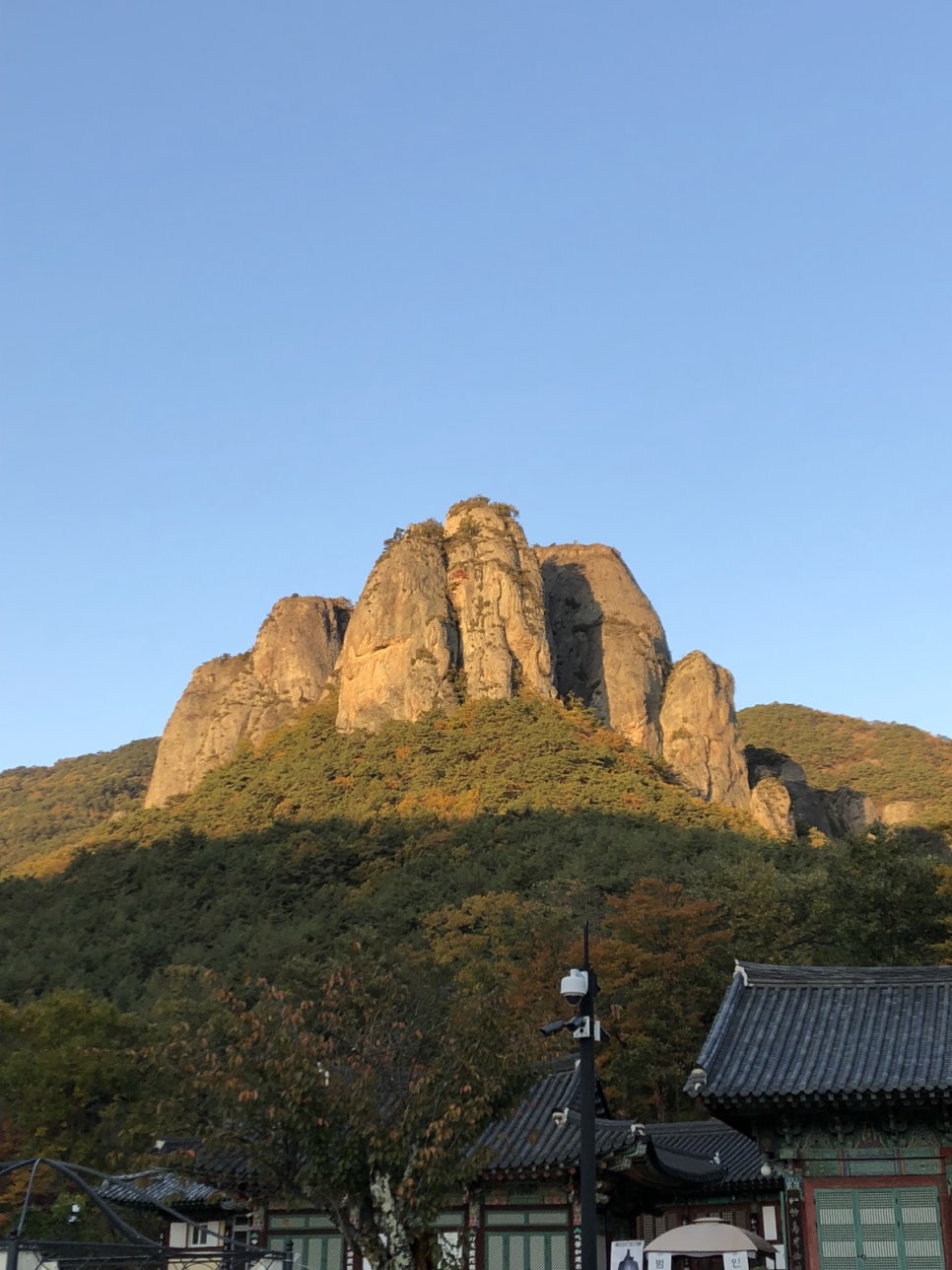
Where and when can you see it?
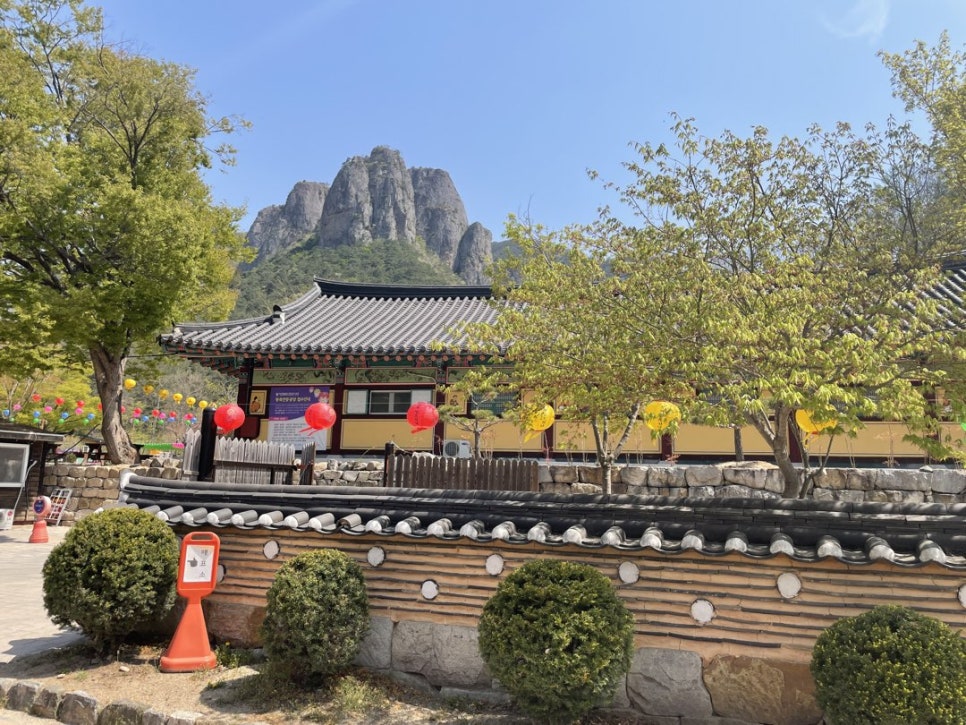
The venue is the Sangui Visitor Centre at the Sangui entrance to the park, the main gate for the Juwang Valley trail. It reopened in a new building in 2022 and is also called the Juwangsan UNESCO Global Geopark Visitor Centre, since Cheongsong county has held geopark status since 2017. The valley trail starts right outside, so you pass the door on the way in or out. There is no ticket and no reservation: walk in any time between 10:00 and 17:00. The centre is shut on Mondays, and when a Monday is a public holiday it shuts on the following weekday instead.
What else the Sangui Visitor Centre offers (from the KNPS visitor centre page)
- Exhibition talk
- About 30 minutes inside the centre, in Korean
- Outdoor walk "Rocks that hold the Juwang legend"
- Centre to Juwang Valley trail, about 120 minutes, in Korean
- Services
- Trail and area leaflets, national park stamp passport, stroller and wheelchair loan, phone charging
- Public transport
- Dong-Seoul Bus Terminal → Cheongsong Terminal → Juwangsan Terminal, then a 3-minute walk (about 4 h 50 min from Seoul)
What is "Juwangsan Annaegi"?
Here is what KNPS has said about it. The booklet dates from 1939 and was produced by a body called the Juwangsan Historic Sites Preservation Society (주왕산고적보전회); the text is Japanese. It contains an account of the mountain, drawings, a map, and the Juwang sajeok, the story of how the mountain got its name. The original now belongs to the National Museum of Korea, and what hangs in the visitor centre is the park office's Korean translation together with framed copies. Regional papers also give the title in Chinese characters (周王山案內記).
- Made: 1939, by the Juwangsan Historic Sites Preservation Society
- Language: Japanese (the display pairs it with a Korean translation)
- Contents: a description of the mountain, drawings, a map, and the Juwang sajeok (周王事蹟) legend
- Original: held by the National Museum of Korea — only copies are on show
How do the scenes in the old guidebook look today?
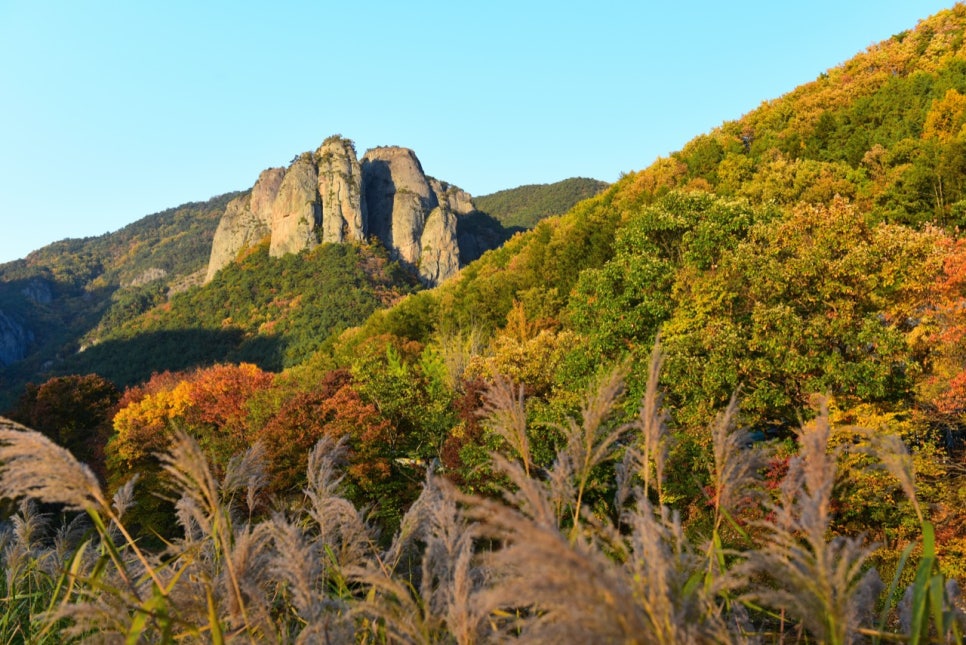
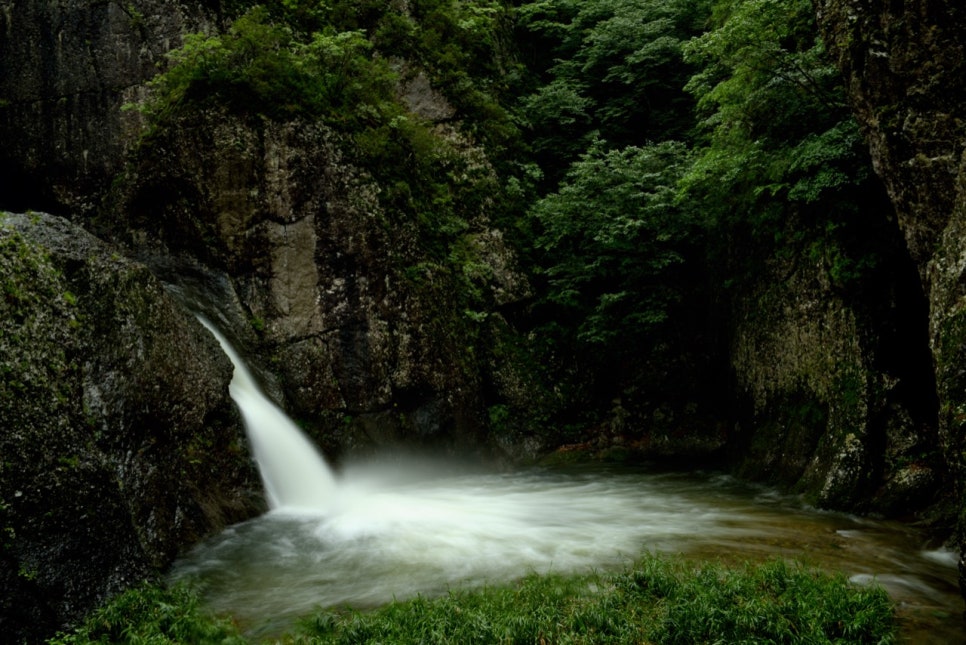
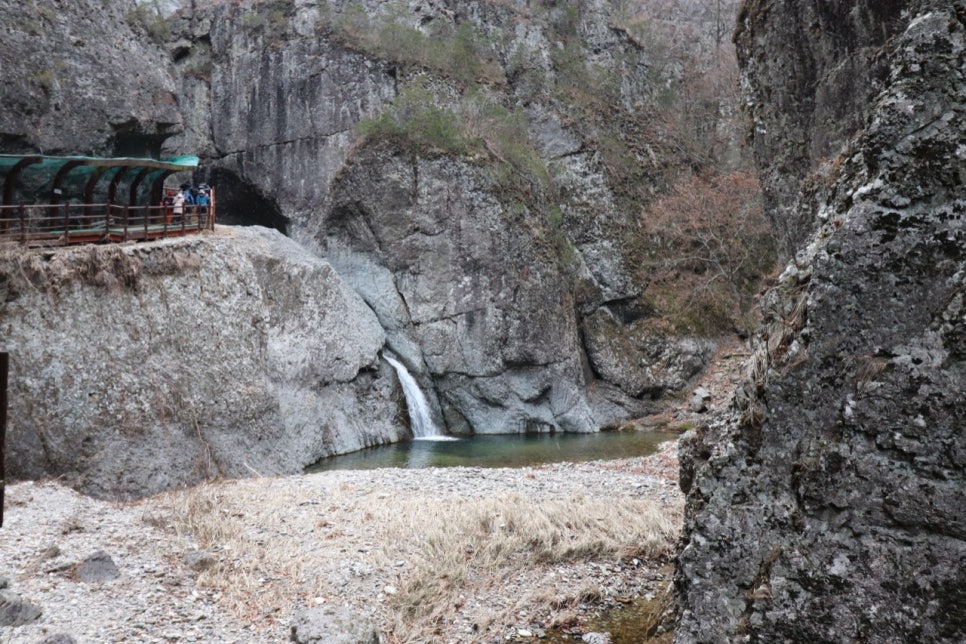
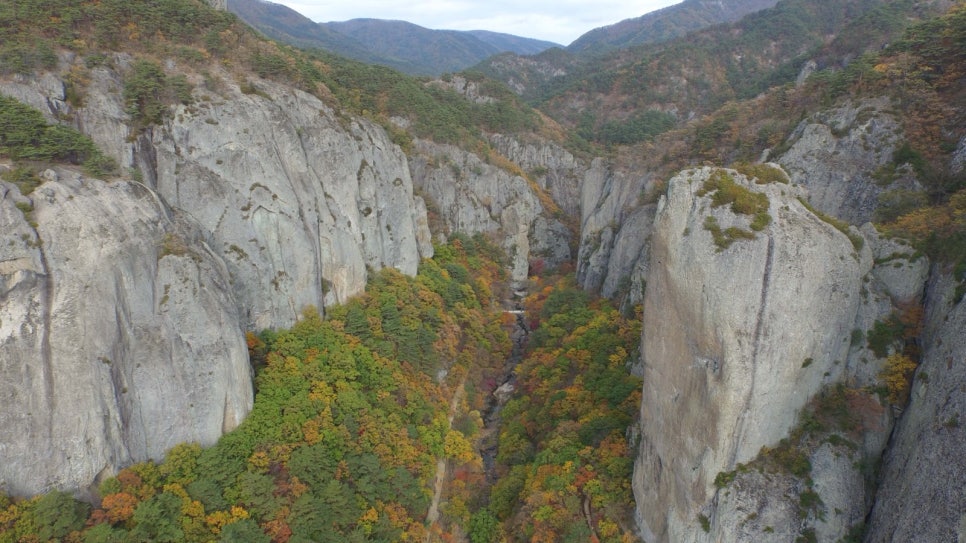
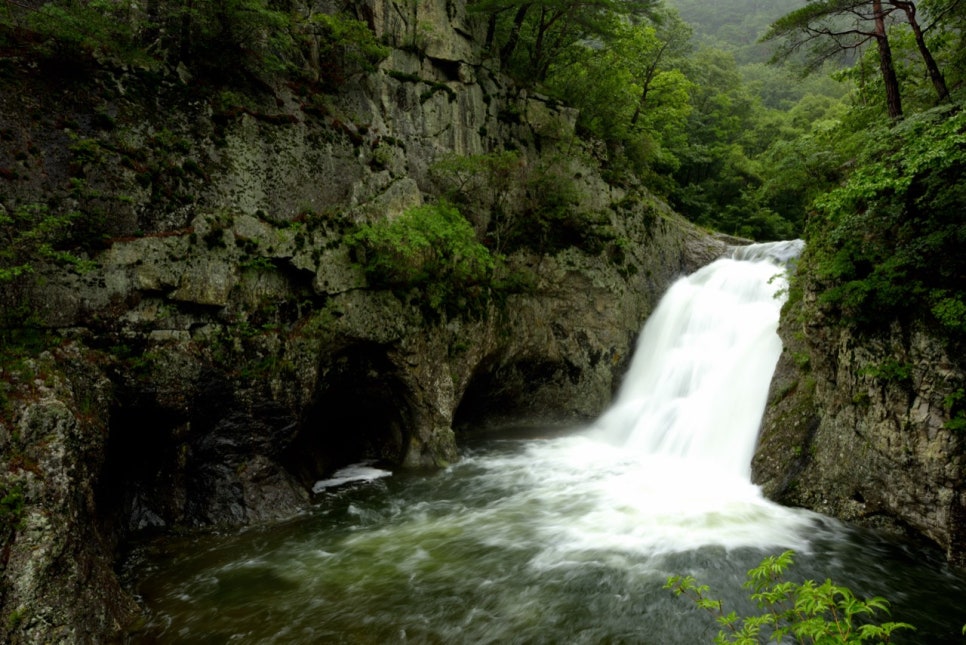
The three photographs attached to the press release show the cover with a sketch of Giam peak, an illustration of Yongchu Falls, and the passage on Giam and Daejeonsa temple. In other words, the scenes the 1939 booklet chose as the face of Juwangsan are the same ones a hiker meets first today. Giam still towers over the temple courtyard, and Yongchu Falls is still there in the valley, so the easiest way to enjoy this exhibition is to look at the drawings, then walk the valley and find the same spots.
Judging from the press photo, the translated passage on Giam and Daejeonsa carries footnotes converting the old Japanese units of length into metres. We saw it in one photograph only, so we are not quoting the figures, but it is a small window into how people measured a mountain 87 years ago — worth reading the footnotes when you are there.
Timed for the autumn colours — how to plan the visit
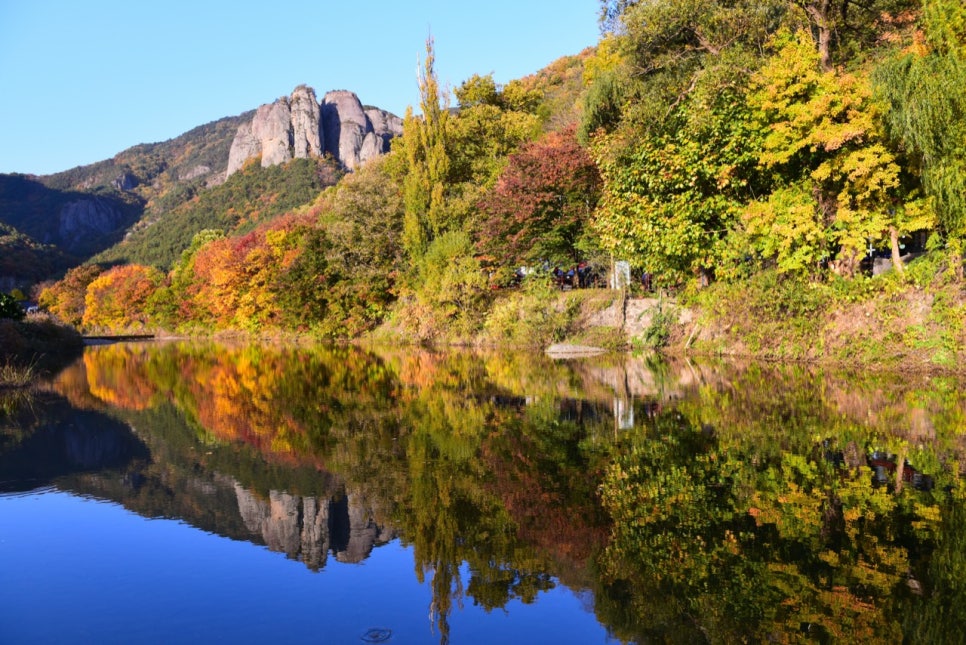
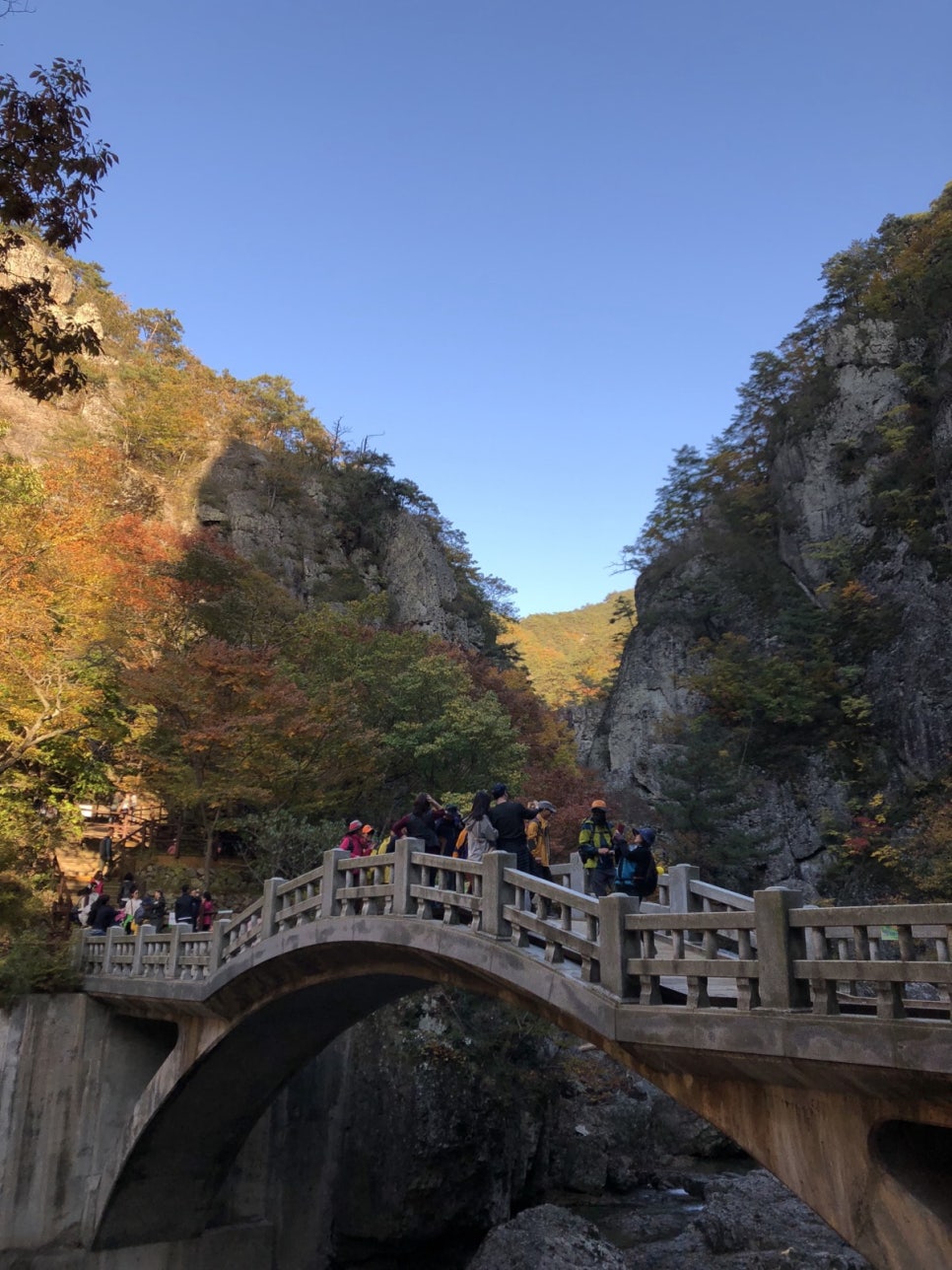
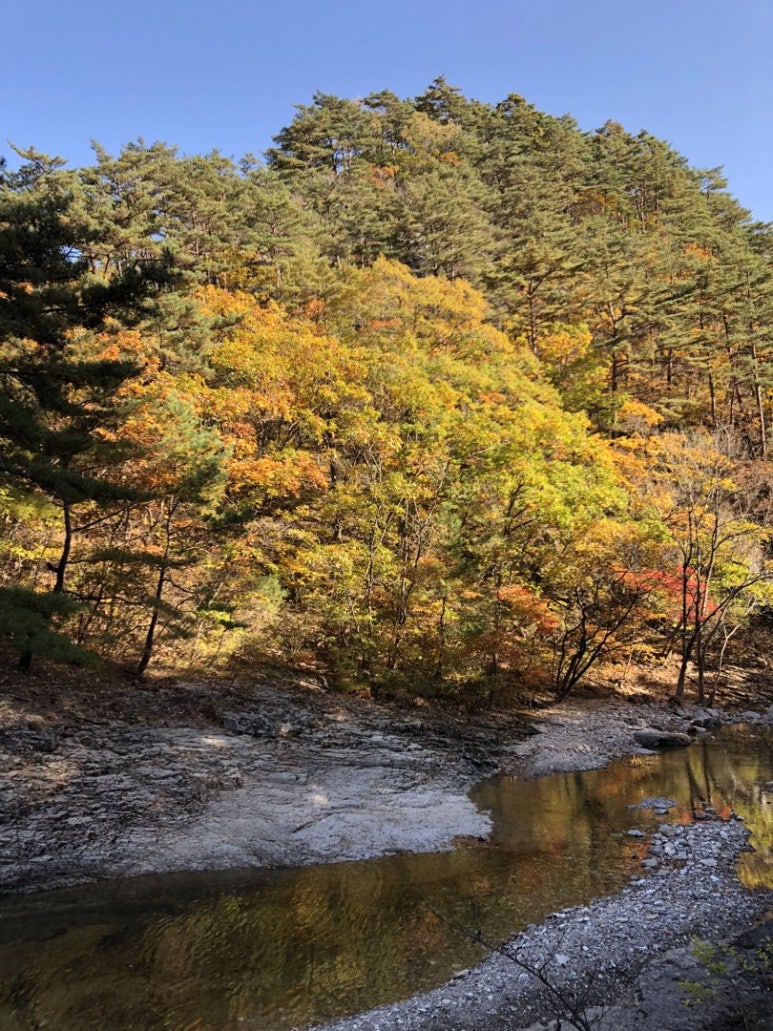
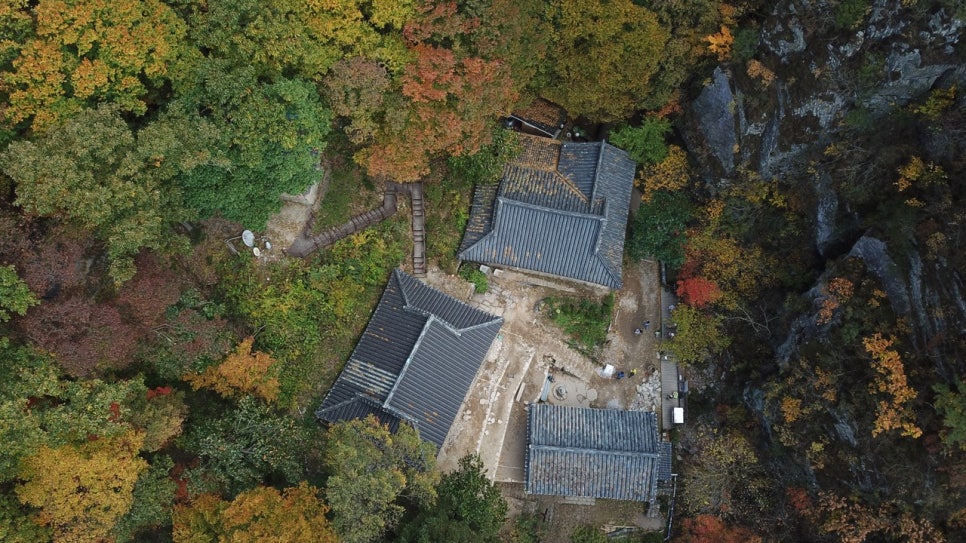
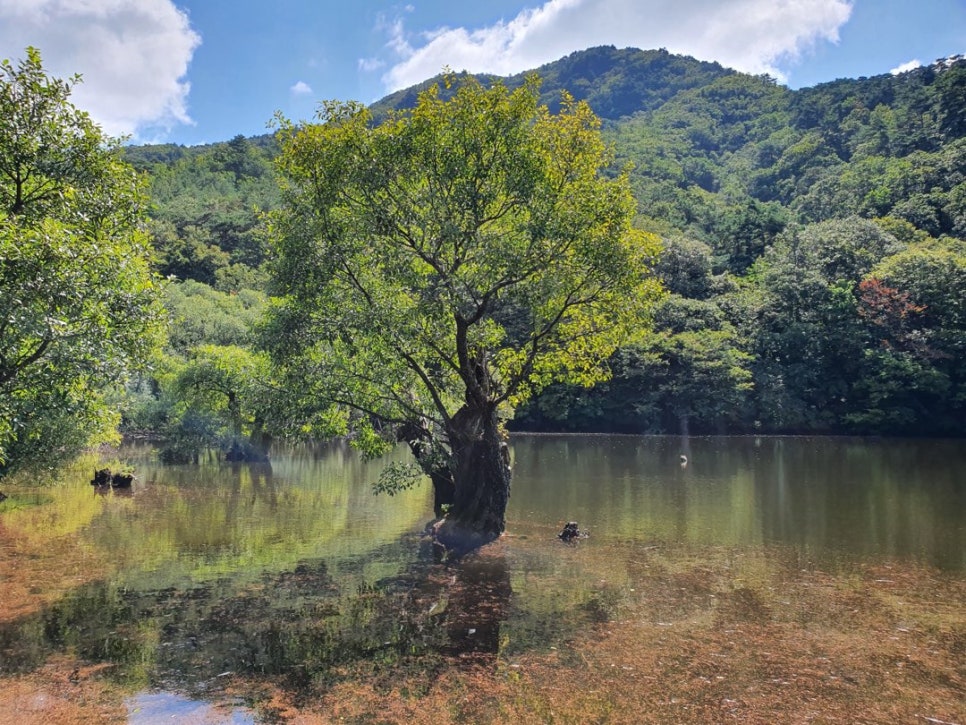
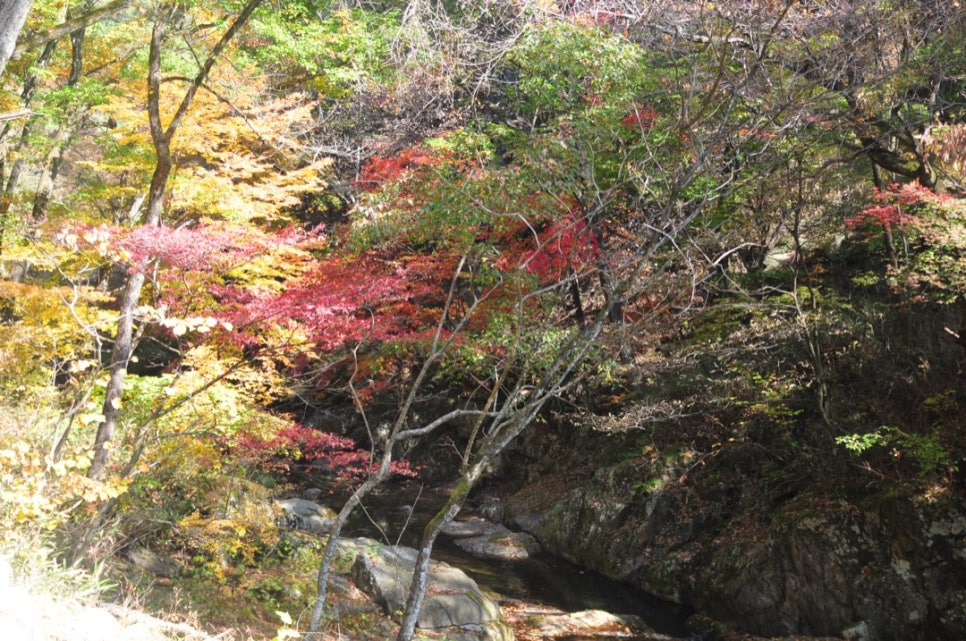
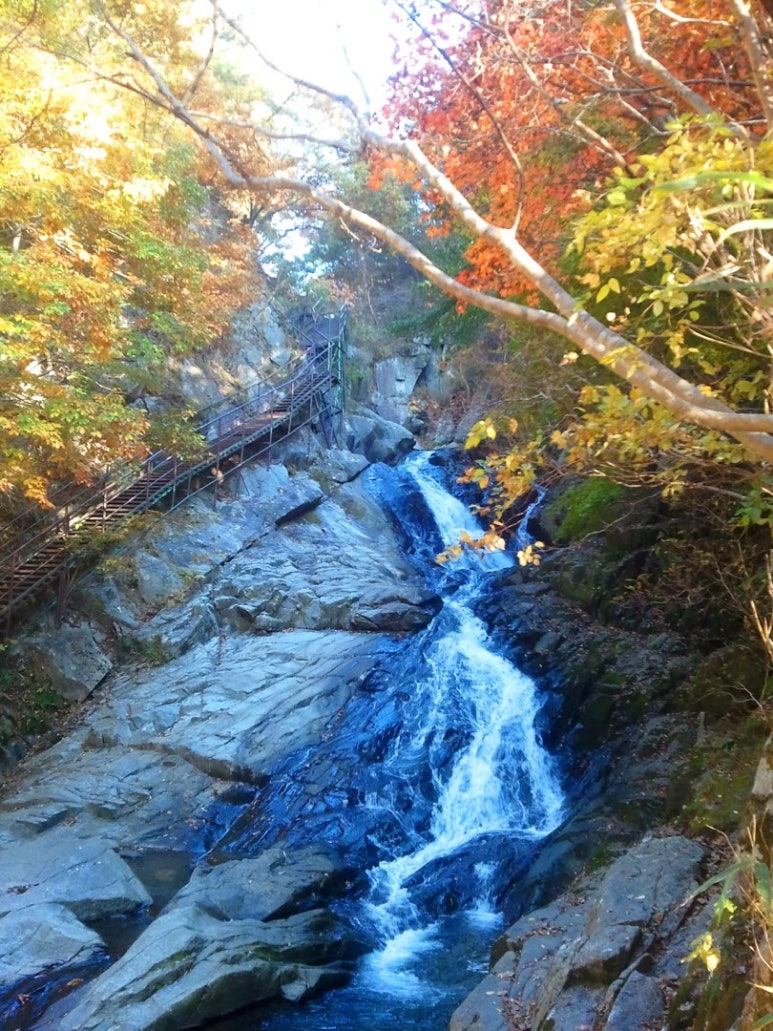
The park office says it scheduled the exhibition for the autumn peak season. The plan is simple: read the translation at the Sangui Visitor Centre first (it is short), pass Daejeonsa temple into the Juwang Valley trail, and walk past Giam, Yongchu Falls and Yongyeon Falls in turn. By the end you will have seen almost every scene drawn in the booklet. The photographs below are KNPS's own pictures of Juwangsan in autumn.
The end date differs between sources
The KNPS press release (28 September 2026) says only that the exhibition "is expected to run until the end of the year", while the Kyongbuk Ilbo (29 September 2026) reports 31 December. We list 31 December as the closing date, but it could be brought forward or extended at the visitor centre's discretion, so call +82-54-873-0231 before a December visit. Some blog posts also date the press release to 29 September; the KNPS website's own posting date is 28 September.
Know before you go
- The original is not here. The 1939 booklet is at the National Museum of Korea; the display is a Korean translation and framed copies.
- It is a set of framed pages inside the visitor centre, not a large special exhibition — allow 20–30 minutes on top of your hike.
- Closed Mondays, or the next weekday when Monday is a public holiday; check the first weekday after the early-October holidays.
- Entry to Juwangsan National Park is free; the Sangui car park is paid, and the queue for it can be long on autumn weekends.
- Enquiries: Sangui Visitor Centre +82-54-873-0231; Juwangsan National Park Office +82-54-870-5300. Both lines are answered in Korean.
In short, this is less a new attraction than an extra layer of time laid over a trail people already walk. Seeing the pencil sketch of Giam on the cover, then stepping outside to look up at the real thing, is reason enough to stop in.
Getting there, and what a non-Korean speaker gets out of it
Getting there. Juwangsan is in Cheongsong county, inland Gyeongsangbuk-do, and there is no rail line. From Seoul, KNPS's own directions are an intercity bus from Dong-Seoul Bus Terminal (동서울터미널) to Cheongsong Terminal, a local bus on to Juwangsan Terminal, then a three-minute walk to the Sangui entrance; allow about 4 hours 50 minutes door to door. Bus tickets are sold at the terminal counters and through Korean apps that generally need a Korean phone number, so buying at the counter is the practical route. By car, the Sangui car park is at the same entrance and is paid. Language. The exhibit is a Korean translation of a Japanese text, shown beside copies of the Japanese pages; we could not confirm any English labels, and the visitor centre's guided talks are in Korean. What works without Korean is the visual side — the cover sketch of Giam, the map, the drawing of Yongchu Falls — and the comparison with the real peaks and falls a few hundred metres up the trail. The trail itself is well marked and hard to lose, and we have not checked how much English the centre's permanent geology display carries, so do not count on it. Booking and payment. There is nothing to book and nothing to pay for the exhibition or for park entry. The only things that need booking at Juwangsan are the campsite and programmes on the KNPS reservation site, which is Korean-only, and none of them are required for this visit.
Frequently asked questions
- Q. Until when is the Juwangsan Annaegi exhibition on?
- It opens on 1 October 2026 and runs to the end of the year. KNPS has said only "until year-end" and the Kyongbuk Ilbo reports 31 December, so for a December trip check with the Sangui Visitor Centre on +82-54-873-0231 (Korean).
- Q. How much does it cost, and what are the hours?
- It is free. The Sangui Visitor Centre opens 10:00–17:00 and is closed every Monday; when Monday is a public holiday it closes on the next weekday instead. No booking is needed.
- Q. Where is the Sangui Visitor Centre?
- At 146 Gongwon-gil, Juwangsan-myeon, Cheongsong-gun, Gyeongsangbuk-do — the Sangui entrance of Juwangsan National Park. By public transport, take a bus from Dong-Seoul Bus Terminal to Cheongsong Terminal, then on to Juwangsan Terminal and walk three minutes; about 4 hours 50 minutes from Seoul.
- Q. Can I see the 1939 original?
- No. The Japanese-language original is held by the National Museum of Korea. The display consists of the park office's Korean translation and framed copies of the pages.
- Q. Who made "Juwangsan Annaegi"?
- According to KNPS it was produced in 1939 by the Juwangsan Historic Sites Preservation Society and contains a description of the mountain, drawings, a map, and the Juwang sajeok (周王事蹟), the legend behind the mountain's name.
- Q. Is it worth going if I do not read Korean?
- As a detour, yes; as the reason for the trip, no. The translated text is Korean and we found no English labels, but the drawings and map are the point of the exhibit, the visitor centre is on the trail you would walk anyway, and it costs nothing. Come for the autumn valley and give the framed pages ten minutes.
Editor's note · Kang Shin-wook
For anyone hiking Juwangsan in the autumn colour season: the exhibit costs nothing and sits in the visitor centre at the trailhead, so it adds ten minutes to a walk you were doing anyway. Know before you go that the display is a translation and copies, not the 1939 original, and that the translated text is Korean. Fees, booking and the other 23 parks are in our Korea National Park Service visiting guide; the calendar is at /en/events.
Sources
- Official notice (Korean)
- KNPS Juwangsan visitor centre page: hours, closed days, transport (Korean)
- Kyongbuk Ilbo report, 29 September 2026 (Korean)
- Maeil Shinmun report, 29 September 2026 (Korean)
Written in our own words from the sources above, never copied from them, and every date and price checked against at least two pages. The originals are in Korean. Spotted a mistake? Ask for a correction.
Latest from Korea National Park Service
 Korea National Park ServiceProgramme17 October 2026On nowFreeChiaksan: free weekend shuttle to Guryongsa — to 15 Nov
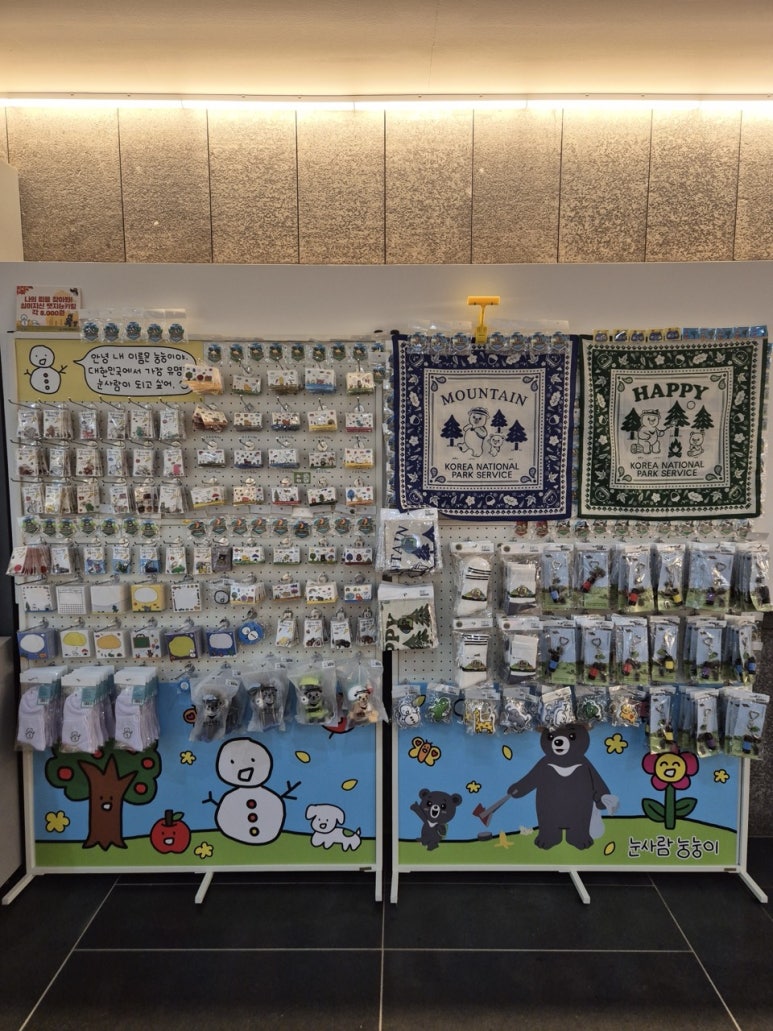 Korea National Park ServiceEvent13 October 2026On nowFreeNungnungi pop-up at Juwangsan National Park's shop — 23 Oct–15 Nov, preview 16–18 Oct
 Korea National Park ServiceNotice8 October 2026Jirisan's Guryong Valley trail reopens Oct 9 — waterfall route restored
 Korea National Park ServiceProgramme7 October 2026On nowOdaesan: a car to Sangwonsa for less-mobile visitors — to 15 Nov