Programme·Korea National Park ServiceOn now
Jirisan's Cheoneunsa lakeside walk with a KakaoTalk chatbot guide
Summary
From 2 November 2026 the Korea National Park Service's Jirisan Ecotourism Centre runs Saengtae Bottari, a self-guided walk on the Sangsaeng-ui-gil ("path of coexistence") at Cheoneunsa Temple in Gurye, where a KakaoTalk chatbot sends the nature commentary instead of a guide. There is no fixed start time, but it has to be booked in advance for at least two people, and the booking system lists KRW 4,000 per youth and KRW 5,500 per adult. The catch for visitors: the chatbot and the booking pages are Korean-only, and the KNPS English booking site covers only shelters and campsites.
Article
In short
- Saengtae Bottari is a contact-free walking programme on the Sangsaeng-ui-gil at Cheoneunsa Temple, Jirisan, running from 2 November 2026; a KakaoTalk chatbot sends the commentary instead of a guide.
- The route runs about 3.3 km from Cheoneunsa's Iljumun gate through a pine forest to the waterside path around Cheoneun Reservoir, and you start whenever you like on the day you booked.
- Booking is through the KNPS reservation system (Ecotourism Centre → Jirisan) and needs at least two people.
- The booking system lists KRW 4,000 per youth and KRW 5,500 per adult, with 100 places a day; the press release does not mention a fee.
- For non-Korean speakers: the chatbot speaks Korean, the booking needs a KNPS account with Korean identity verification, and the English booking site does not carry this programme.
The forest path below Cheoneunsa Temple, on the western side of Jirisan in Gurye, now has a guide you carry in your phone. In a press release on 20 October, the Korea National Park Service's Jirisan Ecotourism Centre announced that from 2 November it would run Saengtae Bottari on the Cheoneunsa Sangsaeng-ui-gil. Unlike its existing programmes, where a group walks with a ranger-guide, people who have booked set off when they like and receive the stories of otters, mandarin ducks and the Korean winter hazel in a KakaoTalk chat. It suits families and small groups whose day does not fit a fixed guided slot.
How does the walk work?
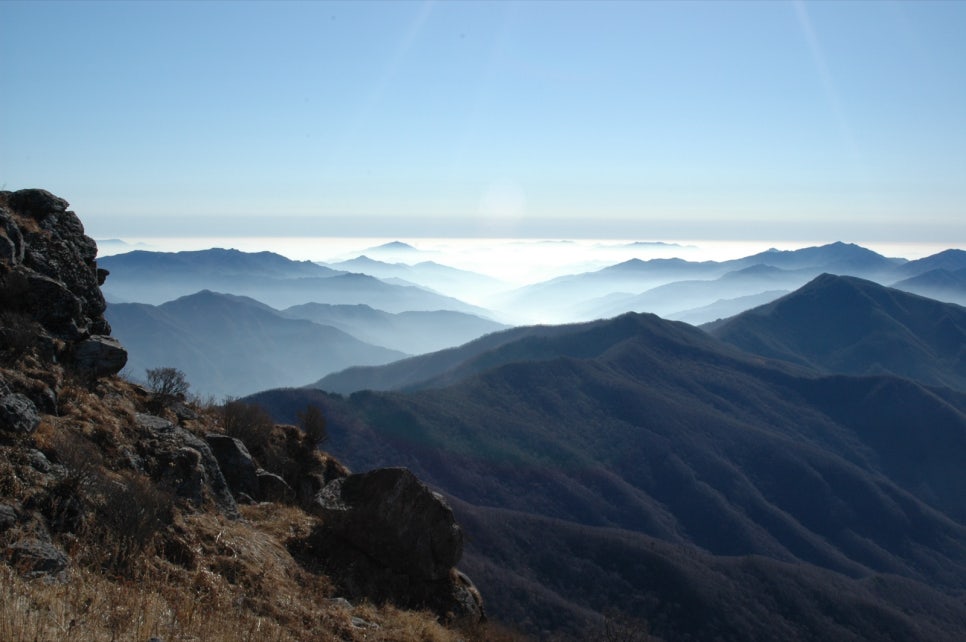
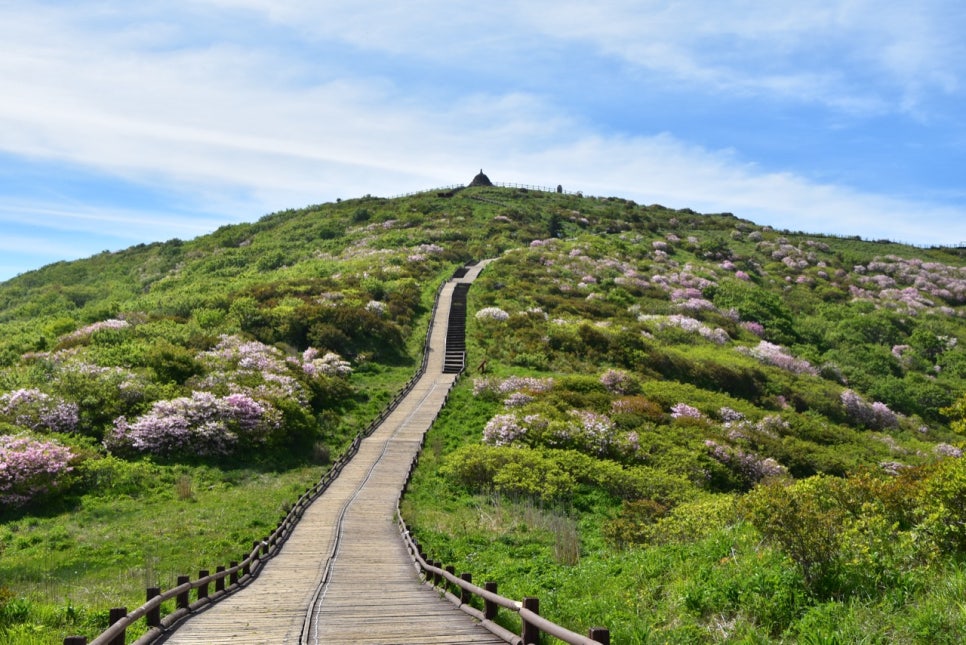
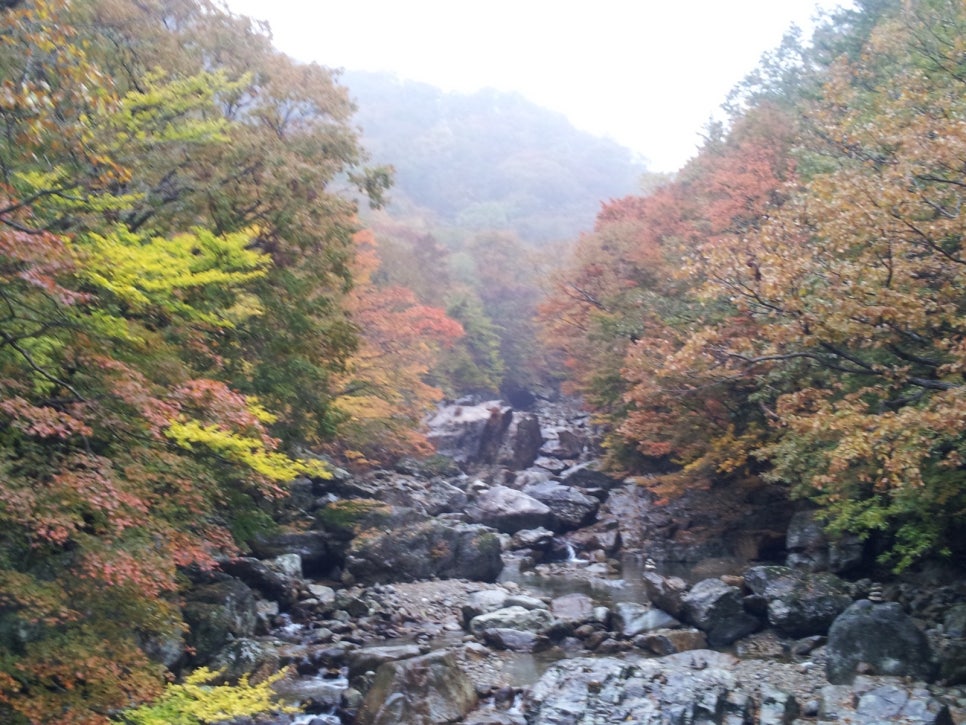
You start at Cheoneunsa's Iljumun, the temple's first gate. From there the path enters a pine forest and continues along the waterside around Cheoneun Reservoir, about 3.3 km in all according to the press release. The chatbot sends commentary at points along the way, so there is no signboard to hunt for and no guide to wait for. The detailed route has only been published as that one-line summary, so on the day it is safest to follow the order the chatbot gives.
What does the chatbot talk about?
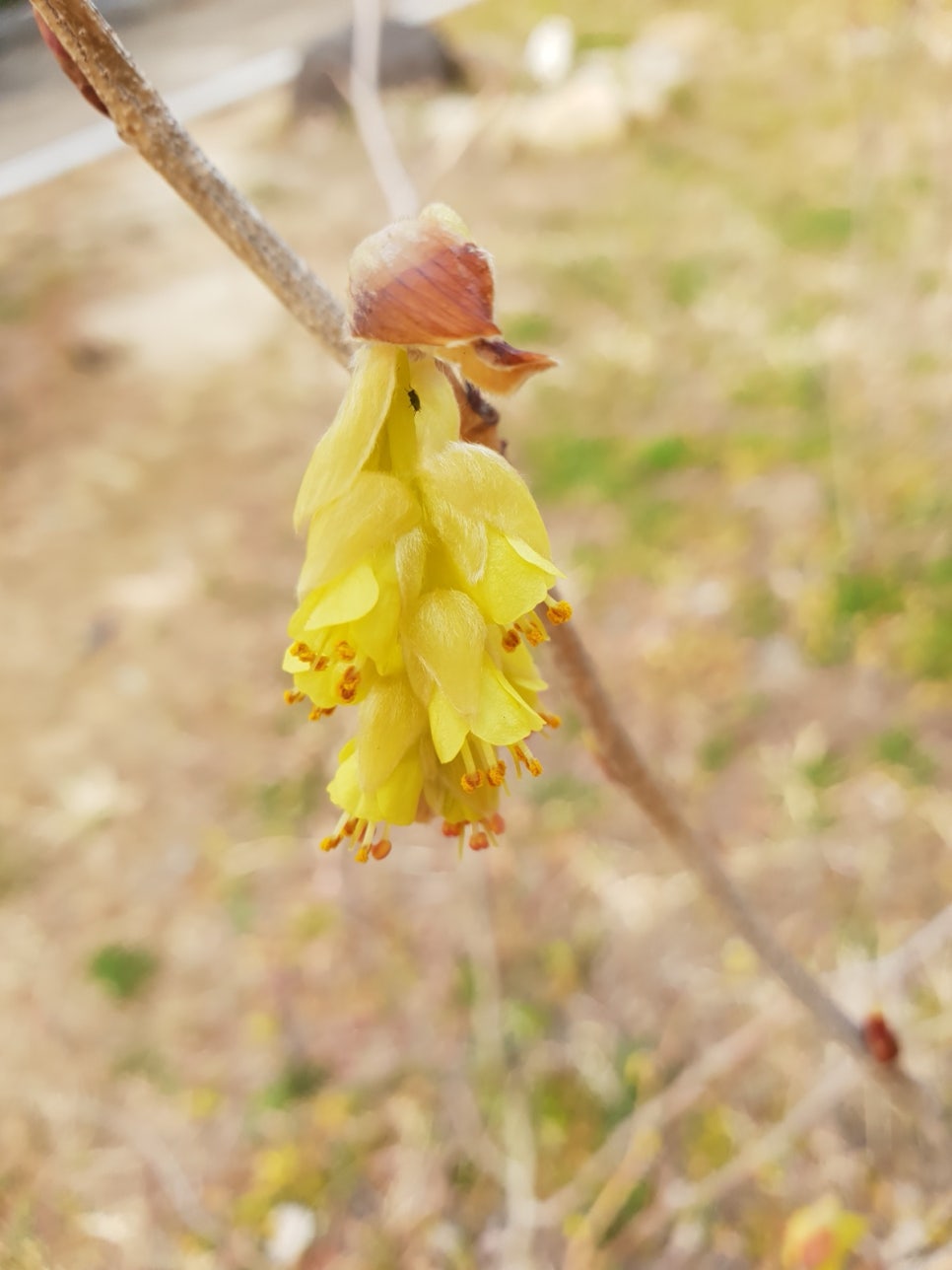
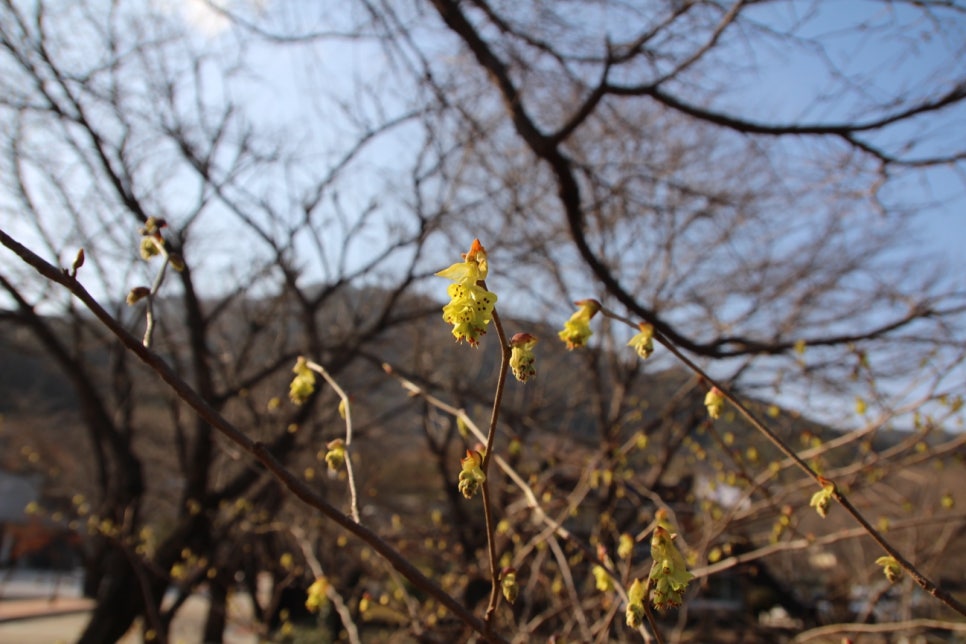
The commentary centres on three species: the otter and the mandarin duck, both natural monuments of Korea, and the Korean winter hazel (Corylopsis coreana), Jirisan National Park's flagship species, which hangs out pale yellow flowers in early spring. KNPS says it also covers how trees survive, what the artificial nest boxes around the reservoir are for, and what "coexistence" in the path's name means. The winter hazel does not flower in November, so for the blossom itself the walk is worth repeating in March.
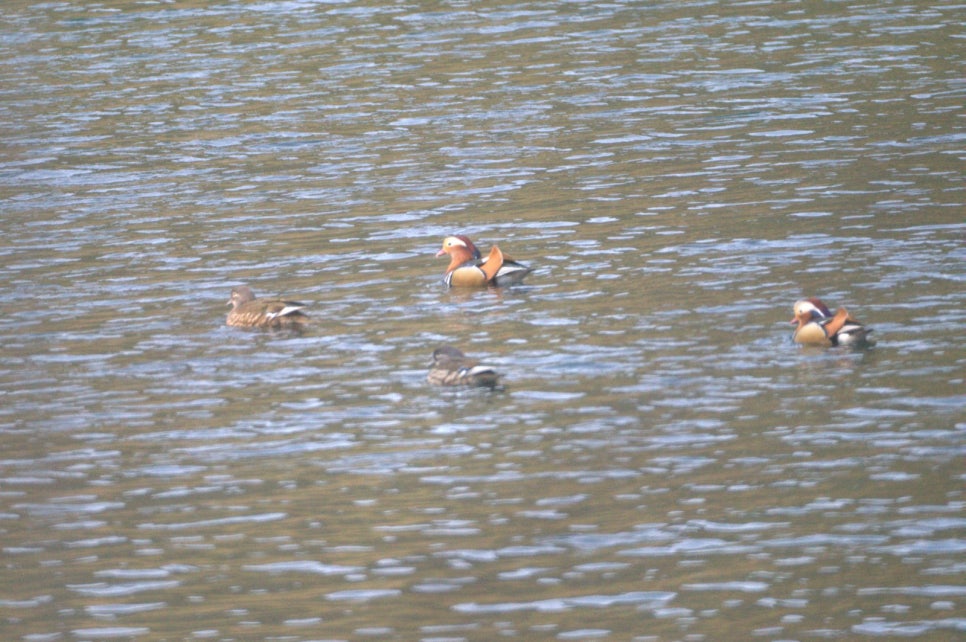
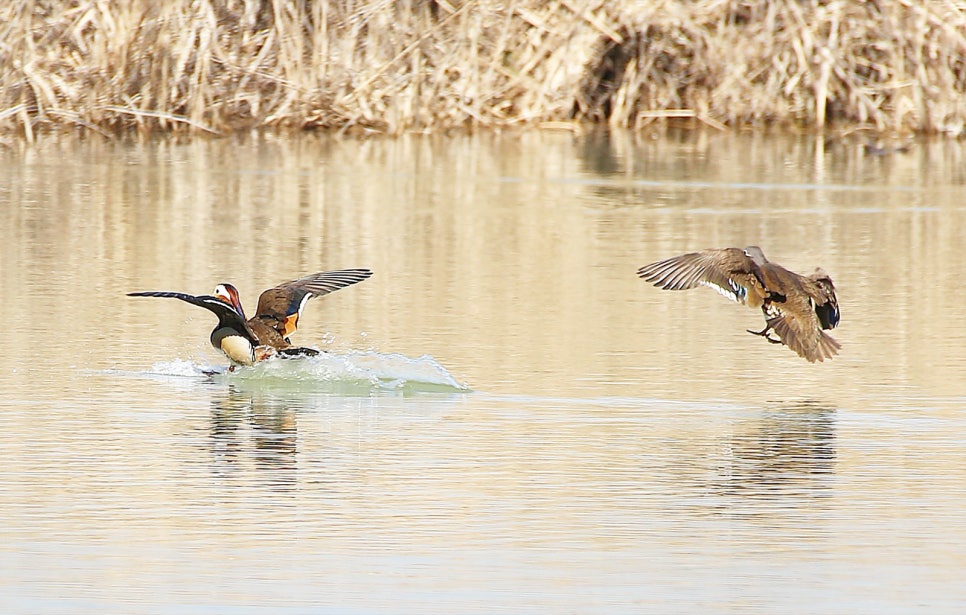
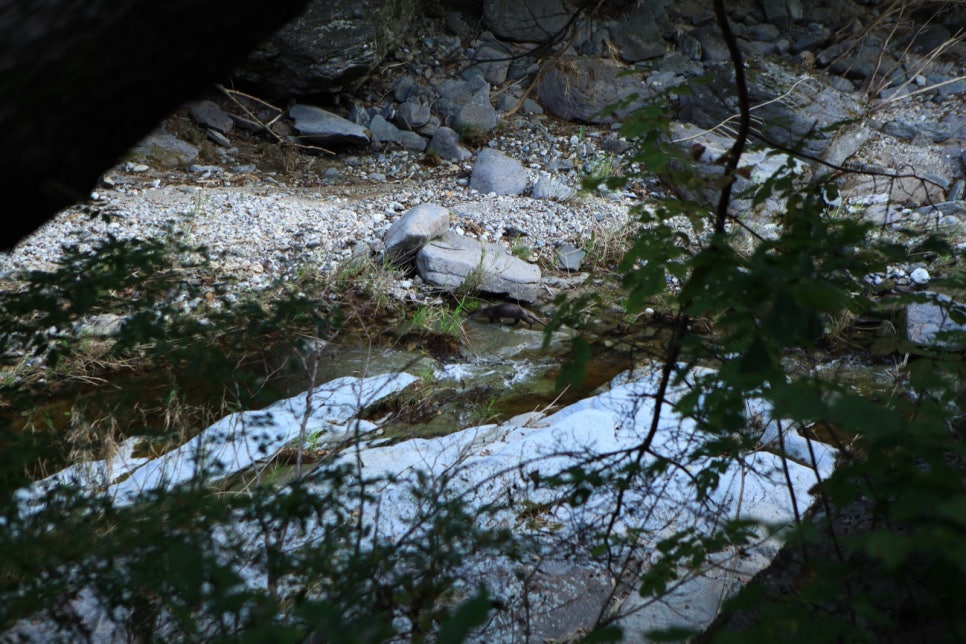
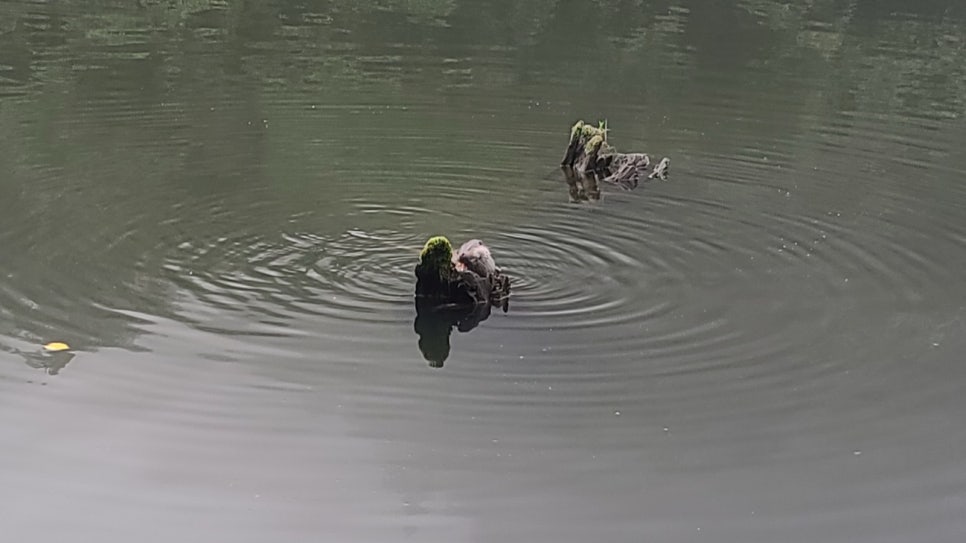
The mandarin duck and otter photographs below are reference pictures showing what the animals look like. They were taken in Songnisan and Juwangsan national parks, not at Cheoneun Reservoir, and there is no guarantee of seeing either animal on the walk.
Why is it called the path of coexistence?
Provincial Road 861, which passes Cheoneunsa, is the way up to Nogodan, and from 1987 the temple charged everyone using it a cultural-heritage viewing fee of KRW 1,600. The charge outlived the abolition of national park entrance fees in 2007 and drew complaints for years, until on 29 April 2019 eight bodies — including the Ministry of Environment, the Cultural Heritage Administration (now the Korea Heritage Service), South Jeolla Province and the temple — signed an agreement ending it. The trails and facilities around Cheoneunsa were then improved as a follow-up, and the route was named Sangsaeng-ui-gil, the path of coexistence, for the dispute that was settled together.
The starting point, Cheoneunsa's Iljumun, was built in 1723 and designated a Treasure in 2022. Its front plaque reads "Jirisan Cheoneunsa" and is traditionally attributed to the late-Joseon calligrapher Wongyo Yi Gwang-sa, so it is worth a look up before you open the chat.
How do you book, and what does it cost?
Saengtae Bottari booking terms (checked in the booking system on 3 November 2026)
- How to book
- KNPS reservation system → Reservation → Ecotourism Centre → Jirisan → the chatbot programme Saengtae Bottari (비대면-챗봇 생태봇따리) (Korean pages)
- Fee
- KRW 4,000 per youth · KRW 5,500 per adult
- Minimum group
- At least two people per booking
- Daily capacity
- 100 people
- Bookable dates
- Open date by date to the end of November (no December dates published yet)
- Children
- One guardian recommended for children aged 10 and under
Logging in to the booking system requires a KNPS membership and identity verification. Under the general notice for ecotourism-centre programmes, plans can change with the weather on the day, so it is safest to check with the Jirisan Ecotourism Centre (061-780-8700) before setting off.
The fee appears only in the booking system
The 20 October press release does not mention a fee, and neither did the original blog post. The fee above (KRW 4,000 per youth, KRW 5,500 per adult) and the 100-person daily capacity are what the KNPS reservation system listed for the Jirisan centre's programmes on 3 November, and may change while the programme runs.
Getting to Cheoneunsa, and what to expect without Korean
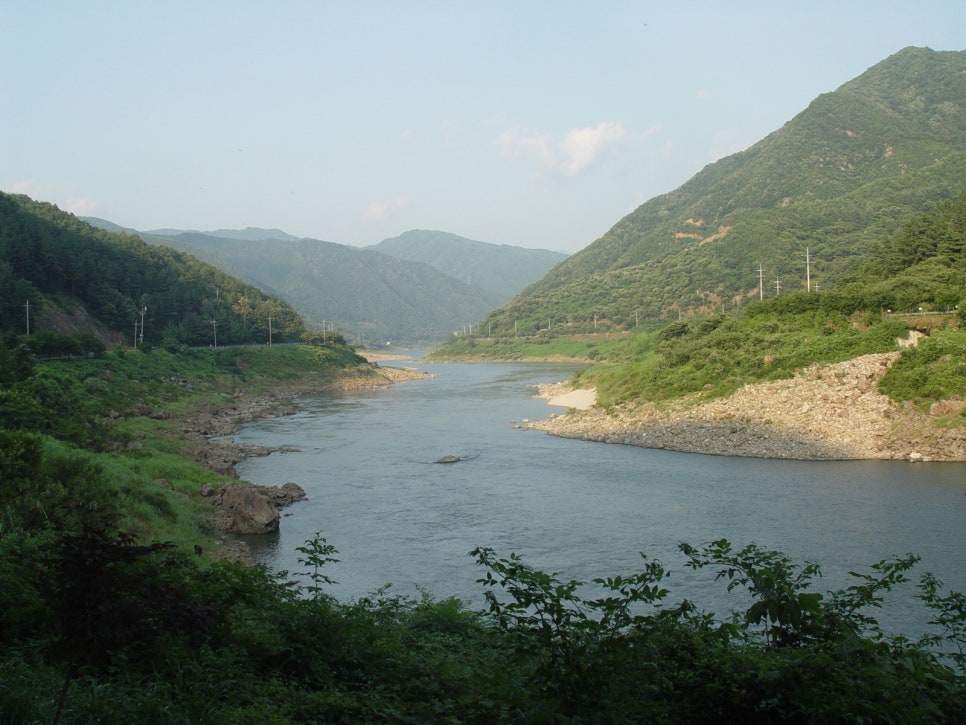
Cheoneunsa is on Nogodan-ro in Gurye, on the road that climbs to Nogodan and Seongsamjae. From Seoul, trains on the Jeolla line run from Yongsan to Guryegu Station, and express buses run to Gurye's bus terminal; from Gurye town, local buses on the Nogodan route stop at Cheoneunsa, but they are infrequent and seasonal, so check the day's times through the Korea Travel Hotline (1330, in English) or take a taxi. The temple itself charges no admission. The harder part is the language. The chatbot commentary arrives in Korean in KakaoTalk, so you will need the app, mobile data, and either Korean or a translation app that can read chat messages. The KNPS English booking site lists only shelters and campsites, and the Korean site asks for a KNPS account with Korean identity verification, which a short-stay visitor usually cannot complete; booking through a Korean-resident friend or your accommodation, or calling the Jirisan centre, are the realistic routes. If none of those works, the path is still a national park trail, and the walk from the gate to the reservoir is there without the commentary.
Frequently asked questions
- Q. When does Saengtae Bottari at Cheoneunsa start?
- The Korea National Park Service's Jirisan Ecotourism Centre runs it from Monday 2 November 2026. No end date has been announced, and the booking system has dates open to the end of November.
- Q. Is the Cheoneunsa chatbot walk free?
- No. The KNPS booking system lists KRW 4,000 per youth and KRW 5,500 per adult. The press release does not mention a fee, so check the final amount on the booking screen.
- Q. Where do I book Saengtae Bottari?
- On the KNPS reservation system (reservation.knps.or.kr, Korean): Reservation → Ecotourism Centre → Jirisan, then the programme marked as the contact-free chatbot programme. Bookings need at least two people.
- Q. How long is the Sangsaeng-ui-gil at Cheoneunsa?
- About 3.3 km according to the press release, from Cheoneunsa's Iljumun gate through a pine forest to the waterside path around Cheoneun Reservoir. The chatbot gives the detailed route.
- Q. Can children take part?
- Yes, it is open to all ages. Under the general ecotourism-centre notice, one guardian is recommended to walk with children aged 10 and under.
- Q. Is it worth going if I do not read Korean?
- For the walk, yes: the pine forest and reservoir path need no language, and the temple charges no admission. For the chatbot commentary, only with help — it arrives in Korean on KakaoTalk, and booking needs a Korean-verified KNPS account, so a non-resident usually needs a Korean-resident companion to book it.
Editor's note · Kang Shin-wook
For visitors heading to Gurye and the western side of Jirisan who want a quiet forest-and-reservoir walk, with an honest account of what the Korean-only chatbot and booking system ask of a non-Korean speaker. Park-by-park visiting basics are on Korea National Park Service; other open bookings are on Booking & sign-up.
Sources
- Official notice (Korean)
- KNPS reservation system — Jirisan Ecotourism Centre programmes (Korean)
- Seoul Shinmun on the end of the Cheoneunsa road toll, 28 Apr 2019 (Korean)
- Report on the 2022 Treasure designations including temple gates, 28 Dec 2022 (Korean)
Written in our own words from the sources above, never copied from them, and every date and price checked against at least two pages. The originals are in Korean. Spotted a mistake? Ask for a correction.
Latest from Korea National Park Service
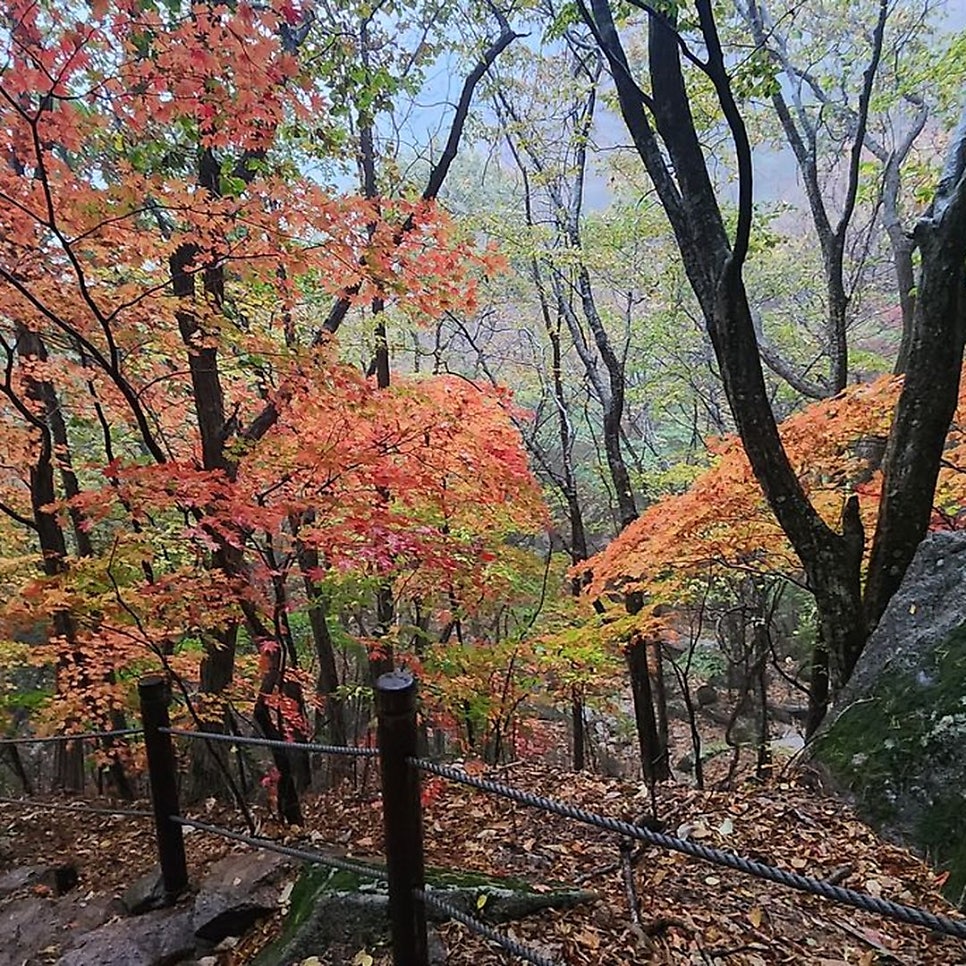 Korea National Park ServiceNotice3 November 2026Korea's national parks in autumn: live cameras, crowds and entry times — what to check before you go
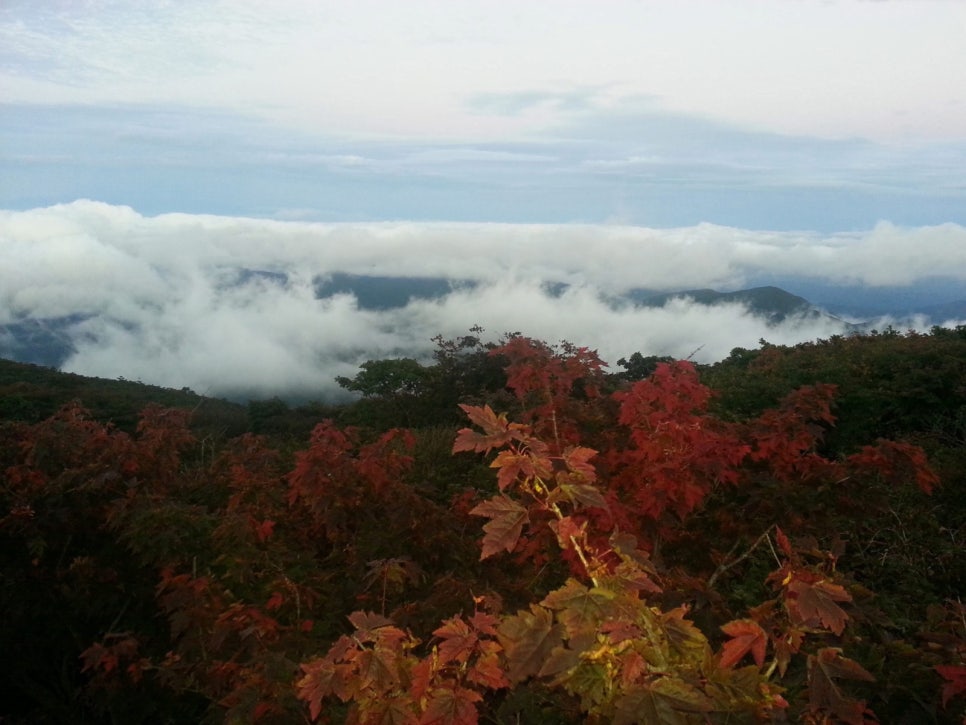 Korea National Park ServiceNotice2 November 2026Korea national park trail closures — 15 Nov to 15 Dec 2026
 Korea National Park ServiceProgramme2 November 2026On nowKorea's national park eco-centres: overnight stays with a local gift — November 2026
 Korea National Park ServiceProgramme29 October 2026On nowFreeDeogyusan autumn colour at its peak — free Gucheondong shuttle runs to 15 November, nine days only in November