Summary
Higher trails in Korea's national parks close from 15 November to 15 December 2026 to prevent wildfires. Seoraksan shuts 11 trails, including both main routes to Daecheongbong, so 14 November is the last day for the summit; Deogyusan closes 13 and Sobaeksan 7. Entering a closed trail is fined up to KRW 500,000. Valley walks such as Sogongwon to Biseondae in Seoraksan and the gondola-side path to Hyangjeokbong in Deogyusan stay open. There is no booking route onto a closed trail, and closure notices are posted in Korean only.
Article
In short
- In 2026 the Korea National Park Service closes higher trails from Sunday 15 November to Tuesday 15 December to prevent wildfires; two trails around Gombaeryeong in Seoraksan closed early, on 1 November.
- Seoraksan closes 11 trails, including both main routes to the Daecheongbong summit (from Osaek and from Baekdam), so Saturday 14 November is the last day to reach the top until 16 December.
- Deogyusan closes 13 trails but keeps six open, including Seolcheonbong to Hyangjeokbong; Sobaeksan closes 7 of its 20 trails.
- Entering a closed trail carries a fine of up to KRW 500,000, and smoking or carrying a lighter or other flammables up to KRW 2,000,000, under Article 86 of the Natural Parks Act.
- No booking or permit lets you onto a closed trail; the open trails need no booking at all, and the main junctions are signed in English as well as Korean.
Park offices across the Korea National Park Service posted their autumn wildfire notices at the end of October. The wildfire-caution season itself began on 1 November, but the period in which high trails are actually shut runs 31 days, from 15 November to 15 December. Anyone planning a ridge hike at the tail end of the autumn colour needs to check the dates first. This article sets out which trails close and which stay open in Seoraksan, Deogyusan and Sobaeksan, where the offices published full lists, and explains how to check parks such as Jirisan, Taebaeksan and Byeonsanbando, which have so far published their routes only as maps.
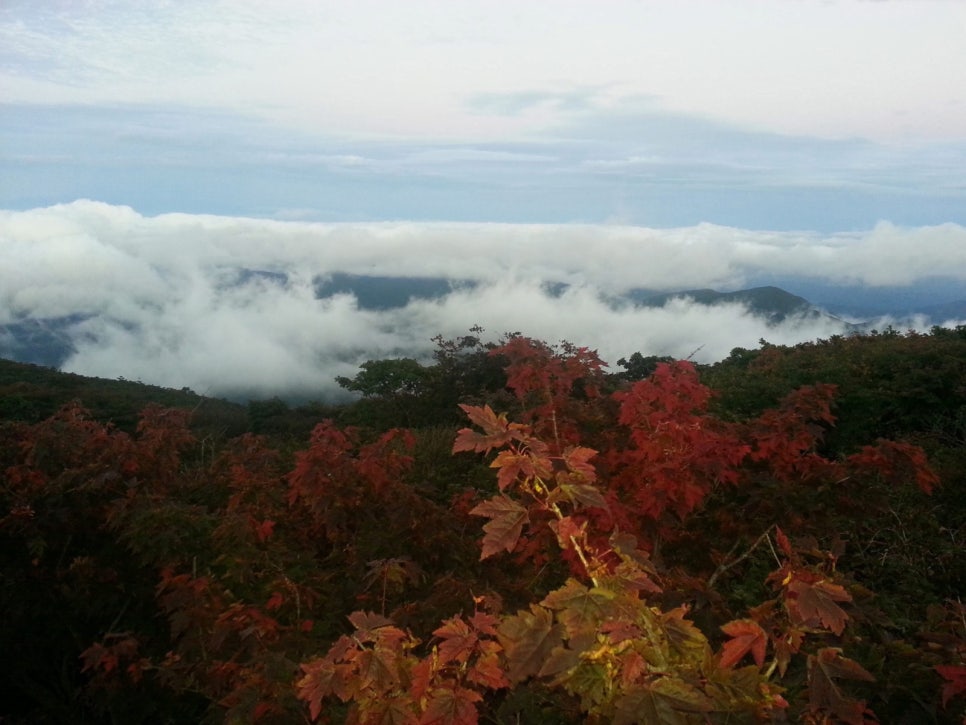
When is the last day to climb Daecheongbong in Seoraksan?
According to the Seoraksan National Park Office notice (No. 2026-47), 11 trails close in total. Nine close from 15 November, and the two around Gombaeryeong on the Inje side closed from 1 November. The nine include Osaek to Daecheongbong and Baekdam visitor centre to Daecheongbong — the two standard summit routes — as well as Madeungnyeong to Hangyeryeong, which takes in the Gongnyong (Dinosaur) Ridge, and Biseondae to Huiungak shelter. In practice the summit is reachable only until 14 November.
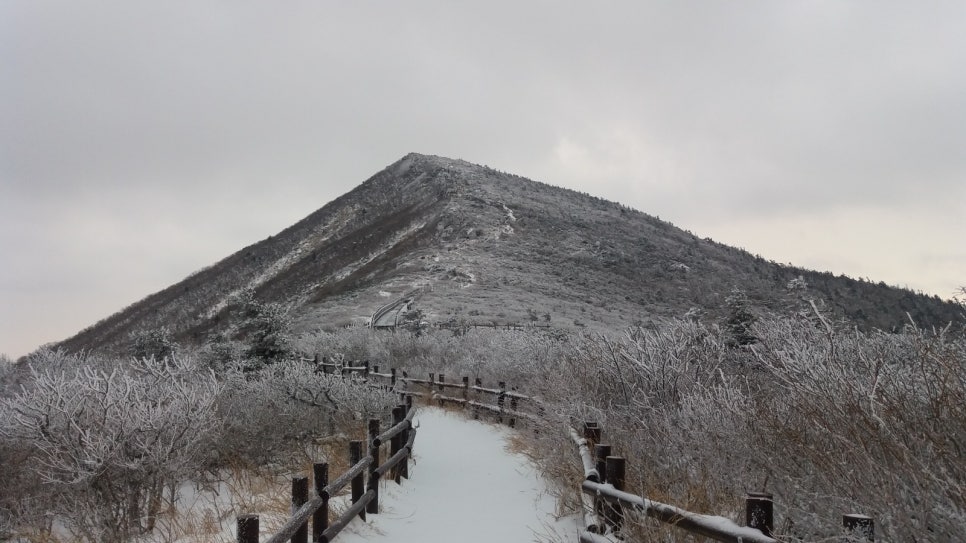
Seoraksan closed trails (Seoraksan National Park Office notice No. 2026-47)
- Closure dates
- Trails
- 15 Nov–15 Dec (9 trails)
- Madeungnyeong–Hangyeryeong / Jangsudae–Daeseungnyeong / Biseondae–Huiungak shelter / Biseondae–Yeongsiam / Baekdam visitor centre–Daecheongbong / Namgyo-ri–Daeseungnyeong–Hangyeryeong junction / Osaek–Daecheongbong / Oseam–Bongjeongam / Oknyeotang–Hangyesanseong
- 1 Nov–15 Dec (2 trails)
- Gombaegol entrance–Gombaeryeong–Gangseon-ri / Gombaeryeong–Jindong-ri descent
- Enquiries
- Seoraksan National Park Office +82-33-801-0900 (Korean)
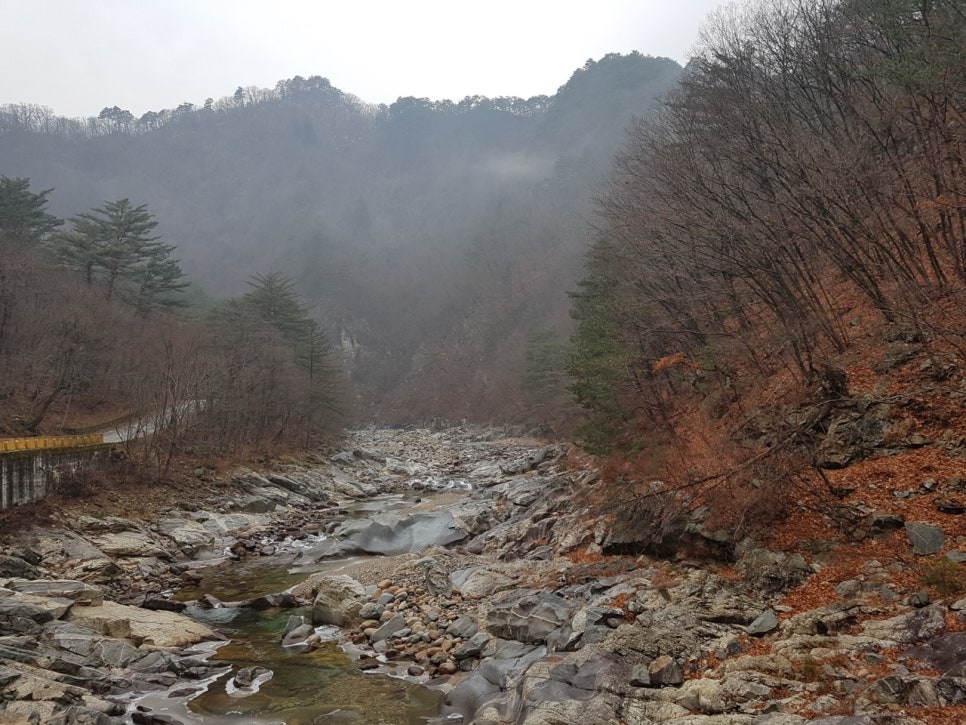
Which Seoraksan trails can I still walk during the closure?
The notice says every official trail not on the list stays open; unbuilt side paths were never open in the first place. Two sights that lie inside closed trails are kept open as access points: you sign an entry register at the named post, and going beyond the access point is fined in the same way as entering a closed trail.
Low-level access points inside closed trails
- Geumganggul cave (Biseondae–Yeongsiam trail)
- 09:30–14:00 · sign the register at the Biseondae visitor centre
- Daeseung Falls (Jangsudae–Daeseungnyeong trail)
- 09:00–16:00 · sign the register at the Hangyesanseong ranger post
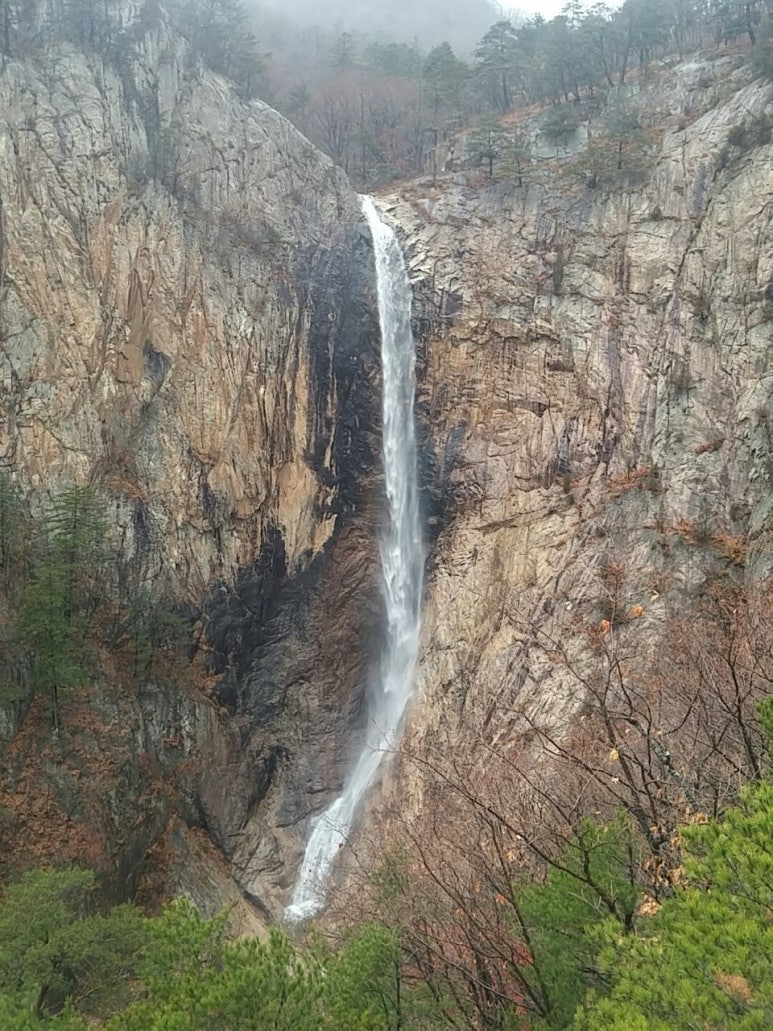
The autumn trail map the Seoraksan office posted alongside the notice marks these as open: Sogongwon to Biseondae; Sogongwon via Sinheungsa temple to Ulsanbawi rock; Biryong Falls and the Towangseong Falls viewpoint; Gwongeumseong fortress (Anrakam side); the Jujeongol valley route from Heullimgol past Yongso Falls to Osaek mineral spring; and the native-plant garden entrance to the Gamasogol entrance. Most of the valley walks starting from Sogongwon in Outer Seorak can therefore still be done.
Sogongwon to Anrakam is not closed
Some news reports listed Sogongwon to Anrakam (towards Gwongeumseong) as closed, but it is not among the 11 trails in the notice and the official trail map shows it as open. We have followed the notice; it is still worth confirming with the park office before you set out.
What closes and what stays open in Deogyusan?
In a 29 October press release the Deogyusan National Park Office announced 11 fully closed trails and 2 partly closed ones. Only two of the fully closed trails are named: Anseong visitor centre to Dongyeopryeong (4.4 km) and Songgyesa temple to Baegambong (6.5 km); the other nine appear only on the attached map. Six trails stay open, and the notice and press release agree on them. They include the 0.6 km walk from Seolcheonbong (the top of the resort gondola) to Hyangjeokbong, and the route from Gucheondong past Baengnyeonsa temple to Hyangjeokbong, which makes Deogyusan one of the few parks where you can still reach a summit during the closure.
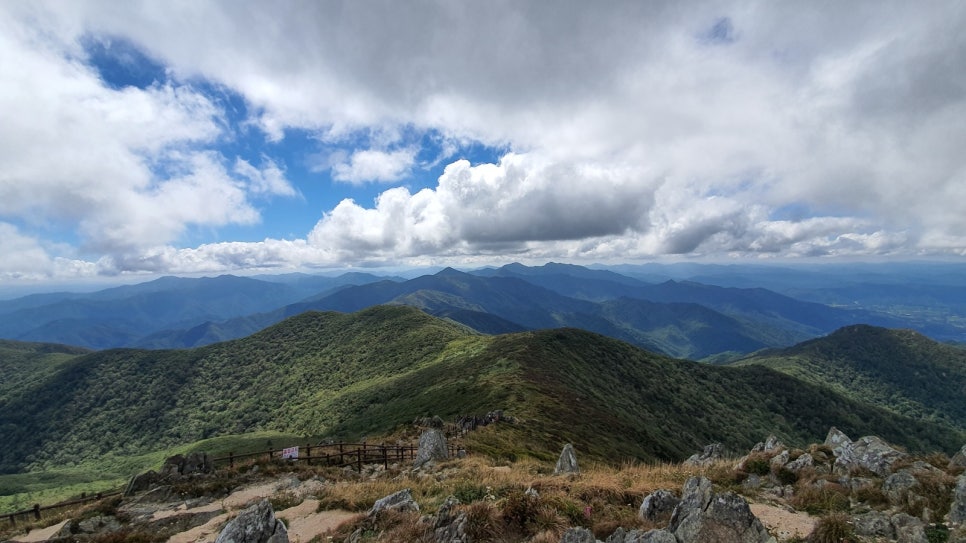
Deogyusan closed and open trails (press release and park notice, 29 October 2026)
- Fully closed, 11 trails · no entry
- Anseong visitor centre–Dongyeopryeong (4.4 km), Songgyesa–Baegambong (6.5 km) and others
- Partly closed, 2 trails · no entry
- Inwoldam–Seolcheonbong (5.1 km), Hyangjeokbong–Yeonggak visitor centre (17.5 km)
- Partly open, 2 trails · open
- Seolcheonbong–Hyangjeokbong (0.6 km), Gucheondong visitor centre–Baengnyeonsa–Hyangjeokbong (8.5 km)
- Fully open, 4 trails · open
- Deogyudae nature-study area–Ansimdae (3.3 km), Hwangjeom–Satgatjae (3.4 km), Seochang ranger post–Anguksa (3.8 km), Sinyangdam–Baengnyeonsa (1.4 km)
- Enquiries
- Deogyusan National Park Office +82-63-322-3174 or 3175 (Korean)
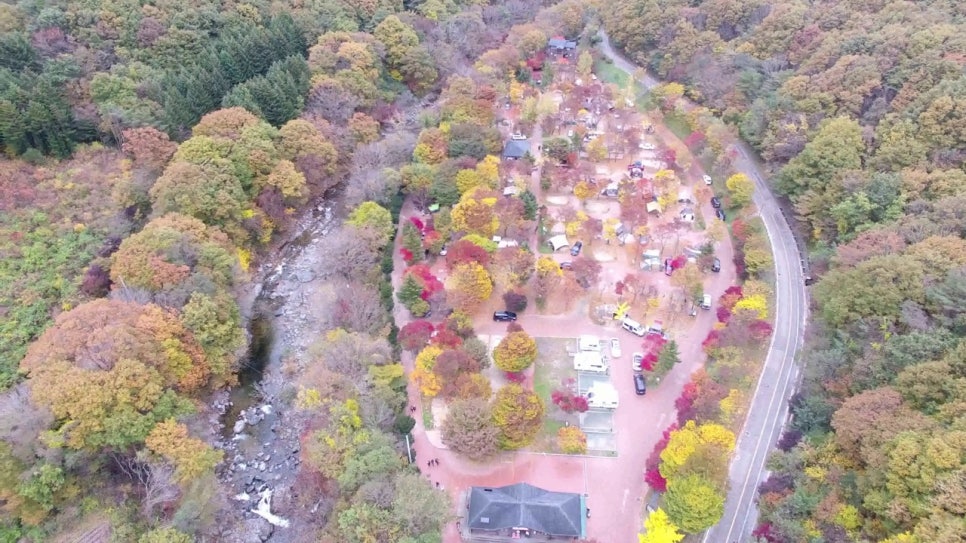
The Deogyusan office asks hikers to check open trails on its website or by phone before setting out, and not to smoke, cook or burn anything in the park. The same release says enforcement against smoking and cooking is being stepped up for the wildfire season.
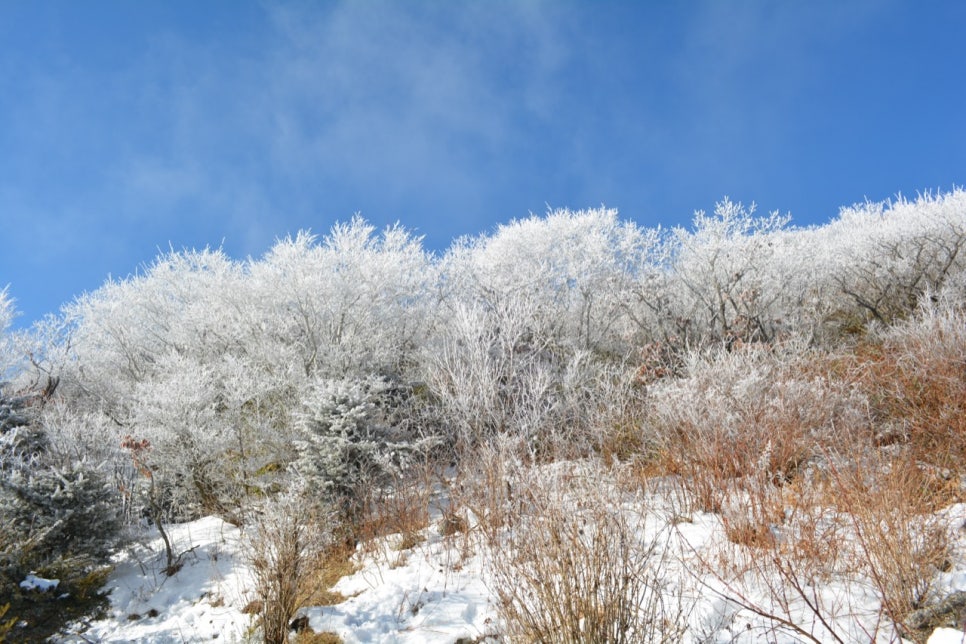
How many Sobaeksan trails are closed?
The Sobaeksan National Park Office notice says 7 of its 20 trails close — 51.58 km of 101.01 km, a little over half the network by length. Most routes up Gungmangbong from the Yeongju side in North Gyeongsang close, and on the Danyang side in North Chungcheong the Baekdudaegan ridge section from Myojeongnyeong to Jungnyeong is included. Other routes to Birobong, the main summit, are not on the notice's closure list; check the attached map before planning.
Sobaeksan closed trails (Sobaeksan National Park Office notice)
- Area
- Trails
- Yeongju, North Gyeongsang (5)
- Yeonhwa-dong–Yeonhwa junction / Choamsa–Gungmangbong / Eouigok junction–Gungmangbong / Gungmangbong–Neujeunmogi / Namdae school–Neujeunmogi (Sobaeksan Jarakgil courses 8 and 9)
- Danyang, North Chungcheong (2)
- Myojeongnyeong–Jungnyeong / Euljeon–Neujeunmaegijae
- Enquiries
- Sobaeksan National Park Office +82-54-630-0700 · northern office +82-43-423-0708 (Korean)
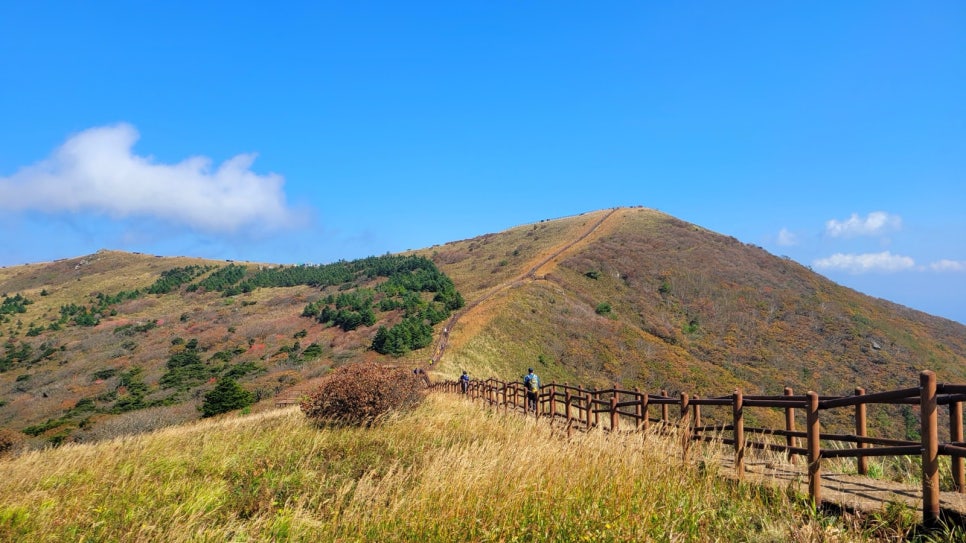
What about Jirisan, Taebaeksan, Byeonsanbando and the other parks?
The Jirisan (South Gyeongsang) and Taebaeksan offices announced the same 15 November to 15 December closure, but their trail lists exist only as an attached map and a Hangul-format document, so we have not reproduced them. On 1 November the Byeonsanbando National Park Office said it would close 5 of its 15 trails: Badeujae to the Yonggakbong junction, Naebyeonsan visitor centre via Gamaso to the Gulbawi entrance, Sebong to Injangam, Manseok-dong to Gambul, and the Sebong junction to Gamaso. For other parks, watch each office's notice board as notices appear, and if a map is hard to read, phoning the park office is the most reliable check.
Park office phone numbers (Korean-speaking staff)
- Park
- Phone
- Taebaeksan
- +82-33-550-0000
- Jirisan, South Gyeongsang side (Sancheong, Hamyang, Hadong)
- +82-55-970-1000
- Jirisan, North Jeolla side (Namwon)
- +82-63-630-8900
- Jirisan, South Jeolla side (Gurye)
- +82-61-780-7700
- Byeonsanbando
- +82-63-582-7808
What to check before hiking during the closure
- Entering a closed trail without permission is fined up to KRW 500,000 under Article 86 of the Natural Parks Act.
- Smoking and carrying flammables such as lighters are banned in national parks all year round, not only in the wildfire season, with fines of up to KRW 2,000,000.
- Cooking and burning are also banned. If a long hike involves a stove, check the shelter rules as well.
- Dry-weather or high-wind warnings can close even open trails on the day, so check the park notice board or phone again just before you leave.
What we could not confirm
As of 2 November we could not confirm from Korea National Park Service headquarters the total number of trails closed nationwide this year, or the fine amounts by number of offences. The full names of Deogyusan's 11 fully closed trails are only on the attached map.
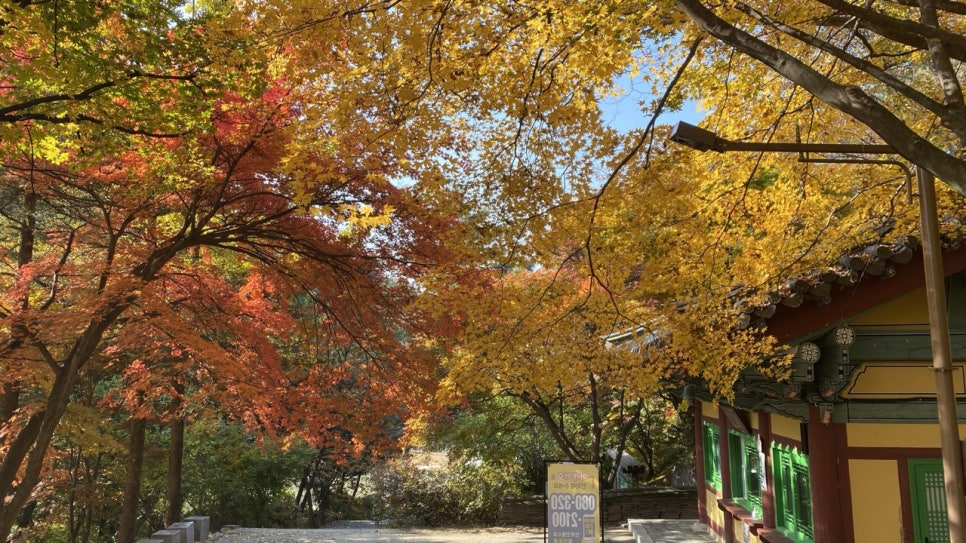
In short, the month from 15 November is a time for valleys and low-level colour rather than high ridges. Do Daecheongbong or the Gungmangbong ridge before 14 November or leave them until after 16 December, and during the closure pick a trail that is confirmed open, such as the Sogongwon area of Seoraksan or the Gucheondong valley of Deogyusan.
Getting there and what to expect on the trail
For Seoraksan, express and intercity buses run from Seoul (Dong Seoul and Seoul Express Bus Terminal) to Sokcho in about two and a half hours, and Sokcho city buses 7 and 7-1 go on to Sogongwon, the trailhead for Biseondae, Ulsanbawi and Gwongeumseong — all open during the closure. For Deogyusan's Hyangjeokbong, most visitors ride the resort's tourist gondola at Muju Deogyusan Resort to Seolcheonbong and walk the last 0.6 km; the gondola is a private operation, so check its own timetable and whether it takes advance booking in season. The national parks charge no entrance fee and the open trails need no booking. Trail junction signs and the main maps at trailheads carry English as well as Korean, but closure notices pinned at barriers and the closure lists on the park websites are in Korean only, so note the Korean name of your trail before you go. A closed trail is usually marked by a rope or barrier and a sign; if you are unsure, the ranger posts at Sogongwon, Biseondae and Hangyesanseong can point you to an open route, though staff may speak limited English.
Frequently asked questions
- Q. When are national park trails closed in autumn 2026?
- From Sunday 15 November to Tuesday 15 December 2026. The wildfire-caution season began on 1 November, and two trails around Gombaeryeong in Seoraksan have been closed since 1 November.
- Q. Until when can I climb Daecheongbong in Seoraksan?
- Until Saturday 14 November. Both main routes to the summit, from Osaek and from the Baekdam visitor centre, are closed from 15 November to 15 December and reopen on 16 December.
- Q. Can I still hike in Seoraksan during the closure?
- Yes. Sogongwon to Biseondae, Sogongwon via Sinheungsa to Ulsanbawi, Heullimgol through Jujeongol to Osaek, and Gwongeumseong (Anrakam side) are open. Geumganggul cave (09:30–14:00) and Daeseung Falls (09:00–16:00) lie inside closed trails but can be visited after signing the entry register.
- Q. Can I reach Hyangjeokbong on Deogyusan during the closure?
- Yes. Seolcheonbong to Hyangjeokbong (0.6 km) and Gucheondong visitor centre via Baengnyeonsa to Hyangjeokbong (8.5 km) are partly open trails and can be used. Anseong visitor centre to Dongyeopryeong and Songgyesa to Baegambong are closed.
- Q. What is the fine for entering a closed national park trail?
- Under Article 86 of the Natural Parks Act, entering a closed trail is fined up to KRW 500,000, and smoking or carrying flammables up to KRW 2,000,000. The smoking and flammables ban applies all year.
- Q. Is it worth going if I do not read Korean?
- Yes, if you stick to the open valley trails. Trail junction signs and trailhead maps include English, and no booking is needed. The catch is that closure notices and park websites are in Korean only, so match the Korean trail name from this article to the sign at the trailhead, or ask at a ranger post.
Editor's note · Kang Shin-wook
For anyone planning a national park hike in late autumn. We read each park office's notice and split the trails into closed and open. Park basics, including the designated entry-time rule, are on our Korea National Park Service guide; other dated listings are on What's on.
Sources
- Official notice (Korean)
- Deogyusan National Park Office, autumn 2026 closed and open trails (Korean)
- KNPS press release on Deogyusan's autumn trail closures, 29 October 2026 (Korean)
- Sobaeksan National Park Office, autumn wildfire season and closed trails (Korean)
- Taebaeksan National Park Office, autumn 2026 wildfire season (Korean)
- Jirisan National Park South Gyeongsang Office, autumn 2026 open and closed trails (Korean)
- Byeonsanbando National Park Office, autumn closed trails 15 Nov–15 Dec (Korean)
Written in our own words from the sources above, never copied from them, and every date and price checked against at least two pages. The originals are in Korean. Spotted a mistake? Ask for a correction.
Latest from Korea National Park Service
 Korea National Park ServiceNotice3 November 2026Korea's national parks in autumn: live cameras, crowds and entry times — what to check before you go
 Korea National Park ServiceProgramme3 November 2026On nowJirisan's Cheoneunsa lakeside walk with a KakaoTalk chatbot guide
 Korea National Park ServiceProgramme2 November 2026On nowKorea's national park eco-centres: overnight stays with a local gift — November 2026
 Korea National Park ServiceProgramme29 October 2026On nowFreeDeogyusan autumn colour at its peak — free Gucheondong shuttle runs to 15 November, nine days only in November