Notice·Korea National Park Service
Korea's national parks in autumn: live cameras, crowds and entry times — what to check before you go
Summary
An announcement that a mountain's colours have peaked does not mean the trail you walk has turned. This guide puts the official pages to open before an autumn national-park hike in order: the Korea Meteorological Administration's foliage status for 21 mountains, the Korea National Park Service's live cameras at 18 spots in 16 parks, trail crowding, closures and entry times. From 1 November winter entry hours apply, and many high-altitude trails close for wildfire prevention from 15 November to 15 December. The pages are in Korean but mostly pictures and colour codes; the two booking-only autumn trails, Heullimgol and Seoraebong, are booked through the Korean-language reservation site.
Article
In short
- To see how far the colour has come down a mountain, open the Korea Meteorological Administration's foliage status page: it shows before, first-colour and peak photographs for 21 well-known mountains with the date each was taken. First colour means about 20% of the mountain has turned from the summit down; peak means about 80% of the whole mountain.
- For conditions on the day, open the Korea National Park Service's live video page. On 3 November 2026 it carried 18 cameras in 16 national parks; feeds can pause in bad weather or when the connection drops.
- Crowding is shown as a traffic light on the KNPS trail congestion service (50% or less relaxed, over 100% crowded), and whether a trail is open is on its closure page. Many high-altitude trails close for wildfire prevention from 15 November to 15 December.
- Winter entry hours (November to March) apply from 1 November, about an hour earlier than in summer. Seoraksan's Heullimgol (to 30 November) and Naejangsan's Seoraebong (to 16 November) can only be walked with a booking on the KNPS reservation system.
- Every page is in Korean, but the camera pictures, dated photographs and colour-coded crowding lights can be read without it. The trail bookings are only on the Korean-language reservation site.
It is common to arrive at a mountain after reading that its colours have peaked and find the trees by the path still green. Foliage starts at the summit and works downhill, so the trailhead can lag a 'peak' announcement by several days to more than a week. The Korea Meteorological Administration (KMA) and the Korea National Park Service (KNPS) publish free pages that close that gap. Below are ten official pages in the order to open them, a few days before → the morning you leave → before you reach the trailhead; we checked that every link opened on 3 November 2026.
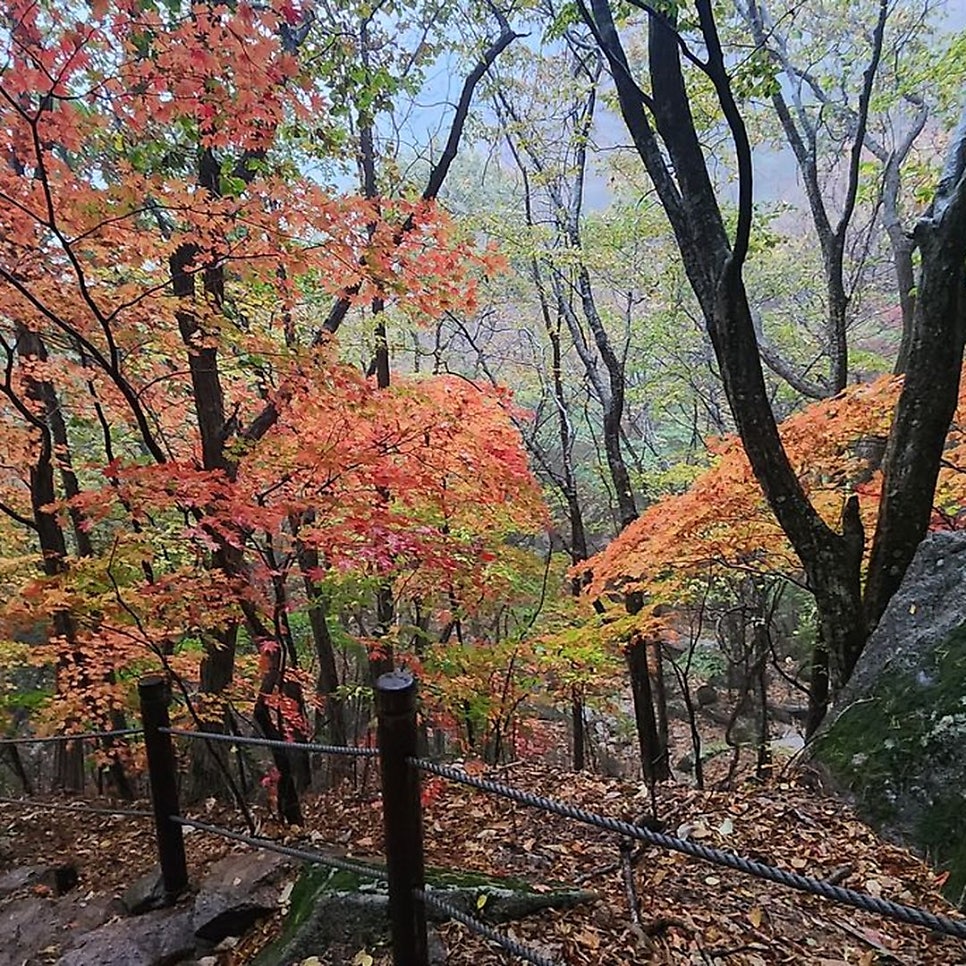
Where has the colour reached on the mountain right now?
Choosing a mountain takes two pages. KMA observers climb each mountain and record its foliage stage, and KNPS park offices post dated photographs taken by their own staff. The KMA page judges the mountain as a whole; the KNPS photos show one spot. Looking at both shows how far the trail you will walk is behind the official verdict.
Step 1 — a few days before: choosing a mountain
- ① KMA Weather Nuri, foliage status of well-known mountains
- Before, first-colour and peak photos with dates for 21 mountains. First colour: about 20% turned from the summit down; peak: about 80% of the whole mountain
- ② KNPS Saengsaeng Photo (field photos)
- Photos posted by each park office, filterable by park, with the posting date
When we reopened the KMA page on 3 November 2026, 11 of the 21 mountains were at peak — Seoraksan, Odaesan, Bukhansan, Chiaksan, Gyeryongsan, Sobaeksan, Woraksan, Songnisan, Jirisan, Deogyusan and Wolchulsan — and 10 were at first colour: Palgongsan, Mudeungsan, Juwangsan, Hallasan, Naejangsan, Duryunsan, Gayasan, Geumosan, Gajisan and Jogyesan. Songnisan was marked as peaked from a photograph taken on 2 November. The southern and south-coast mountains still at first colour are the ones to aim for through mid-November.
Foliage stages change from day to day
The stages above are the KMA Weather Nuri page as of 3 November 2026. A verdict is updated on the day an observer climbs, so check the photo date for your mountain on page ① before you set off. Other agencies, such as the Korea Forest Service, define the peak differently, so their dates and the KMA's do not line up one to one.
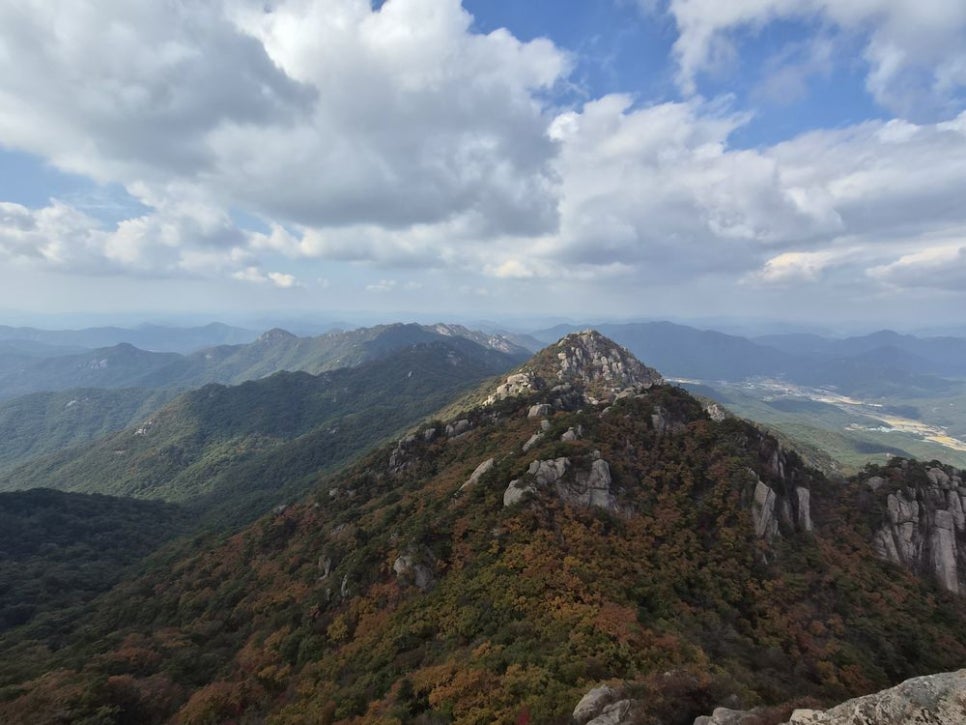
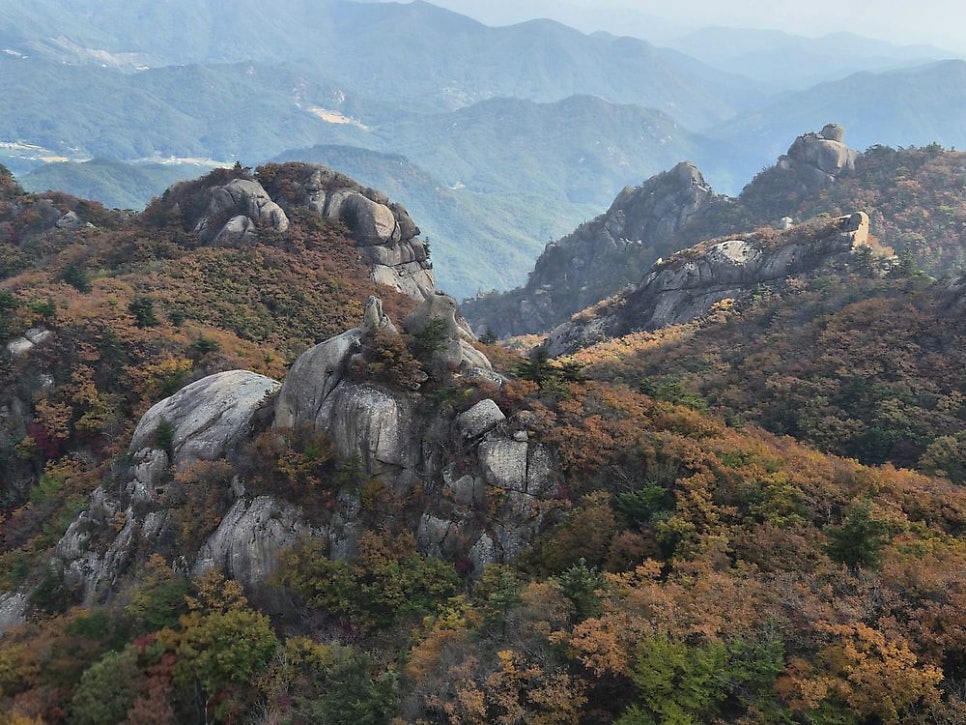
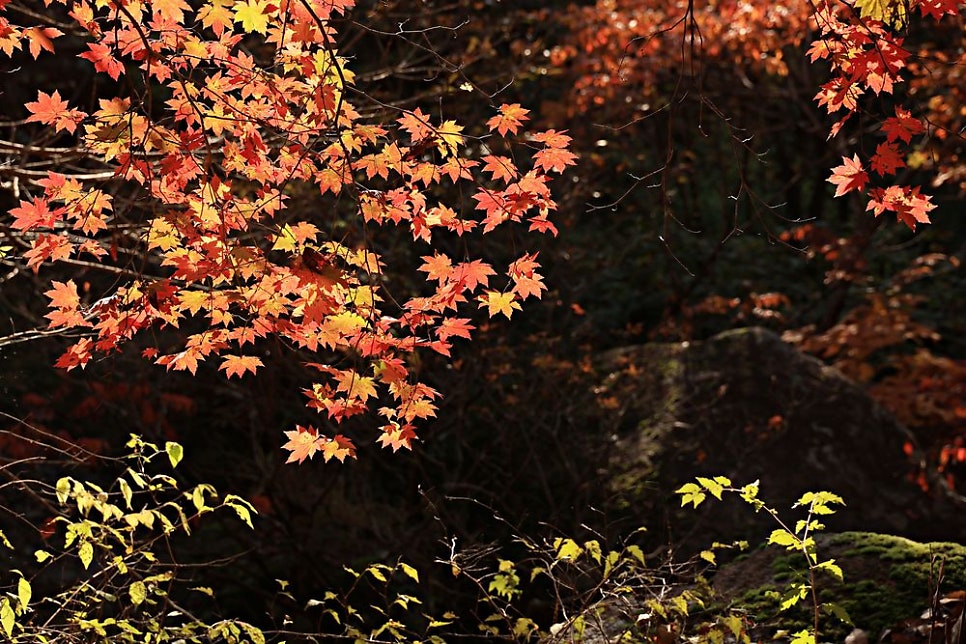
Paging through Saengsaeng Photo by date shows the colour moving down a single mountain. On Songnisan, the 11 October photos show the Gwaneumbong area turning red first; by 15 October it had reached the ridges around Chilhyeongjebong, and by 18 October the trail at 500 m. The KMA peak verdict came later, on 2 November. Rather than picking a date from summit photos, check whether photos from the altitude you will walk have appeared.
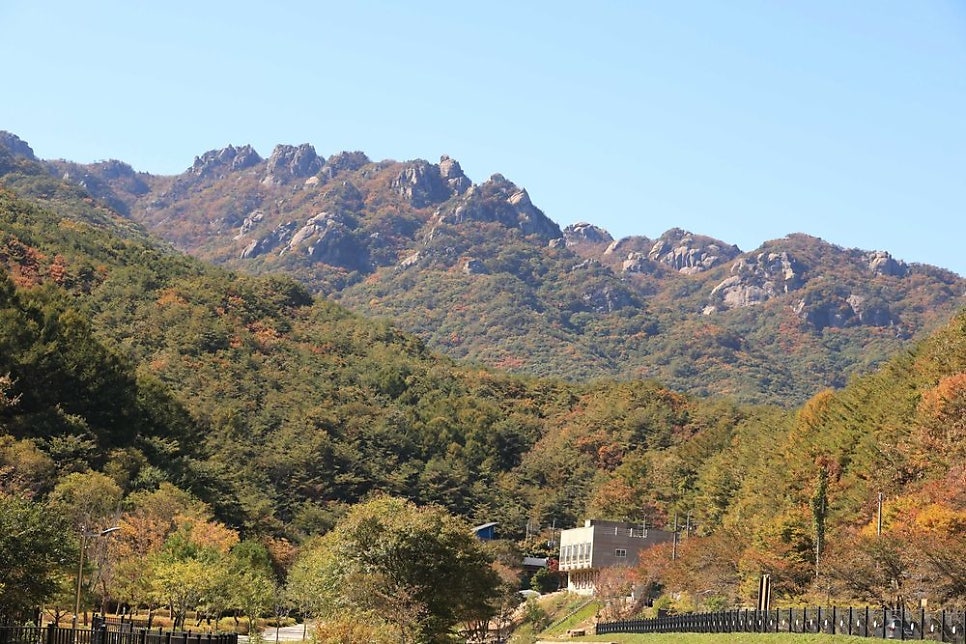
How do you check the weather on the mountain the day you go?
Once the date is set, look at the live pictures again the morning you leave. It can be clear at the bottom while the ridge is in cloud or high wind, and Seoraksan had its first snow at the end of October. The KNPS live video page covers 18 spots in 16 parks: Bukhansan (Baegundae and Sapaesan), Sobaeksan (Yeonhwabong), Deogyusan (Seolcheonbong), Jirisan (Cheonwangbong and Jangteomok), Seoraksan (Daecheongbong), Odaesan (Duroryeong), Taebaeksan (Cheonjedan), Chiaksan (Sangwonsa), Naejangsan (the 108 maple road), Mudeungsan (Jangbuljae), Gyeryongsan (Cheonhwangbong), Juwangsan (Gian), Taeanhaean (Hakampo), Byeonsanbando (Jungmak trail), Hallyeohaesang (Gaksan) and Dadohaehaesang (Jiricheongsong beach).
Step 2 — the morning you leave: weather and live pictures
- ③ KNPS live video
- 18 cameras in 16 parks (as of 3 November 2026), mostly on summits and ridges — for the weather up top
- ④ Gangwon Regional Meteorological Office, foliage and weather LIVE
- Four feeds: Seoraksan Ulsanbawi, Odaesan Duroryeong, Chiaksan Sangwonsa and Taebaeksan Cheonjedan (video supplied by KNPS)
- ⑤ KNPS national park weather
- Hour-by-hour forecasts for each park
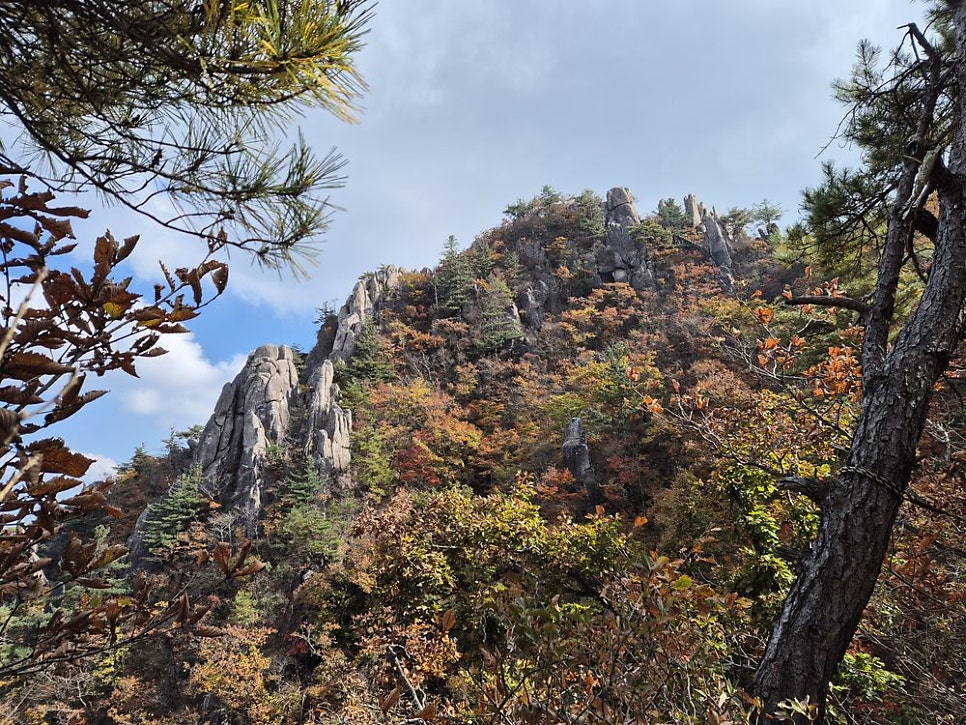
The KNPS page warns that feeds may pause depending on weather and connection on site. If a picture is frozen, use page ④ for the Gangwon parks and the latest dated photo on page ① for the rest. For Seoraksan, the KNPS camera shows Daecheongbong and the KMA one shows Ulsanbawi, so the two together show the difference between altitudes.
How do you know if a trail is crowded or closed?
October and November are the national parks' busiest months. Avoiding the busiest entrance on the same mountain makes parking and the walk down far easier, and late in the season the wildfire-prevention closures begin, so check that the trail is open before you arrive.
Step 3 — before you reach the trailhead: crowding and closures
- ⑥ KNPS trail congestion service
- A light for each park: 50% or less is 'relaxed', over 50% up to 100% 'moderate', over 100% 'crowded'
- ⑦ KNPS trail closure information
- Whether each park and section is open or closed
- ⑧ KNPS trail search
- Pick a route by park, difficulty and walking time, and see distance and time in advance
High trails close from 15 November
Many high-altitude national park trails close for autumn wildfire prevention from 15 November to 15 December 2026. If you are planning a late-season walk, check on page ⑦ that your section is open. The closures park by park are gathered in our autumn trail closures post.
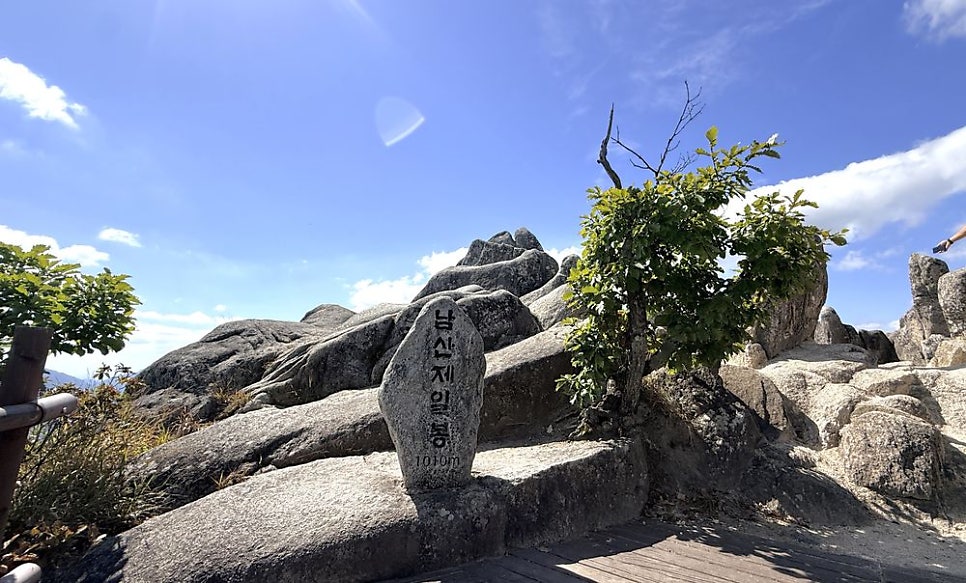
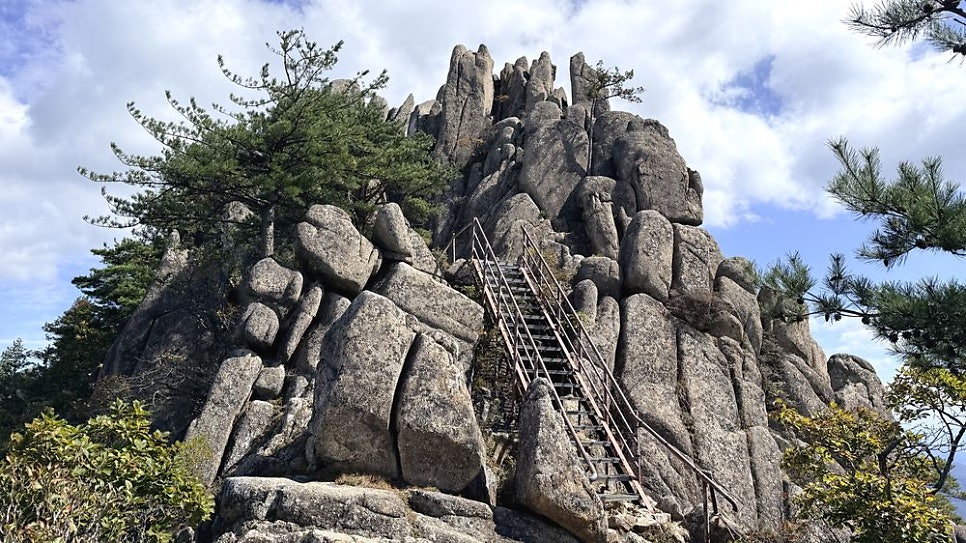
On routes like Namsanjeilbong, where a long stairway comes just before the summit, check the walking time on page ⑧ and set your start time against the entry hours on page ⑩. At Gayasan's Cheongnyangdong ranger post, winter entry is 05:00 to 14:00.
Which trails need a booking, and what are the November entry hours?
Some autumn hot spots cannot be walked without a booking, and from 1 November the designated entry-time rule switches to winter hours, earlier than in summer for both the last entry and the closing time. Start late and you may be turned back at the gate.
Step 4 — bookings and entry hours (checked 3 November 2026)
- ⑨ KNPS reservation system
- Trail bookings, shelters and campsites. Helpline 1670-9201 (weekdays 09:00–18:00)
- Seoraksan Heullimgol
- One way from the Heullimgol ranger post to the Yongso Falls junction; booking required until 30 November 2026. No car park near the ranger post
- Naejangsan Seoraebong
- Seorae ranger post – Seorae junction – Seoraebong – Byeongnyeonam, 2.8 km; booking required until 16 November 2026. The entry QR code arrives by KakaoTalk message
- ⑩ Designated entry times
- Entry and closing times per trail, set separately for winter (November–March) and summer (April–October)
Entry hours now on winter time (entry – closing, summer → winter)
- Naejangsan, Geumseon valley entrance
- 04:00–16:00 → 05:00–15:00
- Seoraksan, Biseondae towards Yangpok
- 03:00–14:00 → 04:00–12:00
- Seoraksan, Osaek towards Daecheongbong
- 03:00–12:00 → 04:00–11:00
- Gayasan, Namsanjeilbong summit
- 04:00–16:30 → 05:00–15:30
Using these pages if you do not read Korean
All ten pages are Korean-only, but most of what they say is visual. On the KNPS live video page, each camera is labelled with the park name followed by the spot in brackets, as listed above, so matching the park name is enough. On the KMA foliage page, each mountain carries one of three leaf icons for no colour, first colour and peak, and each photograph shows the date it was taken. The congestion page is a set of green, amber and red lights, one per park. The catch is booking. KNPS's English reservation site lists only shelters and campsites; trail slots such as Heullimgol and Seoraebong are on the Korean-language site, which needs a KNPS account with Korean identity verification, and Seoraebong sends its entry QR code by KakaoTalk. A visitor without a Korean phone may need help from someone in Korea, or can pick one of the many trails that need no booking. From Seoul the easiest peak-colour option is Bukhansan, at peak on 3 November and reached by subway: Bukhansan Ui station at the end of the Ui-Sinseol line is a short walk from the trailheads. Remember the winter entry hours and the 15 November closures before choosing a high route.
Frequently asked questions
- Q. Where can I watch live cameras in Korea's national parks?
- On the Korea National Park Service website, under the PR media centre's live video page. On 3 November 2026 it carried 18 cameras in 16 national parks; feeds can pause in bad weather or when the connection drops. Four Gangwon cameras are also on the Gangwon Regional Meteorological Office's foliage and weather service.
- Q. How does Korea decide when autumn foliage has peaked?
- The Korea Meteorological Administration calls first colour when about 20% of a mountain has turned from the summit down, and peak when about 80% of the whole mountain has turned. Because it judges the whole mountain, lower trails often turn later than the announced peak.
- Q. Which national parks are at peak foliage now?
- On 3 November 2026 the KMA listed Seoraksan, Odaesan, Bukhansan, Chiaksan, Gyeryongsan, Sobaeksan, Woraksan, Songnisan, Jirisan, Deogyusan and Wolchulsan at peak, and Naejangsan, Gayasan, Juwangsan, Mudeungsan, Palgongsan and others at first colour. The stages are updated often, so check the KMA page again before you go.
- Q. What time do national park trails close in November?
- From November to March winter entry hours apply. For example, Naejangsan's Geumseon valley entrance is open for entry 05:00–15:00 and Seoraksan's Biseondae towards Yangpok 04:00–12:00. Each trail differs, so check the KNPS designated entry times table.
- Q. Is it worth using these pages if I do not read Korean?
- Yes for planning: the live cameras, dated foliage photos and colour-coded crowding lights can be read without Korean, and none of them needs an account. No for the two booking-only autumn trails, Heullimgol and Seoraebong: they are booked on the Korean-language reservation site with Korean identity verification, so most visitors are better off choosing a trail that needs no booking.
Editor's note · Kang Shin-wook
For anyone heading to a Korean national park for autumn colour in November. We opened each of the ten official links again on 3 November 2026 and updated the foliage stages and booking windows to that date. Park-by-park visiting information is on our Korea National Park Service guide, and the Deogyusan shuttle that runs to 15 November is covered in Deogyusan's free Gucheondong shuttle.
Sources
- Official notice (Korean)
- Korea Meteorological Administration, foliage status of well-known mountains (Korean)
- Korea.kr policy briefing: how the KMA decides first colour and peak (Korean)
- Korea.kr policy briefing: seasonal changes, autumn edition (Korean)
- Gangwon Regional Meteorological Office, foliage and weather live video (Korean)
- KNPS national park weather (Korean)
- KNPS trail congestion service (Korean)
- KNPS trail closure information (Korean)
- KNPS trail search (Korean)
- KNPS reservation system, trail bookings (Korean)
- KNPS designated entry times (Korean)
- KNPS field photos, Saengsaeng Photo (Korean)
Written in our own words from the sources above, never copied from them, and every date and price checked against at least two pages. The originals are in Korean. Spotted a mistake? Ask for a correction.
Latest from Korea National Park Service
 Korea National Park ServiceProgramme3 November 2026On nowJirisan's Cheoneunsa lakeside walk with a KakaoTalk chatbot guide
 Korea National Park ServiceNotice2 November 2026Korea national park trail closures — 15 Nov to 15 Dec 2026
 Korea National Park ServiceProgramme2 November 2026On nowKorea's national park eco-centres: overnight stays with a local gift — November 2026
 Korea National Park ServiceProgramme29 October 2026On nowFreeDeogyusan autumn colour at its peak — free Gucheondong shuttle runs to 15 November, nine days only in November