National museums · Ministry of Culture, Sports and Tourism
National Folk Museum of Korea
A free museum inside Gyeongbokgung's walls that you can enter without a palace ticket
The National Folk Museum of Korea sits inside the Gyeongbokgung grounds, and the thing worth knowing before you go is that you do not need a palace ticket to get in. Its own gate opens onto Samcheong-ro, and from that side the museum is free and independent of the palace queue. Inside, three permanent halls trace how people in Korea actually lived — the farming year, the stages of a life from birth to funeral rites, the objects of an ordinary household — rather than what kings owned.
The outdoor section is the part visitors remember: a reconstructed street of mid-twentieth-century shopfronts, a barber's, a photo studio, a record shop, laid out as a working lane. It is free, it is outdoors, and it is a short walk from both Gyeongbokgung and Bukchon, which makes the museum an easy hour to slot into a day that is mostly about the palace and the hanok streets around it.
Visiting
- Hours
- March–October 9:00 am – 6:00 pm November–February 9:00 am – 5:00 pm Last admission one hour before closing Wednesdays, March–October, open until 8:00 pm
- Closed
- 1 January, the day of Seollal and of Chuseok, plus occasional one-off closures (in 2026: 7 July)
- Admission
- Free. Gyeongbokgung Palace itself is ticketed separately
- Address
- Main site: 37 Samcheong-ro, Jongno-gu, Seoul 03045. Paju site: 30 Heyri-ro, Tanhyeon-myeon, Paju, Gyeonggi-do
- Getting there
- Anguk or Gyeongbokgung Station on Line 3, then a walk of roughly ten minutes. Enter from Samcheong-ro to skip the palace ticket office
- From the airport
- From Incheon (ICN): AREX to Seoul Station, Line 4 to Chungmuro, then Line 3 to Anguk — about 90 minutes. From Gimpo (GMP): Line 9 to Yeouido, Line 5 to Jongno 3-ga, Line 3 one stop to Anguk
- Between March and October last entry is 5:00 pm, or 7:00 pm on the late-opening Wednesdays; from November to February it is 4:00 pm.
- At weekends and on public holidays you can walk the outdoor street but not go inside the reconstructed buildings; on weekdays you can.
- The separate Paju site in Heyri is an open-storage facility and a different sort of visit — check its own hours before making the trip.
Checked against the official pages on 2026-09-21. Hours and fees change — confirm before you travel. Official site
How much English you will find
- Gallery labels and the museum's site are available in English, and the museum publishes its visitor information in English at nfm.go.kr/english.
- Free guided tours in English are offered on a published weekday timetable and need no advance application — you sign up on the spot at the information desk. Group bookings are handled separately in advance.
- The outdoor street is largely self-explanatory and signed bilingually, so it works even without a tour.
Exhibitions and events
Full schedule- 15 Sept – 22 AugNational Folk Museum of Korea · National Folk Museum of Korea Paju, Open Conservation LabA paper game board that folds shut — free at the Folk Museum's Paju siteOn nowFree
- 16 Sept – 28 OctNational Folk Museum of Korea · Traditional Culture Learning Centre and outdoor exhibition area, National Folk Museum of KoreaFolk Museum ghost-story evenings — all five sessions full, how cancellations workOn nowFree
How to visit
- 1
Use the Samcheong-ro gate, not the palace entrance
The museum has its own entrance on Samcheong-ro, and going in that way costs nothing and skips the Gyeongbokgung ticket office entirely. If you enter through the palace you will have paid for the palace, which is a fine thing to do — just not a requirement for seeing this museum.
- 2
Come on a Wednesday between March and October for the late opening
Wednesdays in the warmer half of the year the museum stays open into the evening, which lines up neatly with Gyeongbokgung's own night openings. Doing the outdoor street at dusk and the palace afterwards is a better evening than either on its own.
- 3
Turn up rather than book
General admission needs no reservation at any time of year. Booking only comes into it for the Children's Museum and for group visits, both of which are handled through the museum's own site in advance.
Frequently asked questions
Do I have to pay for Gyeongbokgung to see this museum?
No. The museum has its own gate on Samcheong-ro and is free to enter from there, with no palace ticket involved. The two sites share a boundary rather than a ticket, and plenty of people visit the museum without ever setting foot in the palace proper.
Is it worth coming if I have already seen the National Museum of Korea?
Yes, because they are doing different jobs. The National Museum is a collection of the finest objects that survive; this one is about how ordinary households actually ran — what people ate, wore, farmed and buried. An hour here is a good counterweight to a morning of gold crowns and celadon.
What is closed at weekends?
The interiors of the reconstructed buildings in the outdoor street are shut at weekends and on public holidays for safety reasons, though you can still walk the street itself and photograph it. On a weekday you can go inside them, which is the better experience if your dates allow.
Official channels
Official services
Latest from National Folk Museum of Korea
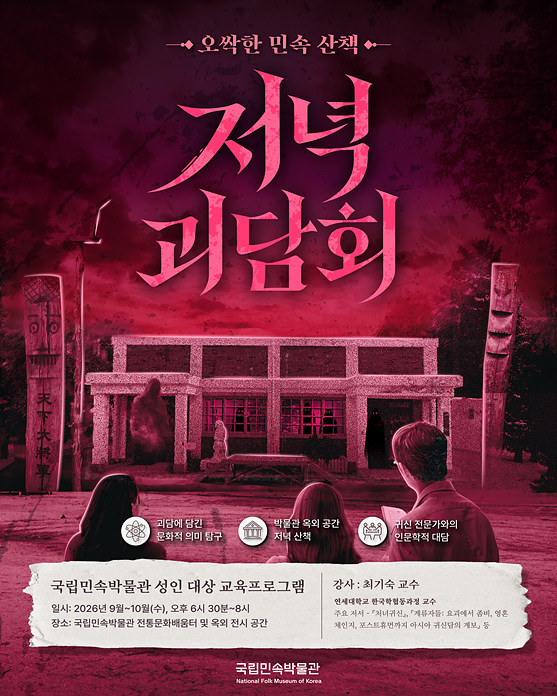 National Folk Museum of KoreaProgramme26 September 2026On nowFreeFolk Museum ghost-story evenings — all five sessions full, how cancellations work
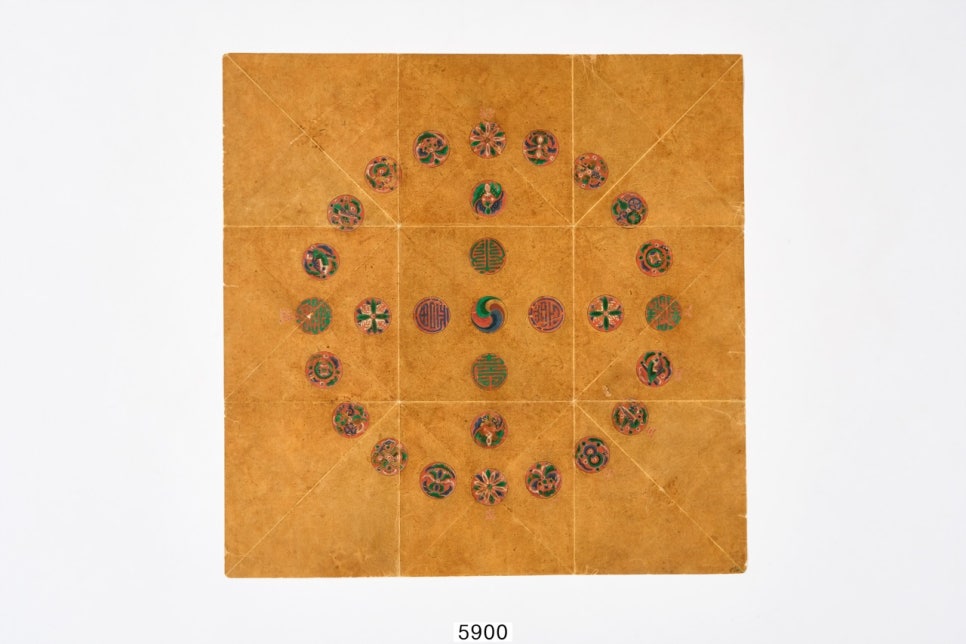 National Folk Museum of KoreaExhibition23 September 2026On nowFreeA paper game board that folds shut — free at the Folk Museum's Paju site
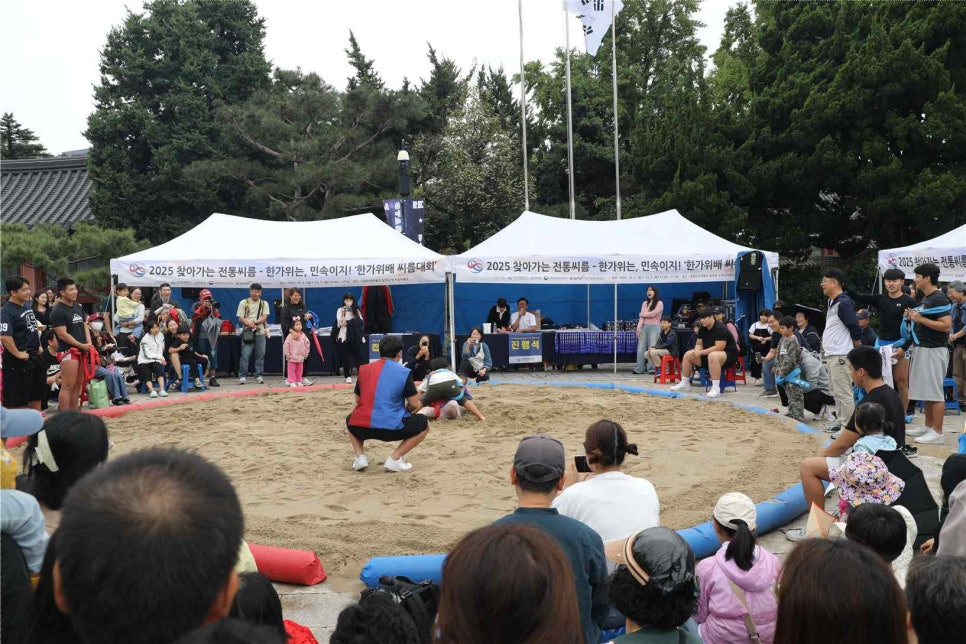 National Folk Museum of KoreaEvent22 September 2026EndedFreeA free Chuseok festival at the National Folk Museum, 26 and 27 September