Exhibition·National Folk Museum of KoreaOn nowFree
A paper game board that folds shut — free at the Folk Museum's Paju site
Summary
The National Folk Museum of Korea's Paju site is showing The Hidden Story of a Paper Yut Board Revealed through Conservation Science in its ground-floor Open Conservation Lab from 15 September 2026 to 22 August 2027. Conservators found that a late-Joseon paper board for the game of yut, flat for as long as anyone had recorded it, was in fact folded like a paper tile with the playing sticks tucked inside. Admission is free, general entry is walk-in with no booking, and the museum is closed every Monday. Almost all the wall text is Korean, but the objects and the folding diagrams carry the exhibition on their own.
Article
In short
- On show 15 September 2026 – 22 August 2027 in the Open Conservation Lab on the ground floor of the National Folk Museum of Korea Paju.
- Admission is free and general entry is walk-in — nothing to book, so no Korean phone number or card is needed.
- Closed every Monday, and on 1 January, Seollal and Chuseok (25 September in 2026).
- The find: a late-Joseon paper board for the game of yut, long believed to be flat, folds shut like a paper tile with the playing sticks stored inside.
- Panels are largely Korean, but the folding is explained in diagrams and video, and the leaflet is a fold-it-yourself board you take away.
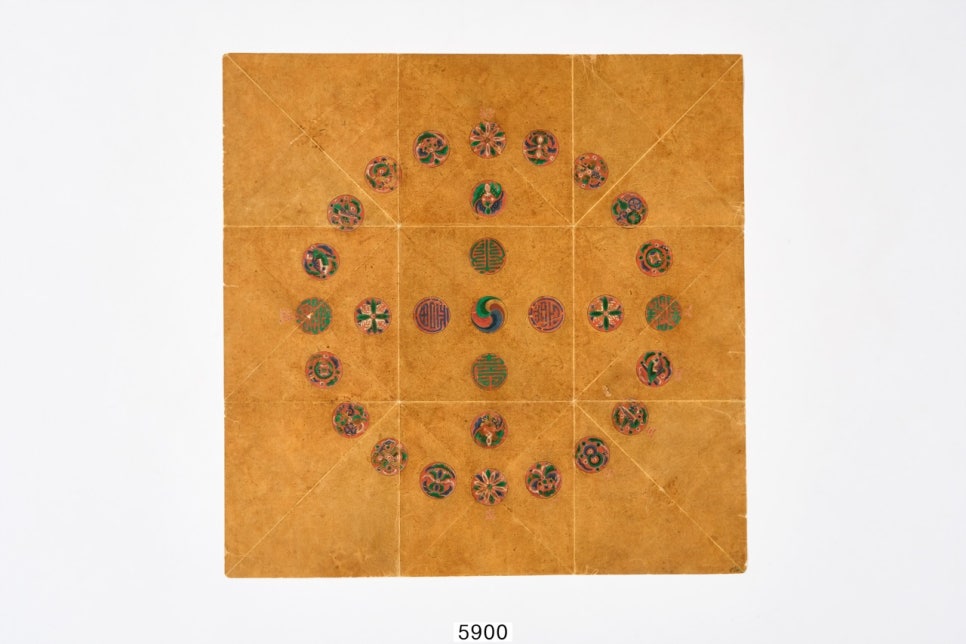
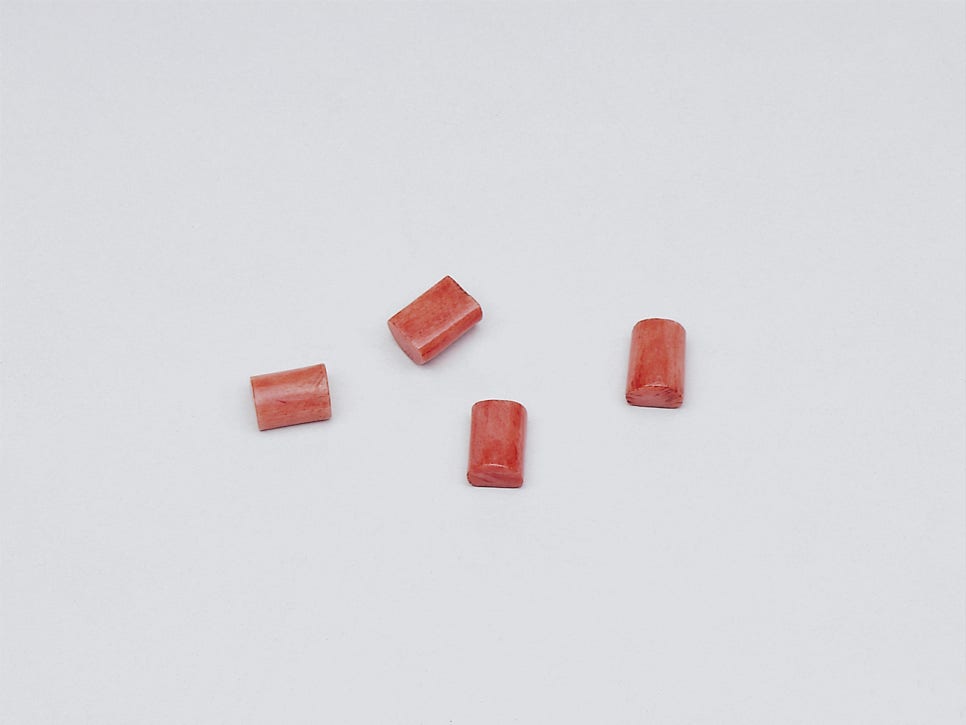
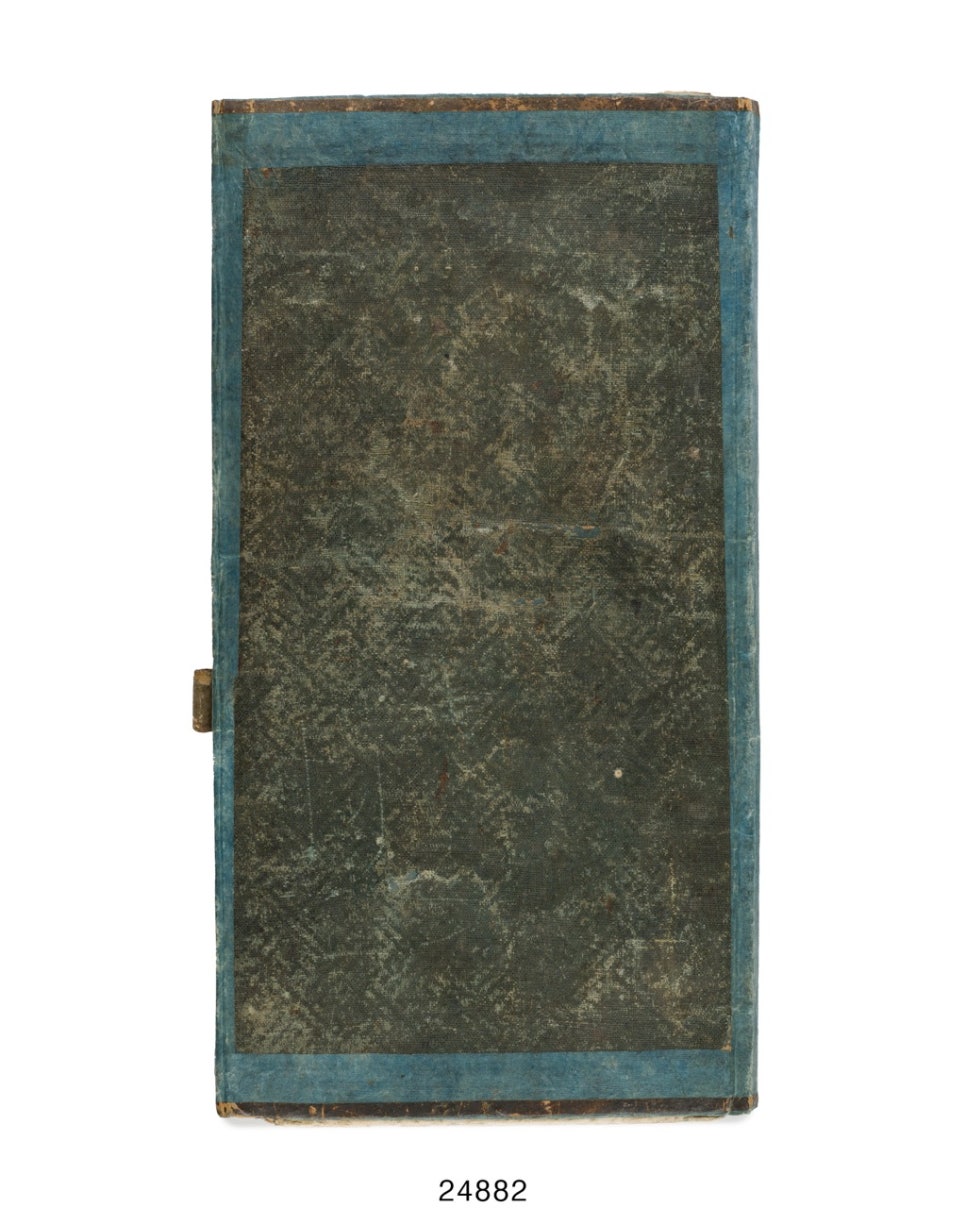
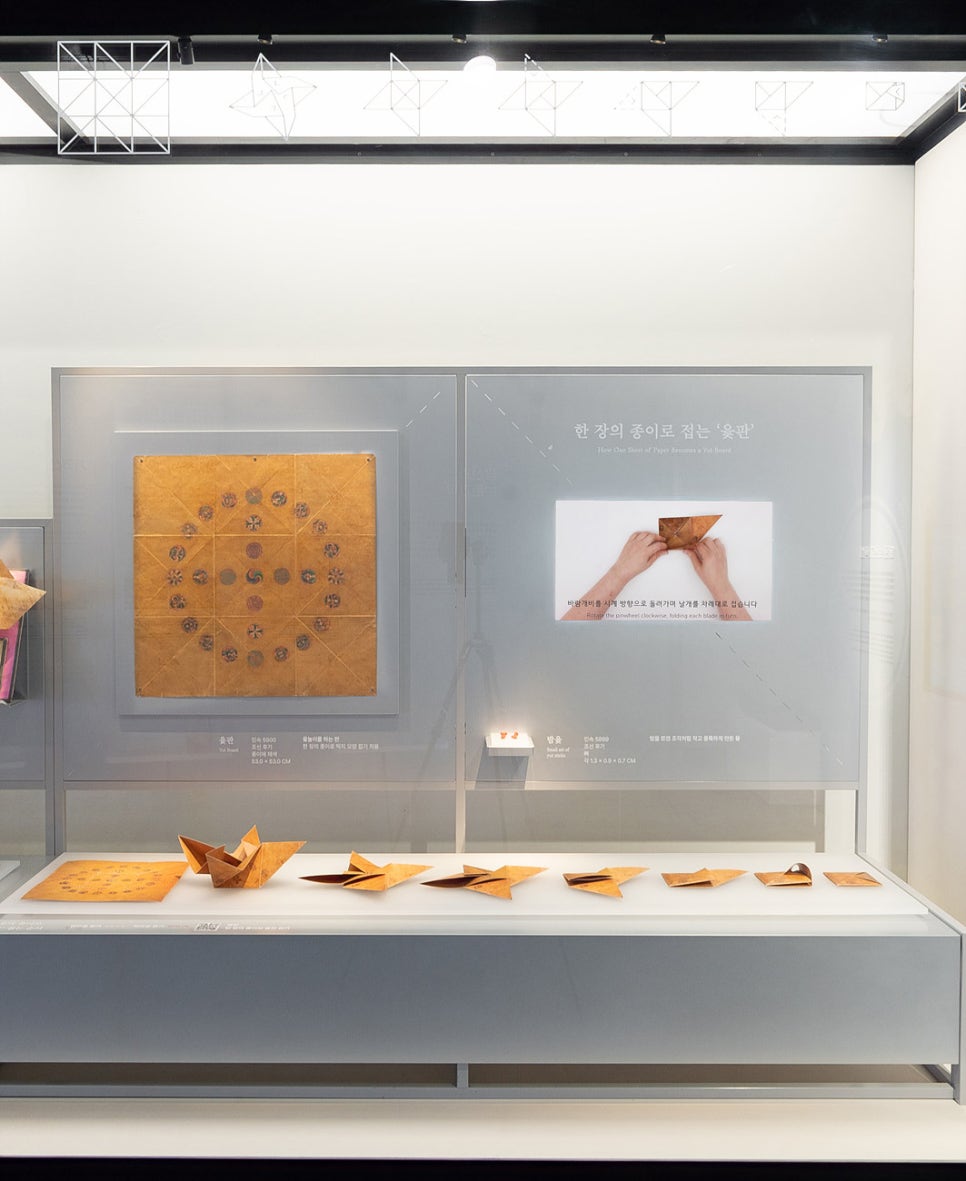
The National Folk Museum of Korea is showing The Hidden Story of a Paper Yut Board Revealed through Conservation Science in the Open Conservation Lab on the ground floor of its Paju site. It opened on 15 September 2026 and runs until 22 August 2027, and admission is free. Six objects are on display — the paper yut board (Minsok 5900), the coral yut sticks found with it (Minsok 5899) and a coloured-thread case (Minsok 24882) among them. It is a small room, but it is built around one clear idea: how a single object is read.
What was new: it was not a flat board at all
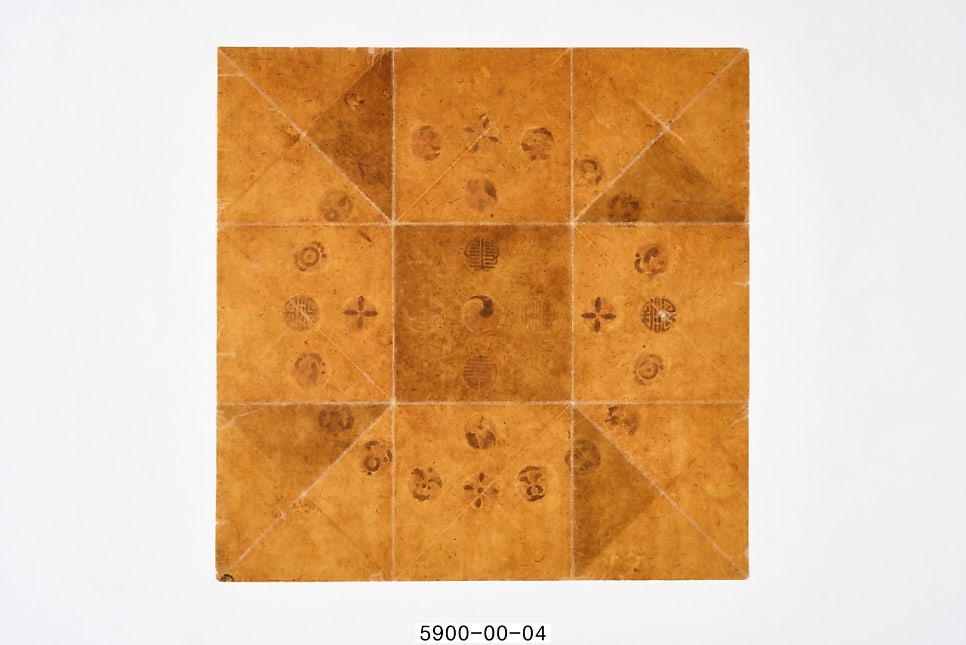
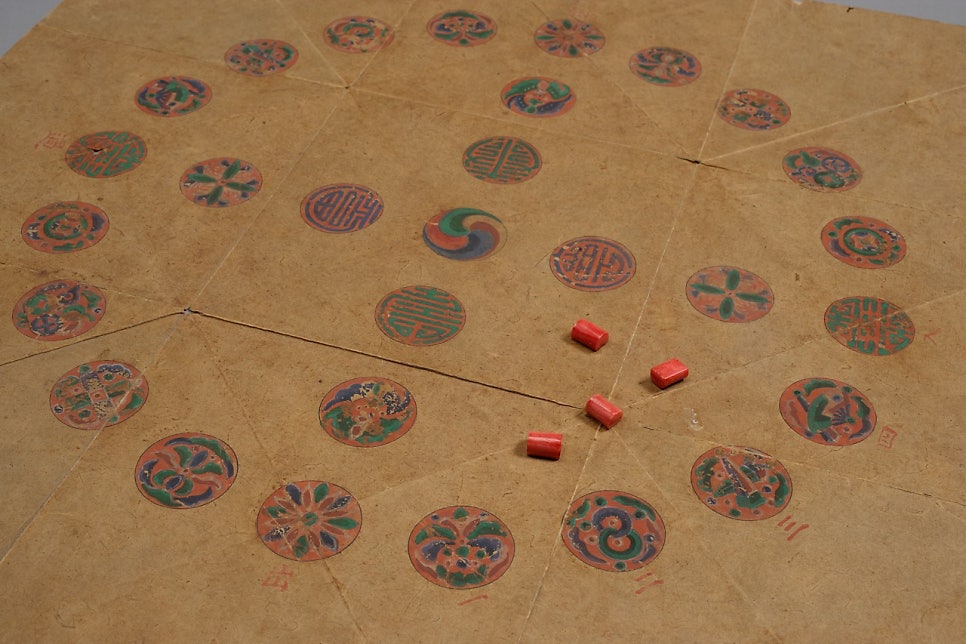
This is where the exhibition starts. The board had been stored and displayed open for as long as the museum had it, so it was taken to be a flat playing surface. Conservation work turned up two clues. One was a set of fold lines in the paper. The other was staining transferred onto the reverse — marks where the pattern and grime of the front had pressed through while the sheet sat folded for a long time.
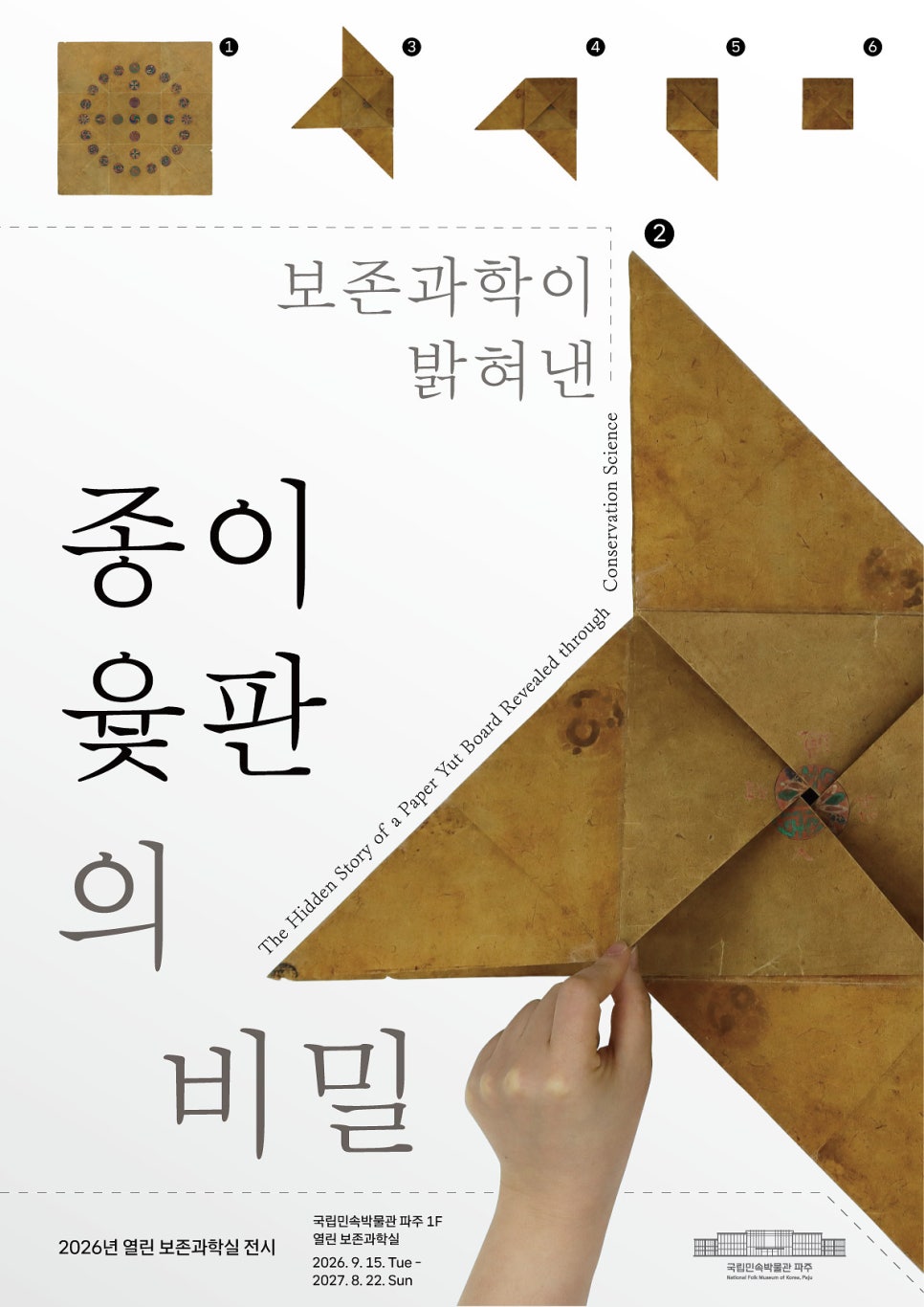
Working from those marks, conservators reconstructed the folding sequence digitally, and found that the sheet could be folded over on itself into the shape of a ttakji, the folded paper tile children flick at each other. The pocket that forms inside, the museum says, is comparable in size to the small coral yut sticks that came with the board. Open it and you have a game board; fold it and you have a carrying case. It is worth being precise about the method: the original was never folded to test this — the reconstruction was virtual.

Why is the track a circle?
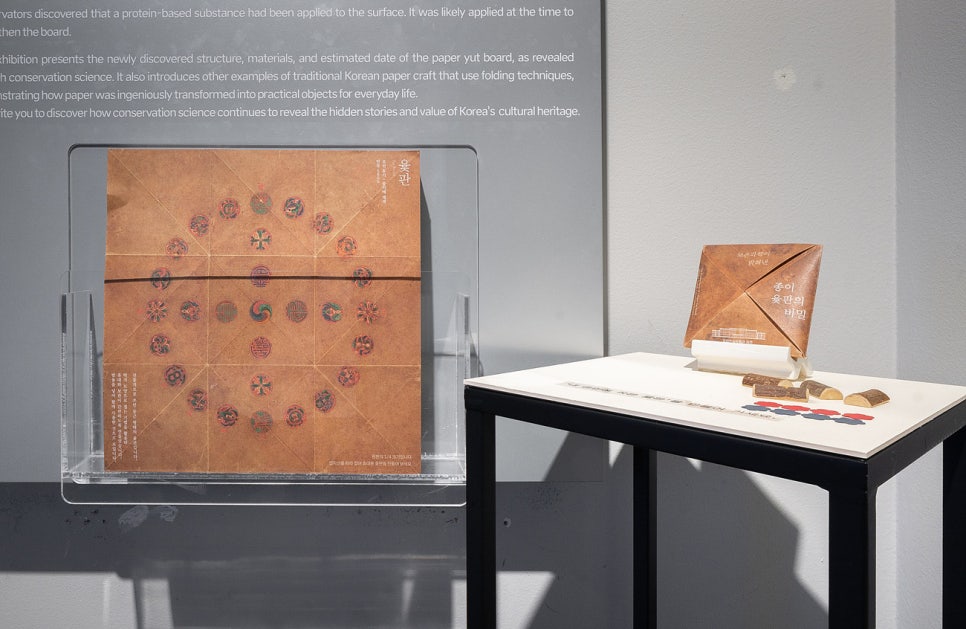
Yut is Korea's best-known board game, still played over the lunar new year, and on a modern board the track the pieces travel is a square. Paintings and texts from before the twentieth century, though, show boards with a circular track, and this is one of them. Look closely and every station is painted differently: roundels bearing the characters for long life and good fortune, the three-part taegeuk, flowers and birds. It was a game and a wish for luck on the same sheet of paper.
The paper yut board
- Object and number
- Yut board / Minsok 5900
- Date and material
- Late Joseon period / colour on paper
- Size
- 53.0 × 53.0 cm
- Found with it
- Coral yut sticks (Minsok 5899) and a coloured-thread case (Minsok 24882)
What the protein and the green pigment tell you
Analysis of the materials produced two results. First, the paper surface — now browned and stiff — was found to carry protein. That much is measurement; the rest is interpretation. Soybean liquid was traditionally brushed onto paper to toughen it and make it shed water, so the museum's reading is that this board may have been finished with a protein-based coating of that kind to survive repeated use. It has not been established that soybean liquid specifically was used.
Second, pigment analysis found emerald green, a synthetic pigment developed in Europe, in the green areas. Given when that pigment reached Korea, the board can be placed after the middle of the nineteenth century. One pigment sets the earliest possible date — though again this is an estimate, not a fixed year of manufacture.
What emerald green is
A synthetic green pigment manufactured commercially in Germany from the early nineteenth century. In Korea it has been identified in work of the 1860s and 1870s: Gyeongbokgung Palace's Sujeongjeon hall (1867), a portrait of Yi Gyeong-ha (1871) and the portrait of King Taejo of Joseon held by the Royal Portrait Museum (1872). It was called yangnok, meaning green from the West, a name recorded in the 1877 Jinchan uigwe court banquet manual. Summarised from the footnotes to the National Folk Museum's press release.
Not only the game board: thread cases and thimble boxes
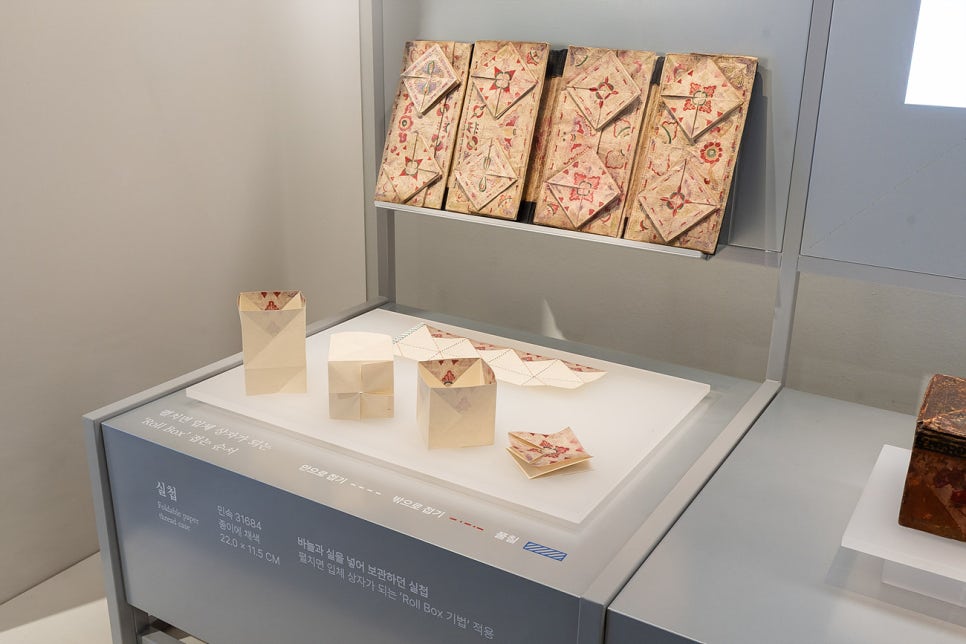
The room also shows other folk objects made with the same tile-fold. Cases for needles and thread, and boxes for thimbles, were built by folding one sheet over itself from several directions. The uses differ; the principle does not — fold the paper to make a space inside, unfold it when you need what is in there. A separate case shows a roll-box technique, where the same starting sheet opens into a three-dimensional container instead, so you can see how far a small change in the folding takes the result.

What the room looks like, and what you can do in it
The Open Conservation Lab exists so that visitors can look in on conservation work as it happens. For this exhibition it holds reconstructions of each folding structure alongside video of the sequence, so you can follow a flat sheet turning into a three-dimensional object step by step. It is not a large show, but it knows exactly what it is about — and because the argument is made in objects and diagrams, very little of it depends on reading Korean.

The leaflet is the hands-on activity. Fold the board printed on it along the marked lines and you end up with a pocket-sized yut board of your own — the structure found in the object, repeated with your hands, which is why the argument sticks. The museum does not publish how many leaflets are available or on what terms, so if the activity is the reason you are going, call ahead.
Visiting the Paju site
National Folk Museum of Korea Paju — practical details
- Address
- 30 Heyri-ro, Tanhyeon-myeon, Paju, Gyeonggi-do 10859
- Opening hours
- Tuesday to Sunday, 10:00 am – 6:00 pm (last admission 5:30 pm)
- Closed
- Every Monday, 1 January, the day of Seollal and the day of Chuseok (25 September 2026). When a Monday is a public holiday the museum opens and closes instead on the next working day
- Admission and booking
- Free; general admission is walk-in. Only the children's museum is booked, by timed slot
- Public transport
- Red express buses 2200, 2200-1 and 7300 (weekends) from Hongik University Station, green buses 75 and 900, village buses 33 and 33-1; or bus 037 from Unjeong Jungang Station on the GTX-A line
- Enquiries
- +82-31-580-5899 for general admission; switchboard +82-31-580-5800
The Paju site opened in July 2021 as the first national museum in the north of Gyeonggi Province, and it is built as an open storage facility: fifteen stores holding more than 1.1 million objects and archive items, some of which you can walk into and some of which you look into through glass. It deserves more than the twenty minutes this one room takes.
You may be looking at a facsimile
The museum states that light-sensitive items are replaced with reproductions after a set period. With a run of nearly a year, it is worth calling ahead if you want to be sure of seeing a particular object in the original.
Getting there, and what to expect on the day
Paju is an hour to ninety minutes from central Seoul and the trip is easiest as a half day combined with Heyri Art Village, which the museum sits inside. The simplest route is the red express bus 2200 or 2200-1 from Hongik University Station; on the GTX-A high-speed line, take it to Unjeong Jungang and change to local bus 037. Buses are paid with a T-money card or a contactless card, and no advance booking exists to be blocked by a foreign phone number — you walk in. Inside, the admission desk is used to visitors with no Korean and admission is free in any case, so there is no transaction to get through. The wall text in this room is mostly Korean with the title and some captions in English; the folding is shown as diagrams and video, and the take-home leaflet is a diagram too. There is no English audio guide for the Open Conservation Lab and no English docent tour, so come for the objects rather than the reading. The wider open-storage galleries have more English signage than this room does.
Frequently asked questions
- Q. How much does the paper yut board exhibition cost?
- Nothing. Admission to the National Folk Museum of Korea Paju is free, and general entry is walk-in with no booking. Only the children's museum requires a reservation.
- Q. How long does the exhibition run?
- From 15 September 2026 to 22 August 2027. The run is nearly a year, but light-sensitive items may be swapped for reproductions partway through.
- Q. When is the museum closed?
- Every Monday, plus 1 January, the day of Seollal and the day of Chuseok — 25 September in 2026. If a Monday falls on a public holiday the museum opens that day and closes on the next working day instead.
- Q. How did conservators work out that the board folded?
- They examined the fold lines in the paper and the staining transferred onto the reverse during conservation treatment, then reconstructed the folding structure digitally. The original object was not folded to test it.
- Q. Is it worth going if I do not read Korean?
- Yes, for this particular show. The argument is carried by the objects, the stage-by-stage folding models and a video, and the leaflet you fold yourself needs no language at all. You will miss the detail in the Korean panels — the pigment and protein analysis is explained there — but not the point of the room. Pair it with Heyri Art Village next door so the trip out from Seoul pays for itself.
Editor's note · Kang Shin-wook
For anyone building a day around Heyri Art Village in Paju, and for anyone curious about what conservation science actually does to an object. The run is nearly a year long, so there is no rush — just avoid Mondays. Hours, transport and the rest of the museum are set out in our National Folk Museum visiting guide.
Sources
- Official notice (Korean)
- National Folk Museum of Korea Paju, visitor information (Korean)
- Woori Munhwa Shinmun, carrying the museum's press release of 16 September 2026 in full (Korean)
- National Folk Museum of Korea, hours and admission (English)
Written in our own words from the sources above, never copied from them, and every date and price checked against at least two pages. The originals are in Korean. Spotted a mistake? Ask for a correction.