Exhibition·National Institute of EcologyOn now
National Institute of Ecology: living corals and a warming sea — until 31 December 2026
Summary
'Message from the Sea' (바다에서 온 메시지), a small exhibition in the ground-floor lobby of the Ecorium at the National Institute of Ecology in Seocheon, runs until 31 December 2026 according to the institute's exhibition page. It shows climate-change indicator species — a stony coral, a damselfish and a green seaweed — alive in tanks, beside an eelgrass tank, coastal-species photographs and a KBS documentary. There is nothing to book: it is covered by the ordinary admission ticket (adults KRW 5,000), bought at the ticket office by card only, and the panels are in Korean.
Article
In short
- 'Message from the Sea', an exhibition at the National Institute of Ecology in Seocheon, South Chungcheong, runs in the Ecorium's ground-floor lobby until 31 December 2026, per the official exhibition page.
- It has no separate fee or booking: the general admission ticket covers it — KRW 5,000 adults, KRW 3,000 teenagers, KRW 2,000 children, card payment only.
- On show: living Alveopora coral, neon damselfish and Caulerpa seaweed as climate-change indicator species, an eelgrass tank, photographs of 11 Korean coastal species and the KBS documentary 'Boiling Sea'.
- Open 9:30 am – 5:30 pm with ticket sales ending at 4:30 pm; closed Mondays, or the next working day when a Monday is a public holiday.
- The panels are in Korean, but the live tanks need no translation, and admission is a walk-in ticket with no Korean phone number required.
The National Institute of Ecology opened 'Message from the Sea' in the Ecorium's ground-floor lobby on 5 May 2025: a small exhibition that shows a warming ocean through living organisms. The official exhibition page gives 31 December 2026 as the closing date, so about two months remain. Because it sits in the entrance lobby, it fits naturally into a walk through the Ecorium's climate-zone greenhouses.
What sets it apart is that it is not an aquarium of pretty fish. It walks through what happens when the water warms — which species move north, and why corals turn white and die — using live animals, panels and film in turn.
When and where is 'Message from the Sea'?
Both the institute's exhibition page and its list of current exhibitions give the dates as 5 May 2025 – 31 December 2026 and the venue as the Ecorium lobby, ground floor. The lobby is a shared space at the Ecorium entrance, but the official information does not say whether it can be seen without a ticket, so plan on buying the general admission ticket.
The closing date is stated two ways
The institute's spring 2026 events round-up ('Let's go and explore the Earth!') listed this exhibition as running 'until June, in the lobby'. The exhibition page and the current-exhibitions list, as of November, both say 31 December 2026, and this article follows that later listing. Year-end closures or an early take-down are possible, so check with the institute's main line (+82-41-950-5300) before travelling.
What is on show: living indicator species and eelgrass
The institute describes the exhibition as a special display meant to make people grasp how seriously climate change is threatening marine ecosystems — its own introduction says that people on land rarely feel the changes under the sea, even though they have reached a very serious stage.
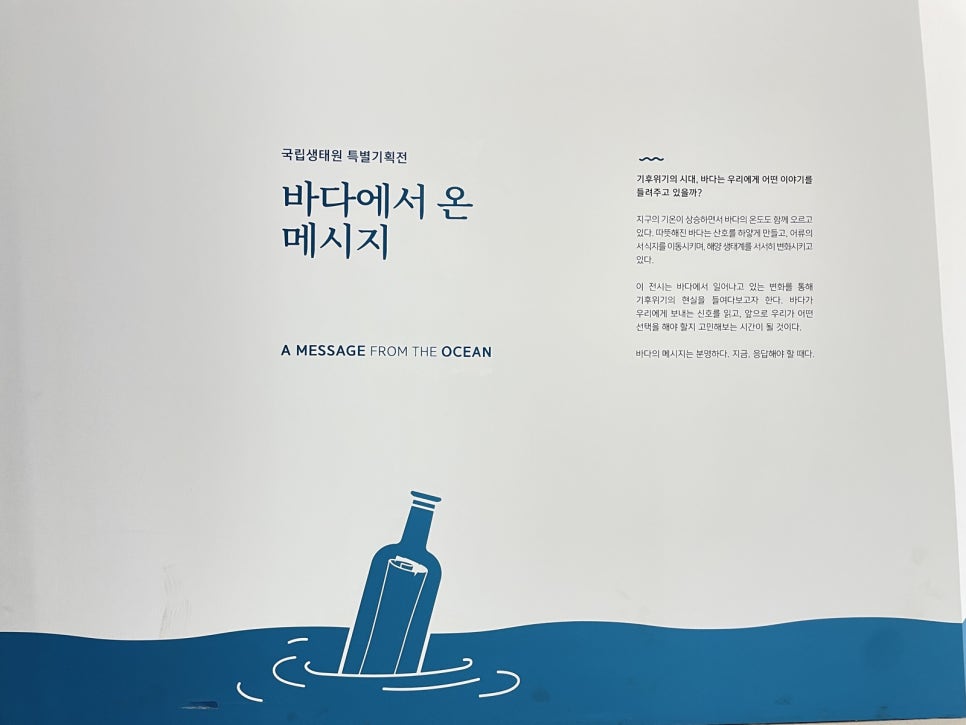
The opening panel frames the visit as a message in a bottle sent by the sea. After it, the indicator-species tanks, the coastal-species photographs and the climate panels run along one side of the lobby.
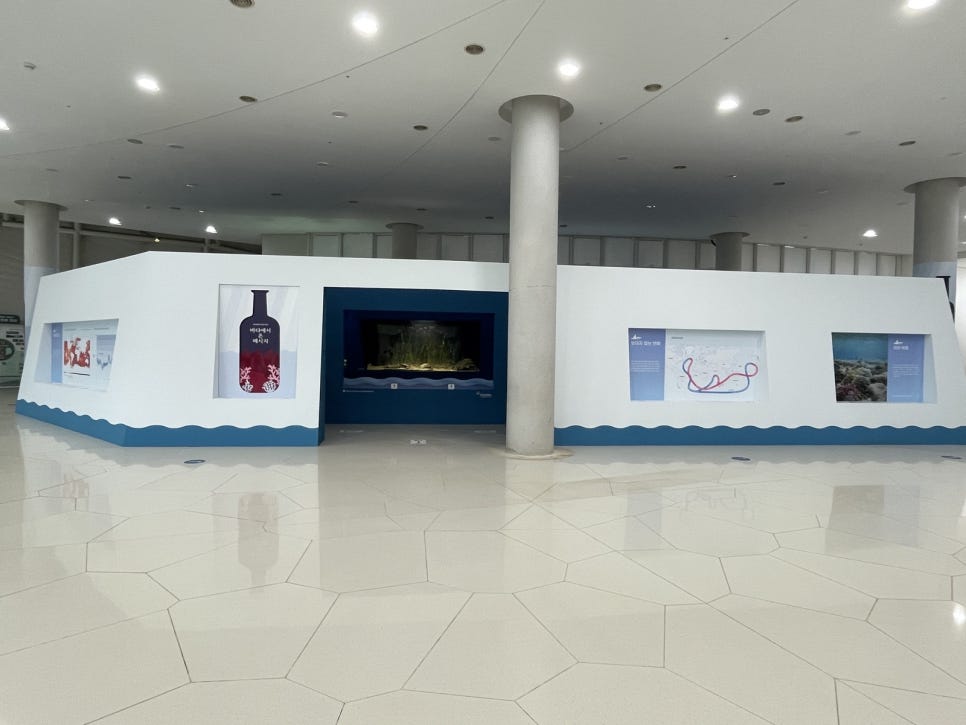
The core of the show is living organisms, not photographs or models. The official introduction names four of them.
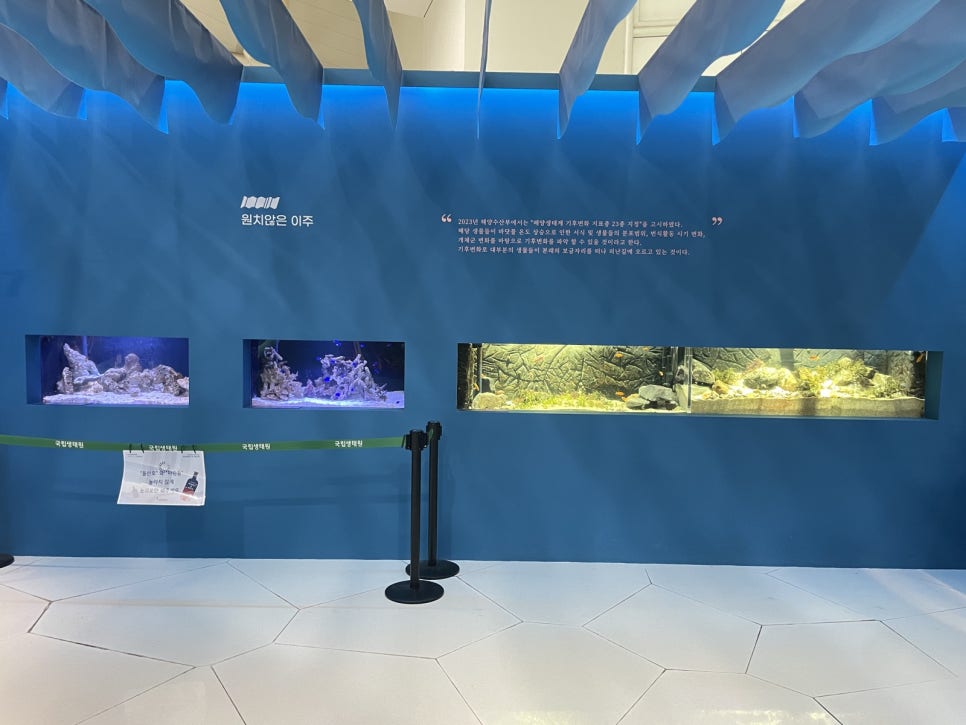
- Alveopora coral (거품돌산호) — a stony coral, shown as a climate-change indicator species
- Neon damselfish (파랑돔) — a fish, shown as a climate-change indicator species
- Caulerpa seaweed (옥덩굴) — a green alga, shown as a climate-change indicator species
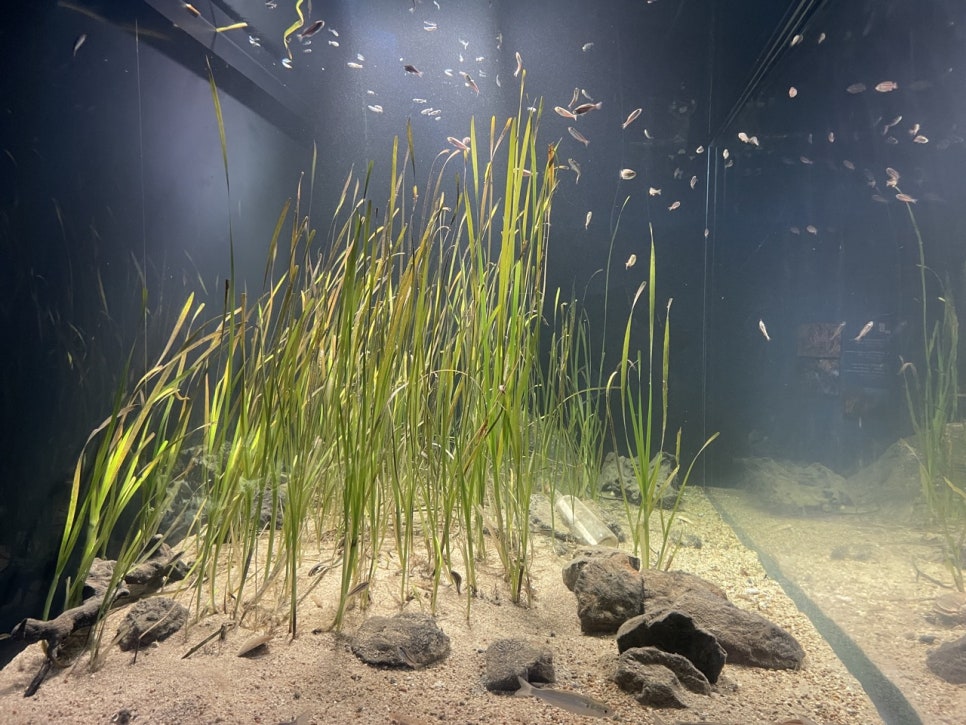
- Eelgrass (거머리말) — a seagrass, in its own tank beside the coastal-species photographs
Because these are live animals and plants, some tanks may be off view on a given day depending on their condition. Bear that in mind if you are going for one particular species.
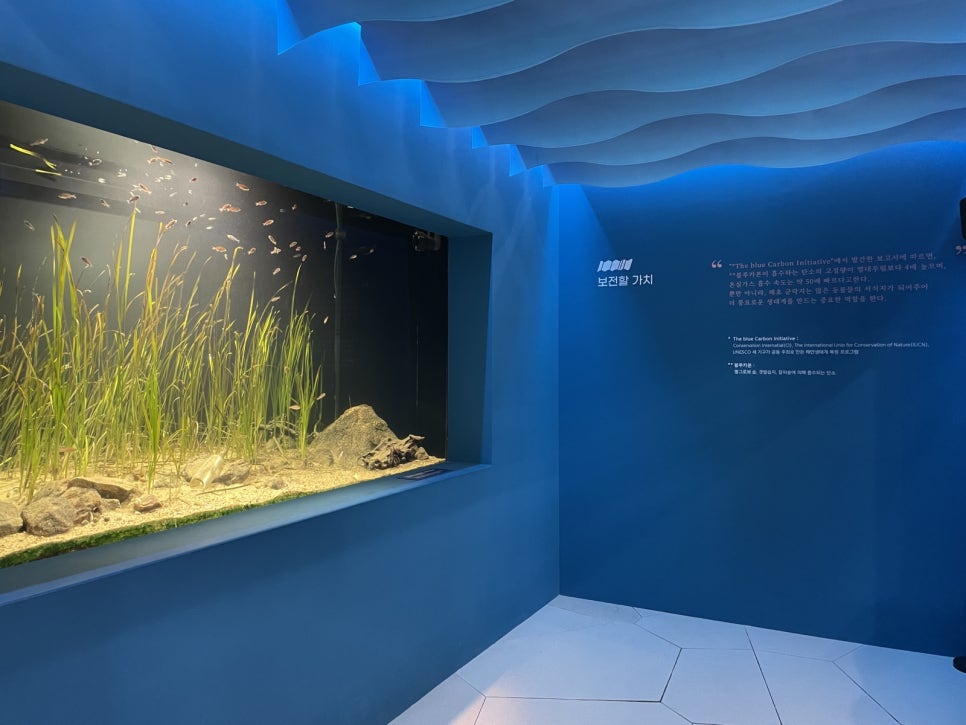
The ripple lighting on the ceiling makes the eelgrass tank feel like standing inside a seagrass meadow, and it is the best place for a photograph with children.
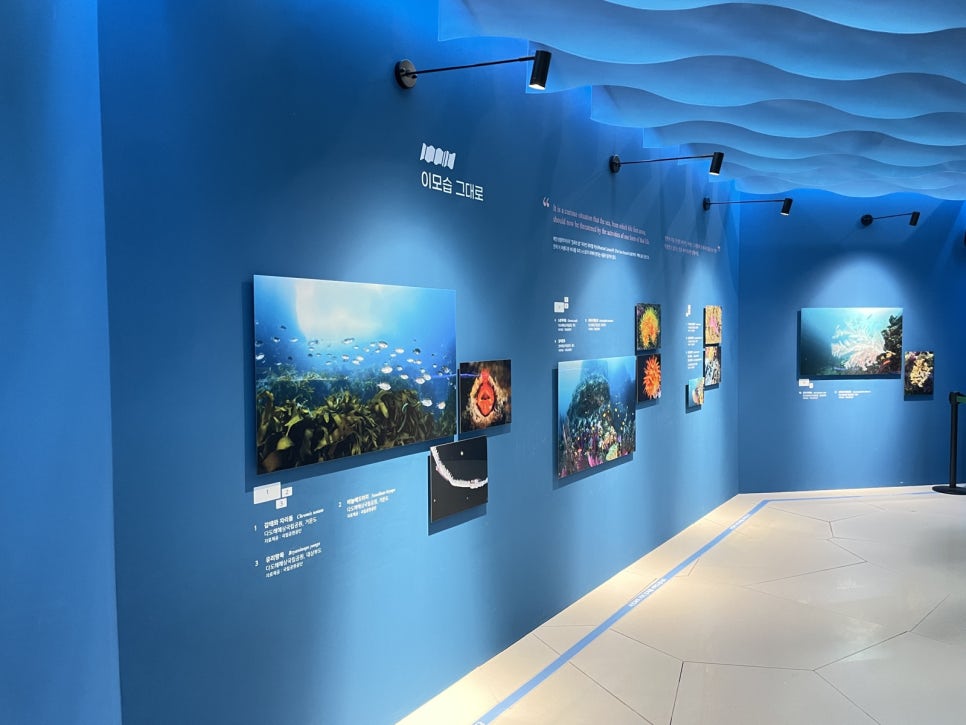
The wall opposite the tanks holds photographs of 11 species that live on Korea's coasts. The official introduction does not list them by name, so read the labels on site.
What do the panels and the film say?
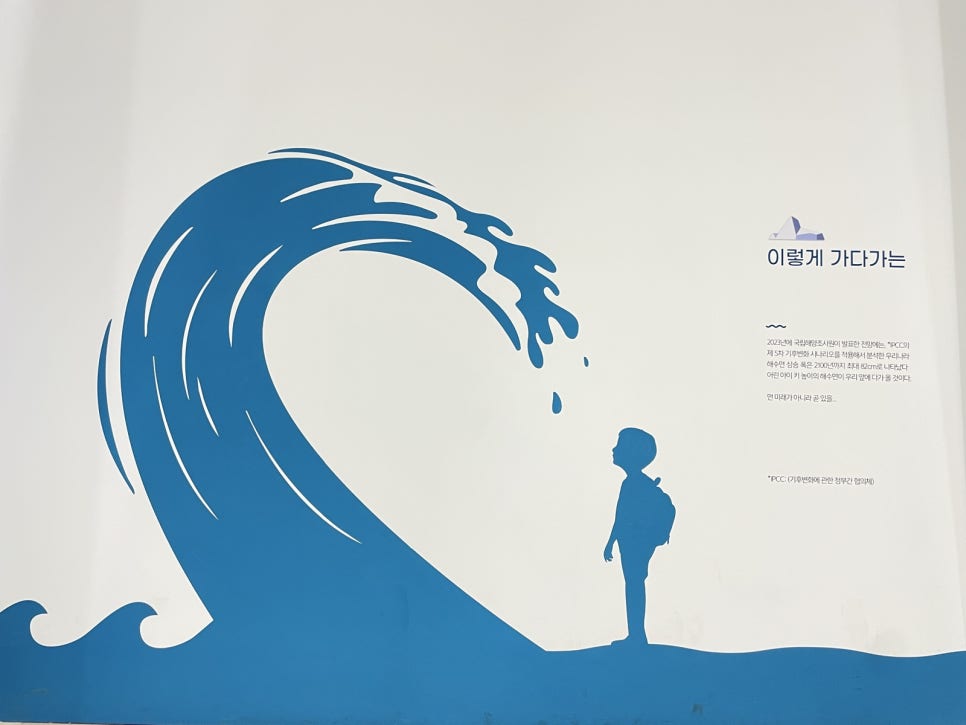
The panels beside the tanks deal in turn with sea temperature, ocean currents and coral bleaching. The panel titles below are read from photographs the institute has published, so the layout on the day may differ.
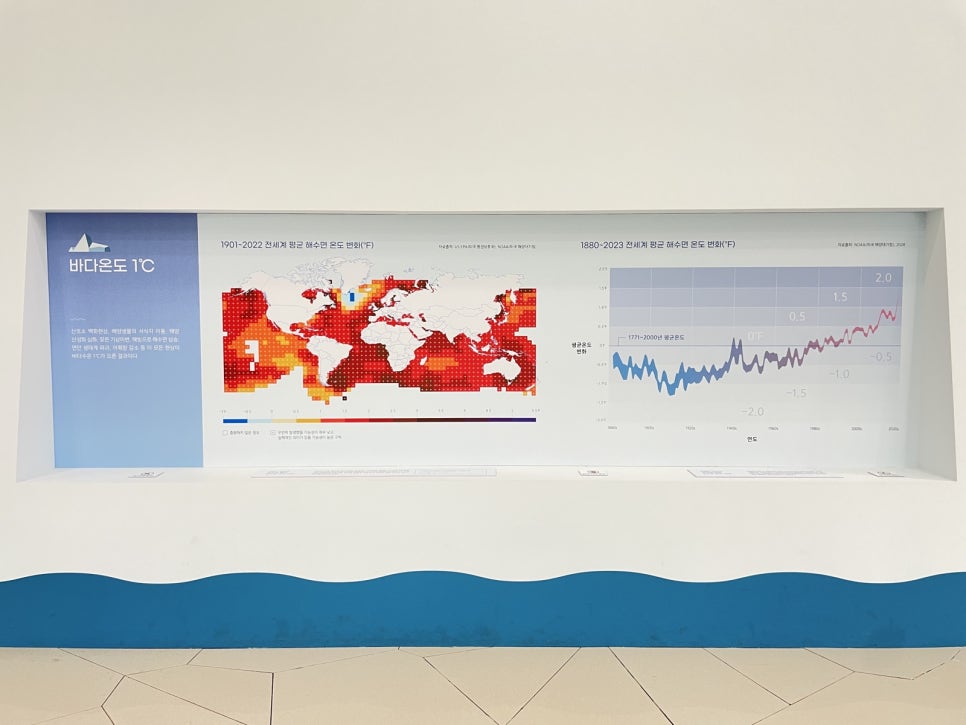
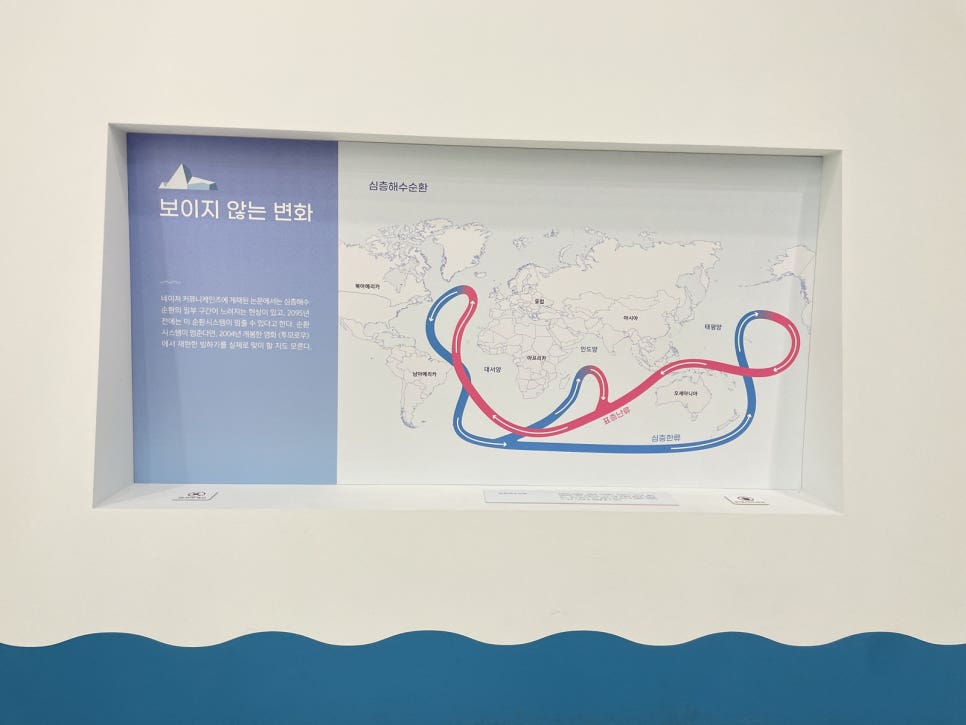
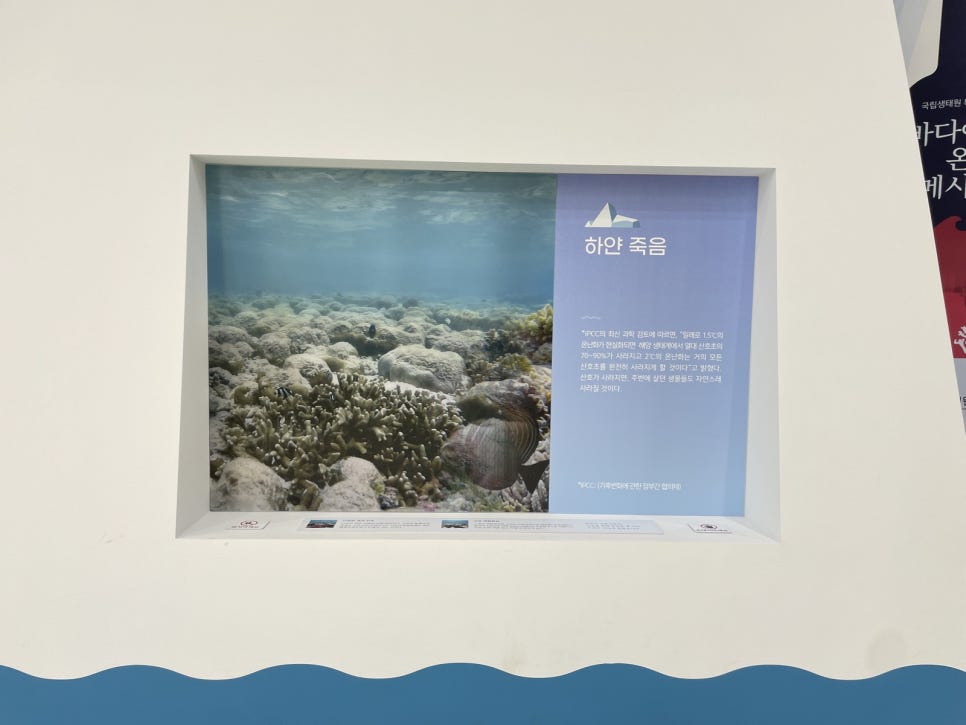
A screen plays 'Boiling Sea' (끓는 바다), a documentary provided by the Korean broadcaster KBS about lives upended as climate change continues — it connects the figures on the panels to what happens to people. It is in Korean.
Admission, opening hours and what to check before you go
From the National Institute of Ecology's visitor information, checked November 2026
- Hours
- 9:30 am – 5:30 pm (ticket office closes 4:30 pm)
- Closed
- Mondays; the next working day when a Monday is a public holiday
- Admission
- KRW 5,000 adults (19–64), KRW 3,000 teenagers (13–18), KRW 2,000 children (5–12)
- Free entry
- Age 4 and under, 65 and over, disabled visitors, persons of national merit and others, with proof
- Payment
- Card only
- Preview
- 360° VR tour on the exhibition page
One admission ticket covers both the Ecorium's five climate-zone greenhouses and the lobby exhibition. If Seocheon is too far for now, the 360° VR tour on the official page shows how the room is laid out.
In short, if you are going to the National Institute of Ecology before the end of the year, this is worth a pause in the Ecorium lobby on the way in or out. Remember the three indicator species, and news stories about Korea's seas turning subtropical become much more concrete.
Getting there, and what to expect if you do not read Korean
The National Institute of Ecology is in Seocheon on the west coast, about five minutes' walk from Janghang Station on the Janghang line; trains from Yongsan in Seoul take roughly three hours, so most visitors make it a full day or an overnight. The exhibition is in the Ecorium, the large glasshouse building, at the ground-floor lobby by the entrance. Tickets are sold at the gate by card — foreign cards are normally accepted at Korean ticket desks, but carry a second card in case — and nothing needs to be booked in advance, so no Korean phone number or account is involved. The exhibition's own panels and the documentary are in Korean only; the Ecorium's general signage is bilingual. Allow extra time for the greenhouses, which most visitors combine with this display.
Frequently asked questions
- Q. How long is 'Message from the Sea' at the National Institute of Ecology on?
- Until 31 December 2026, according to the institute's exhibition page and its list of current exhibitions. A spring 2026 events round-up said 'until June', so it is worth checking with the institute (+82-41-950-5300) before travelling.
- Q. Is there a separate charge for the exhibition?
- No. It is covered by the National Institute of Ecology admission ticket — KRW 5,000 adults, KRW 3,000 teenagers, KRW 2,000 children — paid by card only, which also covers the Ecorium greenhouses.
- Q. Do I need to book?
- No booking exists for this exhibition. Buy an admission ticket at the institute's ticket office and go to the ground-floor lobby of the Ecorium.
- Q. Which living species can I see?
- Alveopora coral, neon damselfish and Caulerpa seaweed, shown as climate-change indicator species, plus a tank of eelgrass and photographs of 11 Korean coastal species. Some tanks may be off view depending on the animals' condition.
- Q. Can I see it without going?
- Yes, in part: the exhibition page on the institute's website has a 360° VR tour of 'Message from the Sea'.
- Q. Is it worth going if I do not read Korean?
- As an add-on to the Ecorium, yes. The panels and the documentary are Korean-only, so the climate argument is harder to follow, but the living coral, fish, seaweed and eelgrass tanks are the point of the room and need no text. On its own it is a short stop, not a reason to make the trip from Seoul.
Editor's note · Kang Shin-wook
For anyone heading to Seocheon before the end of the year, especially families and teachers looking for a climate-and-oceans visit. Hours, transport and the rest of the site are in our National Institute of Ecology visiting guide; other dated exhibitions are on /en/events.
Sources
- Official notice (Korean)
- Current exhibitions list (Korean)
- Opening hours (Korean)
- Admission fees (Korean)
- Spring 2026 events round-up (Korean)
Written in our own words from the sources above, never copied from them, and every date and price checked against at least two pages. The originals are in Korean. Spotted a mistake? Ask for a correction.
Latest from National Institute of Ecology
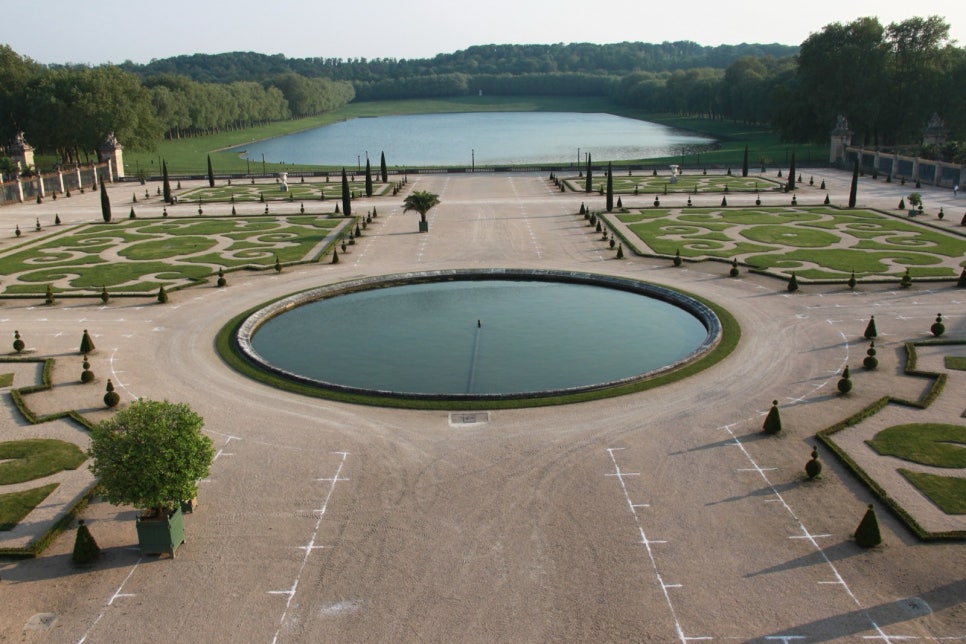 National Institute of EcologyExhibition16 October 2026On nowOrangerie at the National Institute of Ecology, Seocheon — potted olives and palms until 15 November
 National Institute of EcologyProgramme22 September 2026Year-roundFreeThe ant exhibition at Korea's National Institute of Ecology
 National Institute of EcologyExhibition21 September 2026On nowA new climate gallery opens the Ecorium — Seocheon, KRW 5,000