Exhibition·National Museum of KoreaOn nowFree
Bamboo porcelain at the National Museum of Korea — free to 31 Jan 2027
Summary
The National Museum of Korea in Seoul has a small thematic exhibition, 'Evergreen Bamboo Through the Four Seasons Embodied in Ceramics', in its Buncheong Ware and White Porcelain Gallery (rooms 304–305, third floor of the Permanent Exhibition Hall) until 31 January 2027. It gathers 16 pieces of Joseon white porcelain: bottles, brush holders and a wine ewer shaped like bamboo stalks, and jars and flasks painted with bamboo in cobalt blue or iron brown. Because it sits inside the permanent galleries it is free, there is no ticket and nothing to book, and the galleries are labelled in English. A curator's talk in the gallery on the evening of Wednesday 4 November is in Korean only.
Article
In short
- 'Evergreen Bamboo Through the Four Seasons Embodied in Ceramics' is a thematic exhibition in the Buncheong Ware and White Porcelain Gallery of the National Museum of Korea, rooms 304–305 on the third floor of the Permanent Exhibition Hall, from 23 June 2026 to Sunday 31 January 2027.
- It is inside the permanent galleries, so there is no admission charge and nothing to book. Hours are 09:30–17:30 on Monday, Tuesday, Thursday, Friday and Sunday, and 09:30–21:00 on Wednesday and Saturday.
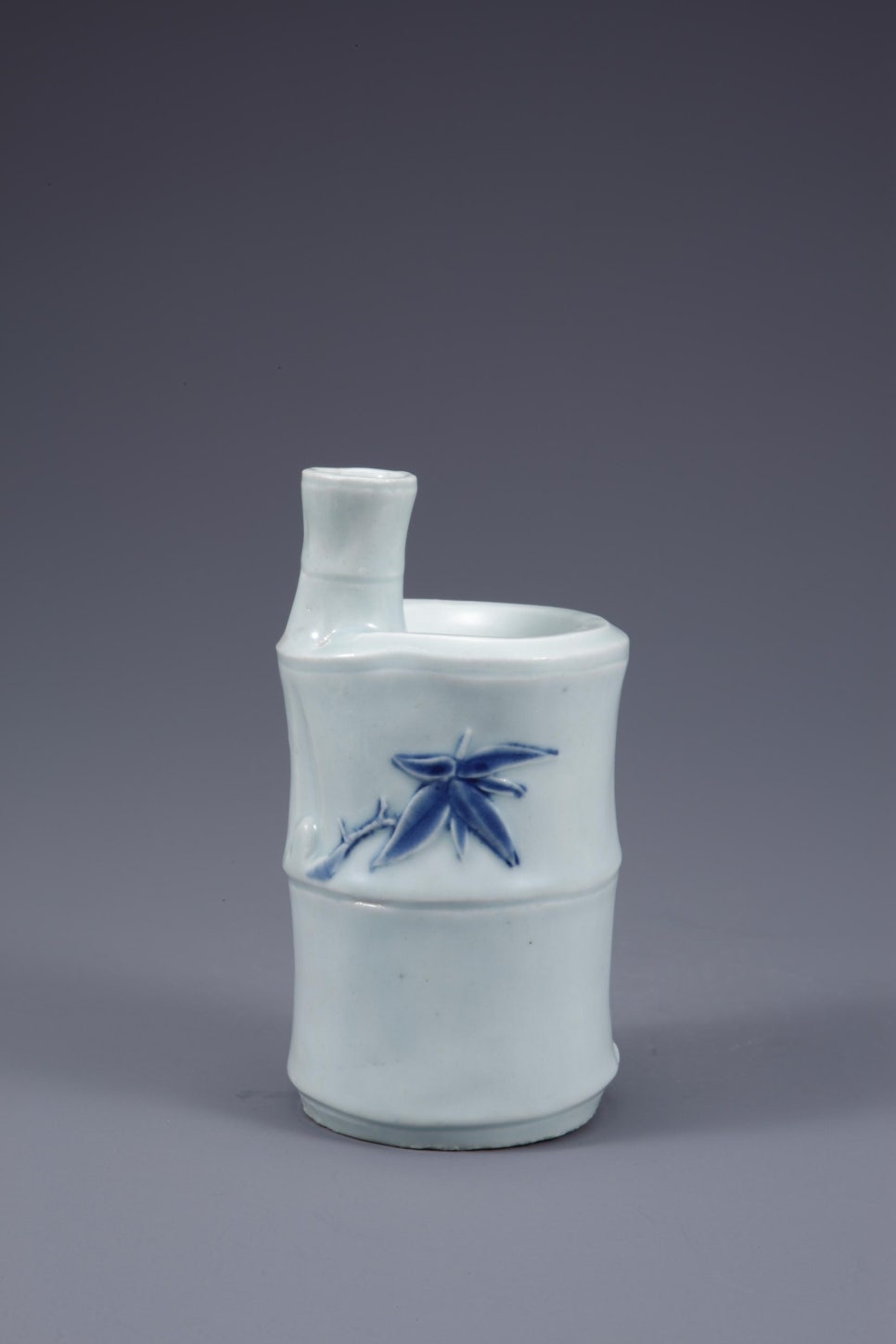
- On show are 16 pieces of Joseon white porcelain, led by a 19th-century bamboo-shaped bottle: some vessels are modelled on a bamboo stalk and its joints, others are painted with bamboo in cobalt blue or iron brown.
- On Wednesday 4 November 2026 the curator in charge gives a 'Conversation with a Curator' talk in the gallery at 18:00–18:30 and 19:00–19:30 — walk in, no sign-up, no cap on numbers, in Korean.
- The galleries are labelled in Korean and English, and getting in needs no Korean at all: Ichon Station (이촌역) on Line 4 connects to the museum by a covered walkway. During the exhibition the permanent galleries are shut only on Monday 7 December and 1 January.
The National Museum of Korea is running a small thematic display built around a single motif, bamboo, inside the Buncheong Ware and White Porcelain Gallery on the third floor of its Permanent Exhibition Hall. Its title is 'Evergreen Bamboo Through the Four Seasons Embodied in Ceramics'. In 16 pieces of white porcelain it shows how Joseon potters carried bamboo into clay and pigment, from a late-15th-century shard painted in cobalt blue to 19th-century bottles and a wine ewer shaped like the stalk itself. The idea that Korean scholars read moral steadiness into bamboo is familiar; what is rare is a chance to see how that idea reached the brush holder on a desk and the ewer on a drinking table. The display sits on the ordinary route through the permanent galleries, so there is no ticket to buy and nothing to reserve, and it runs well into the new year, to 31 January 2027.
Where it is and how to see it — rooms 304–305, third floor
The display is in the Buncheong Ware and White Porcelain Gallery of the Sculpture and Crafts section on the third floor of the Permanent Exhibition Hall — rooms 304 and 305 on the floor plan. It is not a separate special-exhibition hall but a themed corner within the gallery's permanent arrangement, so once you are on the third floor and past the Celadon Gallery (room 303) you are there. The museum's permanent galleries charge no admission and issue no ticket; you pass the security check at the main entrance and walk in. The museum's visitor information page and the exhibition page both say the same thing. The department in charge is the Fine Arts Division (+82-2-2077-9487).
Bamboo 'shaped' and bamboo 'painted' — what is the difference?
The museum's framing is simple. People of the past either made vessels in the form of bamboo or painted bamboo on them, because a plant that keeps its leaves through every season stood for the integrity and constancy expected of a gentleman-scholar. The exhibition sets the two approaches side by side. On one side are bottles, brush holders and a ewer whose whole form copies a bamboo stalk and its joints; on the other, jars and flasks with bamboo painted on the surface in blue cobalt or brown iron pigment.
Keeping the two apart also makes the chronology visible. The 15th- to 17th-century pieces are almost all 'painted' bamboo, while the sculptural vessels modelled on the stalk cluster in the 19th century. The museum notes that the 19th-century bamboo-shaped bottles were made under the influence of Chinese and Japanese ceramics of the 17th to 19th centuries, yet show the restraint typical of Joseon white porcelain rather than their ornament.
The five highlighted pieces
These are the five works the official exhibition page presents with photographs. The accession numbers are given so you can match them to the gallery labels. Taken in order they trace the shift from blue-painted bamboo in the 15th century to vessels shaped like bamboo in the 19th.
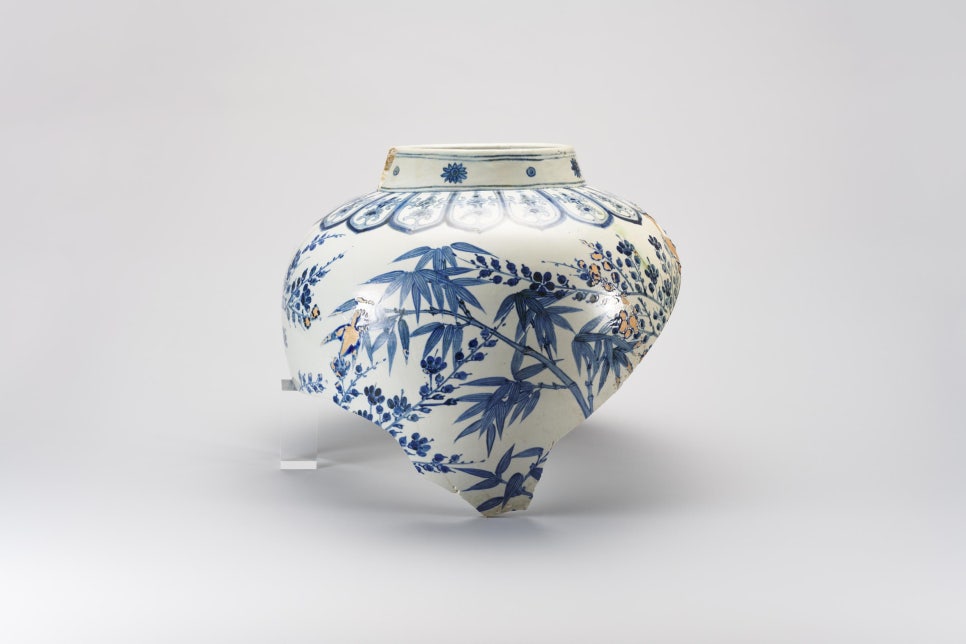
1. Jar shard with bamboo and plum in cobalt blue — Only a fragment, dug up in Gwancheol-dong in central Seoul, but a rare witness to the early phase of Joseon blue-and-white. The bamboo stalks are bent to follow the flare of the jar's shoulder, and even the veins of the leaves are drawn in fine line. Bamboo and plum branches overlap to fill the surface with no empty ground, which the museum describes as characteristic of 15th- and 16th-century blue-and-white decoration, and the hand as that of a trained court painter.
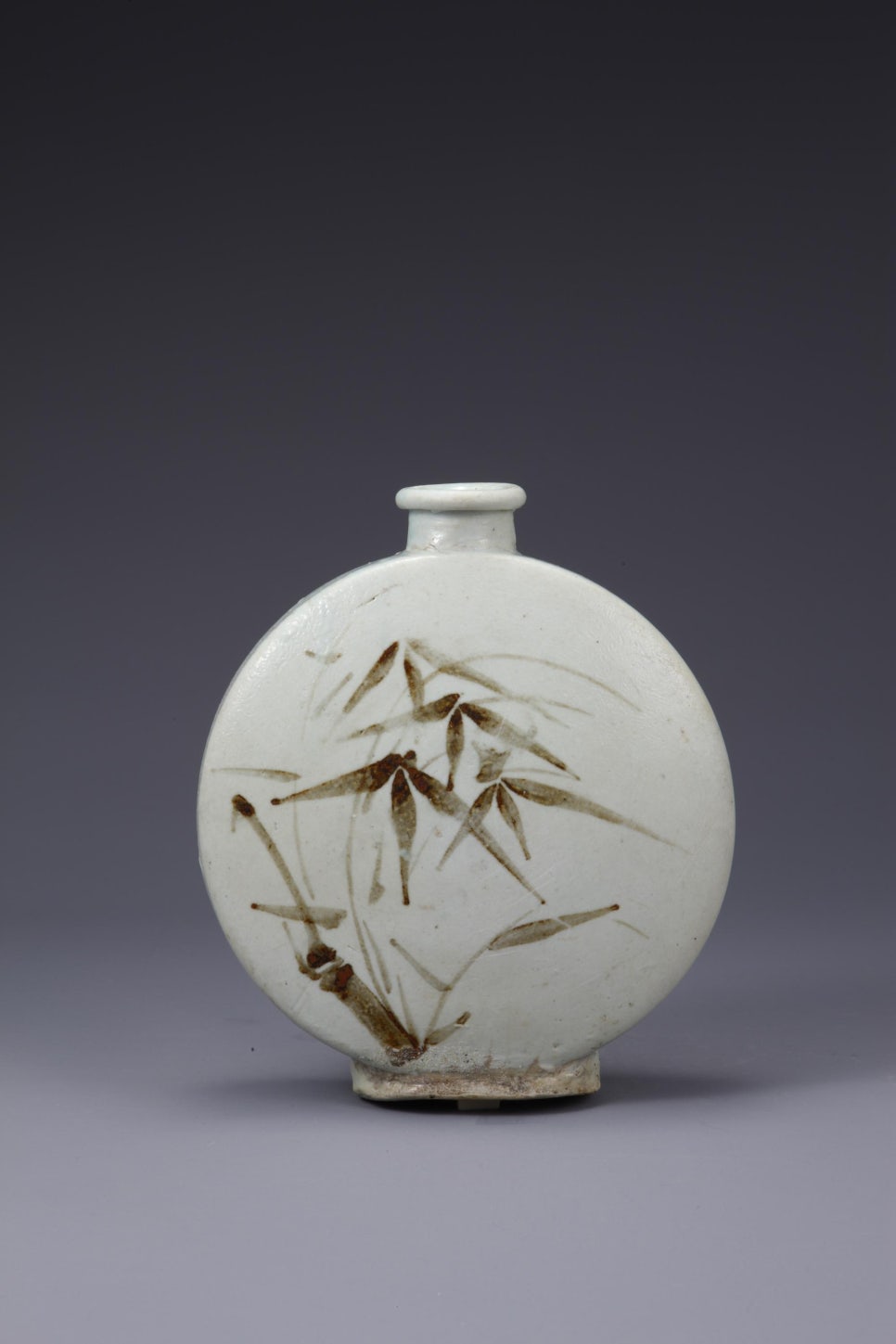
2. Flat flask with bamboo in iron brown — In the 17th century bamboo was painted in brown iron pigment instead of cobalt blue. The central leaf hangs long and the side leaves thrust out left and right, a composition the museum compares to the paintings of Yi Jeong (1554–1626), the most celebrated bamboo painter of the period. The rough brushwork keeps the plant's energy intact.
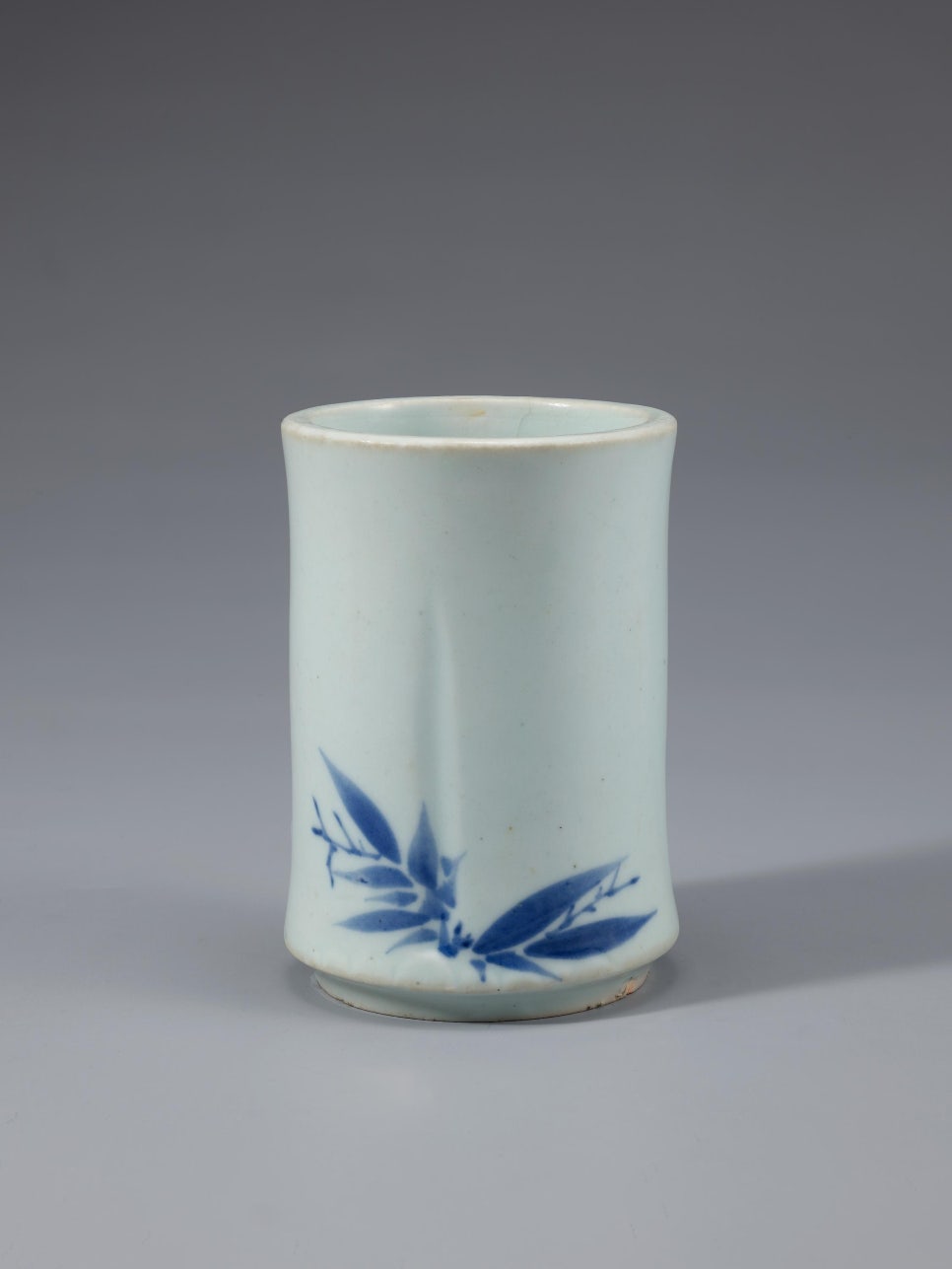
3. Bamboo-shaped brush holder in cobalt blue — A brush holder modelled in clay as a section of bamboo stalk. Long vertical grooves make it look like a new shoot. Brush holders of this form also appear on the shelves painted in 19th-century chaekgado screens — pictures of imaginary bookcases filled with prized objects — which suggests how scholars of the time valued them.
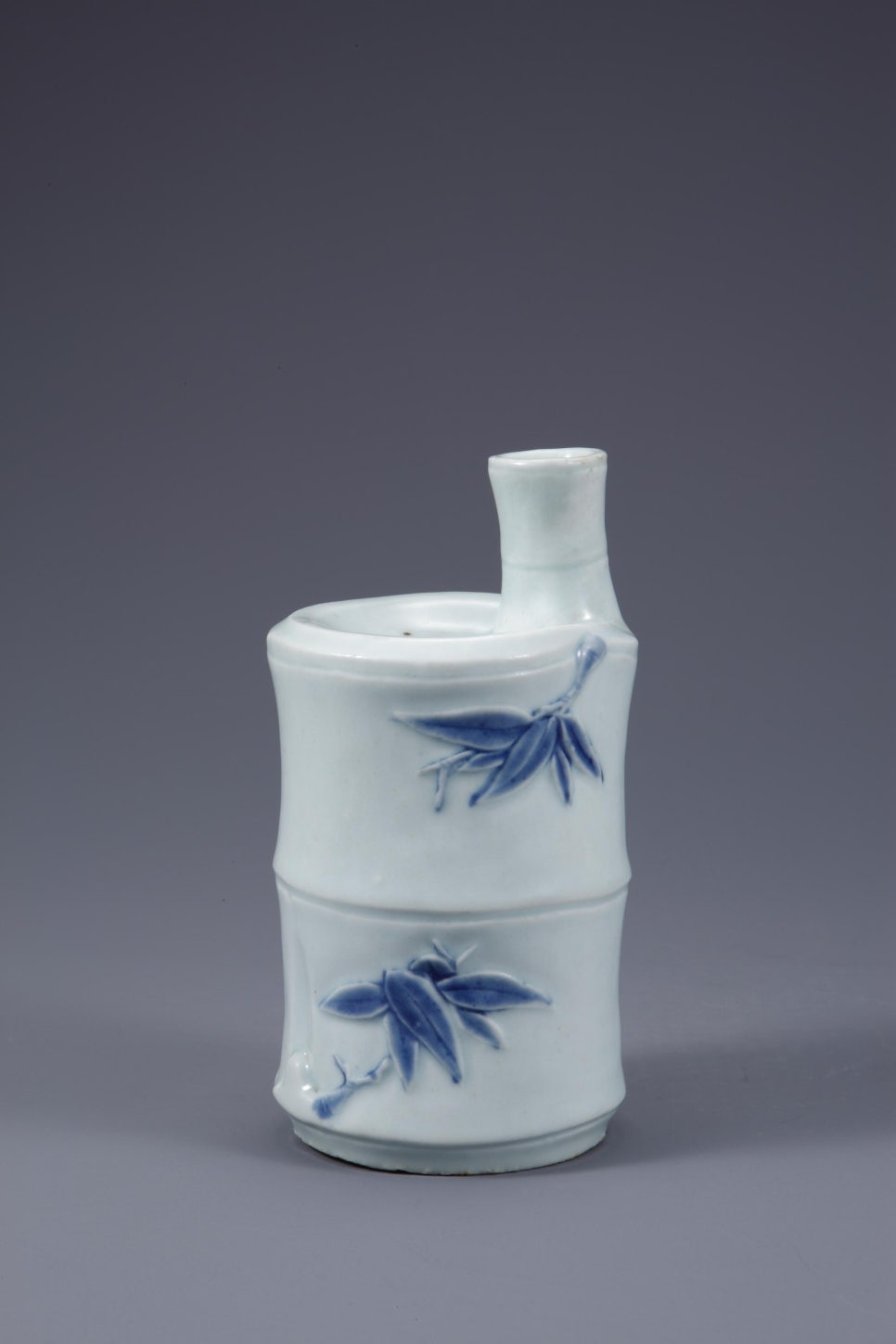
4. Bamboo-shaped bottle with relief leaves in blue — The exhibition's signature piece. On a clear white bottle shaped like a jointed stalk, the leaves are modelled in relief and then painted blue with cobalt. The form follows Chinese and Japanese ceramics of the 17th to 19th centuries, but the sparing decoration is distinctly Joseon. The cover photograph and this one show it from two angles, so compare the depth of the leaves.
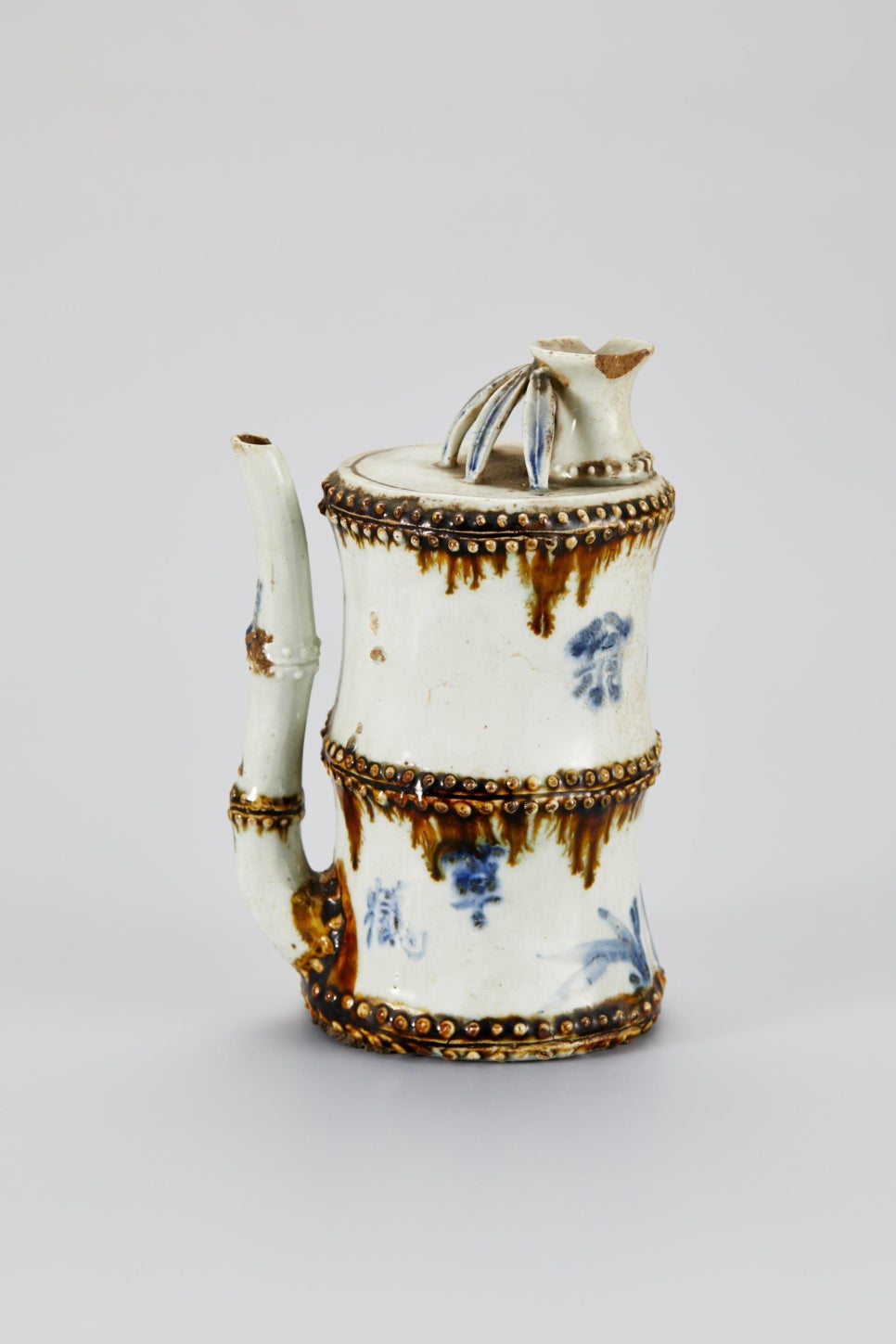
5. Bamboo-shaped ewer with relief, blue and iron-brown decoration — A pouring vessel shaped like a jointed stalk, with bead-like pellets of clay applied around the joints and coloured with iron pigment. A poem about the pleasures of wine and music is written on the body in cobalt blue, which tells us it was made for drinking, and a spout was added so the liquid pours cleanly. The museum adds that Chinese bamboo-form craft objects of the 17th and 18th centuries offer similar examples.
The five highlighted pieces — period and how the bamboo is rendered (from the museum's exhibition page)
- Jar shard with bamboo and plum
- Late 15th – early 16th century — painted in cobalt blue
- Flat flask with bamboo
- 17th century — painted in iron brown
- Brush holder with bamboo
- 19th century — modelled as a bamboo stalk
- Bamboo-shaped bottle with relief leaves
- 19th century — modelled as a stalk, relief leaves painted blue
- Bamboo-shaped ewer
- 19th century — modelled as a stalk, iron-brown beads, a poem in blue
The exhibition page does not list the other 11 of the 16 pieces. Counting them is left to you in the gallery.
Wednesday 4 November: the curator's talk
The museum pairs its Wednesday late opening with a weekly 'Conversation with a Curator'. The November timetable puts this exhibition in the first slot, on Wednesday 4 November. The curator in charge (Choi Yu-mi of the Fine Arts Division) gives the same talk twice in rooms 304–305, at 18:00–18:30 and 19:00–19:30; there is no sign-up — you simply go to the gallery at the right time — and no limit on numbers. The same talk was given once before, on 1 July, just after the opening. The talk is in Korean. There is no session on a Wednesday that falls on a public holiday, and the museum reserves the right to change the topic, so check the schedule page on the day.
More bamboo porcelain to look for
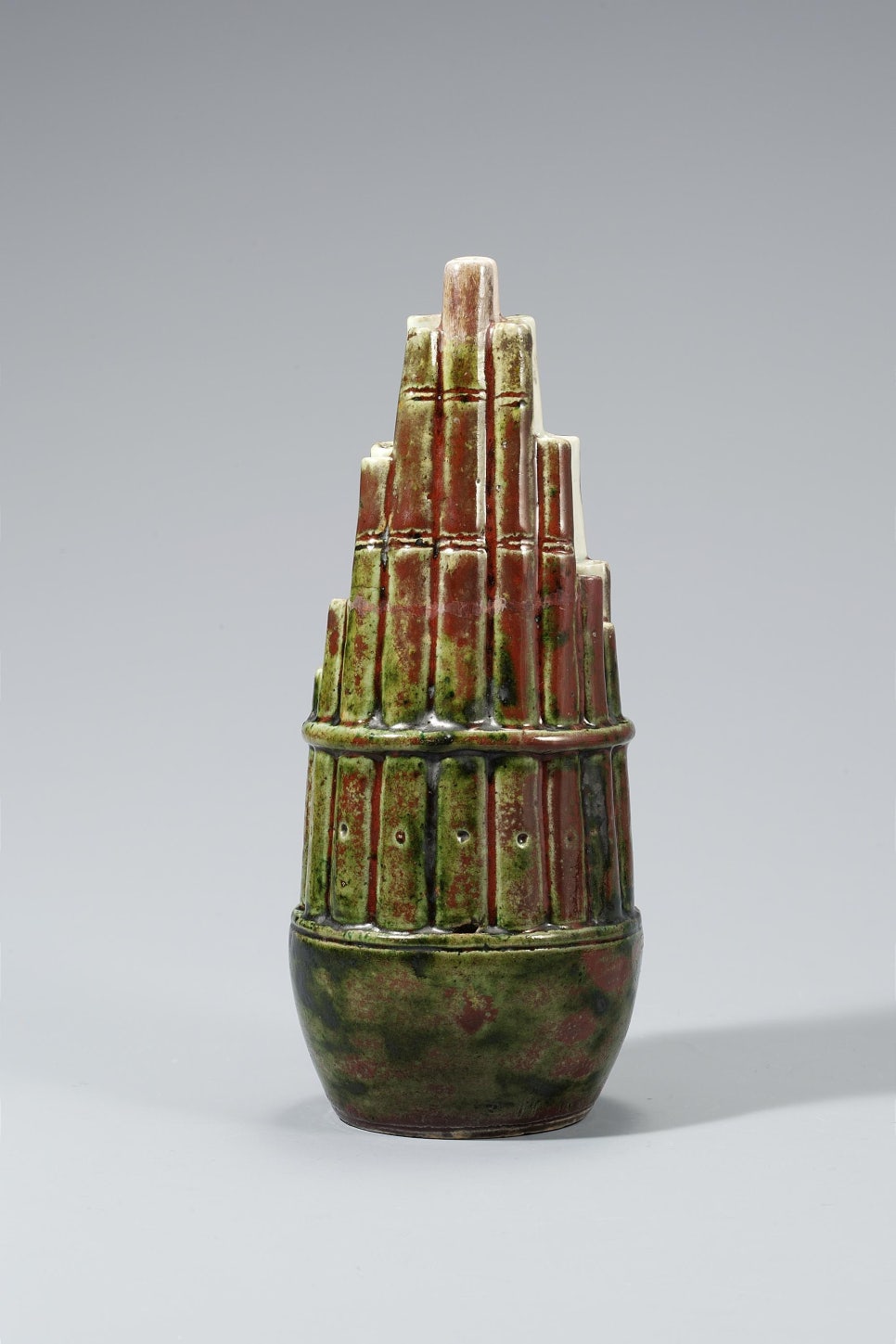
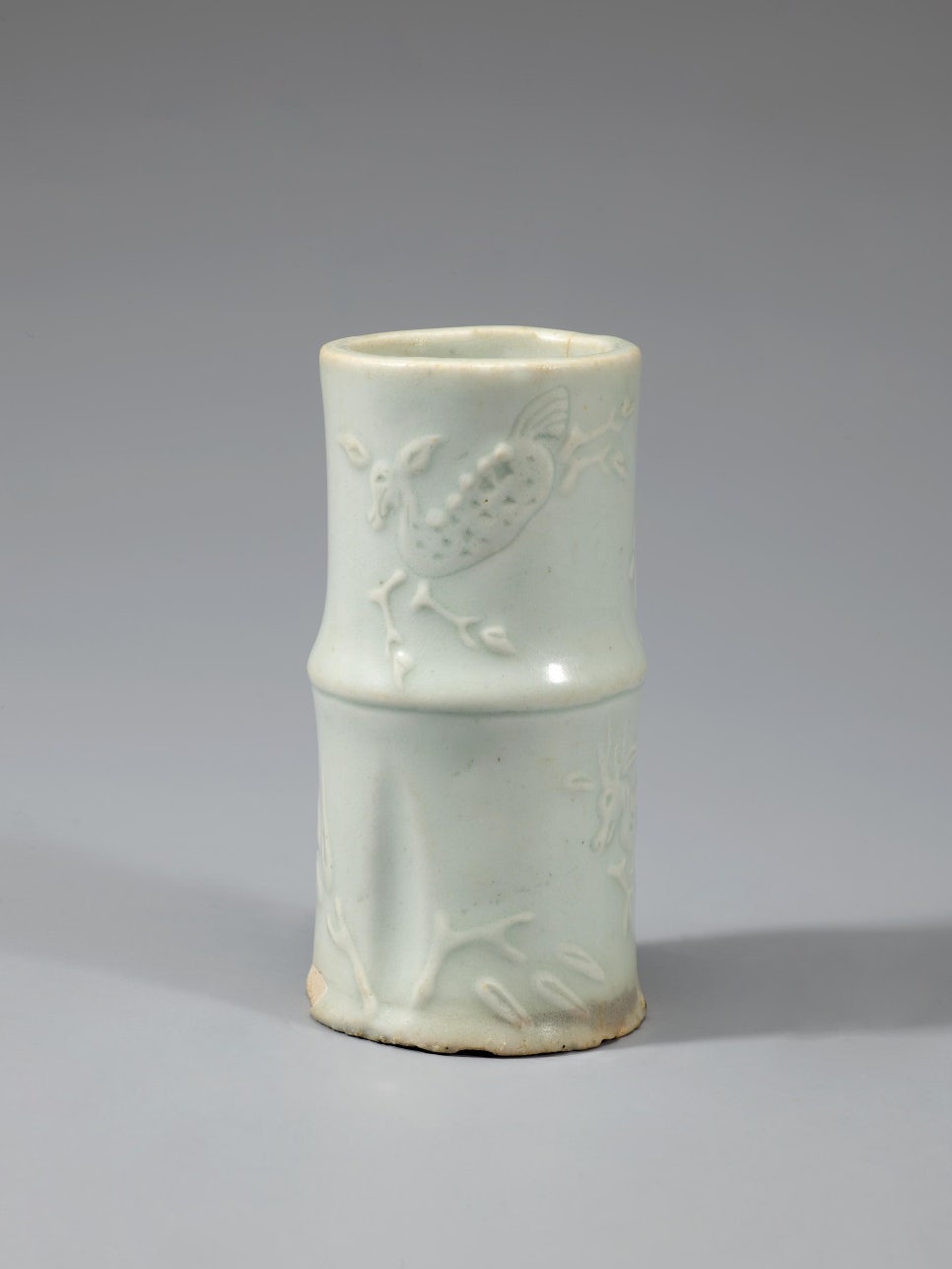
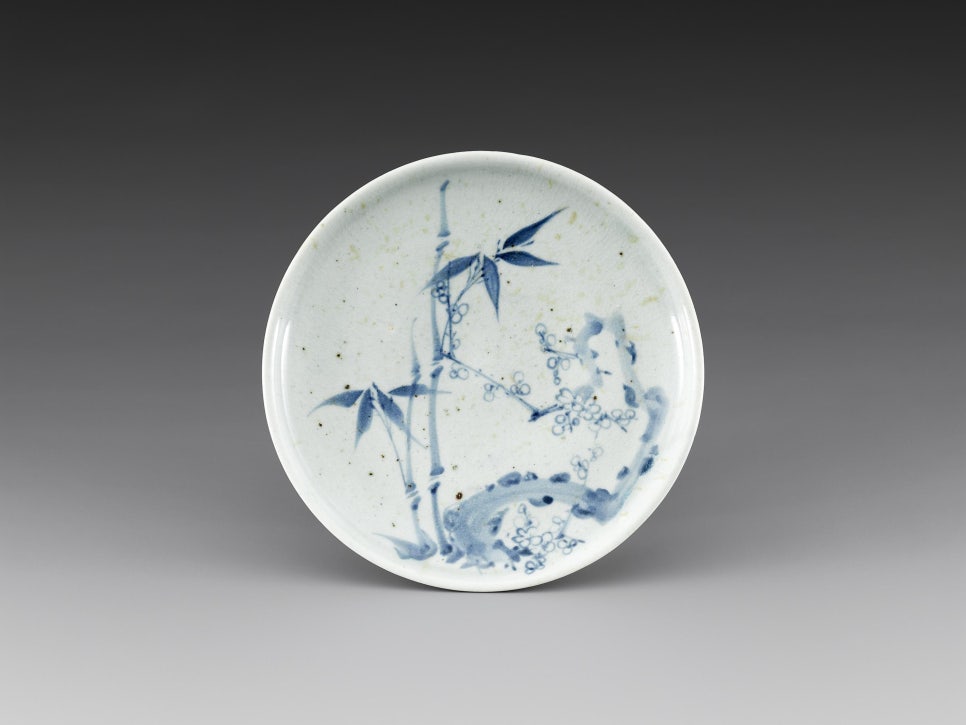
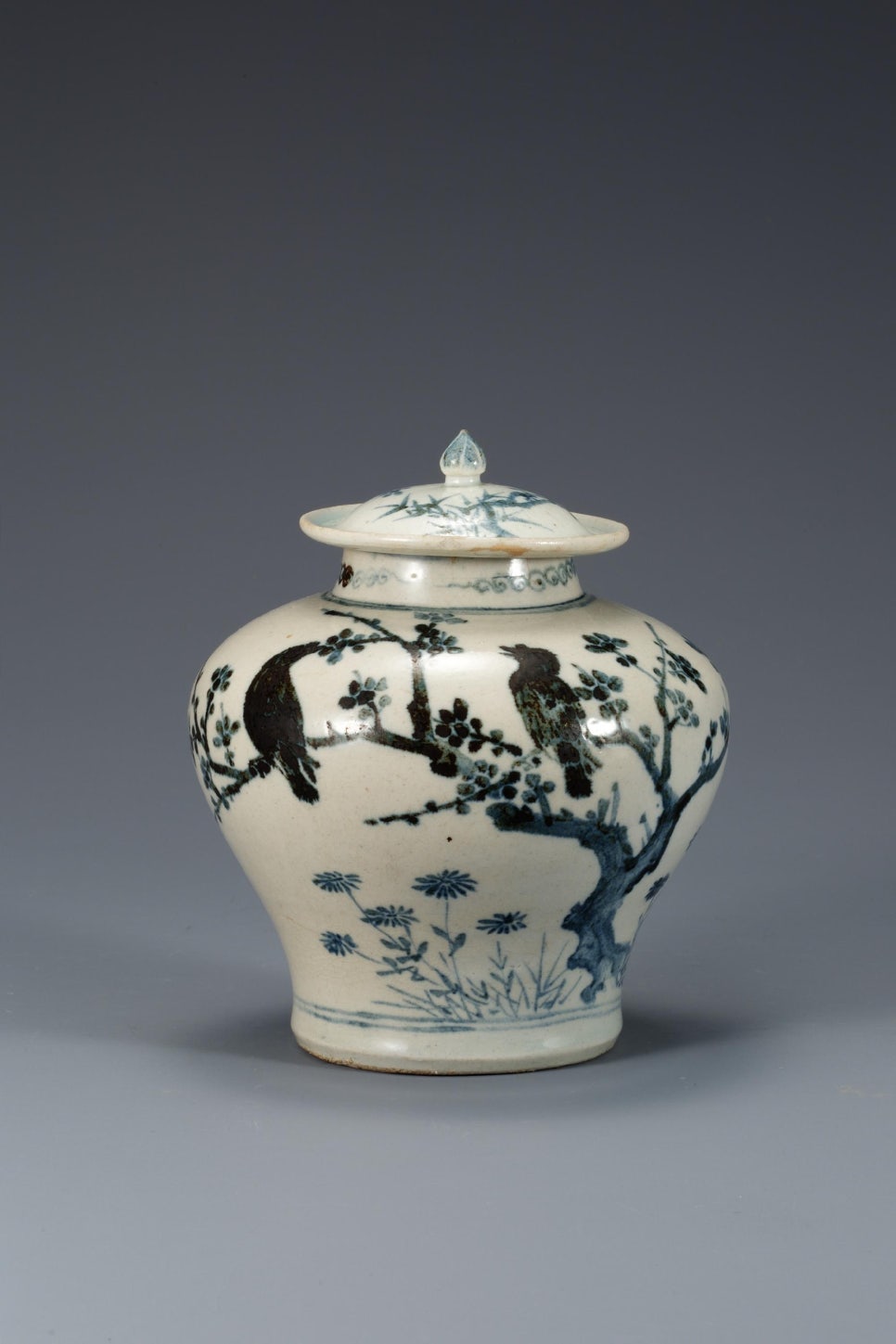
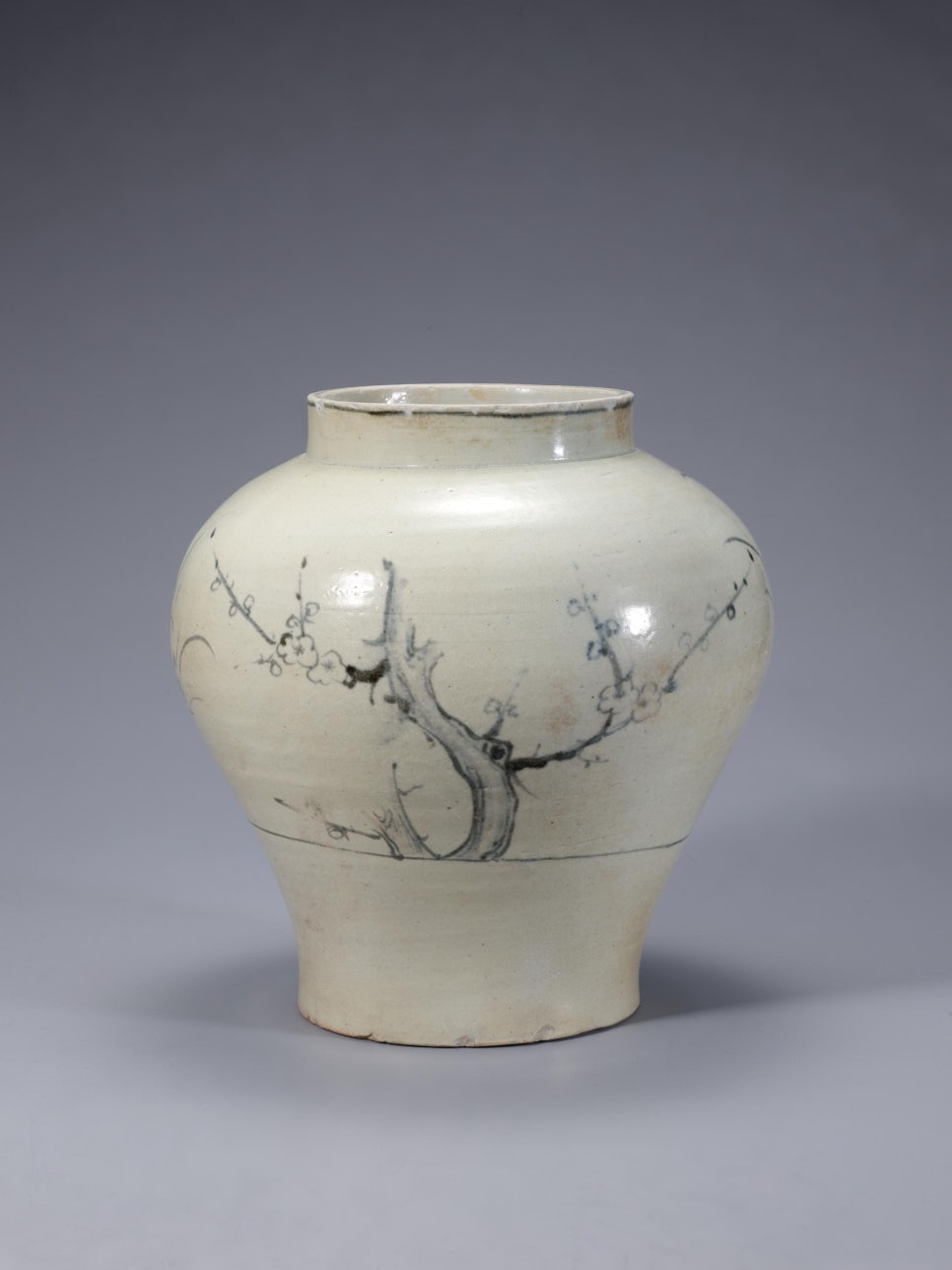
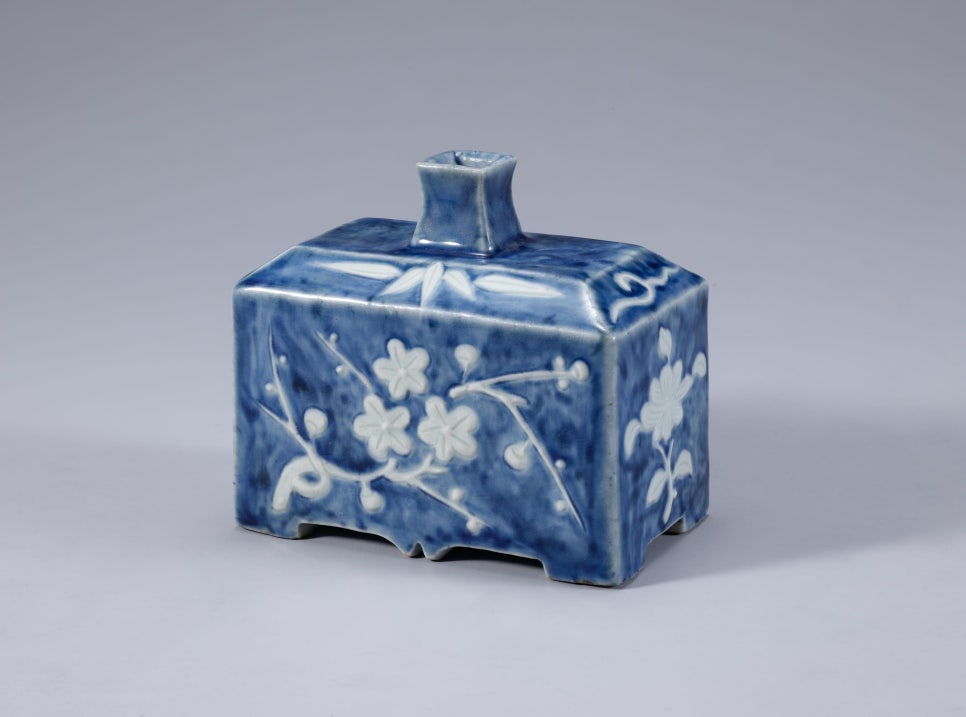
The photographs below are bamboo-themed white porcelain whose location in the museum's e-museum collection database is given as the Buncheong Ware and White Porcelain Gallery (rooms 304–305). Whether any of them is among the exhibition's 16 pieces is not confirmed by official sources, so treat them as a sampler of how widely bamboo was used on Joseon porcelain. You may well meet them in the gallery's permanent cases.
Not a confirmed list of exhibits
The six pieces in this section were chosen from e-museum location data, not from an exhibit list. The only works the museum has published as being in the exhibition are the five above.
Before you go
- Hours: Monday, Tuesday, Thursday, Friday and Sunday 09:30–17:30 (last entry 17:00); Wednesday and Saturday 09:30–21:00 (last entry 20:30).
- Closed: 1 January and the days of Seollal and Chuseok. The permanent galleries also shut for maintenance on the first Monday of March, June, September and December — during this exhibition that is Monday 7 December 2026 (the outdoor grounds stay open).
- Admission and booking: the permanent galleries are free and issue no ticket, and this exhibition is part of them. Only the ticketed special exhibitions in the separate special-exhibition halls charge.
- Getting there: Ichon Station (이촌역) on Line 4 or the Gyeongui–Jungang Line, Exit 2, then about five minutes along the covered Museum Path walkway. The exhibition is in rooms 304–305 on the third floor of the Permanent Exhibition Hall.
- Enquiries: Fine Arts Division +82-2-2077-9487; the museum's main line, which handles English, +82-2-2077-9000.
Getting there, and what is in English
From anywhere in central Seoul, take Line 4 to Ichon Station (이촌역) — from Seoul Station it is a few stops south — or the Gyeongui–Jungang Line to the same station. Leave by Exit 2 and follow the covered Museum Path walkway for about 150 metres; you arrive at the museum without stepping outside. From Incheon Airport, the AREX all-stop train to Seoul Station and a change to Line 4 takes around 75–90 minutes. Nothing about this visit needs a Korean phone number, a Korean card or a booking: the permanent galleries have no ticket, so a foreign visitor walks in exactly as a resident does, and the lockers inside the entrance hall will take a suitcase if you come straight from the airport. The gallery labels are in Korean and English, as they are throughout the permanent galleries, and the museum's English website lists the display under its English title, so finding room 304 is a matter of following the floor signs. What you will not get in English is the curator's talk on 4 November, which is held in Korean; the museum's free English guided tours of the permanent galleries and its paid audio guide exist, but they cover the collection broadly rather than this corner, and their times and languages change — the visitor-services page on the English site has the current line-up. Allow 20–30 minutes for the bamboo display itself, and since you are already on the third floor, the celadon and buncheong galleries either side of it are the natural next stop.
Frequently asked questions
- Q. Until when is the bamboo porcelain exhibition at the National Museum of Korea?
- It opened on 23 June 2026 and runs to Sunday 31 January 2027, in the Buncheong Ware and White Porcelain Gallery (rooms 304–305) on the third floor of the museum's Permanent Exhibition Hall.
- Q. Is 'Evergreen Bamboo Through the Four Seasons Embodied in Ceramics' free? Do I need to book?
- It is free and there is nothing to book. It is part of the permanent galleries, which charge no admission and issue no ticket; both the exhibition page and the museum's visitor information say so.
- Q. What is on display?
- Sixteen pieces of Joseon white porcelain. The signature piece is a 19th-century bamboo-shaped bottle with blue-painted relief leaves; the other highlighted works are a late-15th- to early-16th-century jar shard painted with bamboo and plum in cobalt blue, a 17th-century flask with bamboo in iron brown, and a 19th-century bamboo-shaped brush holder and ewer.
- Q. When is the curator's talk, and is it in English?
- On Wednesday 4 November 2026 at 18:00–18:30 and again at 19:00–19:30, in rooms 304–305. No sign-up and no limit on numbers, but it is given in Korean. Later months' schedules are published on the museum's 'Conversation with a Curator' page.
- Q. Is the National Museum of Korea open on Mondays?
- Yes — unusually for Korea, it opens on Mondays. The exceptions are the first Monday of March, June, September and December, when the permanent galleries close for maintenance (7 December 2026 during this exhibition), plus 1 January and the days of Seollal and Chuseok.
- Q. Is it worth going if I do not read Korean?
- Yes. The labels are bilingual Korean–English, there is no ticket or booking to navigate, and the pieces — bamboo-shaped bottles and brush holders, jars painted with bamboo — are legible without any text at all. The only Korean-only element is the curator's talk on 4 November, and this article covers what the museum says about each highlighted piece.
Editor's note · Kang Shin-wook
For anyone with half an hour to spare at the National Museum of Korea, and for visitors who like Joseon porcelain but do not want to pay for a ticketed special exhibition. Opening hours, closing days and the walk from Ichon Station are in our National Museum of Korea guide; other dated exhibitions are on the events board.
Sources
- Official notice (Korean)
- National Museum of Korea — visitor information: hours, admission, closing days (Korean)
- National Museum of Korea — 'Conversation with a Curator' schedule, November 2026 (Korean)
- National Museum of Korea — 'Conversation with a Curator' schedule, July 2026 (Korean)
- National Museum of Korea — current exhibitions, 'Evergreen Bamboo Through the Four Seasons Embodied in Ceramics' (English)
Written in our own words from the sources above, never copied from them, and every date and price checked against at least two pages. The originals are in Korean. Spotted a mistake? Ask for a correction.
Latest from National Museum of Korea
 National Museum of KoreaEvent30 October 2026In 4 daysJoseon Wizard family musical at the National Museum of Korea — 7 Nov–31 Dec
 National Museum of KoreaExhibition17 October 2026On nowFreeDunhuang sutras on show for the first time at the National Museum of Korea — free until 24 Jan
 National Museum of KoreaExhibition14 October 2026In 24 daysKunsthaus Zürich masterpieces at the National Museum of Korea — KRW 12,000 early bird until 17 Dec
 National Museum of KoreaNews10 October 2026MU:DS Regional Heritage Collection — 100 museum goods from 13 national museums