MU:DS Regional Heritage Collection — 100 museum goods from 13 national museums
Summary
On 1 September 2026 the National Museum Foundation of Korea released the MU:DS Regional Heritage Collection: 100 goods based on signature artefacts from the 13 regional branches of the National Museum of Korea, from the Divine Bell of King Seongdeok in Gyeongju to the Gilt-bronze Incense Burner of Baekje in Buyeo. Every museum has a fan-and-handkerchief set (KRW 42,000) and a bookmark (KRW 14,000); the craft pieces run up to KRW 1,100,000. The catch for visitors: the collection is sold through the Korean-language online shop and eight museum shops in Korea, not through the English-language MU:DS global store.
Article
In short
- The MU:DS Regional Heritage Collection is a set of 100 museum goods released on 1 September 2026 by the National Museum Foundation of Korea, each based on a signature artefact of one of 13 regional national museums such as Gyeongju, Buyeo and Naju.
- The 100 items split into 26 everyday goods and 74 craft pieces made with metal, ceramic, wood, textile and hanji paper artists.
- Every museum has one fan-and-handkerchief set at KRW 42,000 and one bookmark at KRW 14,000 (online shop prices on 10 October 2026).
- It is sold at eight museum shops — the National Museum of Korea in Seoul and the Gyeongju, Gwangju, Jeonju, Daegu, Jinju, Jeju and Iksan National Museums — and on the Korean online shop, where most craft pieces must be ordered on their own.
- For visitors: the online listing is Korean-only and the collection is not on the English MU:DS global store, so the simplest route is the shop at the National Museum of Korea, five minutes from Ichon Station in Seoul.
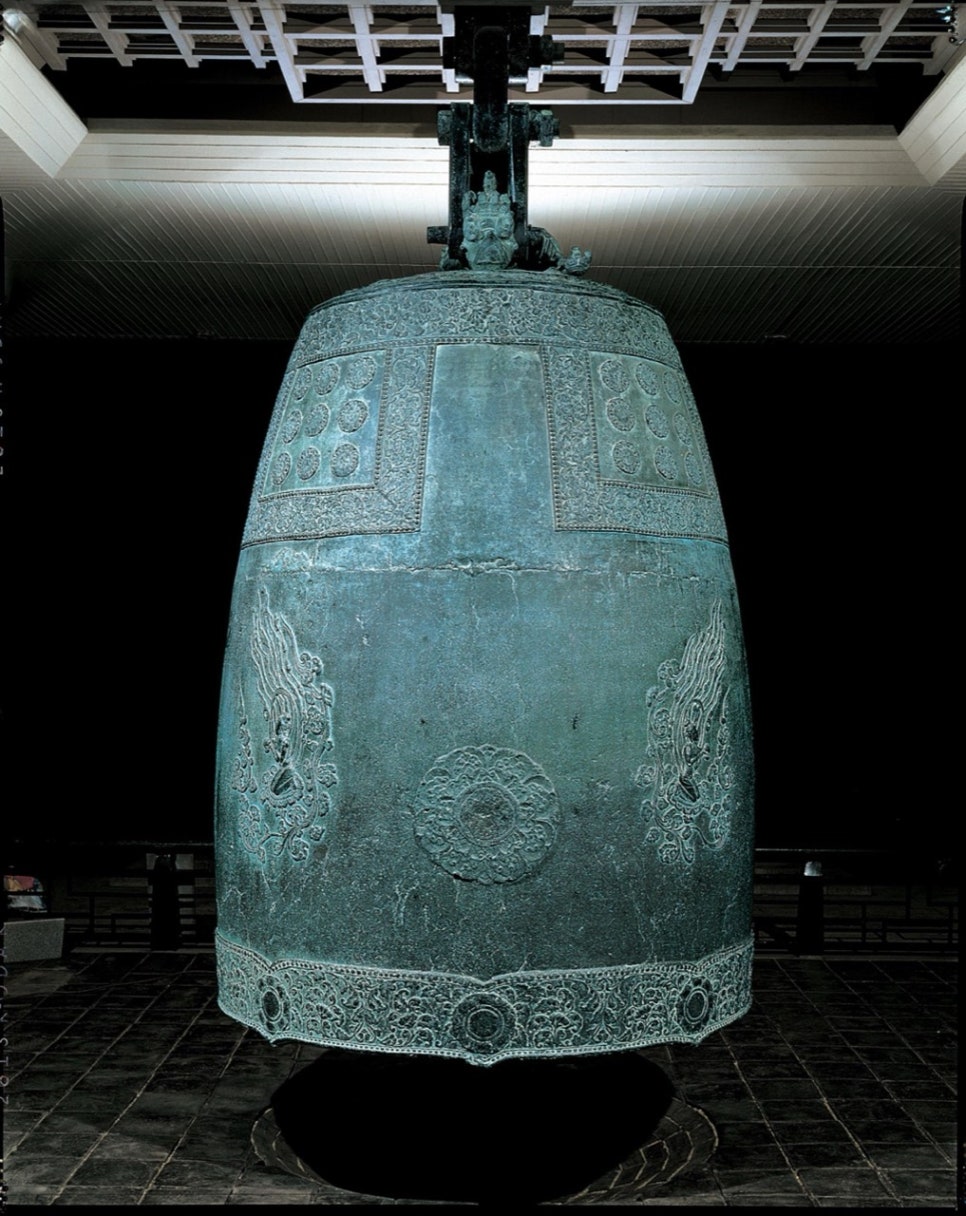
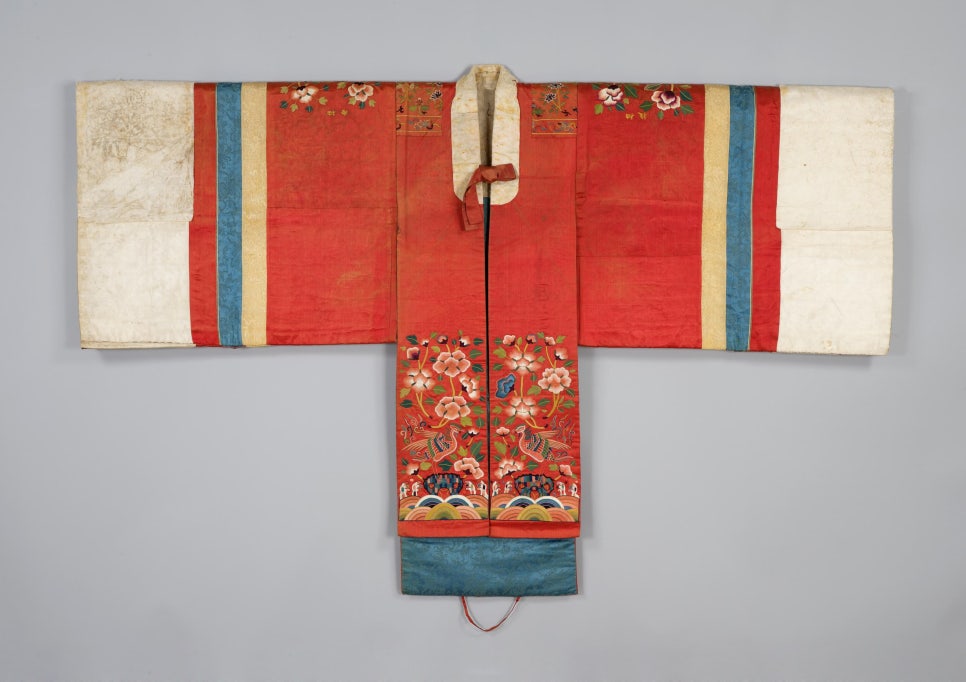
MU:DS, the goods brand of Korea's national museums, has put the collections of the 13 national museums outside Seoul into one product line. The National Museum Foundation of Korea asked each museum to nominate artefacts that would work as products, developed them together, and released 100 items on 1 September 2026 under the name Regional Heritage Collection. The range runs from famous National Treasures such as the Divine Bell of King Seongdeok in Gyeongju and the Gilt-bronze Incense Burner of Baekje in Buyeo to everyday heritage such as Daegu's hwarot wedding robe and Jeju's dongjaseok stone figures. For someone who has visited a regional museum it is a souvenir; for someone who has not, it reads like a map of which museum holds what.
How do the everyday goods differ from the craft collection?
The everyday goods (26 items) follow one format across all 13 museums. Each museum's signature object was turned into a graphic and printed on a fan-and-handkerchief set and a bookmark, so laying the 13 side by side compares the museums at a glance. The craft collection (74 items) is the work of metal, ceramic, wood, textile and hanji paper artists who reinterpreted the artefacts in their own materials. The foundation's press release names metalworker Lim Sang-a, ceramicist Jeon Sang-geun, woodworker Lee Su-bin and hanji artist Kim Hyun-ju among the artists; which artist made which piece has not been published.
The two collections compared (online prices on 10 October 2026)
- Number of items
- Everyday: 26 · Craft: 74
- How they are made
- Everyday: a graphic of the signature object on daily items · Craft: collaborations with metal, ceramic, wood, textile and hanji artists
- Main items
- Everyday: 13 fan-and-handkerchief sets + 13 bookmarks, one each per museum · Craft: wind chimes, tea sets, brooches, vases, objets, lamp holders, mirrors and more
- Price
- Everyday: KRW 42,000 per fan set, KRW 14,000 per bookmark · Craft: from about KRW 10,000 to KRW 1,100,000 (Gongju's jinmyosu mirror)
- Ordering
- Everyday: can be ordered with other goods · Craft: most are marked "order separately" and cannot share a basket with other items
Which artefact became which product, museum by museum?
The table below matches product names on the online shop with the artefact list in the press release. All 13 museums have a fan set and a bookmark; the craft goods vary widely by museum in type and price.
Artefact and main craft goods by museum (online prices on 10 October 2026)
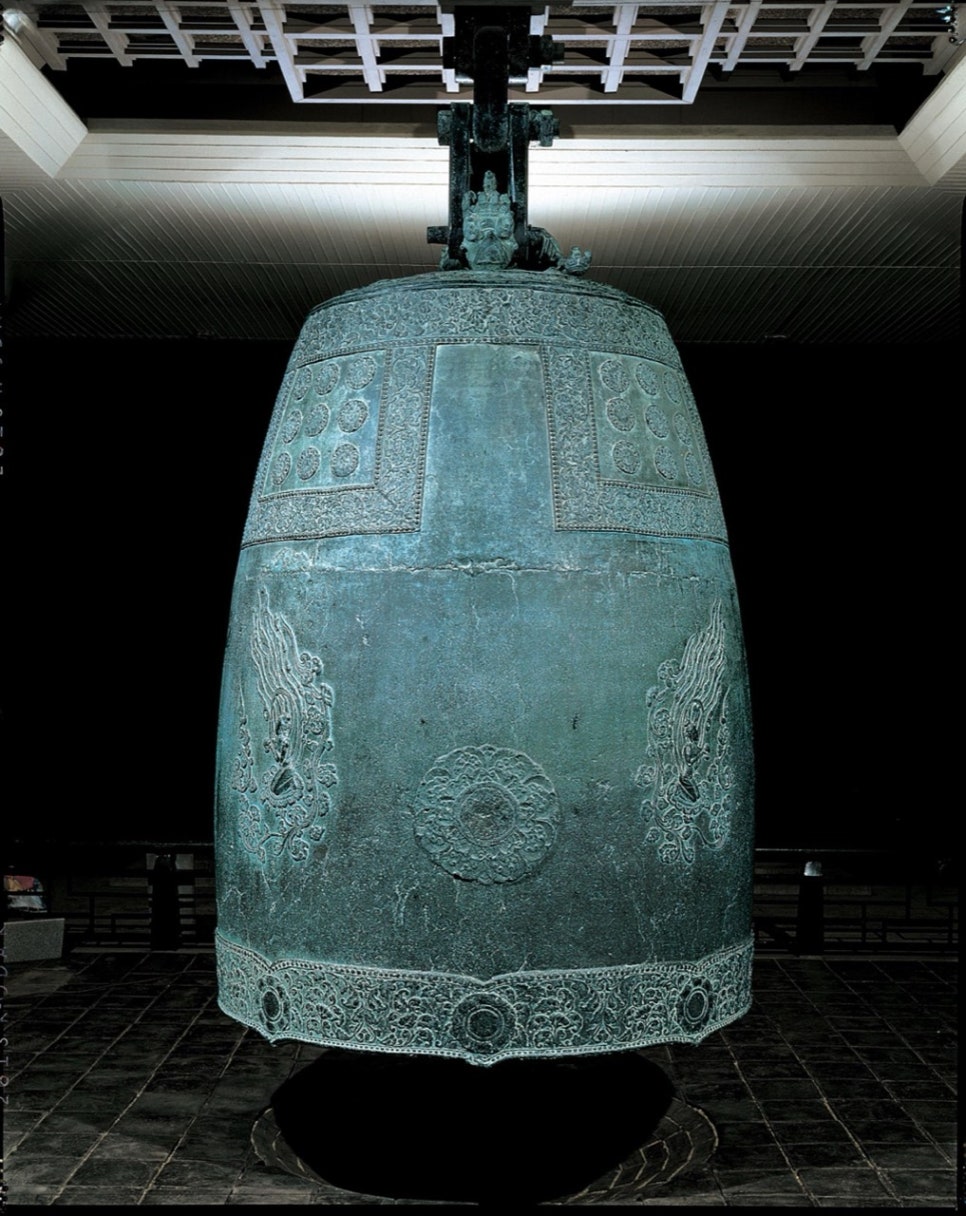
- Gyeongju — Divine Bell of King Seongdeok (National Treasure)
- Divine Bell wind chime; tea set based on a jar decorated with clay figurines
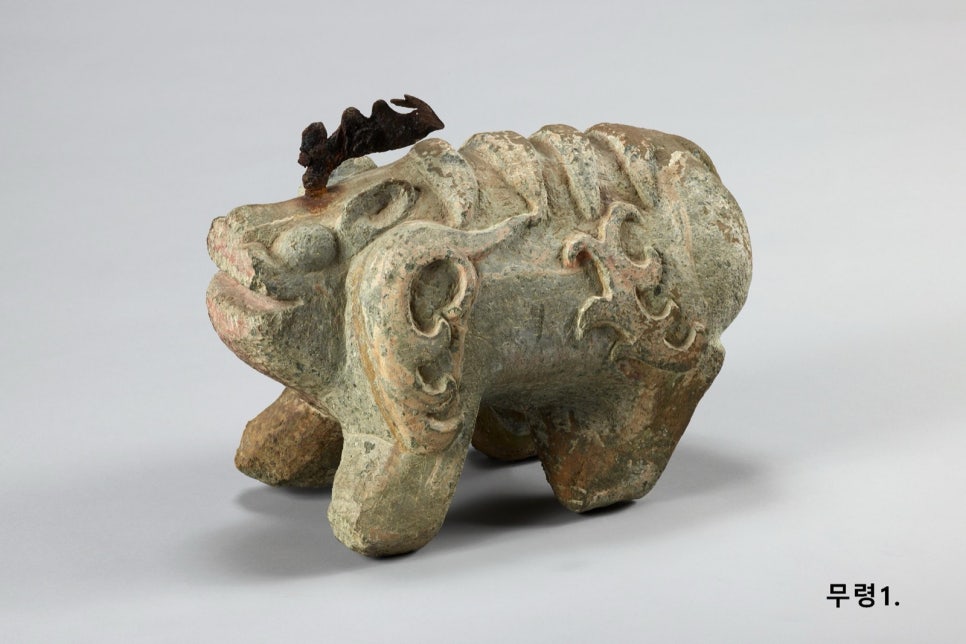
- Gwangju — "eggplant bell" rattle; celadon lion-shaped water dropper
- Lion water dropper incense holder and others
- Cheongju — Saincham sword
- Paper knife; bag and bag charm
- Daegu — hwarot wedding robe; gat hat
- Hwarot apron KRW 79,000 and pouch KRW 52,000; miniature gat brooch KRW 240,000
- Jeju — dongjaseok stone figures
- Dongjaseok tray and holder KRW 69,000 each; onggi heobeok cup KRW 30,000
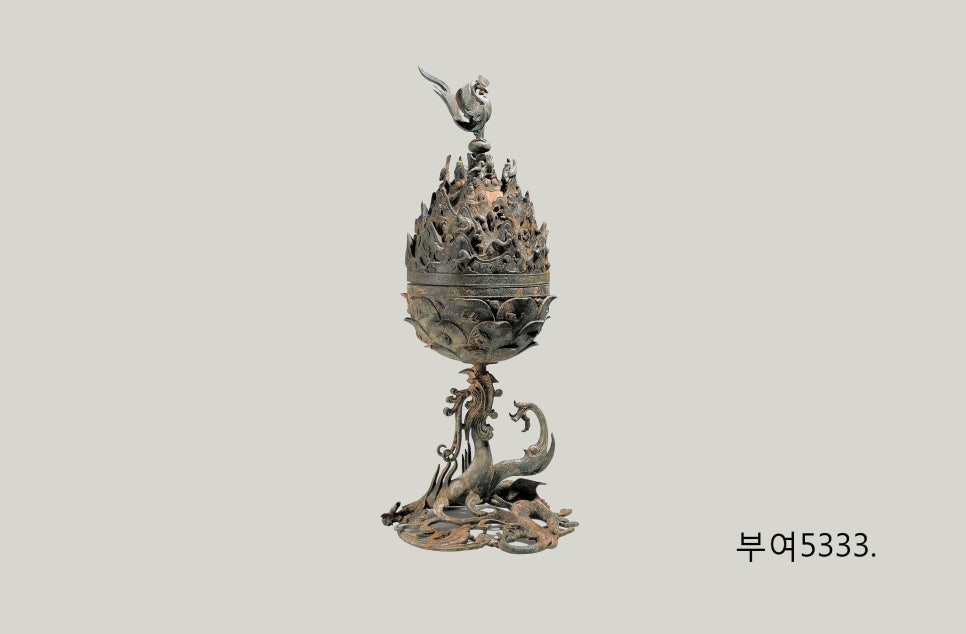
- Buyeo — Gilt-bronze Incense Burner of Baekje (National Treasure); gilt-bronze halo
- Hoja objet KRW 475,000; gilt-bronze standing Avalokitesvara necklace KRW 275,000
- Gongju — silver cup with stand; jinmyosu tomb guardian
- Jinmyosu mirror KRW 1,100,000; silver cup gaiwan tea set KRW 260,000
- Naju — Sinchon-ri gilt-bronze crown (National Treasure); stone lantern inside Seoseongmun gate
- Stone lantern lamp holder KRW 250,000; stone lantern wind chime KRW 130,000
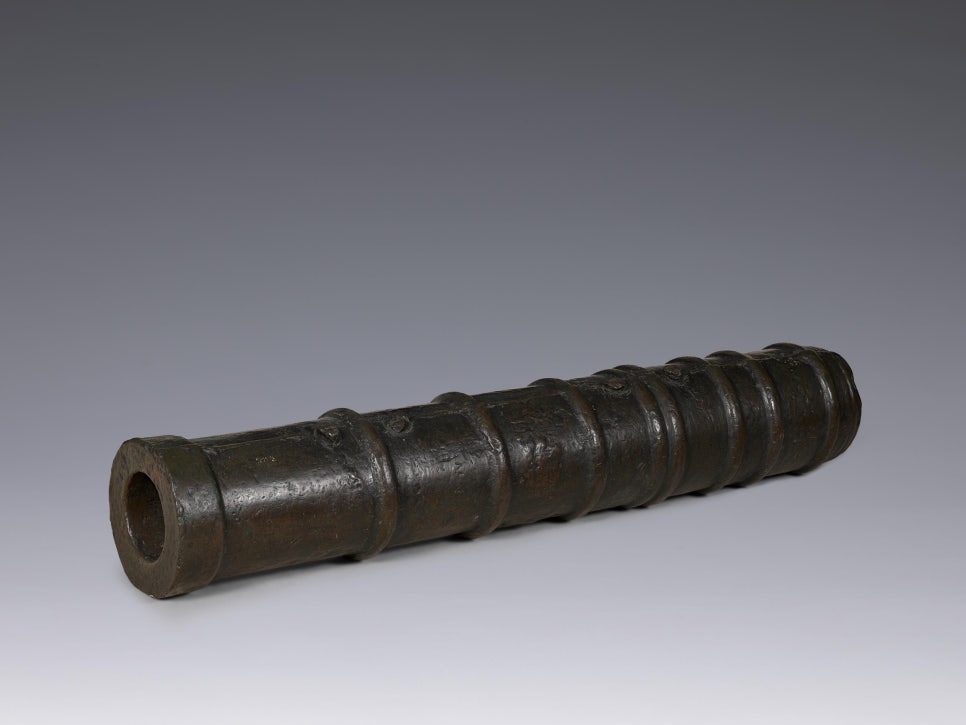
- Jinju — cheonja chongtong cannon and other Joseon weapons
- Cannon vase KRW 250,000, pen holder KRW 150,000, mug KRW 66,000
- Iksan — gilt-bronze outer reliquary jar; chimi roof ornament
- Chimi incense holder KRW 158,000; chimi vase KRW 134,000
- Jeonju — bronze mirror with fine-line design
- Fan-and-handkerchief set and bookmark
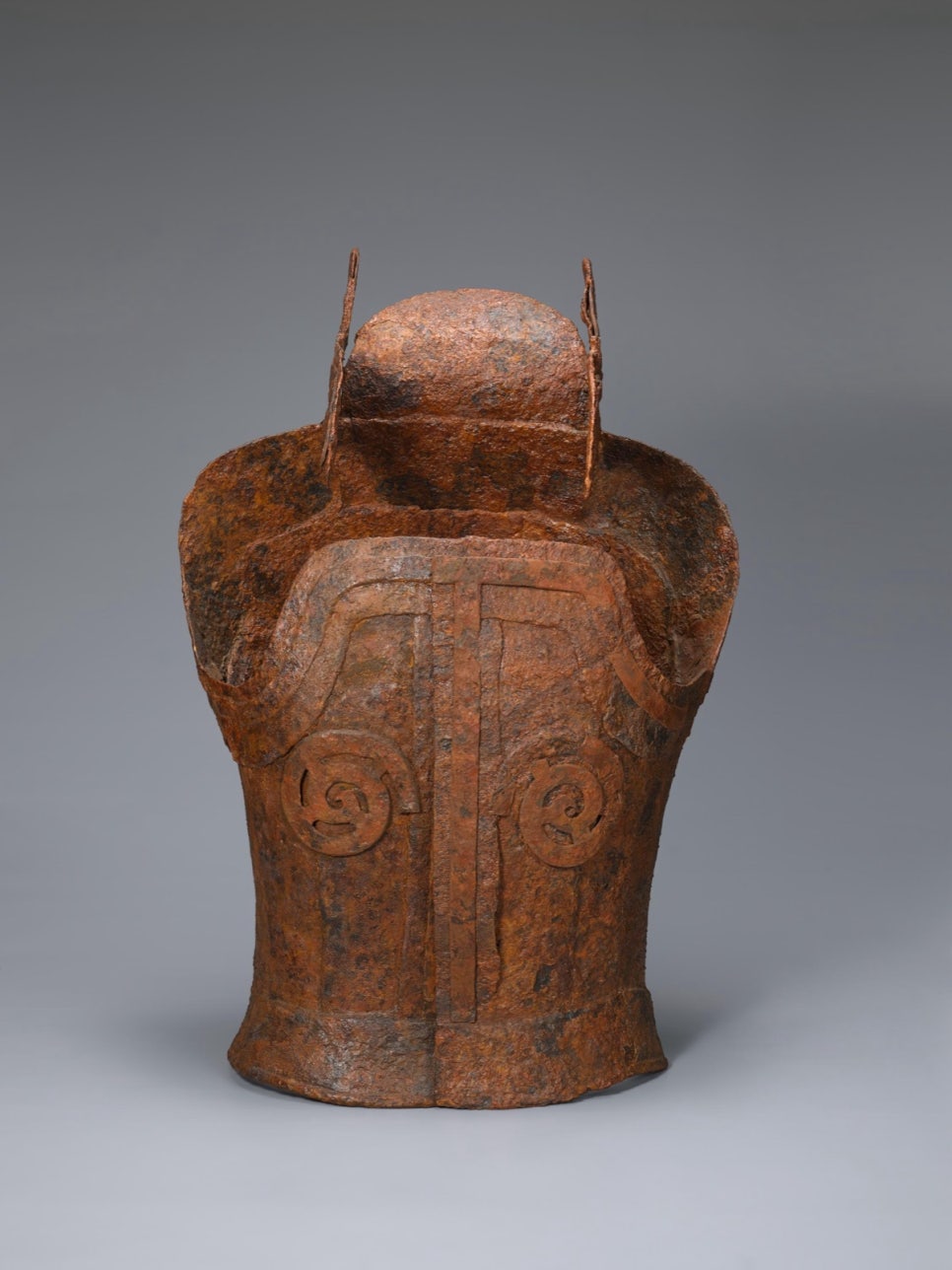
- Gimhae — plate armour; Gaya pottery
- Plate armour wine cooler KRW 300,000
- Chuncheon — Geumgangsan folding screen; arhat statues from Changnyeongsa temple site
- Arhat objet KRW 430,000; ring based on the seated stone bodhisattva from Hansongsa temple site KRW 340,000
What do the original artefacts look like?
Looking at the original first makes it easier to see what each design borrows. All photographs below are collection images published on e-museum, the national museums' online collection database. As with Daegu's wedding robe, a regional museum sometimes sells goods based on an object held by another national museum, so if you plan to see the original, check where it is on display first.

Where the artefact details disagree
The collection number the press release gives for Gwangju's "eggplant bell" brings up a different object (the celadon lion-shaped water dropper) on e-museum, so exactly which object the goods are based on has not been confirmed; the twin-bell rattle above is only a candidate. The designation grades of the Iksan reliquary jar and the Gongju jinmyosu also differ between the press release and e-museum, so we have left the grade off both.


Where and how can you buy them?
- Online: the "Regional National Museum MU:DS Collection" menu of the national museums' online shop (Korean only). Not all 100 items are listed online; if a craft piece you want is missing, ask a museum shop.
- In person: according to the press release, the museum shops at the National Museum of Korea and the Gyeongju, Gwangju, Jeonju, Daegu, Jinju, Jeju and Iksan National Museums. The shops at Buyeo, Gongju, Cheongju, Gimhae, Chuncheon and Naju were not on the list of sellers.
- Ordering: many craft pieces are marked "order separately" and cannot be ordered together with other goods. That is an ordering rule, not a sign of a limited edition.
- Stock: some craft pieces show as sold out online. The official material gives no limited quantity or end date, and the foundation says items and dates may change with each shop's circumstances.
Buying it as a visitor: which shop, and can you order from abroad?
The easiest place to see the collection is the museum shop at the National Museum of Korea in Seoul: take Line 4 or the Gyeongui–Jungang Line to Ichon Station (이촌역), leave by Exit 2 and follow the covered walkway for about five minutes. Admission to the museum is free. In the regions, Gyeongju National Museum is the one most visitors already pass through; the other sellers are Gwangju, Jeonju, Daegu, Jinju, Jeju and Iksan. Ordering online is harder. The listing on museumshop.or.kr is in Korean, and the separate English-language MU:DS store at muds.kr, which prices in US dollars and ships abroad, did not carry the Regional Heritage Collection when we checked on 10 October 2026. The online shop lists global@nmf.or.kr for overseas purchases; if you cannot get to a museum, writing there before you order is the safest course. Buying in person avoids all of this.
Frequently asked questions
- Q. When was the MU:DS Regional Heritage Collection released?
- The National Museum Foundation of Korea released it on 1 September 2026: 100 items based on signature artefacts of the 13 regional national museums, split into 26 everyday goods and 74 craft pieces.
- Q. How much are the fan set and bookmark in the Regional Heritage Collection?
- On the online museum shop on 10 October 2026, the fan-and-handkerchief set was KRW 42,000 and the bookmark KRW 14,000, with one of each for every one of the 13 museums.
- Q. Where can I buy MU:DS Regional Heritage Collection goods?
- According to the foundation, at the museum shops of the National Museum of Korea and the Gyeongju, Gwangju, Jeonju, Daegu, Jinju, Jeju and Iksan National Museums, and on the Korean-language online museum shop. Items may vary by shop.
- Q. Is the Regional Heritage Collection a limited edition?
- The official material gives no limited quantity or end date. "Order separately" on craft pieces is an ordering rule meaning they cannot share a basket with other goods. Some craft pieces do show as sold out online.
- Q. Is it worth going if I do not read Korean?
- Yes, if you are visiting one of the eight museums that sell it anyway — the goods are on the shelf and need no Korean to buy. Ordering online is the hard part: the shop that lists the collection is Korean-only, and the English MU:DS store did not carry it when we checked.
Editor's note · Kang Shin-wook
For anyone touring Korea's regional national museums who wants a souvenir tied to what they saw — or who wants a shortlist of which museum holds which treasure. If you plan to see the originals, start with the National Museum of Korea visiting guide and the Gyeongju National Museum guide; some originals are held by a different museum from the one selling the goods.
Sources
- Official notice (Korean)
- National museum online shop: Regional National Museum MU:DS Collection (Korean)
- e-museum: national museums' collection database
Written in our own words from the sources above, never copied from them, and every date and price checked against at least two pages. The originals are in Korean. Spotted a mistake? Ask for a correction.
Latest from National Museum of Korea
 National Museum of KoreaExhibition17 October 2026In 5 daysFreeDunhuang sutras on show for the first time at the National Museum of Korea — free until 24 Jan
 National Museum of KoreaExhibition14 October 2026In 40 daysKunsthaus Zürich masterpieces at the National Museum of Korea — KRW 12,000 early bird until 17 Dec
 National Museum of KoreaEvent10 October 2026In 13 daysSori: the Seongdeok Bell in concert at the National Museum of Korea — 31 Oct & 1 Nov
 National Museum of KoreaExhibition6 October 2026In 61 daysMarie Antoinette Style at Seoul’s National Museum — from 18 Dec